Inhibition of Adipocyte Differentiation and Adipogenesis by Supercritical Fluid Extracts and Marc from Cinnamomum verum
Sung-Jin Park1, In-Seon Lee1, Sam-Pin Lee1,2 and Mi-Hee Yu1*
1Department of Food Science and Technology, Keimyung University, Daegu 704-701, Korea
2The Center for Traditional Microorganism Resources, Keimyung University, Daegu 704-701, Korea Received January 14, 2013 /Revised April 2, 2013 /Accepted April 3, 2013
This study was performed to evaluate the antiobesity effect of supercritical fluid extracts (SFC) and marc methanol extracts (SFM) from Cinnamomum verum in 3T3-L1 preadipocytes. In inducing the differentiation of 3T3-L1 preadipocytes in the presence of an adipogenic cocktail, iso-butylmethylan- thine (IBMX), dexamathasone, and insulin, treatment with fraction residue SFC and SFM . SFC sig- nificantly reduced the mRNA expression of the transcription factor peroxisome proliferator-activated- receptor-γ (PPARγ), the sterol regulatory-element-binding protein-1c (SREBP1c), and the CCAAT en- hancer-binding-protein α (C/EBPα) in a concentration-dependent manner. Moreover, SFC markedly down-regulated acyl-CoA synthetase-1 (ASC1), fatty acid synthesis (FAS), fatty acid transport-1 (FATP1), fatty acid binding protein 4 (FABP4), and perilipin. These findings suggest that SFC may be a poten- tial therapeutic adjunct for obesity by targeting the differentiation of preadipocytes, as well as their functions.
Key words : Adipocyte, anti-obesity,CCAAT enhancer-binding-protein α (C/EBPα), Cinnamomum verum, peroxisome-proliferators-activated-receptor-γ (PPARγ)
*Corresponding author
*Tel:+82-53-580-5538, Fax:+82-53-580-5538
*E-mail : [email protected]
This is an Open-Access article distributed under the terms of the Creative Commons Attribution Non-Commercial License (http://creativecommons.org/licenses/by-nc/3.0) which permits unrestricted non-commercial use, distribution, and reproduction in any medium, provided the original work is properly cited.
Journal of Life Science 2013 Vol. 23. No. 4. 510~517 DOI : http://dx.doi.org/10.5352/JLS.2013.23.4.510
서 론
현대사회는 생활환경의 편의, 교통의 발달, 과학과 의학의 발달로 인하여 과거에 비하여 매우 풍족한 생활을 누리고 있 지만, 신체활동의 감소 및 과도한 칼로리 섭취로 인해 비만 인구가 급속도로 증가하고 있다. 비만은 유전적, 환경적, 사회 적 요인 등 다양한 원인들이 관여하는 복합적 증후군으로, 과 도한 에너지 섭취 후 체내 대사활동으로 소비되고 남은 것이 지방으로 축적되어 발생된다[1, 9]. 비만은 세계적인 문제로 2015년에는 비만 인구가 7억 명에 이를 것으로 추산되며, 비만 의 효과적인 치료 및 예방방법에 대하여 많은 연구가 수행되 고 있다[32, 37, 38]
비만으로 인한 체내 지방조직의 과다한 에너지 축적과 지방 세포의 과다 증식은 불균형적인 에너지 대사를 유발하게 되 고, 에너지 대사의 불균형은 고지혈증, 고혈압, 동맥경화 등과 같은 심혈관 질환을 발생시키고, 혈중 중성지질과 LDL-콜레 스테롤의 양이 증가되어 고지혈증을 발생시켜 말초조직과 복 부에 중성지질을 축적시켜, 인슐린 저항성, 당뇨, 지방간을 발
생시켜 다양하고 심각한 합병증을 유발한다[21, 27, 34, 35]
비만은 지방전구세포의 분화 및 adipogenesis 과정에 의하 여 지방세포의 세포 내 triglyceride 축적으로 발생되고, 따라 서 이러한 지방전구세포 분화 및 adipogenesis를 저해하여 항 비만 효과를 얻을 수 있다.
지방세포의 형성 과정은 전사인자인 CCAAT/enhancer binding proteins (C/EBPs)와 peroxidase proliferator- activated receptor-γ (PPARγ), sterol regulatory element binding protein-1c (SREBP 1c)의 발현에 의하여 이루어 지고, 지방수송, 합성, 축적과 관계되는 전사인자들 acetyl-CoA carboxylase (ACC), fatty acid synthase (FAS), acyl-CoA synthase (ACS), fatty acid binding protein 4 (FABP4), Fatty acid transport protein 1 (FATP1), perillipin을 발현시키게 된 다[6, 8, 22, 30, 31, 35, 41].
이러한 지방세포의 분화를 저해하기 위하여 운동이나 식이 요법을 이용한 방법들이 사용되고 있지만, 바쁜 현대인들의 경우 비만치료제나 보조식품 섭취가 주로 이용되고 있다. 현 재 sibutramine (Reductil), phentermine과 oristat (Xenical)이 사용되고 있으나, 혈압의 상승이나, 복통, 불안, 변비, 불면, 두통 등의 부작용으로 인해 사용에 주의를 필요로 한다[2, 10, 29]. 따라서 안전한 비만예방을 목적으로 한 천연물 연구가 시도되고 있다[4, 14, 16, 19, 20, 39].
천연물 중 계피(cinnamon)는 세계적으로 사용되는 인류의 오래된 향신료로서 녹나무과에 속하는 계피나무의 껍질을 말 한다. 주요성분으로는 cinnamaldehyde, cinnamic acid, euge-
nol 등의 향기성분을 함유하고 있으며, 진정작용 말초혈관확 장, 해열, 건위, 항산화 작용, 생육억제 등의 약리 효능이 있고, 장내 가스 제거제, 방부제로 한방에서도 이용하였다[12, 13, 19, 26, 40].
본 연구에서는 계피의 초임계 추출물 및 메탄올 추출물을 이용하여 3T3-L1 지방세포의 분화 초기전사인자인 PPARγ, C/EBPα의 저해능을 비교하고 저해능이 가장 우수한 시료의 지방수송, 축적, 합성에 관여하는 전사인자에 미치는 영향을 확인하여 천연물의 효과적 이용방법과 천연오일의 비만 억제 식품으로서의 가능성을 확인하였다.
재료 및 방법 실험재료
본 실험에서 사용한 계피는 중국산 계피를 대구시 약령시장 에서 건조 상태의 것을 구입하여 20~30 mesh의 분말로 분쇄 하여 밀봉하여 저온, 암실에서 보관하며 추출 및 실험에 사용 하였다.
계피 초임계 추출물(SFC)의 제조
초임계 추출 장치는 Waters AD-RC 08 (Waters CO., Milford, MA, USA)를 사용하였다. 분말화된 건계피를 추출 용기에 300 g을 넣어 CO2flow rate: co-solvent의 flow rate를 47.5 g/min: 2.5 g/min으로 하여 total flow rate (CO2 flow rate + co-solvent flow rate)를 50 g/min의 속도로 흘려주었고 co-solvent로는 HPLC급 ethyl alcohol (JT Baker Co., Phillipsburg, NJ, USA)를 사용하였다. 추출 온도는 35℃, 압력 300 bar 조건에서 30분씩 4회 반복하여 총 120분 추출하였다.
초임계 박 메탄올 추출물(SFM), 계피 메탄올 추출물(ME) 제조 및 추출수율
초임계 추출을 하고 남은 부산물인 계피 박과 건계피를 무 게의 10배(w/v)의 메탄올(80%)을 가하여 24 시간 동안 정치 배양하여 총 3회 추출하였다. 추출액은 여과지(whatman No.
3)를 사용하여 여과하고 상등액은 rotary vacuum evaporator (UNI TRAP UT-1000, Eyela, Tokyo, Japan)로 55℃에서 농축 하여 사용하여 동결하여 사용하였다.
추출 수율은 추출 조건에 따라 추출 전 시료 건조물의 중량 에 대비 각 추출 방법에 의해 생성된 추출 용액을 회전진공농 축기로 감압 농축하여 나온 추출물 무게에 대한 백분율로 나 타내었다.
추출수율(%, w/w)=추출물건조무게/시료건조무게×100
GC/MS를 이용한 성분 분석
실험에 사용한 GC/MS system은 HP 190915-433 model (Paloalto, California, USA)이며 column은 HP-5MS (30 m ×
0.25 mm, 0.25 μM)를 사용하였고 Detector로는 MS를 이용하 였다. ESI mode에서 70 eV의 에너지로 이온화하였으며 TIC의 SCAN mode에서 검출이온 질량범위 35∼350으로 설정하여 각 질량스펙트럼 중에서 가장 강도가 강한 main fragment ion 을 중심으로 라이브러리를 검색하여 물질 확인 분석을 하였 다. Injector temperature는 260℃, detector temperature는 28 0℃이며 carrier gas는 helium을 사용하여 flow rate를 1 ml/min으로 사용하였다. Oven temperature는 최초 50℃에서 5분 동안 유지한 후 4℃/min 속도로 200℃까지 상승시킨 후, 200℃에서 20℃/min 속도로 280℃까지 온도를 상승시킨 후 20분간 유지하였다. 계피 초임계 추출물, 박 추출물, 메탄올 추출물은 에탄올에 희석한 후 0.45 μM membrane filter로 여 과하여 분석 시료로 사용하였다. 라이브러리를 통해 검색된 main peak인 계피의 주요 성분인 cinamaldehyde는 50, 500, 1,000 ppm의 농도로 제조한 후 정량 분석에 이용하였다.
MTT assay
3T3-L1 지방전구세포의 시료 독성은 MTT assay로 분석하 였다[5]. MTT 3-(3,4-dimethyl-thiazolyl-2)-2,5-diphenyl tetra- zolium bromide (MTT) assay는 미토콘드리아의 탈수소효소 작용에 의하여 노란색의 수용성 기질인 MTT가 불용성의 보라 색 formazan으로 환원되는 원리를 이용한 방법이다. 세포를 5×10⁴ cells/well으로 96 well plate에 분주하고 24시간 배양 후 배지를 교체하고 샘플 처리하여 24시간 후 MTT (Sigma Aldrich) 시약을 5 mg/ml 농도로 10 μl를 각 well에 가하고 4시간 동안 배양하였다. 배양 종료 후 상층액을 제거하고 각 well에 100 μl의 DMSO (Sigma Aldrich) 를 첨가하여 생성된 formazan 결정을 용해시켜 ELISA reader (Spectra MAX M2, Molecular Device)로 550 nm에서 흡광도를 측정하였으며, 세 포독성은 시료의 흡광도를 대조군의 흡광도에 대한 백분율로 나타내었다.
3T3-L1 지방전구세포의 배양 및 분화 유도 및 샘플처리 실험에 사용된 3T3-L1 세포는 한국 세포주 은행(KCLB)에 서 분양 받아 사용하였다. 배양 및 분화 배지는 Dulbecco’s modified Eagle’s medium high glucose (DMEM, Gibco RBL, Grand Island, NY, USA)에 10% calf serum (Gibco RBL), anti- biotics를 첨가하여 5% CO2, 37℃ 인큐베이터에서 배양하여 세포가 confluent 상태가 되면 trypsin/EDTA를 처리하여 세 포를 원심분리 하여 세포를 모아서 3×10⁶cells/well의 밀도로 6 well에 분주한 후 100% confluency 상태에서 48시간 방치 후 DMEM에 10% FBS (Gibco RBL)와 23 mg/ml 3-isobutyl- 1-methyl-xanthin (IBMX, Sigma Aldrich Co, St Louis, Mo, USA), 5 mg/ml insulin (Sigma Aldrich), 1 mM dex- amethazone (Sigma Aldrich)이 첨가된 배지(MDI)와 시료를 처리하여48시간 동안 유도하고 배지를 제거하고 시료와 10%
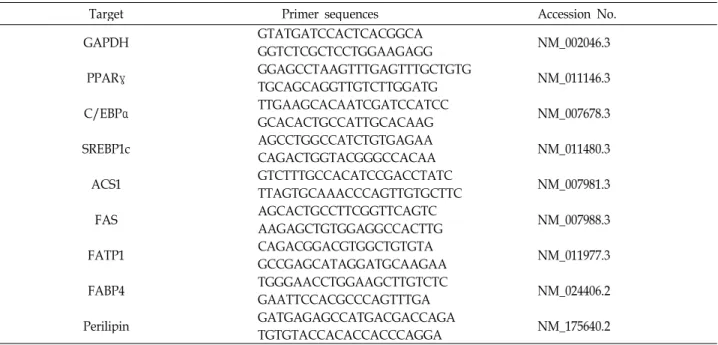
Table 1. The primer sequence used for real-time PCR
Target Primer sequences Accession No.
GAPDH GTATGATCCACTCACGGCAGGTCTCGCTCCTGGAAGAGG NM_002046.3
PPARγ GGAGCCTAAGTTTGAGTTTGCTGTGTGCAGCAGGTTGTCTTGGATG NM_011146.3 C/EBPα TTGAAGCACAATCGATCCATCCGCACACTGCCATTGCACAAG NM_007678.3 SREBP1c AGCCTGGCCATCTGTGAGAACAGACTGGTACGGGCCACAA NM_011480.3 ACS1 GTCTTTGCCACATCCGACCTATCTTAGTGCAAACCCAGTTGTGCTTC NM_007981.3 FAS AGCACTGCCTTCGGTTCAGTCAAGAGCTGTGGAGGCCACTTG NM_007988.3 FATP1 CAGACGGACGTGGCTGTGTAGCCGAGCATAGGATGCAAGAA NM_011977.3 FABP4 TGGGAACCTGGAAGCTTGTCTCGAATTCCACGCCCAGTTTGA NM_024406.2 Perilipin GATGAGAGCCATGACGACCAGATGTGTACCACACCACCCAGGA NM_175640.2 FBS DMEM 배지에 5 mg/ml의 insulin이 첨가된 배지를 교체
해주었다. 10% FBS DMEM, insulin 배지는 2일 마다 지속적으 로 시료와 같이 처리하였다.
Oil red O 염색법
시료의 지방세포 분화억제 활성을 검토하기 위하여 Oil red O 염색을 시행하였다. Oil red O 염색은 중성지방을 염색하는 방법으로 지방 세포 내 중성지방 축적 정도를 시각화할 수 있다. 3T3-L1 전구지방세포를 9일 동안 분화시킨 후 배지를 제거하고 phosphate buffered saline (PBS)로 세척하고 10%
formaldehyde 용액으로 세포를 고정시켰다. 다시 PBS로 세척 후, Oil red O 용액을 첨가하여 30분간 실온에서 염색하고, Oil red O 용액을 제거한 후 증류수로 세척하여 건조시킨 다음 위상차 현미경을 이용하여 관찰하고 흡광도 측정을 위하여 100% isopropyl alcohol로 염색된 지방구를 용출시켜 spec- trophotometer를 이용하여 510 nm에서 흡광도를 측정하였다.
Real-time PCR을 이용한 mRNA 분석
지방세포 분화가 완료된 cell을 pH 7.4 phosphate buffered saline (PBS, Gibco RBL)로 세척하여 배양된 세포에서 배지를 제거하고 PBS 10 ml로 두 번 세척한 후 TRI reagent를 처리하 고, 1.5 ml tube에 1 ml씩 담고 1-bromo-3-chloropropane (Sigma Aldrich)을 200 μl 첨가하고 vortex 하여 원심분리 (3,000 rpm, 15분, 4℃)하고, 상등액을 새로운 tube에 옮겼다.
여기에 동량의 isopropanol (Sigma Aldrich)을 첨가하여 -20℃
에서 2시간 이상 방치하고 나서 원심분리(13,000 rpm, 15분, 4℃)한 후 상등액을 제거하였다. 침전물에 75% ethanol을 첨가 하여 제거한 후 diethyl pyrocarbonate (DEPC, Sigma
Aldrich) 처리된 증류수를 첨가하여 65℃ 수조에서 10분간 반 응시켜 침전물을 녹였다.
추출된 RNA를 cDNA로 합성 후 SYBER Green과 지방세포 분화 발현 인자인 PPAR-gamma, C/EBP-alpha, SREBP-1c를 확인하고, 지방 축적, 합성, 저장에 관련된 ACS, FAS, FATP1, FABP4, Perilipin의 primer를 이용하여 real-time PCR을 실시 하였다. Primer 염기서열은 Table 1과 같다.
Real-time PCR은 초기변성 95℃ 30초, 변성은 95℃ 5초, an- nealing은 60℃ 15초, 신장반응은 72℃ 10초로 하여 40 cycle을 진행했다. 용해 곡선은 55℃로 시작하여 95℃를 종말점으로 0.5℃씩 상승시키며 80번을 반응하여 원하는 형광 값을 검출 하였다.
통계처리
모든 결과는 평균±표준편차로 나타내었으며, 유의성 검사 는 SPSSTM version 17.0 (SPSS Inc., Chicago, USA)을 이용하여 one-way ANOVA를 실시하였고, 대조구인 분화 Control에 대 한 시료 처리구의 통계적 유의성은 Turkey’s HSD test [36]로 검증하였다.p<0.05 이상일 때만 통계적 유의성이 있는 것으로 판단하였다.
결과 및 고찰
계피 초임계 추출물의 지방세포 생존율 및 lipid droplet에 미치는 영향
각 well 당 5×10⁴ cells/well 의 밀도로 분주한 96 well을 24시간 배양 후 배지를 교체하고 SFC, SFM, ME를 최종농도 10, 50, 100 μg/ml로 24 시간 처리하였다. 그 결과 SFC 100
μg/ml 농도에서 대조구와 비교하였을 때 60%의 생존율로 독 성을 나타냈으며, 나머지 농도에서는 모두 80% 이상의 생존율 을 나타내었다(Fig 1). 따라서 시료 처리 농도를 50 μg/ml을 최고 농도로 설정하여 실험하였다.
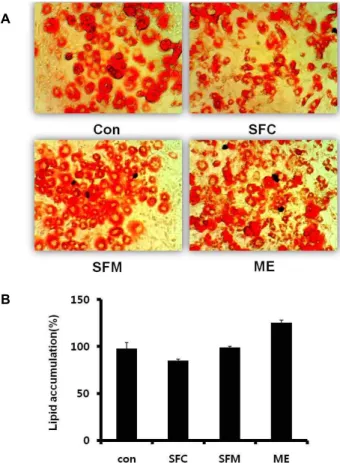
지방세포의 Lipid droplet은 지방전구세포의 분화 및 adi- pogenesis 과정에 의하여 지방세포의 세포 내 triglyceride 축 적으로 발생되는데, SFC, SFM, ME를 각각 50 μg/ml 농도로 처리하고 분화 완료 후 Oil Red O 염색을 하여 현미경으로 관찰한 결과 SFC가 다른 추출물에 비하여 높은 지방 축적 저 해능을 보였다(Fig. 2).
계피 초임계 추출물의 adipogenic transcription factor 의 mRNA 발현에 미치는 영향
전지방세포(preadipocyte)의 성장과정은 먼저 세포의 밀도 가 증가하면 contact inhibiton에 의해 성장이 멈추고 con- fluent state가 되어 growth arrest 상태에서 FBS, IBMX, dex- amethazone, insulin을 처리하면 분화가 유도되고, 이후 FBS, insulin을 2일 간격으로 처리하면 성숙한 지방세포로 분화하 게 된다. 분화가 유도되면 CREB 전사인자가 인산화되어 C/EBPα, PPARγ가 연쇄적으로 발현되면서 분화가 진행된다 [6, 7, 41]. 따라서 C/EBPα, PPARγ의 발현억제는 초기 지방 세포분화를 차단하여 비만을 예방할 수 있다.
SFC, SFM, ME를 각각 50 μg/ml의 농도로 처리하고 C/EBPα, PPARγ의 유전자 발현을 분석한 결과 SFC에서 가
Fig. 1. Effect of ME, SFC, SFM on cell viability of in 3T3-L1 adipocytes. 3T3-L1 preadipocytes were maintained with adipocyte-induction media for 9 days and treated with ME, SFC, SFM fromCinnamomun verum(10, 50, 100 μ g/ml) every 2 days. Cell viability was calculated as a percentage of MTT metabolism in controls(Con, meth- anol). Results represent the mean±S.D. of three in- dependent experiments.
A
B
Fig. 2. Inhibitory effect of SFC, SFM, ME on the lipid accumu- lation in 3T3-L1 adipocyte. Differentiating 3T3-L1 cells were treated with every 2 days with SFC, SFM, ME. (50 μg/ml) for 9 days in adipocyte-induction media.
Intracellular lipids were stained with Oil Red O (A). To determine the accumulation of lipid content, Oil Red O dye was dissolved in isopropanol and optical density detected at 510 nm (B). Results were presented as means±S.D. in triplicate.
장 높은 발현 저해를 보여 계피의 초임계 추출 오일이 지방세 포의 초기 분화를 억제할 수 있을 것으로 나타났다(Fig. 3).
박[26] 등의 연구에서 초임계 계피 오일과 박의 생리 활성 검색 결과, 초임계 오일은 항균활성이, 박 추출물은 항산화 활성이 우수한 것으로 나타나 오일과 박의 활성성분은 각각 다른 것 으로 나타났다. 또한 김 등의 연구에서는 더덕을 순차분획 하 였을 때 추출하여 이들 추출물의 폴리페놀 함량을 비교했을 때 폴리페놀 성분은 극성용매에 다량 함유되어 있음을 보고하 였다[15]. 계피의 정유 성분 중 주된 성분은 cinnamaldehyde 이며, 2형 당뇨나 비만 억제 전사인자 저해에 효과가 있는 것 으로 보고되었다[11, 12, 28].
SFC의 adipogenic transcription factor 및 관련 유전 자들의 발현에 미치는 영향
Lipid droplet 및 초기지방세포 분화억제가 우수하였던 SFC 를 10, 20, 50 μg/ml 농도로 처리하여adipogenic transcription
Fig. 3. Effect of SFC, SFM, ME on C/EBPα, PPARγ mRNA expression during the differentiation of 3T3-L1 adipocyte. Differentiating 3T3-L1 cells were treated with every 2 days with SFC, SFM, ME 50 μg/ml for 9 days in adipocyte-induction media. At day 9 adipocytes RNA was isolated and mRNA expressions of PPARγ, C/EBP α were determined by real-time PCR analysis. Results were presented as means±S.D. in triplicate. *p<0.05,
**p<0.01 vs control.
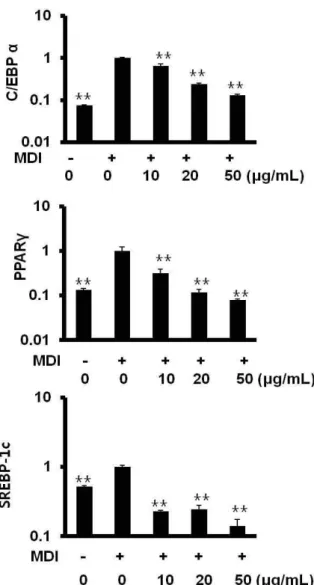
factor 및 관련 유전자들에 미치는 영향을 확인하기 위해 re- al-time PCR을 이용하여 나타낸 결과는 Fig. 4와 같다. 분화를 유도한 대조구에서 C/EBPα, PPARγ, SREBP-1c의 발현이 증 가되었으나, SFC를 농도별로 처리한 결과 10, 20, 50 μg/ml의 농도 모두에서 그 발현이 유의적으로 감소됨을 확인하였다.
또한 이들 전사인자들의 하위 인자로 지방합성, 이동, 저장에 관여하는 fatty acid synthase (FAS), acyl-CoA synthase (ACS1), fatty acid bidind protein 4 (FABP4), fatty acid trans- port protein 1 (FATP1), 및 Perilipin의 mRNA 발현에서도 분화유도에 따라 각 유전자의 발현이 현저하게 증가하였으나, SFC처리에 의해 유의적으로 감소하였다(Fig. 5). SFC는 지방 세포 분화에 관여하는 C/EBPα, PPARγ, SREBP-1c 발현을 억제하여 지방세포의 분화를 억제하였으며, 지방세포의 비대 (hypertrophy)와 과형성(hyperplasis)을 감소시키고[23], 지방 세포의 감소에 의하여 지방합성에 관여하는 FAS와 ACS1을 효과적으로 억제하였으며, 지방수송에 관여하는 FABP4, FATP1, 지질축적에 관여하는 perilipin의 발현을 감소시켜
Fig. 4. Effect of SFC on adipogenic transcription factor.
Differentiating 3T3-L1 cells were treated with every 2 days with SFC 10, 20, 50 μg/ml for 9 days in adipo- cyte-induction media. At day 9 adipocytes RNA was isolated and mRNA expressions of C/EBPα ,PPARγ and SREBP-1c were determined by real-time PCR analysis. Results were presented as means±S.D. in triplicate. *p<0.05, **p<0.01 vs control.
lipid droplet 및 triglyceride의 생성을 감소시킨 것으로 생각 된다.
계피의 추출방법에 따른 수율과 cinnamaldehyde 함량 지방세포 분화에 관여하는 전사인자들의 발현억제와 cin- namaldehyde 함량의 상관관계를 알아보고자 각 조건별 계피 추출물을 GC/MS를 이용하여 정유성분의 화학구조를 규명한 결과 (E)-cinnamaldehyde의 peak을 발견하였다. 각 추출물의 수율과 cinnamaldehyde의 함량을 구한결과는 Table 2에 나타 내었다. 그 결과 SFC, 80% ME, SFM 순으로 cinnamaldehyde 함량이 높음을 알 수 있었으며, 계피의 정유성분을 초임계법
Fig. 5. SFC suppression of proteins regulating synthesis and transport of fatty acids, Lipid accumulated mRNA levels. Differentiating 3T3-L1 cells were treated with every 2 days with SFC 10, 20, 50 μg/ml for 9 days in adipocyte-induction media. At day 9 adipocytes RNA was isolated and mRNA expressions of ACS, FAS, FATP1, FABP4 and Perilipin were determined by real-time PCR analysis. Results were presented as means±S.D. in triplicate. *p<0.05, **p<0.01 vs control.
으로 추출했을 경우 기존의 용매추출에 비해 cinnamaldehyde 의 함량이 20배 이상 많이 함유되어 있어 정유 성분의 추출에 초임계 추출법이 매우 효율적임을 알 수 있었다. 계피와 같은 휘발성이 강한 천연물에는 정유성분에 유용성분이 많이 함유 되어 있기 때문에 고온, 장시간이 소요되는 용매 추출법 보다 는 초임계 추출법이 더 효율적이다[3, 24, 25, 33]. 김 등의 연구 에서도 고추냉이에서 allyl isothiocyanate (AITC)는 유기용매 추출보다 초임계 추출에서 더 많은 함량을 보였다[18]. 김 등의 연구에서 오레가노, 육계, 편백 및 황금의 초임계 추출물과 용매 추출물의 항균활성을 비교한 결과, 초임계 추출물의 항 균활성이 더욱 우수하였다[17].
따라서 지방세포의 분화억제에 활성을 보이는 계피의 정유 성분은 주요성분인 cinnamaldehyde일 것으로 예상된다. 이전 의 연구에서 cinnamaldehyde는 2형 당뇨 개선이나, 비만억제
Table 2. Cinnamaldehyde (CA) contents and extraction yield in 80% MeOH (ME) extracts and SFC, SFM from Cinnamomun verumaccording to different extraction conditions
Condition Yield (%) CA content (mg/100 g) MEa
SFCb SFMc
19.93 4.73 8.63
595.52 35220.56 266.95
aME: 80 % Methanol Extract of Cinnamomum verum
bSFC: Supercritical Fluid Extracts in 300 bar, 35℃, 120 min
cSFM: Methanol extracts of SFC oil marc
에 효과적이라 보고된 바 있어 본 연구와도 일치하는 결과이 다[11, 12, 14, 28]. 천연물의 추출은 성분에 따라 그 추출방법을 달리 하는 것이 성분을 효율적으로 이용할 수 있을 것이라
생각되고, cinnamaldehyde와 계피 초임계 오일의 adipogenic transcription factor 및 관련 유전자들의 비교 실험을 통해 cin- namaldehyde가 지방세포 분화억제에 어떠한 영향을 미치는 지와 cinnamaldehyde 외에 지방세포 분화억제에 관련된 계피 의 기타 정유 성분에 대한 분리 및 메커니즘에 대한 규명이 필요할 것으로 생각된다.
감사의 글
이 논문은 교육과학기술부 및 한국연구재단의 지역혁신인 력양성사업과 교육과학기술부 및 대구경북과학기술원의 지 원을 받아 수행된 연구결과입니다(12-BD-0401).
References
1. Albu, J., Allison, D., Boozer, C. N., Heymsfield, S., Kissileff, H., Kretser, A., Krumhar, K., Leibei, R., Nonas, C., Pi-Sunyer, X., Vanltallie, T. and Wedral, E. 1997. Obesity solutions: report of a meeting. Nutr Rev55, 150-156.
2. Apfelbaum, M., Vague, P., Ziegler, O., IIanotin, O., Thomas, F. and Leu-tenegger, E. 1999. Long-term maintenance of weight loss after a very low calorie diet: Efficacy and toler- ability of sibutramine. Am J Med106, 179-184.
3. Barth, M. M., Zhou, C., Kute, M. K. and Rosenthal, G. A.
1995. Determination of optimum conditions for supercritical fluid extraction of carotenoids (Daucus carota L.) from car- rot tissue. J Agric Food Chem43, 2876-2878.
4. Carmen, S. 2000. Processing technologies: An alternativefor cactus pear (Opuntia spp) fruits and cladodes. J Aarid Environ 46, 209-225.
5. Cole, S. P. 1986. Rapid chemosensitivity testing of human lung tumor cells using the MTT assay. Cancer Chemother Pharmacol 17, 259-263.
6. Farmer, S. R. 2006. Transcriptional control of adipocyte formation. Cell Metab4, 263-273.
7. Green, H. and Kehinde, O. 1974. Sublines of mouse 3T3 cells that accumlate lipid. Cell1, 113-116.
8. Gregoire, F. M., Smas, C. M. and Sul, H. S. 1998.
Understanding adipocyte differentiation. Physiol Rev 78, 783-809.
9. Grundy, S. M. 1998. Multifactorial causation of obesity: im- plications for prevention. Am J Clin Nutr67, 563-572.
10. Hansen, D. L., Toubro, S., Stock, M. J., Macdonald, I. A.
and Astrup, A. 1998. Thermogenic effects of sibutramine in humans. Am J Clin Nutr 68, 1180-1186.
11. Huang, B., Yuan, H. D., Kim, D. Y., Quan, H. Y. and Chung, S. H. 2011. Cinnamaldehyde prevents adipocyte differ- entiation and adipogenesis via regulation of peroxisome proliferator-activated receptor-γ (PPARγ) and AMP-acti- vated protein kinase (AMPK)Pathways.J Agric Food Chem 59, 3666-3673.
12. Kannappan, S., Jayaraman, T., Rajasekar, P., Ravichandran, M. K. and Anuradha, C. V. 2006. Cinnamon bark extract
improves glucose metabolism and lipid profile in the fruc- tose-fed rat. Singapore Med J 47, 858-863.
13. Kaul, P. N., Bhattacharya, A. K., Rao, B. R., Syamasundar, K. V. and Ramesh, S. 1987. Volatile constituents of essential oils isolated from different parts of cinnamon (Cinnamomum zeylanicum Blume). J Sci Food Agric83, 53-55.
14. Khan, A., Bryden, N. A., Polansky, M. M. and Anderson, R. A. 1990. Insulin potentiating factor and chomium content of selected foods and spices.Biol Trace Elem Res24, 183-188.
15. Kim, N. M., Sung, H. S. and Woo, W. J. 1993. Effect of sol-vents and some extraction condition on antioxidant ac- tivity in Cinnamon extracts. Korean J Food Sci Technol 25, 204-209.
16. Kim, K. I., Han, C. K., Seong, K. S., Lee, O. H., Park, J.
M. and Lee, B. Y. 2003. Effect of whole powder and extracts ofGastrodiae Rhizomaon serum lipids and body fat in rats fed high-fat diet. Korean J Food Sci Technol 35, 720-725.
17. Kim, W. J., Cho, J. Y., Choi, C. S., Yoon, G. S., Lee, W. K.
and Ryu, Y. W. 2008. Antimicrobial Activity of Extracted by Supercritical Fluid fromOriganum vulgare, Cinnamomum cassia, Chamaecyparis obtusaandScutellariae baicalensis.Korean J Biotechnol Bioeng 22, 147-152.
18. Kim, S. J., Lee, M. K., Back, S. S. and Chun, B. S. 2007.
Extraction and identification of volatile isothiocyanates from Wasabi using supercritical carbon dioxide. Korean J Biotechnol Bioeng 22, 174-178.
19. Lee, K. S., Kim, M. G. and Lee, N. Y. 2004. Antimicrobial effect of the extracts of Cactus Cheonnyuncho (Opuntiahumifusa) against food borne pathogens.J Korean Soc Food Nutr 33, 1268-1272.
20. Lee, Y. A. and Kim, M. H. 2008. The effect of sea tangle extract on serum lipid level in ovariectomized rats. J Life Sci 18, 249-254.
21. Lew, E. A. 1985. Mortality and weight: Insured lives and the american cancer society studies. Ann Intern Med103, 1024-1029.
22. MacDougald, O. A. and Lane, M. D. 1995. Transcriptional regulation of gene expressionduring adipocyte differ- entiation. Annu Rev Biochem64, 345-373.
23. Otto, T. C. and Lane, M. D. 2005. Adipose development:
from stem cell to adipocyte.Crit Rev Biochem Mol Biol40, 229-242.
24. Park, M. K., Lee, Y. L. and Kang, E. S. 2005. Hepatoprotective effect of chounnyouncho extract in rats treated carbon tetrachloride. Korean J Food Sci Technol 37, 822-826.
25. Park, S. M., Ahn, I. S., Hong, S. M., Kim, D. S., Kwon, D.
Y. and Yang, H. J. 2010. The effects of the supplementation of Opuntia humifusa water extracts and methyl sulfonyl methane on the laying productivity, egg quality and sensory characteristics. J Korean Soc Food Sci Nutr 39, 294-300.
26. Park, S. J., Yu, M. H., Kim, J. E., Lee, S. P. and Lee, I. S.
2012. Comparison of antioxidant and antimicrobial activities of supercritical fluid extracts and marc extracts from Cinnamomum verum. J Life Sci 22, 373-379.
27. Peter, G. K. 2000. Obesity as a medical problem.Nature404, 635-643.
초록:초임계 추출 계피오일의 3T3-L1 지방전구세포의 분화 전사인자 억제에 의한 지방대사 조절 박성진1․이삼빈1,2․이인선1․유미희1*
(1계명대학교 식품가공학 전공, 2계명대학교 전통미생물자원개발 및 산업화연구(TMR)센터)
본 연구에서는 초임계를 이용한 계피 오일 추출물(SFC)과 오일 추출 후 남은 부산물인 박(SFM), 그리고 80%
methanol (ME) 계피추출물을 이용하여 항비만 효과를 비교하고 어떤 계피의 어떤 성질의 성분이 비만에 더 효과 적인지 알아보았다. 3T3-L1 preadipocyte의 성숙한 지방세포로 분화시키기 위해 iso-butylmethylanthine (IBMX), dexamathasone, insulin을 SFC, SFM, ME를 처리하고 Real time PCR을 이용하여 전사인자 발현을 확인하였다.
그 결과 SFC에서 mRNA 수준에서 peroxisome-proliferators-activated-receptor-γ (PPARγ), CCAAT en- hancer-binding-protein α (C/EBPα)의 저해능이 세 가지 조건 중에서 가장 높았으며, 또한 SFC는 perox- isome-proliferators-activated-receptor-γ (PPARγ), CCAAT enhancer-binding-protein α (C/EBPα) sterol-regu- latory-element-binding protein-1c (SREBP1c)와 acyl-CoA synthetase-1 (ASC1), fatty acid synthesis (FAS), fatty acid transport-1 (FATP1), fatty acid binding protein-4 (FABP4) 그리고 perilipin의 전사인자도 농도유의적으로 감소시켰다.
28. Plaisier, C., Cok, A., Scott, J., Opejin, A., Bushhouse, K. T., Salie, M. J. and Louters, L. L. 2011. Effects of cinnamalde- hyde on the glucose transport activity of GLUT1.Biochimie 93, 339-344.
29. Rolls, B. J., Shide, D. J., Thorwart, M. L., and Ulbrecht, J.
S. 1998. Sibutraminereduces food intake in nondieting wom- en with obesity. Obes Res 6, 1-11.
30. Rosen, E. D. and Spiegelman, B. M. 2000. Molecular regu- lation of adipogenesis.Annu Rev Cell Dev Biol16, 145-171.
31. Rosen, E. D., Walkey, C. J., Puigserver, P. and Spiegelman, B. M. 2000. Transcriptional regulation of adipogenesis.Genes Dev14, 1293-1307.
32. Scott, M. G. 2004. Obesity, metabolic syndrome, and car- diovascular disease. J Clin Endocrinol Metab89, 2595-2600.
33. Shim, J. H., Kim, M. R. and Kim, M. R. 2001. A Comparative Study on the Solvent Extraction and Supercritical Fluid Extration Method of β-Ecdysone in Achyranthis radix. J Korean Soc Appl Chem Biolthechnol 44, 197-201.
34. Spiegelman, B. M. 2001. Obesity and the regulation of energy balance. Cell 104, 531-543.
35. Spiegelman, B. M. and Flier, J. S. 1996. Adipogenesis and obesity: rounding out the big picture. Cell 87, 377-389.
36. Sreel, R. G. D. and Torrie, J. H. 1990.Principles and procedures of satistics. McGraw Hill, New York, USA.
37. Wellman, N. S. 2002. Causes and consequences of adult obe- sity: health, social and economic impacts in the united States. Asia Pac J Clin Nutr 11, S705-S709.
38. Wyatt, S. B., Winters, K. P. and Dubbert, P. M. 2006.
Overweight and obesity: prevalence, consequences, and causes of a growing public health problem.Am J Med Sci 331, 166-174.
39. Yoon, J. A. and Son, Y. S. 2009. Effectsof Opuntia ficus-indica complexes B (OCB) on blood glucose and lipid metabolism in streptozotocin-induced diabetic rats.Korean J Food Nutr 22, 48-56.
40. Wijesekera, R. O. B., Jayewardene, A. L. and Rajapakse, L.
S. 1974. Volatile constituents of leaf, stem and root oils of cinnamon (Cinnamomum zeylanicum). J Sci Food Agric 25, 1211-1220.
41. Zhang, J. W., Klemm, D. J., Vinson, C. and Lane, M. D.
2000. Role of CREB in transcriptional regulation of CCAAT/enhancer-binding protein beta gene during adipogenesis. J Biol Chem279, 4471-4478.