Review Korean Circulation J 2001;;;;31((((9))))::::849-856
관동맥질환에서 콜레스테롤 저하요법
- 스타틴계 약물을 중심으로 -
경북대학교 의과대학 순환기내과학교실
전 재 은
Cholesterol Lowering Therapy in Coronary Artery Disease
---
- With Particular Reference to Statins ----
Jae-Eun Jun, MD
Division of Cardiology, Department of Internal Medicine, College of Medicine, Kyungpook National University, Daegu, Korea
ABSTRACT
Statins (HMG-CoA reductase inhibitors) are widely used lipid lowering agents. They effectively reduce LDL cholesterol (LDL-C), lower triglyceride levels and are very safe. Recent large-scale clinical trials have dem- onstrated that lowering LDL-C with statins substantially reduces the incidence of major coronary events in patients both with and without coronary artery disease (CAD). While all the clinical benefit of statins result primarily from their LDL-lowering effects, a variety of proposed statin mechanisms unrelated to LDL-low- ering appears to further contribute to their benefits. Despite the statin database, the important clinical question persists;what is the ideal LDL level in CAD patients? Ongoing trials of high-dosage statins should confirm whether further reduction below the current LDL goal (<100 mg/dL) will provide worthy additional benefit.
Unfortunately, up to 82% of proven CAD patients have not even achieved the current LDL goal, with up to 55% needing a >30 mg/dL reduction in LDL-C merely to reach the existing goal. These findings/considerations suggest that many patients are not receiving a statin or an inadequate dose.((((Korean Circulation J 2001;31 (
((
(9)))):849-856))))
KEY WORDS:Hydroxymethylglutaryl-CoA reductase inhibitors·LDL cholesterol·Clinical trials.
서 론
동맥경화에 의한 관동맥질환(CAD)의 치료와 병인론 에 관한 많은 연구 결과 저비중지단백(LDL) 유래의 콜 레스테롤(LDL-C) 증가가 CAD의 중요한 원인의 하나1)
이며, 또한 죽상반의 불안정성(plaque instability)이 급 성관증후군, 즉 불안정 협심증, 심근경색 및 급사의 주 되는 발생기전의 하나2)3)로 밝혀졌다.
스타틴[3-hydroxy-3-methylglutaryl-coenzyme A(HMG-CoA) reductase inhibitor]은 이제까지 개발 된 고지혈증 치료제보다 콜레스테롤 저하효과가 탁월하 여 스타틴계 약물을 이용한 많은 임상연구가 시행되거 나 진행중에 있을 뿐만 아니라 LDL 콜레스테롤 저하효 과 외에도 다양한 항동맥경화 효과가 제시되고 있다. 본 종설에서는 스타틴과 관련된 약리작용, 임상시험 그리고 교신저자:전재은, 700-721 대구광역시 중구 삼덕2가 50번지
경북대학교 의과대학 순환기내과학교실
전화:(053) 420-5526・전송:(053) 426-2046 E-mail:[email protected]
콜레스테롤 저하효과 외의 새로이 제시된 항동맥경화 기전 등을 중심으로 검토하고 아울러 금년에 발표된 미 국 콜레스테롤 교육프로그램(NCEP)의 3차 치료지침4) 을 요약하여 소개하고져 한다.
작용기전 및 약리작용
스타틴은 콜레스테롤 합성 단계중 HMG-CoA가 me- valonic acid로 변환하는 단계에 촉매작용을 하는 율 속효소(rate-limiting enzyme)인 HMG-CoA red- uctase를 경쟁적으로 억제하여 세포내 콜레스테롤의 합 성을 줄인다.5) 일단 간세포내 콜레스테롤 합성이 억제 되어 그것의 농도가 감소하면 이를 보상하기 위한 기 전으로 간세포 표면에 있는 LDL 수용체의 발현이 항진 되어 혈장으로부터 LDL 및 LDL precursors의 간세 포내로 유입(uptake)이 증가하여, 결과적으로는 혈장 LDL-콜레스테롤 농도가 감소한다.6) 또한 스타틴은 간 세포에서 apo B-100의 합성을 억제하며, triglyceri- derich lipoproteins의 합성 및 분비도 감소시킬 수 있 다고 한다.7)8)
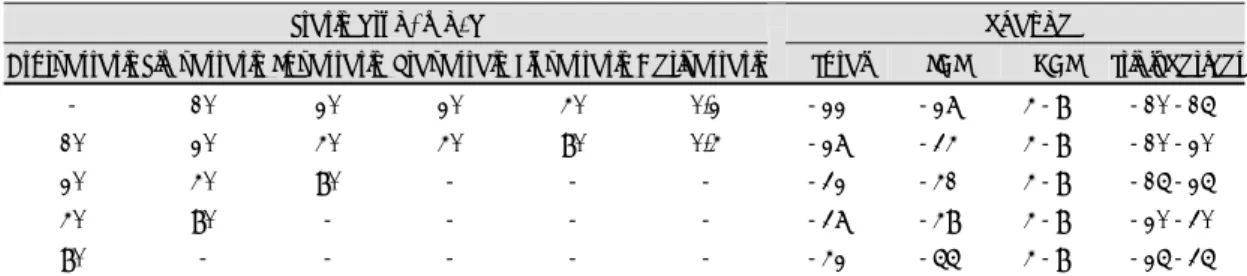
현재 널리 사용되는 스타틴계 약물로는 진균 대사산 물에서 유도되는 로바스타틴, 프라바스타틴 및 심바스 타틴, 그리고 인공적 합성물인 플루바스타틴, 아토바스 타틴 및 세리바스타틴 6종류가 있다. 이들 스타틴에 의 한 혈청 지질 및 지단백에 대한 총괄적 개선효과는 Ta- ble 1과 같다.9) 즉, 스타틴 각각의 상용량 투여시 총콜 레스테롤(TC)은 22~27%, LDL-C는 27~34%, 그 리고 중성지방은 10~20% 감소하며 HDL-C는 4~
8% 증가한다. 스타틴의 용량을 증가하면 TC와 LDL- C의 감소효과는 비례하여 증가하는데 투여 용량을 배로 증량할 경우 TC와 LDL-C는 각각 5% 및 7%씩 개선 효과가 증가한다.9)10) 그러나 스타틴은 다른 지단백 즉, lipoprotein(a)[Lp(a)]와 LDL size 및 density에 대해
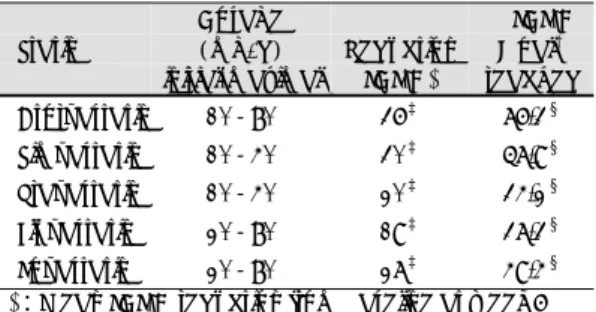
서는 개선효과가 없었다고 한다.11)12) 최근 5종의 스타 틴계 약물간의 LDL-C 저하효과, NCEP의 치료목표 달 성률1) 및 안전성을 직접 비교한 ACCESS 연구 결과13) 를 요약하면 다음과 같다(Table 2). 이 연구는 고콜레 스테롤혈증 환자 3,916례를 대상으로 Table 2에서와 같은 5종의 스타틴을 첫 6주동안은 초기용량을 투여하 고 6주후부터는 NCEP 치료목표치 달성때까지 증량하 여 총 54주 투여하였다. 첫 6주에서의 LDL-C 저하율 은 아토바스타틴군에서 36%로 다른 4개군에 비해 유 의하게 높았으며(p<0.001), 투여 54주후 치료목표 달 성률 또한 아토바스타틴군에서 76.3%로 심바스타틴 57.
9%, 프라바스타틴 34.2%, 플루바스타틴 37.3%, 로바 스타틴 49.4%보다 유의하게 높았다(p<0.0001). 내약 성은 5종의 스타틴 모두에서 높았으며, 부작용으로 치료 를 중지한 전체적 빈도는 2.9~7.8%였으나 약물간에 유 의한 차이는 없었다고 한다. 한편, 최근 우리나라에서도 고콜레스테롤혈증 환자를 대상으로 심바스타틴14)(n=
478;1일 10~40 mg, 12주 투여)과 아토바스타틴15) (n=166;1일 10 mg, 6주 투여)을 이용한 다기관연구 에서 LDL-C는 평균 39% 및 42% 감소하였으며, 부 작용으로 간장애의 빈도는 각각 0.9% 및 0.6%였으나 근육장애는 두 연구 모두에서 없었다고 한다.
부작용
스타틴계 약물은 일반적으로 내약성이 우수하고, 부작 용 역시 경미하고 또 적을뿐 아니라 약제간에 유의한 차 이가 없는 것으로 알려져 있다.9)13) 부작용으로 가장 중 요한 것은 간 및 근육 장애이다. 간장애(AST 및 ALT치 가 정상 상한치보다 3배 이상 증가)의 빈도는 약제간에 차이가 없이 대체로 1%이며 투여량에 비례한다.9)13-16) 일단 발생하면 투약을 중지해야 하며, 중단후 2~3개월 지나면 치료전의 수치로 회복된다.16) 근증(myopathy:
Table 1. Comparative efficacy of the six statins on lipids and lipoproteins in patients without hypertriglyceridemia
Statin drug, mg/d % change
Atorvastatin Simvastatin Lovastatin Pravastain Fluvastatin Cerivastatin Total LDL HDL Triglycerides
- 10 20 20 40 0.2 -22% -27% 4-8% -10-15%
10 20 40 40 80 0.4 -27% -34% 4-8% -10-20%
20 40 80 - - - -32% -41% 4-8% -15-25%
40 80 - - - - -37% -48% 4-8% -20-30%
80 - - - - - -42% -55% 4-8% -25-35%
LDL:low density lipoprotein, HDL:high density lipoprotein
근육효소 CK치가 정상 상한치보다 10배 이상 증가)의 빈도는 스타틴 단독요법시 0.1% 정도이며 역시 투여량 에 비례하며, 동반 증상으로는 근육통, 무력감, 발열 등 이 있다.9) 근증의 발생을 인지못하고 계속 투여하면 횡 문근변성(rhabdomyolysis)과 급성 신부전이 발생할 수 있으며, 일단 발생하면 투약을 중단해야 하며 전자는 회 복되나 후자는 지속할 수 있다.17)
스타틴과 다음의 약물을 병용하면 근증의 발생이 더 높다. 스타틴중 플루바스타틴과 프라바스타틴 외에는 대 사과정상 cytochrome P450(CYP) 3A4를 이용하기 때문에 CYP 3A4 억제제인 cyclosporine,18) 마크로라 이드계 항생제(erythromycin, clarithromycin),19) az- ole계 항진균제19) 등과, 그리고 지질개선제인 피브레이
트와 나이아신1)20)과 병용하면 근증 위험이 증가한다. 근 증의 위험을 높일 수 있는 다른 요인으로는 간기능장애, 신부전, 갑상선기능 저하증, 고령자 등이 있다.9)
스타틴 투여에 따른 간 및 근육 장애를 예방하기 위 해서는 AST, ALT 및 CK 등의 검사를 치료전에 측정 하고, AST와 ALT는 치료후 주기적으로 검사함이 바 람직하다. 근증은 대체로 갑자기 발생하여, 주기적 검사 는 큰 의미가 없고 오히려 전술한 임상증상의 발현에 더 관심을 갖는 것이 낫다.9)
임상시험
스타틴계 약물은 이제까지 개발된 콜레스테롤 저하제 가운데 가장 효과적인 약제이며, 지난 6년간 스타틴을 이용하여 실시된 많은 임상시험중 콜레스테롤 저하요법 으로 관동맥질환 예방효과를 실증한 대규모 임상시험 몇 개의 성적21-25)을 요약하면 Table 3과 같다. 4S 연 구,21) CARE 연구22) 및 LIPID 연구23) 셋은 이차예방 에 관한 연구인데, 이들에서 중요한 차이점의 하나는 사 용한 약제와 대상 환자가 서로 다르다. 4S는 심한 고콜 레스테롤증을 동반한 협심증이나 심근경색 환자에 심바 스타틴을 투여하였으며, CARE는 혈청 LDL-C치가 정 상이거나 약간 높은 심근경색 환자에 프라바스타틴을, 그리고 LIPID 연구는 LDL-C가 경도내지 중등도 상승 한 심근경색이나 불안정 협심증 환자를 대상으로 프라 바스타틴을 투여하였다. 이들 세 성적을 비교하면 Ta- Table 2. Comparative efficacy of the five statins on LDL
cholesterol and NCEP goal in patients with hyperchole- sterolemia
Statin Dosage (mg/d) initial-maximal
% Reduction
LDL-C*
% LDL-C Goal† reached Atorvastatin 10-80 36‡ 76.3§ Simvastatin 10-40 30‡ 57.9§ Pravastatin 10-40 20‡ 34.2§ Fluvastatin 20-80 19‡ 37.3§ Lovastatin 20-80 27‡ 49.4§
*:Mean LDL-C reduction from baseline at week 6
†:Patients reaching NCEP LDL-C goal at week 54
‡:p<0.001 vs atorvastatin initial dose
§:p<0.0001 vs atorvastatin maximal dose
Table 3. Clinical outcome studies using statins
% Reduction Study, n Statin
Baseline LDL-C, mg/dL*
% Reduction
LDL-C
LDL-C Achieved,
mg/dL Total death
Coronary events
CABG and PTCA
Secondary-prevention trials
4S,21) 4444 Simvastatin
20-40 mg/d 188 35 122 30
(p=0.003) 34 (p<0.0001)
37 (p<0.0001) CARE,22) 4159 Pravastatin
40 mg/d 139 32 98 9
(p=NS)
24 (p=0.003)
27 (p<0.001) LIPID,23) 9014 Pravastatin
40 mg/d 150 25 112 22
(p<0.0001) 23 (p<0.0001)
22 (p<0.001)
Primary-prevention trials
WOSCOPS,24) 6595 Pravastatin
40 mg/d 192 26 142 22
(p=0.051) 31 (p<0.001)
37 (p=0.009) AFCAPS/TexCAPS,25)
6605
Lovastatin
20-40 mg/d 150 25 113 0
(p=NS)
37 (p<0.001)
33 (p=0.001) 4S:Scandinavian Simvastatin Survival Study, CARE:Cholesterol and Recurrent Events, LIPID:Long-term Intervention with Pravastatin in Ischemic Disease, WOSCOPS:West of Scotland Coronary Prevention Study, AFCAPS/TexCAPS:
Air Force/Texas Coronary Atherosclerosis Prevention Study
*:An LDL cholesterol level of ~- 100, 130 and 160 mg/dL corresponds to a total cholesterol level of 160, 200 and 240 mg/dL, respectively
ble 2에서와 같이 치료전의 LDL-C치가 높고 낮음에 관계없이 LDL-C는 평균 25~35% 감소하고, 관동맥 이벤트가 23~34% 감소하여 스타틴에 의한 콜`구는 콜 레스테롤 저하요법으로 총사망률도 유의하게 감소(30%) 시켰다는 첫 번째 보고이며, 스타틴계 약물 도입이전의 성적을 메타분석한 보고26)27)에서는 총사망률 감소는 10%
미만으로 낮았다.
WOSCOPS 연구24)와 AFCAPS/TexCAPS 연구25)는 CAD가 없는 일반인을 대상으로 일차예방 효과를 시험 한 연구인데, 전자는 고콜레스테롤증을 가진 고위험군을, 그리고 후자는 콜레스테롤치가 정상이거나 경도의 상 승을 보인 저위험군을 대상으로 하였다. 이들 두 연구 에서도 Table 2와 같이 치료전의 LDL-C치에 관계없 이 LDL-C는 25~26% 감소하고, 관동맥 이벤트 역시 31~37% 감소시켜 예방효과를 증명했다. AFC-APS/
TexCAPS 연구에서 주목할 것은 대상자 대부분(83%) 이 현행 고콜레스테롤 치료지침1)에서는 약물요법의 적 응이 않되는 환자였으며, 특히 HDL-C 수치가 40 mg/
dL미만인 경우 치료효과가 가장 컷다고 한다.25) 이상의 성적을 요약하면 CAD를 가진 환자나 CAD가 없는 일 반인에서 동반된 고콜레스테롤혈증(비록 심하지 않더라 도)을 스타틴계 약물로 치료하여 LDL-C 농도를 낮추 면 CAD의 발병(일차예방)은 물론 관동맥 이벤트의 발 생(이차예방)을 효과적으로 억제할 수 있고 더욱이 이차 예방의 경우 치료후의 LDL-C 수치가 낮을수록 이벤트 발생률이 더 낮았다.
심혈관조영 시험
스타틴계 약물을 사용하여 CAD환자에서 협착의 진행 정도를 혈관조영술을 이용하여 관찰한 연구들을 요약한 보고28)에 의하면, LDL-C는 치료군에서 24~46% 감 소하고, 병변의 최소내강직경(MLD)은 0.06~0.08 mm 억제되거나 심지어는 병변의 퇴행도 관찰되었으며 새로 운 병소의 출현도 40~50% 감소하여, 스타틴계 약물에 의한 콜레스테롤 저하요법이 CAD 진행을 억제하는데 매우 유용하다고 했다. 사용된 스타틴은 로바스타틴, 심 바스타틴, 프라바스타틴 및 플루바스타틴였으며, 혈관조 영술상 MLD의 변화치는 비록 적더라도 CAD 이벤트 의 감소가 매우 컷던 것에 대한 설명의 하나로 스타틴계 약물에 의한 콜레스테롤 저하에 기인한 경화반(plaque) 안정성의 개선을 들고 있다.29)
뇌혈관질환 및 말초혈관질환에 대한 효과
동맥경화증은 전신성질환이란 점을 고려하면 뇌혈관 질환에 대해 스타틴계 약물은 유의한 효과가 있을 것으 로 생각되나 뇌혈관질환을 대상으로 시행한 대규모의 전 향적 연구는 없는 실정이다. 전술한 4S 연구21)에서는 뇌혈관 이벤트가 30% 감소하였다고 한다. 또한 CARE 연구,22) LIPID23) 및 WOSCOPS 연구24) 셋에서의 환자 총 19,768례를 대상으로 뇌혈관질환 이벤트율을 메타 분석한 PPP project 연구30)에 의하면 프라바스타틴 치 료군에서 죽상성 혈전에 의한 전체 및 비치명적 stroke 는 각각 22% 및 25% 감소하였으나 출혈성 stroke에 대해서는 효과가 없었다고 한다. 심바스타틴은 간헐성 파행증에 효과가 있었다는 보고31)도 있다.
스타틴계 약물을 이용한 콜레스테롤 저하요법에 의한 CAD 예방효과를 실증한 대규모 임상시험21-24)에서 뇌 경색의 발생을 유의하게 감소시킨 것에 대한 설명으로, 먼저 stroke의 원인은 매우 다양하고 또한 LDL-C치 는 stroke의 중요한 위험요인이 아니다라는 점32)33)을 감안한다면, 스타틴에 의한 경화반 안정화 효과와 더불 어 nitric oxide(NO)를 통한 혈관내피세포 기능개선과 항산화성, 항염증성 및 항혈소판성 효과 등의 비-지질 성 기전(non-lipid mechanism)33)34)을 들고 있다. 그 러나 프라바스타틴은 출혈성 stroke에는 효과가 없었다 는 점,30) LDL-C 수치가 70 mg/dL 미만인 경우 출혈 성 뇌혈관계 이벤트가 높았다는 점35) 등을 고려한다면 이 방면에 관한 더 많은 연구가 요망된다.
콜레스테롤 저하효과 외의 Pleiotropic effect
최근 동맥경화의 병태에 관한 연구가 급속히 진행되 어 동맥경화의 발생과 진행에는 콜레스테롤뿐만 아니라 혈관내피세포 기능장애, 응고계 항진, 염증, 산화스트레 스 등 많은 인자가 관여하는 것으로 알려져 있다. 따라 서 동맥경화를 예방하기 위해서는 혈청 지질이상을 개선 시킴과 더불어 동맥경화 촉진인자를 억제하여야 한다는 인식을 갖게 되었다.
고콜레스테롤혈증 치료제인 스타틴계 약물은 콜레스테 롤 저하작용외에도 다양한 항동맥경화 효과36)가 있음이 최근들어 제시되고 있어, 간략하게 요약하면 다음과 같다.
혈관 내피세포기능 개선효과
고콜레스테롤혈증은 NO 생성을 억제하고 또 분해를
증가시키는데,37) 스타틴 투여로 콜레스테롤을 저하시키 면 내피세포기능이 유의하게 개선된다고 하였다.38) 내피 세포기능 개선효과는 반드시 LDL-C 저하효과 만은 아 니며,39) NO 생성증가도 관여한다고 한다.40)41)
동맥경화반 안정화 작용
콜레스테롤 저하에 따른 경화반 내부의 지질감소26)외 에도 스타틴은 혈관평활근 세포의 성장을 감소시키며 대 식세포의 증식을 억제하여 구성성분을 변화시킨다.42)43)
항염증 작용
프라바스타틴은 염증 표식자인 C-반응단백(CRP) 수 치를 감소시키며 또한 CRP가 상승된 예에서는 관동맥 이벤트 감소율이 더 크다고 한다.44) 최근의 보고45)에 의 하면 치료전 혈청지질치가 높지 않더라도 CRP가 상승 된 예에서 로바스타틴 투여로 관동맥 이벤트율을 유의하 게 감소시켰다고 한다. 그밖에도 스타틴계 약물에 의한 항동맥경화 효과로는 지질과산화물의 생성을 조절하는 항산화 효과,46)47) 항응고 효과,48) 항맥관형성 효과49) 등이 거론되고 있다.
적극적 콜레스테롤 저하요법의 전망
스타틴계 약물을 이용하여 CAD의 일차 및 이차 예 방효과를 증명한 대규모 임상연구21-25)에서 얻은 중요 한 교훈은 스타틴에 의한 콜레스테롤 저하요법은 안전 하며 동시에 고위험군은 물론 LDL-C치가 상대적으로 높지 않은 경우라도 매우 효과적이었으며, CAD환자에서 의 이차예방효과는 치료후의 LDL-C치가 낮을수록, 관 동맥 이벤트의 재발율이 더 낮았다. 그러나 치료후 LDL 저하정도와 이벤트 감소간의 정량적 관계를 알고자 추 후로 재분석(post hoc analysis)한 결과, CARE 연구50) 에서는 LDL-C치를 125 mg/dL보다 더 감소시킬 경 우 그에따른 부가적인 잇점은 없었다고 한다(한계치형 모델). 이에 반하여, 4S 서브연구51)에서는 LDL-C치 저하에 비례하여 계속해서 관동맥 이벤트가 낮아 LDL- C치를 1% 감소시킬 경우 이벤트 재발율은 1.7% 감소 한다는 곡선형 모델 관계를 제시하면서 CAD환자에서 는 더 적극적으로 LDL치를 낮출 것을 제안했다. 또한 전술한 지금까지의 대규모 임상시험중 대부분21)23-25)에 서는 치료후의 LDL-C가 NCEP의 치료목표치에는 못미 쳐, NCEP가 제안한 현행의 치료목표치(LDL-C <100
mg/dL)는 과연 적절한가? 더 적극적으로 치료하여 LDL- C를 NCEP 목표치보다 더 낮출 경우(예, LDL-C=75 mg/dL) CAD 위험이 부가적으로 더 감소할까?
최근에 발표된 AVERT 연구52)는 고용량의 아토바스 타틴을 이용한 적극적 LDL-C 저하요법의 효과를 검토 한 최초의 시험이다. 본 연구에서는 경피적 관동맥성형 술(PTCA) 적응증례로 진단된 안정형 협심증환자 341 례를 PTCA를 실시하고 통상의 치료를 받은 PTCA군 (177례)과 아토바스타틴 1일 80 mg을 투여한 적극치료 군(164례) 두군으로 나누어 18개월간 관찰한 바, LDL- C치는 PTCA군에서는 치료전 147 mg/dL에서 119 mg/
dL로 18% 감소하였으나 적극적 치료군에서는 145 mg/
dL에서 77 mg/dL로 46% 감소하였다. 그 결과 허혈성 이벤트 발생률은 PTCA군에서는 21%, 반면에 적극적 치료군에서는 13%로 아토바스타틴 적극치료군에서 36%
더 감소하였으며(p=0.048), 최초의 허혈성 이벤트 발 생까지의 시간 또한 PTCA군보다 적극치료군에서 유의 하게 연장되었으며(p=0.03), 양군에서의 차이는 6개 월 이후부터 더 현저하였다. 부작용으로 간장애(간효소 치 정상보다 3배 상승)는 적극치료군에서 2% 발생하 였으나 근육장애(정상 CK치 10배 이상 상승)는 양군 모두에서 없었다. 이상의 성적으로보아 아토바스타틴 고 용량에 의한 적극적 콜레스테롤 저하요법은 비교적 안전 하면서 LDL-C 또한 강력하게 낮추어, CAD 환자중 상 태가 안정된 예에서는 적어도 PTCA와 함께 통상의 치 료에 의한 허혈성 이벤트 감소만큼의 효과를 얻을 수 있 어, 환자를 적절하게 선택하면 약물에 의한 지질 저하요 법만으로도 CAD 예후를 개선시킬 수 있을 가능성을 제 시했다.
현재 AVERT 연구와 같이 고용량의 스타틴계 약물을 이용하여 적극적인 LDL-C 저하요법의 의의를 장기간 에 걸쳐 검토하는 몇몇 대규모 시험이 진행 중에 있다.
그중 하나인 TNT(Treating to New Targets) 연구는 CAD 환자 10,000례(LDL-C=130~250 mg/dL)를 대상으로 아토바스타틴을 1일 10 mg 및 80 mg, 5년간 투여하면 치료후 LDL-C치는 양군에서 각각 100 mg/
dL 및 75 mg/dL로 감소할 것으로 예상하여 새로운 LDL-C 치료목표치 설정과 함께 적극적인 콜레스테롤 저하요법의 효과를 검토하는 시험이고, SEARCH(St- udy of Effectiveness of Additional Reductions of Cholesterol and Homocystein) 연구는 심바스타틴 고
용량(1일 80 mg)과 통상용량(1일 20 mg)에 따른 차 이를 밝히고져 심근경색환자 12,000례를 대상으로 5년 계획으로 시행중에 있다. 반면에 IDEAL(Incremental Decrease in Endpoints through Aggressive Lipid Lowering) 연구는 고위험군인 CAD 환자 7,600 례를 대상으로 아토바스타틴(1일 80 mg) 및 심바스타틴(1 일 20~40 mg) 고용량에 의한 LDL-C 저하효과를 비 교하고자 현재 시험중에 있다. 금후 수년이내에 적극적 콜레스테롤 저하요법의 유효성에 관한 새로운 지견이 얻 어질 것으로 기대된다. 그러나 지금까지의 견해로는 고 콜레스테롤혈증을 동반한 CAD 환자에서는 LDL-C를 먼저 낮추어야 하는데도 실제로는 그러하지 않다. 한 보 고53)에 의하면 CAD 환자 1,460례중 대다수(82%)가 불행하게도 치료목표치에 미달하였을 뿐만 아니라 반수 (55%)에서는 치료목표에 도달하기 위해서는 LDL-C 를 30 mg/dL이상 감소시켜야 한다고 했다. 바꾸어 말하 면 많은 환자가 스타틴으로 치료하지 않거나 불충분한 용량으로 치료받고 있음을 뜻한다.
LDL 콜레스테롤 치료목표 및 치료적응증
LDL-C의 상승은 CAD 발생에 가장 중요한 원인의 하나여서 콜레스테롤 저하요법의 일차적 목표는 증가된 LDL-C를 낮추는데 있다. 금년에 새로운 NCEP의 3차 치료지침4)이 발표되어 종전의 지침1)과 비교하여 개정된 몇 가지를 요약하면 다음과 같다. 먼저 LDL-C의 새 분 류에서는 LDL-C(mg/dL)가 100 미만을“optimal”, 100~129를“near/above optimal”, 130~159를“bo- rderline high”, 160~189를“high”, 그리고 190 이
상을“very high”로 정의하였으며, HDL-C의 하한치 를 35 mg/dL 미만에서 40 mg/dL 미만으로 상향 조정 했다. CAD 발생위험도와 약물개시 적응증에 관한 개정 안은 Table 4와 같다. 즉, 위험도 평가시 종전에는 위 험요인의 갯수(No.)에 근거한데 반해, 개정안에서는 동 반된 위험요인을 Framingham scoring tables을 이용 하여 단기간의 위험도(10-year risk)를 구하여, 구한 값이 20%를 초과하면 CAD가 없는 환자라도 고위험 군으로 분류했다. 임상적으로 타부위에 동맥경화증(예, 복부대동맥류)이 있거나 당뇨병을 동반한 경우도 CAD 와 마찬가지로 고위험군으로 분류하였으며, 약물치료의 적응증도 LDL-C의 농도와 10-year risk에 따라 더 세분화했다. LDL-C 치료목표치는 종전의 그것과 같아 고위험군에서는 100 mg/dL보다 더 낮추도록 권장하고 있으며(Table 4), 치료약제도 금기사항이 없는한 스타 틴계 약물을 먼저 사용하도록 하였다. 이상 열거한 것 외 에도 많은 부분이 개정되어 관심있는 분은 NCEP의 3 차 보고서4)를 참조했으면 한다.
요 약
스타틴은 HMG-CoA reductase 억제제로서 저비중 지단백 콜레스테롤(LDL-C)를 효과적으로 감소시킬 뿐 아니라 중성지방도 낮추어 가장 널리 사용되는 지질강 하제이다. 스타틴을 이용한 대규모 임상시험에서 스타틴 은 LDL-C를 효과적으로 낮추었으며 그 결과 관동맥 질환(CAD)을 갖거나 갖지않은 환자 모두에서 주요 관 동맥 이벤트를 유의하게 감소시켰다. 스타틴계 약물에 Table 4. LDL cholesterol goals and cutpoints for therapeutic lifestyle changes (TLC) and drug therapy in different risk categories
Risk category LDL goal (mg/dL) LDL level at which to initiate TLC (mg/dL)
LDL level at which to consider drug therapy (mg/dL)
≥130 CHD or CHD risk equivalents*
(10-year risk >20%) <100 ≥100
(100-129:drug optional) 10-year risk 10-20%:≥130 2+ Risk factors
(10-year risk ≤20%) <130 ≥130
10-year risk <10%:≥160
≥190
0-1 risk factor† <160 ≥160
(160-189:LDL-lowering drug optional)
*:CHD (coronary heart disease) risk equivalents comprise other clinical forms of atherosclerotic disease (peripheral artery disease, abdominal aortic aneurysm, and symptomatic carotid artery disease), diabetes and multiple risk fa- ctors that confer a 10-year risk for CHD >20%
†:Almost all people with 0–1 risk factor have a 10-year risk <10%;thus, 10-year risk assessment in people with 0- 1 risk factor is not necessary
의한 항동맥경화 효과는 스타틴에 의한 LDL-C 저하가 주 되는 기전이지만 LDL저하효과와는 무관한 다양한 비지방성 작용기전도 관여할 것으로 생각된다. 한편, 의 문의 하나는 CAD를 가진 환자에서는 LDL-C를 얼마 나 낮추어야 할까? 현행의 치료목표치(LDL-C <100 mg/dL)보다 더 감소시킬 경우 부가적 잇점이 있을지에 관해 고용량의 스타틴을 이용한 적극적 콜레스테롤 저 하요법의 의의를 검토하고자 많은 임상시험이 진행중에 있다.
그러나 불행하게도 CAD 환자의 대다수(82%)가 치 료목표치에 미달하였을 뿐 아니라 반수(55%)에서는 치 료목표치에 도달하기 위해서는 LDL-C를 30 mg/dL이 상 감소시켜야 하는 실정이다. 이러한 사실은 많은 환자 가 스타틴으로 치료하지 않거나 불충분한 용량으로 치료 받고 있음을 뜻한다.
중심 단어:HMG-CoA 환원효소 억제제・저비중지단 백 콜레스테롤・임상시험.
REFERENCES
1) Expert Panel on Detection, Evaluation, and Treatment of High Blood Cholesterol in Adults. National Cholesterol Education Program: Second report of the Expert Panel on Detection, Evaluation, and Treatment of High Blood Ch- olesterol in Adults (Adult Treatment Panel II). Circulation 1994;89:1329-445.
2) Fuster V, Lewis A. Conner Memorial Lecture: Mechani- sms leading to myocardial infarction: Insight from stud- ies of vascular biology. Circulation 1994;90:2126-46.
3) Falk E. Morphologic features of unstable atherothrombo- tic plaques underlying acute coronary syndromes. Am J Cardiol 1989;63:114E-20E.
4) Expert Panel on Detection, Evaluation, and Treatment of High Blood Cholesterol in Adults. Executive summary of the third report of the National Cholesterol Education Pr- ogram (NCEP) Expert Panel on Detection, Evaluation, and Treatment of High Blood Cholesterol in Adults (Ad- ult Treatment Panel III). JAMA 2001;285:2486-97.
5) Endo A, Tsujita Y, Kuroda M, Tanzawa K. Inhibition of cholesterol synthesis in vitro and in vivo by ML-236A and ML-236B, competitive inhibitors of 3-hydroxy-3-methyl- glutaryl-coenzyme A reductase. Eur J Biochem 1977;77:
31-6.
6) Brown MS, Goldstein JL. A receptor-mediated pathway for cholesterol homeostasis. Science 1986;232:34-47.
7) Ginsberg HN, Le NA, Short MP, Ramakrishnan R, Des- nick RJ. Suppression of apolipoprotein B production du- ring treatment of cholesteryl ester storage disease with lovastatin: Implications for regulation of apolipoprotein B synthesis. J Clin Invest 1987;80:1692-7.
8) Grundy SM. Consensus statement: Role of therapy with
“statins” in patients with hypertriglyceridemia. Am J
Cardiol 1998;81:1B-6B.
9) Maron DJ, Fazio S, Linton MF. Current perspectives on statins. Circulation 2000;101:207-13.
10) Roberts WC. The rule of 5 and the rule of 7 in lipid-low- ering by statin drugs. Am J Cardiol 1997;80:106-7.
11) Kostner GM, Gavish D, Leopold B, Bolzano K, Weint- raub MS, Breslow JL. HMG-CoA reductase inhibitors lower LDL cholesterol without reducing Lp (a) levels.
Circulation 1989;80:1313-9.
12) Bredie SJ, de Bruin TW, Demacker PN, Kastelein JJ, Stalenhoef AF. Comparison of gemfibrozil versus sim- vastatin in familial combined hyperlipidemia and effects on apolipoprotein-B-containing lipoproteins, low-density lipoprotein subfraction profile, and low-density lipoprotein oxidizability. Am J Cardiol 1995;75:348-53.
13) Edmundowicz D, Andrews TC, Shear CL, for the AC- CESS investigators. Comparing treatment success with statins: Results from the Atorvastatin Comparative Chol- esterol Efficacy and Safety Study (ACCESS) (abstract). J Am Coll Cardiol 2000;35 (suppl A):314A.
14) Korean Simvastatin-1 Investigators. Korean multicenter clinical trial of simvastatin (KS-1 study). Korean J Med 1999;57:906-15.
15) Korean Atorvastatin Investigators. Multicenter clinical trial of atorvastatin in patients with hypercholesterolemia.
Korean Circulation J 2001;31:434-41.
16) Bradford RH, Shear CL, Chremos AN, Dujovne C, Do- wnton M, Franklin FA, et al. Expanded clinical evalua- tion of lovastatin (EXCEL) study results, 1: Efficacy in modifying plasma lipoproteins and adverse event profile in 8245 patients with moderate hypercholesterolemia. Arch Intern Med 1991;151:43-9.
17) Pierce LR, Wysowski DK, Gross TP. Myopathy and rh- abdomyolysis associated with lovastatin-gemfibrozil co- mbination therapy. JAMA 1990;264:71-5.
18) Norman DJ, Illingworth DR, Munson J, Hosenpud J.
Myolysis and acute renal failure in a heart-transplant re- cipient receiving lovastatin. N Engl J Med 1988;318:46-7.
19) 2000 Physicians’ Desk Reference. 54th ed. Montvale, NJ:
Medical Economics Co.;2000. p.1919-1920, 2254-2257.
20) Gruer PJ, Vega JM, Mercuri MF, Dobrinska MR, Tobert JA. Concomitant use of cytochrome p450 3A4 inhibitors and simvastatin. Am J Cardiol 1999;84:811-5.
21) Scandinavian Simvastatin Survival Gruop. Randomised trial of cholesterol lowering in 4444 patients with coro- nary heart disease: The Scandinavian Simvastatin Survival Study (4S). Lancet 1994;344:1383-9.
22) Sacks FM, Pfeffer MA, Moye LA, Rouleau JL, Ruth- erford JD, Cole TG, et al. The effect of pravastatin on coronary events after myocardial infarction in patients with average cholesterol levels. N Engl J Med 1996;335:
1001-9.
23) The Long-Term Intervention with Pravastatin in Ischae- mic Disease (LIPID) Study Group. Prevention of cardi- ovascular events and death with pravastatin in patients with coronary heart disease and a broad base of initial cholesterol levels. N Engl J Med 1998;339:1349-57.
24) Shepherd J, Cobbe SM, Ford I, Isles CG, Lorimer AR, MacFarlane PW, et al. Prevention of coronary heart dis- ease with pravastatin in men with hypercholesterolemia.
West of Scotland Coronary Prevention Study Group. N
Engl J Med 1995;333:1301-7.
25) Downs JR, Clearfiled M, Weis S, Whitney E, Shapiro DR, Beere PA, et al. Primary prevention of acute coronary events with lovastatin in men and women with average cholesterol levels: Results of AFCAPS/TexCAPS. JAMA 1998;279:1615-22.
26) Rossouw JE. Clinical trials of lipid-lowering drugs. In:
Rifkind BM, ed. Drug Treatment of Hyperlipidemia. New York, NY: Marcel Dekker, Inc;1991. p.67-88.
27) Rossouw JE, Lewis B, Rifkind BM. The value of lower- ing cholesterol after myocardial infarction. N Engl J Med 1990;323:1112-9.
28) Ballantyne CM. Low-density lipoproteins and risk for coronary artery disease. Am J Cardiol 1998;82:3Q-12Q.
29) Brown BG, Zhao XQ. Importance of endothelial function in mediating the benefits of lipid-lowering therapy. Am J Cardiol 1998;82:49T-52T.
30) Byington RP, David BR, Plehn JF, White HD, Baker J, Cobbe SM, et al. Reduction of stroke events with pravas- tatin: The Prospective Pravastatin Pooling (PPP) Project.
Circulation 2001;103:387-92.
31) Pedersen TR, Kjekshus J, Pyorala K, Olsson AG, Cook TJ, Musliner TA, et al. Effect of simvastatin on ischemic signs and symptoms in the Scandinavian Simvastatin Sur- vival Study (4S). Am J Cardiol 1998;81:333-5.
32) Prospective Studies Collaboration. Cholesterol, diastolic blood pressure, and stroke: 13,000 strokes in 450,000 pe- ople in 45 prospective cohorts. Lancet 1995;346:1647-53.
33) Plutzky J, Ridker PM. Statins for stroke: The second story? Circulation 2001;103:348-50.
34) Cucchiara B, Kasner SE. Use of statins in CNS disorders.
J Neurol Sci 2001;187:81-9.
35) Iso H, Jacobs DR Jr, Wentworth D, Neaton JD, Cohen JD. Serum cholesterol level and six-year mortality from stroke in 350,977 men screened for the multiple risk fa- ctor intervention trial. N Engl J Med 1989;320:904-10.
36) Lefer AM, Scalia R, Lefer DJ. Vascular effects of HMG CoA-reductase inhibitors (statins) unrelated to cholesterol lowering: New concepts for cardiovascular disease. Car- diovasc Res 2001;49:281-7.
37) Ludmer PL, Selwyn AP, Shook TL, Wayne RR, Mudge GH, Alexander RW, et al. Paradoxical vasoconstriction induced by acetylcholine in atherosclerotic coronary ar- teries. N Engl J Med 1986;315:1046-51.
38) Treasure CB, Klein JL, Weintraub WS, Talley JD, Still- abower ME, Kosinski AS, et al. Beneficial effects of ch- olesterol-lowering therapy on the coronary endothelium in patients with coronary artery disease. N Engl J Med 1995;332:481-7.
39) Williams JK, Sukhova GK, Herrington DM, Libby P.
Pravastatin has cholesterol-lowering independent effects on the artery wall of atherosclerotic monkeys. J Am Coll Cardiol 1998;31:684-91.
40) Laufs U, La Fata V, Plutzky J, Liao JK. Upregulation of endothelial nitric oxide synthase by HMG CoA reductase inhibitors. Circulation 1998;97:1129-35.
41) Sumi D, Hayashi T, Thakur NK, Jayachandran M, Asai Y, Kano H, et al. A HMG-CoA reductase inhibitor poss- esses a potent antiatherosclerotic effect other than serum
lipid lowering effects-the relevance of endothelial nitric oxide synthase and superoxide anion scavenging action.
Atherosclerosis 2001;155:347-57.
42) Marais AD, Naoumova RP, Firth JC, Penny C, Neuwirth CK, Thompson GR. Decreased production of low dens- ity lipoprotein by atorvastatin after apheresis in homozy- gous familial hypercholesterolemia. J Lipid Res 1997;38:
2071-8.
43) Sakai M, Kobori S, Matsumura T, Biwa T, Sato Y, Tak- emura T, et al. HMG-CoA reductase inhibitors suppress macrophage growth induced by oxidized low density lip- oprotein. Atherosclerosis 1997;133:51-9.
44) Ridker PM, Rifai N, Pfeffer MA, Sacks F, Braunwald E.
Long-term effects of pravastatin on plasma concentration of C-reactive protein. Circulation 1999;100:230-5.
45) Ridker PM, Rifai N, Clearfield M, Downs JR, Weis S, Miles S, et al. Measurement of C-reactive protein for the targeting of statin therapy in the primary prevention of acute coronary events. N Engl J Med 2001;344:1959-65.
46) Aviram M, Rosenblat M, Bisgaier CL, Newton RS. Ato- rvastatin and gemfibrozil metabolites, but not the parent drugs, are potent antioxidants against lipoprotein oxida- tion. Atherosclerosis 1998;138:271-80.
47) Rikitake Y, Kawashima S, Takeshita S, Yamashita T, Azumi H, Yasuhara M, et al. Anti-oxidative properties of fluvastatin, an HMG-CoA reductase inhibitor, contribute to prevention of atherosclerosis in cholesterol-fed rabbits.
Atherosclerosis 2001;154:87-96.
48) Undas A, Brummel KE, Musial J, Mann KG, Szczeklik A. Simbastatin depresses blood clotting by inhibiting act- ivation of prothrombin, factor V, and factor XIII and by enhancing factor Va inactivation. Circulation 2001;103:
2248-53.
49) Vincent L, Chen W, Hong L, Mirshahi F, Mishal Z, Mirshahi-Khorassani T, et al. Inhibition of endothelial cell migration by cerivastatin, an HMG-CoA reductase inhibitor: Contribution to its anti-angiogenic effect. FEBS Lett 2001;495:159-66.
50) Sacks FM, Moye LA, Davis BR, Cole TG, Rouleau JL, Nash DT, et al. Relationship between plasma LDL conc- entrations during treatment with pravastatin and recurrent coronary events in the Cholesterol and Recurrent Events trial. Circulation 1998;97:1446-52.
51) Pedersen TR, Olsson AG, Faergeman O, Kjekshus J, Wedel H, Berg K, et al. Lipoprotein changes and reduc- tion in the incidence of major coronary heart disease ev- ents in the Scandinavian Simvastatin Survivial Study (4S).
Circulation 1998;97:1453-60.
52) Pitt B, Waters D, Brown WV, van Boven AJ, Schwartz L, Title LM, et al. Aggressive lipid-lowering therapy co- mpared with angioplasty in stable coronary artery disease:
Atorvastatin versus Revascularization Treatment Investi- gators. N Engl J Med 1999;341:70-6.
53) Pearson TA, Laurora I, Chu H, Kafonek S. The Lipid Treatment Assessment Project (L-TAP): A multicenter su- rvey to evaluate the percentages of dyslipidemic patients receiving lipid-lowering therapy and achieving low-den- sity lipoprotein cholesterol goals. Arch Intern Med 2000;
160:459-67.