Received March 23, 2015, Revised August 13, 2015, Accepted for publication August 16, 2015
Corresponding author: Byung-Soo Kim, Department of Dermatology, Pusan National University Hospital, 179 Gudeok-ro, Seo-gu, Busan 49241, Korea. Tel: 82-51-240-7338, Fax: 82-51-245-9467, E-mail: dockbs@pusan.
ac.kr
This is an Open Access article distributed under the terms of the Creative Commons Attribution Non-Commercial License (http://creativecommons.
org/licenses/by-nc/4.0) which permits unrestricted non-commercial use, distribution, and reproduction in any medium, provided the original work is properly cited.
Copyright © The Korean Dermatological Association and The Korean Society for Investigative Dermatology
Ann Dermatol Vol. 29, No. 1, 2017 https://doi.org/10.5021/ad.2017.29.1.1
ORIGINAL ARTICLE
Effectiveness of Specific Sublingual Immunotherapy in Korean Patients with Atopic Dermatitis
Hyang-Suk You1, Min-Young Yang1, Gun-Wook Kim1, Hyun-Ho Cho1, Won-Jeong Kim1, Je-Ho Mun1, Margaret Song1, Hoon-Soo Kim1, Hyun-Chang Ko1, Moon-Bum Kim1,2, Byung-Soo Kim1,2
1Department of Dermatology, Pusan National University School of Medicine, 2Biomedical Research Institute, Pusan National University Hospital, Busan, Korea
Background: Sublingual immunotherapy (SLIT) with house dust mites (HDM) preparation has recently been proven to be beneficial for treating allergic rhinitis and asthma. However, there has been no report regarding the efficacy and safety of SLIT in Korean patients with atopic dermatitis (AD).
Objective: We intended to investigate the efficacy and safety of SLIT in Korean patients with AD. Methods: A total of 34 pa- tients with AD and immunoglobulin E (IgE)-proven HDM sensitization (Class ≥3) were recruited. Eczema area and se- verity index (EASI) score, total serum IgE level, specific IgE as- says to Dermatophagoides pteronyssinus, D. farinae, and ad- verse effects were recorded during follow-up. “Responder”
was defined as a patient with ≥30% improvement in EASI score after SLIT. Results: Twenty-three patients continued SLIT for 12 months or more, whereas 3 patients (8.8%) drop- ped out because of exacerbation of dermatitis, and 8 patients (23.5%) were lost to follow-up. The average duration of SLIT treatment was 22.4 months (range, 12∼32 months). EASI scores reduced significantly after 6 months of treatment (p
<0.05) compared with those at baseline. A total of 18 pa- tients were determined to be responders to SLIT after 6 months. Total and specific IgE serum levels did not sig-
nificantly reduce after SLIT. No patients experienced serious adverse events, with the exception of two patients who de- veloped transient lip and tongue swelling. Conclusion: Our study demonstrated that SLIT with HDM extracts is effective and tolerable in Korean patients with AD. Further controlled long-term trials are required to reinforce the current results.
(Ann Dermatol 29(1) 1∼5, 2017) -Keywords-
Atopic dermatitis, House dust mites, Sublingual immu- notherapy
INTRODUCTION
Atopic dermatitis (AD) is a common chronic inflammatory skin disease that is triggered by specific allergens, such as house dust mites (HDM). Allergen-specific immuno- therapy has recently been reported to be an effective treat- ment for AD1,2. Allergen-specific immunotherapy is classi- fied into two treatment modalities according to the meth- od of allergen administration: subcutaneous immunotherapy (SCIT) and sublingual immunotherapy (SLIT)3. Compared to SCIT, SLIT has not been well validated, and there are conflicting data regarding the use of SLIT for treating AD2. However, a few recent reports have shown that SLIT is a viable alternative to the classic injection route4,5. To date, no study has assessed the efficacy and safety of SLIT for AD patients in Korea. Therefore, we aimed to investigate the efficacy and safety of SLIT in Korean patients with AD.
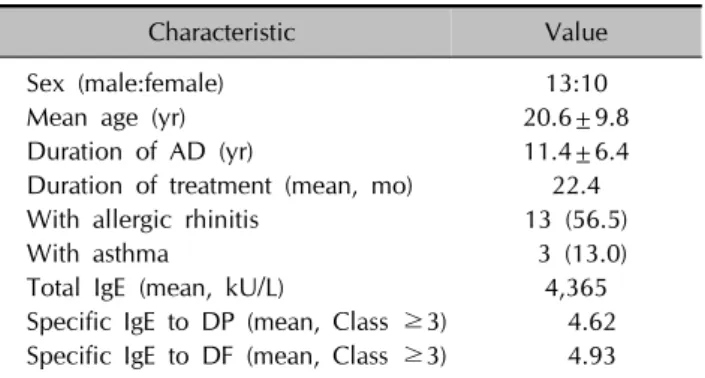
Table 1. Demographics and baseline characteristics (n=23)
Characteristic Value
Sex (male:female) 13:10
Mean age (yr) 20.6±9.8
Duration of AD (yr) 11.4±6.4
Duration of treatment (mean, mo) 22.4 With allergic rhinitis 13 (56.5)
With asthma 3 (13.0)
Total IgE (mean, kU/L) 4,365
Specific IgE to DP (mean, Class ≥3) 4.62 Specific IgE to DF (mean, Class ≥3) 4.93 Values are presented as number only, mean±standard deviation, or number (%).
AD: atopic dermatitis, IgE: immunoglobulin E, DP: Dermato- phagoides pteronyssinus, DF: D. farinae.
MATERIALS AND METHODS
Patients
This was an open-label, non-controlled, non-randomized pilot trial in Pusan National University Hospital from July 2011 to September 2014. The study was approved by the institutional review board of Pusan National University Hospital (No. E-2015039), and all the patients were given informed consent. A total of 34 patients with a diagnosis of AD (by Hanifin and Rajka criteria) who presented with positive results to the specific immunoglobulin (Ig)E test- ing (ImmunoCAPⓇ; Phadia, Uppsala, Sweden) to Dermatophagoides pteronyssinus (DP) and D. farinae (DF) (Class ≥3) were included in this study. Patients were ex- cluded for having uncontrolled or severe asthma, having significant co-morbid disease such as cardiovascular dis- ability, and using beta-blockers. Patients with AD were classified in two groups according to the number of sensi- tized allergens: mono-sensitized patients (sensitized to only DP and DF) and poly-sensitized patients (simultaneously sensitized to HDM and other allergens proven by a multi- ple allergen simultaneous test immunoblot assay (Polycheck AllergyⓇ; Biocheck GmbH, Münster, Germany). AD pa- tients who presented with mild to moderate severity (eczema area and severity index [EASI] score ≤20) after cyclosporine induction therapy (3∼4 mg/kg for 2∼4 weeks) were included.
Immunotherapy
Patients with AD received SLIT (DP and DF mix extracts, 200 standardized treatment units/dose, SLIT oneⓇ; ALK-abel- lo, Hørsholm, Denmark) for at least 12 months. The daily dose was a volume of 0.2 ml per single-dose container.
Drops were held under the tongue for 2 minutes and were then swallowed. Patients were prohibited to drink or eat any foods for 5 minutes after swallowing the drops.
Measurement of clinical efficacy and rescue medications
The clinical efficacy of SLIT was evaluated by changes in EASI score. Responders were defined as patients with
≥30% improvement of EASI scores after SLIT. Levels of total serum IgE and specific IgE to DP and DF were meas- ured at baseline and after 12 months of SLIT. Clinical re- sponse and adverse effects were checked after 1, 3, 6, 9, and 12 months of treatment. Topical tacrolimus 0.1% oint- ment/pimecrolimus 1% cream and oral antihistamines were allowed during SLIT. Short-term therapy with oral cy- closporine (3∼4 mg/kg) was permitted in the case of wor- sening pruritus, itching, edema, or oozing.
Statistical analysis
Only patients who received SLIT over 12 months were in- cluded in the analysis. Statistical analyses were performed using PASW Statistics ver. 18.0 (IBM Co., Armonk, NY, USA), and a p-value of <0.05 was considered to indicate statistically significant differences. The Mann-Whitney test was used to test changes in EASI scores, total IgE serum levels, and specific anti-HDM IgE serum levels.
RESULTS
The demographics of all patients are summarized in Table 1. Twenty-three patients continued SLIT for 12 months or more, whereas 3 patients (8.8%) dropped out because of exacerbation of dermatitis, and 8 patients (23.5%) were lost to follow-up. Thirteen of the patients were male, and 10 were female (mean age, 20.6 years). The average dura- tion of SLIT was 22.4 months (range, 12∼32 months).
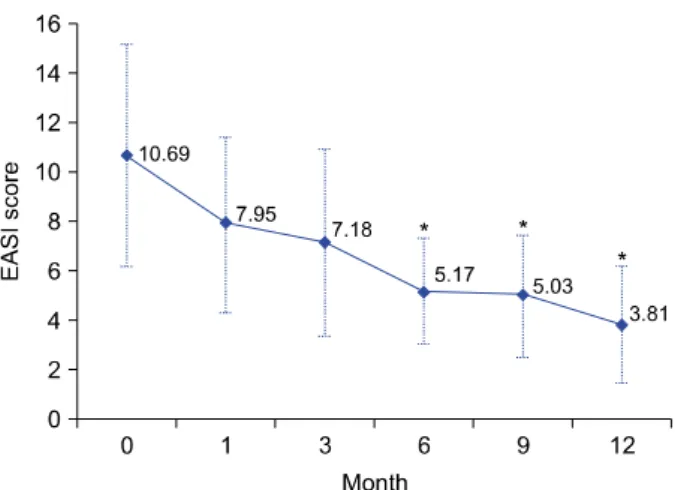
Compared with baseline scores, there was a significant re- duction of EASI scores after 6 months (p<0.05; Fig. 1).
This presented a 51.6% reduction in EASI scores. A total of 18 (78.3%) patients were considered responders to SLIT after 6 months (Fig. 2).
In contrast, there were no significant differences in age, gender, disease duration, severity, total IgE level, and pos- itivity to DP/DF between responders and non-responders after 12 months (p>0.05) (data not shown). Total and spe- cific IgE serum levels did not show significant reduction (p>0.05; Fig. 3, 4). The reduction in EASI scores between the mono-sensitized and poly-sensitized groups was not significantly different (p>0.05; Fig. 5). During the treat- ment, no patients experienced serious adverse events, with the exception of two patients who suffered from tran- sient lip and tongue swelling. The above minor adverse ef-
Fig. 1. Changes in eczema area and severity index (EASI) scores during sublingual immunotherapy (n=23). *Statistical analysis was performed using using Mann-Whitney test showing significant difference (p<0.05).
Fig. 2. Changes of the numbers of responders during sublingual immunotherapy (n=23).
Fig. 3. Changes of total immunoglobulin E (IgE) serum levels during sublingual immunotherapy (SLIT) (n=23). *Statistical analysis was performed using Mann-Whitney test.
Fig. 4. Changes of specific anti-house dust mite immunoglobulin E serum levels during sublingual immunotherapy (SLIT) (n=23).
*Statistical analysis was performed using Mann-Whitney test. DP:
Dermatophagoides pteronyssinus, DF: D. farinae.
Fig. 5. Changes of specific anti-house dust mite immunoglobulin E serum levels during sublingual immunotherapy. *The dif- ferences of reduction in eczema area and severity index (EASI) score between monosensitized and polysensitized group was analyzed statistically by using Mann-Whitney test. Mono-sensitized patients: sensitized to only Dermatophagoides pteronyssinus and D. farinae. Poly-sensitized patients: simultaneously sensitized to house dust mite and other allergens proven by multiple allergen simultaneous test (Grade ≥3).
fects disappeared spontaneously without treatment.
DISCUSSION
AD is a T-cell-mediated chronic inflammatory skin disease associated with cutaneous hyperreactivity to environ- mental antigens, such as HDM6. The mechanism of action underlying SLIT with DF extract is hyposensitization to the allergen. SLIT leads to decreased numbers of specific T cells, increased production of interleukin-10, and en- hanced protection from DF-induced skin inflammation7.
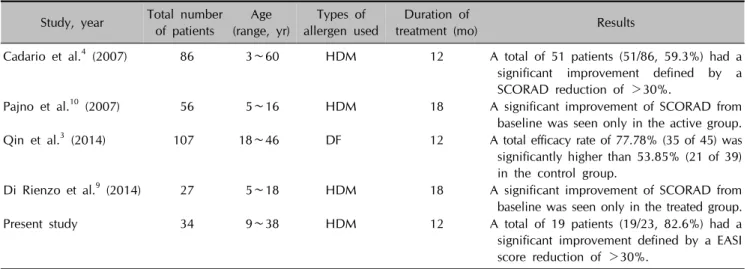
Table 2. Efficacy of specific sublingual immunotherapy for AD in previous studies
Study, year Total number of patients
Age (range, yr)
Types of allergen used
Duration of
treatment (mo) Results
Cadario et al.4 (2007) 86 3∼60 HDM 12 A total of 51 patients (51/86, 59.3%) had a significant improvement defined by a SCORAD reduction of >30%.
Pajno et al.10 (2007) 56 5∼16 HDM 18 A significant improvement of SCORAD from
baseline was seen only in the active group.
Qin et al.3 (2014) 107 18∼46 DF 12 A total efficacy rate of 77.78% (35 of 45) was significantly higher than 53.85% (21 of 39) in the control group.
Di Rienzo et al.9 (2014) 27 5∼18 HDM 18 A significant improvement of SCORAD from baseline was seen only in the treated group.
Present study 34 9∼38 HDM 12 A total of 19 patients (19/23, 82.6%) had a
significant improvement defined by a EASI score reduction of >30%.
AD: atopic dermatitis, HDM: house dust mite, SCORAD: SCORing atopic dermatitis, DF: Dermatophagoides farinae, EASI: eczema area and severity index.
The indication of SLIT in allergic rhinitis and asthma is well-established in adults and children, regardless of the allergen considered8. However, there have been few stud- ies investigating the use of SLIT for AD. Recently, a few studies3,4,9,10 have reported that SLIT resulted in clinically significant improvements in those with AD compared to those in healthy individuals (Table 2). Our study demon- strated a significant reduction of EASI scores, which sup- ports the results of these previous reports. Cadario et al.4 reported that 51 patients (51/86, 59.3%) responded to SLIT after 12 months. In our study, the responder/non-res- ponder ratio was higher than that in a previous report4. We think that the reason for this high ratio of responders in our study may be partially because we allowed patients to use topical treatment and rescue medication for AD exacerbations. However, despite these biases in our study, SLIT showed favorable results for treating patients with AD.
There is no gold standard serological or laboratory test for assessing the severity of AD. However, several studies of specific immunotherapy for AD reported changes in levels of IgE, IgG4, and cytokines in the blood11. While Cadario et al.4 presented that total and specific IgE values de- creased significantly after SLIT, other researchers5,12 re- ported no significant difference in IgE values. Our study showed that the levels of total and allergen-specific IgE re- mained unchanged during treatment. Serum IgE levels are thought to correlate with the severity of AD, but additional studies are still needed to identify the influence of specific immunotherapy on IgE levels.
Criteria for the selection of SLIT indicate that mono-sensi- tized patients are ideal candidates13. However, our results
demonstrated that the reduction in EASI scores between the mono-sensitized and poly-sensitized groups were not significantly different. Moreover, SLIT with mixed DP and DF extract showed a similar effect on poly-sensitized pa- tients with AD in our study. As the sample size of the cur- rent study was relatively small, and there have been few clinical trials of SLIT in poly-sensitized AD patients, more clinical studies are necessary to determine the efficacy of SLIT in mono- and poly-sensitized patients with AD.
SLIT is known to have a better safety profile than SCIT, and no fatality has been reported in clinical trials14,15. Local side effects, such as itching or mild edema in the mouth and/or throat, have been frequently reported. Only two patients developed transient lip and tongue swelling in this study, and these adverse effects resolved when the treatment was temporarily stopped. Moreover, we did not observe any serious systemic reactions or anaphylaxis.
Three dropped out patients experienced an exacerbation of AD from the result. Rather than stopping cyclosporine, we assume that SLIT itself may have influenced on ex- acerbation as it was mostly identified after every re-admin- istration of SLIT.
In conclusion, our study shows that SLIT with HDM ex- tracts is effective and tolerable in Korean patients with AD, as shown by the significant overall reduction of EASI scores. Additional controlled long-term trials with larger patient populations are required to reinforce these current results in Korea.
REFERENCES
1. Pajno GB. Sublingual immunotherapy: the optimism and
the issues. J Allergy Clin Immunol 2007;119:796-801.
2. Bae JM, Choi YY, Park CO, Chung KY, Lee KH. Efficacy of allergen-specific immunotherapy for atopic dermatitis: a systematic review and meta-analysis of randomized con- trolled trials. J Allergy Clin Immunol 2013;132:110-117.
3. Qin YE, Mao JR, Sang YC, Li WX. Clinical efficacy and compliance of sublingual immunotherapy with Derma- tophagoides farinae drops in patients with atopic dermatitis.
Int J Dermatol 2014;53:650-655.
4. Cadario G, Galluccio AG, Pezza M, Appino A, Milani M, Pecora S, et al. Sublingual immunotherapy efficacy in patients with atopic dermatitis and house dust mites sensitivity: a prospective pilot study. Curr Med Res Opin 2007;23:
2503-2506.
5. Silny W, Czarnecka-Operacz M. Specific immunotherapy in the treatment of patients with atopic dermatitis--results of double blind placebo controlled study. Pol Merkur Lekarski 2006;21:558-565.
6. Bieber T. Atopic dermatitis. N Engl J Med 2008;358:
1483-1494.
7. Vanbervliet B, Tourdot S, Mascarell L, Rouzaire P, Vocanson M, Rozières A, et al. SLIT prevents the develop- ment of eczema in percutaneous allergen-sensitized mice. J Invest Dermatol 2012;132:244-246.
8. Passalacqua G, Compalati E, Canonica GW. Sublingual immunotherapy: clinical indications in the WAO-SLIT position paper. World Allergy Organ J 2010;3:216-219.
9. Di Rienzo V, Cadario G, Grieco T, Galluccio AG, Caffarelli C, Liotta G, et al. Sublingual immunotherapy in mite-
sensitized children with atopic dermatitis: a randomized, open, parallel-group study. Ann Allergy Asthma Immunol 2014;113:671-673.e1.
10. Pajno GB, Caminiti L, Vita D, Barberio G, Salzano G, Lombardo F, et al. Sublingual immunotherapy in mite- sensitized children with atopic dermatitis: a randomized, double-blind, placebo-controlled study. J Allergy Clin Immunol 2007;120:164-170.
11. Novak N. Allergen specific immunotherapy for atopic dermatitis. Curr Opin Allergy Clin Immunol 2007;7:542- 546.
12. Werfel T, Breuer K, Ruéff F, Przybilla B, Worm M, Grewe M, et al. Usefulness of specific immunotherapy in patients with atopic dermatitis and allergic sensitization to house dust mites: a multi-centre, randomized, dose-response study. Allergy 2006;61:202-205.
13. Canonica GW, Bousquet J, Casale T, Lockey RF, Baena-Cagnani CE, Pawankar R, et al. Sub-lingual immu- notherapy: world allergy organization position paper 2009.
World Allergy Organ J 2009;2:233-281.
14. Cox LS, Larenas Linnemann D, Nolte H, Weldon D, Finegold I, Nelson HS. Sublingual immunotherapy: a com- prehensive review. J Allergy Clin Immunol 2006;117:
1021-1035.
15. Gómez Vera J, Flores Sandoval G, Orea Solano M, López Tiro J, Jiménez Saab N. Safety and efficacy of specific sublingual immunotherapy in patients with asthma and allergy to Dermatophagoides pteronyssinus. Rev Alerg Mex 2005;52:231-236.