Environmental Science
Vol. 36, No. 3, pp. 207-218, September, 2020 https://doi.org/10.7747/JFES.2020.36.3.207
Evaluation of Bio-Control Efficacy of
Trichoderma Strains against Alternaria alternata Causing Leaf Blight of Ashwagandha [ Withania somnifera (L.) Dunal]
Md. Ahsanur Rahman1,*, Md. Arifur Rahman2, Zakiah Rahman Moni3 and Mohammad Anisur Rahman4
1Forest Protection Division, Bangladesh Forest Research Institute, Chattogram 40000, Bangladesh
2Seed Orchard Division, Bangladesh Forest Research Institute, Chattogram 4000, Bangladesh
3Technology Transfer and Monitoring Unit (TTMU), Bangladesh Agricultural Research Council (BARC), Farmget, Dhaka 1215, Bangladesh
4Wood Preservation Division, Bangladesh Forest Research Institute, Chattogram 4000, Bangladesh
Abstracts
Ashwagandha is an important ancient medicinal crops, being affected with many diseases, among which leaf blight caused by Alternaria alternata has become the constraint resulting in huge yield losses. Continuous usage of chemical methods leads to environment, soil and water pollution. Whereas biological control of diseases is long lasting, inexpensive, eco-friendly and harmless to target organisms. In this context, it is aimed to evaluate five Trichoderma strains viz.
Trichoderma virens IMI-392430, T. pseudokoningii IMI-392431, T. harzianum IMI-392432, T. harzianum IMI-392433 and T. harzianum IMI-392434 as bio-control efficacy against A. alternata and growth promoting effect in Ashwagandha.
All the Trichoderma strains had varied antagonistic effects against the pathogen. In dual culture technique, the strain T. harzianum IMI-392433 showed maximum percentage inhibition of mycelial growth (54.89%) followed by T. harzianum IMI-392432 (53.83%), T. harzianum IMI-392434 (48.94%) and T. virens IMI-392430, (43.62%) against the pathogen, while the least inhibition percentage was observed with the T. pseudokoningii IMI-392431 (36.60%). The culture filtrate of the Trichoderma strain, T. harzianum IMI-392433 recorded highest inhibition on the mycelial growth (39.05%) and spore germination (80.77%) of pathogen and the lowest was recorded in T. pseudokoningii IMI-392431 (20.45 and 50%). Moreover, seeds treated with spore suspension of the strain T. harzianum IMI-392433 reduced the percentages of disease severity index significantly. The strain T. harzianum IMI-392433 also significantly increased seed germination
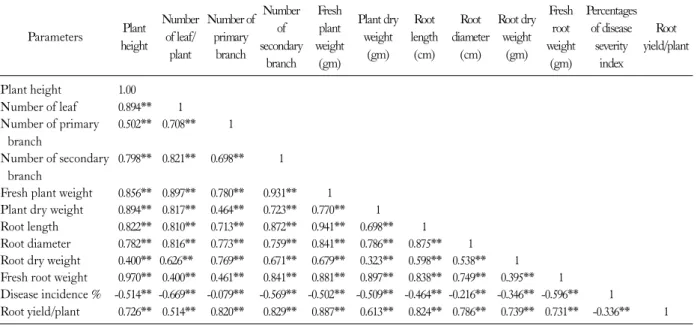
%, seedling vigor and growth of Ashwagandha. The correlation matrix showed that root yield per plant of Ashwagandha had significant and positive correlation with plant height (r=0.726**), number of leaf (r=0.514**), number of primary branch (r=0.820**), number of secondary branch (r=0.829**), fresh plant weight (r=0.887**), plant dry weight (r=0.613**), root length (r=0.824**), root diameter (r=0.786**), root dry weight (r=0.739**) and fresh root weight (r=0.731**). The significant and negative correlation (r=-0.336**) was observed with the root yield and percentages of disease severity index. The study recognized that the T. harzianum IMI-392433 strain performed well in inhibiting the mycelial growth and reduced the percentages of disease severity index of pathogen as well as increased the plant growth in Ashwagandha.
Key Words: Withania somnifera, leaf blight, Alternaria alternata, Trichoderma, biological control
Received: December 2, 2019. Accepted: January 28, 2020.
Corresponding author: Md. Ahsanur Rahman
Forest Protection Division, Bangladesh Forest Research Institute, Chattogram 4000, Bangladesh Tel: +8801718084069, Fax: +88031681566, E-mail: [email protected]
Introduction
Ashwagandha [Withania somnifera (L). Dunal.] is an important medicinal plant belonging to the family Solanaceae. It grows well in dry and sub-tropical regions of India, Sri Lanka and Bangladesh (Agarwal et al. 2004).
The plant is most important due to presence of alkaloids, withanoloids, steroids, lactones which have antimicrobial properties. It has high reputation in traditional Indian med- icine and is one of the most extensively used plants in Ayurveda and Unani medicines (Bhat et al. 2014). The roots of this medicinal plants are prescribtible for curing general sexual weakness in human. Nowadays Ashwagandha is cultivated for medicinal purposes in fields and open grounds throughout the Bangladesh. Due to high demand of raw materials of this medicinal plant and also market as- surance of some reputed pharmacital companies, the farm- ers of the northern districts of Bangladesh especially the Natore districts of Bangladesh have come forward to culti- vate this important medicinal plant commercially. At pres- ent, farmers are cultivating Ahwagandha in different dis- tricts of Northern part of Bangladesh such as Natore, Bogra, Gaibandha, Joypurhat and Naogaon. At this time, farmers are facing various diseases at the field level, result- ing in reduced yields. Among the various diseases, leaf blight of Ashwangandha caused by Alternaria alternata is the most prevalent disease, which is most severe in the plains of Bangladesh. Blight first appear on older, lower leaves, progressing upward to the new growth. Blight have yellow halo and concentric ring pattern of lines in tan centers. Application of the fungicides is not economical in the long time because they pollute the environment, leave harmful residues and can lead to the development of re- sistant strains of the pathogen with repeated use (Vinale et al. 2008). Furthermore, Ashwagandha plant parts is used directly as a medicine. Uses of chemical fungicides are ex- tremely harmful to the human body. Replacement of chem- ical fungicides with bio-control agents are an alternative mean to; manage the plant pathogens, produce safely food and reduce the environment pollution (Barakat and Al-Masri 2005).
Trichoderma is a filamentous soil fungus that functions as a bio-control agent for a wide range of economically im- portant aerial and soil borne plant pathogens (Harman et al.
2004). Trichoderma spp. also are commercially marketed as biopesticides, bio-fertilizers and soil amendments. The use of Trichoderma fungi in agriculture can provide numerous advantages such as; colonization of the root and rhizo- sphere of plant, control of plant pathogens by different mechanisms, improvement of the plant health by promote plant growth and stimulation of root growth (Harman et al.
2004). The genus Trichoderma is not only one of the most common, isolated from various habitats soil fungi but also known to be secreting to the environment various secon- dary metabolites. Among these metabolites, the production of harzianic acid, alamethicins, tricholin, peptaibols, anti- biotics, 6-penthyl--pyrone, massoilactone, viridin, gliovir- in, glisoprenins, heptelidic acid, and others have been de- scribed (Vey et al. 2001), which provide to protect plant from disease (Chet et al. 1997). Therefore, the objectives of this investigation were to assay the effect of five Trichoderma strains against leaf blight pathogen of A. alternata under in vitro condition. Plant growth and disease incidence per- centage were also investigated to evaluate their performance under in vivo conditions.
Materials and Methods
Isolation and identification of pathogen
A. alternata was isolated from naturally infected W. som- nifera plants in the field plantation. W. somnifera plants showing typical leaf blight symptoms were collected from Forest Protection Division (FPD) nursery at Bangladesh Forest Research Institute (BFRI), Chattogram, Bangladesh.
The infected leaves were collected and put in poly bags and transferred to the laboratory. The infected leaves were cut into 5 mm pieces and surface sterilized with 0.5% sodium hypochloride solution for 5 minutes and rinsed trice with sterilized water. The pieces were dried with sterile filter pa- per and placed (3 pieces per plate) on fresh Potato Dextrose Agar (PDA) medium impregnated with streptomycin (0.5mg mL-1) to prevent bacterial growth and incubated for 7-10 days at 28 to 30°C. The resulting A. alternata colonies were sub cultured by transferring small mycelia plugs from the colony margin. For storage, the fungal isolates were maintained on PDA slant. The fungal isolates were identi- fied based on their colonial morphology. Microscopic ex- amination of fungal isolates was carried at both vegetative
and sporulating stages.
Morphology of the fungal pathogen
Morphological characters of the fungal pathogen infect- ing W. somnifera were studied from the culture growth on PDA for 5 to 10 days at 27±1°C. As suggested by Chowdhry and Varshney (2000), observations regarding morphological characters of different structures viz., myce- lium (young and matured), conidiophores, conidia, and chlamydospores were noted by adopting slide culture technique. The microscopic measurements were taken with the help of ocular micrometer. The measurements for young and old mycelium were recorded from five and ten day’s old cultures, respectively.
Pathogenicity test
Pathogenicity of the fungus was confirmed by inoculat- ing healthy leaves Ashwagandha plants grown in an ex- perimental field. One month old healthy Ashwagandha saplings of local cultivar were selected for proving the path- ogenicity of the fungal pathogen. Distinctly, ten leaves per experiment were sprayed with @ 5 mL of conidial suspen- sion (1×10⁵ conidia mL-1) obtained from 7-day-old cul- ture plates. Before inoculation, all plants were disinfected with 0.1% sodium hypochlorite solution for 1 min and rinsed out thoroughly with sterile distilled water. Only wa- ter was sprayed for control treatment. After inoculations, control and inoculated leaves were covered with polythene bags for 15 days.
Sources of Trichoderma strains
Five Trichoderma strains namely; T. virens IMI-392430, T. pseudokoningii IMI-392431, T. harzianum IMI- 392432, T. harzianum IMI-392433, and T. harzianum IMI-392434 were used in this study which was collected from Biotechnology and Microbiology Laboratory, Department of Botany, Rajshahi University, Bangladesh. These strains were isolated from decomposed garbage and soil and were verified by CABI Bioscience, Surrey, U.K.
Antagonism of Trichoderma in dual culture on A. alternate
The dual culture test was performed to test the ability of Trichoderma strains against A. alternata for mycelial
growth inhibition and over growth. Trichoderma strains and A. alternata was sub cultured onto PDA for 7 days.
The margin of colony of A. alternata was cut with sterile cork borer (0.6 cm diameter) and placed on agar surface at 1.5 cm from a margin of 9 cm diameter Petri dish. Another agar disc of the same size of A. alternata was also placed at the periphery but on the opposing end of the same Petri dish. As a control, A. alternata was placed in a similar man- ner on a fresh PDA plate. All pairings were carried out in quadruplicate and incubated at 28±2°C. Antagonistic ac- tivity was tested 7 days after incubation by measuring the radius of the A. alternata colony in the direction of the an- tagonist colony (R2) and the radius of the A. alternata col- ony in the control plate (R1). The dishes were incubated for 10 days at room temperature, and then the ability of Trichoderma strains to overgrow the colony of A. alternata were observed and compared with the control treatment.
The inhibition levels were calculated by using the formula;
[(R1−R2)/R1]×100, when R1 was the mean of colony ra- dius of A. alternata in the control dish and R2 was the mean of colony radius of A. alternata in Petri-dish of dual culture test. Each treatment was performed with four replicates, one dish per a replicate.
The overgrowth rates of Trichoderma strains were calcu- lated by using the formula; [(D1−D2)/Td]×100, when D1 was the mean of colony radius of the Trichoderma strains on the day of recording, D2 was the mean of colony radius of the Trichoderma strains on the day before record- ing and Td was the time (d) between before and after recording. Each treatment was performed with four replicates.
Determination of inhibitory activity of Trichoderma culture filtrate using normal poison agar technique
The inhibition of the mycelial growth of A. alternata was tested by metabolites secreted by Trichoderma in liquid cul- ture medium as per method given by Dennis and Webster (1971). Fifty mL of sterilized 1/5 strength potato dextrose broth (PDB) were dispensed into 250 mL Erlenmeyer flasks and inoculated with a 5 mm diameter disc from edge of four days old culture of the Trichoderma culture plates.
Each flask was inoculated each in triplicate and set up was shaken at 100 rpm for 15 days at 28+2°C on Thermostat Culture Shaker. After 15 days, the culture filtrates were fil- tered through Whatman No.1 filter paper and sterilized by
millipore membrane filtration of 0.25 m and stored at 4°C for further use. The sterilized culture filtrates of Trichoderma and molten double strength PDA were mixed together in equal proportion (1:1). The medium was then poured into the Petriplate @ 20 mL/plate. After solidification, the Petriplates were carefully inoculated with 5 mm discs of the test pathogen cut from the four day old culture. PDA plates inoculated with the test pathogen but not amended with culture filtrate were maintained as control. Plates were then incubated in an incubator at 28±2°C. Four replications were maintained for each treatment, one dish per a replicate. Periodic observations on radial growth of myce- lium were recorded after 10 days of inoculation (Khan and Sinha 2007). Inhibition percentage of mycelial growth of test pathogen was calculated by the formula: I=(C−T)/C
×100 Where, I=Percent inhibition in growth of test pathogen, C=Radial growth of pathogen (mm) in control, T=Radial growth of pathogen (mm) in treatment.
Effect of culture filtrates on conidial germination of pathogen
Conidia obtained from 10-day-old PDA cultures of A.
alternata were suspended in sterilized distilled water. The concentration of spore suspension was adjusted with a hae- macytometer to 1×10⁵ spores per mL. Two hundred L of a mixture containing: 80 L of conidial suspension, 100
L of 1/5 strength Potato Dextrose Broth (PDB) and 20
L of culture filtrate of Trichoderma, were pipette into each well of the microtitration plate and kept at 25±2°C for 24 hours. One plate row was filled with untreated spore sus- pension in 1/5 strength Potato Dextrose Broth (PDB) as negative control. Conidial germination 24 hours after in- oculation was assessed by mounting 10 L samples on a glass slide and counting the geminated spores at 100×
magnifications. The percentage germination recorded for the four wells was averaged. The two readings C1 (Control) and C2 (treated) of conidial germination were transformed into percent inhibition of conidial germination (PICG) us- ing the formula by Skidmore and Dickinson (1976).
Where PICG=C1−C2/C1×100
Effect of Trichoderma strains on growth of Ashwagandha in vivo
To evaluate the efficacy of Trichoderma strains at con-
trolling Alternaria leaf blight disease and growth promoting effect of Ashwagandha under in vivo condition, a pot trial experiment was conducted at the Forest Protection Division Laboratory, Bangladesh Forest Research Institute (BFRI), Chattogram, Bangladesh from January 2017 to June 2017.
Preparation of pot
Soil was collected from the research field of Bangladesh Forest Research Institute and mixed with sand at the por- tion of 3:1. Then autoclaved at 120ºC for 15 minutes. The plastic pots of 10×30 cm diameter were filled with sandy loam soil (Ahmed and Meisner 1996).
Preparation of inoculum
Mycelial disc (5 mm diameter) of Trichoderma strains and A. alternata were obtained from 4-5 days old culture and separately transferred to 50 mL PDA in a 250 mL con- ical flask and incubated at 28ºC. After incubation, 30 mL of sterile distilled water was added to each culture and the flask was shaken at 50 rpm for 30 min in an orbital shaker.
Then the content of each conical flask was filtered through muslin cloth. The culture filtrate, containing the spores, was collected, and a concentration of 5×10⁵ spores/mL was obtained by dilution with sterilized distilled water.
Seed treatment
Local variety of Ashwagandha seeds were collected from Forest Protection Division, Bangladesh Forest Research Institute (BFRI), Chattogram, Bangladesh. Pathogen-free healthy seeds were selected for use in this experiment.
For seed treatment, 10 to 15 seeds were dipped in the spore suspension (5×10⁵ spores/mL) of 4-5 days old Trichoderma strains for about 20 min, and the treated seeds were dried by laminar air flow. After that, both Trichoderma treated and untreated seeds were again dipped in the spore suspension (3×10⁵ spores/mL) of 7 days old culture of A.
alternata for about 20 min and then dried by laminar air flow. After germination of treated seeds, the pot soil was treated with 30 mL of conidial suspension (combination of Trichoderma strains and A. alternata) according to re- spective treatment. The treatment was continued up to har- vesting with seven days interval.
The experiments were design with the following combi- nations:
Fig. 1. Disease symptoms colony and conidia of A. alternata. (a, b) Leaf blight symptoms of Ashwagandha.
(c) Colonies of A. alternata on PDA after 7 days. (d) Mycelium of A. alternata. (e, f) Conidia of A.
alternate.
T0=Control (untreated foliage and untreated seeds);
T1=A. alternata (3×10⁵ spores/mL); T2=T. virens IMI-392430 (5×10⁵ spores/mL)+A. alternata (3×10⁵ spores/mL); T3=T. pseudokoningii IMI-392431 (5×10⁵ spores/mL)+A. alternata (3×10⁵ spores/mL); T4=T. har- zianum IMI-392432 (5×10⁵ spores/mL)+A. alternata (3×10⁵ spores/mL); T5=T. harzianum IMI-392433 (5×
105 spores/mL)+A. alternata (3×10⁵ spores/mL); T6= T.
harzianum IMI-392434 (5×10⁵ spores/mL)+A. alternata (3×10⁵ spores/mL); T7=T. virens IMI-392430 (5×10⁵ spores/mL); T8=T. pseudokoningii IMI-392431 (5×10⁵ spores/mL); T9=T. harzianum IMI-392432 (5×10⁵ spores/mL); T10=T. harzianum IMI-392433 (5×10⁵ spores/mL); T11=T. harzianum IMI-392434 (5×10⁵ spores/mL).
Foliar spray
Thirty days old Ashwagandha seedlings were sprayed with spore suspension @ 5 mL of Trichoderma strains (5×10⁵ spores/mL) with 0.05% Tween 20. After 24 h, the plants were sprayed with the spore suspension of A. alter- nata @ 5 mL of conidial suspension (3×10⁵ spores/mL) obtained from 15-day-old culture plates. The seedlings which were sprayed with A. alternata alone (3×10⁵ spores/mL), served as control. Observations on the leaf blight incidence were recorded seven days interval up to six month after inoculation of pathogen and the percentage of disease severity index was calculated for each individual
treatment (Desai et al. 2004).
Data recording
All experiments were established as a completely randomized design with three replications and ten plants were used as each replication.
Seed germination percentages and vigor index was re- corded after 3 to 10 days.
Vigour index for each treatment was determined using the following formula developed by Abdul-Baki and Anderson (1973).
Vigour index=[Mean of root length (cm)+Mean of shoot length (cm)]×percentages of seed germination.
Ashwagandha growth parameters namely; plant height, number of leaf, number of primary branch, number of sec- ondary branch, fresh plant weight (gm), plant dry weight (gm), root length (cm), root diameter (cm), root dry weight (gm), fresh root weight (gm) and percentages of disease se- verity index (PDSI) were determined 180 days after sowing.
Assessment of the disease severity index of Alternaria leaf blight of Ashwagandha was made with the help of the descriptive scale developed by Sharma and Kolte (1994), using 0-5 scale rating. Where, 0=no symptoms of leafs;
1=1-10% leaf area infected; 2=11-25% leaf area infected;
3=26-50% leaf area infected; 4=51-75% leaf area in- fected; 5=>75% leaf area infected. For epidemiological studies, this scale was used throughout the investigation.
For disease severity 10 plants (100 leaves) per replication
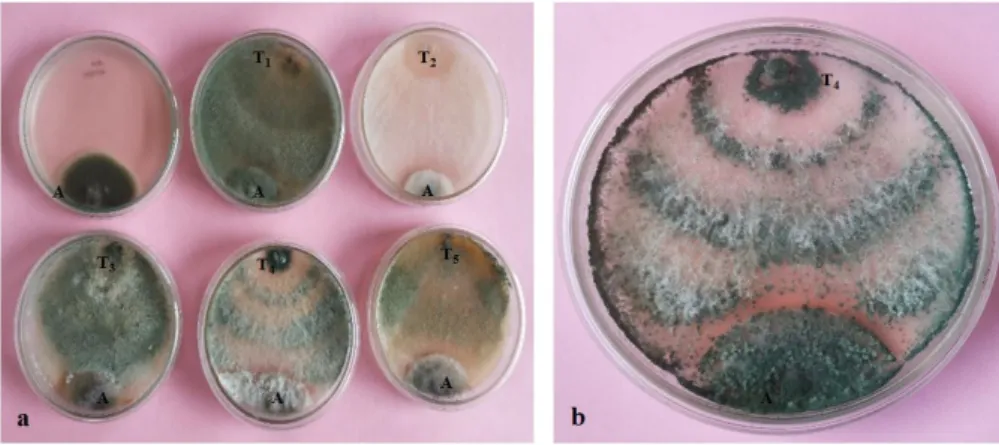
Fig. 2. (a) Antagonistic effects of Trichoderma strains against A. al- ternata in dual culture technique.
F, T1, T2, T3, T4 and T5 indicates A. alternata, T. virens IMI-392430, T. pseudokoningii IMI-392431, T. harzianum IMI-392432, T.
harzianum IMI-392433, and T.
harzianum IMI-392434, respect- ively. (b) Overgrowth of Trichoderma covering the A. alternata colony af- ter 7 days of inoculation in dual culture.
was randomly selected and percentages of disease severity index (PDSI) was calculated.
The percentages of disease severity index (PDSI) was calculated using the formulas of the Mckinney (1923).
Percentages of disease severity index (PDSI)=(sum of all disease rating/total no. of rating×maximum disease grade)×100.
Statistical analysis
All data were analyzed by DMRT and correlation ma- trix using the help of computer package program SPSS (SPSS Inc., Chicago, IL, USA).
Results and Discussion
Morphological and microscopic characteristics of A.
alternata
Morphological observations of the fungus were recorded by adopting slide culture technique. The fungus produced profuse mycelial growth on PDA (Fig. 1c). Initially, the mycelium was hyaline that turned to grey-brownish, multi- celled, septate and irregularly branched. Conidia were pro- duced in long chains, pale to light brown, obpyriform, with a beak one to seven transverse and up to three longitudinal septa, and measured 10 to 45 m long×7 to 22.5 m wide.
Conidiophores were straight, septate, light to olive golden brown with conidial scar, and measured 35 to 100 m long×2 to 5 m wide (Fig. 1d-f). The morphological de- scriptions and measurements of the fungus are similar to A.
alternata (Simmons 2007).
Pathogenicity tests of A. alternata
Pathogenicity tests conducted on healthy leaves of W.
somnifera resulted in the development of typical symptoms of the disease on leaves after 10-12 days, whereas no symp- toms were observed on control plants. The same pathogen was consistently re-isolated and identified from all in- oculated plants, confirming Koch’s postulates (Data not shown).
Antagonism of Trichoderma in dual culture on A.
alternate
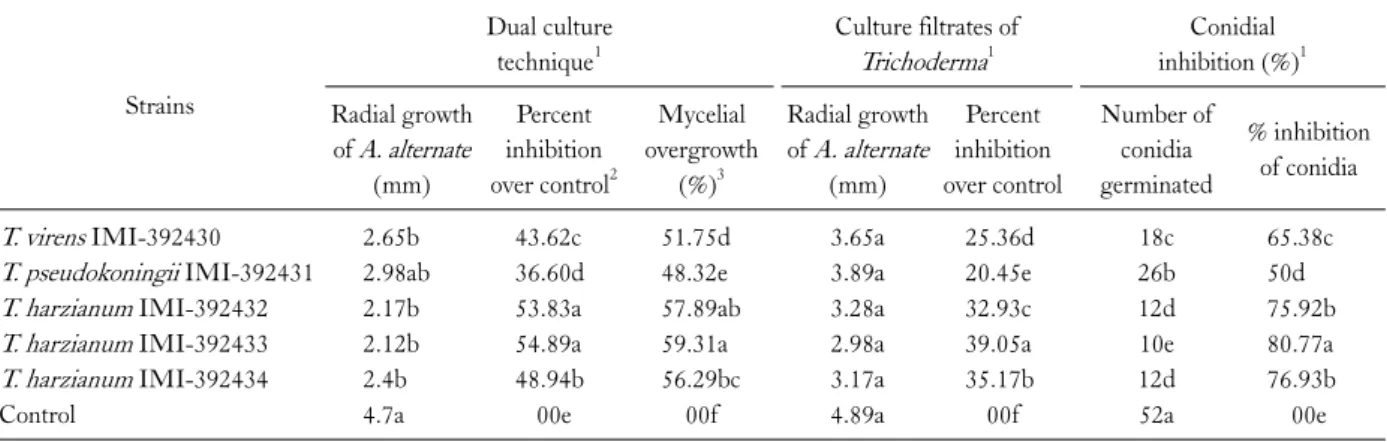
All the five Trichoderma strains significantly exhibited antibiotic potential against A. alternata by inhibiting its my- celial growth in duel culture technique (Fig. 2a). Seven days after inoculation, growth of A. alternata was found to be inhibited by T. virens IMI-392430, T. pseudokoningii IMI-392431, T. harzianum IMI-392432, T. harzianum IMI-392433, and T. harzianum IMI-392434 strains and attained a inhibition percentages of 43.62, 36.6, 53.83, 54.89 and 48.94 respectively. Strains T. harzianum IMI-392433 showed the highest PIRG value of 54.89%, while the least inhibition percentage was observed with the isolate T. pseudokoningii IMI-392431 (36.60%). This in- dicates that T. harzianum IMI-392433 strain had max- imum antifungal activity against A. alternata compared to the other Trichoderma strains (Table 1). In a similar study, Akbari and Parakhi (2007) reported that T. viride-I and T.
hamatum-IV&V isolates showed strong antagonism against Alternaria alternata causing blight of sesame. Ambuse et al.
(2012) tested three Trichoderma species viz., T. viride, T.
Table 1. In vitro screening and comparative effect of culture filtrates of Trichoderma strains on growth and spore germination of A. alternata
Strains
Dual culture technique1
Culture filtrates of Trichoderma1
Conidial inhibition (%)1 Radial growth
of A. alternate (mm)
Percent inhibition over control2
Mycelial overgrowth
(%)3
Radial growth of A. alternate
(mm)
Percent inhibition over control
Number of conidia germinated
% inhibition of conidia
T. virens IMI-392430 2.65b 43.62c 51.75d 3.65a 25.36d 18c 65.38c
T. pseudokoningii IMI-392431 2.98ab 36.60d 48.32e 3.89a 20.45e 26b 50d
T. harzianum IMI-392432 2.17b 53.83a 57.89ab 3.28a 32.93c 12d 75.92b
T. harzianum IMI-392433 2.12b 54.89a 59.31a 2.98a 39.05a 10e 80.77a
T. harzianum IMI-392434 2.4b 48.94b 56.29bc 3.17a 35.17b 12d 76.93b
Control 4.7a 00e 00f 4.89a 00f 52a 00e
1Means in a column followed by the same letter(s) are not significantly different according to DMRT (p=0.05); 2means of inhibition of my- celia growth of A. alternata by Trichoderma strains on PDA in dual culture test calculated from four replications; 3means of inhibition of my- celia over growth of A. alternata by Trichoderma strains on PDA in dual culture test calculated from four replications; 4means of inhibition of mycelia growth of A. alternata by Trichoderma culture filtrates on PDA calculated from four replications.
koningii and T. pseudokoningii against Alternaria ten- uissima and found 80% antagonistic activity of Trichoderma sp. against Alternariatenuissima.
All strains of Trichoderma overgrew mycelia of A. alter- nata with overgrowth percentages ranging from 48.32 to 59.31 (Fig. 2b and Table 1). Strain T. harzianum IMI- 392433 provided the highest percent overgrowth about 59.31% followed by T. harzianum IMI-392432 (57.89%), T. harzianum IMI-392434 (56.29%), T. virens IMI- 392430 (51.75%) and T. pseudokoningii IMI-392431 (48.32%), respectively. This overgrowth may be due to its fast growing nature, rapid sporulation or secretion of cell wall lytic enzymes in dual culture (Sharma and Trivedi 2010).
Determination of inhibitory activity of culture fil- trates of Trichoderma using normal poison agar technique
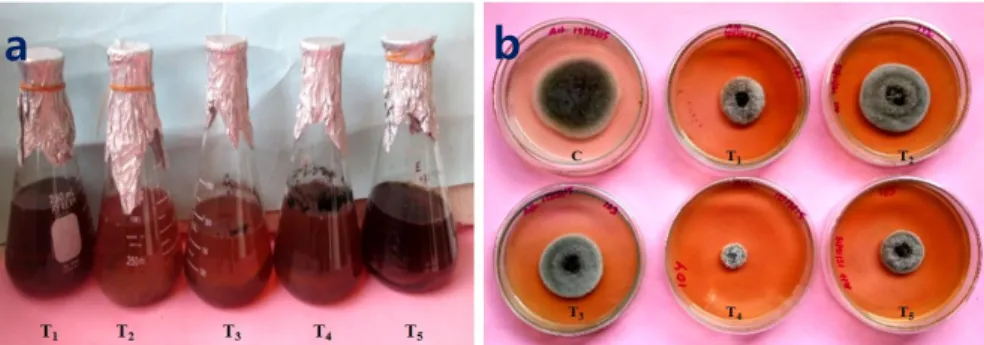
The culture filtrates of five Trichoderma strains were tested against mycelial growth of A. alternata in normal poi- son agar technique. The Percent Inhibition of Mycelial Growth (PIMG) values by culture filtrates of Trichoderma strains varied significantly (p≤0.05) after 10 days (Table 1 and Fig. 3b). The highest PIMG values (39.05%) were achieved by culture filtrate of T. harzianum IMI-392433 followed by T. harzianum IMI-392434 (35.17%), T. har- zianum IMI-392432 (32.93%), T. virens IMI-392430
(25.36%) and T. pseudokoningii IMI-392431 (20.45%), respectively. The lowest PIMG values, 20.45%, were re- corded at T. pseudokoningii IMI-392431. Among five Trichoderma strains, culture filtrate of T. harzianum IMI-392433 was the best for PIMG of A. alternata. It is clear from the present study that the antagonistic fungus in- hibited the growth of test pathogens by the production of nonvolatile compounds indicating the main mechanism in- volved in biocontrol is antibiosis (Shanmugam and Varma 1999; Hazarika et al. 2000). In a similar study, Dennis and Webster (1971) and Jinantara (1995) reported that culture filtrate produced by Trichoderma contained inhibitory sub- stances against microorganisms. Among the antibiotics pro- duced by T. harzianum were 6-n-pentyl-2H-pyran-2-one, pyridine, anthraquinones, butenolides, isonitrin D and F, trichorzianines and furanone (Claydon et al. 1987). The metabolites released in the culture filtrates by Trichoderma strains in the present investigation may be toxic to A. alter- nata that inhibited mycelia growth of the pathogen. This suggests that the antibiotics possibly play an important role in suppressing infection by the pathogen.
Effect of culture filtrates on conidial germination Percent inhibition of conidial germination (PICG) of A.
alternata varied significantly different (p≤0.05) by the ap- plication of culture filtrate of each Trichoderma strains at 24 hours of incubation (Table 1). The highest percent in-
Table 2. Effect of Trichoderma strains on seed germination % and vigour index of Ashwagandha under different treatments
Treatments Seed germination
(%)
Shoot length (cm)
Root length (cm)
Vogour index
T0 68.58g 2.42ab 2.88abc 372.69j
T1 45.28h 1.16b 1.86c 354.18k
T2 70.32g 2.89ab 2.53bc 601g
T3 69.61g 2.87ab 3.52abc 540i
T4 73.41f 3.29a 3.12abc 681h
T5 87.38b 3.64a 3.89ab 776e
T6 78.46e 3.54a 3.87ab 775e
T7 83.95c 3.86a 3.86ab 741f
T8 81.58d 3.79a 3.97ab 785c
T9 87.51b 3.88a 3.97ab 782d
T10 90.43a 3.97a 4.76a 840a
T11 88.98ab 3.96a 4.16ab 813b
In a column same letters are not significantly different by DMRT at 5% level.
T0=Control (untreated foliage and untreated seeds); T1=A. al- ternate; T2=T. virens IMI-392430+A. alternate; T3=T. pseudo- koningii IMI-392431+A. alternate; T4=T. harzianum IMI- 392432+A. alternate; T5=T. harzianum IMI-392433+A. alter- nate; T6=T. harzianum IMI-392434+A. alternate; T7=T. virens IMI-392430; T8=T. pseudokoningii IMI-392431; T9=T. har- zianum IMI-392432; T10=T. harzianum IMI-392433; T11=T.
harzianum IMI-392434.
a b
Fig. 3. (a) Culture filtrates of Trichoderma strains. (b) Effects of culture filtrates of Trichoderma strains in PDA on mycelial growth of A. alternata by normal poison agar technique at 80% concentration after 10 days of incubation. C=control; T1=T. virens IMI-392430; T2=T. pseudokoningii IMI-392431; T3=T. har- zianum IMI-392432; T4=T. harzianum IMI-392433; T5=T. harzianum IMI-392434.
hibition of conidial germination (80.77%) was achieved at T. harzianum IMI-392433 followed by T. harzianum IMI-392434 (76.93%), T. harzianum IMI-392432 (75.92%), T. virens IMI-392430 (65.38%) and T. pseudo- koningii IMI-392431 (50%), respectively. Least percent
inhibition of conidial germination of A. alternata was re- corded of T. pseudokoningii IMI-392431 (50%). The strain T. harzianum IMI-392433 was found to be more ef- fective, due to their highest conidial inhibition percentage.
This result were in conformation with Rahman et al.
(2014), who tested five Trichoderma strains for efficacy to inhibit conidial germination and germ tube formation of Fusarium solani causing root rot Ashwagandha and ob- served that antifungal metabolites extractions of these strains completely inhibited both the spore germination and germ tube formation of the pathogen.
Plant growth promotion
The effects of spore suspension of the Trichoderma strains on Ashwagandha seed germination and growth pro- motion are presented in Tables 2 and 3. The Trichoderma strains increased the germination percentages, besides in- creasing the shoot length, root length and vigor index of Ashwagandha seedlings after 10 days of sowing. Among the treatments, T. harzianum IMI-392433 (5×10⁵ spores/mL) (T10) recorded maximum germination percentage (90.43%), shoot (3.97 cm) length, root length (4.76 cm) and vigor index (840) compared to A. alternate (3×10⁵ spores/mL) (T1) treatment (45.28, 1.16, 1.86 and 354.18, respectively).
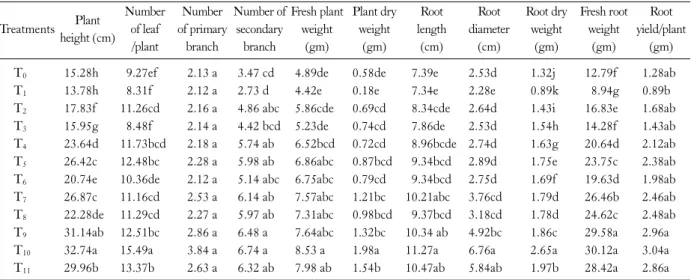
After 180 days, plant height, number of leaf, number of primary branch, number of secondary branch, fresh plant weight, plant dry weight, root length, root diameter, root dry weight, fresh root weight, and root yield were highest for T10 (T. harzianum IMI-392433 and lowest for A. alter- nate (T1) treatment with a significant difference (p˂0.05)
Fig. 4. Effect of Trichoderma strains on growth characteristics of Ashwagandha after 180 DAS.
T0=Control (untreated foliage and untreated seeds); T1=A. alternate (3×10⁵ spores/mL); T2=T. virens IMI-392430 (5×10⁵ spores/mL)+A. alternate (3×10⁵ spores/mL); T3=T. pseudokoningii IMI-392431 (5×10⁵ spores/mL)+A. alternate (3×10⁵ spores/mL); T4=T. harzianum IMI-392432 (5×10⁵ spores/mL)+A. alternate (3×10⁵ spores/mL); T5=T. harzianum IMI-392433 (5×10⁵ spores/mL)+A. alternate (3×10⁵ spores/mL); T6 =T. harzianum IMI-392434 (5×10⁵ spores/mL)+A. alternate (3×10⁵ spores/mL); T7 = T. virens IMI-392430 (5×10⁵ spores/mL); T8=T. pseudokoningii IMI-392431 (5×10⁵ spores/mL); T9=T. harzianum IMI-392432 (5×10⁵ spores/mL); T10=T. harzianum IMI-392433 (5×10⁵ spores/mL); T11=T. harzianum IMI-392434 (5×10⁵ spores/mL).
Table 3. Effect of seed treatment with Trichoderma strains on growth characteristics of Ashwagandha at 180 DAS
Treatments Plant height (cm)
Number of leaf /plant
Number of primary
branch
Number of secondary
branch
Fresh plant weight
(gm)
Plant dry weight
(gm)
Root length
(cm)
Root diameter
(cm)
Root dry weight
(gm)
Fresh root weight
(gm)
Root yield/plant
(gm) T0 15.28h 9.27ef 2.13 a 3.47 cd 4.89de 0.58de 7.39e 2.53d 1.32j 12.79f 1.28ab T1 13.78h 8.31f 2.12 a 2.73 d 4.42e 0.18e 7.34e 2.28e 0.89k 8.94g 0.89b T2 17.83f 11.26cd 2.16 a 4.86 abc 5.86cde 0.69cd 8.34cde 2.64d 1.43i 16.83e 1.68ab T3 15.95g 8.48f 2.14 a 4.42 bcd 5.23de 0.74cd 7.86de 2.53d 1.54h 14.28f 1.43ab T4 23.64d 11.73bcd 2.18 a 5.74 ab 6.52bcd 0.72cd 8.96bcde 2.74d 1.63g 20.64d 2.12ab T5 26.42c 12.48bc 2.28 a 5.98 ab 6.86abc 0.87bcd 9.34bcd 2.89d 1.75e 23.75c 2.38ab T6 20.74e 10.36de 2.12 a 5.14 abc 6.75abc 0.79cd 9.34bcd 2.75d 1.69f 19.63d 1.98ab T7 26.87c 11.16cd 2.53 a 6.14 ab 7.57abc 1.21bc 10.21abc 3.76cd 1.79d 26.46b 2.46ab T8 22.28de 11.29cd 2.27 a 5.97 ab 7.31abc 0.98bcd 9.37bcd 3.18cd 1.78d 24.62c 2.48ab T9 31.14ab 12.51bc 2.86 a 6.48 a 7.64abc 1.32bc 10.34 ab 4.92bc 1.86c 29.58a 2.96a T10 32.74a 15.49a 3.84 a 6.74 a 8.53 a 1.98a 11.27a 6.76a 2.65a 30.12a 3.04a T11 29.96b 13.37b 2.63 a 6.32 ab 7.98 ab 1.54b 10.47ab 5.84ab 1.97b 28.42a 2.86a In a column same letters are not significantly different by DMRT at 5% level.
T0=Control (untreated foliage and untreated seeds); T1=A. alternate; T2=T. virens IMI-392430+A. alternate; T3=T. pseudokoningii IMI-392431+A. alternate; T4=T. harzianum IMI-392432+A. alternate; T5=T. harzianum IMI-392433+A. alternate ;T6=T. harzia- num IMI-392434+A. alternate; T7=T. virens IMI-392430; T8=T. pseudokoningii IMI-392431; T9=T. harzianum IMI-392432; T10= T. harzianum IMI-392433; T11=T. harzianum IMI-392434.
(Table 3 and Fig. 4). These results indicate that T. harzia- num IMI-392433 has growth-promoting effect on Ashwagandha. The growth promotion exerted by Trichoderma
might be due to the production of auxin-like compounds (Vinale et al. 2008). Similar beneficial effects on seed ger- mination and seedling vigour was observed with inoculation
Table 4. Correlation matrix among different parameters of Ashwagandh as influenced by treatments
Parameters Plant height
Number of leaf/
plant
Number of primary
branch
Number of secondary
branch Fresh plant weight
(gm)
Plant dry weight
(gm) Root length
(cm) Root diameter
(cm)
Root dry weight
(gm) Fresh
root weight
(gm)
Percentages of disease
severity index
Root yield/plant
Plant height 1.00 Number of leaf 0.894** 1 Number of primary
branch
0.502** 0.708** 1
Number of secondary branch
0.798** 0.821** 0.698** 1
Fresh plant weight 0.856** 0.897** 0.780** 0.931** 1 Plant dry weight 0.894** 0.817** 0.464** 0.723** 0.770** 1 Root length 0.822** 0.810** 0.713** 0.872** 0.941** 0.698** 1 Root diameter 0.782** 0.816** 0.773** 0.759** 0.841** 0.786** 0.875** 1 Root dry weight 0.400** 0.626** 0.769** 0.671** 0.679** 0.323** 0.598** 0.538** 1 Fresh root weight 0.970** 0.400** 0.461** 0.841** 0.881** 0.897** 0.838** 0.749** 0.395** 1 Disease incidence % -0.514** -0.669** -0.079** -0.569** -0.502** -0.509** -0.464** -0.216** -0.346** -0.596** 1
Root yield/plant 0.726** 0.514** 0.820** 0.829** 0.887** 0.613** 0.824** 0.786** 0.739** 0.731** -0.336** 1
**Significant at 1% level.
Fig. 5. Effect of Trichoderma strains on leaf blight disease severity index of Ashwagandha after six month of sowing. Bars marked by the same letters are not significantly different (p<0.05) by DMRT analysis.
T0=Control (untreated foliage and untreated seeds); T1=A. alternate (3×10⁵ spores/mL); T2=T. virens IMI-392430 (5×10⁵ spores/mL)+A.
alternate (3×10⁵ spores/mL); T3=T. pseudokoningii IMI-392431 (5×
105 spores/mL)+A. alternate (3×10⁵ spores/mL); T4=T. harzianum IMI-392432 (5×10⁵ spores/mL)+A. alternate (3×10⁵ spores/mL); T5= T. harzianum IMI-392433 (5×10⁵ spores/mL)+A. alternate (3×10⁵ spores/mL); T6=T. harzianum IMI-392434 (5×10⁵ spores/mL)+A. al- ternate (3×10⁵ spores/mL); T7=T. virens IMI-392430 (5×10⁵ spores/mL); T8=T. pseudokoningii IMI-392431 (5×10⁵ spores/mL); T9 = T. harzianum IMI-392432 (5×10⁵ spores/mL); T10=T. harzianum IMI-392433 (5×10⁵ spores/mL); T11=T. harzianum IMI-392434 (5×
105 spores/mL).
of Trichoderma spp. has been previously reported (Jadhav and Ambadkar 2007).
Percentages of disease severity index (PDSI) of Ashwagandha
Application of Trichoderma strains was significantly (p≤0.05) intimidated the disease severity index (%) com- pared to A. alternata (T1) treatment (Fig. 5). The highest percentages of disease severity index (%) was recorded in T1 (A. alternata) treatment and the lowest was recorded at T. harzianum IMI 392432 (T9), T. harzianum IMI 392433 (T10) and T. harzianum IMI 392434 (T11) treat- ments, respectively. In a similar study, Begum et al. (2010) were evaluated five Trichoderma strains to assay their effi- cacy in suppressing Alternaria fruit rot disease and promot- ing chili plant growth under field conditions. Their result demonstrated that application of Trichodermaharzianum IMI 392432 significantly (p=0.05) suppressed the disease compared to Alternariatenuis treatment.
Correlation matrix
The correlation matrix among different parameters are presented in Table 4. The correlation matrix showed that root yield per plant of Ashwagandha had significant and
positive correlation with plant height (r=0.726**), num- ber of leaf (r=0.806**), number of primary branch (r=
0.820**), number of secondary branch (r=0.829**), fresh plant weight (r=0.887**), plant dry weight (r=0.613**), root length (r=0.824**), root diameter (r=0.786**), root dry weight (r=0.739**) and fresh root weight (r=
0.731**). The significant and negative correlation (r=
-0.336**) was observed with the root yield and percentages of disease severity index. These results indicated that root yield per plant of Ashwagandha were dependence on growth characteristics of the plant. The higher root yield re- lated to plant growth parameters were negatively influenced by the disease incidence percentages. The results are fully agreement with the findings of Rahman et al. (2012).
Conclusion
In the present study T. harzianum, IMI 392433 was found to be highly effective in inhibiting the mycelial growth and conidial germination of A. alternata and in- creased the germination percentages, seedling vigor, and plant growth. This strain can be used as potential biological control agent to control the leaf blight disease and increased plant growth of Ashwagandha.
Acknowledgements
The author expresses their special thanks to the Director, Bangladesh Forest Research Institute (BFRI), Chattogram, Bangladesh for providing necessary research facilities to conduct this research work.
References
Abdul-Baki AA, Anderson JD. 1973. Vigor Determination in Soybean Seed by Multiple Criteria. Crop Sci 13: 630-633.
Agarwal A, Nallella KP, Allamaneni SS, Said TM. 2004. Role of antioxidants in treatment of male infertility: an overview of the literature. Reprod Biomed Online 8: 616-627.
Ahmed SM, Meisner CA. 1996. Wheat research and development in Bangladesh. Bangladesh Australia Wheat Improvement Project, CIMMYT-Bangladesh, Mexico, 201 pp.
Akbari LF, Parakhi AM. 2007. Ecofriendly approaches to manage blight of seasame. J Mycol Pl Pathol 37: 389-400.
Ambuse MG, Chatage VS, Bhale UN. 2012. Influence of
Trichoderma spp against Alternaria tenuissima inciting leaf spot of Rumex acetosa L. Biosci Discov 3: 259-262.
Barakat RM, Al-Masri MI. 2005. Biological Control of Gray Mold Disease (Botrytis cinerea) on Tomato and Bean Plants by Using Local Isolates of Trichoderma harzianum. Dirasat Agric Sci 32: 145-156.
Begum MF, Rahman MA, Alam MF. 2010. Biological Control of Alternaria Fruit Rot of Chili by Trichoderma Species under Field Conditions. Mycobiology 38: 113-117.
Bhat SA, Lone SA, Ahmad SS. 2014. Biocontrol of Damping off in Withania Somnifera (L) Dunal. Int Res J Microbiol 5: 73-79.
Chet I, Inbar J, Hadar I. 1997. Fungal Antagonists and Mycoparasites.
In: The mycota: a comprehensive treatise on fungi as experi- mental systems for basic and applied research / IV, Environmen- tal and microbial relationships. (Wicklow DT, Söderström B, Esser K, Lemke PA, eds). Springer-Verlag, Berlin, pp 165-184.
Chowdhry PN, Varshney A. 2000. Identification of different Colletotrichum gloeosporioides species. In: Manual on identi- fication of plant pathogenic and biocontrol fungi of agricultural importance 14th September to 13th October 2000 (Centre of Advanced Studies in Plant Pathology, ed). Center of Advance studies in plant pathology, New Delhi, India, pp 73-78.
Claydon N, Allan M, Hanson JR, Avent AG. 1987. Antifungal al- kyl pyrones of Trichoderma harzianum. Trans Br Mycol Soc 88:
503-513.
Dennis C, Webster J. 1971. Antagonistic properties of species-groups of Trichoderma: I. Production of non-volatile antibiotics. Trans Brit Mycol Soc 57: 25-39.
Desai AG, Chattopadhyay C, Ranjana A, Kumar A, Meena RL, Meena PD, Sharma KC, Srinivasa Rao M, Prasad YG, Ramakrishna YS. 2004. Brassica juncea powdery mildew epi- demiology and weatherbased forecasting models for India - a case study. J Plant Dis Prot 111: 429-438.
Harman GE, Howell CR, Viterbo A, Chet I, Lorito M. 2004.
Trichoderma species--opportunistic, avirulent plant symbionts.
Nat Rev Microbiol 2: 43-56.
Hazarika DK, Sarmah R, Paramanick T, Hazarika K, Phookan AK. 2000. Biological management of tomato damping off caused by Pythium aphanidermatum. Indian J of Plant Pathol 18: 36-39.
Jadhav VT, Ambadkar CV. 2007. Effect of Trichoderma spp. on seedling emergence and seedling mortality of tomato, chilli and brinjal. J Pl Dis Sci 2: 190-192.
Jinantara J. 1995. Evaluation of Malaysian Isolates of Trichoderma Harzianum Rifai and Gliocladium Virens Miller, Giddens and Foster for the Biological Control of Sclerotium Foot Rot of Chilli. Ph.D thesis. University Putra Malaysia, Selangor, Malaysia. (in Englinsh)
Khan AA, Sinha AP. 2007. Biocontrol potential of Trichoderma species against sheath blight of rice. Indian Phytopathol 2:
208-213.
McKinney H. 1923. Influence of soil temperature and moisture on
infection of wheat seedlings by Helminthosporium sativum. J Agri Res 26: 195-217.
Rahman MA, Islam MR, Nasreen S. 2014. Screening of Trichoderma Strains as a Biological Control Agent against Fusarium solani Causing Root Rot of Ashwagandha [Withania somnifera (L.) Dunal]. Bangladesh J For Sci 33(1&2): 1-10.
Rahman MA, Rahman MM, Kamruzzaman M, Begum MF, Alam MF. 2012. Use of culture filtrates of Trichoderma strains as a biological control agent against Colletotrichum capsici caus- ing Anthracnose fruit rot disease of chili. J Bio Env Sci 2: 9-18.
Shanmugam V, Varma AS. 1999. Effect of native antagonists against Pythium aphanidermatum, the causal organism of rhi- zome rot of ginger. J Mycol Pl Pathol 29: 375-379.
Sharma P, Trivedi P. 2010. Evaluation of different fungal antago- nists against Fusarium oxysporum infecting Withania somnifera (L.) Dunal. Assam University J Sci Technol 6: 37-41.
Sharma SR, Kolte SJ. 1994. Influence of nutritional factors on phy- totoxic effects of Alternaria brassicae. Ind Phytopath 47: 186-187.
Simmons EG. 2007. Alternaria: an identification manual: fully il- lustrated and with Catalogue Raisonne 1796-2007. CBS Fungal Biodiversity Centre, Utrecht, Netherlands.
Skidmore AM, Dickinson CH. 1976. Colony interactions and hy- phal interference between Septoria nodorum and phylloplane fungi. Trans Br Mycol Soc 66: 57-64.
Vey A, Hoagland RE, Butt TM. 2001. Toxic Metabolites of Fungal Bio control Agents. In: Fungi as biocontrol agents: prog- ress, problems and potential (Butt T, Butt TM, Jackson C, Magan N, eds). CAB, Oxon, pp 311-346.
Vinale F, Sivasithamparam K, Ghisalberti EL, Marra R, Woo SL, Lorito M. 2008. Trichoderma-plant-pathogen interactions. Soil Biol Biochem 40: 1-10.