• 검색 결과가 없습니다.

The Relationships among Gender, Information Seeking Style and High Risk Behavior in Korean Adults

N/A
N/A
Protected

Academic year: 2021

Share "The Relationships among Gender, Information Seeking Style and High Risk Behavior in Korean Adults"

Copied!
8
0
0

로드 중.... (전체 텍스트 보기)

전체 글

(1)

주요용어 정보 성별 건강 행위: , ,

서 론 I.

연구의 필요성 1.

21

.

(Korean Ministry of Health &

Welfare, 2006-a; WHO, 2006).

. .

개인의 성별 정보추구성향 및 불건강 행위 간 관계 연구 ,

이동숙

1

1

,

The Relationships among Gender, Information Seeking Style and High Risk Behavior in Korean Adults

Lee, Dong Suk

1

1

Assistant Professor, Department of Nursing, Kangwon National University

Purpose: The aim of this study was to investigate the relationships among gender, information-seeking styles, and

high risk behavior in Korean adults. Methods: A survey utilizing a structured questionnaire was used to examine the relationships of the study variables. Eight hundred fifty six adults were recruited and this group consisted of 403 females and 453 males. Information seeking style and high risk behavior were measured by Miller Behavioral Style Scale revised by Zurren and Wolfs, and High Risk Behaviors checklist developed by Lee, respectively. Results:

Differences between gender were significant in information-seeking styles and high risk behavior. Monitoring and blunting scores were both higher in female than male, and high risk behavior was higher in males than females.

The blunting style was positively related to high-risk behavior and the monitoring style was negatively related to high risk behavior. Conclusion: To intervene with high risk behavior effectively, individual differences such as gender and information seeking style should be considered. In addition, the research about well-designed health information support is needed in the future.

Key Words : Information, Gender, Health behavior

* 2005 .

Corresponding address: Lee, Dong-Suk, RN, Ph.D., Assistant Professor, Department of Nursing, College of Medicine, Kangwon National

University, 191-1 Hyoja 2-dong, Chunchon 200-701, Korea. Tel: 82-33-250-8887, Fax: 82-33-242-8840, E-mail:

[email protected]

투고일 2007 3 5 심사의뢰일 2007 3 5 심사완료일 2007 4 10

(2)

1 (Korean Ministry of Health & Welfare, 2006-b).

「 2005 , 20

․ 」

1998 53.1%, 2001 76.5%, 2005

83.9% (Korean Ministry of

Health & Welfare, 2006-a).

.

, ,

,

(Lee & Lee, 2003). Miller(1987)

(information seeking style) (monitoring)

(blunting) .

(Griffin, Dun- woody, & Neuwirth, 1999; Shi, Nakamura, & Takano, 2004).

, Shi, Nakamura Takano (2004)

, Steiner (2002)

. Votta Manion(2004)

, , ,

.

, ,

, , (Liu et.

al., 2006; Mayer et. al., 2007; Rice, 2006; Stein & Nya- mathi, 2000).

. Stein Nyamathi (2000)

,

, ,

, . Rice(2006)

. Mayer (2006)

,

.

,

.

. Shi, Nakamura Takano(2004)

. (Griffin, Dunwoody, & Neuwir- th, 1999; Mayer et al., 2007; Rice, 2006; Shi, Nakamura

& Takano, 2004; Stein & Nyamathi, 2000; Steiner et al., 2002; Votta & Manion, 2004)

. ,

,

.

, .

.

(3)

연구의 목적 2.

,

. .

1) , ,

. 2)

. 3)

. 4)

.

용어의 정의 3.

1) (information seeking style, habitual coping style)

(Miller,

1987), (moni-

toring style) (blunting style) .

Miller(1987)

(Miller's information seeking Behavioral Style Scale, MBSS) Zurren Wolfs(1991) 5

.

2) (high risk behaviors)

(Lee, 2004)

, , , , , ,

, 8

.

연구방법

II.

연구설계 1.

,

.

연구대상자

2.

19 65

453 , 403 856 .

,

460 , 460

64 856

.

0.1 ,

=0.05, 0.80

α

393 786

(Cohen, 1988).

,

.

19-29 , 30-39 , 40-49 , 50-65

,

. .

측정도구

3.

,

.

1) (Miller‘s Behavioral Style

Scale)

Miller(1987) 40

Zurren

Wolfs(1991) 5

(4)

. 5 .

, 20 40

. 20

.

20-100 .

(Monitoring style scale) Chronbach =.834, α (Blunting style scale)

Chronbach =.791 α .

2)

1 , , , ,

, , , 8

2 16 4

. Lee(2004) 「 1998

, (U.S. Public Health

Service) 8

Chronbach =.627 α ,

Chronbach =.645 α .

16-64 .

자료수집 절차 4.

2

. ,

1 2

.

자료분석 5.

, ,

,

t-test ,

Pearson .

연구결과 III.

대상자의 일반적 특성 1.

453 (52.9%),

403 (47.1%) . 37 ,

50 64

(Table 1).

64 51

. , χ

2

2

=1.857, p=.603).

대상자의 정보추구성향 및 불건강 행위 정도 2.

,

Table 1. Age and gender of the subjects (N=856)

Variable Categories Frequency(%) Mean(SD)

Gender Male

Female

453(52.9) 403(47.1)

Age (years)

19-29 30-39 40-49 50-64

252(29.4) 232(27.1) 226(26.4) 146(17.1)

37.31(±11.15)

(5)

100 72.96 ,

100 58.73

(Table 2). 64

30.67 ,

46 (Table 2), 16

48 16

.

대상자의 성별에 따른 정보추구성향의 차이 3.

,

(monitoring style) (blunt-

ing style) .

(monitoring style) (Table 3-1).

(blunting style) ,

(Table 3-2).

대상자의 성별에 따른 불건강 행위의 차이 4.

,

(Table 4).

5. 대상자의 정보추구성향과 불건강 행위의 상관관계

, (monitoring style)

, (blunting

style)

(Table 5).

.

Table 2. Information seeking style and high risk behaviors of the subject (N=856)

Variable Categories Mean(SD) Range Possible range

Information seeking style Monitoring Blunting

72.96(± 10.01) 58.73(± 9.63)

27-99 24-95

20-100 20-100

High risk behaviors 30.67(± 4.92) 16-46 16-64

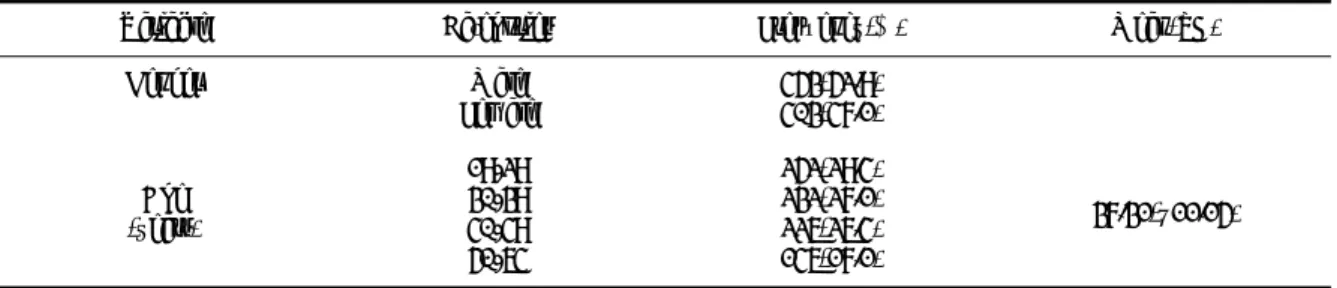
Table 3-1. Difference in information seeking style(monitoring style) by gender (N=856)

Mean(SD) t p

Male(n=453) 71.34( ±9.48)

-5.052 .000

Female(n=403) 74.77(±10.29)

Table 3-2. Difference in information seeking style(blunting style) by gender (N=856)

Mean(SD) t p

Male(n=453) 58.10(± 9.45)

-2.052 .040

Female(n=403) 59.45(± 9.80)

(6)

논 의 IV.

. 20

Lee(1983)

. Hamburg Adams(1967) (coping) .

20

. .

,

, Miller(1995), Shi, Nakamura Takano(2004), Steiner (2002), Votta

Manion (2004) .

Miller(1995)

, Shi, Nakamura Takano(2004)

Steiner (2002) Votta Manion(2004)

.

. Christensen (1997)

, . Christensen (1997)

51

.

,

, . Barsevick Johnson(1990)

. Table 4. Differences of high risk behaviors by gender

Mean(SD) t p

Male(n= 453) 32.21(± 5.14)

10.420 .000

Female(n= 403) 28.94(± 4.01)

Table 5. Correlations of information seeking style and high risk behavior (N=856)

Monitoring style Blunting style

Monitoring style

Blunting style .358**

High risk behavior -.082* .153**

*p<.05; **p<.01

(7)

.

.

, ,

. Liu (2006)

.

(Lee,

2004). ,

. ,

. .

. (Miller,

1987)

. Miro(1997) Miller(1987)

636

, 0.42

.

,

.

’ ‘ ’ ‘ ’ ‘

. (HLOC)

,

, ,

(Wallston, Wallston, & DeVe- llis, 1978)

, ,

.

.

결론 및 제언 V.
, ,

19 65

856

. .

1)

. 2)

( t=-5.052, p<.01, t=-2.052, p<.05).

3)

(t=10.420, p<.01).

4)

, (r=

-.082, p<.05) ,

(r=.153, p<.01) .

(8)

(r=.358, p<.01) .

. 1)

. ,

. 2)

.

,

.

References

Barsevick, A. M. & Johnson, J. E. (1990). Preference for information and involvement, information seeking and emotional responses of women undergoing colposcopy.

Res Nurs Health, 13, 1-7.

Christensen, A. J., Moran, P. J., Lawton, W., Stallman, D., &

Voigts, L. (1997). Monitoring attentional style and medical regimen adherence in hemodialysis patients. Health Psy- chol, 16(3), 256-262.

Cohen, J. (1988). Statistical power analysis for the behavioral sciences(2nd ed.). NJ: Lawrence Erlbaum Associates Inc.

Griffin, R. J., Dunwoody, S., & Neuwirth, K. (1999). Proposed model of relationship of risk information seeking and processing to the development of preventive behaviors.

Environ Res Section A, 80, S230-S245.

Hamburg, D. & Adams, J. (1967). A perspective on coping:

seeking and utilizing information in mazor transactions, Arch Gen Psychiatry, 17(3), 277-284.

Korean Ministry of Health & Welfare (2006-a). The third Korea national health and nutrition examination survey (KNHANES III) 2005 - Health behaviors of adults -, [on- line] http:// blog.korea.kr/health.

Korean Ministry of Health & Welfare (2006-b). International statistics(OECD), Table 10-1-15 Regular smoking habits (Male): 1970-2000, [on-line] http://blog.korea.kr/health.

Lee, D. S. (2004). A structural model development of health insensitivity in Korean adult. J Korean Acad Adult Nurs, 16(3), 355-365.

Lee, D. S. & Lee, E. O. (2003). Concept analysis of health insensitivity using hybrid model. Korean J Health Educ Promot, 20(2), 145-170.

Lee, S. S. (1983). Coping styles of korean adults. J Kyungsung Univ, 4, 249-259.

Liu, H., Miller, L. G., Hays, R. D., Golin, C. E., Zhao, H., Wenger, N. S., & Kaplan, A. H. (2006). A comprehensive evaluation of survey questions for adherence to antiretro- viral medications and exploratory analyses for identifying optimal sets of survey questions. AIDS Patient Care STDS, 20(11), 760-772.

Mayer, D. K., Terrin, N. C., Kreps, G. L., Menon, U., McCance, K., Parsons, S. K., & Mooney, K. H. (2007).

Cancer survivors information seeking behaviors: a com- parison of survivors who do and do not seek information about cancer. Patient Edu Couns, 65(3), 342-350.

Miller, S. M. (1987). Monitoring and blunting: validation of a questionnaire to assess styles of information seeking under threat. J Pers Soc Psychol, 52, 345-353.

Miller, S. M. (1995). Monitoring versus blunting styles of coping with cancer influence the information patients want and need about their disease. Cancer, 76, 167-177.

Miro, J. (1997). Translation, validation, and adaptation of an instrument to assess the information-seeking style of coping with stress: the Spanish version of the Miller Behavioral Style Scale. Pers Individ Dif, 23(5), 909-912.

Rice, R. E. (2006). Influence, usage, and outcomes of internet health information searching: multivariate results from the Pew surveys. Int J Med Inform, 75, 8-28.

Shi, H., Nakamura, K., & Takano, T. (2004). Health value and health information seeking in relation to positive change of health practice among middle-aged urban men. Prev Med, 39, 1164-1171.

Stein, J. A. & Nyamathi, A. (2000). Gender differences in behavioral and psychosocial predictors of HIV testing and return for test results in a high-risk population. AIDS Care, 12(3), 343-356.

Steiner, H., Erickson, S. J., Hernandez, N. L., & Pavelski, R.

(2002). Coping styles as correlates of health in high school students, J Adolesc Health, 30(5), 326-335.

Votta, E. & Manion, I. (2004). Suicide, high-risk behaviors and coping style in homeless adolescent male's adjustment. J Adolesc Health, 34(3), 237-243.

van Zuuren, F. J. & Wolfs, H. M. (1991). Styles of information seeking under threat: Personal and situational aspects of monitoring and blunting. Pers Individ Dif, 12, 141-149.

Wallston, K. A., Wallston, B. S., & DeVellis, R. (1978). Dev- elopment of the multidimensional health locus of control scales. Health Educ Monogr, Spring, 160-170.

W. H. O. (2006). (on-line) http://www.who.int/topics/en/

수치

Table 1. Age and gender of the subjects (N=856)
Table 2. Information seeking style and high risk behaviors of the subject (N=856)
Table 5. Correlations of information seeking style and high risk behavior (N=856)

참조

관련 문서

Objective: This study was conducted to identify the association between vitamin D and osteosarcopenia among all adults in Korea using data from the Korea National Health

There was statistically significant difference in physical competence information according to gender, exercise performance, and participation persistence

The Relationship between Physical Activities and Health-related Quality of Life in Korean Adults with Diabetes

§  Positive feedback causes exponential growth, while negative feedback causes goal-seeking behavior+. State of

Health behavior of multicultural and general family adolescents in Korea: the Korea Youth Risk.. Behavior

Objective: This study was conducted to identify the association between vitamin D and Sarcopenia among all adults in Korea using data from the National Health and

Objectives: The aim of this study was to study the relationship between smoking, alcohol drinking and vitamin D level among Korean adults using data from the

relationships to changing gender differences in behaviour and other causal factors.  Gender inequalities in health, 150-181.. World

