DOI http://dx.doi.org/10.9725/kstle.2014.30.1.59
윤활영역에서 멀티크기 Laser Surface Texturing 효과
김종형1·최시근2·다윗제네베세구2· 정용섭2· 김석삼3†
1한국생산기술연구원, 2경북대학교 대학원 기계공학과, 3경북대학교 기계공학과
Improvement of Tribological Characteristics of Multi-Scale Laser-Textured Surface in terms of Lubrication Regime
Jong-Hyoung Kim1,Si Geun Choi2, Dawit Zenebe Segu2, Yong-Sub Jung2 and Seock-Sam Kim3†
1 Ultimate Manufacturing Technology Center, Korea Institute of Industrial Technology
2Department of Mechanical Engineering, Graduate School, Kyungpook National University
3Department of Mechanical Engineering, Kyungpook National University
(Received November 15, 2013 ; Revised December 29, 2013 ; Accepted January 3, 2014)
Abstract − Laser Surface Texturing(LST) is a surface engineering process used to improve tribological characteristics of materials by creating patterned microstructures on the mechanical contact surface. In LST technology, a pulsated laser beam is used to create arranged dimples on a surface by a material ablation process, which can improve such as load capacity, wear resistances, lubrication lifetime, and reduce friction coefficients. In the present study, the effect of multi-scale LST on lubricant regime was investigated. A pulsed Nd:YAG laser was applied on the bearing steel(AISI 52100) to create arranged dimples. To optimize the surface texturing effect on friction, multi-scale texture dimples with some specific formula arrays were fabricated by combining circles, ellipses and the laser ablation process. The tri- bological testing of multi-scale textured surface was performed by a flat-on-flat unidirectional tribometer under lubri- cation and the results compared with that of the non-textured surface. Through an increase in sliding speed, the beneficial effect of multi-scale LST performance was achieved. The multi-scale textured surface had lower friction coefficient performances than the non-textured surface due to the hydrodynamic lubrication effect.
Keywords: laser surface texture (레이저 표면 텍스처), lubrication regime (윤활영역), friction (마찰), surface modification (표면개질)
1. 서 론
Surface texturing이란 금속재료표면에 micro patter을 정밀 가공하여 사용목적에 따른 특성제어 및 성능을 표 면에 부여하는 기술이다. 최근, 산업체에서는 두 물체 의 접촉 시, 경계윤활 및 건조마찰상태에서 발생하는 트라이볼로지적 특성을 향상시키기 위해 물리적인 방법 으로 micro-dimple, micro groove와 같은 미세한 형상 들을 원하는 패턴으로 가공하는 surface texturing마찰 제어법이 주목받고 있다. 이러한 기계시스템의 마찰을
제어하여 수명을 연장하고, 효율과 신뢰성을 향상시킴 으로써 에너지를 절약할 수 있으며, 안전성 향상에도 상당한 도움이 된다고 알려져 있다[1, 2]. 최근에는 표 면의 마찰 성능 향상을 위한 surface texturing연구가 골프공, 엔진실린더, 자기 저장 장치, 베어링 및 메키니 컬 씰 등의 접동면 마찰 특성을 개선하기 위해 다앙하 게 적용 되고 있다[3, 4].
Etion의 연구[5]에 따르면 균일하게 분포된 반구형 마 이크로 딤플을 기계용 씰표면에 처리하였을 때 일반 마 이크로 표면 텍스처링에 비해 큰 내구성향상을 가져왔 으며 동일한 표면처리를 피스톤링 부분에 적용하여 제 한속도 내에서 마찰 평가한 결과, LST실린더 링부분의
†Corresponding author : [email protected]
를 나타내었다. 이러한 LST기법은 세라믹, 금속, 고분 자의 텍스처 딤플은 마찰저감에 상당한 효과가 야기하 는 것으로 나타나고 있음을 보고하였다[7, 8].
그러나, 이러한 texturing 효과는 위와 같은 많은 연 구를 진행되고 있으나, 윤활 영역에서의 멀티크기의 LST의 마찰 저감 효과에 대한 연구는 아직 활발히 진 행되고 있지 않고 있다.
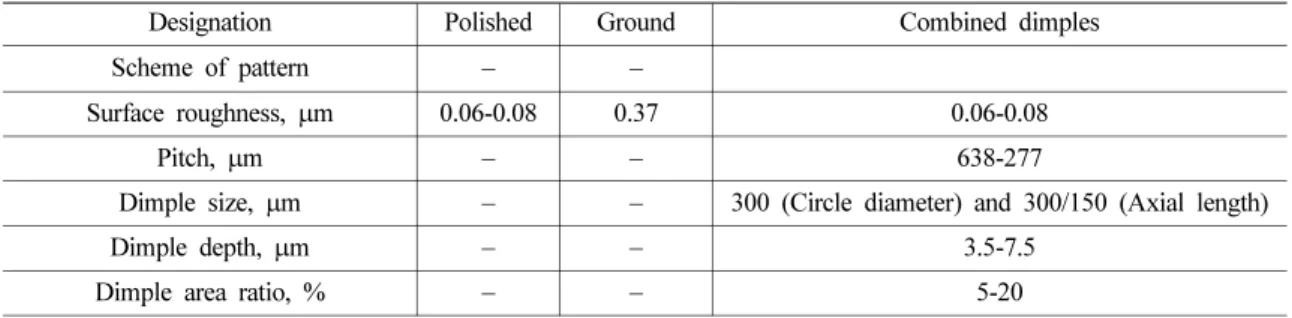
본 연구에서는 베어링강(AISI 52100) 시험편에 레이 저를 사용하여 서로 다른 밀도의 딤플 패텬을 제작하 였다. 베어링강 디스크 시험편의 상대재로 베어링강 핀 을 접촉하여 마찰특성 평가와 텍스처링 마찰특성을 비 교하였다.
2. 시험장치 및 시험방법
2-1. 시험편
디스크 시험편은 직경 35 mm 두께 5 mm인 크기로 제작 하였으며 핀과 디스크 시험편 모두 경도 HRC 59-60인 베어링강(AISI 52100)을 사용하였다. 모든 시 험편은 표면거칠기(Ra) 0.06-0.08 µm로 연마를 실시하 였다. 마찰시험은 멀티크기 텍스처와 처리하지 않은 두 개의 다른 표면 구조로 구성하였다. 멀티크기 텍스처 는 밀도를 달리하여 시험편을 제작하였으며 본 연구에 서의 LST표면의 특성은 Table 1과 같다. 멀티크기 턱스 처 핀 시험편을 제작하기 위하여 200 ns의 펄스시간 펄 스에너지 1 mJ, 15 kHz 펄스반복과 18~20% 힘으로 레
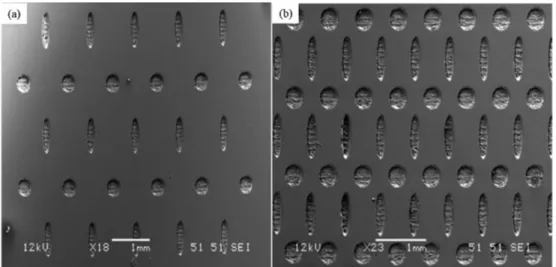
이저 마이크로 텍스처링을 금속 표면에 실시하였다. 원 및 타원으로 조합하여 레이저공정으로 멀티크기의 특 정 배열 딤플을 제작하였으며 LST공정동안 딤플 주위 에 생성된 마모입자들은 랩핑작업으로 제거하였다. 타 원 딤플은 150/300 µm의 축방향 길이를 가지고 있으 며, 원형 딤플의 직경은 300µm로 가공하였다.
2-2. 마찰시험
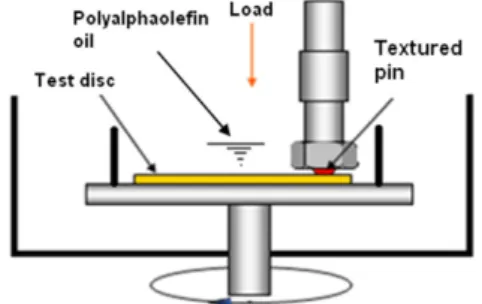
마찰 시험은 멀티크기 텍스처와 처리하지 않은 베어 링강을 사용하여 Pin-on-disc 단방향 실험을 수행하였 다. 아래에 디스크 시험편을 고정하고 상부에 6 mm 직경의 핀시험편을 사용하여 10N의 하중에서 회전속 도 50~300 RPM의 범위로 단방향 슬라이딩 접촉실험 을 하였다. 디스크의 접촉궤도가 22 mm이기 때문에 선형 미끄럼 속도는 0.09, 0.18, 0.36, 0.55 m/s이며, 각각의 시험은 2,000초 동안 실시하였다. 모든 시험편 은 아세톤으로 세정한 후 가능한 일정 표면 상태를 유
Table 1. Surface patterns and characteristics of multi-scale LST patterns
Designation Polished Ground Combined dimples
Scheme of pattern – –
Surface roughness, µm 0.06-0.08 0.37 0.06-0.08
Pitch, µm – – 638-277
Dimple size, µm – – 300 (Circle diameter) and 300/150 (Axial length)
Dimple depth, µm – – 3.5-7.5
Dimple area ratio, % – – 5-20
Fig. 1. Laser surface texturing equipment.
지하기 위하여, 마찰 시험 이전에 윤활제 및 오염물질 을 제거하고 건조시켰으며, 텍스처 처리 하지 않은 시 험편은 동일한 시험조건으로 비교 평가 하였다. 다른 시 험은 딤플 깊이의 마찰 거동을 평가하기 위해 수행되었 고, 위에서 언급 한 같은 미끄럼 속도와 수직하중에 3.4, 5.5, 7.5 µm 깊이의 딤플 표면에 실시하였다. 시험 편의 장착과 마찰시험은 Fig, 2와 같이 수행하였다. 시 험에 사용된 윤활유는 현재 자동차의 엔진오일로 시판 중인 동점도 40oC에서 54 mm2/s, 100oC에서 10 mm2/s, 점도지수 157인 poly-alpha-olefin(PAO) 윤활제를 사용 하였다. 결과의 정밀도를 높이기 위해 모든 시험은 두 번 수행하여 평균값을 제시하였다. 또한 시험 전후의 표 면형상을 관찰하기 위하여 FE-SEM을 사용 하였다.
3. 결과 및 고찰
3-1. 윤활영역에서 언텍스처 표면의 마찰특성 연마한 언텍스처 표면과 그라운드 시험편의 10N에
서 미끄럼속도와 마찰계수의 관계는 Fig. 4에서 나타 내었다. 표면조도가 마찰계수에 어떠한 영향을 미치는 지 명확하게 알 수 있다. 0.09-0.36 m/s의 범위에서 미끄럼 속도가 증가할 때, 마찰 계수는 서서히 감소하 여 미끄럼 속도가 0.55 m/s로 더 증가했을 때보다 다시 올라 갔다. 두 시험편은 낮은 미끄럼 속도 (<0.36)에서 유사한 마찰계수 경향을 보이지만 전체적으로 연마한 시험편이 저마찰 특성을 나타내고 있다. 이러한 경향은 윤활 효과로 의한 것으로 생각 되어진다. 연마된 시험 편은 0.043 − 0.015 ± 0.0031, 그라운드 시험편은 0.062 − 0.018 ± 0.0031의 평균 마찰계수 범위에 있었다.
3-2. 윤활영역에서 멀티크기 텍스처의 마찰특성 Fig. 6은 10N의 수직하중에서 0.09m/s에서 0.55 m/s Fig. 2. Schematic illustration of pin on disk type recipro-
cating friction test.
Fig. 3. The SEM micrographs of (a) polished, (b) ground.
Fig. 4. The friction coefficient of non-textured, ground and polished surface.
로 속도를 달리하여 멀티크기LST 딤플의 밀도와 마찰 계수의 상관관계를 보여준다. 딤플 패턴의 깊이는 5.5 µm로 동일하게 제작하였으며, 일반적으로 모든 그래프 는 표면의 굴곡에 따라 명확한 마찰계수를 나타내고 있다. 언텍스처 시험편에 비해 멀티크기 텍스처 시험 편의 평균 마찰계수는 크게 다르게 나타났다. 0.09 m/s 에서는 높은 마찰계수를 보였고, 미끄럼 속도가 0.18 m/s 이상에서는 마찰계수가 급격히 감소하여 그 이상 에서는 안정적인 마찰계수를 보였다. 모든 마찰계수 그 래프는 0.18 m/s에서 미끄럼속도 인근에서 윤활영역으 로 전환되는 것으로 사료되며 이것은 스트리벡 곡선과 일치했다.
0.18 m/s에서 0.55 m/s에서 밀도에 따른 실험결과 12%일 때 가장 낮은 마찰 계수를 보였으며, 20%, 7%, 5% 순으로 나타났다. 시험한 모든 조건에서 멀 티크기 텍스처 시험편이 언텍스처 시험편에 비해 저 마찰 특성을 보였다. 이것은 접촉표면 마이크로 딤플 에 윤활막을 형성함으로써, 윤활하에서 마찰계수를 줄이는 역할을 해주기 때문이다. 그리고, 미끄럼 속 도의 증가는 접촉면에 들어가는 윤활유의 증가로 유 체윤활 효과에 따른 마찰계수를 감소시킨다고 할 수 있다.
3-3. 멀티크기 텍스처의 윤활 효과
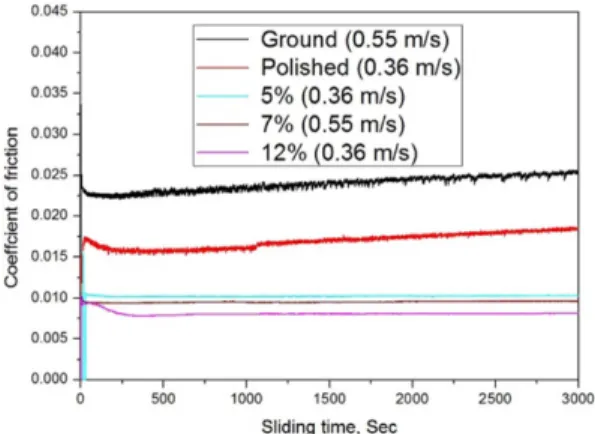
윤활영역에서의 멀티크기 텍스처의 마찰특성을 평가 하기 위해서 언텍스처 시험편 멀티크기 텍스처 시험편 을 장시간 동안 윤활조건에서 미끄럼 마찰시험을 수행 하였다. 언텍스처 시험편은 연마 시험편, 그라운드 시 험편, 멀티크기 텍스처 시험편은 밀도를 5, 7, 12%
시험편으로 3,000초 동안 미끄럼 속도를 달리하고 수 직 하중 10N의 조건으로 수행 하였다. Fig. 7은 시험편 에 따른 마찰계수의 변화를 그래프로 나타낸 것이다. 텍 스처 시험편과 언텍스처 시험편 사이의 마찰계수에는 큰 차이가 관찰되었다. 그라운드 시험편이 연마 시험 편에 비해 약 0.006 높은 마찰계수를 보였다. 밀도에 따른 마찰계수는 12%일때가 가장 낮았으며 7%, 5%
순으로 나타났다. 12% 밀도의 딤플 시험편이 연마시 험편에 비해서는 4배, 그라운드 시험편에 비해서는 7 배의 저마찰 특성 보였다.
Fig. 5. The SEM micrographs of multi-scale textured surface (a) at low density of 7%, (b) high density of 20%.
Fig. 6. The friction coefficient of multi-scale LST with increasing sliding speed at different dimple densities.
4. 결 론
윤활영역 하에서 원형과 타원 형상의 멀티크기 laser-surface texturing(LST)의 트라이볼로지적 특성 을 pin-on-disc 시험장치로 평가하였다. 그 결과 멀티크기 텍스처 표면이 텍스처 처리하지 않은 표면에 비해 마 찰계수가 낮고 안정적이었다. 이것은 유체윤활 효과에 의한 것으로, 딤플의 밀도 분포가 12%일 때 마찰 저 감 효과가 가장 높았으며, 미끄럼 속도가 증가함에 따 라 저마찰 특성을 나타냈다.
Acknowledgements
이 논문은 2012학년도 경북대학교 학술 연구비에 의 하여 연구되었음.
References
[1] Vilhena, L. M., Podgornik, B., Vižintin, J., and Možina, J., “Influence of texturing parameters and contact conditions on tribological behaviour of laser textured surfaces,” Meccanica, Vol. 46, pp. 567-575, 2011.
[2] Podgornik, B. “Coated machine elements - fiction or
reality,” Sur. Coat. Technol., Vol. 146-147, pp. 318- 323, 2001.
[3] Segu, D. Z. Tribological Evaluation of Multi-Shape Textured Surface, Doctoral Thesis, Department of mechanical engineering, Kyungpook national university, Korea, 2014.
[4] Wang, X., Adachi, K., Otsuka, K. and Kato, K.
“Optimization of the surface texture for silicon car- bide sliding in water,” Appl. Surf. Sci., Vol. 253, pp.
1282-1286, 2006.
[5] Etsion, I., “State of the art in laser surface textur- ing,” J. Tribol., Vol. 127, pp. 248-253, 2005.
[6] Ryk, G. and Etsion, I., “Testing piston rings with partial laser surface texturing for friction reduction,” Wear, Vol. 261, pp. 792-796, 2006.
[7] Chon, M. H. and Park, S., “Micro CNC surface textur- ing on polyoxymethylene (POM) and its tribological performance in lubricated sliding,” Tribol. Int., Vol.
44, pp. 859-867, 2011.
[8] Huang, W., Jiang, L., Zhou, C., and Wang, X., “The lubricant retaining effect of micro-dimples on the sliding surface of PDMS,” Tribol. Int., Vol. 52, pp.
87-93, 2012.
[9] Kim, S. S., Chae, Y. H., and Kim, D. J., “Tribologi- cal characteristics of silicon nitride at elevated tem- peratures,” Tribol. Lett., Vol. 9, pp. 3-4, 2000.
[10] Segu, D. Z., Choi, J. H., Yi, S. H., and Kim, S. S. “Dry Sliding Tribological Properties of Fe-Based Bulk Metal- lic Glass,” Tribol. Lett., Vol. 47, pp. 131-138, 2012.
[11] Segu, D. Z., Kim, J. H., Choi, S. G., Jung, Y. H. and Kim, S.S., “Application of Taguchi Techniques to Study Friction and Wear Properties of MoS2 Coatings Depos- ited on Laser Textured Surface,” Surface and Coat- ings Technology, Vol. 232, pp. 504-514, 2013.
[12] Segu, D. Z., Yi, S. H., and Kim, S. S., “Sliding fric- tion and wear behavior of Fe-based bulk metallic glass in 3.5% NaCl solution,” Journal of Materials Sci- ence, Vol. 47, pp. 1446-1451, 2012.
[13] Segu, D. Z., Choi, J. H., and Kim, S. S., “Sliding wear behavior of Fe-based bulk metallic glass at high temperature,” Journal of Mechanical Science and Technology, Vol. 26, pp. 1-6, 2012.
[14] Segu, D. Z., Choi, S. G., Choi, J. H., and Kim, S. S.
“The effect of multi-scale laser textured surface on lubrication regime,” Applied Surface Science. Vol.
270, pp. 58-63, 2013.
Fig. 7. The friction coefficient performance of non- textured and multi-scale textured surface under longer sliding conditions.