Monoculture and Mixture Effects of Green Manure Crops on Soil Quality, Weed Suppression and Organic Red-pepper Production
Sangmin Lee, Jungah Jung1, Bongsu Choi2, Yonghwan Lee2, Jongsik Lee3, Beomheon Song4, and Jwakyung Sung3*
Crop and Animal Division, RDA, Suwon, 441-707, Korea
1Division of Organic Farming, NAAS, RDA, Suwon, 441-707, Korea
2Division of Crop Environment, NICS, RDA, Suwon, 441-707, Korea
3Division of Soil and Fertilizer Management, NAAS, RDA, Suwon, 441-707, Korea
4Department of Crop Science, Chungbuk National University, Cheongju, 361-763, Korea
Organic farming is rapidly expanding worldwide. Crop growth in organic systems greatly depends on the functions performed by soil microbes, and nutrient supply weed suppression by green manure crops input.
Four red-pepper production systems were compared: 1) bare ground (conventional system); 2) hairy vetch monoculture; 3) rye monoculture; and 4) hairy vetch-rye mixture. Soil inorganic N reached the peak at 30 DAI and hairy vetch monoculture was the highest (192 mg kg-1) and soil total carbon was fluctuated sporadically during the experiment. Carbohydrate and phenolic compounds in soil kept significantly higher in green manure crops systems from 10 DBI to 30 DAI, however the level was the maximum at 10 DBI (carbohydrate) and 30 DAI (phenolic comounds). Incorporation of green manure crops residue enhanced soil microbial biomass C and N throughout the growing season except that MBN in rye was reduced after incorporation. Green manure crops systems suppressed weed occurrence and, in particular, it was prominent in rye monoculture. Mineral elements composition and production in red-pepper fruits were markedly decreased in green manure crops systems although hairy vetch monoculture has come close to bare ground (NPK-applied).
Therefore, it was suggested that higher biomass production should be performed not only to improve soil quality and suppress weeds but to yield suitable red-pepper fruits in green manure crops-based organic farming.
Key words: Soil quality, mineral elements, weed suppression, green manure crop, red-pepper production
Received : July 14. 2011 Accepted : August 18. 2011
*Corresponding author : Phone: +82312900318 E-mail: [email protected]
Introduction
Enhanced soil fertility and improved environmental quality are both important goals of today’s agriculture. With a view toward developing more environmental-friendly, ecologically sound and economically profitable agricultural systems and management practices, several research studied have evaluated organic systems as an alternative to chemical and synthetic fertilizer-based system (King and Buchanan, 1993; Drinkwater et al., 1998). Organic soil amendments such as compost and green manure crops are integral com- ponents in organic management systems. These activities are performed to promote soil biological activity, suppress
disease, increase soil organic C and supply nutrients.
The cultivation of winter annual cover crops such as hairy vetch (Vicia villosa Roth) and rye (Secale cereal), as a green manure crop, has constantly been increased with a goal of achieving environmental-friendly agriculture year and year. Both green manure crops reduce nitrate leaching and soil carbon losses (Drinkwater et al., 1998; Jackson et al., 2004; Ranells and Wagger, 1997), improve nutrient use efficiency (Staver and Brinsfield, 1998), increase soil microbial biomass (Jackson et al., 2004; Mendes et al., 1999), and decrease soil bulk density (Jackson et al., 2004).
Hairy vetch and rye establish easily, overwinter successfully, produce sufficient biomass, and are easily killed in the spring by mechanical methods (Creamer et al., 1997).
Legume manure crops such as hairy vetch have been known to enrich soil N and increase fruit yield compared with non-legume crop or bare fallow (Abdul-Baki and
Teasdale, 1993; Sainju et al., 1999). Hairy vetch-based cropping system profoundly influenced soil microbial biomass levels and soil pools of organic and available NO3-N (Doran et al., 1987). However, hairy vetch has a big limitation not to capture excess soil N during the fall and winter months due to favorable growth during the spring (Shipley et al., 1992). Also, hairy vetch residue decomposes rapidly in that more than 50% of biomass is degraded during the first month after incorporation (Wagger, 1989). Rapid decomposition can be beneficial when N is synchronically released with crop growth, but can be either adverse to suppress weeds when is quickly decomposed or less effective at suppressing weeds late in the season (Mohler and Teasdale, 1993). A rye has properties that can cover the several limitations of hairy vetch. Rye grows at lower temperatures, develops faster in spring, and takes up more residual N than does hairy vetch (Shipley et al., 1992). Furthermore, rye residue decomposes more slowly (Wagger, 1989) and keeps down weeds over a longer period of time (Mohler and Teasdale, 1993). However, because of a high C : N ratio, rye residue immobilizes N and can decrease yield of high N requirement crops (Clark et al., 1997b).
Crop N recovery from winter annual green manure crop mixtures depends on natural soil N, quality and quantity of green manure species applied, tillage, climate, and soil characteristics. The C : N ratio of 20 : 1 to 30 : 1 at the time of kill is desired to supply the optimal N to the subsequent crops (Creamer et al., 1997; Ranells and Wagger, 1997).
When green manure crop incorporation takes place before planting, subsequent crops benefit by the slow release of nutrients (Wilson and Hargrove, 1986). Mixtures have slower surface decomposition than legumes alone (Cremer et al., 1997) and can provide significant suppression of weeds for the following crop (Creamer et al., 1996).
Red-pepper is one of the most staple vegetables in Korea which has a life span of more than 5 months. Therefore, the growth and yield of red-pepper are greatly influenced by nitrogen which is a major limiting factor. In the previous studies, we documented soil N supply and crop growth in short- and long-term levels (Sung et al., 2008a and 2008b), and green-manure crops-own allelochemicals and weed control (Sung et al., 2010). Furthermore, we compared legumes and non-legumes on soil N supply and soil quality improvement (Choi et al., 2010). A large number of studies have been performed to determine the influence of cover crops application on nutrient supply, weed control and
crop production, but little data are collected from organic systems. This research was conducted to determine whether monoculture and mixture of green manure crops could 1) improve soil quality 2) increase weed suppression and 3) maintain marketable red-pepper fruit yield of similar levels with conventional system.
Materials and Methods
Experimental site, crop cultivation and sampling Comparative study of conventional and green manure crops based on the production systems was performed on the experimental fields of NAAS, RDA, located in Suwon city, Korea (latitude 37°16’40N and longitude 126°59’
5E) in 2008. Green manure crops in the field where this work was carried out, hairy vetch (Vicia villosa Roth) and rye (Secale cereal), have been cultivated every winter season since 2003. Chemical properties of soil were determined at the beginning (April 2008) and termination (October 2008) of the study. Soil was a sandy clay loam (Gopyeong series) with a pH of 6.6 to 7.3 (1:5, soil:water), an electrical conductivity of 0.28 to 0.38 dS m-1, and total nitrogen of 0.09 to 0.11% (Table 2). On last September, 2007, seeds of hairy vetch (cv. Hungvillosa) and rye (cv. Winter green) were sown as a rate of 80 and 100 kg ha-1, respectively, and hairy vetch-rye mixture was 40 and 50 kg ha-1, respectively.
The shoots of green manure crops growing in the field were harvested, chopped with a length of 10 to 15 cm and directly incorporated into the soil before 15 days of trans- planting red-pepper plants. A little amount of green manure crops was taken to estimate mineral contents and biomass (see Table 1). Chemicals were applied with the rates of N (Urea, 155 kg ha-1), P (Fused superphosphate, 133 kg ha-1) and K (Potassium chloride, 122 kg ha-1) to the bare ground as the control before 5 days of transplanting.
Nitrogen and potassium were applied with 3- and 2-spilts, respectively, and phosphorus was supplied as a basal. On May 13, red-pepper ‘Super manitta’ plants were transplanted at 27,300 plants ha-1 in 90 cm rows. The experimental design was a planned block with three replications and not covered. Individual plots were 6 m by 3.7 m and included six rows of pepper.
Soil sampling and analysis Soil chemical properties, pH, EC, avail. P2O5 and exchangeable cations, was determined before and after the experiment according to Plant and Soil Analysis (NIAST, 1988). In order to
examine the changes in inorganic N and total C of soil, soil samples from each treatment were taken from 0 to 15 cm soil depth on the arranged date from 10 days before incorporation (DBI) to 80 days after incorporation (DAI).
Inorganic nitrogen concentration (Kopp and McKee, 1978;
Keeney and Nelson, 1982) from fresh soil samples were colorimetically determined by flow injection analyzer (BRAN LUBBE, Germany) after extracting with 2 M KCl (1:5, w/v). Total carbon contents of soil after dryness were determined using a CN elemental analyzer (Variomax CN, ELEMENTAR, Germany). To extract alcohol-soluble carbohydrates from soil, the dried soil samples (20 g) were subject to 100 ml of 80% EtOH and shaken for 30 min at 85℃. The supernatants were subsequently subject at 85℃
for evaporating EtOH phase and made up 10 ml of ddH2O.
An aliquot (1 ml) was mixed with 2 ml of conc. H2SO4
including 0.2% anthrone reagent, reacted for 10 min at 95℃ and read at 630 nm (UV-2450, Shimadzu, Japan) using a glucose as a standard (Roe, 1955). Modified Folin- Ciocalteu method was used to determine total soil phenolic contents (Chandler and Dodds, 1983). Briefly, 5 g of soil sample were shaken with 25 ml of 95% EtOH for 3 days at 4℃, centrifuged (6,000 rpm, 10 min), incubated with Folin-Ciocalteu reagent and assayed. Absorbance was measured at 750 nm and ferulic acid was used to generate the standard curve and the concentrations were expressed in ferulic acid equivalent units. Fumigation extractable carbon (FEC) and nitrogen (FEN) released after fumigation and extraction of soil were measured using a method adapted from Vance et al. (1987). The fumigation time was 24 hr and a soil-to-extractant ratio of 1 : 4 was used. All extracts were stored - 20℃ until analysis. Before analysis, samples were thawed and kept at room temperature for 30 min.
Extractable C following fumigation was determined by a TOC analyzer (TOC-5050, Shimadzu, Japan), samples were diluted to 5-fold prior to prevent precipitation of M K2SO4 from the extraction medium onto the catalyst pellets. Extractable N following fumigation-extraction was determined as ninhydrin-reactive N, which includes NH4-N, amines, amino acids, peptides and proteins (Cater, 1991). The value reported are differences in extractable C and N between the fumigated and unfumigated samples.
Mineral elements composition in red-pepper plants Uniformly grown seventy-day-old red-pepper (9 plants/
treatment), 85 DAI, were harvested to analyze the compo- sition of mineral elements. Plants were carefully divided
into leaves, stem and fruits, dried for 48 hrs at 70℃ and finely ground with a grinding machine. The extraction and measurement of macro-nutrients were determined according to Walinga method (1989). The absorbance of N and P was measured at 660 and 880 nm, respectively, using UV- spectrophotometer (UV-2450, Shimadzu, Japan), and macro- and micro-cations were measured with ICP-OES (INTEGRA XMP, GBC, Australia).
Weed density and pepper production No herbicide was sprayed to correctly compare between bare ground and green manure crops. The density and composition of weeds were assessed by counting the number of weeds taken from each treatment with three-1 m2 quadrats and were collected at 55 and 85 days after incorporation (DAI) of cover crops to know an influence by heavy rain (monsoon season). Weeds were firstly classified into broad-leaves and grasses, weighed after 48 hrs dryness at 70℃ after the combination and nitrogen loss by weeds were estimated through analyzing approximate nitrogen contents. Red- pepper fruits were harvested three times (40, 70 and 100 days after transplanting) and marketable ones were carefully selected. With the consideration of nitrogen supply rates from all sources applied, green manure crops-incorporated red-pepper fruits were compared with those from bare ground (chemical).
Statistics Experimental plots were designed with completely planned block (3 replications) and all samples obtained were examined with 3 replications. All data were subjected to ANOVA, and means were separated using Fisher’s Protected LSD test using SAS program (ver. 9.1).
Results
Fresh biomass of green manure crops was harvested before 15 days of transplanting and weighed in one square meter (3 replications). The amount of hairy vetch and rye harvested was 53.6 and 43.8 Mg ha-1, respectively, but hairy vetch-rye mixture resulted in lower biomass due to the reduced growth of rye (Table 1). The content of N, P and K was markedly higher in hairy vetch compared with the rye, therefore, their supply rates from each treatment significantly differed.
Differences in soil chemical properties between before incorporation and 80 days after incorporation occurred (Table 2). Except soil sodium (exchangeable Na), all
Table 1. Fresh green manure crops production (Mg ha-1) and the contents and supply rates of N, P and K. The chemicals applied to bare ground were estimated from the result of soil test before the experiment.
Green manure crops Harvest N P K N supply P supply K supply
Mg ha-1, fw --- % --- --- kg ha-1 --- Bare ground
Hairy vetch Rye
Hairy vetch + Rye
- 53.6 43.8 38.8
- 3.13 0.93 -
- 0.90 0.62 -
- 4.27 2.58 -
152 (100) 322 (212) 92 (61) 155 (102)
135 (100) 93 (69) 61 (45) 55 (41)
122 (100) 439 (360) 254 (208) 246 (202) Table 2. Changes in chemical properties of soils experimented.
Time Green manure crops pH EC Inorganic-N Total N Avail. P2O5 Exch. Cation
K Ca Mg Na
1:5 dS m-1 mg kg-1 % mg kg-1 --- cmolc kg-1 ---
10 DBI
Bare ground Hairy vetch Rye
Hairy vetch + Rye
6.6 7.0 7.3 7.1
0.38 0.36 0.35 0.28
34 39 26 28
0.09 0.11 0.10 0.09
334 432 430 237
0.49 0.43 0.75 0.39
4.58 5.32 5.31 5.02
0.71 0.78 0.78 0.75
0.09 0.08 0.08 0.08 80 DAI
Bare ground Hairy vetch Rye
Hairy vetch + Rye
6.5 7.0 7.4 7.1
0.48 0.33 0.38 0.30
41 37 17 30
0.10 0.14 0.12 0.12
346 462 392 228
0.46 0.40 0.62 0.46
4.63 5.24 5.20 4.89
0.64 0.77 0.75 0.70
0.08 0.08 0.07 0.08 Fisher’s Protected LSD
Time Treatment Time X treatment
NS
***
NS
NS
***
NS
*
**
***
***
*
*
NS
***
NS
NS
***
NS NS
***
NS
*
***
**
* NS
*
Fig. 1. Temporal changes in inorganic nitrogen (nitrate + ammonium) and total carbon of the soil incorporated with hairy vetch, rye and hairy vetch + rye (1 : 1). Soil samples were taken from the depth of 15 cm. Bare ground means chemical-(N, P and K) applied soils, but not covered with any kind of covering materials. The symbols, *, ** and ***, indicate P<0.05, P<0.01 and P<0.001 by Fisher’s Protected LSD test, respectively (n = 3).
properties significantly differed among treatments. Soil pH was obviously higher in green manure crops-incorporated soils than that of bare ground, in contrast, an EC was greater in bare ground. Green manure crops seemed to increase slightly soil total nitrogen, available phosphorus and exchangeable cations. However, an improvement on soil chemical properties in hairy vetch-rye mixture was
insignificant.
Before hairy vetch and rye incorporation in April, residual soil inorganic N was not different among treatments (Fig. 1a). With an incorporation of green manure crops and chemical fertilizer application, inorganic N significantly increased and reached the maximum around 30 days after incorporation (DAI), however any marked change wasn’t
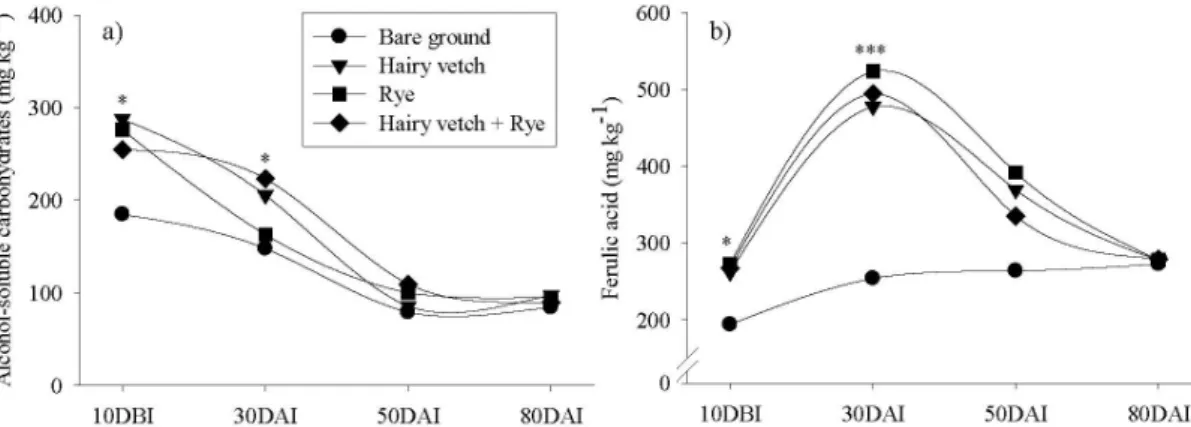
Fig. 2. Temporal changes in alcohol-soluble carbohydrates and total phenolics (expressed as an equivalent of ferulic acid) of the soil incorporated with hairy vetch, rye and hairy vetch + rye (1 : 1). Soil samples were taken from the depth of 15 cm. Bare ground means chemical-(N, P and K) applied soils, but not covered with any kind of covering materials. The symbols, *, ** and ***, indicate P<0.05, P<0.01 and P<0.001 by Fisher’s Protected LSD test, respectively (n = 3).
Fig. 3. Temporal changes in fumigation extractable carbon (a) and nitrogen (b) in the soil incorporated with hairy vetch, rye and hairy vetch + rye (1 : 1). Soil samples were taken from the depth of 15 cm. Bare ground means chemical-(N, P and K) applied soils, but not covered with any kind of covering materials. The symbols, *, ** and ***, indicate P<0.05, P<0.01 and P<0.001 by Fisher’s Protected LSD test, respectively (n = 3).
found in rye-incorporated soil which kept from 20 to 35 mg kg-1 throughout the experiment. The inorganic N in hairy vetch-incorporated soil was the highest among treatments and increased five times higher at 30 DAI than that before incorporation. Hairy vetch-rye mixture and bare ground (NPK applied) presented similar pattern during monitoring.
Soil total carbon differences among treatments occurred sporadically throughout the experiment (Fig. 1b) and ranged from 1.0 to 1.8%. A significant increase was observed at 30 DAI, hairy vetch, and 80 DAI, rye, whereas hairy vetch-rye mixture didn’t result in any marked influence.
Soils generally had higher soil carbohydrate levels before green manure crops incorporation and chemical application compared with incorporated- and applied-soils and green manure-growing soils were seen slightly higher than bare ground (Fig. 2a). Soil carbohydrate levels gradually decreased in all treatments until 50 DAI and hairy vetch- containing soils kept slightly higher levels of carbohydrates
compared with rye only. Total phenolics, expressed as a ferulic acid, of green manure crops-growing and -incor- porated soils were remarkable (Fig. 2b). The initial level of green manure crops-growing soils was approximately 270 mg kg-1 and, after incorporation, the level sharply increased to 520 mg kg-1, which means more than 2 times compared with bare ground. Total phenolics remained above 330 mg kg-1 until 50 DAI and became similar levels with bare ground at 80 DAI.
Fumigation extractable C (FEC) was significantly higher in the green manure crops-incorporated systems than in bare ground on most dates (Fig. 3a). These differences were present even before the beginning of the crop growing season. FEC increased slowly following green manure crops incorporation in all soils, reached the peak at 50 DAI and then began to decline until it reached and leveled off at pre-incorporation quantities by 80 DAI. FEC concentrations in the four soils before incorporation remained highest in
Table 3. Weed density per unit (m-2) and N loss by weeds at 55 and 85 days after green manure crops incorporation.
Time Green manure crops Broad leaves Grasses Total dry weight† N loss‡
--- No. m-2 --- g m-2 kg ha-1
55 DAI
Bare ground Hairy vetch Rye
Hairy vetch + Rye
100 393 193 161
869 785 527 357
62 72 8 20
11.7 16.5 1.4 4.0 85 DAI
Bare ground Hairy vetch Rye
Hairy vetch + Rye
79 243 187 120
712 463 456 368
878 522 278 525
131.8 62.2 27.3 61.1 Fisher’s Protected
Time Treatment Time X treatment
NS
***
NS
NS
* NS
***
**
***
***
**
***
†Weed dry weights indicate the sum of broad leaves and grasses collected from the square meter.
‡Broad leaves and grasses were separated to count number of weeds. N loss by weeds was estimated through analyzing weed N contents after the combination of both broad leaves and grasses.
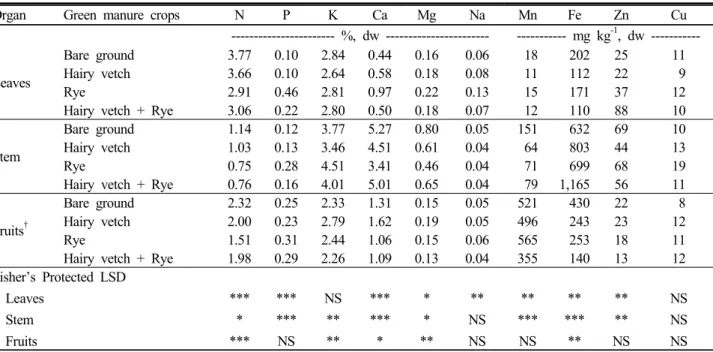
Table 4. Macro and micro elements in leaves, stem and fruits of red-pepper at 85 DAI.
Organ Green manure crops N P K Ca Mg Na Mn Fe Zn Cu
--- %, dw --- --- mg kg-1, dw --- Leaves
Bare ground 3.77 0.10 2.84 0.44 0.16 0.06 18 202 25 11
Hairy vetch 3.66 0.10 2.64 0.58 0.18 0.08 11 112 22 9
Rye 2.91 0.46 2.81 0.97 0.22 0.13 15 171 37 12
Hairy vetch + Rye 3.06 0.22 2.80 0.50 0.18 0.07 12 110 88 10
Stem
Bare ground 1.14 0.12 3.77 5.27 0.80 0.05 151 632 69 10
Hairy vetch 1.03 0.13 3.46 4.51 0.61 0.04 64 803 44 13
Rye 0.75 0.28 4.51 3.41 0.46 0.04 71 699 68 19
Hairy vetch + Rye 0.76 0.16 4.01 5.01 0.65 0.04 79 1,165 56 11
Fruits†
Bare ground 2.32 0.25 2.33 1.31 0.15 0.05 521 430 22 8
Hairy vetch 2.00 0.23 2.79 1.62 0.19 0.05 496 243 23 12
Rye 1.51 0.31 2.44 1.06 0.15 0.06 565 253 18 11
Hairy vetch + Rye 1.98 0.29 2.26 1.09 0.13 0.04 355 140 13 12
Fisher’s Protected LSD Leaves
Stem Fruits
***
*
***
***
***
NS NS
**
**
***
***
*
*
*
**
**
NS NS
**
***
NS
**
***
**
**
**
NS
NS NS NS
†Dried red-fruits were used to determine mineral elements.
rye followed by hairy vetch-rye mixture, hairy vetch and bare ground, but, at the peak, highest in hairy vetch. FEC in the mixture wasn’t remarkable throughout the whole season. Fumigation extractable N (FEN) also was higher in green manure crops-incorporated systems except rye (Fig. 3b). Before incorporation, FEN concentration was the highest in rye, however was sharply declined with incorporation and kept the lowest until the end of experi- ment. Unlike rye, FEN in hairy vetch and hairy vetch-rye mixture was constantly elevated until 50 DAI and reduced
slightly in accordance with the result of FEC.
Green manure crops incorporation suppressed annual grasses weeds density, whereas didn’t affect broad-leaves (Table 3). Broad-leaves weeds in green manure crops incorporation emerged 1.6-3.9 times greater at 55 DAI compared with bare ground and also 1.5-3.1 times greater at 85 DAI. However, green manure crops incorporation significantly affected the reduction of grasses, which ranged from 10-60% at 55 DAI and 35-50% at 85 DAI. Weed dry weights from green manure crops incorporation were
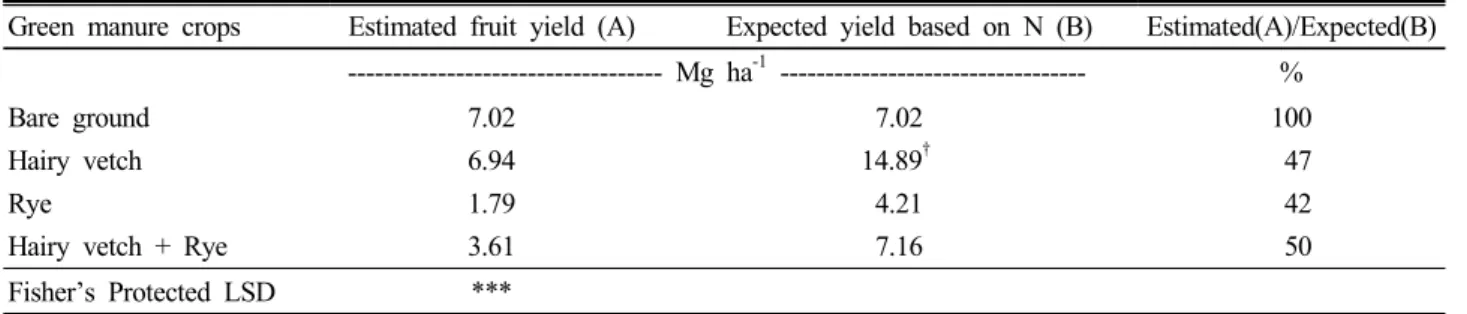
Table 5. Marketable fruit yields of red-pepper and relative yield to chemicals.
Green manure crops Estimated fruit yield (A) Expected yield based on N (B) Estimated(A)/Expected(B) --- Mg ha-1 --- %
Bare ground Hairy vetch Rye
Hairy vetch + Rye
7.02 6.94 1.79 3.61
7.02 14.89†
4.21 7.16
100 47 42 50
Fisher’s Protected LSD ***
†The value means an expected fruit yield as considered by green manure crops-own N.
greatly reduced compared with bare ground at 85 DAI.
Rye was greatest to suppress emergence and growth of weeds, whereas hairy vetch-rye mixture wasn’t marked.
On the basis of weeds dry weights, the potential N loss by weeds was estimated and, therefore, green manure crops incorporation greatly decreased uptake of available soil N by weeds.
The composition of mineral elements in leaves, stem and fruits of red-pepper plants harvested at 85 DAI presented significant differences by green manure crops incorporation systems (Table 4) and, consequently, less supply of green manure residues such as rye and hairy vetch-rye mixture led to different mineral compositions. In leaves, green manure crops systems showed lower contents in N, Mn and Fe compared with bare ground, whereas higher in P, Ca, Mg, Na and Zn. In particular, rye and hairy vetch-rye mixture resulted in substantially higher P, Ca and Zn contents. Like leaves, the contents of N, Ca, Mg, Mn and Zn were markedly decreased in stem of green manure crops systems, whereas P, K, Fe and Cu were significantly higher. Mineral compositions in fruits also showed similarly as the results of stem except Fe.
Marketable yield was lower in all green manure crops systems (Table 5). Yield of red-pepper grown with green manure crops was highest in hairy vetch only (6.94 Mg ha-1) followed by hairy vetch-rye mixture (3.61 Mg ha-1) and rye only (1.79 Mg ha-1). As considering expected yield based on N amounts supplied into each system, hairy vetch-rye mixture was slightly greater compared with monoculture of hairy vetch or rye although all green manure crops system remained less than 50% than bare ground.
Discussion
Use of green manure crops has been annually expanding
the conventional as well as the organic system. Green manure crops have lots of benefit such as mineral supply to following crops, protection of nutrient leaching and soil erosion, weed suppression and etc. In present work, we investigated effects on soil improvement, weed suppression and crop production and also examined whether the mixture of hairy vetch and rye exceeds effects of monoculture of green manure crops. Overall, soil quality improvement and crop production was greatly affected by the biomass of green manure crops incorporated. Results from green manure crops biomass showed differentially and highest in hairy vetch followed by hairy vetch-rye mixture and rye (Table 1). Fast growth of rye during winter season was suggested to lead to earlier senescence at spring, resulting in less production biomass, although rye captures more residual N than hairy vetch (Shipley et al., 1992). Lower production and mineral contents of rye resulted in a significantly reduced mineral supply, which indicates 61%
to bare ground and 29% to hairy vetch in N, whereas hairy vetch provided 2 times more N than that of bare ground.
Hairy vetch-rye mixture presented similar level with bare ground. All green manure crops supplied less P than bare ground but more K. Soil mineral nitrogen was mostly released within 30 DAI with the initiation of decomposition of residues and also greatly affected by incorporated amount of biomass. In general, green manure crops and organic materials are rapidly decomposed after incorporation and the release of minerals and organic substances is completed within 4 weeks (Choi et al., 2010; Creamer et al., 1996; Danielle et al., 2008; Lundquist et al., 1999;
Sung et al., 2008a and b) although the decomposition rates are substantially affected by C : N ratio. In our study, mineralized N in soil was greatly correlated with the amount of N from each green manure crops system. Soil total carbon didn’t show consistent changes in all systems.
However, it was suggested that soil carbon was higher before incorporation, green manure crops-growing stage,
and after 30 DAI, means that soil was re-adjusted from the disturbance due to plowing. Soil organic matter was slightly decreased directly after incorporation unlike nitrogen, however most didn’t change with season (Boyer and Groffman, 1996; DeLuca and Keeney, 1993; Lundquist et al., 1999). Alcohol-soluble soil carbohydrate concent- rations were the highest before incorporation and, after incorporation, the levels reached the peak at 30 DAI and then declined sharply until 50 DAI. Soil carbohydrate was substantially decreased immediately after incorporation (data not shown). Soil carbohydrate was derived from both cover crops residue and microbial biomass (Haynes and Francis, 1993; Kuo et al., 1997) and non-leguminous crops were better suited for building SOC and carbohydrate levels in the rhizosphere than leguminous ones. During a 11 weeks laboratory incubation of several soils incorporated different green manure crops, Choi et al. (2010) found that soil carbohydrate was steadily increased until from 4 to 7 weeks after incorporation and then returned to the initiation of incorporation. Green manure crops substantially increased soil phenolic compounds expressed as a ferulic acid equivalent (Fig. 2) and their levels in soil were the highest at 30 DAI, which was in accordance with previous researches (Sung et al., 2010; Yenish et al., 1995). Result from the present experiment demonstrated that difference in C inputs (including quantity and quality) can significantly impact microbial biomass. Green manure crops systems generally increased soil microbial biomass C and N as compared to the bare ground except MBN in rye (Fig. 3).
Stimulation of microbial biomass by organic C inputs has been well documented in various organic substrates such as green manure crops (Lundquist et al., 1999; Tu et al., 2006), animal manure (Chowdhury et al., 2000) and straw and farmyard manure (Goyal et al., 1999). The differences in microbial biomass under different green manure crops systems may have implications for nutrient availability.
High microbial biomass and activity often lead to high nutrient availability to crops (Zaman et al., 1999; Tu et al., 2003; Wang et al., 2004). Our results showed that enhanced soil microbial biomass in green manure crops systems were associated with high net N mineralization. Green manure crops systems significantly suppressed grasses occurrence and total weeds growth although broad-leaves weed species were emerged much more than those of bare ground (Table 3). Our results showed that rye was much more effective to decline weed emergence and growth than hairy vetch and hairy vetch-rye mixture, however, it
was suggested that green manure crops systems was not sufficient to eliminate the need for additional control measures. Creamer et al (1997) reported that cover crop mixtures dominated by rye were most suppressive of weeds. Generally, higher production of cover crop biomass can increase weed suppression by the cover crop residue (Mohler and Teasdale, 1993; Wicks et al., 1994), however biomass levels achieved by cover crops suppress weed emergence early in the season but do not provide full season weed control (Teasdale, 1996). As for mineral elements of red-pepper organs, green manure crops systems significantly differed compared with bare ground (NPK- applied) (Table 4). In particular, N contents by the limited supply and Ca and Fe contents due to low translocation in fruits were markedly lower in green manure crops systems although hairy vetch and hairy vetch-rye mixture covered 2 times higher and similar levels of nitrogen than bare ground. Interestingly, rye and hairy vetch-rye mixture showed higher P levels in all organs despite less supply rates and this should be considered in more details through further study. Marketable yield was low in all green manure crops systems and, in particular, the reduction in red-pepper yield was substantial in rye and hairy vetch-rye mixture. However, as considered on the basis of N rates provided from each treatment, hairy vetch-rye mixture was slightly higher than hairy vetch and rye monoculture although fruit production only reached 50% of bare ground (NPK-applied). Other researchers have reported similar yield since mineral supply from green manure crops residue concentrated on early season of crop growth (Delate et al., 2008; Drost and Price, 1991; Teasdale and Abdul-Baki, 1998; Vasey et al., 1996). In summary, leguminous green manure crops could be effectively used to improve soil quality and meet N needs of organic red-pepper production system, whereas rye has a potential to suppress weeds.
However, mixture and monoculture of green manure crops presented detrimental reduction in red-pepper fruit yields.
Furthermore, it was not found remarkable benefits of hairy vetch-rye mixture from this study. Therefore, higher biomass production of green manure crops could be a clue to achieve soil quality improvement, weed suppression and suitable yield.
Acknowledgements
This research was carried out with support from the National Academy of Agricultural Science, RDA in 2008.
References
Abdul-Baki, A.A. and J.R. Teasdale. 1993. A no-tillage tomato production system using hairy vetch and subterranean clover mulches. HortSci. 28:106-108.
Boyer, J.N. and P.M. Groffman. 1996. Bioavailability of water extractable organic carbon fractions in forest and agricultural soil profiles. Soil Biol. Biochem. 28:783-790.
Carter, R.M. 1991. Ninhydrin-reactive N released bythe fumigation- extraction method as a measure of microbial biomass under field conditions. Soil Biol. Biochem. 23:139-143.
Chandler, S.F. and J.H. Dodds. 1983. The effect of phosphate, nitrogen, and sucrose on the production of phenolics and solasidine in callus cultures of Solanum lacinitum. Plant Cell Rep. 2:105-108.
Choi, B.S., J.A. Jung, M.K. Oh, S.H. Jeon, H.G. Goh, Y.S.
Ok, and J.K. Sung. 2010. Effects of green manure crops on improvement of chemical and biological properties in soil. Korean J. Soil Sci. Fert. 43:528-536.
Chowdhury, M.A.H., K. Kouno, T. Ando, and T. Nagaoka.
2000. Microbial biomass, S mineralization and S uptake by African millet from soil amended with various composts.
Soil Biol. Biochem. 32:845-852.
Clark, A.J., A.M. Decker, J.J. Meisinger, and M.S. McIntosh.
1997b. Kill date of vetch, rye and a vetch-rye mixture: II.
Soil moisture and corn yield. Agron. J. 89:434-441.
Creamer, N.G., M.A. Bennett, and B.R. Stinner. 1997. Certified organic growers’ manual: Aguide for ecologically responsible farming practices. Pittsboro. NC.
Creamer, N.G., M.A. Bennett, B.R. Stinner, J. Cardina, and E.E. Regnier. 1996. Mechanisms of weed suppression in cover crop-based production systems. HortSci. 31:410-413.
Delate, K., C. Cambardella, and A. McKern. 2008. Effects of organic fertilization and cover crops on an organic pepper system. HortTech. 18:215-225.
DeLuca, T.H. and D.R. Keeney. 1993. Soluble anthrone-reactive carbon in soils: effect of carbon and nitrogen amendments.
Soil Sci. Soc. Am. J. 57:1296-1300.
Doran, J.W., D.G. Fraser, M.N. Culik, and W.C. Liebhardt.
1987. Influence of alternative and conventional agricultural management on soil microbial processes and nitrogen availability.
Am. J. Alternative Agriculture 2:99-106.
Drinkwater, L.E., P. Wagoner, and M. Sarrantonio. 1998.
Legume-base cropping systems have reduced carbon and nitrogen losses. Nature 396:262-265.
Goyal, S., K. Chander, M.C. Mundra, and K.K. Kapoor.
1999. Influence of inorganic fertilizers and organic amend- ments on soil organic matter and soil microbial properties under tropical conditions. Biol. Fert. Soils 29:196-200.
Haynes, R.J. and G.S. Francis. 1993. Changes in microbial biomass C, soil carbohydrate composition and aggregate stability induced by growth of selected crop and forage species under field condition. J. Soil Sci. 44:665-675.
Jackson, L.E., I. Ramirez, R. Yokota, S.A. Fennimore, S.T.
Koike, D.M. Henderson, W.E. Chaney, F.J. Calderon, and K. Klonsky. 2004. On-farm assessment of organic matter and
tillage management on vegetable yield, soil, weeds, pests, and economics in California. Agr. Ecosyst. Environ. 103:
443-463.
Keeney, D.R. and D.W. Nelson. 1982. Nitrogen inorganic forms. pp. 643-698. In A. L. Page et al. (ed.) Methods of soil analysis. Part 2. 2nd ed. Agron. Monogr. 9. ASA and SSSA Madison. WI.
King, L.D. and M. Buchanan. 1993. Reduced chemicals input cropping systems in the Southeastern United States.
I. Effect of rotations, green manure crops and nitrogen fertilizer on crop yield. Am. J. Alternative Agriculture 8:
27-33.
Kopp, J.F. and G.D. McKee. 1978. Methods for chemical analysis of water and wastes. Nitrogen ammonia-Method 350. 1. USEPA Environ. Monitoring and Support Lab., Cincinnati.
Kuo, S., U.M. Sainju, and E.J. Jellum. 1997. Winter cover crop effects on soil organic carbon and carbonhdrate in soil. Soil Sci. Soc. Am. J. 61:145-152.
Lundquist, E.J., L.E. Jackson, K.M. Scow, and C. Hsu.
1999. Changes in microbial biomass and community composition, and soil carbon and nitrogen pools after incorporation of rye into three California agricultural soils. Soil Biol. Biochem. 31:221-236.
Mendes, I.C., A.K. Bandick, R.P. Dick, and P.J. Bottomley.
1999. Microbial biomass and activities in soil aggregates affected by winter cover crops. J. Soil Sci. Soc. Am. 63:
873-881.
Mohler, C.L. and J.R. Teasdale. 1993. Response of weed emergence to rate of Vicia villosa Roth and Secale cereal L.
residue. Weed Res. 33:487-499.
Mwaja, V.N., J.B. Masiunas, and C.E. Eastman. 1996. Rye (Secale cereal L.) and hairy vetch (Vicia villosa Roth) intercrop management in fresh-market vegetables. J. Am.
Soc. Hort. Sci. 121:586-591.
NIAST. 1988. Methods of soil chemical analysis. National Institute of Agricultural Science and Technology, RDA, Suwon, Korea.
Ranells, N.N. and M.G. Wagger. 1997. Grass-legume bicultures as winter annual cover crops. Agron. J. 89:659-665.
Roe. J.H. 1955. The determination of sugar in blood and spinal fluid with anthrone reagent. J. Biol. Chem. 212:
335-343.
Sainju, U.M., B.P. Singh, and S. Yaffa. 1999. Tomato yield and soil quality as influenced by tillate, cover cropping, and nitrogen fertilization. In: Hook, J. E. (Ed.), Proceedings of the 22nd Annual Southern Conservation Tillage Conference for Sustainable Agriculture. Tifton. GA. July 6-8. Spec.
Pub. 95. Agric. Exp. Sta., Athens. GA. pp. 104-113.
Shipley, P.R., J.J. Meisinger, and A.M. Decker. 1992. Conserving residual corn fertilization nitrogen with winter cover crops.
Agron. J. 85:673-680.
Staver, K.W. and R.B. Brinsfield. 1998. Using cereal grain winter cover crops to reduce groundwater nitrate contami- nation in the mid-Atlantic coastal plains. J. Soil Water Cons. 53:230-240.
Sung, J.K., J.A. Jung, B.M. Lee, S.M. Lee, Y.H. Lee, D.H.
Choi, T.W. Kim, and B.H. Song. 2010. Effect of incorporation of hairy vetch and rye grown as cover crops on weed suppression related with phenolics and nitrogen contents of soil. Plant Prod. Sci. 13:78-82.
Sung, J.K., S.M. Lee, J.A. Jung, J.M. Kim, Y.H. Lee, D.H.
Choi, T.W. Kim, and B.H. Song. 2008b. Effects of green manure crops, hairy vetch and rye, on N supply, red-pepper growth and yields. Korean J. Soil Sci. Fert. 41:247-253.
Sung, J.K., S.M. Lee, Y.H. Lee, D.H. Choi, T.W. Kim, and B.H. Song. 2008a. Impacts of cover crops on early growth, nitrogen uptake and carbohydrate composition of pepper plants. Korean J. Soil Sci. Fert. 41:44-49.
Teasdale, J.R. 1996. Contribution of cover crops to weed management in sustainable agricultural systems. J. Prod.
Agr. 9:475-479.
Teasdale, J.R. and A.A. Abdul-Baki. 1998. Comparison of mixtures vs. monocultures of cover crops for fresh-market tomato production with and without herbicide. HortSci.
33:1163-1166.
Tu, C., S.R. Koenning, and S. Hu. 2003. Root-parasitic nematodes enhance soil microbial activities and nitrogen mineralization. Microbial Ecol. 46:134-144.
Vance, E.D., P.C. Brookes, and D.S. Jenkinson. 1987. An
extraction method for measuring soil microbial biomass C. Soil Biol. Biochem. 19:703-707.
Wagger, M.G. 1989. Time of desiccation effects on plant composition and subsequent nitrogen release from several winter annual cover crops. Agron. J. 81:236-241.
Wang, W.J., C.J. Smith, and D. Chen. 2004. Predicting soil nitrogen mineralization dynamics with a modified double exponential model. Soil Sci. Soc. Am. J. 68:1256-1265.
Wicks, G.A., D.A. Crutchfield, and O.C. Burnside. 1994.
Influence of wheat straw mulch and metolachlor on corn growth and yield. Weed Sci. 42:141-147.
Wilson, D.O. and W.L. Hargrove. 1986. Release of nitrogen from crimson clover residue under two tillage regimes.
Soil Sci. Am. J. 50:1251-1254.
Yenish, J.P., A.D. W orsham, and W . S. Chilton. 1995.
Disappearance of DIBOA-Glucoside, DIBOA, and BOA from rye (Secale cereal L.) cover crop residue. Weed Sci.
43:18-20.
Zaman, M., H.J. Di, and K.C. Cameron. 1999. A field study of gross rates of N mineralization and nitrification and their relationships to microbial biomass and enzyme activities in soils treated with dairy effluent and ammonium fertilizer.
Soil Use and Management 15:188-194.