• 검색 결과가 없습니다.

The Domestic Trend of Studies on 3D Printing Technology Applied to the Fashion Industry

N/A
N/A
Protected

Academic year: 2021

Share "The Domestic Trend of Studies on 3D Printing Technology Applied to the Fashion Industry"

Copied!
9
0
0

로드 중.... (전체 텍스트 보기)

전체 글

(1)

ISSN 1229-3350(Print) ISSN 2288-1867(Online)

J. fash. bus. Vol. 24, No. 6:80-88, December. 2020 https://doi.org/

10.12940/jfb.2020.24.6.80

Technology Applied to the Fashion Industry

Jeongwook Choi

*

· Sanghee Park†

*

Dept. of Textile & Clothing Design, Kyunghee University, Korea, Dept. of Fashion Industry, Beawha Women's University, Korea

Corresponding author

Sanghee Park Tel : +82-2-399-0759

E-mail : [email protected]

Keywords Abstract

3D printer,

3D printing technology, trend of studies, journal, association

This work was supported by a grant from Kyung Hee University in 2018. (KHU-20181194)

This study, by analyzing previous studies, aimed to understand how 3D printing technology is applied and utilized in the fashion industry and to contribute to encouraging further studies on 3D printing technology in the fashion sector and suggesting proper ways for designing such studies. Firstly, 47 papers were selected from all literature concerning 3D printing technology published in 15 journals of fashion and design since 2013. Afterwards, these papers were analyzed with regard to the frequency, topics or sectors, and purposes or types of studies shown by outcomes. Results were as follows: First, the number of papers on 3D printing technology published in the journals was counted according to the year, which showed that this number increased rapidly after 2015 for about 3 years. Especially in the year 2016, this increase was quite notable. Although a little decrease in this number was found afterwards, a steady increase was highly expected. Out of the 8 journals, Journal of The Korean Society of Fashion Design had the maximum papers. Regarding areas of studies, works on designing and development of products were most common.

Finally, regarding the purpose of studies, those suggesting or presenting apparel

were predominant. Product items included clothes, shoes, and caps. Studies on

caps mostly covered designing the products. Studies on clothes aimed at

designing, characteristics of construction, and case study. However, there were

very few works on 3D printing technology as an alternative material or

composition of clothing.

(2)

I. Introduction

3D printing technology, one of the most critical features in the era of 4

th

industrial revolution, was chosen as one of 10 most significant manufacturing technologies by American government when catching attention in many fields of industry. The 3D printer market has also been showing a steady growth for the last 27 years. From 2013 to 2016 especially recorded high annual increase rate as 31.5% (Lee, 2017). 3D printing manufacturing is a splendid and efficient way that you make things of different materials at one blow saving time and cost unlike traditional ‘Subtractive Manufacturing’ that parts are cut out before they are put together (Choi, 2017). In fashion industry as well, 3D printing technology is being tried and used in developing products recently (Park, Jung, & Lee, 2017). Nevertheless, the usage is quite limited compared to other fields or industries (Lee &

Choi, 2020).

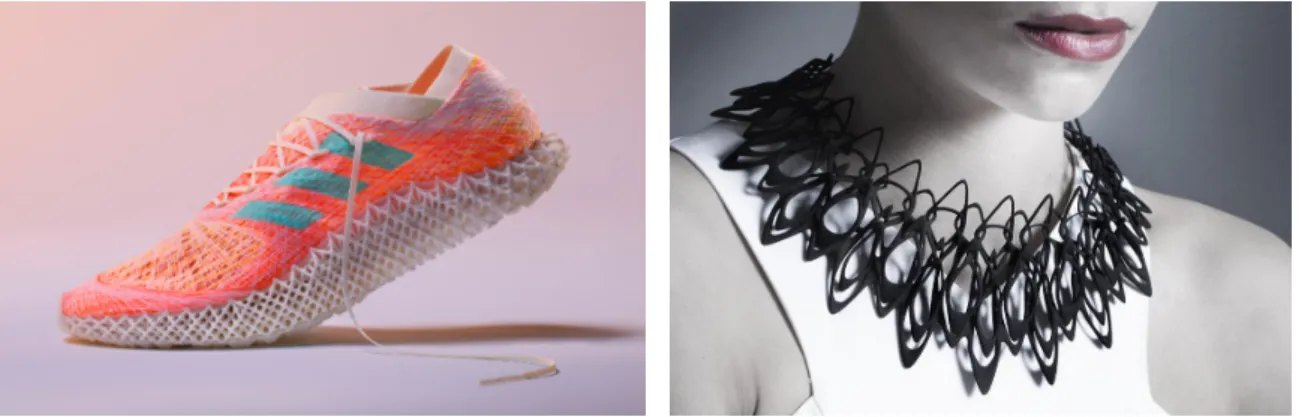
The application of 3D printing technology in the domestic fashion industry is only limited in small items such as shoes and hats or accessories such as necklaces, earings, and pendants (Figure 1, 2). Domestic apparel industry has yet to find any case that utilizes 3D printing technology when we find some foreign cases (Lee & Kim, 2016). Such foreign cases are not normal daily wear, but some designers’ works mainly pursuing

Figure 1. Futurecraft 4D Shoes (www.adidas.com)

Figure 2. 3D Printied Jewelry (3dprint.com)

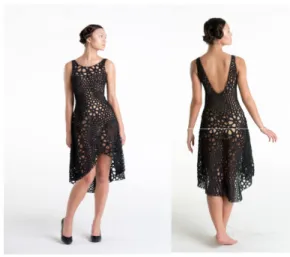
art purpose. Some radical designers including Iris Van Herpen from Netherlands present artistic works using laser cutter or 3D printer (Figure 3). A 3D printing studio named Kinematics of ‘Nervous System’ produces a tailored design through a simulation system using 2,279 triangular units and 3,316 hinges to give drape when the clothes are worn (Figure 4). An Israeli designer, Danit Peleg, makes and sells clothes manufactured by just a home 3D printer of FDM system (Figure 5). Though the endeavor of such foreign designers is still conceptual and experimental, there are not even any trials in domestic industry.

Therefore, by analyzing the previous studies concerning 3D printing technology in fashion industry, the study is intended to contribute to encouraging more of further studies on 3D printing technology in fashion sector and to serve a significant role in suggesting appropriate ways for such studies to turn to.

. Methods and Contents

In this study, first of all, all the literature concerning 3D

printing published in domestic journals of Fashion and

Design since 2013 were selected as the subject of the

research. As a result of inputting and searching keywords

such as 3D, 3D printer, and 3D printing, 81 research

papers were isolated from 23 journals. Among them, 47

(3)

Figure 3. Iris Van Herpen Dress (www.irisvanherpen.com)

Figure 4. Kinematics Dress (n-e-r-v-o-u-s.com)

Figure 5. Danit Peleg Jacket (danitpeleg.com)

research papers from 15 journals were selected as the subject of the study, except for those with topics that are not fashion products.

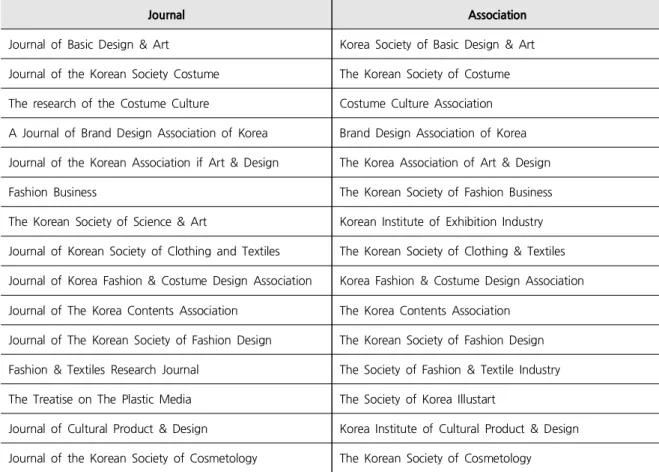
The journals covered in this study are limited to 11 journals including Journal of Basic Design & Art, Journal of the Korean Society Costume, The Research of the Costume Culture, A Journal of Brand Design Association of Korea, Journal of the Korean Association if Art &

Design, Fashion Business, The Korean Society of Science

& Art, Journal of Korean Society of Clothing and Textiles, Fashion & Textkle Research Journal, The

Treatise on The Plastic Media, Journal of Cultural Product & Design, and Journal of The Korean Society of Cosmetology (Table 1).

These papers were analyzed in regard to the frequency of occurrence, the topics or sectors, and purposes or types of studies shown by the outcomes.

III. Results

The results of the study are as follows. First of all, the

number of the papers on fashion-related 3D printing

(4)

Table 1. Journals and the Associations

Journal Association

Journal of Basic Design & Art Korea Society of Basic Design & Art

Journal of the Korean Society Costume The Korean Society of Costume

The research of the Costume Culture Costume Culture Association

A Journal of Brand Design Association of Korea Brand Design Association of Korea

Journal of the Korean Association if Art & Design The Korea Association of Art & Design

Fashion Business The Korean Society of Fashion Business

The Korean Society of Science & Art Korean Institute of Exhibition Industry

Journal of Korean Society of Clothing and Textiles The Korean Society of Clothing & Textiles

Journal of Korea Fashion & Costume Design Association Korea Fashion & Costume Design Association

Journal of The Korea Contents Association The Korea Contents Association

Journal of The Korean Society of Fashion Design The Korean Society of Fashion Design

Fashion & Textiles Research Journal The Society of Fashion & Textile Industry

The Treatise on The Plastic Media The Society of Korea Illustart

Journal of Cultural Product & Design Korea Institute of Cultural Product & Design

Journal of the Korean Society of Cosmetology The Korean Society of Cosmetology

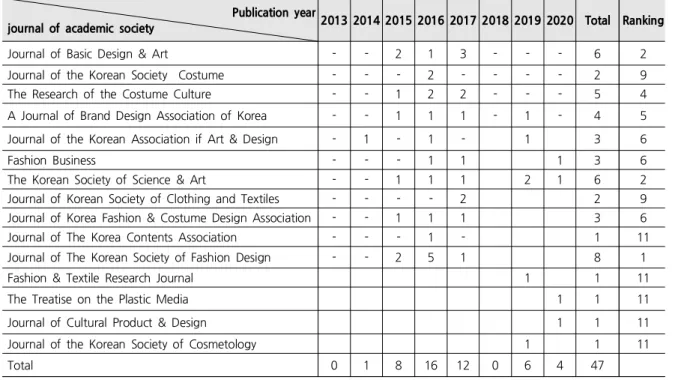
technology research published in the journal by the year is shown in Table 2 and Figure 6. Beginning in 2014,

“A Comparative Study on 3-Dimensional Printing Technologies Used in Jewelry Designing” in The Korea Association of Art & Design , the number of studies increased sharply for three years after 2015. Though there was a little decrease afterwards, studies are still steadily in progress.

In terms of journals, the journals such as ‘Journal of Basic Design & Art ’ and ‘Journal of The Korean Society of Fashion Design’, among others are persistently publishing papers concerning 3D printing or the trend is somewhat at increase (Figure 6).

In terms of journals, Journal of the Korean Society of Fashion Design showed the highest frequency of appearance with 8 pieces followed by Journal of Basic

Design & Art (6), The Korean Society of Science & Art (6) , and the Costume Culture Research (5). As a result, the frequency of appearance in journals dealing with overall design seems to be relatively high rather than the journals of apparel specialty. This is because the apparel industry considers 3D printing technology as an unfamiliar technology based on engineering and recognizes that it is not easily accessible and that 3D printer materials are not yet suitable for use in clothing.

Next, Figure 7 show the results of examining the field

of application of the research papers on 3D printing

technology. The research on product design and

development showed the highest frequency with 20

papers (41%), followed by studies on the status and the

situations that 3D printing is being used with 12 papers

(25%). Because of the characteristics of 3D printers, it is

(5)

Table 2. Number of Papers Published by the Year

Publication year

journal of academic society 2013 2014 2015 2016 2017 2018 2019 2020 Total Ranking

Journal of Basic Design & Art - - 2 1 3 - - - 6 2

Journal of the Korean Society Costume - - - 2 - - - - 2 9

The Research of the Costume Culture - - 1 2 2 - - - 5 4

A Journal of Brand Design Association of Korea - - 1 1 1 - 1 - 4 5

Journal of the Korean Association if Art & Design - 1 - 1 - 1 3 6

Fashion Business - - - 1 1 1 3 6

The Korean Society of Science & Art - - 1 1 1 2 1 6 2

Journal of Korean Society of Clothing and Textiles - - - - 2 2 9

Journal of Korea Fashion & Costume Design Association - - 1 1 1 3 6

Journal of The Korea Contents Association - - - 1 - 1 11

Journal of The Korean Society of Fashion Design - - 2 5 1 8 1

Fashion & Textile Research Journal 1 1 11

The Treatise on the Plastic Media 1 1 11

Journal of Cultural Product & Design 1 1 11

Journal of the Korean Society of Cosmetology 1 1 11

Total 0 1 8 16 12 0 6 4 47

Figure 6. The Number of Publication by Journals by the Year

(6)

Figure 7. Frequency of Appearance by the Field of Study

Figure 8. Distribution of Items Suggested by Research Results

a tool for producing results, so that there are many researches aimed at product design of various items.

Since 3D printing technology is still in its early stage, most of researches in fashion sector are limited to case studies and studies on the situation that it’s being used.

On the other hand, 8 cases (16%) of Formative Characteristic studies and 7 cases (14%) of Material

Development studies showed relatively high frequency,

which is because the limit of access to 3D printing in

the field of clothing is due to the problem of material,

there’s a practical need for a study for the development

of plastic or fabric structural and physical materials to

overcome this problem. Meanwhile, as an alternative to

the clothing material, researches on the full-fledged 3D

(7)

Figure 9. Distribution of Field of Study by the Items

printing technology material or the composition of clothing have rarely been carried out. This item was checked over again, which means that it included researches to understand usage status, design products, and study curriculum after studying formative characteristics.

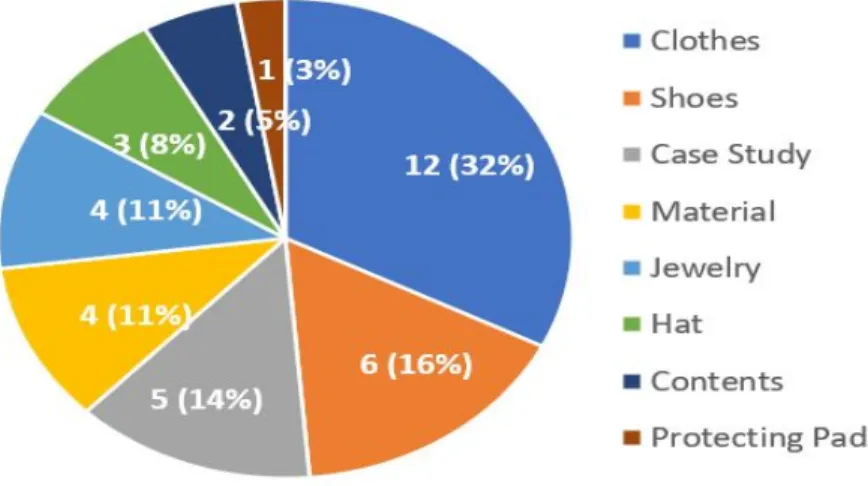
Next, talking about the items suggested by the research results, as shown in Figure 8, overwhelmingly ruling cases (12, 32%) suggested and presented clothingproducts followed by shoes (6, 16%), and case studies (5, 14%). Aside from clothing, accessories, such as shoes, jewelry, and hats, were the main components of fashion products, yet when these papers were put together, it makes 13 (35%) similar to clothing products.

Therefore, studies on accessories sector as well as the clothing sector are vigorously being done.

An overlap check was performed over 20 different other studies of Product Design and Development in order to analyze various kinds of filaments utilized during the 3D printing process. Studies which utilized flexible filament were 11 and studies which used PLA filament were 13. When compared in sheer numbers, PLA seemed to be more prevalent; however, most of this number came from studies on shoes, jewelries, and hats.

In the case of clothing, 10 out of 12 studies showed usages of flexible filament or mix of flexible filament and PLA filament.

This was primarily due to pliable nature of flexible filaments and its compatibility with sewing. Therefore, for studies on clothings, specifically on 3D printing of textiles, usages of flexible filament or other new, competent filament are needed.

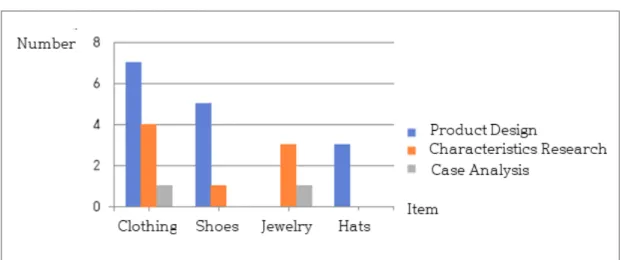
As a result of examining the research fields according to the items presented as research results (Figure 9), there were many researches related to product design for clothing, shoes and hats. With respect to clothing, it was analyzed that the research was conducted in the order of product design, formative characteristics research, and case analysis. As for accessories, formative characteristics and case studies were mainly performed.

IV. Conclusion

This study, by analyzing the previous studies related to

3D printing technology in the fashion field in how they

are applied and utilized in the field of fashion industry

and what results are obtained by the studies, tries to

help in extending the realms of research concerning 3D

(8)

printing technology in fashion industry and to suggest significant ways for further studies to take.

The results of the study are as follows: First, the number of papers on 3D printing technology published in the journals was counted by the year, which shows that the number increases sharply after 2015 for about 3 years. Especially, in the year 2016 the increase was quite noticeable. Though a little downturn was found afterwards, steady increase is highly expected.

As for journals, The Korean Society of Fashion Design showed the highest frequency of appearance with 8 pieces followed by Journal of Basic Design & Art (6), The Korean Society of Science & Art (6) , and the Costume Culture Research (5).

Next, examining the field of application of the research papers on 3D printing technology showed that the research on product design and development marked the highest frequency with 20 papers (41%), followed by studies on the status of 3D printing being used with 12 papers (25%). Meanwhile, 8 cases (16%) of Formative Characteristic studies and 7 cases (14%) of Material Development studies showed relatively high frequency, which is because the limit of access to 3D printing in the field of clothing is due to the problem of material, there’s a need for a study for the development of plastic or fabric structural and physical materials to overcome this problem.

Next, as a result of analyzing multiple variations of filaments used during the 3D printing process. An overlap check was performed over 20 different other studies of Product Design and Development in order to analyze various kinds of filaments utilized during the 3D printing process. Studies which utilized flexible filament were 11 and studies which used PLA filament were 13.

When compared in sheer numbers, PLA seemed to be more prevalent; however, most of this number came from studies on shoes, jewelries, and hats.

In the case of clothing, 10 out of 12 studies showed usages of flexible filament or mix of flexible filament and PLA filament.

This was primarily due to pliable nature of flexible filaments and its compatibility with sewing. Therefore,

for studies on clothings, specifically on 3D printing of textiles, usages of flexible filament or other new, competent filament are needed.

Finally, examining the research results or items revealed that there are overwhelmingly many cases suggesting or presenting clothing products (12, 32%) followed by shoes (6, 16%), and case studies (5, 14%). In terms of the research fields according to the items presented as research results, there were many researches related to product design for clothing, shoes and hats. In particular, in the case of apparel, more studies were conducted in the order of product design, formative characteristics study, and case analysis. Meanwhile, as an alternative to the apparel material, there have been little or no studies on full-scale 3D printing materials or research on clothing composition.

The reason that the research is sluggish on clothing composition and material development using 3D printing technology in the apparel industry is because there are some limitations in applying 3D printing technology to clothing. That is, it is not easy to reproduce the 3D printing textile structure that can replace the existing clothing material, and the types of materials (filament, resin, etc.) for 3D printing that can replace it are not diverse, and the size of the output depending on the 3D printer is limited. Therefore, in order to incorporate 3D printing technology in clothing, development of the woven form of various fabrics and exploration of draping materials should be proceeded.

With the above results, this study aims to contribute to the expansion of research areas related to 3D printing technology in fashion industry and to suggest effective research directions by analyzing trends of previous studies on 3D printing technology.

However, since 3D printing study is only at its early

stage, the number of studies is minimal; therefore,

quantitative analysis data is not included in this study. In

the future, when more 3D printing related researches are

available, following research could be proposed which

uses ‘Topic Modeling’ or ‘Word Cloud’ methods to

intuitive analyze keywords used in the research.

(9)

Reference

3D Printed Jewelry. (n.d.). Retrieved March 2, 2020, from https://3dprint.com/wp-content/uploads/2014/

11/LACE-stria-necklace2.jpg

Choi, K. (2017). A study on the characteristics of 3D printing jewelry design utilizing with fractal geometry.

Journal of Fashion Business, 21 (5), 136-150. doi:

10.12940/jfb.2017.21.5.136

Danit Peleg Jacket. (n.d.). Retrieved March 2, 2020, from https://danitpeleg.com/product/create-your- own-3d-printed-jacket

Futurecraft 4D Shoes. (n.d.). Retrieved March 2, 2020, from https://img1.daumcdn.net/thumb/R1280x0/?

scode=mtistory2&fname=https%3A%2F%2Fblog.kakaoc dn.net%2Fdn%2FSNncj%2FbtqKtfmntvX%2FqWVsK7kh 7QF8G1GRRnxM70%2Fimg.png

Iris Van Herpen Dress. (n.d.). Retrieved March 2, 2020, from https://www.irisvanherpen.com/_uploaded/blog -fotos/ivh-book-cover_1-LRG.jpg

Kinematics Dress. (n.d.). Retrieved March 2, 2020, from https://n-e-r-v-o-u-s.com/projects/albums/kinematics -dress-1/content/kinematicsdress-back-4/lightbox

Lee, H., & Choi, J. (2020). A study on the pattern of 20s taekwondo uniforms considering motion, Function, and dimension adaptability: Focused on appearance and functional evaluation. Journal of Fashion Business, 24 (4), 48-62. doi:10.12940/jfb.2020.24.4.48

Lee, R., & Kim, J. (2016). A study on the three-dimensional expression of fashionable textiles based on analyses of 3D scanning and textile properties -Focus on the work of Iris van herpen-.

Journal of Fashion Business, 20 (2), 124-133. doi:

10.12940/jfb.2016.20.2.124

Lee, Y. (2017). 3D printing role in the craft industry and future job. Journal of Basic Design & Art, 18 (6), 431-443.

Park, J., Jumg, H., & Lee, J. (2017). Structure design of fall impact protection pad using 3D printing technology and comparison of characteristics according to filament material. Journal of the Korean Society of Clothing and Textiles, 41 (5), 939-949. doi:10.5850/

JKSCT.2017.41.5.939

Received (November 4, 2020)

Revised (December 10, 2020; December 24, 2020)

Accepted (December 29, 2020)

수치

Figure  1.  Futurecraft  4D  Shoes (www.adidas.com)
Figure  3.  Iris  Van  Herpen  Dress (www.irisvanherpen.com)
Table  1.  Journals  and  the  Associations
Figure  6.  The  Number  of  Publication  by  Journals  by  the  Year
+3

참조

관련 문서

 To understand the broad characteristics of ETAs achieved by SMEs in India in the era of globalization in terms of technology shift, source of technology, time

Common corporate digital crimes include piracy, financial fraud, espionage, and theft of services.. _______________________________________ such as

The index is calculated with the latest 5-year auction data of 400 selected Classic, Modern, and Contemporary Chinese painting artists from major auction houses..

The “Asset Allocation” portfolio assumes the following weights: 25% in the S&P 500, 10% in the Russell 2000, 15% in the MSCI EAFE, 5% in the MSCI EME, 25% in the

The speed and magnitude of this transmission will partly depend on the regulatory environment governing trade and location of 3D printing activities. Current WTO rules

1 John Owen, Justification by Faith Alone, in The Works of John Owen, ed. John Bolt, trans. Scott Clark, "Do This and Live: Christ's Active Obedience as the

This paper studies the use of human behavior improvement systems and human error prevention techniques used in the field to reduce human error in domestic nuclear

Fourth, as the information technology is developed due to the fourth industrial revolution and the proportion of information technology in the commercial