164 https://doi.org/10.9713/kcer.2019.57.2.164
PISSN 0304-128X, EISSN 2233-9558
Study of Protonation Behaviour and Distribution Ratios of Hydroxamic Acids in Hydrochloric and Perchloric Acid Solutions Through Hammett Acidity Function, Bunnett-Olsen and Excess
Acidity Method
Manisha Agarwal*, Priyanka Singh** and Rama Pande***,†
*School of Studies in Chemistry, Pt. Ravishankar Shukla University, Raipur-492010, Chhattisgarh, India
**Rungta College of Engineering & Technology, Bhilai-490024, Chhattisgarh, India
***Department of Chemistry, Govt. Digvijay PG Autonomous College,Rajnandgaon-491441 Chhattisgarh, India (Received 4 July 2018; Received in revised form 20 December 2018; accepted 21 December 2018)
Abstract − The protonation parameters, dissociation constants (pKBH+) of conjugate acid, slope values (m, ϕ and m*) and correlation coefficients (r) of hydroxamic acids were determined by Hammett acidity function method, Bunnett- Olsen method and excess acidity method in hydrochloric and perchloric acid solutions. Effect of acid concentration on partition and percentage protonation was also studied. pKBH+ values show that hydroxamic acids do not behave as Ham- mett bases, but hydroxamic acids behave as weak bases in strong acidic solutions. The values of pKBH+ obtained through Bunnett-Olsen method and excess acidity method were compared with the Hammett acidity function. ChemAxon’s Mar- vinSketch 6.1.5 software was also used for determining pKa, pI and microspecies distribution (%) of hydroxamic acids with pH. Hydrogen donor and acceptor values and logD were also obtained. The results show that N-p-chlorophenyl-4- bromobenzohydroxamic acid has the highest pKa and lowest logD values. On the contrary, N-phenyl-3,5-dinitrobenzo- hydroxamic acid has lowest the pKa and highest logD values.
Key words: Dissociation constant, hydroxamic acid, logD and protonation parameters
1. Introduction
The protonation constant is a quantitative measure of the strength of an acid/base in solution that allows the calculation of the ratio of neutral and charged species at any pH, in addition to the basic or acidic properties of the compound. The acid-base dissociation con- stant has an ample effect on the biopharmaceutical properties of drugs and chemicals. It helps in understanding the ionic form in which a molecule exists at different pH [1]. Kostiainen et al. (2003) reported that the protonation constant influences lipophilicity, solu- bility and permeability of a drug, which has a direct effect on its phar- macokinetic characteristics, absorption, distribution, metabolism and excretion (ADME) [2]. Several biochemical reactions occurring inside living organisms are also affected by pH.
Early investigators have already reported that hydroxamic acids are a remarkable class of compounds as they have a broad spectrum of applicability [3-5]. They are used as analytical reagents for organic and inorganic analyses and find medical applications as well. Vernon and Eccles (1976) and Sharma et al. (2013) reported that poly(hydroxamic acid) chelating resin can be used for extraction of iron from various salts [6-7]. Hassan et al. (2011) reported that poly- hydroxamic acids are useful for separation of Zr (IV) from Y (III)
and Sr (II) and purification of Zr [8]. Gidwani et al. (2009) reported that a new chromogenic calixarene with hydroxamic acid acts as chelating agent for sequential separation of Ti (IV) and Zr (IV) [9].
Farkas et al. (2001) reported that complexes formed between iron (II) and different siderophore model hydroxamic acids may contrib- ute to a better understanding of the different biological processes [10]. Jiao et al. (2017) reported the role of poly(amidoxime-hydroxamic acid) cellulose derivative in heavy metal ion removal [11]. There- fore, the present investigation was undertaken to study the protona- tion behaviour and distribution ratios of hydroxamic acids.
2. Materials and Methods
N-phenyl-2-nitrobenzohydroxamic acid, N-phenyl-3,5-dinitrobenzo- hydroxamic acid, N-m-chlorophenylbenzohydroxamic acid, N-m- chlorophenyl-2-methoxybenzohydroxamic acid and N-p-chlorophe- nyl-4-bromobenzohydroxamic acid were prepared according to the reported literature [12,13]. Their purity was ascertained by determin- ing their melting points, UV and IR analyses. Analytical grade chemi- cals were purchased from Merck (Japan).
The protonation equilibria of hydroxamic acids were evaluated as a function of pH in hydrochloric acid and perchloric acid. Analytical grade carbon tetrachloride and hydrochloric acid were used for dis- tribution ratio determination. Hydrochloric acid was standardized with sodium hydroxide solution, which was titrated against potas- sium hydrogen phthalate using phenolphthalein as indicator [14,15].
Acidic solutions of different concentrations were prepared by dilu-
†To whom correspondence should be addressed.
E-mail: [email protected]
This is an Open-Access article distributed under the terms of the Creative Com- mons Attribution Non-Commercial License (http://creativecommons.org/licenses/by- nc/3.0) which permits unrestricted non-commercial use, distribution, and reproduc- tion in any medium, provided the original work is properly cited.
tion with distilled water. The protonation constant and distribution ratio were calculated from Equations (1) and (2), respectively.
(1)
(2)
where, H0 is Hammett acidity function, KD is thermodynamic dis- tribution constant of hydroxamic acid, D is the distribution ratio and is the acid dissociation constant. A saturated solution of ammonium metavanadate was prepared in distilled water. Chloro- form was distilled after shaking five times with equal volume of water to remove ethanol and was stored in a cool place. HCl was used to maintain the acidity during extraction. The hydroxamic acid concentration was determined in both the phases spectropho- tometrically through the vanadium (V) method. Hydroxamic acids form water insoluble coloured complexes with pentavalent ions, in presence of hydrochloric acid. Extraction of the colored com- plex with chloroform forms the basis of its spectrophotometric estimation.
An aliquot of the solution was transferred to a separating funnel containing 10 ml of chloroform for the analysis of organic phase.
5 ml of aqueous saturated solution of ammonium metavanadate and hydrochloric acid was added. The pH of the solution was maintained between 3.5-7 for maximum color development. The two phases were vigorously shaken for 2 minutes and were allowed to separate.
The colored organic layer was transferred to a beaker containing 1 to
2 grams of anhydrous sodium sulfate. The aqueous phase was washed with chloroform. The washings and extract were transferred to a vol- umetric flask after drying over sodium sulfate. The absorbance was measured against chloroform as blank. Batch extraction with chloro- form was applied for the analysis of aqueous phase. This chloroform layer was used to develop the colored complex. Hydroxamic acid concentration was obtained in each phase by calibration curve. Sol- vent extraction method was used for determining total concentration of molecular and protonated species. Several water immiscible sol- vents were tried for the extraction of coloured complex from aque- ous phase.
Hydroxamic acids behave as weak organic bases in the presence of strong mineral acid. But these concentrated solutions are non- ideal as they become much more acidic than their concentrations below a pH of about 1.5. Therefore, the pH scale cannot be used in such cases. Acidity scales known as acidity functions or excess acid- ities have to be used in such non-ideal media. Acidity constants out- side the accessible range in water can also be estimated, which provides help in understanding the mechanisms of acid- and base- catalyzed reactions [16]. The protonation studies of N-arylsubsti- tuted hydroxamic acids were done through Hammett Acidity Func- tion Method (HAFM), Bunnett-Olsen method (BOM) and excess acidity method (EAM).
2-1. Excess acidity method (EAM)
Excess acidity, also known as X-function, is used for the determi- nation of acidity constant or acid dissociation constant of weak pKb H0 (KD+D)
---D +
=
KD D Dh0 KBH+
--- +
=
KBH+
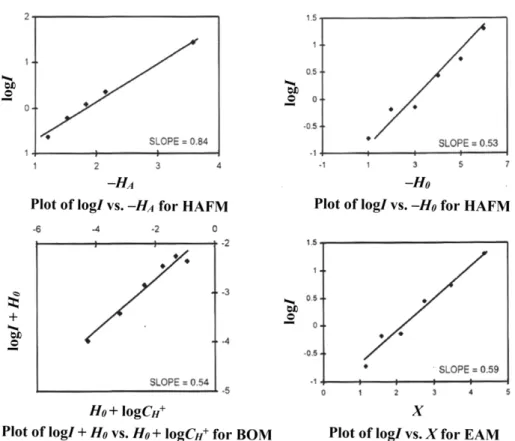
Fig. 1. Slopes m, ϕ and m* for N-p-chlorophenyl-4-bromobenzo hydroxamic acid.
bases. The extrapolation to the aqueous standard state is used. This method for obtaining acidity constants, in spite of medium effects, is based on excess medium acidity, X, which represents the excess acidity [17,18]. Buglass et al. (1971) and Bunnett and Olsen (1966) reported that excess acidity is the difference between the observed acidity and the acidity in case of ideal solution [19,20]. Equation (3) shows the general thermodynamic equation for the definition of
(3) where, BH+ is protonated hydroxamic acid and is proton- ation constant, C is the molar concentration and f is the molar activity coefficient. On assuming the activity coefficient term as a linear function of a similar term for a standard base, B, slope, in this equation m* and the X-function (Fig. 1), Equation (4) is obtained (4) The concept of excess medium acidity involves proton concentration and is summarized as Equation (5)
(5) where, CH+ is the proton concentration and m* is the slope.
2-2. Hammett acidity function method (HAFM)
The Hammett acidity function (H0) is a thermodynamic quantita- tive measure of the acidic strength of nonaqueous or concentrated Bronsted acids. Lower Hammett values show stronger ability of the acid to transfer a proton [21]. Evaluation of requires ioniza- tion ratio (I) measurement at various acid concentration obtained from Equation (6).
(6)
where, and CB are the molar concentration of protonated and unprotonated hydroxamic acid, respectively. Thus ionization ratio, I, is measured by Equation (7),
I = (KD – D) / D (7)
where, KD and D are the thermodynamic distribution constant and distribution ratio of hydroxamic acids between the organic layer and aqueous acid, respectively. KD is estimated from Equation (8),
An + bΣX = ΣY
aΣX + bΣX2 = ΣXY (8)
where, n is the number of observations, i.e., range of percentage of sulfuric acid, X is Dh0, where, D is the distribution ratio and ho
is Hammett activity coefficient which is obtained by Equation (9),
H0 = - logh0 (9)
where, H0 is the Hammett acidity function. Distribution ratio, D, of hydroxamic acids was measured between an organic solvent and aqueous hydrochloric acid and aqueous perchloric acid, respec- tively.
2-3. Bunnett-olsen method (BOM)
The linear free energy approach of Bunnett and Olsen can be used for determining [22] using Equation (10), provided the plot of logI + H0 vs. (H0 + logCH+) is linear.
(10)
The slope is a measure of susceptibility of the equilibrium to changing acid concentration and (1–ϕ) is the slope of free energy relationship.
ChemAxon’s MarvinSketch 6.1.5 software was used to study the hydrogen donor and acceptor strength along with protonation behaviour of hydroxamic acids. The variation of logD of hydroxamic acids with pH was also studied [23].
3. Results and discussion
In the presence of a strong mineral acid, hydroxamic acids behave as weak organic bases. Therefore, their protonation behaviour was stud- ied in aqueous solution of hydrochloric acid and perchloric acid.
Hydroxamic acid (B) is protonated in presence of aqueous hydro- chloric acid solution as depicted by Equation (11),
pKBH+
B + H+ BH+ (11)
The distribution ratio, D of a base between the organic solvent and aqueous acidic solution is a function of their respective con- centration. It was calculated between organic solvent and aqueous perchloric acid and hydrochloric acid solutions. The values obtained are reported in Tables 1 and 2.
X-values for the aqueous hydrochloric acid and perchloric acid log C( BH+/CB) logC– H+=log f(BfH+fBH+) pK+ BH+
pKBH+
log f(BfH++fBH+) m*log f= (BfH+/fBH+) m*X=
logI logC
H+
– m*X pK
BH+
+
=
pKBH+
I C
BH+
CB ---
=
CBH+
logI H+ 0=φ H( 0+logCH+) pK+ BH+
Table 1. Distribution ratios, D of N-arylhydroxamic acids between organic solvent and aqueous perchloric acid solutions
S. No. Hydroxamic acids Molarity of perchloric acid
1 2 3 4 5 6 7 8 9 10
N-phenyl-2-nitrobenzo- 10.00 7.51 5.73 4.41 3.81 2.75 2.25 2.00 1.83 0.11
N-phenyl-3,5-dinitrobenzo- 40.52 32.00 27.01 23.10 18.51 13.49 12.11 7.51 5.00 3.00
N-m-chlorophenylbenzo- 40.40 30.21 21.00 15.61 12.01 8.60 4.95 3.50 1.40 0.20
N-m-chlorophenyl-2-methoxybenzo- 34.44 28.01 21.21 15.01 10.31 7.22 4.61 2.62 1.21 0.21 N-p-chlorophenyl-4-bromobenzo- 106.01 87.51 72.50 58.00 44.51 32.00 22.21 14.01 8.20 2.50
system are given in Table 3 along with corresponding HA and H0 val- ues. The slopes, m, are the plots of logI vs. H0/HA, ϕ are the plots of vs (logI + H0) and m* are the plots of logI vs X for HAFM, BOM and EAM methods, respectively. If slope = 1, then B is a Hammett base. But the slopes are lower than 1.0 in case of N- arylhydroxamic acids. Typical protonation slope values for the car- bonyl group are nearly 0.6 [20], and that of amides is between 0.51- 0.57 [18]. Similar values have been obtained in the present investiga- tion as well. Its value ranges between 0.42 to 0.58 in HAFM, 0.42 to 0.64 in BOM and 0.48 to 0.59 in EAM. Therefore, it can be con- cluded that hydroxamic acids do not behave as Hammett bases. The is not thermodynamic quantity in such cases, but it represents the H0 values of the acids, in which the base is half-protonated.
The values of D as a function of aqueous perchloric acid and aque- ous hydrochloric acid concentrations are presented in Tables 1 and 2, respectively. Table 3 presents the data for HA, H0 and X as a function of acid concentrations. Table 4 reports the protonation parameters of N-arylsubstituted hydroxamic acids in perchloric acid based on HAFM, BOM and EAM methods. The correlation coefficients for these plots are good enough and the ϕ values are in the expected range. N-arylhydroxamic acids are weak bases and are protonated only in the presence of strong acid. Therefore, 4–10 M acidic solu-
tions are used. The effect of substituents on acidity constants derived from HAFM, BOM and EAM are similar. The substituent position produces base strengthening and weakening effects. Generally, the introduction of alkyl and alkoxy group increases basicity due to +I effect, whereas halogen group decreases basicity due to –I effect.
Hydroxamic acids containing nitro groups are less basic than unsub- stituted products due to electron withdrawing nature of nitro groups.
The introduction of two nitro groups is even more effective. N-phe- nyl-3,5-dinitrobenzohydroxamic acid has value -3.19, which is less than that of N-phenyl-2-nitrobenzohydroxamic acid with
value -2.92.
ChemAxon’s MarvinSketch 6.1.5 software [23] was used to obtain the pKa, pI and microspecies distribution (%) of hydroxamic acids with pH. The Microspecies distribution (%) curve of hydroxamic acids (Fig. 2) shows that the concentration of protonated species decreases with increase in pH value, whereas the concentration of unprotonated species increases with pH value. The variation of Hydrogen acceptor and donor values along with logD of hydroxamic acids with pH was also obtained by using ChemAxon’s Marvin- Sketch 6.1.5 software. The H acceptor and donor values (Fig. 3A and 3B) show that all these compounds have similar hydrogen donor val- ues, but the hydrogen acceptor values vary. N-phenyl-3,5-dinitro- H0+logCH+
( )
pKBH+
pKBH+
pKBH+
Table 2. Distribution ratios, D of N-arylhydroxamic acids between organic solvent and aqueous hydrochloric acid solutions
S. No. Hydroxamic acid Molarity of hydrochloric acid
1 2 3 4 5 6 7 8 9 10
1 N-phenyl-2-nitrobenzo- 11.80 11.00 9.91 8.48 6.91 5.95 4.21 3.90 3.25 3.00
2 N-phenyl-3,5-dinitrobenzo- 53.50 51.30 48.51 47.20 45.00 35.61 32.40 24.51 15.65 7.50
3 N-m-chlorophenylbenzo- 69.01 72.21 65.11 53.03 45.04 32.00 25.01 16.10 10.00 6.21
4 N-m-chlorophenyl-2-methoxybenzo- 60.55 64.21 60.10 54.01 45.03 35.00 26.01 16.02 8.00 5.21 5 N-p-chlorophenyl-4-bromobenzo- 655.23 640.40 615.50 565.10 490.01 405.02 325.00 235.13 135.14 80.00
Table 3. Values of HA, H0 and X as a function of acid concentrations
S. No. Molarity, M Hydrochloric acid Perchloric acid
-HA -H0 X -HA -H0 X
1 1 0.50 0.20 0.500 0.06 0.02 0.120
2 2 0.78 0.69 0.479 0.50 0.49 0.280
3 3 1.04 1.05 0.563 0.86 0.87 0.490
4 4 1.43 1.40 0.828 1.20 1.23 0.725
5 5 1.73 1.76 1.031 1.51 1.62 1.145
6 6 2.02 2.12 1.242 1.83 2.07 1.585
7 7 2.33 2.53 1.485 2.15 2.60 2.100
8 8 2.60 2.93 1.697 2.60 3.29 2.730
9 9 2.88 3.31 1.926 3.09 4.17 3.470
10 10 3.18 3.60 2.180 3.56 5.28 4.365
Table 4. Protonation parameters of N-arylsubstituted hydroxamic acids in perchloric acid based on HAFM, BOM and EAM methods
S. No. Hydroxamic acids KD pKa pI HAFM BOM EAM
pKBH+ m r σ pKBH+ ϕ r σ pKBH+ m* r σ
1 N-phenyl-2-nitrobenzo- 4.92 8.11 - -2.92 0.53 0.935 0.31 -1.70 0.52 0.920 0.32 -2.07 0.58 0.931 0.33 2 N-phenyl-3,5-dinitrobenzo- 20.24 8.01 - -3.19 0.42 0.919 0.27 -1.41 0.64 0.964 0.25 -2.09 0.48 0.932 0.25 3 N-m-chlorophenylbenzo- 18.13 8.27 1.71 -2.46 0.58 0.992 0.11 -1.59 0.42 0.974 0.14 -2.30 0.57 0.991 0.09 4 N-m-chlorophenyl-2-methoxybenzo- 15.84 8.13 - -2.37 0.50 0.994 0.13 -1.04 0.56 0.989 0.14 -1.58 0.59 0.992 0.12 5 N-p-chlorophenyl-4-bromobenzo- 52.88 8.28 1.72 -2.92 0.53 0.986 0.14 -1.64 0.54 0.984 0.14 -2.14 0.59 0.989 0.12
benzohydroxamic acid has the highest hydrogen acceptor value;
however, N-p-chlorophenyl-4-bromobenzohydroxamic acid has the lowest value. Fig. 3C shows the variation of logD of hydroxamic acids with pH. N-p-chlorophenyl-4-bromobenzohydroxamic acid shows highest logD value between the pH range considered for this theoretical study, whereas N-phenyl-3,5-dinitrobenzohydroxamic acid shows the lowest logD value. These findings are consistent with the fact that the compound N-p-chlorophenyl-4-bromobenzohy- droxamic acid having the lowest hydrogen acceptor value and the
highest pKa value has low ionizing ability compared to other hydroxamic acids; therefore it has higher logD value as well. Simi- larly, the highest hydrogen acceptor value and the lowest pKa value in case of N-phenyl-3,5-dinitrobenzohydroxamic acid can be cor- related to its lower logD value.
Vernon and Khorassani (1978) reported caprylohydroxamic acid as a suitable extractant for the removal of titanium (IV), vanadium (V), chromium (VI) molybdenum (VI) and uranium (VI) from 6M hydrochloric acid [24]. Pande and Tandon (1991) studied the rela- Fig. 2. Microspecies distribution (%) of (A) N-phenyl-2-nitrobenzohydroxamic acid (B) N-phenyl-3,5-dinitrobenzohydroxamic acid (C) N-m-
chlorophenylbenzohydroxamic acid (D) N-m-chlorophenyl-2-methoxybenzohydroxamic acid and (E) N-p-chlorophenyl-4-bromoben- zohydroxamic acid with pH.
tion between protonation and solvent extraction of N-p-tolylbenzo- hydroxamic acid in hydrochloric acid medium [25]. They reported that the solubility and distribution ratio as well as the metal-extract- ing properties of these reagents in acid solutions depends on the for-
mation of a protonated species. Knowledge of protonation constant is essential for the determination of extraction coefficients of their metal chelates. Monzyk (1992) reported that N-ethyl hydroxamic acids act as useful metal chelants [26]. Cheng et al. (2012) also reported Fig. 3. Variation of (A) Hydrogen acceptor, (B) Hydrogen donor values and (C) logD of hydroxamic acids with pH.
the extraction and separation of nickel and cobalt with hydroxamic acids [27]. Ghosh (2000) reported that an accurate knowledge of the protonation and the deprotonation behaviour is required both for structure-reactivity correlations and detailed analysis of acid-base catalyzed reactions [28]. Venturini et al. (2001) reported hydroxamic acids as weak base indicators and studied protonation in strong acid media [29]. Beccia (2012) discussed the hydroxamic acids interac- tions with metals in aqueous and micellar media along with their protonation behaviour [30]. Therefore, the protonation behaviour and distribution ratios of the hydroxamic acids calculated in the pres- ent investigation will form a basis for the determination of their metal extractant ability.
4. Conclusions
The present investigation shows the protonation behaviour and distribution ratios of hydroxamic acids, which behave as weak organic bases in hydrochloric and perchloric acid solutions. N-arylhy- droxamic acids are weak bases and are protonated only in the pres- ence of strong acid. Three different approaches, Hammett acidity function method, Bunnett-Olsen method and excess acidity method were used to study protonation parameters. The substituent position affects base strength, and introduction of alkyl and alkoxy group increases basicity, whereas halogen group decreases basicity. Nitro groups substituted hydroxamic acids are less basic than unsubsti- tuted products. The physico-chemical parameters of these compounds can be used further for QSAR study.
References
1. Garcia, V. S., Gonzalez, V. D. G., Vega, J. R., Marcipar, I. S. and Gugliotta, L. M., “Synthesis and Characterization of Carboxyl and Acetal Latexes by Emulsion Polymerization. Application to the Production of Latex-protein Complexes for Detecting Cha- gas Disease,” Lat. Am. Appl. Res., 42, 405-412(2012).
2. Kostiainen, R., Kotiaho, T. and Kuuranne, T. S., “Liquid Chro- matography/atmospheric Pressure Ionization–mass Spectrome- try in Drug Metabolism Studies,” J. Mass Spec., 38, 357-372 (2003).
3. Yadav, S. S., Pande, R., Khare, D. and Tripathi, M., “Volumetric and Steric Properties of Hydroxamic Acids in Ethanol at Differ- ent Temperatures,” J. Chem. Thermodyn., 54, 76-82(2012).
4. Singh, P. and Pande, R., “DNA Folding Transition in Presence of Naphthylhydroxamic Acids as Revealed by Fluorescence Micro- scopic Single Molecule Observation Method,” J. Fluoresc., 26, 67-73(2016).
5. Singh, P., Khare, D. and Pande, R. “Evaluation of Antioxidant Activity and DNA Cleavage Protection Effect of Naphthyl Hydroxamic Acid Derivatives Through Conventional and Fluo- rescence Microscopic Methods,” Chem. Pap., 68(10), 1298-1304 (2014).
6. Vernon, F. and Eccles, H., Some hydrometallurgical applications of hydroxyl-oxime, hydroxyquinoline and hydroxamic acid impregnated resins. In: M. Streat (Ed.), The Theory and Prac-
tice of Ion Exchange, London SCI 39.1 (1976).
7. Sharma, P., Obrai, S. and Kumar, R., “Calix[4]pyrroles as Sen- sors: A Review,” Chem. Bio. Phy. Sci. Sec. A, 3, 91-99(2013).
8. Hassan, K. F., Kandil, S. A., Abdel-Aziz, H. M. and Siyam, T.,
“Preparation of Poly(Hydroxamic Acid) for separation of Zr/Y, Sr System,” Chromatogr. Res. Int., 2011, 1-6(2011).
9. Gidwani, M. S., Kaur, H., Pal, U. and Menon, S. K., “A Chro- mogenic Calixarene Hydroxamic Acid for the Sequential Sepa- ration of Ti(IV) and Zr(IV),” J. Anal. Chem., 64, 104-109(2009).
10. Farkas, E., Enyedy, E. A., Zekany, L. and Deak G., “Interaction Between Iron (II) and Hydroxamic Acids: Oxidation of Iron (II) to Iron (III) by Desferrioxamine B Under Anaerobic Condi- tions,” J. Inorg. Biochem., 83, 107-114(2001).
11. Jiao, C., Zhang, Z., Tao, J., Zhang, D., Chen, Y., Lin, H., “Syn- thesis of a Poly(amidoxime-hydroxamic acid) Cellulose Deriva- tive and Its Application in Heavy Metal Ion Removal,” RSC Adv., 7, 27787-27795(2017).
12. Tondon, S. G. and Bhattacharya, S. C., “Preparation and Prop- erties of Some N-Aryl Hydroxamic Acids,” J. Chem. Eng. Data, 7, 553-555(1962).
13. Gupta, V. K. and Tondon, S. G., “Preparation and Properties of N-1-napthylhydroxamic Acids,” J. Chem. Engg. Data, 17, 257- 268(1972).
14. Marziano, N. C., Cimino, G. M. and Passerini, R. C., “The MC Activity Coefficient Function for Acid–base Equilibria. Part I.
New Methods for Estimating pka Values for Weak Bases,” J.
Chem. Soc. Perkin Trans. 2, 64, 1253-1261(1977).
15. Csizmadia, A., Tsantili-Kakoulidou, I., Pander, F. and Darvas,
“Prediction of Distribution Coefficient from Structure. 1. Esti- mation Method.,” J. Pharm. Sci., 86, 865-871(1997).
16. Cox, R. A. and Yates, K., “Acidity Functions: An Update,” Can.
J. Chem., 61, 2225-2243(1983).
17. Cox, R. A. and Stewart, R., “The Ionization of Feeble Organic Acids in DMSO-water Mixtures. Acidity Constants Derived by Extrapolation to the Aqueous State,” J. Am. Chem. Soc., 98, 488- 494(1976).
18. Cox, R. A. and Yates, K., “Excess Acidities. A Generalized Method for the Determination of Basicities in Aqueous Acid Mixtures,” J. Am. Chem. Soc., 100, 3861-3867(1978).
19. Cox, R.A. and Yates, K., “The Excess Acidity of Aqueous HCl and HBr Media. An Improved Method for the Calculation of X- functions and H0 Scales,” Can. J. Chem., 59, 2116-2124(1981).
20. Buglass, A. J., Hudson, K. and Tillet, J., “The Acid-catalysed Hydrolysis and Protonation Behaviour of Hydroxamic Acids,” J.
Chem. Soc., Sec. B, 42, 123-2696(1971).
21. Zhang, S., Zhang, T. and Tang, S., “Determination of the Ham- mett Acidity Functions of Triflic Acid/Ionic Liquid Binary Mix- tures by the 13C NMR-Probe Method,” J. Chem. Eng. Data, 61, 2088-2097(2016).
22. Bunnett, J. F. and Olsen, F. P., “Linear Free Energy Relation- ships Concerning Equilibria in Moderately Concentrated Mineral Acids: A Simple Method for Estimating pK’s of Weak Bases,”
Can. J. Chem., 44, 1899-1917(1966).
23. Arnett, E. M., “Quantitative Comparisons of Weak Organic Bases,”
Prog. Phys. Org. Chem., 1, 223-296(1963).
24. Vernon, F. and Khorassani, I. H., “Solvent Extraction of Metals with Hydroxamic Acids,” Talanta, 25, 410-412(1978).
25. Pande, R. and Tandon, S. G., “Protonation and Solvent Extraction of N-p-tolylbenzohydroxamic Acid in Hydrochloric Acid Medium,” Talanta, 38, 1015-1018(1991).
26. Monzyk, B. F., “Compositions Containing N-ethyl Hydroxamic Acid Chelants,” United States Patent: 5174917(1992).
27. Zhang, W., Pranolo, Y., Urbani, M. and Cheng, C. Y., “Extraction and Separation of Nickel and Cobalt with Hydroxamic Acids LIX®1104, LIX®1104SM and the Mixture of LIX®1104 and Versatic 10,” Hydrometallurgy, 119-120, 67-72(2012).
28. Ghosh, K. K., “Acid-base Equilibria of Hydroxamic Acids :
Spectroscopic Investigation,” Indian Journal of Chemistry, 40A, 2683-2697(2003).
29. García, B., Ibeas, S., Hoyuelos, F. J., Leal, J. M., Secco, F. and Venturini, M., “Hydroxamic Acids as Weak Base Indicators: Proton- ation in Strong Acid Media,” J. Org. Chem. 66, 7986-7993(2001).
30. Beccia, M. R., “Hydroxamic Acids Interactions with Metals in Aqueous and Micellar Media: A Mechanistic Study of Com- plexation Reactions and Metallacrown Formation,” Coordina- tion chemistry. Università degli studi di Pisa, pp. 7-9(2012).