Disease Prevalence and Mortality among Agricultural Workers in Korea
The aim of this paper was to provide an overview of mortality and disease prevalence related to occupational diseases among agricultural workers in Korea. We evaluated the age-standardized mortality rates and the prevalence of chronic diseases and compared them with those of other populations using death registration data from 2004 through 2008 and the 2005 Korean National Health and Nutrition Examination Survey. In addition, we conducted a literature review on published articles examining the health status of farmers in Korea. Agricultural workers have a significantly higher mortality of cancer, tuberculosis, chronic respiratory diseases, liver diseases, suicide, motor and non-motor vehicle accidents. Compared to other populations, farmers have higher prevalence rates of arthritis and intervertebral disc disorders. The literature review revealed a number of work- related diseases among farmers, such as musculoskeletal diseases, pesticide poisoning, infections, and respiratory and neurologic diseases. Korean farmers demonstrate a distinct pattern of mortality and disease prevalence compared to other populations. Although lifestyle factors remain important contributors to those deaths and diseases, our study suggests that occupation is a major determinant as well. Intensive programs such as surveillance systems, therefore, should be developed in order to identify and prevent work- related diseases among agricultural workers in Korea.
Key Words: Agricultural Workers’ Diseases; Mortality; Occupations; Prevalence; Republic of Korea
Won Jin Lee, Eun Shil Cha, and Eun Kyeong Moon
Department of Preventive Medicine, Korea University, College of Medicine, Seoul, Korea
Received: 8 February 2010 Accepted: 12 April 2010 Address for Correspondence:
Won Jin Lee, M.D.
Department of Preventive Medicine, College of Medicine, Korea University, 73 Inchon-ro, Seongbuk-gu, Seoul 136-705, Korea
Tel: +82.2-920-6413, Fax: +82.2-927-7220 Email: [email protected]
DOI: 10.3346/jkms.2010.25.S.S112 • J Korean Med Sci 2010; 25: S112-118 Occupation & Environmental Medicine
INTRODUCTION
Agriculture is the single largest form of employment in the world and, based on occupational fatality, non-fatal injury, and occu- pational illness rates, one of the most hazardous of occupations in most countries (1). Farming as a means of employment en- tails a number of unique characteristics compared to other oc- cupations, such as worker traits and behaviors, setting, and or- ganizational structure. Furthermore, agricultural workers are exposed to a wide range of occupational hazards, such as ergo- nomic stresses, sunlight, viruses, inorganic dust, pesticides, and other chemicals (2). A number of previous studies have sug- gested a unique pattern of disease among farmers when com- pared to other populations (1).
Korea has traditionally been an agricultural country and as of 2008 retained a farm population exceeding 3.1 million however, little interest has been demonstrated in studying health and safety concerns in an agricultural setting. Previous studies re- ported that agricultural workers in Korea suffer poor working conditions and a variety of work-related diseases (3). However, occupational diseases among agricultural workers are more difficult to quantify than those of other workers, because such
illnesses among the self-employed are rarely identified as occu- pation-related. Agricultural workers are not included in the spe- cial periodic health examinations which are normally provided to industrial workers, and no official program exists to identify occupational diseases among agricultural workers in Korea. Al- though data from Industrial Accident Compensation Insurance is a key source for investigating occupational diseases covered by the program, the majority of self-employed agricultural work- ers in Korea have not been included. Most of the scattered avail- able studies on agricultural workers were also focused on spe- cific regions or clinical findings and did not estimate their over- all health status.
The purpose of this article, therefore, is to offer an overview of work-related diseases among agricultural workers both by examining overall mortality and disease prevalence and through a literature review.
MATERIALS AND METHODS Mortality and prevalence data
Mortality data were obtained from death registration data from 2004 to 2008 which are classified by the underlying cause of
death according to the International Classification of Diseases and Related Health Problems, 10th Revision (ICD-10) (4). The death data for the previous five years were pooled to minimize the fluctuation in cases of death.
The prevalence data used was drawn from the 2005 Korean National Health and Nutrition Examination Surveys (KNHANES).
The KNHANES was a cross-sectional and nationally represen- tative survey conducted by the Ministry of Health and Welfare, Korea. The survey employed a stratified multistage probability sampling design. The subjects were selected from sampling units predicated by geographical area, gender and age, as determined by household registries (5).
Study population and disease outcomes
The overall number of deaths from 2004 to 2008 was 1,229,423 and the 2005 KNHANES participants totaled 34,145. The occupa- tions of study subjects were categorized according to the stan- dard Korean classification of occupations. The category of farm- ers included about 4.4% fishery and 0.2% forestry workers (6).
We restricted the subjects to those aged 20 or over in order to compare prevalent chronic diseases and mortality across the working-age population. As a result, we investigated a total of 1,207,531 deaths through death certificate data, including 151,919 agricultural workers, and a population of 25,161, including 1,732
agricultural workers, via the KNHANES.
Overall and all causes of specific deaths were analyzed and causes resulting in less than one hundred annual deaths are not presented. Participants in the KNHANES were considered to have a chronic disease if they answered “yes” to both of the in- terview questions: “Have you ever experienced any chronic dis- eases?” and “Have you been diagnosed with such a disease by a physician?” Individual chronic diseases were selected based on an a priori interest in farmer’s health and in acquiring a sufficient number of cases.
Statistical analysis
We calculated mortality rate as the number of deaths divided by the sum of persons in each occupation. The mortality rates were directly standardized to 10-yr age groups, using the aver- age age distribution from 2004 to 2008 of the Korean population (6). The annual death rates for each cause of death were calcu- lated per 100,000 population. Standardized mortality ratios (SMRs) were calculated to compare deaths among agricultural workers with mortality patterns in the overall population.
The age-standardized prevalence of chronic diseases per one hundred population with 95% confidence intervals was calcu- lated using the direct adjustment method for the 2005 standard population, with a population breakdown by five-year incre-
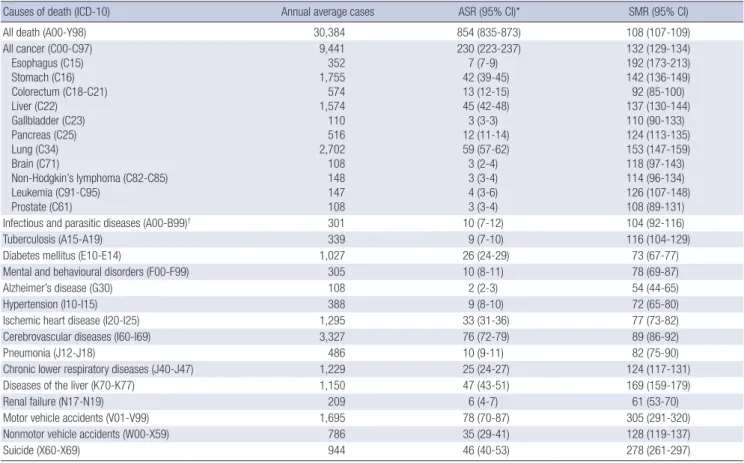
Table 1. Age-standardized mortality rates and standardized mortality ratios for overall and major cause-specific deaths among agricultural workers from 2004 to 2008
Causes of death (ICD-10) Annual average cases ASR (95% CI)* SMR (95% CI)
All death (A00-Y98) 30,384 854 (835-873) 108 (107-109)
All cancer (C00-C97) Esophagus (C15) Stomach (C16) Colorectum (C18-C21) Liver (C22) Gallbladder (C23) Pancreas (C25) Lung (C34) Brain (C71)
Non-Hodgkin’s lymphoma (C82-C85) Leukemia (C91-C95)
Prostate (C61)
9,441 352 1,755 574 1,574 110 516 2,702 108 148 147 108
230 (223-237) 7 (7-9) 42 (39-45) 13 (12-15) 45 (42-48) 3 (3-3) 12 (11-14) 59 (57-62) 3 (2-4) 3 (3-4) 4 (3-6) 3 (3-4)
132 (129-134) 192 (173-213) 142 (136-149) 92 (85-100) 137 (130-144) 110 (90-133) 124 (113-135) 153 (147-159) 118 (97-143) 114 (96-134) 126 (107-148) 108 (89-131)
Infectious and parasitic diseases (A00-B99)† 301 10 (7-12) 104 (92-116)
Tuberculosis (A15-A19) 339 9 (7-10) 116 (104-129)
Diabetes mellitus (E10-E14) 1,027 26 (24-29) 73 (67-77)
Mental and behavioural disorders (F00-F99) 305 10 (8-11) 78 (69-87)
Alzheimer’s disease (G30) 108 2 (2-3) 54 (44-65)
Hypertension (I10-I15) 388 9 (8-10) 72 (65-80)
Ischemic heart disease (I20-I25) 1,295 33 (31-36) 77 (73-82)
Cerebrovascular diseases (I60-I69) 3,327 76 (72-79) 89 (86-92)
Pneumonia (J12-J18) 486 10 (9-11) 82 (75-90)
Chronic lower respiratory diseases (J40-J47) 1,229 25 (24-27) 124 (117-131)
Diseases of the liver (K70-K77) 1,150 47 (43-51) 169 (159-179)
Renal failure (N17-N19) 209 6 (4-7) 61 (53-70)
Motor vehicle accidents (V01-V99) 1,695 78 (70-87) 305 (291-320)
Nonmotor vehicle accidents (W00-X59) 786 35 (29-41) 128 (119-137)
Suicide (X60-X69) 944 46 (40-53) 278 (261-297)
*Age-standardized mortality rate per 100,000 population and 95% confidence intervals; †Total infectious and parasitic diseases except tuberculosis.
ments from the Statistics Korea (6). For prevalence rates, sam- pling weights were applied to account for unequal probabilities of selection resulting from the sample design and from non-re- sponse, as well as to adjust for post-stratification population to- tals for the KNHANES. Multiple logistic analyses were conduct- ed while controlling for potential confounding factors to com- pare prevalence rates of chronic diseases among agricultural workers with those for the total population. Other occupational reference groups (i.e., manual workers and non-manual work- ers) for odds ratio were also used to avoid health worker effect.
Statistical analyses were carried out using Stata 10.0 (StataCorp., College Station, Texas, USA). This study analyzed publicly avail- able data sets and was therefore exempt from institutional re- view board approval.
RESULTS
Table 1 shows average annual deaths, age-standardized mortal- ity rates, and SMRs by cause of death for agricultural workers versus the total population. During the five-year period from 2004 through 2008, there was an average of 30,384 annual deaths among agricultural workers. The most prevalent causes of death were cancer, motor vehicle accidents, and cerebrovascular dis- eases. Significantly increased SMRs were observed for total can- cers, along with cancer of the esophagus, stomach, liver, pan- creas, and lung, as well as leukemia, tuberculosis, chronic lower respiratory diseases, liver diseases, motor vehicle accidents, non- motor vehicle accidents, and suicide. Reduced SMRs were shown for diabetes mellitus, mental disorders, hypertension, ischemic heart disease, cerebrovascular diseases, and renal failure.
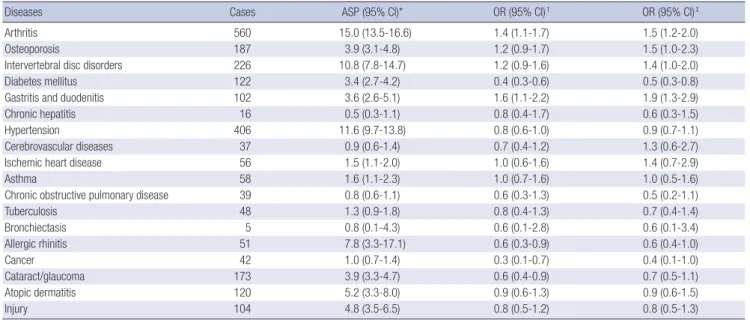
Table 2 presents selected lifetime disease prevalence and odds ratios for agricultural workers. The most prevalent diseases were arthritis, hypertension, and intervertebral disc disorders. Com- pared to the total population, agricultural workers showed a sig- nificantly higher risk of arthritis, gastritis and duodenitis, where- as agricultural workers had a lower prevalence of diabetes mel- litus, cancer, and cataract/glaucoma. The results were similar when the analyses were repeated comparing agricultural to man- ual and non-manual workers.
Table 3 summarizes selected major papers published since 2000 on work-related diseases among agricultural workers in Korea which were used to supplement the limited available mor- tality and morbidity data. The principle health outcomes include musculoskeletal diseases, injury, pesticide poisoning, neuro- logic diseases, respiratory illness, allergy, cancer, infectious dis- eases and others. Infectious, neurological and respiratory dis- eases were more frequently reported than other outcomes, and the majority of the studies are cross-sectional or case reports.
However, there were few published studies on mental health, temperature-related illnesses, hearing loss, bites, toxic diseases which may relate to agricultural work or studies on fishery and forestry workers.
DISCUSSION
When compared to the total population, agricultural workers were observed to be generally more likely to die from a variety of site-specific chronic diseases such as cancer, as along with chronic respiratory diseases, non-motor vehicle accidents, and suicide. The prevalence of musculoskeletal diseases such as ar- Table 2. Age-standardized prevalence, and prevalence odd ratios of selected diseases among agricultural workers versus other populations in 2005 Korean National Health and Nutrition Examination Survey
Diseases Cases ASP (95% CI)* OR (95% CI)† OR (95% CI)‡
Arthritis 560 15.0 (13.5-16.6) 1.4 (1.1-1.7) 1.5 (1.2-2.0)
Osteoporosis 187 3.9 (3.1-4.8) 1.2 (0.9-1.7) 1.5 (1.0-2.3)
Intervertebral disc disorders 226 10.8 (7.8-14.7) 1.2 (0.9-1.6) 1.4 (1.0-2.0)
Diabetes mellitus 122 3.4 (2.7-4.2) 0.4 (0.3-0.6) 0.5 (0.3-0.8)
Gastritis and duodenitis 102 3.6 (2.6-5.1) 1.6 (1.1-2.2) 1.9 (1.3-2.9)
Chronic hepatitis 16 0.5 (0.3-1.1) 0.8 (0.4-1.7) 0.6 (0.3-1.5)
Hypertension 406 11.6 (9.7-13.8) 0.8 (0.6-1.0) 0.9 (0.7-1.1)
Cerebrovascular diseases 37 0.9 (0.6-1.4) 0.7 (0.4-1.2) 1.3 (0.6-2.7)
Ischemic heart disease 56 1.5 (1.1-2.0) 1.0 (0.6-1.6) 1.4 (0.7-2.9)
Asthma 58 1.6 (1.1-2.3) 1.0 (0.7-1.6) 1.0 (0.5-1.6)
Chronic obstructive pulmonary disease 39 0.8 (0.6-1.1) 0.6 (0.3-1.3) 0.5 (0.2-1.1)
Tuberculosis 48 1.3 (0.9-1.8) 0.8 (0.4-1.3) 0.7 (0.4-1.4)
Bronchiectasis 5 0.8 (0.1-4.3) 0.6 (0.1-2.8) 0.6 (0.1-3.4)
Allergic rhinitis 51 7.8 (3.3-17.1) 0.6 (0.3-0.9) 0.6 (0.4-1.0)
Cancer 42 1.0 (0.7-1.4) 0.3 (0.1-0.7) 0.4 (0.1-1.0)
Cataract/glaucoma 173 3.9 (3.3-4.7) 0.6 (0.4-0.9) 0.7 (0.5-1.1)
Atopic dermatitis 120 5.2 (3.3-8.0) 0.9 (0.6-1.3) 0.9 (0.6-1.5)
Injury 104 4.8 (3.5-6.5) 0.8 (0.5-1.2) 0.8 (0.5-1.3)
*Age-standardized prevalence per one hundred population and 95% confidence intervals; †Adjusted for age, education, marriage, smoking, drinking. The reference category was total population; ‡Adjusted for age, education, marriage, smoking, drinking. The reference category was manual and nonmanual workers.
thritis was significantly higher among agricultural workers than among other populations. Although these may have been due to lifestyle or other environmental factors, our findings suggest- ed that such causes of death and chronic diseases may also be closely related with occupational factors. The discrepancy be- tween mortality and prevalence may be explained in part by agricultural worker’s tendency to enter into the health care sys- tem at a later point and in more advanced stages of diseases than other populations, possibly due to lower incomes and ed- ucation.
Musculoskeletal diseases such as osteoarthritis, low back pain, and neck and upper limb complaints are among the most prev- alent illnesses of agricultural workers. Our analyses based on the 2005 KNHANES revealed significantly increased risks of arthritis and intervertebral disc disorders than the total population and other occupations. Although determining a cause-effect rela- tionship between work and musculoskeletal injuries is difficult, a number of risk factors for musculoskeletal diseases, such as extensive workloads, heavy lifting, and working in stressful pos- tures, are all encountered in agriculture. Among musculoskele- tal diseases, agricultural workers demonstrated a higher preva- lence of arthritis and intervertebral disc disorders than other occupational groups. Furthermore, this same class of workers showed a higher prevalence changes for intervertebral disc dis- orders than other occupational classes in analyses of the 1998, 2001, and 2005 KNHANES (7). Another major work-related mus- culoskeletal disease among agricultural workers is carpal tun- nel syndrome. Surveillance data from 2000 to 2003 showed that agricultural workers had the second-highest proportion of work- related carpal tunnel syndrome among all occupations (8).
Injures can be considered the primary occupational health concern in agriculture. Farm machinery such as cultivators, trac- tors, and combines, along with animal-related injuries are the primary sources of acute injuries. Our results showed a signifi- cantly increased SMR for non-motor vehicle accidents, and ag- ricultural (including fishery and forestry) workers were report- ed to experience the second-highest rates of unintentional fatal injuries (33 per 100,000 workers) from 1998-2001 (9). Based on national health insurance and agricultural and fishery qualifi- cation data, the age-adjusted standardized morbidity ratio of total injuries and poisoning was significantly higher among both men (SMR=137) and women (SMR=123) in the agricultural and fishery population than in the general population in 2002 (10).
Pesticide poisoning is a typical occupational disease among agricultural workers. The prevalence of non-fatal pesticide poi- soning has been reported to vary from 5.7% to 86.7% among Korean farmers, depending on the study subjects, years stud- ied, and definition of pesticide poisoning (11). A variety of work- related factors such as pesticide usage, pesticide application days, hazardous practices, and poor hygiene are significantly related with pesticide poisoning. Greenhouse farmers have been reported to receive greater exposure to pesticide than ordinary farmers. Mortality rates for pesticide poisoning based on death registration data also significantly increased in Korea from 4.42 to 6.42 per 100,000 during the period of 1996-2005 (12). Although intentional self-poisoning was the primary cause of these deaths, the majority of victims were residing in rural areas, and pesticide exposure itself may have been related to the intentional self-poi- soning.
In addition, neurologic diseases such as neurologic symptoms, Table 3. Selected published studies since 2000 on the health status of agricultural workers in Korea
Main outcomes Authors (yr) Study type (data sources) Findings Ref.
Musculoskeletal diseases Cha et al. (2009)
Jeong et al. (2004) Cross-sectional (KNHANES)
Surveillance data Arthritis, Intervertebral disc disorders
Carpal tunnel syndrome cases (7) (8)
Injury Im et al. (2008)
Ahn et al. (2004)
Cross-sectional (National Health Insurance data) Survey (Korea Labor Welfare Corporation data)
Prevalence of injury and poisoning Unintentional fatal occupational injury
(10) (9) Pesticide poisoning Lee & Cha (2009)
Lee et al. (2009) Review
Cross-sectional (registered death data) Prevalence of pesticide poisoning
Mortality rates from pesticide-related deaths (11) (12) Neurologic diseases Park et al. (2005)
Kwon et al. (2004) Shin et al. (2002)
Case-control (hospital data) Cross-sectional (survey) Case report (hospital data)
Parkinson’s disease Neurologic symptoms Organophosphate induced peripheral
polyneuropathy
(15) (13) (14) Respiratory diseases Lee & Lim (2008)
Kim & Kim (2002) Kwon et al. (2004) Kim et al. (2008)
Review Review Cross-sectional (survey)
Case report
Work-related diseases including asthma and pneumonitis
Spider-mite allergy and asthma Occupational pollinosis Hypersensitivity pneumonitis
(3) (18) (19) (20) Infectious diseases Kim et al. (2008)
Min et al. (2005) Ahn & Lim (2007) Kim et al. (2006) Shin et al. (2003)
Case-control (hospital) Cross-sectional (surveillance report) Survey (Korea Labor Welfare Corporation data)
Cross-sectional (hospital) Cross-sectional (hospital)
Scrub typhus Scrub typhus
Occupational diseases including scrub typhus Brucellosis
Tetanus
(21) (22) (23) (24) (25)
Cancer Lee et al. (2008)
Sull et al. (2002) Ecologic (registered death data)
Cohort (prospective) Cancer mortality
Cancer incidence (26)
(27)
depression, organophosphate-induced delayed polyneuropathy, and Parkinson’s disease, are all related with agricultural work, especially in terms of pesticide exposure. Long-term occupa- tional exposure to pesticides was seen to increase neurologic symptoms among agricultural workers in a field survey in 2001 (13). Organophosphate-induced delayed polyneuropathy cases were reported among farmers after increased exposures to pes- ticides (14). It has been reported in a multi-center case-control study in Korea (15) that ever having worked in the agricultural, hunting, and/or forestry sector of industry (OR=1.88) and farm- ers as an occupation (OR=1.64) are positively associated with Parkinson’s disease.
Mental health is another important health issue in agricul- ture. Korean agricultural workers suffer stress from chronic dis- eases, economic, and other workplace factors, certain of which may lead to stress-related health disorders such as depression and suicide. Heightened risk of suicide among farmers has been reported from several countries (1). Although mental health status is difficult to quantify and no studies have been reported focusing on agricultural work in Korea, we found a significantly increased SMR for suicide among agricultural workers. Suicide from pesticide ingestion is a prevalent and notorious phenom- enon in rural areas in Korea. Among the different occupational groups analyzed through 2000 death registration data, suicide risk is the greatest in agricultural workers (16).
Respiratory illnesses are among the most prominent occupa- tional illness of agricultural workers and may stem from organ- ic/inorganic dusts, microorganisms, mycotoxins, endotoxins, pollens, mites, molds, animal production, and/or pesticides, and other chemicals. These exposures have been demonstrated to give rise to a variety of respiratory disorders such as bronchi- tis, asthma, and organic dust toxic syndrome (1). In our study, a higher mortality from chronic respiratory diseases was seen in agricultural workers than in the total population. Excessive lev- els of organic dusts and ammonia have been reported in poul- try farms in Korea (17) and respiratory diseases have been fre- quently reported among farmers (3). A variety of case reports and field studies have shown that many other respiratory dis- eases or allergies such as occupational asthma in fruit farmers (18), occupational pollinosis induced by radish and Chinese cabbage pollen in horticultures farmers (19), and hypersensi- tivity pneumonitits from stored hay (20).
A great number of infectious diseases can be transmitted from animals or the environment that may result in occupational dis- eases in agricultural workers. These include scrub typhus (i.e., tsutsugamushi disease), hemorrhagic fever with renal syndrome, leptospirosis, anthrax, rabies, brucellosis, tetanus, and swine and avian influenza. Among these, scrub typhus has been the most frequently reported in Korea. A case-control study for scrub ty- phus showed that fruit farming (OR=2.44), gathering chestnuts (OR=2.05), and taking breaks in locations adjacent to agricul-
tural operations (OR=3.06) are all associated with a high risk of developing scrub typhus (21). The majority of scrub typhus pa- tients (67.2%) were revealed to be farmers in an analysis of sur- veillance data from Gyeongsanbuk-do from 1999 to 2001 (22).
Major compensated occupational diseases among agricultural, forestry and fishery workers in Korea as seen in Industrial Acci- dent Compensation Insurance data were infectious disease, skin disease, and intoxication cases (23). Brucellosis (24) and tetanus cases (25) were found most frequently among agricul- tural workers.
Agricultural workers showed a higher mortality of total can- cers as well as most cancer sites except colorectum, compared to other populations. A previous ecologic study demonstrated an increased risk of cancer mortality in rural areas (26), and a cohort study reported an elevated risk for total cancer and diges- tive cancer among farmers exposed to pesticides in Korea (27).
Work-related factors such as exposure to pesticides, organic and inorganic dusts, zoonotic viruses, fertilizers, and nitrates have been suggested as the possible risk factor to explain the increased rate of cancer among agricultural workers (28). From the Agri- cultural Health Study, a largest prospective cohort study for ag- ricultural workers, the relation between individual pesticides and developing cancer to be discovered (29).
Although not observed in our analysis, skin diseases rank as one of the most common occupational diseases among agricul- tural workers. Contact dermatitis is the most common type, but they are not often reported as they occur, since sufferers may accept these conditions as a natural occurrence rather than a work-related illness. Green tobacco sickness from tobacco leaves was reported in 2001, and showed 42.5% to 67.0% prevalence in rural areas in Korea (3). Farmer’s syndrome, which refers to a combination of eight symptoms of physical and mental impair- ment observed in farmers, has been frequently surveyed and reported to show a wide range of prevalence, but it is difficult to recognize as an occupational disease due to its subjectivity.
Numerous additional work-related illnesses and injury con- ditions remain among agricultural workers. These categories of specific conditions include heat and cold-induced illnesses such as heat stroke and frostbite, hearing loss, snake and insect bites, parasitic infection, keratitis, and allergies or toxic reactions from substances used for animals such as antibiotics, immunization products, and hormones (1). Although those diseases occur fre- quently in agriculture and are occasionally reported as cases, the mortality or KNHANES data may not represent their epide- miology as a result of limited information.
There are certain important limitations to this analysis, such as the cross-sectional nature of the KNHANES data, the poten- tial misclassification of self-reported medical history, a lack of individual information and the validity of death certificates. Job titles are also only a crude approximation of occupational fac- tors, include a wide range of exposures, and would be expected
to contain misclassifications. Although there was no study fo- cused on the accuracy of self-reporting as agricultural workers, a previous reliability study showed 70.3% agreement in the three occupational classes (manual workers, non-manual workers and others) between KNHANES and death certificate data (30).
Agricultural work is more likely to be a life-long occupation than are other occupations and a job description as an agricultural worker may be more accurate than in the case of other types of jobs. We were also unable to examine separate risks by detailed occupational groups (i.e., farmers, fishery workers, and forestry workers) due to limitations in the information collected by the KNHANES and death data. However, the population of fishery and forestry workers constituted less than 5% of the agricultural workers group within our data. Therefore, estimates of mortality and disease prevalence would be mainly explained by agricul- tural workers.
Despite these limitations, this study has shown that agricul- tural workers have a distinct pattern of mortality and disease prevalence than other populations and that certain of these dis- eases may be work-related or occupational. These results from limited data sources are not sufficiently comprehensive and would underestimate the actual number of occupational dis- eases in agriculture. Since no national-level official data are col- lected focusing on agricultural worker’s health, intervention programs such as surveillance systems are required to investi- gate the impact of distinct aspects of agricultural work and to prevent occupational diseases among agricultural workers in Korea.
REFERENCES
1. Donham KJ, Thelin A. Agricultural Medicine: occupational and envi- ronmental health for the health professions. 1st ed. Ames, USA: Black- well Publishing; 2006.
2. Lessenger JE. Agricultural Medicine. New York, USA: Springer; 2006.
3. Lee K, Lim HS. Work-related injuries and diseases of farmers in Korea.
Ind Health 2008; 46: 424-34.
4. Statistics Korea. Annual statistics on the cause of death [CD-ROM]. Dae- jeon, Republic of Korea.
5. Korea Centers for Disease Control and Prevention. The Third Korea National Health and Nutrition Survey 2005 Summary Report. Available at http://knhanes.cdc.go.kr/Index.aspx [accessed on 5 Jan 2010].
6. Statistics Korea. Korean Statistical Information Service. Available at http:
//www.kosis.kr [accessed on 5 Jan 2010].
7. Cha ES, Kong KA, Moon EK, Lee WJ. Prevalence and changes in chronic diseases among South Korean farmers: 1998 to 2005. BMC Public Health 2009; 9: 268.
8. Jeong WC, Kwon HJ, Ha M, Roh SC, Kwon BS, Hyun JG, Lee SJ, Lee JM, Kwon JY, Kim JS, Baek NJ, Lee H, Lee KW, Lee SK. Surveillance of work- related carpal tunnel syndrome in Korea. Korean J Occup Environ Med 2004; 16: 37-47.
9. Ahn YS, Bena JF, Bailer AJ. Comparison of unintentional fatal occupa-
tional injuries in the Republic of Korea and the United States. Inj Prev 2004; 10: 199-205.
10. Im HJ, Kwon YJ, Yim J, Ju YS, Lee KS, Kim KR. The comparative study on the prevalence of injury/poisoning in the agricultural and fishery popu- lation and the general population. J Agric Med Community Health 2008;
33: 82-9.
11. Lee WJ, Cha ES. Overview of pesticide poisoning in South Korea. J Rural Med 2009; 4: 53-8.
12. Lee WJ, Cha ES, Park ES, Kong KA, Yi JH, Son M. Deaths from pesticide poisoning in South Korea: trends over 10 years. Int Arch Occup Environ Health 2009; 82: 365-71.
13. Kwon YJ, Kang TS, Kim KR, Lee KS, Ju YS, Song J. The relationship be- tween pesticide exposure and central nervous system symptoms. Korean J Rural Med 2004; 29: 265-85.
14. Shin HS, Hwang JH, Lee CK. Organophosphate induced peripheral poly- neuropathy with delayed myelopathy: a case report. J Korean Acad Re- habil Med 2002; 26: 113-6.
15. Park J, Yoo CI, Sim CS, Kim HK, Kim JW, Jeon BS, Kim KR, Bang OY, Lee WY, Yi Y, Jung KY, Chung SE, Kim Y. Occupations and Parkinson’s dis- ease: a multi-center case-control study in South Korea. Neurotoxicology 2005; 26: 99-105.
16. Oh JK, Cho YT, Kim CY. Socio-demographic characteristics of suicides in South Korea. Health Soc Sci 2005; 18: 191-210.
17. Shin C, Lee K, Kim K, Kang T, Park N. A study on exposure to organic dust and ammonia in poultry confinement buildings. Korean J Rural Med 2004; 29: 303-14.
18. Kim YK, Kim YY. Spider-mite allergy and asthma in fruit growers. Curr Opin Allergy Clin Immunol 2002; 2: 103-7.
19. Kwon NY, Lee JH, Choi SY, Park JW, Hong CS. Occupational pollinosis induced by radish and Chinese cabbage pollens. Korean J Asthma Aller- gy Clin Immunol 2004; 24: 288-93.
20. Kim CS, Lee WJ, Yoon BJ, Chung HY, Han ER, Choi IS, Koh YI. A case of stored hay-induced hypersensitivity pneumonitis diagnosed with inha- lational provocation tests using antigen sources. Korean J Asthma Aller- gy Clin Immunol 2008; 28: 226-30.
21. Kim DM, Kim KY, Nam HS, Kweon SS, Park MY, Ryu SY. Risk-factors for human infection with Orientia tsutsugamushi: a case-control study in Korea. Clin Microbiol Infect 2008; 14: 174-7.
22. Min YS, Lim HS, Lee K, Jung C, Cheong HK. A study on the epidemio- logic characteristics of scrub typhus in Gyeongsangbuk-do, 1999-2001.
Korean J Epidemiol 2005; 27: 70-9.
23. Ahn YS, Lim HS. Occupational diseases among agricultural, forestry and fishery workers approved by Korea Labor Welfare Corporation. Korean J Occup Environ Med 2007; 19: 1-16.
24. Kim YS, Sill CY, Oh WS, Kwon KT, Lee H, Lee SH, Son JS, Kim SW, Chang HH, Jung SI, Ko KS, Park MY, Peck KR, Song JH. Clinical characteristics of human brucellosis in South Korea. Infect Chemother 2006; 38: 334-43.
25. Shin DH, Yu HS, Park JH, Shin JH, Kim SJ. Recently occurring adult teta- nus in Korea: emphasis on immunization and awareness of tetanus. J Korean Med Sci 2003; 18: 11-6.
26. Lee WJ, Son M, Chun BC, Park ES, Lee HK, Coble J, Dosemeci M. Can- cer mortality and farming in South Korea: an ecologic study. Cancer Causes Control 2008; 19: 505-13.
27. Sull JW, Yi SW, Sohn TY, Jee SH, Nam CM, Ohrr H. Pesticides and can- cer incidence-The Kangwha Cohort Study. Korean J Prev Med 2002; 35:
24-32.
28. Blair A, Zahm SH. Cancer among farmers. Occup Med 1991; 6: 335-54.
29. Alavanja MC, Sandler DP, Lynch CF, Knott C, Lubin JH, Tarone R, Thomas K, Dosemeci M, Barker J, Hoppin JA, Blair A. Cancer incidence in the Agricultural Health Study. Scand J Work Environ Health 2005; 31 Suppl
1: 39-45.
30. Kim HR, Khang YH. Reliability of education and occupational class: a comparison of health survey and death certificate data. J Prev Med Pub- lic Health 2005; 38: 443-8.