Received:March 3, 2017, Accepted:April 10, 2017
Corresponding to:Young Ho Lee, Division of Rheumatology, Department of Internal Medicine, Korea University Medical Center, Korea University College of Medicine, 73 Inchon-ro, Seongbuk-gu, Seoul 02841, Korea. E-mail:[email protected]
Copyright ⓒ 2017 by The Korean College of Rheumatology. All rights reserved.
This is a Free Access article, which permits unrestricted non-commerical use, distribution, and reproduction in any medium, provided the original work is properly cited.
Urinary Tumor Necrosis Factor-like Weak Inducer of Apoptosis as a Biomarker for Lupus Nephritis:
A Meta-analysis
Young Ho Lee, Gwan Gyu Song
Division of Rheumatology, Department of Internal Medicine, Korea University Medical Center, Korea University College of Medicine, Seoul, Korea
Objective. This study evaluates serum or urinary tumor necrosis factor-like weak inducer of apoptosis (TWEAK) as a biomarker for lupus nephritis (LN). Methods. We conducted a meta-analysis examining serum or urinary TWEAK levels in patients with systemic lupus erythematosus (SLE), patients with LN (active or inactive), and healthy controls. We tabulated correlation co- efficients between urinary TWEAK level and total or renal SLE Disease Activity Index (tSLEDAI or rSLEDAI). Results. Eight stud- ies were included in this meta-analysis. The meta-analysis revealed that serum TWEAK levels tended to be higher in patients with SLE than in controls (standard mean difference [SMD]=0.850, 95% confidence interval [CI]=−0.067∼1.767, p=0.069).
Urinary TWEAK was significantly higher in patients with active LN than in those with inactive LN (SMD=2.865, 95% CI=
−0.831∼4.898, p=0.006). In addition, urinary TWEAK was positively associated with tSLEDAI and rSLEDAI (correlation co- efficient=0.436, 95% CI=0.204∼0.622, p=4.3×10⁻⁴; correlation coefficient=0.483, 95% CI=0.108∼0.738, p=0.014).
Pooled sensitivity and specificity of urinary TWEAK for diagnosis of LN were 81.3% (95% CI, 73.3∼87.8) and 76.0% (95% CI, 66.3∼84.2), indicating good diagnostic accuracy. Conclusion. The meta-analysis demonstrated that urinary TWEAK was sig- nificantly higher in patients with active LN than in those with inactive LN, and that urinary TWEAK levels were positively corre- lated with renal disease activity. (J Rheum Dis 2017;24:85-92)
Key Words. Urinary TWEAK, Lupus nephritis, Biomarker
INTRODUCTION
Renal involvement occurs in up to 60% of patients with systemic lupus erythematosus (SLE), and lupus nephritis (LN) remains the predominant cause of morbidity and mortality in SLE [1]. The pathogenesis of LN involves au- toantibody deposition in the glomeruli, activation of complement and macrophages, cell proliferation, and production of extracellular matrix proteins, proinflam- matory cytokines, and chemokines, leading to glomerular damage, tubulointerstitial inflammation, and fibrosis [2].
Tumor necrosis factor-like weak inducer of apoptosis (TWEAK) is a proinflammatory cytokine that induces the
activation of several intracellular signal transduction cas- cades, including the nuclear factor kappa B and mi- togen-activated protein kinase pathways [3], thus con- trolling many cellular activities including proliferation, migration, differentiation, apoptosis, angiogenesis, and inflammation [4]. TWEAK induces apoptosis of glomer- ular mesangial cells and tubular epithelial cells with in- duction of proinflammatory cytokines and chemokines [5]. TWEAK may also contribute to kidney injury through enhanced permeability, which increases the ex- travasation of immunoglobulin G (IgG) and subsequent glomerular IgG deposition, thereby increasing immune complex-mediated activation, which may play an im- portant role in the pathogenesis of LN [6]. TWEAK is
mainly produced by cells of the innate immune system, such as monocytes, dendritic cells, and natural killer cells [7]. TWEAK is abundant in most tissues, but levels are lower in the kidneys [8]. Monocytes and T lymphocytes infiltrating the kidneys may be the potential sources of TWEAK in the kidneys of patients with LN [9].
Biomarkers are potentially useful in the context of dis- ease diagnosis and management. Serum or urinary TWEAK levels have been reported to be markedly ele- vated in patients with LN, and elevation of TWEAK levels in urine reflects renal expression. Thus, serum or urinary TWEAK has been considered a potential biomarker for LN because it plays a major role in the pathogenesis of LN. However, studies examining the association of serum or urinary TWEAK levels with renal involvement in SLE have shown mixed results, mainly because of the small number of trials conducted and the small sample sizes.
Therefore, in order to overcome the limitations of in- dividual studies, we performed a meta-analysis to inves- tigate whether serum or urinary TWEAK could serve as a biomarker for LN.
MATERIALS AND METHODS
Identification of eligible studies and data extraction
We performed a literature search for studies that exam- ined serum or urinary TWEAK concentrations in patients with SLE, patients with LN, and healthy controls.
PubMed, Embase, and Cochrane databases were searched to identify all available past articles (until October 2016).
The keywords and subject terms used in the search were
“TWEAK,” “systemic lupus erythematosus,” and “SLE.”
All references cited were also reviewed to identify addi- tional studies not covered by the abovementioned elec- tronic databases. Studies were considered eligible if: (1) they were case-control or cohort studies; (2) they in- cluded cases of SLE or LN; (3) they provided data on se- rum or urinary TWEAK levels in cases and controls; (4) they provided data on the association between TWEAK levels and SLE or renal activity based on the total or renal SLE Disease Activity Index (t- or rSLEDAI); or (5) they in- cluded sufficient data to calculate the sensitivity and spe- cificity of urinary TWEAK for diagnosis of LN. No lan- guage or race restrictions were applied. Studies were ex- cluded if: (1) they contained overlapping or insufficient data; (2) they included fewer than 5 subjects in the case or control groups; or (3) they were reviews or case reports.
Data on methods and results were extracted from original studies by two independent reviewers. Discrepancies in findings between the reviewers were resolved by consensus. The meta-analysis was conducted in accord- ance with PRISMA guidelines [10]. The following in- formation was extracted from each study: primary author, year of publication, country, number of participants, mean and standard deviation (SD) of TWEAK levels, and correlation coefficients between the urinary TWEAK lev- el and disease activity. Raw data on TWEAK levels were extracted from primary studies to fill 4 cell values (true positive, false positive, true negative, and false negative) in a diagnostic 2×2 table. When the data given were me- dians, interquartile ranges, or ranges, the mean and SD values were obtained using previously described for- mulae [11,12].
Evaluation of statistical associations
We performed a meta-analysis examining serum or uri- nary TWEAK levels in patients with SLE, patients with LN (active or inactive), and healthy controls; correlation coefficients between the urinary TWEAK level and tSLEDAI or rSLEDAI; and the diagnostic accuracy of uri- nary TWEAK in patients with LN. For continuity of data, results were presented as standardized mean differences (SMDs) and 95% confidence intervals (CIs). Odds ratios (ORs) and 95% CIs were calculated for dichotomous data. We assessed within-study and between-study varia- tions and heterogeneities using Cochran’s Q test [13].
The heterogeneity test was used to assess the null hy- pothesis that all studies were evaluating the same effect.
When the significant Q statistic (p<0.10) indicated het- erogeneity across studies, the random effects model was used for the meta-analysis [14]. When the significant Q statistic (p<0.10) did not indicate heterogeneity across studies, the fixed-effects model was used. The model as- sumed that all studies estimated the same underlying effect, and it considered within-study variations only [13]. We quantified the effect of heterogeneity using I2=100%×(Q-df)/Q [15], where I2 measured the degree of inconsistency between studies and determined wheth- er the percentage of total variation across studies was due to heterogeneity rather than chance. I2 ranged from 0% to 100%; I2 values of 25%, 50%, and 75% were referred to as low, moderate, and high estimates, respectively [15]. We combined sensitivity, specificity, positive and negative likelihood ratios (PLR and NLR, respectively), and diag- nostic odds ratio (DOR) estimates and analyzed sum-
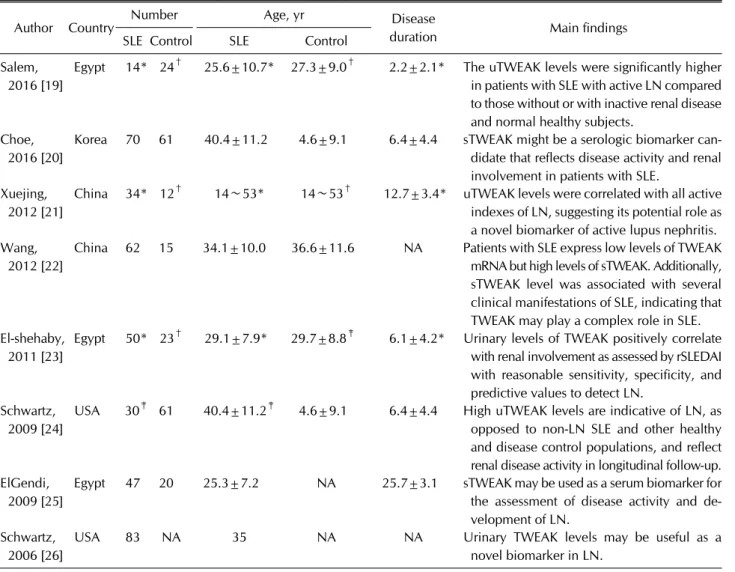
Table 1. Characteristics of individual studies included in the meta-analysis
Author Country Number Age, yr Disease
duration Main findings
SLE Control SLE Control
Salem, 2016 [19]
Egypt 14* 24† 25.6±10.7* 27.3±9.0† 2.2±2.1* The uTWEAK levels were significantly higher in patients with SLE with active LN compared to those without or with inactive renal disease and normal healthy subjects.
Choe, 2016 [20]
Korea 70 61 40.4±11.2 4.6±9.1 6.4±4.4 sTWEAK might be a serologic biomarker can- didate that reflects disease activity and renal involvement in patients with SLE.
Xuejing, 2012 [21]
China 34* 12† 14∼53* 14∼53† 12.7±3.4* uTWEAK levels were correlated with all active indexes of LN, suggesting its potential role as a novel biomarker of active lupus nephritis.
Wang, 2012 [22]
China 62 15 34.1±10.0 36.6±11.6 NA Patients with SLE express low levels of TWEAK mRNA but high levels of sTWEAK. Additionally, sTWEAK level was associated with several clinical manifestations of SLE, indicating that TWEAK may play a complex role in SLE.
El-shehaby, 2011 [23]
Egypt 50* 23† 29.1±7.9* 29.7±8.8‡ 6.1±4.2* Urinary levels of TWEAK positively correlate with renal involvement as assessed by rSLEDAI with reasonable sensitivity, specificity, and predictive values to detect LN.
Schwartz, 2009 [24]
USA 30‡ 61 40.4±11.2‡ 4.6±9.1 6.4±4.4 High uTWEAK levels are indicative of LN, as opposed to non-LN SLE and other healthy and disease control populations, and reflect renal disease activity in longitudinal follow-up.
ElGendi, 2009 [25]
Egypt 47 20 25.3±7.2 NA 25.7±3.1 sTWEAK may be used as a serum biomarker for the assessment of disease activity and de- velopment of LN.
Schwartz, 2006 [26]
USA 83 NA 35 NA NA Urinary TWEAK levels may be useful as a
novel biomarker in LN.
Values are presented as number and mean±standard deviation. SLE: systemic lupus erythematosus, TWEAK: tumor necrosis factor-like weak inducer of apoptosis, uTWEAK: urinary TWEAK, LN: lupus nephritis, sTWEAK: serum TWEAK, NA: not available, rSLEDAI: renal SLE disease activity index. Definition of Active LN in this analysis: rSLEDAI score ≥4. *Active LN, †non-LN SLE,
‡LN.
mary receiver operating characteristic (SROC) curves for diagnosing LN. Area under the curve (AUC) (in this case, area under the SROC curve) provides an overall summary of test performance and shows the trade-off between sen- sitivity and specificity [16]. Q* index is another useful global estimate of test accuracy for comparing SROC curves [16]. In the present meta-analysis, statistical ma- nipulations were undertaken using the Comprehensive Meta-Analysis computer program (Biostat, Englewood, NJ, USA) and Meta-DiSc version 1.4 (Hospital Universitario Ramón y Cajal, Madrid, Spain) [17].
Evaluation of publication bias
Although funnel plots are often used to detect pub-
lication bias, they require diverse study types of varying sample sizes, and their interpretation involves subjective judgment. Therefore, we assessed the publication bias using Egger’s linear regression test [18], which measured funnel plot asymmetry using a natural logarithm scale of ORs.
RESULTS
Studies included in the meta-analysis
We identified 191 studies using electronic and manual search methods. Twelve of the studies were selected for full-text review on the basis of titles and abstracts. Four of these were excluded because they contained groups with
Table 2. Meta-analysis of serum and urinary TWEAK levels in lupus nephritis Comparison PopulationNumber of
study
Test of association Test of heterogeneity Publication bias p-value
SMD 95% CI p-value Model p-value I2
Serum TWEAK
SLE vs. Control Overall 4 0.850 −0.067∼1.767 0.069 R 0.000 92.5 0.823
LN vs. Control Overall 3 1.326 −0.695∼3.347 0.198 R 0.000 95.9 0.244
LN vs. Non-LN Overall 3 0.997 −0.513∼2.506 0.196 R 0.000 94.8 0.025
Urinary TWEAK
LN vs. Control Overall 2 1.655 −0.289∼3.600 0.095 R 0.000 93.2 NA
Active LN vs.
Inactive LN
Overall 3 2.865 0.831∼4.898 0.006 R 0.000 92.5 0.441
TWEAK: tumor necrosis factor-like weak inducer of apoptosis, SMD: standard mean difference, CI: confidence interval, SLE:
systemic lupus erythematosus, LN: lupus nephritis, R: random effects model, NA: not available.
Figure 1. Meta-analysis of the relationship between serum TWEAK level and SLE com- pared with control (A), and be- tween urinary TWEAK level and active LN compared with inactive LN (B). TWEAK: tumor necrosis factor-like weak in- ducer of apoptosis, SLE: sys- temic lupus erythematosus, LN:
lupus nephritis, CI: confidence interval, Std diff: standardized difference.
subject number less than 5, or were reviews. Thus, 8 ar- ticles met the inclusion criteria [19-26] (Table 1). There were 4 studies on serum in SLE or LN, 3 on urinary TWEAK levels, 4 on correlation coefficients between uri- nary TWEAK level and SLE and renal activity, and 3 on the diagnosis of LN (Table 1). The characteristic features of the studies included in the meta-analysis are summarized in Table 1.
Meta-analysis of serum or urinary TWEAK level in SLE and LN
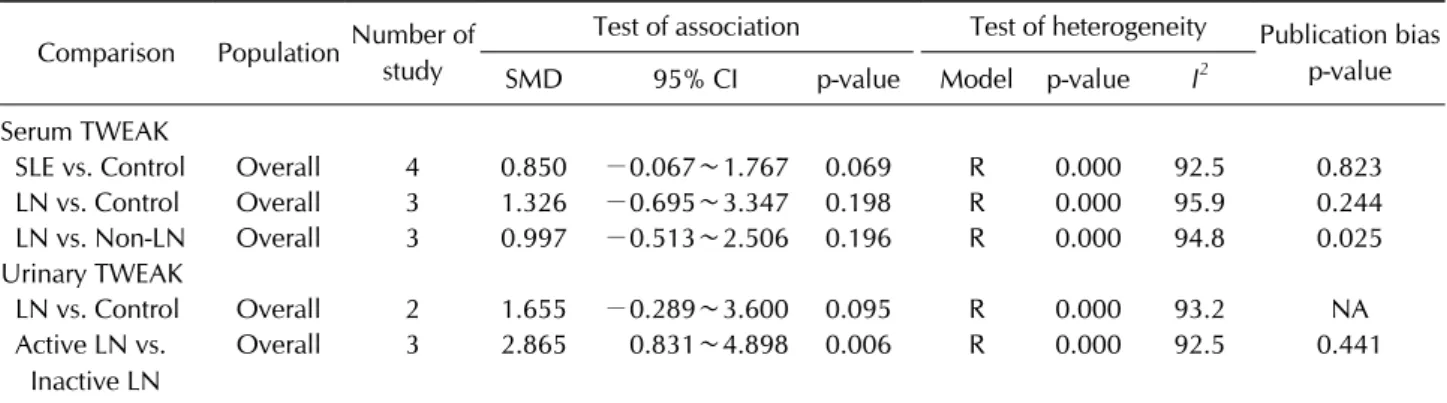
The meta-analysis revealed that the serum TWEAK level tended to be higher in patients with SLE than in controls (SMD=0.850, 95% CI=−0.067∼1.767, p=0.069) (Table 2, Figure 1). However, the meta-analysis showed no sig-
nificant difference in serum TWEAK level between the LN group and the control group, or between the ac- tive-LN group and the inactive-LN group (Table 2). The meta-analysis indicated that the urinary TWEAK level tended to be higher in patients with LN than in controls (SMD=1.655, 95% CI=−0.289∼3.600, p=0.095) (Table 2). However, the meta-analysis also showed that the uri- nary TWEAK level was significantly higher in the ac- tive-LN group than in the inactive-LN group (SMD=2.865, 95% CI=−0.831∼4.898, p=0.006) (Table 2, Figure 1).
Meta-analysis of the relationship between urinary TWEAK level and SLE, renal disease activity
The meta-analysis identified that urinary TWEAK was positively associated with SLE activity based on tSLEDAI
Table 3. Meta-analysis of the correlation coefficient between urinary TWEAK level and SLE and renal activity, and the diagnosis of LN A. Correlation between uTWEAK and SLE or renal activity
Comparison
Number Test of association Test of heterogeneity
Publication bias p-value Study Patient Correlation
coefficient 95% CI p-value Model p-value I2
tSLEDAI 4 212 0.436 0.204∼0.622 4.3×10⁻⁴ R 0.002 79.7 0.949
rSLEDAI 4 289 0.483 0.108∼0.738 0.014 R 0.000 92.0 0.705
TWEAK: tumor necrosis factor-like weak inducer of apoptosis, SLE: systemic lupus erythematosus, LN: lupus nephritis, uTWEAK:
urinary TWEAK, CI: confidence interval, tSLEDAI: total SLE disease activity index, rSLEDAI: renal SLE disease activity index, R:
random effects model.
B. Diagnosis of LN
PopulationStudy No.
Number Sensitivity (95% CI)
Specificity (95% CI)
PLR (95% CI)
NLR (95% CI)
DOR (95% CI)
AUC (SE)
Q*
LN Non-LN (SE)
Overall 3 123 96 0.813
(0.733∼0.878)
0.760 (0.663∼0.842)
2.723 (1.774∼4.180)
0.248 (0.073∼0.843)
11.28 (5.128∼24.82)
0.836 (0.038)
0.768 (0.035) LN: lupus nephritis, PLR: positive likelihood ratio, NLR: negative likelihood ratio, DOR: diagnostic odds ratio, AUC: area under the curve, CI: confidence interval, SE: standard error.
Figure 2. Meta-analysis of the correlation coefficient between urinary TWEAK and total SLEDAI (A) and renal SLEDAI (B). TWEAK:
tumor necrosis factor-like weak inducer of apoptosis, SLEDAI:
systemic lupus erythematosus disease activity index, CI: con- fidence interval.
(correlation coefficient=0.436, 95% CI=0.204∼0.622, p=4.3×10⁻⁴) (Table 3, Figure 2). Urinary TWEAK was also positively associated with renal disease activity based on rSLEDAI (correlation coefficient=0.483, 95%
CI=0.108∼0.738, p=0.014) (Table 3, Figure 2).
Diagnostic accuracy of urinary TWEAK level in LN
The pooled sensitivity and specificity of urinary TWEAK were 81.3% (95% CI, 73.3∼87.8) and 76.0% (95% CI,66.3∼84.2), respectively (Table 3). The PLR, NLR, and DOR of urinary TWEAK were 2.723 (95% CI, 1.774∼
4.180), 0.248 (95% CI, 0.073∼0.843), and 11.28 (95%
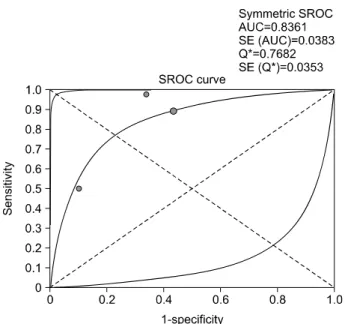
CI, 5.128∼24.82), respectively (Table 3). Figure 3 shows the performance of the urinary TWEAK test in the form of SROC curves. The AUC and Q* index of urinary TWEAK were 0.836 and 0.768, respectively (Table 3, Figure 3).
Figure 3. Summary receiver-operating characteristic curves for urinary TWEAK for the diagnosis of LN. Solid circles repre- sent individual studies included in this meta-analysis. The curve shown is a regression line that summarizes the overall diagnostic accuracy. TWEAK: tumor necrosis factor-like weak inducer of apoptosis, LN: lupus nephritis, SROC: summary re- ceiver operating characteristic, SE (AUC): standard error of the area under the curve, Q*: an index defined by the point on the SROC curve where the sensitivity and specificity are equal;
and SE (Q*): Q* index standard error.
Heterogeneity and publication bias
Between-study heterogeneity was identified during the meta-analyses of serum and urinary TWEAK in patients with SLE or LN (Tables 2 and 3). However, most of the studies showed the same direction of the effect size.
Publication bias results in a disproportionate number of positive studies, and poses a problem for meta-analyses.
However, we found no evidence of publication bias for the meta-analyses (Egger’s regression test p-values>0.1), except for the analysis of serum TWEAK in patients with LN versus non-LN (Tables 2 and 3).
DISCUSSION
In this meta-analysis, we combined the evidence of se- rum and urinary TWEAK levels as a biomarker in patients with LN. This meta-analysis showed no significant differ- ence in serum TWEAK levels between patients with LN and controls, or between the active-LN group and the in- active-LN group. In contrast, the urinary TWEAK level was significantly higher in patients with active LN than in patients with inactive LN. In addition, urinary TWEAK
was positively associated with SLE and LN activity based on the tSLEDAI and rSLEDAI. The pooled sensitivity and specificity of urinary TWEAK for diagnosis of LN were 81.3% and 76.0%, respectively, and the AUC of urinary TWEAK was 0.836, indicating good diagnostic performance.
These meta-analysis data suggest that urinary TWEAK may be a useful potential biomarker for assessing LN ac- tivity and diagnosing LN, and for differentiating between active and inactive LN in patients who have SLE with re- nal involvement.
TWEAK also contributes to the renal inflammatory process and damage in LN. TWEAK induces apoptosis of glomerular mesangial cells and tubular epithelial cells with induction of proinflammatory cytokines and chemo- kines, thus causing glomerular and tubular injury, which plays a major role in the pathogenesis of LN [6]. TWEAK, like monocyte chemoattractant protein-1 (MCP-1), is a potent mediator of renal involvement and renal disease activity in SLE [27]. Our results suggest that urinary TWEAK levels reflect LN activity because urinary TWEAK levels correlated with rSLEDAI scores, and were increased significantly in the active-LN group compared to the inactive-LN group.
There has been a need for biomarkers for LN, because bi- omarkers provide a method to noninvasively evaluate the extent and activity of LN [28]. Biomarkers should be pathophysiologically relevant and simple to utilize in rou- tine practice [29]. It will be valuable to identify a reliable, noninvasive assessment method that reflects the activity of LN. Urine biomarkers appear to be more promising than serum biomarkers in the assessment of renal in- volvement in SLE, because urine biomarkers are the di- rect products or consequences of kidney inflammation and may most accurately reflect renal status [28]. In addi- tion, urine biomarkers are easily obtained. Among several biomarkers, urinary TWEAK has been considered a sensi- tive and specific biomarker for LN [30]. Urinary TWEAK levels are correlated with their local production in the kid- neys with LN because TWEAK produced in the kidneys shows elevated levels in the urine [30]. Our meta-analy- sis revealed that urinary but not serum TWEAK levels were increased significantly in the active-LN group com- pared to the inactive-LN group. Thus, measurement of urinary TWEAK may be a useful noninvasive method for evaluating renal involvement in SLE, allowing possible differentiation of patients with active LN from those with inactive LN on the basis of levels of this urinary bio- marker.
The present study has certain shortcomings that should be considered. First, a small number of studies were in- cluded in this meta-analysis, and most of the included studies had small sample sizes. Thus, the meta-analysis may be underpowered. Second, the studies included in the meta-analysis were heterogeneous in demographic characteristics and clinical features. The heterogeneity and confounding factors in clinical status and disease ac- tivity in the included populations may have affected our results. However, the small number of studies did not permit further subgroup meta-analyses. Nevertheless, this meta-analysis also has its strengths: First, to the best of our knowledge, our meta-analysis is the first study that provides combined evidence regarding serum or urinary TWEAK levels in SLE and LN according to the activity.
Second, compared with individual studies, our study should provide more reliable data on the relationship be- tween urinary TWEAK level and LN by increasing the lev- el of statistical power and resolution through the pooling of the results of independent analyses.
CONCLUSION
Our meta-analysis demonstrated that the urinary TWEAK level was significantly higher in patients with ac- tive LN than in patients with inactive LN. Moreover, uri- nary TWEAK was positively associated with renal disease activity in patients with SLE, and showed good diagnostic accuracy. Our meta-analysis suggests that urinary TWEAK may be a useful potential biomarker for evaluat- ing LN activity and differentiating between LN and non-LN. Further studies are necessary to elucidate whether urinary TWEAK can serve as a biomarker for di- agnosing LN and monitoring LN activity in practice.
CONFLICT OF INTEREST
No potential conflict of interest relevant to this article was reported.
REFERENCES
1. Waldman M, Appel GB. Update on the treatment of lupus nephritis. Kidney Int 2006;70:1403-12.
2. Lech M, Anders HJ. The pathogenesis of lupus nephritis. J Am Soc Nephrol 2013;24:1357-66.
3. Ogura Y, Mishra V, Hindi SM, Kuang S, Kumar A. Proin- flammatory cytokine tumor necrosis factor (TNF)-like weak inducer of apoptosis (TWEAK) suppresses satellite
cell self-renewal through inversely modulating Notch and NF-κB signaling pathways. J Biol Chem 2013;288:35159- 69.
4. Winkles JA. The TWEAK-Fn14 cytokine-receptor axis: dis- covery, biology and therapeutic targeting. Nat Rev Drug Discov 2008;7:411-25.
5. Campbell S, Burkly LC, Gao HX, Berman JW, Su L, Browning B, et al. Proinflammatory effects of TWEAK/
Fn14 interactions in glomerular mesangial cells. J Immunol 2006;176:1889-98.
6. Zhao Z, Burkly LC, Campbell S, Schwartz N, Molano A, Choudhury A, et al. TWEAK/Fn14 interactions are in- strumental in the pathogenesis of nephritis in the chronic graft-versus-host model of systemic lupus erythematosus. J Immunol 2007;179:7949-58.
7. Michaelson JS, Wisniacki N, Burkly LC, Putterman C. Role of TWEAK in lupus nephritis: a bench-to-bedside review. J Autoimmun 2012;39:130-42.
8. Chicheportiche Y, Bourdon PR, Xu H, Hsu YM, Scott H, Hession C, et al. TWEAK, a new secreted ligand in the tu- mor necrosis factor family that weakly induces apoptosis. J Biol Chem 1997;272:32401-10.
9. Sanz AB, Sanchez-Niño MD, Ortiz A. TWEAK, a multifunc- tional cytokine in kidney injury. Kidney Int 2011;80:708-18.
10. Moher D, Liberati A, Tetzlaff J, Altman DG; PRISMA Group.
Preferred reporting items for systematic reviews and meta-analyses: the PRISMA statement. PLoS Med 2009;
6:e1000097.
11. Hozo SP, Djulbegovic B, Hozo I. Estimating the mean and variance from the median, range, and the size of a sample.
BMC Med Res Methodol 2005;5:13.
12. Ridout KK, Ridout SJ, Price LH, Sen S, Tyrka AR. Depression and telomere length: A meta-analysis. J Affect Disord 2016;191:237-47.
13. Egger M, Smith GD, Phillips AN. Meta-analysis: principles and procedures. BMJ 1997;315:1533-7.
14. DerSimonian R, Laird N. Meta-analysis in clinical trials.
Control Clin Trials 1986;7:177-88.
15. Higgins JP, Thompson SG. Quantifying heterogeneity in a meta-analysis. Stat Med 2002;21:1539-58.
16. Walter SD. Properties of the summary receiver operating characteristic (SROC) curve for diagnostic test data. Stat Med 2002;21:1237-56.
17. Zamora J, Abraira V, Muriel A, Khan K, Coomarasamy A.
Meta-DiSc: a software for meta-analysis of test accuracy data. BMC Med Res Methodol 2006;6:31.
18. Egger M, Davey Smith G, Schneider M, Minder C. Bias in meta-analysis detected by a simple, graphical test. BMJ 1997;315:629-34.
19. Salem MN, Taha HA, Abd El-Fattah El-Feqi M, Eesa NN, Mohamed RA. Urinary TNF-like weak inducer of apoptosis (TWEAK) as a biomarker of lupus nephritis. Z Rheumatol 2016 Sep 12 [Epub]. DOI:10.1007/s00393-016-0184-1.
20. Choe JY, Kim SK. Serum TWEAK as a biomarker for disease activity of systemic lupus erythematosus. Inflamm Res 2016;65:479-88.
21. Xuejing Z, Jiazhen T, Jun L, Xiangqing X, Shuguang Y, Fuyou L. Urinary TWEAK level as a marker of lupus neph- ritis activity in 46 cases. J Biomed Biotechnol 2012;2012:359647.
22. Wang C, Chen LL, Pan HF, Leng RX, Qin WZ, Ye DQ.
Expression of human tumor necrosis factor-like weak in- ducer of apoptosis in patients with systemic lupus ery- thematosus. Clin Rheumatol 2012;31:335-9.
23. El-Shehaby A, Darweesh H, El-Khatib M, Momtaz M, Marzouk S, El-Shaarawy N, et al. Correlations of urinary bi- omarkers, TNF-like weak inducer of apoptosis (TWEAK), osteoprotegerin (OPG), monocyte chemoattractant pro- tein-1 (MCP-1), and IL-8 with lupus nephritis. J Clin Immunol 2011;31:848-56.
24. Schwartz N, Rubinstein T, Burkly LC, Collins CE, Blanco I, Su L, et al. Urinary TWEAK as a biomarker of lupus neph- ritis: a multicenter cohort study. Arthritis Res Ther 2009;
11:R143.
25. ElGendi SS, El-Sherif WT. Anti-C1q antibodies, sCD40L, TWEAK and CD4/CD8 ratio in systemic lupus eryth- ematosus and their relations to disease activity and renal
involvement. Egypt J Immunol 2009;16:135-48.
26. Schwartz N, Su L, Burkly LC, Mackay M, Aranow C, Kollaros M, et al. Urinary TWEAK and the activity of lupus nephritis.
J Autoimmun 2006;27:242-50.
27. Lee YH, Song GG. Urinary MCP-1 as a biomarker for lupus nephritis: a meta-analysis. Z Rheumatol 2016 Jun 9 [Epub].
DOI:10.1007/s00393-016-0109-z.
28. Mok CC. Biomarkers for lupus nephritis: a critical appraisal.
J Biomed Biotechnol 2010;2010:638413.
29. Illei GG, Tackey E, Lapteva L, Lipsky PE. Biomarkers in sys- temic lupus erythematosus. I. General overview of bio- markers and their applicability. Arthritis Rheum 2004;50:
1709-20.
30. Reyes-Thomas J, Blanco I, Putterman C. Urinary bio- markers in lupus nephritis. Clin Rev Allergy Immunol 2011;40:138-50.