1
Open Access
Transradial Approach as a Default Route in Coronary Artery Interventions
Jang-Young Kim, MD and Junghan Yoon, MD
Divison of Cardiology, Department of Internal Medicine, Wonju College of Medicine, Yonsei University, Wonju, Korea ABSTRACT
Advances in percutaneous coronary intervention (PCI) and peri-procedural potent antithrombotic treatments during the past decade have dramatically improved the outcomes of ischemic heart disease. The femoral artery is the vascular route used in PCI in most catheterization labs. However, when the femoral artery is used as the approaching vessel, local hemorrhagic complication is not rare in the era of potent antithrombotics. Recent studies have suggested that peri-procedural bleeding complications after PCI are associated with increased short- and long-term morbidity and mortality. On the other hand, there has been growing interest in transradial PCI due to rare complications at the puncture site, patient conveniences, early disch- arge and shortened hospitalization periods. Furthermore, the indications of transradial PCI are expanding to the complex lesion subsets due to the miniaturization of devices used, improvement of devices and techniques, and accumulated experience with the use of transradial PCI. In this review, we discuss the data of transradial PCI as a potential default route in coronary artery interventions, as well as other issues that may raise concerns with transradial PCI. (Korean Circ J 2011;41:1-8) KEY WORDS: Angioplasty; Coronary arteries; Radial artery.
Correspondence: Junghan Yoon, MD, Divison of Cardiology, Depart- ment of Internal Medicine, Wonju College of Medicine,Yonsei University, 162 Ilsan-dong, Wonju 220-701, Korea
Tel: 82-33-741-0906, Fax: 82-33-741-1219 E-mail: [email protected]
• The authors have no financial conflicts of interest.
cc This is an Open Access article distributed under the terms of the Cre- ative Commons Attribution Non-Commercial License (http://creativecom- mons.org/licenses/by-nc/3.0) which permits unrestricted non-commer- cial use, distribution, and reproduction in any medium, provided the origi- nal work is properly cited.
Introduction
Femoral approach has been the preferred vascular access for coronary angiography and percutaneous coronary inter- vention (PCI). However, recent reports have suggested that the radial artery approach for coronary angiography and in- terventions might be effective in terms of procedural out- comes compared to transfemoral approach and permits a wide range of diagnostic and therapeutic interventions. Further- more, the transradial approach is a very safe alternative to fe- moral access due to a low rate of vascular entry site complica- tions.1-3)
In the recent era of potent antiplatelet and anticoagulant th- erapy, post-PCI bleeding complications are closely related with an increase of in-hospital outcomes, as well as mid- and
long-term mortality.4)5) Transradial coronary intervention (TRI) is an attractive access site for interventionists, compared to transfemoral coronary intervention (TFI), when considering the reduction of bleeding complications.
Transradial vs. Transfemoral Coronary Intervention
Efficacy of clinical outcomes
Although the amount of existing data comparing outcome after femoral and radial PCI is modest, a recent meta-analysis of 23 randomized trials showed that there were no significant differences in death, myocardial infarction (MI), or stroke be- tween the transradial and transfemoral approach (TFI).6) How- ever, the mortality rate tends to be lower in the transradial group [mortality rate: 1.2% vs. 1.8%, for TRI vs. TFI, odds ratio (OR): 0.74 {95% confidence interval (CI) 0.42-1.30}, p=0.29].
The rates of MI and stroke individually were both similar to the trend seen in mortality {MI: 2.0% vs. 2.9% for TRI vs.
TFI, OR 0.76 (95% CI 0.49-1.17), p=0.21} {Stroke: 0.1% vs.
0.5% for TRI vs. TFI, OR 0.39 (95% CI 0.09-1.75), p=0.22}.
When the three individual hard outcomes were combined, there was a marginal trend toward lower composite event rates in the transradial group {2.5% vs. 3.8%, (95% CI 0.49-1.01),
p=0.058}.6) The large cohort data from 593,094 procedures in the National Cardiovascular Data Registry (606 sites; 2004 to 2007) were compared to the procedural success rate be- tween TFI and TRI. Although the proportion of TRI proce- dures are rare {1.32% (7,804 cases) of total procedure}, TRI was associated with a similar rate of procedural success {ad- justed OR: 1.02 (95% CI: 0.93-1.12)} compared with TFI.7) In a recent meta-analysis of acute MI performed primary PCI (n=3,324), there was significant reductions in the composite of death, MI, and stroke {3.65% vs. 6.55%, for TRI vs. TFI, OR 0.56 (95% CI 0.39-0.79)}.8)
Therefore, considerable evidence suggested that TRI has a similar procedural success and trend for reduction in ischemic events in coronary intervention compared with those of TFI.
Bleeding and access site complications
Post-PCI bleeding complications are most commonly relat- ed to vascular access of the femoral artery. Femoral bleeding complications have traditionally been considered benign. How- ever, the Mayo clinic data of 17,901 patients who underwent PCI between 1995 and 2006 found that major femoral bl- eeding complications were associated with increased 30-day mortality with a adjusted hazard ratio of 9.96 (95% CI: 6.94- 14.3).4) Similar findings of a national cohort study showed that access site hematoma requiring transfusion independently associated with in-hospital mortality (OR 3.59, 95% CI 1.66- 7.77) and 1-year death (OR 1.65, 95% CI 1.01-2.70).5) Current- ly, available data suggests that access site complications are not a benign complication of PCI, but a very important predic- tor of adverse procedural success and patient outcome.
A definite advantage of the transradial approach is the re- duction in access site related complications such as access site bleeding, pseudoaneurysm, and arteriovenous fistula.1)7)8) In the meta-analysis of 23 randomized trials, radial access reduc- ed the OR of major bleeding by 73% in patients undergoing coronary angiography or intervention compared to femoral access.6) These benefits can be explained by the fact that the radial artery runs superficially and hemostasis can be easily achieved by manual compression or pressure bandage. In addi- tion, no major nerves or veins were located near the radial ar- tery, minimizing the risk of injury of these structures.
Some studies have shown that TRI could reduce both the bl- eeding complication and clinical outcomes. In the Mortality benefit Of Reduced Transfusion after percutaneous coronary intervention via the Arm or Leg (M.O.R.T.A.L) study from 38,872 PCI patients (radial approach, 20.5%), TRI was asso- ciated with a significant decrease in bleeding complications {OR 0.59 (95% CI 0.48 to 0.73)}, 30-day mortality {OR 0.71 (95% CI 0.61-0.82)} and 1-year mortality {OR 0.83 (95% CI 0.71- 0.98)}, compared with those of TFI.9) In the meta-analysis with ST elevation MI, TRI reduces the risk of peri-procedural ma- jor bleeding {OR 0.30 (95% CI 0.16-0.55)}, and mortality {OR
0.54 (95% CI 0.33-0.86)} in the primary PCI setting.8) How- ever, clinical evidence is limited because most of the study was observational or the data was obtained from an experienced operator. Therefore, large randomized clinical trials (RCT) are necessary to determine the benefit of TRI from access site bleeding to mortality and several large scale RCTs are ongoing (ClinicalTrials.gov Identifier; NCT01014273).
Another advantage of TRI is that it leads to early ambula- tion and may result in reduced hospital stay and decreased cost.10) Therefore, experienced centers of TRI establish an outpatient PCI unit, leading to increased turnover of PCI and diagnostic angiography cases and reduced cost for hospital stay.10)11) Many interventional cardiologists are becoming in- creasingly interested in TRI due to rare access site hematoma, patient convenience, and shortened hospitalization periods.
Downside of transradial procedures
Although less procedural complications leads to an impro- vement of procedural outcomes, there are also downsides to the transradial approach. The transradial approach was asso- ciated with a significantly longer procedural time (mean dif- ference: 3.1 minutes in meta-analysis) and fluoroscopic time (mean difference: 0.1 minutes in meta-analysis).6) However, there was significant heterogeneity (p<0.001, i2=87%) with a large difference in procedural time in studies performed by non-TRI experts {4.8 minutes (95% CI 3.7-5.8 minutes)} com- pared to TRI experts {1.7 minutes (95% CI 0.7-2.6 minutes)}
suggesting that a significant learning curve is present.6) A major problem in the early period may be access failure leading to crossover to another puncture site. In a recent meta- analysis, the rate of access site crossover was significantly hi- gher with the TRI (5.9%, 150 of 2,542 patients) compared with the TFI (1.4%, 34 of 2,460 patients) {OR 3.82 (95% CI 2.83- 5.15), p<0.001}.6) However, the OR for access site crossover decreased significantly from the earlier period of radial access to the modern period, suggesting that improvements in device technology and increase in expertise have narrowed the gap.
Another technical issue is related to the size of the guide ca- theter because the diameter of the radial artery is smaller than that of the femoral artery. In a meta-analysis, there was a slight insignificant trend towards higher failure rate of crossing le- sion with wire, balloon, or stent with the transradial approach {OR 1.31 (95% CI 0.87-1.96), p=0.20}. However, in the studies performed by radial experts, the rates were similar between TRI and TFI {OR: 1.18 (95% CI 0.77-1.81), p=0.44}, again sug- gesting the presence of a learning curve.6) Overcoming the learning curve is usually dependant on TRI cases and an an- nual procedural volume >80 transradial cases are significant reductions in access failure, sheath insertion time, and overall procedural time in an observation study.12) With the develop- ment of dedicated catheters such as the sheathless system for TRI and with increased experience, there seem to be similar
in access failure and procedure times between TRI and TFI.
In summary, TRI is associated with comparable procedural success and efficacy to TFI and reduces access site related com- plications and has made early ambulation possible, which sig- nificantly increases patient comfort and reduced hospital stay and cost. Therefore, TRI is a very attractive technique to apply in daily practice as a default route.
Concerned Issues of Transradial Coronary Intervention
as a Default Route
The indications of transradial PCI are expanding complex co- ronary lesions {e.g., chronic total occlusion (CTO),13)14) primary PCI,8)15)16) and bifurcation lesion17)} and non-coronary angio- plasty (e.g., renal artery stenosis18) and peripheral artery disease19)) due to the miniaturization of devices used, improvement of devices, and accumulated experience with transradial PCI.
Although TRI has many advantages over TFI during inter- ventional procedures, <10% of cath. labs use TRI as a default route.7)20) There are some obstacles to overcome the learning curve related to the radial artery access, selection of guide ca- theter and complex lesion angioplasty.
Issues related to the radial artery access
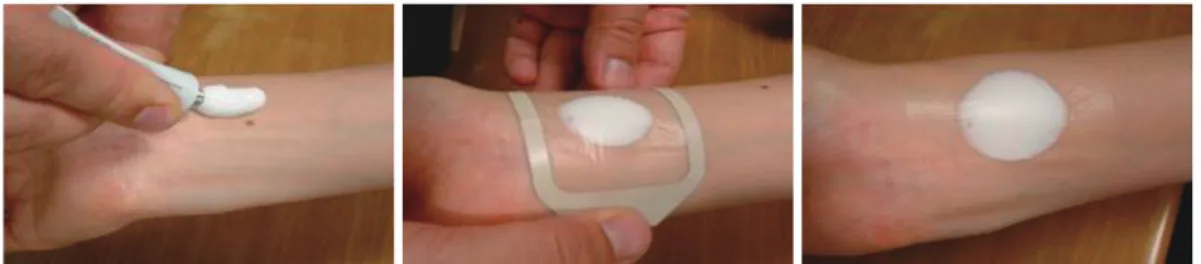
Puncture failure is the first obstacle during the early learning period of TRI because radial artery is small (less than 4 mm) and prone to arterial spasm. In our experience, the wrist pain at the puncture site is an important factor leading to radial spasm and puncture failure. Premedication should be given, such as a light sedative or local anesthetic cream. Eutectic mix- ture of local anesthetic (EMLA) cream, composed of lidocaine 2.5% and prilocaine 2.5%, is known to be an effective topical anesthetic agent. It is used for a variety of painful cutaneous procedures on intact skin, including phlebotomy, intravenous catheterization, arterial cannulation and lumbar puncture.21) In our data, EMLA cream was able to reduce the pain (about half) during transradial cannulation and reducing the rate of puncture failure (Fig. 1).22) After sheath insertion, spasmo- lytic cocktails (various combinations of nitrate, xylocaine and verapamil) have been proposed to reduce the radial artery sp- asm during the procedures.
Variations and tortuosity of the radial artery have been ob-
served during human dissections and on angiographic images.
In routine clinical practice, variations of these vessels are one of the main reasons for technical difficulty and failure in TRI. In our data,23) tortuosity of radial and brachial artery was found in 4.2% (67 cases of 1,191 cases) and more frequently in elderly persons. The most common forms of tortuosity were S-shape in 21 cases, omega-shape in 21 cases and alpha-sh- ape (radial artery loop) in 6 cases. In addition, the most com- mon site of radial artery tortuosity was proximal third of an- tecubital fossa. Prolonged procedure times and/or cross-over to other routes were related with tortuosity of the radial ar- tery (especially, omega and alpha-shape). However, the over- all incidence of cross-over due to severe tortuosity of radial and brachial artery is rare (less than 1%) in our study.23)
Local vascular complications of TRI are rare compared to the femoral approach. The most frequent complication dur- ing TRI is the radial artery spasm as previously described.
The other rare complications are severe hematoma or com- partment syndrome due to small branch perforation of con- duit artery and bleeding,24) radial artery occlusion,25) AV fis- tula (very rare), and causalgia caused by nerve injury during ar- terial puncture. Radial artery occlusion accounts for about 1%
of transradial procedures. Most patients with radial artery oc- clusion are asymptomatic due to dual supply of the ulnar-ra- dial artery. The use of an adequate amount of heparin is im- portant in the prevention of radial artery occlusion after the procedure. The use of a standard 5,000 IU (relatively high do- sage of transradial diagnostic procedure) or 50 U/kg of hep- arin is recommended.26)
A-V fistula is an extremely (<0.1%) rare situation that can arise after transradial procedures. Usually, they are asympto- matic with incidental accounts of bruit of puncture site. Ra- dio-ulnar fistula can infrequently be corrected by surgery.
Severe bleeding in the forearm or compartment syndrome is a rare condition (<0.4%) after TRI procedures. The patient has symptoms of pain, pallor, painful stretching of muscle, paresthesia, and pulseless of forearms. Forearm bleeding can usually be observed after compression and rarely needs sur- gical intervention (surgical fasciotomy of forearm) due to ongoing ischemic changes of the forearm. Therefore, it is criti- cal to immediately detect swellings of the access site or the path of catheter which are easily controlled with haemostatic compression.
Fig. 1. Application of eutectic mixture of local anesthetic cream on radial artery puncture site.
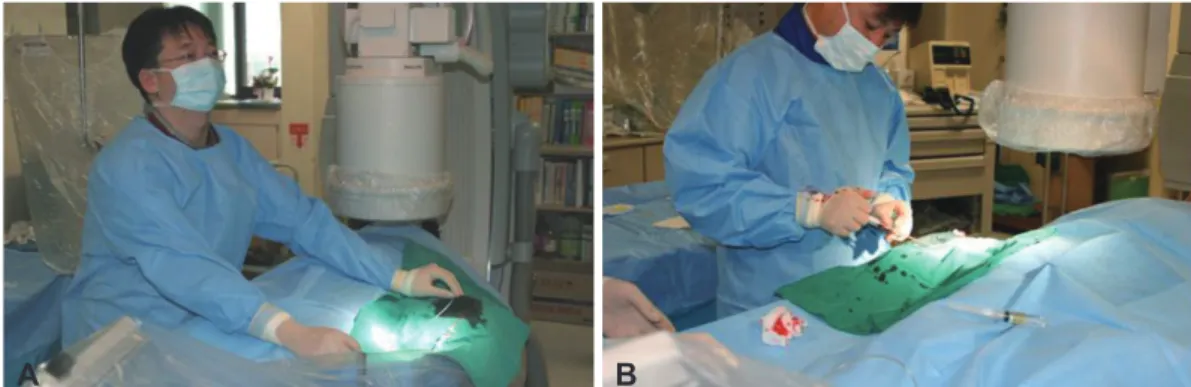
Right radial approach vs. left radial artery approach For selecting the vascular access site, most interventional cardiologists are familiar with doing the procedure at the right side of the patient since the right radial approach is more con- venient for manipulating the devices, including the guide catheter. Therefore, almost 90% of interventional cardiologists select the right radial artery as a first access route when per- forming transradial procedures in international survey data.20) The only difference in performing the left radial access is that because the operator’s standing position is apart from the left arm, the operator must bend over the patient, which may be inconvenient to the operator (Fig. 2). However, there are several advantages in selecting the left radial approach in terms of patient comfort and the effectiveness of the proce- dures. First, the left radial approach potentially increases pa- tient comfort because most patients are right handed. The pa- tients are free to use his/her right hand immediately after the procedure. Second, a left internal mammary angiogram can easily be performed in the case of a coronary artery bypass gr-
aft candidate. The advantages or disadvantages of right or left radial artery access are summarized in Table 1.
Our institute retrospectively evaluated the procedural suc- cess rate, crossover rate, puncture time, total procedural dura- tion, fluoroscopy time, amount of contrast agent used and the local vascular complications in 711 cases via the left radial ap- proach (Lt. group) and in 614 cases via the right radial appro- ach (Rt. group).27) The puncture time, amount of contrast agent used, choice of the guide catheter and local vascular complic- ations were similar for the two groups. There was no differ- ence in the procedural success rate (Lt. group; 96.2% vs. Rt.
group; 96.4%, p=not significant). However, there was a tend- ency towards a higher success rate via radial access for the Lt.
group than for the Rt. group (Lt. group; 93.5% vs. Rt. group;
91.9%, p=0.056). The crossover rate was lower for the Lt.
group than for the Rt. group (2.7% vs. 4.6%, respectively;
p=0.04). The total procedural time (30.7±17.6 minutes vs.
32.3±15.4 minutes, respectively; p=0.03) and fluoroscopy time (13.9±7.9 minutes vs. 16.9±12.6 minutes, respectively;
Fig. 2. Procedural position of the right and left radial approaches for coronary interventions. A: left radial approach. B: right radial approach.
A B
Table 1. Advantages and disadvantages of right vs. left radial artery approach Right radial artery approach during transradial procedures
Advantage
Convenience of operator Easy to puncture Disadvantage
Difficult to catheter manipulation due to subclavian artery tortuosity in 10% patients*
Total procedure time and fluoroscopy time: Sometimes longer than left approach Left radial artery approach during transradial procedures
Advantage
Catheter selection & manipulation : similar to transfemoral intervention Convenience of patient
Low frequency of severe tortuous subclavian artery Easy to angiogram of left internal mammary artery Disadvantage
Discomfort of operator Difficulty of puncture position
sometimes, acute angle from left subclavian artery to aortic arch
*Higher frequency of severe subclavian artery tortuosity29): Old age/Female/HTN/Small height/High body mass index
p<0.01) were shorter in the Lt. group. The number of guide catheters used was higher in the Rt. group compared to the Lt. group (1.21±0.48 vs. 1.08±0.33, respectively, p=0.04). Our data suggested that the left radial approach may provide in- creased procedural efficacy during transradial procedures.
Similar findings published in a randomized control trial (TALENT study) demonstrated that the left radial approach for TRI is associated with lower fluoroscopy time and radia- tion dose adsorbed by patients compared with the right ra- dial approach, particularly in older patients.28) At present, the choice of the right or left radial artery as an entry site de- pends largely on operator preference. However, in case of hi- gher frequency of right subclavian artery tortuosity (age >65, female, and short status <160 cm),29) the left radial approach might be better that the wight radial approach.
Selection of guiding catheter
Diagnostic and PCI catheters for transradial approach are similar to those used for transfemoral approach at present. Re- cent advances in interventional device technology have pro- vided miniaturization of the guiding catheter (GC). With the recent availability of 5 Fr. GC, dedicated shape GC and shea- thless GC, the usefulness and indication of TRI will be ex- panded.
Guiding catheter selection for transradial coronary intervention
In the international survey data (75 countries) for TRI, a large majority of operators prefer to use 6 Fr GC. Only approxima-
tely 10% of operators use 5 Fr. GCs for TRI of right coronary artery, and <10% use 5-Fr. GCs for TRI of left coronary artery.20)
The selection of GC shapes depends on the site of coronary lesion in the survey data. For left coronary artery lesions, op- erators routinely use standard extra back-up (EBU) GCs. The most popular GC is EBU catheter (30% of all cases) in the in- ternational survey data.20) Amplatz, Kimny or Multipurpose GCs are also used for left coronary artery lesions. Interesting- ly, a significant number of operators still use less supportable GCs, such as Judkins left in 22.5% for left anterior descend- ing artery lesions. For the right coronary lesions, the most po- pular GC shape is the Judkins right in 70.2% of cases. Amp- latz left GC provides backup support for right coronary ar- tery intervention. Therefore, Amplatz left GC can be used in the concomitant procedure in both coronary interventions.20) New technology of guide catheters
Recent advancements in the technology of manufacturing TRI devices have now enabled us to use 5 Fr GC. Dahm et al.30) performed a randomized comparison of 6 Fr and 5 Fr GC by TRI to investigate procedural and clinical success rates and the rate of vascular access complications. TRI with 5 Fr GC shows a trend in favor of a higher procedural success rate and a lower rate of vascular access complications com- pared to 6 Fr GC, and these results were particularly marked in the subgroup of patients with small radial artery diameters.
Recently, the sheathless GC system (SheathLess Eaucath, Asahi Intecc®, Japan) consists of a hydrophilic GC and a cen- tral dilator. This system can be used to insert the GC into the
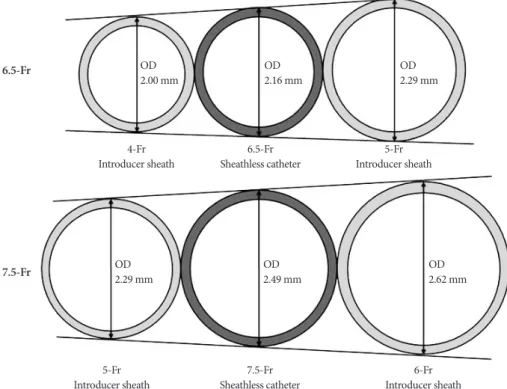
Fig. 3. Comparison of outer diameter (OD) between introducer sheath and sheathless guiding catheters (Adapted from reference 31 with au- thors’ permission).
OD 2.00 mm
OD 2.29 mm
7.5-Fr
Sheathless catheter 6-Fr
Introducer sheath 5-Fr
Introducer sheath
OD 2.16 mm
OD 2.49 mm
OD 2.29 mm
OD 2.62 mm 6.5-Fr
7.5-Fr
4-Fr
Introducer sheath 6.5-Fr
Sheathless catheter 5-Fr Introducer sheath
radial artery without the use of an introducer sheath. The out- er diameter of the 6.5 Fr sheathless GC (2.16 mm) is smaller than a 5 Fr introducer sheath (2.29 mm). The outer diameter of the 7.5 Fr sheathless GC (2.49 mm) is also less than that of 6 Fr introducer sheath (2.62 mm) (Fig. 3). With these fea- tures, the sheathless GC system enables performance of TRI even in patients with a small radial artery diameter.31) Further- more, the hydrophilic coating that is present along the entire length of the GC may be helpful in reducing wrist pain due to arterial spasm. Mamas et al.32) and Liang et al.33) reported on successful use of a sheathless GC in complex interventions with large bore catheters including rotablation, crush stent bi- furcation lesions, thrombectomy devices and simultaneous kissing stenting.
With the advancement of devices such as 5 Fr GC or sh- eathless GC system, TRI will expand the indication of vari- ous coronary lesion subsets and bulky device procedures with patient comfort, even for those with small radial artery size or spastic radial artery.
Transradial coronary intervention for complex lesions
The indications for TRI are expanding due to an accumula- tion of experience with TRI and miniaturization of PCI de- vices. TRI interventionists could be feasible to a complex le- sion subset (e.g., CTO and bifurcation lesion PCI) and unstable patient’s haemodynamics (e.g., primary PCI and acute coro- nary syndrome). Although there is limited data for TRI of a complex lesion subset with regards to efficacy and the safety, recent data demonstrates similar procedural results and re- duced access site complications compare with TFI.13-17) Transradial coronary intervention for primary percutaneous coronary intervention
In the era of potent antiplatelets and anticoagulants to re- duce the incidence of ischemic events, primary PCI should be associated with high access site bleeding complication in the usual transfemoral procedure.34) Recent evidence showed that the burden of bleeding complications after primary PCI is clo- sely related to the in-hospital morbidity and long term survi- val.8)35) Therefore, there are definite advantages of TRI in acu- te MI if primary PCI via radial artery can be performed with equal feasibility as TFI.
TEMPURA study showed that the success rate and major adverse cardiac events of transradial primary PCI were simi- lar to transfemoral primary PCI, and hemorrhagic complic- ations of transradial primary PCI including access site com- plications were decreased.15) In our data from 352 consecutive primary PCI cases,16) vascular access time was similar (3.8±
3.5 minutes in TFI and 3.6±3.1 minutes in TRI) and cath.
room to reperfusion time was 25±11 minutes in TRI and 26±
13 minutes in TRI. Procedural success rate was 89% in TFI gr-
oup and 88% in TRI group. Crossover occurred in 9 cases (4%) due to approaching vessel tortuosity in the TRI group. Major access site complication occurred in 7 cases (5%) in the TFI group and no complication in the TRI group (p<0.001). Alth- ough radial occlusion occurred in 5 cases of the TRI group, there was no evidence of hand ischemia. The total hospital stay was significantly shorter in TRI than TFI group. These data show transradial primary PCI is an effective and safe route in acute MI settings.
Recent meta-analysis (20 study involving 3,324 patients) confirms these findings.8) TRI reduced major bleeding com- pared to transfemoral PCI and significant reductions were found in the composite of death, MI, or stroke (p=0.001). Mor- tality showed a significant trend towards benefit in the case of transradial primary PCI {2.04% vs. 3.06%, OR 0.54 (95%
CI 0.33-0.86), p=0.01}.
Collectively, transradial primary PCI reduces the risk of peri-procedural major bleeding and major adverse events with similar procedural success in the ST elevation acute MI settings.
Transradial coronary intervention for chronic total occlusion
There is limited data available for comparing TRI and TFI in treatment of CTO. When the radial approach for CTO in- tervention is attempted, availability of sufficient guiding sup- port becomes a major concern since it is generally not feasi- ble to use a GC larger than 7 Fr. Accordingly, the transfemoral approach is often preferred over transradial PCI for CTO be- cause 7 or 8 Fr GCs may be used to obtain greater backup sup- port, as compared to the 6 Fr GCs frequently used in the trans- radial approach.
However, several studies reported a high success rate for the transradial approach to CTO with acceptable crossover rate to femoral artery (3.3-6%).13)14) Saito et al.36) reported that the suc- cess rate was 67% in phase 1 and this improved to 81% in ph- ase 2 (late phase). During phase 2, the success rate was high- er for patients who were treated with TRI rather than with TFI (89% vs. 64%; p=0.008) which may indicate that CTO inter- vention is highly dependent on the experience and technique of the operators, regardless of access site. Rathore et al.14) ex- amined 468 patients who underwent CTO PCI and compar- ed the TRI (318 patients) and TFI (150 patients). The procedu- ral success rate was similar in both groups (82% radial and 86%
femoral, p=0.28). Total fluoroscopy time, total procedure time, and total contrast volume were also similar in TFI and TRI. The incidence of death or MI remained low in both gr- oups, but, not surprisingly, the rate of access site complications (3.5% of TRI vs. 11.3% of TFI) and hematoma >5 cm (0% of TRI vs. 2.6% of TFI) was significantly lower in the radial gr- oup (p<0.001).
Collectively, the radial artery is a feasible vascular access route in coronary interventions for CTO with less access site
complication and comparable procedural success as com- pared with TFI.
Transradial coronary intervention for bifurcation lesion Many interventionists prefer the TFI for bifurcation lesions because coronary bifurcation lesions usually need the larger GCs which accommodate two stents or two balloons. Recent advancement and miniaturization of interventional devices enables us to perform bifurcation stenting with 6 Fr large-lu- men GCs or sheathless GCs in case of small radial artery size.
To date, there are limited data sets on TRI for bifurcation le- sions.
In an observational study comparing immediate and 7- month follow-up clinical outcomes between TRI (n=60 pa- tients) and TFI (n=74 patients) for true bifurcated lesions, there was no significant difference in immediate and long- term clinical outcomes.17)
Recently, the 7.5 Fr sheathless GC overcomes the lesions requiring simultaneous kissing stent implantation by tran- sradial approaches. This sheathless system provides a large operating diameter and small outer catheter size compared to a conventional 6 Fr radial artery sheath introducer.33) Collec- tively, TRI of bifurcation lesion might be feasible, more effec- tive and safer than TFI.
Conclusions
TRI was originally considered an alternative vascular route.
However, due to technical improvements, enhanced device te- chnology, and increased operator experience, TRI may be- come a default vascular access route currently for diagnostic coronary angiography, elective coronary angioplasty, primary PCI in acute MI and complex lesion PCI including CTO and bifurcating lesion.
REFERENCES
1) Agostoni P, Biondi-Zoccai GG, de Benedictis ML, et al. Radial versus femoral approach for percutaneous coronary diagnostic and interven- tional procedures: systematic overview and meta-analysis of randomiz- ed trials. J Am Coll Cardiol 2004;44:349-56.
2) Yoon J, Lee SH, Lee HH, et al. Usefulness of trans-radial coronary an- giography in Wonju. Korean Circ J 1998;28:1670-6.
3) Yoon J, Lee SH, Kim JY, et al. The experience of trans-radial coronary intervention in Wonju. Korean Circ J 1998;28:1443-51.
4) Doyle BJ, Ting HH, Bell MR, et al. Major femoral bleeding complica- tions after percutaneous coronary intervention: incidence, predictors, and impact on long-term survival among 17,901 patients treated at the Mayo Clinic from 1994 to 2005. JACC Cardiovasc Interv 2008;1:202-9.
5) Yatskar L, Selzer F, Feit F, et al. Access site hematoma requiring blood transfusion predicts mortality in patients undergoing percutaneous coronary intervention: data from the National Heart, Lung, and Blood Institute Dynamic Registry. Catheter Cardiovasc Interv 2007;69:961-6.
6) Jolly S, Amlani S, Hamon M, Yusuf S, Mehta SR. Radial versus fem- oral access for coronary angiography or intervention and the impact on major bleeding and ischemic events: a systematic review and meta-an- alysis of randomized trials. Am Heart J 2009;157:132-40.
7) Rao SV, Ou FS, Wang TY, et al. Trends in the prevalence and out- comes of radial and femoral approaches to percutaneous coronary in- tervention: a report from the National Cardiovascular Data Registry.
JACC Cardiovasc Interv 2008;1:379-86.
8) Vorobcsuk A, Kónyi A, Aradi D, et al. Transradial versus transfemo- ral percutaneous coronary intervention in acute myocardial infarction:
systematic overview and meta-analysis. Am Heart J 2009;158:814-21.
9) Chase AJ, Fretz EB, Warburton WP, et al. Association of the arterial ac- cess site at angioplasty with transfusion and mortality: the M.O.R.T.A.L study (Mortality benefit Of Reduced Transfusion after percutaneous coronary intervention via the Arm or Leg). Heart 2008;94:1019-25.
10) Cooper CJ, El-Shiekh RA, Cohen DJ, et al. Effect of transradial ac- cess on quality of life and cost of cardiac catheterization: a randomized comparison. Am Heart J 1999;138:430-6.
11) Amoroso G, Laarman GJ, Kiemeneij F. Overview of the transradial ap- proach in percutaneous coronary intervention. J Cardiovasc Med (Ha- gerstown) 2007;8:230-7.
12) Spaulding C, Lefevre T, Funck F, et al. Left radial approach for coro- nary angiography: results of a prospective study. Cathet Cardiovasc Diagn 1996;39:365-70.
13) Kim JY, Lee SH, Choe HM, Yoo BS, Yoon J, Choe KH. The feasibility of percutaneous transradial coronary intervention for chronic total oc- clusion. Yonsei Med J 2006;47:680-7.
14) Rathore S, Hakeem A, Pauriah M, Roberts E, Beaumont A, Morris JL.
A comparison of the transradial and the transfemoral approach in ch- ronic total occlusion percutaneous coronary intervention. Catheter Car- diovasc Interv 2009;73:883-7.
15) Saito S, Tanaka S, Hiroe Y, et al. Comparative study on transradial ap- proach vs. transfemoral approach in primary stent implantation for pa- tients with acute myocardial infarction: results of the test for myocar- dial infarction by prospective unicenter randomization for access sites (TEMPURA) trial. Catheter Cardiovasc Interv 2003;59:26-33.
16) Kim JY, Yoon J, Jung HS, et al. Feasibility of the radial artery as a vas- cular access route in performing primary percutaneous coronary inter- vention. Yonsei Med J 2005;46:503-10.
17) Yang YJ, Xu B, Chen JL, et al. Comparison of immediate and follow up results between transradial and transfemoral approach for percu- taneous coroanry intervention in true bifurcational lesions. Chin Med J 2007;120:539-44.
18) Kessel DO, Robertson I, Taylor EJ, Patel JV. Renal stenting from the radial artery: a novel approach. Cardiovasc Intervent Radiol 2003;26:
146-9.
19) Sanghvi K, Kurian D, Coppola J. Transradial intervention of iliac and superficial femoral artery disease is feasible. J Interv Cardiol 2008;21:
385-7.
20) Bertrand OF, Rao SV, Pancholy S, et al. Transradial approach for coro- nary angiography and interventions: results of the first international transradial practice survey. JACC Cardiovasc Interv 2010;3:1022-31.
21) Gajraj NM, Pennant JH, Watcha MF. Eutectic mixture of local analge- sics (EMLA) cream. Anesth Analg 1994;78:574-83.
22) Kim JY, Yoon J, Yoo BS, Lee SH, Choe KH. The effect of a eutectic mixture of local anesthetic cream on wrist pain during transradial co- ronary procedures. J Invasive Cardiol 2007;19:6-9.
23) Yoo BS, Yoon J, Ko JY, et al. Anatomical consideration of the radial artery for transradial coronary procedures: arterial diameter, branch- ing anomaly and vessel tortuosity. Int J Cardiol 2005;101:421-7.
24) Lin YJ, Chu CC, Tsai CW. Acute compartment syndrome after tran- sradial coronary angioplasty. Int J Cardiol 2004;97:311.
25) Stella PR, Kiemeneij F, Laarman GJ, Odekerken D, Slagboom T, van der Wieken R. Incidence and outcome of radial artery occlusion follow- ing transradial artery coronary angioplasty. Cathet Cardiovasc Diagn 1997;40:156-8.
26) Pancholy SB. Comparison of the effect of intra-arterial versus intrave- nous heparin on radial artery occlusion after transradial catheteriza- tion. Am J Cardiol 2009;104:1083-5.
27) Kim JY, Yoon J, Jung IH, et al. Transradial coronary intervention:
comparison of the left and right radial artery approach. Korean Circ J
2006;36:780-5.
28) Sciahbasi A, Romagnoli E, Burzotta F, et al. Transradial approach (left vs right) and procedural times during percutaneous coronary proce- dures: TALENT study. Am Heart J 2011;161:172-9.
29) Cha KS, Kim MH, Kim HJ. Prevalence and clinical predictors of se- vere tortuosity of right subclavian artery in patients undergoing trans- radial coronary angiography. Am J Cardiol 2003;92:1220-2.
30) Dahm JB, Vogelgesang D, Hummel A, Stuudt A, Volzke H, Felix SB.
A randomized trial of 5 vs 6 French transradial percutaneous coronary interventions. Catheter Cardiovasc Interv 2002;57:172-6.
31) Youn YJ, Yoon J, Sung JK, Kim JY. Feasibility of transradial coronary intervention using the sheathless guiding catheter in patients with sm- all radial artery. Korean Circ J 2011; In press.
32) Mamas MA, Fath-Ordoubadi F, Fraser DG. Atraumatic complex trans- radial intervention using large bore sheathless guide catheter. Cath-
eter Cardiovasc Interv 2008;72:357-64.
33) Liang M, Puri A, Linder R. Transradial simultaneous kissing stent- ing (SKS) with sheathless access. Catheter Cardiovasc Interv 2010;
75:222-4.
34) Nikolsky E, Mehran R, Dangas G, et al. Development and validation of a prognostic risk score for major bleeding in patients undergoing per- cutaneous coronary intervention via the femoral approach. Eur He- art J 2007;28:1936-45.
35) Eikelboom JW, Mehta SR, Anand SS, Xie C, Fox KA, Yusuf S. Ad- verse impact of bleeding on prognosis in patients with acute coronary syndromes. Circulation 2006;114:774-82.
36) Saito S, Tanaka S, Hiroe Y, et al. Angioplasty for chronic total occlusion by using tapered-tip guidewires. Catheter Cardiovasc Interv 2003;59:
305-11.