Received: 2012.2.8. Revised: 2012.3.19. Accepted: 2012.4.24.
Corresponding author: Sung-Ho Park, MD
Department of Obstetrics and Gynecology, Hallym University Kangnam Sacred Heart Hospital, Hallym University College of Medicine, 1 Singil-ro, Yeongdeungpo-gu, Seoul 150-950, Korea Tel: +82-2-829-5163 Fax: +82-2-833-5323
E-mail: [email protected]
Th is is an Open Access article distributed under the terms of the Creative Commons Attribution Non-Commercial License (http://creativecommons.org/licenses/
by-nc/3.0/) which permits unrestricted non-commercial use, distribution, and reproduction in any medium, provided the original work is properly cited.
Copyright © 2012. Korean Society of Obstetrics and Gynecology
Hysterectomy is one of the most common surgical procedure worldwide [1,2]. Annually 600,000 hysterectomies are carried out in the USA, more than 32,000 hysterectomies in Australia, and 60,000 hysterectomies in France [3-5].
According to surgical approach, hysterectomy is divided into ab- dominal approach, vaginal approach, and laparoscopic approach.
Abdominal and vaginal hysterectomies have been performed for centuries. About 20 years ago, the laparoscopic approach to hys- terectomy was introduced by Reich [6], and it has been evolving since then [7].
Until now, many studies attempted to evaluate the effectiveness http://dx.doi.org/10.5468/KJOG.2012.55.6.384
pISSN 2233-5188 · eISSN 2233-5196
THE COMPARISON OF POSTOPERATIVE PAIN: TOTAL LAPAROSCOPIC HYSTERECTOMY VERSUS VAGINAL HYSTERECTOMY
Kong-Ju Choi, MD, Hong-Bae Kim, MD, Sung-Ho Park, MD
Department of Obstetrics and Gynecology, Hallym University College of Medicine, Seoul, Korea
Objective
The purpose of this study was to evaluate postoperative pain of total laparoscopic hysterectomy (TLH) compared with vaginal hysterectomy (VH).
Methods
From June 2010 to August 2010, 122 patients were enrolled, of whom 56 underwent TLH and 66 underwent VH for benign diseases at Kangnam Sacred Heart Hospital. Postoperative pain degree was compared in non-randomized, prospective method and preoperative, intraoperative, postoperative characteristics were considered. Postoperative pain was measured using the visual analog scale (VAS) score at 1-hour, 1-day, 3-day postoperative periods and the additional consumption of analgesic units (vials and tablets) required by patients for pain relief at all hospital stay.
Results
For the fi rst 3 postoperative days, the median total consumption of analgesics was considerably lower in the TLH group than in the VH group (pethidine, P<0.05; non-steroidal anti-infl ammatory drug [Ketorolac Tromethamine], P<0.05). The VAS score also was higher for the VH group than in the TLH group (VAS 1-hour, P<0.05; VAS 1-day, P<0.05; VAS 3-day, P<0.05). No signifi cant difference was found between groups in respect to preoperative, intraoperative and postoperative characteristics except operation time, prior intra-abdominal surgery and pelvic adhesion.
Conclusion
In this study, since TLH is a less painful procedure in comparison to VH, TLH may be a good alternative to VH for the benign gynecologic diseases with expert surgeons.
Keywords: Postoperative pain; Total laparoscopic hysterectomy; Vaginal hysterectomy
of hysterectomy and most of those studies have not mentioned postoperative pain [8-10].
However, it is necessary to study postoperative pain because post- operative pain has made most patients who undergo surgery fear- ful and undoubtedly, they would like to avoid experiencing pain.
For this reason, postoperative pain became an object of this study.
We report our experiences here with total laparoscopic hysterec- tomy (TLH) at Kangnam Sacred Heart Hospital in the year 2010 in comparison to vaginal hysterectomy (VH) in terms of the differ- ence in postoperative pain.
Materials and Methods
Prospective non-randomized case-control study to compare pa- tients undergoing total laparoscopic hysterectomy and women un- dergoing vaginal hysterectomy for benign diseases was designed for this study.
From June 2010 to August 2010, the records of 122 women who had TLH or VH for benign diseases in Kangnam Sacred Heart Hos- pital were reviewed by prospective analysis.
One hundred twenty-two patients were enrolled, of whom 56 underwent total laparoscopic hysterectomy and 66 underwent vaginal hysterectomy.
Procedures were performed by 3 skilled gynecological surgeons in our department and were not limited to those specializing in lapa- roscopy or vaginal procedures. The skilled gynecological surgeon is defi ned as the person who has a minimum of 5 years’ experience in gynecological surgery and has performed at least 100 gyneco- logical surgery procedures per year. The surgical route was decided by whether the uterus was mobile when traction was done by clamping the cervix with tenaculum. VH was performed when mo- bile, whereas TLH was performed in other cases.
1. Operative technique
1) Procedure of VH
The patient was placed in a supine position. Under general anes- thesia, the patient’s position was changed to a lithotomic position.
The skin painting and draping was done in the usual manners. The vaginal mucosa at the junction of the cervix was incised with a scalpel around the entire cervix. The operator dissected the blad- der with a fi nger from the uterus at the vesicouterine peritoneal fold level. The fold was grasped by a silk suture after being incised.
The peritoneum of the cul-de-sac was exposed and incised also.
The ligaments of the uterus were exposed partially on each side.
The uterosacral ligaments were clamped, cut and tied with Vicryl 1-0. And then, both cardinal ligaments were done in the same way.
The round ligaments were clamped with the kelly clamp and in- cised close to the uterine fundus and tied with Vicryl 1-0 on each side. The second ties of these pedicles were done with Vicryl 1-0.
The uterus was removed out of the pelvic cavity through the va- gina. The peritoneum was reestablished with chromic 1-0.
2) Procedure of TLH
The defi nition of TLH in this study was limited in that the uterus must be removed completely laparoscopically and vaginal incision had to be closed by laparoscopic sutures.
With the lithotomic position, the abdomen and suprapubic areas of the patient were painted with potadine solution and draped in the usual manner under general anesthesia. The small skin incision was made just below the umbilicus and the abdominal wall was picked up manually.
The 11 mm trocar was inserted into the umbilical incision wound and peritoneal cavity was filled with CO
2gas to a limited pres- sure of 12 mm Hg. After the same method, three 5 mm trocars were placed laterally left and right, and in the middle of the lower abdomen. The uterine fundus was lifted up by using a “uterine elevator.” The round ligaments were cut and electrocoagulated by electrosurgical devices. The leaves of the broad ligaments were opened anteriorly to the vesicouterine fold and posteriorly to the uterosacral ligaments and across the posterior lower uterine seg- ment. The tubes and suspensory ligaments or infundibulopelvic ligaments both were electrocoagulated. The filmy tissues sur- rounding the uterine vessels were skeletonized by dissecting the tissues away from the uterine vessels.
The uterine vessels were clamped, divided and ligated with Vicryl 1-0.
And then the cervicovaginal junction was cut by electrosurgical devices and the uterus was removed from the vagina circumferen- tially. The suture with Vicryl 1-0 was carried out over the vaginal stump. After rinsing, a drain is placed.
The laparoscopic and trocar sleeve were removed and CO
2gas was removed. The incision wound was closed layer by layer.
Patients were excluded from this study if they had a confi rmed or suspected malignant disease, pelvic infl ammatory disease or se- vere endometriosis. Patients who had vaginal prolapse higher than the fi rst degree also were excluded from this study.
For each patient, we recorded preoperative parameters including
patient’s age, weight, parity, body mass index (BMI), prior intra-
abdominal surgery history, intraoperative parameters including
complications (bladder, ureter or bowel injury), estimated blood loss, time of operation (from the fi rst incision until the last suture), uterine weight, concomitant unilateral or bilateral salpingo-oo- phorectomy, concomitant vaginal repair, conversion to laparotomy, and postoperative parameters including length of hospital stay, fever (temperature >38
oC, after the fi rst 24 postoperative hours), reduction of hemoglobin (before surgery and on the fi rst postop- erative day), blood transfusion.
For pain management, intraoperatively analgesics consisting of fentanyl (4–8 μg/kg/hr intravenously), and patient controlled anal-
gesia (PCA) was given immediately after surgery, which continued for 24 hours. PCA is composed with combinations of fentanyl 20 μg/kg, non-steroidal anti-infl ammatory drug (NSAIDs) (Ketorolac Tromethamine) 3.0 mg/kg and antiemetics (ondansetron) 8 mg (in 100 mL normal saline in a premixed bag). As per our protocol, the PCA was continued for the fi rst 48 postoperative hours. The program allowed a patient bolus of 2 mL available every 15 min- utes. In addition, 30 mg of non-steroidal anti-infl ammatory drugs (Ketorolac Tromethamine) or 50 mg of tramadol was administered intravenously and regularly (q 8 hours) during the 2-day postop-
Table 1. Preoperative patient characteristics
TLH (n = 56) VH (n = 66) P-value (t-test)
Age (yr) 46.8 ± 5.9 45.9 ± 5.1 0.372
Parity 1.9 ± 0.7 2.1 ± 2.6 0.591
Weight (kg) 59.0 ± 6.3 57.5 ± 8.3 0.269
BMI (kg/m
2) 23.9 ± 2.5 23.0 ± 2.8 0.089
Prior intra-abdominal surgery 19 (33.9) 4 (6.1) 0.024
Values are presented as mean ± standard deviation or number (%).
TLH, total laparoscopic hysterectomy; VH, vaginal hysterectomy; BMI, body mass index.
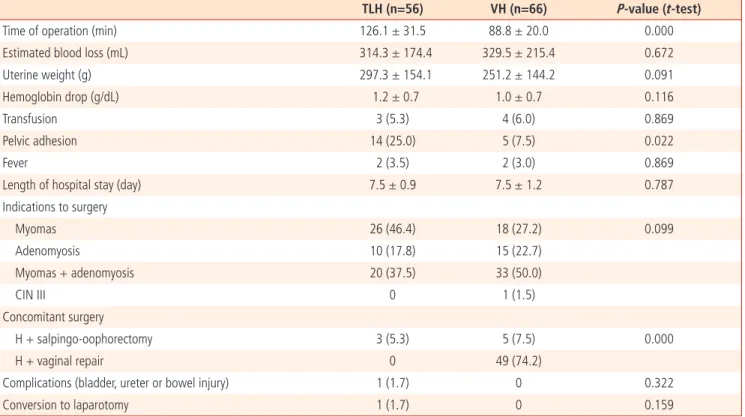
Table 2. Outcome measures evaluated during and after surgery
TLH (n=56) VH (n=66) P-value (t-test)
Time of operation (min) 126.1 ± 31.5 88.8 ± 20.0 0.000
Estimated blood loss (mL) 314.3 ± 174.4 329.5 ± 215.4 0.672
Uterine weight (g) 297.3 ± 154.1 251.2 ± 144.2 0.091
Hemoglobin drop (g/dL) 1.2 ± 0.7 1.0 ± 0.7 0.116
Transfusion 3 (5.3) 4 (6.0) 0.869
Pelvic adhesion 14 (25.0) 5 (7.5) 0.022
Fever 2 (3.5) 2 (3.0) 0.869
Length of hospital stay (day) 7.5 ± 0.9 7.5 ± 1.2 0.787
Indications to surgery
Myomas 26 (46.4) 18 (27.2) 0.099
Adenomyosis 10 (17.8) 15 (22.7)
Myomas + adenomyosis 20 (37.5) 33 (50.0)
CIN III 0 1 (1.5)
Concomitant surgery
H + salpingo-oophorectomy 3 (5.3) 5 (7.5) 0.000
H + vaginal repair 0 49 (74.2)
Complications (bladder, ureter or bowel injury) 1 (1.7) 0 0.322
Conversion to laparotomy 1 (1.7) 0 0.159
Values are presented as mean ± standard deviation or number (%).
TLH, total laparoscopic hysterectomy; VH, vaginal hysterectomy; Hemoglobin drop, preoperative hemoglobin-fi rst postoperative day hemoglobin; CIN III,
cervical intraepithelial neoplasia; H, hysterectomy.
erative period. From the next day, tablet (Ketorolac Tromethamine 10 mg or Tramadol 50 mg) was given regularly (q 8 hours) during the hospital stay.
Consumption of analgesics was defi ned as the number of required analgesics and a total amount of required analgesic units (dose) for pain relief. The used analgesics were pethidine, NSAIDs (Ke-
torolac Tromethamine), and tramadol. To evaluate postoperative pain, we used the visual analog scale (VAS) score at 1-hour, 1-day, 3-day postoperative period and the additional consumption of an- algesic units (vials and tablets) required by patients for pain relief at all hospital stay. The higher VAS score means that the pain felt after operation is more severe.
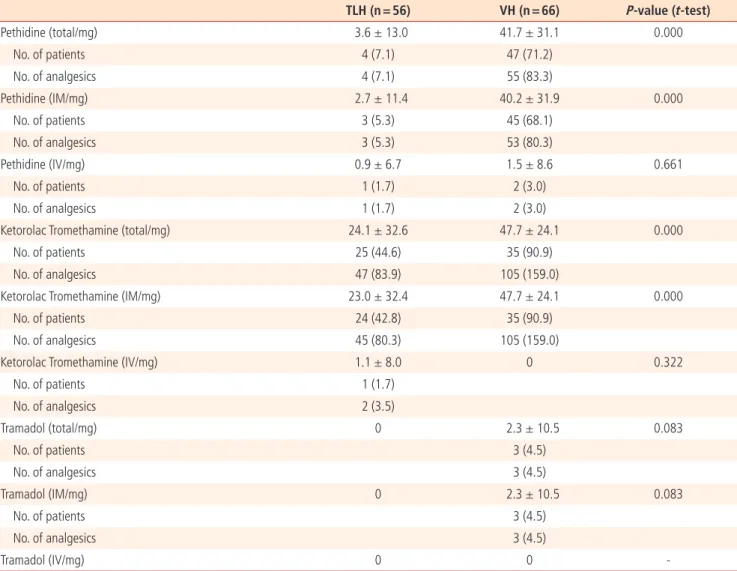
Table 3. Comparison of analgesic requirement between patients who had a TLH or a VH
TLH (n = 56) VH (n = 66) P-value (t-test)
Pethidine (total/mg) 3.6 ± 13.0 41.7 ± 31.1 0.000
No. of patients 4 (7.1) 47 (71.2)
No. of analgesics 4 (7.1) 55 (83.3)
Pethidine (IM/mg) 2.7 ± 11.4 40.2 ± 31.9 0.000
No. of patients 3 (5.3) 45 (68.1)
No. of analgesics 3 (5.3) 53 (80.3)
Pethidine (IV/mg) 0.9 ± 6.7 1.5 ± 8.6 0.661
No. of patients 1 (1.7) 2 (3.0)
No. of analgesics 1 (1.7) 2 (3.0)
Ketorolac Tromethamine (total/mg) 24.1 ± 32.6 47.7 ± 24.1 0.000
No. of patients 25 (44.6) 35 (90.9)
No. of analgesics 47 (83.9) 105 (159.0)
Ketorolac Tromethamine (IM/mg) 23.0 ± 32.4 47.7 ± 24.1 0.000
No. of patients 24 (42.8) 35 (90.9)
No. of analgesics 45 (80.3) 105 (159.0)
Ketorolac Tromethamine (IV/mg) 1.1 ± 8.0 0 0.322
No. of patients 1 (1.7)
No. of analgesics 2 (3.5)
Tramadol (total/mg) 0 2.3 ± 10.5 0.083
No. of patients 3 (4.5)
No. of analgesics 3 (4.5)
Tramadol (IM/mg) 0 2.3 ± 10.5 0.083
No. of patients 3 (4.5)
No. of analgesics 3 (4.5)
Tramadol (IV/mg) 0 0 -
Values are presented as mean ± standard deviation or number (%).
TLH, total laparoscopic hysterectomy; VH, vaginal hysterectomy.
Table 4. Comparison of VAS score between patients who had a TLH or a VH
TLH (n = 56) VH (n = 66) P-value (t-test)
VAS score at 1 hour after surgery 5.6 ± 0.8 5.9 ± 0.9 0.048
VAS score at 1 day after surgery 3.9 ± 0.8 4.2 ± 0.8 0.047
VAS score at 3 days after surgery 2.4 ± 0.7 2.8 ± 0.5 0.000
Values are presented as mean ± standard deviation.
VAS, visual analog scale; TLH, total laparoscopic hysterectomy; VH, vaginal hysterectomy.
Hospital discharge was decided by the restarted bowel motility, lack of urinary problems, absence of temperature (<37
oC), well- controlled pain on oral medications and improved daily activity.
The data was analyzed with SPSS ver. 13.0 (SPSS Inc., Chicago, IL, USA) software, using the Student’s t -test for comparison of continuous data, and correlated by χ
2-test or Fisher’s exact test for nominal data.
A P-value < 0.05 was considered statistically signifi cant.
Results
There is no difference in patient’s characteristics such as age, par- ity, and BMI between two groups ( P=0.05). However, the history of Prior intra-abdominal surgery is much more in TLH group than in VH group ( 19 [33%] vs. 4 [6.1%], P<0.024) (Table 1).
No signifi cant difference was found between groups with respect to intraoperative and postoperative complications rates, estimated blood loss, fever, uterine weight, length of hospital stay (Table 2).
However, TLH is associated with a longer operation time (TLH, 126.1 ± 31.5 minutes vs. VH, 88.8 ± 20.0 minute; P=0.000), more prior intra-abdominal surgery (TLH, 33.9% vs. VH, 6.1%; P<0.05), more pelvic adhesion (TLH, 25.0% vs. VH, 7.5%; P<0.05).
There were no cases of bowel injuries. The reduction of hemoglo- bin was not statistically different, but TLH shows a greater drop in hemoglobin level than VH (TLH, 1.2 ± 0.7 g/dL vs. VH, 1.0±0.7 g/
dL; P=0.116). We had one conversion of intended TLH to abdomi- nal surgery (TLH, 1.7% vs. VH, 0%; P=0.159), because of bladder tear during TLH, which was repaired. The patient had severe pelvic adhesion due to previous abdominal surgery (Table 2).
Postoperative pain was evaluated by measuring additional con- sumption of analgesics and VAS score.
For the fi rst 3 postoperative days, the mean total consumption of analgesics was significantly reduced in patients who underwent TLH compared with patients who had gone under VH. Require- ments of median total pethidine was reduced (TLH, 3.6 ±13.0 mg vs. VH, 41.7 ± 31.1 mg; P =0.000), median total NSAIDs (Ketorolac Tromethamine) was reduced (TLH, 24.1± 32.6 mg vs.
VH, 47.7 ± 24.1 mg; P=0.000), and median total tramadol was re- duced (TLH, 0 mg vs. VH, 2.3 ±10.5 mg, P=0.083) in patients who underwent TLH compared to patients who had VH (Table 3).
Also, the mean VAS score was considerably lower in the TLH group than in the VH group. The mean VAS score at 1 hour after surgery was lower (TLH, 5.6 ± 0.8 vs. VH, 5.9 ± 0.9; P <0.05), the mean VAS score at 1 day after surgery was lower (TLH, 3.9 ± 0.8 vs. VH,
4.2 ± 0.8; P<0.05) and the mean VAS score at 3 days after surgery was signifi cantly lower (TLH, 2.4 ± 0.7 vs. VH, 2.8 ± 0.5; P=0.000) in the TLH group than in the VH group (Table 4).
TLH requires lower dose of analgesics and results in lower VAS score in comparison to VH.
Discussion
The International Association for the Study of Pain defi nes pain as
“an unpleasant sensory and emotional experience associated with actual or potential tissue damage, or described in terms of such damage [11].” And it is axiomatic that there can be no surgery without corresponding postoperative pain because tissue trauma and the release of potent mediators of infl ammation consequently are expected [12].
Due to repeated tissue damage and continual irritation during surgery, the peripheral and central nerves become sensitive, lead- ing to amplifi cation of pain after surgery. Patients who have had surgery performed on the same area will have different degrees of pain depending on the surgical method, and each patient will experience variation in pain as time lapses.
There is now a general consensus that vaginal hysterectomy should be considered the gold standard if compared with abdomi- nal hysterectomy in case of benign uterine pathologies with uterus that is mobile and not large and without adnexal pathologies [13,14]. Such a superiority, however, is not so clearly demonstrat- ed over laparoscopic hysterectomy [15,16].
In a previous study of this kind completed 6 years ago. Nascimen- to et al. [17] compared 100 patients submitted to TLH and VH.
Analgesic requirements were found to be signifi cantly lower in the TLH group.
As a result of a similar study, laparoscopic hysterectomy provides an advantage over vaginal hysterectomy in terms of postoperative pain [18,19].
More recently, in a study randomizing a total of 60 patients to either TLH or VH, Candiani et al. [20] reported that women under- going laparoscopy had better pain scores and shorter time of post- operative analgesia use than those undergoing vaginal surgery.
The current study also demonstrates that, compared with the vaginal approach, total laparoscopic hysterectomy is associated with less postoperative pain, and with a reduction in the need of additional postoperative analgesic doses.
In this study, for postoperative pain control, all the patients re-
ceived the same method of pain control using PCA, and postop-
erative variation in pain intensity was measured using VAS score at scheduled intervals. Any additional dose amount of analgesics and the number of times administered was taken into account.
In our study comparing laparoscopic hysterectomy and vaginal hysterectomy, postoperative pain score on day 0, 1, 3 after surgery and the number of analgesic request were higher in the VH group.
Consequently, laparoscopic hysterectomy results in less postopera- tive pain compared with vaginal hysterectomy.
Also, in a study published in 2008, Schindlbeck et al. [21] found lower consumption of analgesics in TLH compared to VH, similar to our fi ndings.
Several possible explanations can be hypothesized to explain our data in favor of laparoscopy. First, different operative positions are required to perform vaginal and laparoscopic procedures: in particular, the inferior limbs are placed in a more physiological po- sition during TLH. Second, unlike a laparoscopic procedure, vaginal surgery requires applying a frequent downward traction on the uterus. Third, we used electrosurgical devices to coagulate and dis- sect tissues during LH; whereas VH was performed using clamps, scissors, and tying knots, according to the traditional vaginal tech- niques. Regarding this latter possible explanation, some studies have consistently shown how the implementation of electrosurgi- cal technology in vaginal surgery resulted in a signifi cant reduction of postoperative pain [22,23].
Our study reveals that TLH is associated with less postoperative pain when compared with VH overall. Consequently, TLH is an excellent surgical method in terms of postoperative pain. However, laparoscopic hysterectomy is unlikely to be considered cost effec- tive compared with a vaginal hysterectomy. In previously reported comparisons of laparoscopic and vaginal hysterectomy, the main difference related to operating room cost, which refl ected differ- ences in operation times and the multiple use of disposable equip- ment in laparoscopic procedures [24].
If surgeons use mostly reusable equipment instead of relatively ex- pensive disposables, the additional cost of laparoscopic compared with vaginal hysterectomy would decrease considerably, without compromising patient safety.
In conclusion, our study demonstrates that, in experienced hands, TLH is associated with less postoperative pain compared to VH.
However, because the advantages of TLH and VH are similar apart from postoperative pain and the differences in outcome are small, thus, when deciding the method of hysterectomy between TLH and VH, the skills of the surgeon and the quality of the surgeon’s training should be taken into account. In the future, broader pro- spective studies with larger number of patients are required to
compare TLH and VH according to postoperative pain.
References
1. Wilcox LS, Koonin LM, Pokras R, Strauss LT, Xia Z, Peterson HB.
Hysterectomy in the United States, 1988-1990. Obstet Gyne- col 1994;83:549-55.
2. Lepine LA, Hillis SD, Marchbanks PA, Koonin LM, Morrow B, Kieke BA, et al. Hysterectomy surveillance: United States, 1980-1993. MMWR CDC Surveill Summ 1997;46:1-15.
3. Wu JM, Wechter ME, Geller EJ, Nguyen TV, Visco AG. Hys- terectomy rates in the United States, 2003. Obstet Gynecol 2007;110:1091-5.
4. Australian Institute of Health and Welfare (AIHW). Australian hospital statistics 2002–03. AIHW cat. no. HSE 32. Canberra:
AIHW; 2004.
5. Cosson M, Querleu D, Crepin G. Hysterectomies for benign disorders. In: Cosson M, Querleu D, Crepin G, editors. Gynecol- ogy. Paris: Williams and Wilkins; 1997. p.160-73.
6. Reich H. Laparoscopic hysterectomy. Surg Laparosc Endosc 1992;2:85-8.
7. Vaisbuch E, Goldchmit C, Ofer D, Agmon A, Hagay Z. Lapa- roscopic hysterectomy versus total abdominal hysterectomy:
a comparative study. Eur J Obstet Gynecol Reprod Biol 2006;126:234-8.
8. Nieboer TE, Johnson N, Lethaby A, Tavender E, Curr E, Garry R, et al. Surgical approach to hysterectomy for be- nign gynaecological disease. Cochrane Database Syst Rev 2009;(3):CD003677.
9. Ribeiro SC, Ribeiro RM, Santos NC, Pinotti JA. A randomized study of total abdominal, vaginal and laparoscopic hysterec- tomy. Int J Gynaecol Obstet 2003;83:37-43.
10. Soriano D, Goldstein A, Lecuru F, Daraï E. Recovery from vagi- nal hysterectomy compared with laparoscopy-assisted vaginal hysterectomy: a prospective, randomized, multicenter study.
Acta Obstet Gynecol Scand 2001;80:337-41.
11. Rosenquist RW, Rosenberg J; United States Veterans Admin- istration. Postoperative pain guidelines. Reg Anesth Pain Med 2003;28:279-88.
12. Bonica JJ. The need of a taxonomy. Pain 1979;6:247-8.
13. Kovac SR. Guidelines to determine the route of hysterectomy.
Obstet Gynecol 1995;85:18-23.
14. Sheth SS. Vaginal hysterectomy. Best Pract Res Clin Obstet
Gynaecol 2005;19:307-32.
15. Garry R, Fountain J, Mason S, Hawe J, Napp V, Abbott J, et al. The eVALuate study: two parallel randomised trials, one comparing laparoscopic with abdominal hysterectomy, the other comparing laparoscopic with vaginal hysterectomy. BMJ 2004;328:129.
16. Summitt RL Jr, Stovall TG, Lipscomb GH, Ling FW. Randomized comparison of laparoscopy-assisted vaginal hysterectomy with standard vaginal hysterectomy in an outpatient setting. Obstet Gynecol 1992;80:895-901.
17. Nascimento MC, Kelley A, Martitsch C, Weidner I, Obermair A. Postoperative analgesic requirements - total laparoscopic hysterectomy versus vaginal hysterectomy. Aust N Z J Obstet Gynaecol 2005;45:140-3.
18. Do ğanay M, Yildiz Y, Tonguc E, Var T, Karayalcin R, Eryilmaz OG, et al. Abdominal, vaginal and total laparoscopic hysterectomy:
perioperative morbidity. Arch Gynecol Obstet 2011;284:385-9.
19. Johnson N, Barlow D, Lethaby A, Tavender E, Curr L, Garry R. Methods of hysterectomy: systematic review and meta- analysis of randomised controlled trials. BMJ 2005;330:1478.
20. Candiani M, Izzo S, Bulfoni A, Riparini J, Ronzoni S, Marconi A. Laparoscopic vs vaginal hysterectomy for benign pathology.
Am J Obstet Gynecol 2009;200:368. e1-7.
21. Schindlbeck C, Klauser K, Dian D, Janni W, Friese K. Compari- son of total laparoscopic, vaginal and abdominal hysterec- tomy. Arch Gynecol Obstet 2008;277:331-7.
22. Silva-Filho AL, Rodrigues AM, Vale de Castro Monteiro M, da Rosa DG, Pereira e Silva YM, Werneck RA, et al. Randomized study of bipolar vessel sealing system versus conventional suture ligature for vaginal hysterectomy. Eur J Obstet Gynecol Reprod Biol 2009;146:200-3.
23. Hefni MA, Bhaumik J, El-Toukhy T, Kho P, Wong I, Abdel-Razik T, et al. Safety and effi cacy of using the LigaSure vessel seal- ing system for securing the pedicles in vaginal hysterectomy:
randomised controlled trial. BJOG 2005;112:329-33.
24. Sculpher M, Manca A, Abbott J, Fountain J, Mason S, Garry R.
Cost effectiveness analysis of laparoscopic hysterectomy com-
pared with standard hysterectomy: results from a randomised
trial. BMJ 2004;328:134.
복강경하 자궁절제술과 질식 자궁절제술의 수술 후 통증 비교
한림대학교 의과대학 산부인과학교실 최공주, 김홍배, 박성호
목적
복강경하 자궁절제술과 질식 자궁절제술의 수술법에 따른 수술 후 통증의 정도를 비교하기 위해 본 연구를 진행하였다 연구방법
2010년 6월부터 2010년 8월까지 한림대학교 강남성심병원에서 양성질환에 한해 복강경하 자궁절제술을 받은 환자 56명과 질식 자궁절 제술을 받은 환자 66명을 포함한 122명을 대상으로 분석을 시행하였다. 수술후 통증의 정도는 비무작위적으로 비교되었고, 또한 수술 전, 수술 중, 수술 후 특징을 함께 전향적으로 분석하였다. 수술 후 1시간, 1일, 3일째 visual analog scale (VAS; 통증의 강도를 가시화한 점수 로 10점이 최고 통증) 지표를 측정하고 또한 입원기간동안 통증완화를 위한 추가적인 진통제의 요구량이 통증의 척도로 사용되었다.
결과
수술 후 3일동안 진통제 사용량은 복강경하 자궁절제술을 한 환자군이 질식 자궁절제술을 한 환자군보다 더 낮았다(pethidine, P<0.05;
NSAIDs, P<0.05). VAS 지표 또한 질식 자궁절제술을 한 환자군이 복강경하 자궁절제술을 한 환자군보다 더 높았다(VAS-수술 후 1시간 째, P<0.05; VAS-1일째, P<0.05; VAS-3일째, P<0.05). 수술 시간, 이전 복식을 통한 수술 과거력 및 복강내 유착을 제외한 수술 전, 수술 중, 수술 후 특징은 두 환자군 간에 유의한 차이가 없었다.
결론
이 연구를 통해 복강경하 자궁절제술이 질식 자궁절제술에 비해 통증이 적은 것을 확인할 수 있었고, 경험이 많은 수술자에 의해 시행될 경우, 양성 부인과질환에 있어 질식 자궁절제술의 대안이 될 수 있을 것으로 생각된다.
중심단어: 수술 후 통증, 복강경하 자궁절제술, 질식 자궁절제술