
Anti-hypercholesterolemic and anti-atherosclerotic effects of polarized-light therapy in rabbits fed a high-cholesterol diet
8
0
0
전체 글
(2) 40. Dongsun Park et al.. receptors, one of the superficial receptor of macrophages, disrupting feedback controlling mechanism of intracellular cholesterol level. Macrophages that contain highly enriched cholesterol become foam cells and form fatty streak namely atheromatous plaques, initial lesion of atherosclerosis [12]. Several drugs that are clinically used to treat for hyperlipidemia are classified as 3-hydroxy-3-methylglutanylcoenzyme A (HMG-CoA) reductase inhibitor (statins), bile acid sequestrant (resin), nicotinic acid, fibrate and probucol [13,14]. Among them, statins inhibit HMGCoA reductase, rate-limiting step enzyme in cholesterol biosynthesis, thereby reduce intracellular cholesterol level. Statins also increase the activity of LDL receptors on cell membrane, accelerating the metabolism of very low-density lipoproteins (VLDL) remnant and LDL [15]. Even though drugs with such mechanism have an advantage to lower blood cholesterol level remarkably, but they exert serious adverse effects like hepatomegaly and renal hypertrophy [16,17]. Thus, researches on the development of natural resources with a novel mechanism without side effects are required. It is well known that light with specific wavelength exerts influence on organisms, which has been reconsidered in terms of modern medicine [18]. Although sunlight had been believed to have beneficial effects on health in Egypt in B.C., it has been for the treatment of diseases in 1990s [19]. Especially, in 1960s, some studies showed that sunlight has a significant influence on feelings of daily life as well as physical and mental health [20]. Recently, it has been demonstrated that ultraviolet rays, far-infrared radiation, laser and visible lights including sunlight were applicable for disinfection and health improvement. For example, in late 1980s, Low-LevelLight Therapy (LLLT) using narrow-band (632.8 nm) light has been developed for the relief of pain and inflammation as well as for immune-boosting and wound-healing effects [21-26]. Moreover, various light therapies are being studied from a medical perspective [27]. Notably, several studies showed that Polarized-Light Therapy (PLT), using strained broad-band (400-760 nm) visible light through a polarizing lens, exhibited greater pain-relieving effects than LLLT with narrow-band wavelength [21-23,25,26]. Recently, it was confirmed that PLT improved blood circulation and blood pressure of hypertensive patients by reducing fibrinogen, platelets and blood viscosity, preventing aggregation of platelets, Lab Anim Res | March, 2012 | Vol. 28, No. 1. and delaying blood coagulation time (unpublished results). PLT displayed additional beneficial effects: i.e., decreasing blood cholesterol and triglycerides, improving immune function, relieving pain and inflammation, and facilitating wound healing in human studies (unpublished results). Therefore, such results led us to investigate the improving effects of PLT on high-cholesterol diet (HCD)-induced hypercholesterolemia and atherosclerosis in comparison with lovastatin, a clinically available cholesterol-controlling statin, in rabbits.. Materials and Methods Materials. The PLT equipment is consisted of a 60 W tungsten lamp and a lens coated with polarized film in a stainless tube with 6-cm internal diameter. The polarized film (Nucell Biomedics, Cheongju, Korea) was designed to block ultraviolet and infrared lights, permitting penetration of only 400-760 nm light, which was confirmed by prism analysis at Photonics Polymer Laboratory (Gwangju, Korea). The distance between light source and polarized-light lens was set at 10 cm to adjust the light intensity and energy density exposed to the skin to be 50 mW/cm2 and 60 J/cm2, respectively. An anti-cholesterol reference drug Meverstin® containing lovastatin as an active ingredient was purchased from Choongwae Pharma Co. (Seoul, Korea). Cholesterol used to induce hypercholesterolemia and atherosclerosis was procured from Sigma-Aldrich (C75209; St. Louis, MO, USA). Animals. Six-month-old male New Zealand white (NZW) rabbits (n=8/group) weighing 1.7-2.0 kg were from Daehan-Biolink (Eumseong, Korea), and subjected to the experiment after 1-week acclimation to the laboratory environment. The animals were housed in each cage with free access to feed and water under constant environmental conditions (22±2oC; 40-70% relative humidity; 12-hour light-dark cycle; 150-300 lux brightness). Animals were checked for abnormal sign every day and weighed once a week. All the animal experiments were conducted according to the Standard Operation Procedures, and approved by the Institutional Animal Care and Use Committee of Chungbuk National University, Korea..
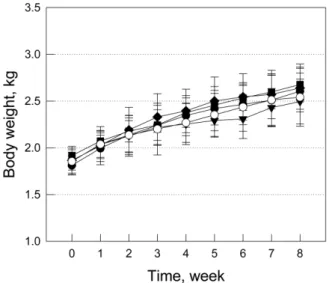
(3) Anti-cholesterolemic and anti-atherosclerotic effects of polarized-light therapy. Induction hypercholesterolemia and treatment. Acute dietary hypercholesterolemia was induced by feeding animals with a powdered high-cholesterol diet (HCD) containing 1% cholesterol for 2 weeks, followed by 0.5% cholesterol for additional 6 weeks during maintenance period and normal diet without cholesterol for recovery period of 2 weeks. After 2-week induction of hypercholesterolemia, the animals were grouped (n=8/group) according to their blood cholesterol levels to adjust similar mean values. To assess therapeutic efficacy of PLT against hypercholesterolemia and atherosclerosis, the rabbits were exposed to PLT light for 5 or 20 min on their outside surface of ear with 10 cm distance from lens every day (10:00-12:00) for 8 weeks. Separately, 0.002% lovastatin was supplemented in diet for the 8-week treatment period.. 41. stained with 0.7% Sudan IV (in propylene glycol) for 10 min. Then, it was hydrated with 85% propylene glycol for 5 min, washed with distilled water, and photographed and analyzed with Digital Image Analyzer (Image Inside; Focus, Seoul, Korea) for red atheromatous plaques. The extent of lipid accumulation (atherosclerosis index; AI, %) was calculated as the percent Sudan-positive area to the total area of the aortic wall. Statistical analysis. The results are presented as means±standard deviation. The significance of differences of all results was analyzed by one-way analysis of variance followed by the Dunnett’s multiple-range test correction. Statistical significance was set a priority at P<0.05.. Results. Hematology and blood biochemistry. Change in body weights. After 16-hour fasting at the ends of 2-week cholesterolemia induction and 10-week total experimental period (2week induction, 6-week maintenance and 2-week recovery), blood sample was collected from auricular artery, and hematocrit, red blood cells (RBC), hemoglobin, mean corpuscular volume (MCV), mean corpuscular hemoglobin (MCH), mean corpuscular hemoglobin concentration (MCHC), white blood cells (WBC), differential counts (neutrophils, eosinophils, basophils, lymphocytes and monocytes) and platelets were measured by a hematology analyzer (Hemavet 850; CDC Technologies Inc., Dayton, USA). Lipid profiles including total cholesterol, LDL, HDL, triglycerides, fibrin-degradation products (FDP) and Ddimer were measured in serum obtained from centrifuged (3,000 rpm×20 min) blood. Parameters of hepatic function such as alanine transaminase (ALT), aspartate transaminase (AST), alkaline phosphatase (ALP) and total bilirubin were analyzed by blood chemistry analyzer (Hitachi-747; Hitachi Korea, Seoul, Korea).. In comparison with normal animals, the body weight gain of HCD-fed animals slightly increased (Figure 1). Daily PLT for 5 or 20 min did not affected the body weight gain of HCD-fed rabbits, while treatment with lovastatin (0.002% in diet) slightly reduced the body weight gain, decreasing the final body weight below that of normal animals. Lovastatin also caused rough skin and hair of the animals, suggestive of a possibility of adverse effects.. Evaluation of atherosclerosis. The aortic arch (14 cm) was dissected from the aortic valve of the heart and washed with saline. The sample was dissected in 10 cm long from the orifice of carotid artery, and opened longitudinally. After removing fats and tissues adhering to the adventitia, the aorta was dehydrated with 100% propylene glycol for 10 min, and. Figure 1. Change in body weight of high-cholesterol diet (HCD)-fed rabbits (n=8) treated with lovastatin or polarized-light therapy (PLT). Treatments were started 2 weeks following induction of hyperchoesterolemia. ○, normal; ●, HCD; ▼, HCD+0.002% lovastatin; ■, HCD+5 min PLT; ◆, HCD+20 min PLT.. Lab Anim Res | March, 2012 | Vol. 28, No. 1.
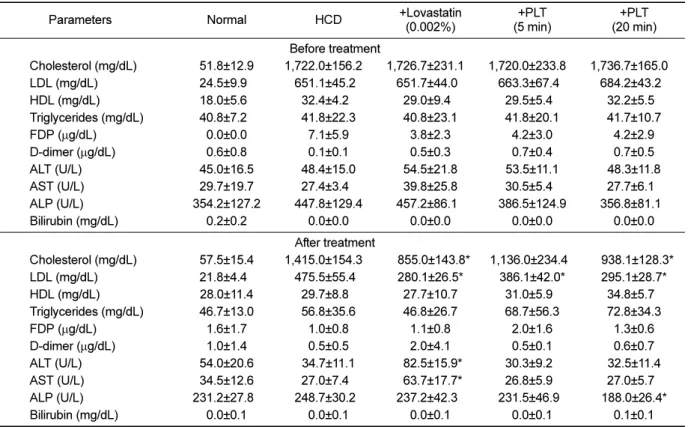
(4) 42. Dongsun Park et al.. Hematology. Blood biochemistry. Two-week feeding of 1% HCD caused hematological changes: increases in WBC (40-60%) and lymphocytes (38-92%) and decreases in basophils (44-78%) and platelets (22-30%), while hematocrit, RBC and RBC indices were not changed (Table 1). Meanwhile, after 8-week feeding of HCD followed by 2-week recovery period, the number of WBC was maintained high, while basophils remained low. Notably, platelets increased after cease of HCD feeding. However, 5-min PLT attenuated the platelets increase, and 20-min PLT substantially inhibited the increases in hematocrit, WBC and platelets. Whereas, lovastatin did not exhibit any effects, except increasing lymphocytes and monocytes. Hence it is considered that PLT improves blood flow more effectively by alleviating hemoconcentration, inflammatory WBC and thrombosis-inducing platelets.. After 2-week feeding of 1% cholesterol, total cholesterol dramatically elevated to 1,720.0-1,736.7 mg/dL from 51.8 mg/dL of normal level (Table 2). Accordingly, LDL also increased to 651.1-684.2 mg/dL from 24.5 mg/dL in normal animals, although there was a slightly increase in HDL levels to 29.0-32.4 mg/dL from 18.0 mg/dL. These changes of lipoproteins induced increase in FDP (3.8-7.1 µg/dL), a metabolite of fibrin, although another fibrin metabolite D-dimer and triglycerides were not remarkably affected. ALP, an indicator of cholestasis slightly increased, without alterations in ALT and AST, parameters of hepatocytic damage. In 10 weeks after 8-week feeding of HCD and 2-week recovery, blood cholesterol, LDL and FDP were recovered to 1,415.0 mg/dL, 475.5 mg/dL and 1.6 µg/dL, respectively. Lovastatin significantly reduced both the cholesterol and. Table 1. Hematology of rabbits (n=8) fed a high-cholesterol (HCD) for 2 weeks followed by lovastatin treatment or polarized-light therapy (PLT) for 8 weeks (6-week maintenance and 2-week recovery periods) Parameters. Normal. HCD. RBC (×106/µL) Hemoglobin (g/dL) Hematocrit (%) MCV (fL) MCH (pg) MCHC (g/dL) WBC (×103/µL) Neutrophils (%) Eosinophils (%) Basophils (%) Lymphocytes (%) Monocytes (%) Platelets (×103/µL). 5.6±0.5 11.7±0.8 37.4±2.3 67.5±2.9 21.1±0.5 31.4±0.7 5.2±1.2 88.5±1.9 1.1±0.3 0.9±0.4 5.3±1.7 4.1±1.3 372.5±168.2. Before treatment 6.1±0.3 12.5±0.6 39.7±1.9 65.6±3.2 20.6±0.4 31.5±1.4 7.3±1.4 85.4±6.0 0.9±0.4 0.3±0.4 10.2±5.6 3.2±1.1 288.8±51.6. RBC (×106/µL) Hemoglobin (g/dL) Hematocrit (%) MCV (fL) MCH (pg) MCHC (g/dL) WBC (×103/µL) Neutrophils (%) Eosinophils (%) Basophils (%) Lymphocytes (%) Monocytes (%) Platelets (×103/µL). 5.0±1.1 11.2±2.1 36.1±6.1 73.5±7.4 22.8±2.0 31.0±0.6 6.5±2.4 88.5±2.8 1.0±0.4 1.5±1.1 5.3±2.4 4.2±1.6 322.0±125.0. After treatment 5.2±0.8 11.8±1.5 37.9±3.8 73.2±4.9 22.6±1.3 30.9±1.1 8.1±1.7 87.1±3.0 1.2±0.2 0.5±0.4 6.6±2.6 4.8±0.8 410.3±79.6. *Significantly different from HCD alone, P<0.05.. Lab Anim Res | March, 2012 | Vol. 28, No. 1. +Lovastatin (0.002%). +PLT (5 min). +PLT (20 min). 5.9±0.5 12.6 ±1.0 39.8±3.2 67.6±1.5 21.3±0.2 31.6±0.6 8.2±1.6 87.9±4.0 1.2±0.4 0.5±0.3 7.3±3.3 3.3±0.8 261.5±51.9. 5.6±0.7 11.8±1.2 38.1±3.7 68.4±3.2 21.2±1.0 31.1±0.6 8.5±2.7 86.0±1.9 1.0±0.3 0.2±0.2 8.8±2.0 4.0±0.5 280.0±66.9. 5.9±0.5 12.2±0.8 38.5±1.5 65.2±3.1 20.6±0.5 31.7±1.1 8.5±1.7 87.4±2.8 0.7±0.3 0.4±0.4 7.8±2.7 3.8±1.4 267.2±54.4. 4.8±0.5 11.1±0.9 35.7±3.5 74.3±3.3 23.1±0.8 31.2±0.8 8.0±3.2 83.7±11.4 1.0±0.5 0.5±0.2 8.5±9.2 6.6±2.9 399.7±100.6. 4.8±0.9 10.9±1.6 36.2±5.4 75.4±3.8 22.6±1.1 30.0±0.4 8.0±1.5 88.3±2.8 1.1±0.5 0.6±0.7 5.0±2.7 5.2±1.8 350.5±80.6. 4.5±0.4 10.5±0.9 34.2±2.2 77.0±2.9 23.6±0.5 30.6±1.0 6.8±1.1* 86.3±6.1 0.8±0.4 0.5±0.3 7.7±3.8 4.7±2.3 329.5±31.3*.
(5) 43. Anti-cholesterolemic and anti-atherosclerotic effects of polarized-light therapy. Table 2. Blood biochemistry of rabbits (n=8) fed a high-cholesterol (HCD) for 2 weeks followed by lovastatin treatment or polarizedlight therapy (PLT) for 8 weeks (6-week maintenance and 2-week recovery periods) Parameters. Normal. +Lovastatin (0.002%). HCD. +PLT (5 min). +PLT (20 min). Cholesterol (mg/dL) LDL (mg/dL) HDL (mg/dL) Triglycerides (mg/dL) FDP (µg/dL) D-dimer (µg/dL) ALT (U/L) AST (U/L) ALP (U/L) Bilirubin (mg/dL). 51.8±12.9 24.5±9.90 18.0±5.60 40.8±7.20 0.0±0.0 0.6±0.8 45.0±16.5 29.7±19.7 354.2±127.2 0.2±0.2. Before treatment 1,722.0±156.20, 1,726.7±231.10, 651.1±45.20 651.7±44.00 32.4±4.20 29.0±9.40 41.8±22.3 40.8±23.1 7.1±5.9 3.8±2.3 0.1±0.1 0.5±0.3 48.4±15.0 54.5±21.8 27.4±3.40 39.8±25.8 447.8±129.4 457.2±86.10 0.0±0.0 0.0±0.0. 1,720.0±233.80, 663.3±67.40 29.5±5.40 41.8±20.1 4.2±3.0 0.7±0.4 53.5±11.1 30.5±5.40 386.5±124.9 0.0±0.0. 1,736.7±165.00, 684.2±43.20 32.2±5.50 41.7±10.7 4.2±2.9 0.7±0.5 48.3±11.8 27.7±6.10 356.8±81.10 0.0±0.0. Cholesterol (mg/dL) LDL (mg/dL) HDL (mg/dL) Triglycerides (mg/dL) FDP (µg/dL) D-dimer (µg/dL) ALT (U/L) AST (U/L) ALP (U/L) Bilirubin (mg/dL). 57.5±15.4 21.8±4.40 28.0±11.4 46.7±13.0 1.6±1.7 1.0±1.4 54.0±20.6 34.5±12.6 231.2±27.80 0.0±0.1. After treatment 1,415.0±154.30, 475.5±55.40 29.7±8.80 56.8±35.6 1.0±0.8 0.5±0.5 34.7±11.1 27.0±7.40 248.7±30.20 0.0±0.1. 1,136.0±234.40 386.1±42.0* 31.0±5.90 68.7±56.3 2.0±1.6 0.5±0.1 30.3±9.20 26.8±5.90 231.5±46.90 0.0±0.1. 0938.1±128.3* 295.1±28.7* 34.8±5.70 72.8±34.3 1.3±0.6 0.6±0.7 32.5±11.4 27.0±5.70 188.0±26.4* 0.1±0.1. 0855.0±143.8* 280.1±26.5* 27.7±10.7 46.8±26.7 1.1±0.8 2.0±4.1 *82.5±15.9* *63.7±17.7* 237.2±42.30 0.0±0.1. *Significantly different from HCD alone, P<0.05.. LDL levels to 855.0 and 280.1 mg/dL, respectively. In comparison, 5-min PLT lowered LDL level more preferably than cholesterol. Interestingly, 20-min PLT markedly decreased both the cholesterol and LDL levels comparable with lovastatin. More importantly, lovastatin significantly increased the blood ALT and AST values, indicative of hepatotoxicity, in contrast to the normal levels in PLT animals. Time-course of blood cholesterol and LDL. During 6-week feeding of 0.5% cholesterol diet, the blood cholesterol level maintained high (Figure 2), although LDL recovered gradually (Figure 3). Lovastatin significantly decreased the cholesterol level from 2week treatment to reach 2-third level after 6-week feeding. Five-min PLT also reduced the blood cholesterol level after 4-week treatment, although the statistical significance was not achieved. Notably, 20-min PLT markedly lowered the cholesterol level even in higher degree than lovastatin. Similar effects of lavastatin and 20-min PLT were obtained on blood LDL level. Importantly, 5-min PLT also exerted a remarkable efficacy in LDL reduction.. Figure 2. Time-course of blood cholesterol level in highcholesterol diet (HCD)-fed rabbits (n=8) treated with lovastatin or polarized-light therapy (PLT). Treatments were started 2 weeks following induction of hypercholesterolemia. ○, normal; ●, HCD; ▼, HCD+0.002% lovastatin; ■, HCD+5 min PLT; ◆, HCD+20 min PLT. *Significantly different from HCD alone, P<0.05.. Atherosclerotic index. Feeding HCD with 1% cholesterol for 2 weeks, 0.5% cholesterol for 6 weeks and recovery for 2 weeks caused Lab Anim Res | March, 2012 | Vol. 28, No. 1.
(6) 44. Dongsun Park et al.. Figure 3. Time-course of blood low-density lipoproteins (LDL) level of high-cholesterol diet (HCD)-fed rabbits (n=8) treated with lovastatin or polarized-light therapy (PLT). Treatments were started 2 weeks following induction of hypercholesterolemia. ○, normal; ●, HCD; ▼, HCD+0.002% lovastatin; ■, HCD+5 min PLT; ◆, HCD+20 min PLT. *Significantly different from HCD alone, P<0.05.. extensive atheromatous plaques covering 57.5% of the aortic arch and abdominal artery (Figure 4 and Table 3). The degree of atheromatous plaques formation was attenuated by treatment with lovastatin to 47.5%. However, the anti-atherosclerotic activity of PLT was superior to lovastatin: 5-min and 20-min PLT decreased the plaque area to 42.2% and 26.4%, respectively.. Discussion To investigate the PLT’s effects on blood lipid profiles and change in vessel walls, HCD was fed to rabbits to induce hypercholesterolemia and ensuing atherosclerosis. Rabbits has been used to study atherosclerosis because their enzyme activity of cholesterol ester transfer proteins (CETP), a causative factor of arteriosclerosis in human, is three times higher than human, so that hypercholesterolemia can be induced in a short period and. Figure 4. Representative findings of the aorta of highcholesterol diet (HCD)-fed rabbits (n=8) treated with lovastatin (0.002%) or 5 min or 20 min polarized-light therapy (PLT). Note extensive atheromatous plaques induced by HCD and marked attenuation by 20 min PLT, in comparison with intact features in rabbits fed normal diet.. lesions such as foam cells and fatty streak be easily induced [28]. Lovastatin is a metabolic derivate of Aspergillus terreus and preferentially prescribed for hypercholesterolemia and cardiovascular diseases. Lovastatin, as HMG-CoA reductase inhibitor, suppress cholesterol synthesis and improves bile duct secretion [29-31]. Accordingly, lovastatin remarkably reduced cholesterol and LDL after 2-week feeding in the present study. Compare to lovastatin, 5-min PLT did not show any effects on cholesterol and LDL within 2 weeks. However, 5-min PLT remarkably reduced the LDL level, a key factor of atheroma formation, from 4-week therapy. Moreover, 20-min PLT markedly lowered both the cholesterol and LDL levels with higher efficacy than lovastatin. It is of interest to note that 5-min PLT was more effective in the suppression of atheromatous lesion formation than lovastatin, in spite of the lower activity on cholesterol and LDL. Accordingly, 20-min PLT was much superior to lovastatin in the prevention of atherosclerosis, in which blood lipid levels were lowered. Table 3. Atheromatous plaques formed in the aorta of high-cholesterol diet (HCD)-fed rabbits (n=8) treated with lovastatin or polarized-light therapy (PLT) Treatment. Total area (cm2). Atheroma area (cm2). Relative area (%). Normal HCD +Lovastatin (0.002%) +PLT (5 min) +PLT (20 min). 4.875±0.396 4.796±0.471 5.145±0.575 5.132±0.222 4.822±0.492. 0.000±0.000 2.758±0.992 2.444±1.064 2.159±0.624 1.218±0.816. 0.0±0.0 57.5±10.6 47.5±8.40 42.2±7.5* 26.4±8.1*. *Significantly different from HCD alone, P<0.05. Lab Anim Res | March, 2012 | Vol. 28, No. 1.
(7) Anti-cholesterolemic and anti-atherosclerotic effects of polarized-light therapy. to similar extents to lovastatin. Therefore, it is estimated that, in addition to the lipid-lowering activity, PLT might inhibit oxidation and accumulation in the aortic wall of LDL, although the exact mechanisms remain to be clarified. In addition, PLT decreased platelets and hematocrit level related to the improvement of blood flow. PLT also decreased WBC, while lovastatin increased lymphocytes and monocytes. Hence it is considered that PLT improves blood flow more effectively by alleviating hemoconcentration, inflammatory WBC and thrombosisinducing platelets. In blood biochemistry, ALT and AST significantly increased following lovastatin treatment. The hepatotoxicity is a critical factor limiting long-term use of high dose lovastatin. It was reported in previous studies that statins caused hepatic injuries with increases in ALT and AST as well as hepatobiliary dysfunction, myocardial degeneration, fetal malformations with skeletal defects presumably by disrupting lipid-metabolic processes [32,33]. PLT did not induce ALT and AST increases, and 20-min PLT rather lowered the HCD-induced increase in ALP, a parameter of cholestasis. In the present study, it was demonstrated that PLT substantially attenuated atherosclerosis not only by lowering blood cholesterol and LDL levels, but also by improving blood flow without adverse effects such as hepatotoxicity. Therefore, it is suggested that PLT could be an alternative therapy for the improvement of hypercholesterolemia and prevention of atherosclerosis.. Acknowledgments This work was supported by the research grant of the Chungbuk National University in 2011.. References 1. Moon SJ. Nutritional problems in Korea. Kor J Nutr 1996; 29(4): 371-380. 2. Huh KB. The present status of nutrition-related diseases and its countermeasures. Kor J Nutr 1990; 23(3): 197-207. 3. Lee HK. Pattern of disease incidence and nutrition in Korea. Kor J Nutr 1996; 29(4): 381-383. 4. Lee YC. Hypercholesterolemia in Korea and nutritional factors. Korean Soc Lipidol Atherosc 1991; 1(1): 111-122. 5. Spady DK, Woollett LA, Dietschy JM. Regulation of plasma LDL-cholesterol levels by dietary cholesterol and fatty acids. Annu Rev Nutr 1993; 13: 355-381. 6. Natio HK. Atherogenesis: current topics on etiology and risk factors. Clin Chem 1995; 41: 132-133. 7. Sanders TA, Oakley FR, Miller GJ, Mitropoulos KA, Crook D, Oliver MF. Influence of n-6 versus n-3 polyunsaturated fatty acids in diets low in saturated fatty acids on plasma lipoproteins and. 45. hemostatic factors. Arterioscler Thromb Vasc Biol 1997; 17(12): 3449-3460. 8. Judd JT, Baer DJ, Clevidence BA, Muesing RA, Chen SC, Weststrate JA, Meijer GW, Wittes J, Lichtenstein AH, VilellaBach M, Schaefer EJ. Effects of margarine compared with those of butter on blood lipid profiles related to cardiovascular disease risk factors in normolipemic adults fed controlled diets. Am J Clin Nutr 1998; 68(4): 768-777. 9. Keys A. Coronary heart disease in seven countries. Circulation 1970; 41: 1-11. 10. Kannel WB, Castelli WP, Gordon T, McNamara PM. Serum cholesterol, lipoproteins, and the risk of coronary heart disease. The Framingham study. Ann Intern Med 1971; 74(1): 1-12. 11. Bae HY. The role of oxidized low density lipoprotein in atherogenesis. Diabetes 1999; 23: 7-11 12. Glass CK, Witztum JL. Atherosclerosis. the road ahead. Cell 2001; 104(4): 503-516. 13. Shin SH. The choice of medicine. In Diagnosis and Treatment in Hyperlipidemia. Association of Hyperlipidemic Theraphy, Haneuyhak, Seoul, 2000; pp 315-331. 14. Blum A, Simsolo C, Hasin Y. 3-Hydroxy-3-methylglutaryl coenzyme a (HMG-CoA) reductase inhibitors (statins), atherosclerosis and coronary syndromes. Atherosclerosis 2004; 175(1): 1-5. 15. Larsen ML, Illingworth DR. Drug treatment of dyslipoproteinemia. Med Clin North Am 1994; 78(1): 225-245. 16. Cho JH, Lee NJ, Chai HY, Kim TM, Park JH, Kang JK, Kim YB, Hwang SY. Effect of Hwalgidan SJ-101 on atherosclerosis in hypercholesterolemic rabbits. Lab Anim Res 2005; 21: 149-158. 17. Hong SH, Chai HY, Kim TM, Lee NJ, Kim DK, Cho JH, Park JH, Kim YB, Kang JK, Hwang SY. Therapeutic effects of mulberry root-bark (Mori radicis Cortex) ethanol-extracts on atherosclerosis in hypercholesterolemic rabbits. Lab Anim Res 2005; 21: 273279. 18. Hsiang YN, Todd ME, Bower RD. Determining light dose for photodynamic therapy of atherosclerotic lesions in the Yucatan miniswine. J Endovasc Surg 1995; 2(4): 365-371. 19. Hayashi J, Saito T, Aizawa K. Change in chemical composition of lipids accumulated in atheromas of rabbits following photodynamic therapy. Lasers Surg Med 1997; 21(3): 287-293. 20. Amemiya T, Nakajima H, Katoh T, Rakue H, Miyagi M, Ibukiyama C. Photodynamic therapy of atherosclerosis using YAG-OPO laser and Porfimer sodium, and comparison with using argon-dye laser. Jpn Circ J 1999; 63(4): 288-295. 21. Lymans'kyi IuP, Tamarova ZA, Hutliar SO, Bidkov IeH. The examination of the analgetic action of polarized light. Fiziol Zh 2000; 46(6): 105-111. 22. Lymans'kyi IuP, Tamarova ZA, Hutliar SO. Suppression of visceral pain by action of the low intensity polarized light on acupuncture antinociceptive points. Fiziol Zh 2003; 49(5): 43-51. 23. Samosiuk IZ, Kulikovich IuN, Tamarova ZA, Samosiuk NI, Kazhanova AK. Pain relief by low-intensity frequency-modulated millimeter waves acting on the acupuncture points. Vopr Kurortol Fizioter Lech Fiz Kult 2000; 4: 7-11. 24. Hafkamp AM, Havinga R, Sinaasappel M, Verkade HJ. Effective oral treatment of unconjugated hyperbilirubinemia in Gunn rats. Hepatology 2005; 41(3): 526-534. 25. Tamarova ZA, Lymans'kyi IuP, Hutliar SO. Comparative testing of analgesia induced by polarized light and analgetics. Fiziol Zh 2005; 51(2): 57-64. 26. Limansky YP, Tamarova ZA, Gulyar SA. Suppression of pain by exposure of acupuncture points to polarized light. Pain Res Manag 2006; 11(1): 49-57. 27. Rastad C, Ulfberg J, Lindberg P. Improvement in Fatigue, Sleepiness, and Health-Related Quality of Life with Bright Light Treatment in Persons with Seasonal Affective Disorder and Subsyndromal SAD. Depress Res Treat 2011; 2011: 543906. 28. Kobayashi H, Matsushita M, Oda K, Nishikimi N, Sakurai T, Komori K. Effects of atherosclerotic plaque on the enlargement of an experimental model of abdominal aortic aneurysm in rabbits. Lab Anim Res | March, 2012 | Vol. 28, No. 1.
(8) 46. Dongsun Park et al.. Eur J Vasc Endovasc Surg 2004; 28(1): 71-78. 29. Anistchow N, Chalatow S. Ueber experimentelle cholesterinstetase und die bedeutung fur die enstehung einiger pathdogischer prozesse. Zebtrabl Allg Pathol 1913; 24: 1-9. 30. McClelland GA, Stubbs RJ, Fix JA, Pogany SA, Zentner GM. Enhancement of 3-hydroxy-3-methylglutaryl-coenzyme A (HMGCoA) reductase inhibitor efficacy through administration of a controlled-porosity osmotic pump dosage form. Pharm Res 1991; 8(7): 873-876.. Lab Anim Res | March, 2012 | Vol. 28, No. 1. 31. Yim JE, Choue RW, Kim YS. Effects of dietary counceling and HMG Co A reductase inhibitor treatment on serum lipid levels in hyperlipidemic patients. Kor Nutr Soc 1998; 8(1): 61-76. 32. MacDonald JS, Gerson RJ, Kornbrust DJ, Kloss MW, Prahalada S, Berry PH, Alberts AW, Bokelman DL. Preclinical evaluation of lovastatin. Am J Cardiol 1988; 62(15): 16-17. 33. de Denus S, Spinler SA, Miller K, Peterson AM. Statins and liver toxicity: a meta-analysis. Pharmacotherapy 2004; 24(5): 584-591..
(9)
수치


관련 문서
Effects of loquat leaf or fruit ethanol extract on the serum lipid profiles, atherogenic index (AI) and cardiac risk factor (CRF) in rats fed a
Effects of solvent frac- tions of Korean cabbage Kimchi on antioxidative enzyme activities and fatty acid composition of phospholipid of rab- bit fed 1%
TC: total cholesterol; HDL-C: high-density lipoprotein cholesterol; LDL-C: low-density lipoprotein cholesterol; TG: triglycerides; ND: normal control diet; HFD: high fat and
이 경우는 본 연구자의 식이 제조의 자율급식과 달리 추출물을 존대를 활용하여 위 Anti-obesity Effects of the Water Extract from Orostachys japonicus in High-fat
Hepatic TG level was significantly reduced by 41% in rats fed with curcumin-supplemented diet in comparison with control group (P < 0.05). Conversely, the curcumin diet
Contents of total cholesterol, triglyceride, LDL-cholesterol and HDL-cholesterol in serum of rats fed a high fat diet containing ethanol extract from the leaf of Lythrum
Effects of Freeze-Dried Garlic Powder on Lipid Improvement in Rats Fed a High Fat-Cholesterol Diet.. Jae-Ran Kang, Min-Jung Kang, Hee-Wook Byun, and Jung-Hye
Results In high fat diet-fed mice, HDYST administration significantly decreased body weight, diet efficiency ratio, serum levels of total cholesterol,
