Effects of Isoflavone Supplementation on Lipid Profiles and Antioxidant Systems in Rats Fed with Cholesterol Diet
Soo Yeon Kim
1, Soon Young Kim
2, Chung Eun Chung
3, Sun Yoon
2and Jung Hwa Park
1*
1
Research Institute of Food and Nutritional Sciences, Yonsei University, Seoul 120-749, Korea
2
Department of Food & Nutrition, Yonsei University, Seoul 120-749, Korea
3
Division of General Studies, Kangnam University, Yong-In 446-702, Korea
Received September 4, 2010 /Accepted September 10, 2010There is an increasing interest in the potential of isoflavone in reducing the risk of cardiovascular dis- ease and cancer, however, although several effects of isoflavone as a component of soy protein are well established, the hypolipidemic and antioxidant effects of purified isoflavone are still controversial.
This study was to investigate the effects of isoflavone on serum lipid profiles and antioxidant status in rats. 7-week old male Sprague Dawley rats were fed one of the following diets for 8 weeks: basal diet (B), basal+0.3% isoflavone (BI), basal+0.5% cholesterol (BC), or basal+0.3% isoflavone +0.5% cho- lesterol (BIC). Two-way ANOVA was used to test the effects of dietary isoflavone and cholesterol sup- plementation and their interaction on variables. Serum lipid profiles and total antioxidant status (TAS) were examined spectrophotometrically. Degree of serum lipid peroxidation was measured by ma- londialdehyde (MDA) assay. The activities of serum antioxidant enzymes (GSH-Px, total-SOD) was determined. Levels of serum total cholesterol, VLDL+LDL-cholesterol and Atherogenic index were sig- nificantly lower in BI than those levels in group B (p=0.0002, p<0.0001, and p=0.0042, respectively).
Serum total antioxidant status (TAS) levels were significantly higher, in both isoflavone supplemented groups (BI, BIC) compared to those levels in each control group (B, BC) (p<0.0001). Activity of to- tal-SOD was significantly higher in BI compared to the activities in group B (p=0.0317). There was no interaction between isoflavone and cholesterol supplementation. In conclusion, isoflavone supple- mentation showed positive effects on the serum lipid profiles and total antioxidant activities in both conditions, either when fed a diet with or without cholesterol. These effects of isoflavone were in- dependent of cholesterol supplementation.
Key words : Isoflavone, serum lipid profile, antioxidant system, total antioxidant status (TAS)
*Corresponding author
*Tel:+82-2-2123-3115, Fax:+82-2-365-3118
*E-mail : [email protected]
서 론
서구 사회에서 전립선암, 유방암, 골다공증 및 심혈관계 질 환 등 호르몬 관련 질환의 유병률 이 콩의 섭취량이 많은 아시 아인에 비해 현저히 높은 것으로 여러 역학조사에서 밝혀짐에 따라 콩 섭취에 대한 관심이 고조되고 있다[4,16,42]. 콩은 수 천년 동안 여러 아시아 지역에서 단백질의 중요한 급원 식품 으로 공급되어 왔고[9,28,40] 또한 대두 단백질과 더불어 콩에 다량 함유된 isoflavone은 폐경기 증상을 완화시키고, 심혈관 질환, 골다공증 및 암의 위험을 감소시킨다는 연구들이 많이 보고되었다[6,17,26].
대두 파이토에스트로겐(phytoestrogen)의 심혈관계 보호 효과에 대해서 많은 연구가 진행되어 왔는데Anderson등에 따 르면[2] 25-50 mg의 대두 단백질을 섭취한 폐경기 여성에서 총 콜레스테롤과 LDL 콜레스테롤은 감소하고, HDL 콜레스테 롤은 증가했으나 어떤 성분에 의한 영향인지는 명확하지 않다
고 보고된 바 있으나 대두의 이러한 인체 유용성은 대두에 다량 함유되어 있는 파이토에스트로겐 의 일종인 이소플라본 (isoflavones)에 의한 것으로 보는 견해가 매우 유력하다[17].
대두에서 주로 발견되는 이소플라본은 불활성인glycosides 형태(genistin, daidzin)로 존재하지만 체내 흡수 시에는 장에 있는 -glucosidase에 의해 활성형인 aglycones 형태(genistein, daidzein)로 전환되며. 에스트로겐과 유사 구조를 보이는 aglycone 형태는 에스트로겐 수용체와 상호작용하여 질병 예 방효과가 있는 것으로 알려졌다[8]. 평균적으로 soy food에 존 재하는 genistein은 1-2 mg/g protein 정도이다. 아시아 지역 에서 식이로 섭취되는 양은 하루 평균 20-80 mg인 반면, 서구 사회에서는 하루 평균 1-3 mg 정도만이 섭취되고 있다[26].
체내 estrogen의 농도, 성이나 폐경 상태와 같은 개인별 특성
에 따라 이소플라본은 에스트로겐 수용체와 반응하여 agonist
와 antagonist의 특성을 나타낸다. 파이토에스트로겐 의 한 종
류인 이소플라본은 에스트로겐 수용체와의 결합 친화력이
100배 더 높은 농도로 존재한다. 이소플라본의 항에스트로겐
반응은 에스트로겐 수용체에 대하여 endogenous 17β
-estradiol과 경쟁하는 것으로 설명되고 있다. 따라서 이소플라
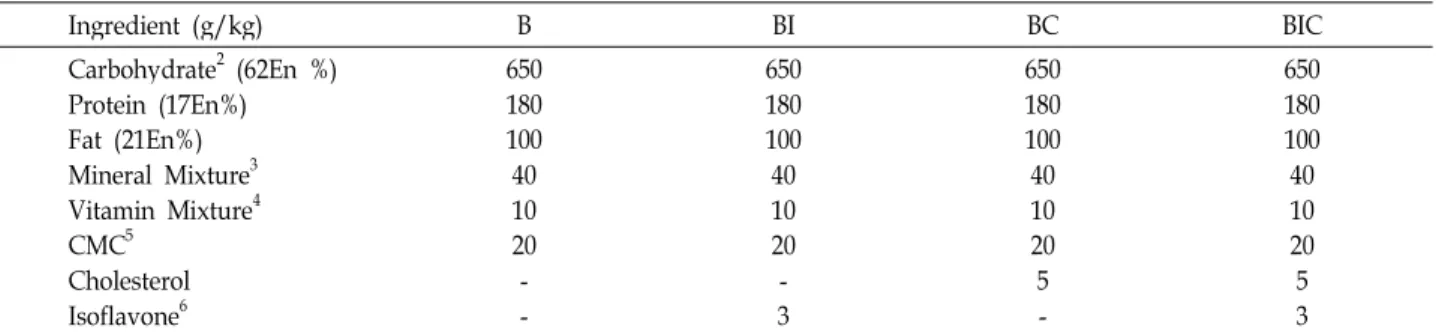
Table 1. Composition of experimental diets1
Ingredient (g/kg) B BI BC BIC
Carbohydrate2 (62En %) Protein (17En%) Fat (21En%) Mineral Mixture3 Vitamin Mixture4 CMC5
Cholesterol Isoflavone6
650 180100 4010 20- -
650 180100 4010 20- 3
650 180100 4010 205 -
650 180100 4010 205 3
1B (basal diet), BI (+0.3% isoflavone), BC (+0.5% cholesterol), BIC (BI diet+0.5% cholesterol)
2Starch:Sucrose=80:20
3AIN-76 mineral mixture (g/kg of mix): CaHPO4, 500; NaCl, 74; K2H6O7H20, 220; K2SO4, 52; MgO, 24; MnCO3, 3.5; FeC6H5O7,
6CuCO3, 0.3; Na2SeO3·5H2O, 0.01; KIO3, 0.01; CrK(SO4)2·12H2O, 0.55; sucrose, finely powdered, 118.03.
4AIN-76 vitamin mixtrue (g/kg of mix): Thiamin HCl 0.6, Riboflavin 0.6, Pyridoxine HCl 0.7, Nicotine acid 3, D-Ca pantothenate 1.6, Folic acid 0.2, D-B+Iotin premix (1%) 2, cyanocobalamin (0.1%) 1, Retinyl palmitate premix (250,000 IU/mg) 1, DL- -tocopherol acetate 100, Cholecalciferol (400,000 IU/g) 0.25, Menaquinone 0.05, Sucrose 990.
5Carboxylmethyl cellulose sodium salt
6Isoflavone concentrations: 2.39 mg/g pt_ 18 g pt/100 g diet 100/15 (total isoflavones 15%)=286.8 mg/100 g≒300 mg/100 g (=3 g/kg)
본은 수용체와 반응하는 체내 estradiol 수준이 낮은 환경에서
는 agonist 특성을 보이며, 반대로 estradiol 수준이 높은 환경 에서는 항에스트로겐 특성을 보이는 것을 알 수 있다[15].
이소플라본이 콜레스테롤을 저하시키고, 혈관벽을 보호함 으로써 동맥경화와 관상동맥심장질환을 예방하는 다양한 기 전이 보고되었다. 이소플라본은 간 대사에 영향을 주어 담즙 산 분비를 증가시며, LDL receptor 활성을 증가하여 LDL 콜레 스테롤 농도가 감소되며 또한, 대두 단백질은 갑상선 호르몬 을 증가시켜 체내 대사를 활발하게 하고, 콜레스테롤 흡수를 방해함으로써 콜레스테롤을 감소시킨다[35]. 다른 기전으로는 tyrosine kinase inhibitor로 작용하여 동맥경화로 진행되는 경 로를 차단하고[41], LDL 콜레스테롤 크기를 감소시켜 과산화 물질로부터 보호함으로써 산화를 방지하여 동맥경화로의 발 전 경로를 차단하며 smooth muscle cells의 migration과 pro- liferation을 차단하고, 혈소판이 활성화되어 응집되는 반응을 억제함으로써 심혈관 질환을 예방한다고 보고하였다[44].
이소플라본의 항산화 효과에 대해서는 in vitro에서 세포 내 산화적 스트레스에 대한 방어효과를 보고하였고[23,36], in vivo에서는 혈중 지질 과산화물 저하와 간세포에서의 catalase 활성 증가 등이 보고되었으나[20,45] 이소플라본의 항산화 작 용에 대한 메커니즘은 아직 확실히 규명되지 않고 있는 실정 이다[22].
이렇듯 대두 단백질이 심혈관 질환을 완화시키는 영향에 관해 많은 연구 결과가 보고되었고, 특히 이소플라본의 효과 로 보는 견해가 유력하지만, 이소플라본의 보호 효과에 대해 일치하지 않는 부정적인 결과[38,46]도 보고되어 질병 예방차 원에서의 이소플라본의 효과에 대한 다각도의 계속적인 연구 가 요구된다. 이에 본 연구에서는 이소플라본 첨가 식이가 고 콜레스테롤 식이를 섭취하는 흰쥐와 일반식이를 섭취하는 흰
쥐의 지질 패턴과 MDA 및 항산화 체계에 미치는 영향을 알아 보고자 하였다.
재료 및 방법
실험동물 및 조건
생후 7주령 Sprague Dawley 수컷 흰쥐를 사용하였으며, 네 개의 실험군당 각 10마리씩 총 40 마리를 8주간 사육하였 다. 각 실험동물은 열흘간 기본 사료를 주어 환경에 적응시킨 후, 실험식이로 사육하였다. 실험동물 사육실 조건은 온도가 22
oC, 습도 18%, 조명주기는 12시간(light: 06:00~18:00시)으로 조절하였고, 실험식이와 식수는 양에 제한없이 공급하였다.
식이 섭취량은 매일 측정하였고, 몸무게는 일주일에 1회 일정 한 시간에 측정하였으며, 식수는 매일 갈아주었다.
실험식이 조성
실험식이는 Table 1과 같이 탄수화물:단백질:지방질의 비율 을 중량을 기준으로 65:18:10으로 구성하였다. 실험군은 대조 군(basal diet, B), 이소플라본 보충군(B+Isoflavone, BI) 고콜레 스테롤군(B+cholesterol, BC) 및 고콜레스테롤-이소플라본 보 충군(BC+Isoflavone, BIC)으로 구성하였다.
실험에 사용된 콜레스테롤의 양은 대두단백질이 0.5% 고콜
레스테롤 식이를 섭취 시킨 암컷 흰쥐에 미치는 영향을 알아
본 김 등[21]의 논문을 참고하였다. 본 실험에 사용된 이소플라
본은 순도 15% glycone으로 (주)태평양에서 제공받았고, 이소
플라본의 첨가량은 Anderson 등[1]이 이소플라본의 항산화
효능에 관한 실험에서 유의적인 결과를 얻어낸 2.39 mg/g
protein을 참고하여, 실험식이에 15% 이소플라본을 3 g/kg을
첨가하였다.
Table 2. FER, Weight gain, food intake of rats fed different diets for 8 weeks*
Diets ANOVA (P)
B BI BC BIC Iso Chol Iso x Chol
FER
Weight gain (g/8 wk) Food intake (g/day) Liver (g)
0.15±0.02 160.8±15.7 18.67±0.63 9.22±0.51
0.14±0.03 151.1±11.34
19.90±0.67 9.01±0.25
0.17±0.01 177.1±4.94 18.30±0.20 10.68±0.30‡
0.13±0.02 149.0±11.08
19.89±0.31 10.69±0.25‡
NS NS NSNS
NS NS
< 0.0001NS
NS NS NSNS
*values are means±standard error of the mean (n=10 rats/groups).
‡
p
<0.05, cholesterol supplementation versus no supplementation.식이효율
각 실험동물은 실험식이 섭취 후부터 일주일에 1회 같은 시각에 체중을 측정하였고, 사육기간 동안 평균 식이 섭취량 과 체중 증가량을 계산하여 각 실험군의 식이효율(food effi- ciency ratio, FER)을 계산하였다.
FER= Body weight gain for experimental period (g) Food intake for experimental period (g)
시료 채취 및 분석 혈청 분리
실험동물은 8주간의 실험기간이 종료된 후, 12시간 절식시 키고 diethyl ether로 마취시켜 복부 대동맥에서 혈액을 채취 하였다. 혈액은 실온에 30분간 방치한 후 2,000× g, 4
oC에서 30분간 원심 분리하여 혈청을 얻었으며, 분석이 이루어질 때 까지 -70
oC에서 보관하였다.
혈청 지질농도 분석
총 콜레스테롤, 중성지방, HDL-콜레스테롤을 kit (Shinyang chemical co., Ltd.)를 이용하여 비색정량하였고, VLDL+LDL- 콜레스테롤은 총 콜레스테롤에서 HDL-콜레스테롤을 뺀 값으 로 계산하였다. Atherogenic index는 동맥경화의 위험율을 예 측할 수 있는 변인으로 산출방법[19]은 다음과 같다.
Atherogenic index
=(Total cholesterol-HDL cholesterol)/HDL cholesterol Total antioxidant status (TAS) 측정
TAS는 혈청 안에 존재하는 총 항산화능을 나타내며 Commercial kit (Randox Laboratories Ltd.)를 이용하여 혈액 자동 분석기기(Autoanalyzer. Chiron Co.)로 분석하였다. 분 석 원리는 ABTS
®(2,2'-Azino-di-[3-ethylB+Inzthiazoline sulphonate])를 peroxidase 및 H
2O
2와 배양시키면 ABTS
®양 이온기를 생성하는데 이는 매우 안정한 청록색 분자로 600 nm에서 측정된다. 검체 중에 존재하는 항산화제에 의해 발색 이 억제되고, 그 정도는 항산화제 농도에 비례한다. 정상 anti- oxidant level은 1.30-1.77 mmol/l이다[29].
Glutathione peroxidase (GSH-Px) 활성 측정 GSH-Px 활성은 Paglia [32]와 Deagen [13]의 방법을 수정하
여, 과산화수소를 기질로 이용한 coupled enzyme 법으로 측 정하였다. 효소활성 단위는 혈청 1 ml당 1분 동안 산화된 NADPH의 nmoles로 나타내었다.
Superoxide dismutase (SOD) 활성 측정
Marklund [27]와 Sheri [39]의 방법을 이용하였으며, py- rogallol의 autoxidation을 SOD가 억제하는 정도를 통하여 측 정하였다. 효소활성 단위는 pyrogaroll autoxidation 50% 방해 하는데 필요한 효소의 양으로서 산출하였다.
혈청의 malondialdehyde 농도 측정
Yagi [47]의 방법과 Buckingham [7]의 방법을 수정하여 이 용하였다. luminescence spectrophotometer (Amico Bowman series)를 이용하여 excitation 500 nm, emission 553 nm에서 fluorescence intensity를 측정한 후 표준용액과 비교하여 비색 정량 하였다.
통계처리
자료의 통계분석은 SAS (Statistical analysis system/STAT Version 6, SAS Institute Inc. Cary, NC, USA)를 이용하였다.
Two-way ANOVA (analysis of variance) test를 실시하여 이 소플라본과 콜레스테롤 보충효과 및 각 변수에 대한 두 요인 간의 상호작용을 검증하였다. F 값이 유의한 경우 각 실험군 간의 평균값의 차이는 Duncan's multiple range test에 의해 유의수준 p<0.05에서 유의성 여부를 검증하였다.
결 과
체중 및 식이효율
이소플라본과 콜레스테롤 섭취에 따른 체중증가율(weight
gain), 식이섭취량(food intake), 식이효율(FER)은 군간에 유의
적인 차이가 없었다. 즉 고지방식 섭취로 인한 고지혈증 유발
단계에서 이소플라본 보충 식이는 식이섭취와 체중 증가에
영향을 미치지 않았다. 그러나, 간 무게(liver weight)는 콜레
스테롤 첨가군(BC, BIC)이 비첨가군(B, BI)보다 유의하게 높았
다(p<0.0001)(Table 2).
Table 3. Serum lipid profiles of rats fed different diets for 8 weeks* (unit: mg/dl)
Diets ANOVA (P)
B BI BC BIC Iso Chol Iso x Chol
Total cholesterol Triglyceride HDL VLDL+LDL **
Atherogenic index#
92.59±4.25 44.49±3.01 38.73±2.78 53.86±2.87 1.45±0.13
70.33±2.93† 45.62±2.82 41.60±2.84 28.72±1.75† 0.73±0.07†
99.51±4.81 53.70±2.89 25.05±2.15‡ 74.46±4.02‡ 3.19±0.36‡
88.20±3.60‡ 41.88±2.50 29.21±2.68‡ 58.98±3.73†‡
2.27±0.37‡
0.0002 NSNS
< 0.0001 0.0042
0.0038
< 0.0001NS
< 0.0001
< 0.0001
NS NSNS NS NS
*values are means±standard error of the mean (n=10 rats/groups).
†
p
<0.05, isoflavon supplementation versus no supplementation.‡
p
<0.05, cholesterol supplementation versus no supplementation.**VLDL+LDL Cholesterol=Total Cholesterol-HDL Cholesterol
#Atherogenic index=(Total Cholesterol-HDL Cholesterol)/HDL Cholesterol
Table 4. Serum lipid peroxidation and antioxidant system of rats fed different diets for 8 weeks* (unit**)
Diets ANOVA (P)
B BI BC BIC Iso Chol Iso x Chol
MDAGSH-Px T-SOD GSH-Px/SOD TAS
2.30±0.29 8.67±0.24 0.32±0.04 28.94±3.31
0.10±0.02
2.29±0.37 9.37±0.86 0.45±0.04† 23.20±3.04 0.22±0.03†
2.26±0.26 8.38±0.32 0.45±0.05 20.87±2.59
0.11±0.02
1.80±0.11 8.96±0.65 0.59±0.07‡ 17.54±3.15 0.25±0.02†
NSNS 0.0317
NS
< 0.0001
NSNS 0.0233
NS NS
NSNS NSNS NS
*values are means±standard error of the mean (n=10 rats/groups).
**Unit: MDA (nmol/l plasma), GSH-Px (nmolNADPH/min/mg protein), T-SOD (Unit/mg protein), TAS (mmol/l)
†
p
<0.05, isoflavone supplementation versus no supplementation.‡
p
<0.05, cholesterol supplementation versus no supplementation.혈청 지방질 농도 및 비율
혈청 총콜레스테롤, HDL 콜레스테롤 농도, VLDL +LDL 및 atherogenic index의 결과는 다음과 같다(Table 3).
Isoflavone 효과
중성지방과 HDL 콜레스테롤은 농도는 이소플라본 첨가군 (BI, BIC)과 비첨가군(B, BC) 간에 유의한 차이를 보이지 않았 다. 총 콜레스테롤, VLDL+LDL 콜레스테롤, atherogenic in- dex는 콜레스테롤 비첨가 군 중에서(B, BI) 이소플라본 첨가군 (BI)이 비첨가군(B)보다 유의하게 낮았고(각각 p=0.0002, p<0.0001, p=0.0042), 콜레스테롤 첨가군(BC, BIC)을 비교했을 때는 VLDL+LDL 농도만이 이소플라본 첨가시(BIC) 유의하게 낮았다(p<0.0001).
Cholesterol 효과
중성지방의 농도는 콜레스테롤 첨가군(BC, BIC)과 비첨가 군(B, BI) 간에 유의한 차이가 없었다. 총 콜레스테롤 농도는 이소플라본 첨가군 중에서(BI, BIC) 콜레스테롤 첨가군(BIC) 이 비첨가군(BI)보다 유의하게 높았고(p=0.038), VLDL+LDL 콜레스테롤과 Atherogenic index는 콜레스테롤 첨가군이(BC, BIC) 각 각의 비첨가군(B, BI)보다 유의하게 높게 나타났다(각 각 p<0.0001, p<0.0001). HDL 콜레스테롤 농도 역시 콜레스테 롤 첨가군이(BC, BIC) 각 각의 비첨가군(B, BI)보다 유의적으
로 낮게 나타났다(p<0.0001).
Isoflavone과 cholesterol의 상호작용
혈청 지방질 농도에 영향을 미치는 이소플라본과 콜레스테 롤의 효과가 독립적인 효과인지를 검증하기 위하여 이들의 상호작용을 살펴본 결과 각 변수에 미치는 각 각의 첨가로 인한 효과는 독립적인 것으로 나타났다.
혈청 지질과산화, 총 항산화능, 항산화 효소 활성
혈청 malondialdehyde (MDA), glutathione peroxidase (GSH-Px), total superoxide dismutase (T-SOD), GSH-Px/
SOD, total antioxidant status (TAS)는 다음과 같다(Table 4).
Isoflavone 효과
MDA, GSH-Px, GSH-Px/SOD는 이소플라본 첨가군(BI, BIC)과 비첨가군(B, BC) 간에 유의적인 차이를 보이지 않았다.
T-SOD는 콜레스테롤 비첨가 군 중에서(B, BI) 이소플라본 첨
가군(BI)이 비첨가군(B)보다 유의하게 높았고(각각 p=0.0317)
TAS는 콜레스테롤 첨가 여부와 관계 없이 이소플라본 첨가군
(BI, BIC)이 비첨가군(B, BC)보다 유의하게 높게 나타났다
(p<0.0001).
Cholesterol 효과
MDA, GSH-Px, GSH-Px/SOD, TAS는 콜레스테롤 첨가군 (BC BIC)과 비첨가군(B, BI) 간에 유의한 차이를 보이지 않았 다. T-SOD는 이소플라본 첨가군 중에서(BI, BIC) 콜레스테롤 첨가군(BIC)이 비첨가군(BI)보다 유의하게 높았다(p=0.0233).
Isoflavone과cholesterol의 상호작용
혈청 지질과산화, 총 항산화능, 항산화 효소 활성에 영향을 미치는 이소플라본과 콜레스테롤의 효과가 독립적인 효과인 지를 검증하기 위하여 이들의 상호작용을 살펴본 결과 각 변 수에 미치는 각 각의 첨가로 인한 효과는 독립적인 것으로 나타났다.
고 찰
본 연구에서는 이소플라본 보충이 식이 섭취와 체중 증가에 영향을 미치지 않았으며 이는 수컷 Wistar rats을 이용하여 20% 대두단백질과 0.1% 콜레스테롤을 급여한 연구[25]와 고 지방 섭취 흰쥐에서 대두 이소플라본 섭취에 따른 항산화 효 소활성을 살펴본 연구결과[22]와 일치했다.
FDA는 대두 단백질과 콜레스테롤을 위한 food-labeling health claim을 공표하여 25 g/day 대두 단백질을 섭취시 콜 레스테롤을 감소하고, 심장병의 위험도 감소한다고 하였다 [14]. 하지만 대두 단백질 및 이소플라본의 지질개선 효과 및 심장병 예방효과에 대한 많은 연구들은 연구조건 및 대상에 따라 다양한 결과들을 보고하고 있다. 본 연구에서는 이소플 라본 섭취가 HDL 콜레스테롤에 미치는 효과는 나타나지 않았 으나 총 콜레스테롤, VLDL+LDL 콜레스테롤, atherogenic in- dex을 낮추는 효과가 있음을 알 수 있었다. 한편, 이소플라본 의 항산화 효능에 대한 연구[1]에서는 High genistein (2.39 mg isoflavon/g protein)군이 대조군에 비해 중성지방을 유의 적으로 낮췄고, 총콜레스테롤은 변화가 없었다는 결과를 보고 한바 있다. 그러나, 성장기 암컷 흰쥐에서 이소플라본 첨가 식이가 지질농도에 미치는 영향에 관한 연구에서[11] 혈청 중 성지질의 농도는 이소플라본 첨가군과 대조군 간에 유의한 차이가 없었고, 혈청 총 콜레스테롤 농도는 이소플라본을 첨 가한 군이 대조군 보다 유의하게 낮게 나타났다. 또한, non HDL 콜레스테롤 농도는 이소플라본 첨가군에서 유의하게 낮 았다고 보고해 본 연구결과와 일치하였다.
LDL 수용체에 미치는 이소플라본의 영향에 관해 많은 연구 [10,24,41]들이 진행되었는데 LDL 분해를 증가시키거나 수용 체의 활성을 증가 시키는 것과 같은 지질대사 과정을 변화시 킴으로써 혈중 지질패턴을 개선하는 것으로 보인다. Anthony 등은[3] 이소플라본을 포함한 대두와 이소플라본을 제거한 대 두 식이를 원숭이에게 주어서 비교 실험한 결과 이소플라본을 함유한 대두 식이군에서 atherosclerotic plaque가 유의적으로
감소하였음을 보였다. 최 등[12]의 연구에서도 폐경기 또는 폐 경기 가까운 여성에게 이소플라본을 하루 150 mg씩 섭취한 군에서는 총 콜레스테롤과 LDL 콜레스테롤이 6주 후, 12주 후 유의적으로 감소하였고, 하루 200 mg씩 섭취한 군의 경우, total, LDL 콜레스테롤, triglyceride가 6주 후, 12주 후 유의적 으로 감소하였다. 한편, 콜레스테롤이 정상이거나 낮은 성인 에 있어서 대두 단백질 섭취가 콜레스테롤 수치에 영향을 미 치지 않는다는 연구보고도 있다. Owen 등[31]은 폐경 여성 36명을 대상으로 placebo, 75 mg 이소플라본 섭취군, 150 mg 이소플라본 섭취군으로 나누어 3개월 섭취 후, 혈청 지질 패턴 을 분석한 결과, 총 콜레스테롤과 중성지방, HDL 콜레스테롤 에는 변화가 없었으며, LDL 콜레스테롤이 7% 감소하는 경향 을 보였으나, 섭취 수준에 따른 유의적인 차이는 없었다고 한 다. 또한, 평균적인 총 콜레스테롤 수치가 145 mg/dl인 성인 12명을 대상으로 한 연구에서 대두 단백질을 66-80 g을 섭취 시킨 결과, 혈청 지질에 변화가 없는 것으로 나타났다[18].
Sacks 등[37]은 대두 단백질 섭취시 콜레스테롤 수치가 129 mg/dl인 13명의 strict vegetarians에 혈청 지질에 변화가 없 다고 보고하였다.
혈청 지질 수치가 높은 성인을 대상으로 한 연구 결과, 대부 분의 연구에서는 대두 단백질을 포화지방과 콜레스테롤을 낮 춘 식단에 첨가 했을 때, 총 콜레스테롤과 LDL 콜레스테롤이 감소하였다고 보고하였다. Bakhit 등[5]은 이소플라본을 함유 한 25 g/day 대두 단백질을 섭취시, 고콜레스테롤 성인 남자 에는 콜레스테롤을 낮추는 효과를 보였고, 정상인에서는 효과 를 보이지 않았다고 하였다.
혈중 총 콜레스테롤 농도가 심장질환의 주요 위험인자이긴 하나 최근에는 혈중 콜레스테롤을 운반하는 지단백질 간의 비율이 더욱 민감한 진단 기준이 되면서 혈청 총 콜레스테롤 농도에 대한 HDL-콜레스테롤의 농도비나, HDL-콜레스테롤 농도에 대한 LDL-콜레스테롤의 농도비 등이 심혈관 질환의 발병을 예견할 수 있는 좋은 지표가 되고 있다[35,45]. 이소플 라본이 혈중 총 콜레스테롤과 VLDL+LDL 콜레스테롤(non- HDL Cholesterol), Atherogenic index을 유의적으로 감소시 켜 주었으므로 꾸준한 대두 식품의 섭취는 심혈관계 질환 예 방에 긍정적인 요인으로 작용할 수 있을 것으로 사료된다.
Total antioxidant status는 인종과 식사패턴, 지역과 유전인
자 등에 의해 다를 수 있으며 본 연구에서는 이소플라본을
첨가한 군에서 대조군에서 보다 유의하게 높게 나타났다. 총
SOD는 이소플라본 첨가군이 대조군보다 유의하게 높았고, 콜
레스테롤 식이에 이소플라본을 첨가한 군이 이소플라본만 첨
가한 군보다 유의하게 높았다. 총 SOD 효소활성은 이소플라
본이나 콜레스테롤 보충에 의해 모두 증가하였다. 항산화 효
과를 가진 이소플라본과 지질과산화를 유발하는 콜레스테롤
보충에 의해 총 SOD 효소활성이 동일하게 증가하였으며, 이
소플라본과 콜레스테롤을 함께 보충한 군에서 가장 높은 효소
활성을 보였는데 이는 고콜레스테롤 섭취시 생성되는 다량의 유리기(free radical) 제거를 위해 이소플라본이 항산화제로 사 용된 후 산화촉진제 형태인 phenoxyl radicals로 전환되었기 때문으로 사료된다[33].
GSH-Px는 이소플라본 첨가군이 비 첨가군보다 높은 수치 를 보였으나, 유의한 차이는 없었고 이 결과는 Mohamedain M. 등[30]의 연구에서 보여주는 항산화 효소 결과와 유사하 다. 1% Cholesterol diet와 Basal diet를 쥐에 섭취시켜 적혈구 에서 GSH-Px, SOD를 측정하였고 혈장에서 MDA를 측정하 였는데, 두 군간에는 유의적인 차이를 보이지 않았다. 그러나, 이연숙[22] 등에 따르면, 고지방 섭취 흰쥐에서 대두 이소플라 본 섭취가 catalase와 glutathione peroxidase, glutathione re- ductase 활성도를 유의하게 증가시킨 것으로 보도된 바 있어 이소플라본이 항산화작용에 관여하는 것으로 사료된다. 이소 플라본을 비롯한 많은 종류의 phytochemical의 항산화작용에 대한 질병예방의 효과에 대해 집중적인 연구가 진행 중에 있 다[43].
이상의 결과는 이소플라본의 심혈관계질환의 위험요소에 대한 개선 효과가 지질패턴 개선 외 및 항산화작용에 의해서 나타남을 보였다. 앞으로 이소플라본의 식이 첨가량을 여러 단계로 나누어 심혈관 질환에 가장 큰 효과를 갖는 적정량을 알아보는 연구 및 이소플라본과 대두 내 기타 생리활성물질을 함께 이용하여 심혈관 질환에 미치는 영향을 비교하는 연구등 이소플라본이 지질대사에 미치는 영향과 항산화작용기전에 대한 보다 심층적인 연구가 이루어져야 할 것이다.
References
1. Anderson, J. W., V. A. Drwadkar, and R. Susan. 1998.
Selective effects of different antioxidants on oxidantion of lipoproteins from rats. Proceedings of the Society for Experimental Biology and Medicine. 218.
2. Anderson, J. W., B. M. Johnstone, and M. E. Cook-Newell.
1995. Meta-analysis of the effects of soy protein intake on serum lipids.
N. Engl. J. Med.
333, 276-282.3. Anthony, M. S. 1995. Effects of soy protein phytoestrogens on cardiovascular risk factors in rhesus monkeys. 1995.
J.
Nutr.
125, 803.4. Atteritano, M., H. Marini, L. Minutoli, F. Polito, A. Bitto, D. Altavilla, S. Mazzaferro, R. D’Anna, M. L. Cannata, and A. Gaudio. 2007.Effects of the phytoestrogen genistein on some predictors of cardiovascular risk in osteopenic, post- menopausal women: a two-year randomized, doubleblind, placebo-controlled study
. J. Clin. Endocrinol. Metabol.
92, 3068-3075.5. Bakhit, R. M., B. P. Klein, and D. Essex-Sorlie. 1994. Intake of 25g of soybean protein with or without soybean fiber alters plasma lipids in men with elevated cholesterol concentrations
. J. Nutr.
124, 213-222.6. Bitto, A., D. Altavilla, A. Bonaiuto, F. Polito, L. Minutoli,
L. Stefano, D. G. Salvatore, V. Arcoraci, and F. Squadrito.
2009. Effects of aglycone genistein in a rat experimental model of postmenopausal metabolic syndrome.
J.
Endocrinol
. 200, 367-376.7. Buckingham, K. W. 1985. Effect of dietary poly- unsaturated/saturated fatty acid ratio and dietary vitamin E on lipid peroxidation in the rat.
J. Nutr.
115, 1425-1435.8. Cavallini, D. C. U., D. S. P. Abdalla, R. C. Vendramini, R.
Bedani, L. Q. Bomdespacho, N. D. Pauly-Silveira, G. F.
Valdez, and E. A. Rossi. 2009. Effects of isoflavone- supplemented soy yogurt on lipid parameters and atherosclerosis development in hypercholesterolemic rabbits: a randomized double-blind study.
Lipids Health Disease
8, 40-50.9. Chan, S. G., S. C. Ho, N. Kreiger, G. Darlington, K. F. So, and P. Y. Y. Chong. 2007. Dietary sources and determinants of soy isoflavone intake among midlife Chinese women in Hong Kong.
J. Nutr.
137, 2451-2455.10. Chen, H. W., C. L. Kuo, C. S. Huang, S. J. Kuo, and C.
S. Liu. 2008. Oxidized lowdensity lipoproteins, autoanti- bodies against oxidized lowdensity lipoproteins and carotid intima media thickness in a clinically healthy population.
Cardiol
. 110, 252-259.11. Choi, M. J. and H. J. Jo. 2005. Effects of isoflavones supple- mented diet on lipid concentrarions and hepatic LDL re- ceptor mRNA level in growing female rats.
Korean Nutr. Soc.
38, 89-95.
12. Choi, Y., S. Yoon, M. J. Lee, S. K. Lee, and B. S. Lee. 2001.
Dose response relationship of isoflavone supplementation on plasma lipid profiles and total antioxidant status in peri- menopausal and postmenopausal women.
Korean Nutr. Soc.
34, 322-329.
13. Deagen, J. T., J. Butle, M. Beilstein, and P. D. Whagner. 1987.
Effects of dietary selenite, selenocysteine and selenome- thione o-selenocysteine lyase and glutathione peroxidase ac- tivites on selenium levels in rat tissues
. J. Nutr.
117, 91-98.14. Food and Drug Administration. 1999. Food labeling, health claims, soy protein, and coronary heart disease.
Fed. Reg.
57, 699-733.
15. Fotsis, M., H. Adlercreutz, T. Hase, R. Montesano, and L.
Schweigerer. 1995. Genistein, a dietary ingested iso- flavonoid, inhibits cell proliferation and in vitro angiogenesis.
J. Nutr.
125, 790-797.16. Franke, A. A., B. M. Halm, K. Kakazu, X. Li, and L. J. Custer.
2009. Phytoestrogenic isoflavonoids in epidemiologic and clinical research.
Drug Test Analysis
1, 14-21.17. Gardner, C. D., L. M. Chatterjee, and A. A. Franke. 2009.
Effects of isoflavone supplements vs. soy foods on blood concentrations of genistein and daidzein in adults.
J. Nutr.
Biochem
. 20, 227-234.18. Giovannetti, P. M., K. K. Carroll, and B. M. Wolfe. 1986.
Constancy of fasting serum cholesterol of healthy young women upon substitution of isolated soy protein for meat and dairy protein in medium and low fat diets.
Nutr. Res
. 6, 609-618.19. Haglund, O., R. Loustarinen, R. Wallin, I. Wibell, and T.
Saldeen. 1991. The effect of fish oil on triglycerides, choles- terol, fibrinogen and malondialdehyde in humans supple- mented with vitamin.
Eur. J. Nutr.
121, 165-172.20. Jenkins, D. J., C. W. Kendall, C. J. Jackson, P. W. Connelly, T. Parker, D. Faulkner, E. Vidgen, S. C. Cunnane, L. A.
Leiter, and R. G. Josse. 2002. Effects of high- and low- iso- flavone soyfoods on blood lipids, oxidized LDL, homo- cystein, and blood pressure in hyperlipidemic men and women.
Am. J. Clin. Nutr
. 76, 365-372.21. Kim, S. Y., E. J. Chung, J. Kim, J. Ahn, J. H. Park, S. Yoon, Y. C. Lee-Kim. 2000. Age-related difference in antioxidant effects of soybean protein concentrate in female rats.
FASEB J.
364, 4.22. Lee, Y. S., S. Y. Jang, and K. O. Kim. 2005. Effects of soy isoflavone intake on Nitrite content and antioxidant enzyme activites in male rats fed high-fat diet.
Korean Nutr. Soc.
38, 89-95.23. Lee, Y. S., C. Xiaowei, and J. Anderson. 2001. Physiological concentrations of genistein stimulate the proliferation and protect against free radical-induced oxidative damage of MC3T3-E1 osteoblast-like cells.
Nutr. Res
. 21, 1287-1298.24. Lovati, M. R., C. Manzoni, and A. Canavesi. 1987. Soybean proteindiet increases low density liporotein receptor activity in mononuclear cells from hypercholesterolemic patients.
J.
Clin. Invest
80, 1498-1502.25. Madani, S., J. M. Frenoux, J. Prost, and J. Bellecille. 2004.
Changes in serum lipoprotein lipids and their fatty acid compositions and lipid peroxidation in growing rats fed soybean protein versus casein with or without cholesterol.
Nutr.
20, 554-563.26. Marguerite, A. K., R. L. Nahin, M. J. Messina, J. I .Rader, L. U. Thompson, T. M. Badger, J. T. Dwyer, Y. S. Kim, C.
H. Pontzer, P. E. Starke-Reed, and C. M. Weave. 2010.
Guidance from an NIH workshop on designing, implement- ing, and reporting clinical studies of soy interventions.
J.
Nutr.
140, 1192S-1204S.27. Marklund, S. and G. Marklund. 1974. Involvement of the superoxide anion radical in the autoxidation of pyrogallol and a convenient assay for superoxide dismutase.
Eur. J.
Biochem.
47, 469-474.28. Messina, M., C. Nagata, and A. H. Wu. 2006. Estimated Asian adult soy protein and isoflavone intakes.
Nutr. Cancer
55, 1-12.29. Miller, N. J., C. Castellucio, L. Tijburg, and C. Rice-Evans.
1996. The antioxidant properties of theaflavins and their gal- late esters-radical scavengers or metal chelators.
FEBS Letters
392, 40-44.30. Mohamedain, M. 2000. Cholesterol-rich diets have different effects on lipid peroxidation, cholesterol oxides, and anti- oxidant enzymes in rats.
J. Nutr. Biochem.
11, 293-302.31. Owen, A. and P. Baghurst. 2000. The effect of isoflavone supplementation on serum lipids in postmenopausal women.
Clin. Esp. Pharmacol. Physiol.
27, A32.32. Paglia, D. E. and W. N. Valentin.1967. Studies on the quanti-
tative and qualitative characterization of erythrocyte gluta- thione peroxidation.
J. Lab. Clin. Med.
70, 158-169.33. Patel, R. P., B. J. Boersma, J. H. Crawford, N. Hogg, M. Kirk, B. Kalyanaraman, D. A. Parks, S. Barnes, and U. Darley.
2001. Antioxidant mechanisms of isoflavones in lipid sys- tems: paradoxical effects of peroxyl radical scavenging.
Free Radic. Biol. Med.
31, 1570-8115.34. Patsch, W. D. 2001. Coronary heart disease prediction from lipoprotein cholesterol levels, triglycerides, lipoprotein(a), apolipoproteins A-I and B, and HDL density subfractions:
the atherosclerosis risk in communities (ARIC) Study.
Circulation
104, 1108-1113.35. Potter, S. M. 1996. Soy protein and serum lipids.
Curr. Opin.
Lipidol.
7, 260-264.36. Rodrdanz, E., S. Ohler, Q. H. Tran-Thi, and R. Kahl. 2002.
The phytoestrogen daidzein affects the antioxidant enzyme system of rat hepatoma H4IIE cells
. J. Nutr.
132, 370-375.37. Sacks, F. M., J. L. Breslow, and P. G. Wood. 1983. Lack of an effect of diary protein (casein) and soy protein on plasma cholesterol of strict vegetarians: an experiment and a critical review
. J. Lipid Res.
24, 1012-1020.38. Sacks, F. M., A. Lichtenstein, L. Van Horn, W. Harris, P.
Kris-Etherton, and M. Winston. 2006. Soy protein, iso- flavones, and cardiovascular health. An American Heart Association Science Advisory for Professionals from the Nutrition Committee.
Circulation
113, 1034-1044.39. Sheri, Z. C., C. L. Keen, and L. S. Hurley. 1983. Superoxide dismutase activity and lipid peroxidation in the rat: devel- opmental correlations affected by manganese deficiency
. J.
Nutr
. 113, 2498-2504.40. Susan, M. Potter. 2000. Soy-new health benefits associated with an ancient food.
Nutrition Today
35, 53-60.41. Sirtori, C. R. and M. R. Lovati. 1995. Soy and cholesterol reduction: clinical experience.
J. Nutr.
125, 598-605.42. Torres, N., I. Torre-Villalvazo, and A. R. Tovar. 2006.
Regulation of lipid metabolism by soy protein and its mpli- cation in diseases mediated by lipid disorders.
J. Nutr.
Biochem
. 17, 365-373.43. Vertuani, S., A. Angusti, and S. Manfredini. 2004. The anti- oxidants and pro-antioxidants network: an overview.
Curr.
Pharmaceutical Design
10, 1677-1694.44. Wilcox, J. N. and B. F. Blumental. 1995. Thrombotic mecha- nism in atherosclerosis: potential impact of soy proteins.
J.
Nutr.
125, 631-638.45. Wiseman, H., J. D. O’Reilly, H. Adlercreutz, A. I. Mallet, E. A. Bowey, J. R. Rowland, and T. Sanders.2000. Isoflavone phytoestrogens consumed in soy decrease F2-isoprostane concentrations and increase resistance of low-density lip- oprotein to oxidation in humans.
Am. J. Clin. Nutr.
72, 395-400.46. Xiao, C. W. 2008. Health effects of soy protein and iso- flavones in Humans.
J. Nutr.
138, 1244-1249.47. Yagi, K. 1976. A simple flourometric assay for lipoperoxide in blood plasma.