http://dx.doi.org/10.4174/astr.2015.89.4.215 Annals of Surgical Treatment and Research
Risk factors for mortality of severe trauma based on 3 years’ data at a single Korean institution
Joohyun Sim, Jaeheon Lee1, John Cook-Jong Lee, Yunjung Heo2, Heejung Wang, Kyoungwon Jung
Departments of Surgery, 1Orthopaedic Surgery, and 2Medical Humanities and Social Medicine, Ajou University School of Medicine, Suwon, Korea
INTRODUCTION
Recent improvements in trauma and critical care systems have decreased the global mortality rate of patients with multiple traumas [1,2]. However, the national trauma system in Korea was only recently implemented in 2012, and the na
tionwide trauma registry is still in its infancy [3,4]. In the na tional trauma system in Korea, the highest level of trauma center appointed by the government is the regional trauma center, of which there are currently 11 hospitals, with 17 hospitals in total expected to receive this designation by 2017 [5].
For policy development, longterm data are needed, but there
have been few shortterm reports regarding preventable trauma mortality in Korea since 1997 [3,4]. Thus, there are growing demands for domestic trauma data that include not only the rates of mortality but also the factors that contribute to post
traumatic mortality. Previous studies [616] have indicated that age, prehospital care, whole body computed tomography, blood transfusion, and scales such as the Abbreviated Injury Scale (AIS) and Injury Severity Score (ISS) are significant factors for trauma
related mortality.
This study aimed to determine the mortality rate in patients with severe multiple traumas and the risk factors for trauma mortality based on 3 years’ data in a regional trauma center in Korea.
Purpose: This study aimed to determine the mortality rate in patients with severe trauma and the risk factors for trauma mortality based on 3 years’ data in a regional trauma center in Korea.
Methods: We reviewed the medical records of severe trauma patients admitted to Ajou University Hospital with an Injury Severity Score (ISS) > 15 between January 2010 and December 2012. Pearson chi-square tests and Student t-tests were conducted to examine the differences between the survived and deceased groups. To identify factors associated with mortality after severe trauma, multivariate logistic regression was performed.
Results: There were 915 (743 survived and 172 deceased) enrolled patients with overall mortality of 18.8%. Age, blunt trauma, systolic blood pressure (SBP) at admission, Glasgow Coma Scale (GCS) at admission, head or neck Abbreviated Injury Scale (AIS) score, and ISS were significantly different between the groups. Age by point increase (odds ratio [OR], 1.016;
P = 0.001), SBP ≤ 90 mmHg (OR, 2.570; P < 0.001), GCS score ≤ 8 (OR, 6.229; P < 0.001), head or neck AIS score ≥ 4 (OR, 1.912; P = 0.003), and ISS by point increase (OR, 1.042; P < 0.001) were significant risk factors.
Conclusion: In severe trauma patients, age, initial SBP, GCS score, head or neck AIS score, and ISS were associated with mortality.
[Ann Surg Treat Res 2015;89(4):215-219]
Key Words: Wounds and injuries, Injury Severity Score, Glasgow Coma Scale, Abbreviated Injury Scale, Risk factors
Reviewed January February March April May June July August September October November December
Received February 16, 2015, Revised April 17, 2015, Accepted May 12, 2015
Corresponding Author: Kyoungwon Jung
Department of Surgery, Ajou University Hospital, Ajou University School of Medicine, 164 World cup-ro, Yeongtong-gu, Suwon 16499, Korea Tel: +82-31-219-4452, Fax: +82-31-219-7765
E-mail: [email protected]
Copyright ⓒ 2015, the Korean Surgical Society
cc Annals of Surgical Treatment and Research is an Open Access Journal. All articles are distributed under the terms of the Creative Commons Attribution Non- Commercial License (http://creativecommons.org/licenses/by-nc/4.0/) which permits unrestricted non-commercial use, distribution, and reproduction in any medium, provided the original work is properly cited.
METHODS
Study population and institution
Data sets of trauma patients who visited Ajou University Hospital in Korea, with ISS > 15, between January 2010 and December 2012 were collected from the institutional trauma registry and analyzed. Patients were placed in the survived or deceased groups. Ajou University Hospital is a leading tertiary hospital in Korea with 16,000 trauma patients visiting its emergency room every year.
Definitions and measures
The AIS is an anatomical based, consensus derived, global se
verity scoring system that classifies each injury by body region (head, neck, face, thorax, abdomen, spine, upper extremity, lower extremity, and external and other regions) according to its relative importance on a 6point ordinal scale [17]. The ISS is an aggregate score for patients with multiple injuries and is calculated as the sum of the squares of the three highest AIS scores for three most severely injured areas of the body [18].
The ISS allows for direct comparison between multiple trauma patients with injuries of varying severities in different body regions (head or neck, face, chest, abdominal or pelvic contents, extremities or pelvic girdle, and external) and has been shown to be a good predictor of survival [18]. Severe trauma is generally defined as an ISS > 15 [19].
In this study, AIS scores were coded by two nurse prac
titioners who were responsible for AIS coding. Three general sur geons, a neurosurgeon, and an orthopedic surgeon colla
borating in the trauma service team confirmed the AIS scores
for each body region.
Statistical analysis
To identify independent risk factors for mortality after severe trauma, we selected potential predictors based on previous studies and the clinical experience of our research group. These variables were age, sex, severity of injury, and early physiology.
Severity of injury was evaluated with the Glasgow Coma Scale (GCS), ISS, and AIS score of each body region. Early physiology was evaluated using initial systolic blood pressure (SBP) measured in the emergency department at the time of arrival.
Comparisons of continuous variables between the survived and deceased groups were conducted using ttests. Chisquare tests were used to analyze categorical variables such as the me
chanism of trauma and sex.
A multivariate logistic regression analysis was performed using a stepwise model, with mortality as the dependent vari able. For this analysis, several continuous variables that have an accepted normal range or gradual orders in a limited range, such as SBP, GCS score, and AIS score, were converted to categorical variables. Initial SBP was categorized into two groups with 90 mmHg as the cutoff value, which is a datum value for diagnosis of shock, and GCS score was categorized with 8 points as the cutoff value, which is the value for initial intubation in Advanced Trauma Life Support guidelines and that would be more likely to indicate a loss of consciousness [20].
Variables with continuous values from one to the highest value, such as age and ISS, were included as continuous variables in the logistic regression.
For all statistical analyses, a probability of <0.05 was
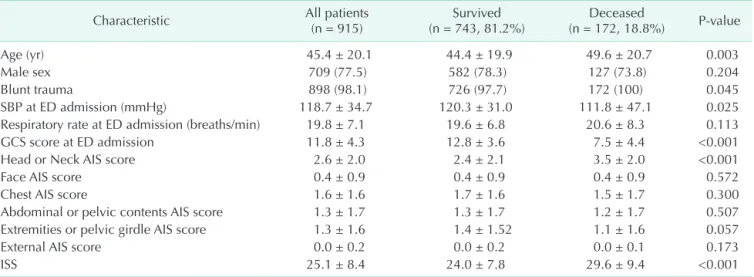
Table 1. Basic demographic and clinical characteristics at admission of patients with severe trauma and compared between those that survived and were deceased
Characteristic All patients
(n = 915) Survived
(n = 743, 81.2%) Deceased
(n = 172, 18.8%) P-value
Age (yr) 45.4 ± 20.1 44.4 ± 19.9 49.6 ± 20.7 0.003
Male sex 709 (77.5) 582 (78.3) 127 (73.8) 0.204
Blunt trauma 898 (98.1) 726 (97.7) 172 (100) 0.045
SBP at ED admission (mmHg) 118.7 ± 34.7 120.3 ± 31.0 111.8 ± 47.1 0.025
Respiratory rate at ED admission (breaths/min) 19.8 ± 7.1 19.6 ± 6.8 20.6 ± 8.3 0.113
GCS score at ED admission 11.8 ± 4.3 12.8 ± 3.6 7.5 ± 4.4 <0.001
Head or Neck AIS score 2.6 ± 2.0 2.4 ± 2.1 3.5 ± 2.0 <0.001
Face AIS score 0.4 ± 0.9 0.4 ± 0.9 0.4 ± 0.9 0.572
Chest AIS score 1.6 ± 1.6 1.7 ± 1.6 1.5 ± 1.7 0.300
Abdominal or pelvic contents AIS score 1.3 ± 1.7 1.3 ± 1.7 1.2 ± 1.7 0.507
Extremities or pelvic girdle AIS score 1.3 ± 1.6 1.4 ± 1.52 1.1 ± 1.6 0.057
External AIS score 0.0 ± 0.2 0.0 ± 0.2 0.0 ± 0.1 0.173
ISS 25.1 ± 8.4 24.0 ± 7.8 29.6 ± 9.4 <0.001
Values are presented as mean ± standard deviation or number (%).
Comparisons were conducted between the survived and deceased groups using t-tests or chi-square tests.
SBP, systolic blood pressure; ED, Emergency Department; GCS, Glasgow Coma Score; AIS, Abbreviated Injury Score; ISS, Injury Severity Score.
considered to be statistically significant. All data were analyzed using IBM SPSS Statistics ver. 21.0 (IBM Co., Armonk, NY, USA).
Ethics statement
This study was approved by the Institutional Review Board (IRB) of Ajou University Hospital (IRB No. MEDOBS14446).
The requirement for informed consent was waived by the IRB because of the observational nature of this study.
RESULTS
Of the 915 patients (709 men, 77.5%) that were identified, 743 patients (81.2%) survived (survived group), and 172 patients (18.8%) passed away (deceased group). The mean age of the entire sample was 45.4 (± 20.11) years. The deceased group was significantly older (49.6 ± 20.7 years) than the survived group (44.4 ± 19.9 years) (P = 0.003). Blunt trauma was the cause of injury in 898 patients (98.1%) and was the cause of injury in 726 patients (97.7%) in the survived group and 172 patients (100%) in the deceased group (P = 0.045) (Table 1). Initial SBP was significantly higher in the survived group (120.3 ± 31.0 mmHg) than in the Deceased group (111.8 ± 47.1 mmHg, P = 0.025).
The mean GCS scores, head or neck AIS scores, and ISS were also significantly different between the survived and deceased groups (12.8 ± 3.6 vs. 7.5 ± 4.4, 2.4 ± 2.1 vs. 3.5 ± 2.0, and 24.0
± 7.8 vs. 29.6 ± 9.4, respectively; all P < 0.001).
Therefore, the significant factors included in the multivariate analysis were age, blunt trauma, initial SBP, GCS score, head or neck AIS score, and ISS. All of the variables resulted in signi
ficant odds ratios (ORs) (Table 2). The greatest OR (6.229; 95%
confidence interval [CI], 1.007–1.026) was observed with GCS scores ≤ 8.
DISCUSSION
In the present study, the overall mortality of patients with multiple traumas was 18.8%, which is similar to the findings of previous studies in which the mortality of patients with
mul tiple traumas was 18.7%–22.8% [1,11,13,21]. Comparatively, in patients with trauma in one body region, global mortality is reportedly 0.5%–6% [22]; these results collectively indicate higher mortality in patients with multiple traumas.
Multiple traumas indicate greater injury intensity, which is often the result of a highenergy blunt trauma [18]. Therefore, patients with multiple traumas are more likely to receive more severe injury and require greater medical resources and higher levels of medical care from the initial scene. The establishment of trauma systems and data collection is required to help allo
cate the necessary resources for patients with multiple traumas.
With validated predictors of mortality, patients with severe trauma can be triaged at the initial scene and transported to a higherlevel trauma center. Several studies have demonstrated that age contributes to increased mortality risk among trauma patients [68], and several studies have developed appropriate scoring systems for triage including the Mechanism, Glasgow Coma Scale, Age, and Arterial Pressure (MGAP) score [8], Emer
gency Trauma Scores [11], and Trauma and Injury Severity Score [14]. These physiologic factors and scoring systems underpinned the design of the present study.
MGAP is a triage score to predict mortality that was reported in 2010 [8] and based on physical variables obtained during the initial prehospital phase. The OR for penetrating trauma was 4.11 (95% CI, 2.24–7.73), and the mechanism for trauma was blunt trauma in 87% and penetrating trauma in 13% of the deceased patients, while 92% of the living patients received a blunt trauma. In the present study, blunt trauma occurred more often, in 98% of the total sample of patients, with a significant difference between the deceased and survived groups (100%
and 97.7%, respectively). In the study of MGAP, the OR for GCS, for a 1point increase, was 0.71 (95% CI, 0.68–0.75) [8]. However, we dichotomized GCS based on a threshold of 8 points because of a lack of a visible difference by individual points. As a result, GCS scores ≤ 8 resulted in an OR of 6.229. Age, for each 1-year increase, had the next highest odds (OR, 1.03) for mortality in the MGAP study [8]. Similarly, age resulted in an OR of 1.016 (P = 0.001) in the present study. Finally, the OR for arterial Table 2. Risk factors for mortality from severe trauma, derived from a multivariate logistic regression analysis using a stepwise model with forward variable selection
Variable Regression coefficient b Adjusted OR, eb (95% CI) P-value
Age (yr) 0.016 1.016 (1.007–1.026) 0.001
SBP ≤ 90 mmHg 0.944 2.570 (1.584–4.172) <0.001
GCS score ≤ 8 1.829 6.229 (4.181–9.282) <0.001
Head or neck AIS score ≥ 4 0.648 1.912 (1.248–2.928) 0.003
ISS (point) 0.041 1.042 (1.019–1.065) <0.001
Constant –4.584 - -
OR, odds ratio; CI, confidence interval; SBP, systolic blood pressure; GCS, Glasgow Coma Scale; AIS, Abbreviated Injury Scale; ISS, Injury Severity Score.
pressure, by 1mmHg increase, was 0.98 [8]. In our study, we converted SBP to categories based on 90 mmHg as the cutoff in order to distinguish patients with shock; this threshold value is included in the recent recommendations [8].
In addition to MGAP, other risk factors for posttraumatic mortality have been investigated in recent studies, including computed tomography [12], blood transfusion [10], and ISS [13].
Diagnostic wholebody CT was associated with a significant reduction in 30day mortality among patients with severe blunt trauma [12], while ≥ 2 units of transfused blood was related to increased mortality [10]. However, AIS or ISS scores alone were not sufficient to predict traumatic mortality in several studies [13].
Of the regional AIS scores, our study showed that the head or neck AIS score was the only score to be significantly associated with mortality, with an AIS score > 4 resulting in an OR of 1.912. Of the few studies that have evaluated the predictive ability of head AIS scores for mortality, that of Baitello et al.
[23] showed that a significantly higher number of patients who lost consciousness (33.9%–35.0%) died compared to those who did not lose consciousness (3.5%–9.0%, P < 0.0001) [23]. It is possible that more intensive head injuries are reflected in the head AIS score.
Although the ISS alone was not sufficient to predict mortality in a previous study [13], the ISS by point increase was a signi
ficant factor in the present study, which included severely in
jured trauma patients with ISS > 15; furthermore, the deceased group had a significantly higher ISS (29.6 points) than the survived group (24.0 points).
The present study had certain limitations. First, it focused on the severity of trauma during the initial evaluation stage only.
Other important factors such as medical and family history were not included in the analysis of mortality. Because the basic data at the time of initial evaluation of trauma patients were not sufficient, we aimed to determine the initial characteristics of the trauma patients who required more medical attention.
Second, pediatric trauma patients were almost not included in our study. There was one infant included in the analysis, and the authors decided not to exclude the infant’s data because it was unlikely that the result of 915 patients could be affected due to one. However, the result was based on adults mostly, so the risk factors of mortality may not have same significance when applied to neonates or pediatric patients. Further study for pediatric trauma patients would be necessary.
With the initial introduction of a national trauma care sys
tem in Korea, the mortality of patients with severe trauma managed in a leading trauma center was similar to that of level1 centers in other countries with established trauma care systems. However, continuous efforts to reduce preventable mortality should be reflected in improvements in the trauma care system. In our rudimental study, age, initial SBP, GCS score, head or neck AIS score, and ISS were associated with mortality in severe trauma patients. Despite these risk factors are already wellknown, these had not been verified in domestic trauma patients before. With implementation of national trauma registry, multicenter based further study in domestic setting would be planned in the future.
CONFLICTS OF INTEREST
No potential conflict of interest relevant to this article was reported.
1. Schoeneberg C, Schilling M, Burggraf M, Fochtmann U, Lendemans S. Reduction in mortality in severely injured patients following the introduction of the
"Treatment of patients with severe and multiple injuries" guideline of the German society of trauma surgery: a retrospective analysis of a level 1 trauma center (20102012). Injury 2014;45:6358.
2. Fröhlich M, Lefering R, Probst C, Paffrath T, Schneider MM, Maegele M, et al.
Epidemiology and risk factors of multiple
organ failure after multiple trauma:
an analysis of 31,154 patients from the
TraumaRegister DGU. J Trauma Acute Care Surg 2014;76:9217.
3. Jung KY, Kim JS, Kim Y. Problems in trauma care and preventable deaths. J Korean Soc Emerg Med 2001;12:4556.
4. Kim Y, Jung KY, Cho KH, Kim H, Ahn HC, Oh SH, et al. Preventable trauma deaths rates and management errors in emergency medical system in Korea. J Korean Soc Emerg Med 2006;17:38594.
5. Seo J. National Health Insurance Mid
term Guarantee Reinforcement Act [Internet]. Sejong: Ministry of Health and Welfare; 2015 Feb 1 [cited 2015 Apr 15].
Available from: http://www.mw.go.kr/
front_new/al/sal0301vw.jsp?PAR_MENU_
I D=0 4 & M EN U_ I D=0 4 0 3 &CON T_
SEQ=316755&page=1.
6. Calland JF, Xin W, Stukenborg GJ. Effects of leading mortality risk factors among trauma patients vary by age. J Trauma Acute Care Surg 2013;75:5015.
7. Hashmi A, IbrahimZada I, Rhee P, Aziz H, Fain MJ, Friese RS, et al. Predictors of mortality in geriatric trauma patients: a systematic review and metaanalysis. J Trauma Acute Care Surg 2014;76:894901.
8. Sartorius D, Le Manach Y, David JS,
REFERENCES
Score (ISS) based approach alone is not sufficient. Injury 2014;45 Suppl 3:S649.
14. McCoy CE, Menchine M, Sampson S, Anderson C, Kahn C. Emergency medical services outofhospital scene and trans
port times and their association with mortality in trauma patients presenting to an urban Level I trauma center. Ann Emerg Med 2013;61:16774.
15. Walder AD, Yeoman PM, Turnbull A. The abbreviated injury scale as a predictor of outcome of severe head injury. Intensive Care Med 1995;21:6069.
16. Demetriades D, Kuncir E, Murray J, Velmahos GC, Rhee P, Chan L. Mortality prediction of head Abbreviated Injury Score and Glasgow Coma Scale: analysis of 7,764 head injuries. J Am Coll Surg 2004;199:21622.
17. Gennarelli TA, Wodzin E. Abbreviated Injury Scale 2005. Update 2008. Des Plaines (IL): Association for the Advan
cement of Automotive Medicine; 2008.
18. Bederman SS, Murnaghan O, Malempati H, Lansang E, Wilkinson M, Johnston E, et al. Inhospital mortality and surgical utilization in severely polytraumatized patients with and without spinal injury. J Ran curel E, Smail N, Thicoipe M, et al.
Me chanism, glasgow coma scale, age, and arterial pressure (MGAP): a new simple prehospital triage score to predict mortality in trauma patients. Crit Care Med 2010;38:8317.
9. Raux M, Sartorius D, Le Manach Y, David JS, Riou B, Vivien B. What do prehospital trauma scores predict besides mortality? J Trauma 2011;71:7549.
10. Charles A, Shaikh AA, Walters M, Huehl S, Pomerantz R. Blood transfusion is an independent predictor of mortality after blunt trauma. Am Surg 2007;73:15.
11. Joosse P, de Jong WJ, Reitsma JB, Wendt KW, Schep NW, Goslings JC. External validation of the Emergency Trauma Score for early prediction of mortality in trauma patients. Crit Care Med 2014;42:839.
12. Yeguiayan JM, Yap A, Freysz M, Garrigue D, Jacquot C, Martin C, et al. Impact of wholebody computed tomography on mortality and surgical management of severe blunt trauma. Crit Care 2012;16:
R101.
13. Paffrath T, Lefering R, Flohe S; Trauma
Register DGU. How to define severely injured patients?: an Injury Severity
Trauma 2011;71:E718.
19. Nathens AB, Rivara FP, MacKenzie EJ, Maier RV, Wang J, Egleston B, et al. The impact of an intensivistmodel ICU on traumarelated mortality. Ann Surg 2006;244:54554.
20. ATLS Subcommittee; American College of Surgeons’ Committee on Trauma;
International ATLS working group.
Advanced trauma life support (ATLS®):
the ninth edition. J Trauma Acute Care Surg 2013;74:13636.
21. FuglistalerMontali I, Attenberger C, Fuglistaler P, Jacob AL, Amsler F, Gross T.
In search of benchmarking for mortality following multiple trauma: a Swiss trauma center experience. World J Surg 2009;33:247789.
22. Tyson AF, Varela C, Cairns BA, Charles AG. Hospital mortality following trauma:
an analysis of a hospitalbased injury surveillance registry in subSaharan Africa. J Surg Educ 2015;72:e6672.
23. Baitello AL, de Assis Cury F, Espada PC, Morioka RY, de Godoy JM. Mortality in patients with loss of consciousness at the scene of trauma. Int J Emerg Med 2010;3:915.