J Korean Surg Soc 2012;83:374-380 http://dx.doi.org/10.4174/jkss.2012.83.6.374
ORIGINAL ARTICLE
Journal of the Korean Surgical Society
JKSS
pISSN 2233-7903ㆍeISSN 2093-0488
Received August 28, 2012, Revised October 5, 2012, Accepted October 22, 2012 Correspondence to: Kwon Mook Chae
Division of Hepatobiliary Surgery, Department of Surgery, Wonkwang University School of Medicine & Hospital, 895 Muwang-ro, Iksan 570-974, Korea
Tel: +82-63-859-1491, Fax: +82-63-855-2386, E-mail: [email protected]
This study results were presented at the Korean Society of Endoscopic & Laparoscopic Surgeons in April 2012.
cc Journal of the Korean Surgical Society is an Open Access Journal. All articles are distributed under the terms of the Creative Commons Attribution Non-Commercial License (http://creativecommons.org/licenses/by-nc/3.0/) which permits unrestricted non-commercial use, distribution, and reproduction in any medium, provided the original work is properly cited.
Clinical results between single incision laparoscopic cholecystectomy and conventional 3-port laparoscopic cholecystectomy: prospective case-matched analysis in single institution
Gum O Jung, Dong Eun Park, Kwon Mook Chae
Division of Hepatobiliary Surgery, Department of Surgery, Wonkwang University School of Medicine & Hospital, Iksan, Korea
Purpose: The aim of our study was to compare single incision laparoscopic cholecystectomy (SILC) and conventional laparo- scopic cholecystectomy (CLC) with respect to clinical outcomes. Methods: Patients with less than a 28 body mass index (BMI) and a benign gall bladder disease were enrolled in this study. From January 2011 to February 2012, 30 consecutive patients who underwent SILC were compared with 30 patients who underwent CLC during the same period. In this study, all oper- ations were performed by one surgeon. In each group, patient characteristics and perioperative data were collected. Results:
There was no significant difference in the preoperative characteristics. There was no significant difference in the post- operative laboratory result (alanine aminotransferase, aspartate aminotransferase, and alanine aminotransferase), number of conversion and complication cases, and length of hospital stay. The operation time was significantly longer in the SILC group (78.5 ± 17.8 minutes in SILC group vs. 34.9 ± 5.75 minutes in CLC group, P < 0.0001). The total nonsteroidal antiinflammatory drug usage during perioperative period showed significantly higher in SILC groups (162 ± 51 mg in the SILC group vs. 138 ± 30 mg in the CLC group), but there was no statistically significant difference in opioid usage between two groups. The post- operative pain score was significantly higher in the SILC group at second, third, and tenth postoperative day. Satisfaction of postoperative wound showed superiority in SILC group. Conclusion: SILC seems to be an acceptable alternative to CLC with acceptable results. However, it is not enough to propose any real benefits of SILC when compared with CLC in terms of oper- ation time and postoperative pain.
Key Words: Laparoscopic cholecystectomy, Single incision laparoscopic cholecystectomy, Conventional laparoscopic chol- ecystectomy, Cosmetic outcomes
INTRODUCTION
After the first reports of laparoscopic cholecystectomy
by Erich Muhe in 1985 [1], within several years the techni- que gained enormous popularity due to its significant ad- vantages of reduced postoperative pain, shortened hospi-
tal stay, faster recuperation, and earlier return to normal function, so it became the gold standard procedure in cholecystectomy. During past two decades with a phe- nomenal change of laparoscopic technique, many laparo- scopic surgeons worked to lessen wound size and number of incisions. These several years have seen numerous re- ports on single incisional laparoscopic surgery (SILS) in the surgical literature. Since Navarra et al. [2] reported that laparoscopic cholecystectomy through single umbilical incision may be technically feasible and could prove ad- vantageous in selected patients, single incision laparo- scopic cholecystectomy (SILC) gained popularity and sev- eral reports examined its feasibility and safety. Hong et al.
[3], Kim et al. [4], and Choi et al. [5] also reported that SILC is feasible and safe as conventional laparoscopic chol- ecystectomy (CLC) with its cosmetic merit in Korea. Until now, SILC studies were simple presentation and/or retro- spective studies of clinical outcomes after SILC. Prospec- tive comparative studies between and SILC and conven- tional multi-port laparoscopic cholecystectomy are lacking. Therefore, the aim of our study was to compare SILC with CLC respect to clinical and cosmetic outcome through well designed prospective comparative study.
METHODS
Before we began this study, 10 cases of SILC were performed. All of 10 cases were performed by one expert laparoscopic surgery in the hepatobiliary division. Serious complications did not occur in these 10 cases. However, SILC operation showed a higher pain score in visual ana- logue pain scale and long operation time, when compared to CLC. Following these initial clinical studies, we plan- ned a prospective controlled study to evaluate advantage, disadvantage and feasibility of SILC operation, when compared to CLC. The study protocol was approved by the Institutional Review Board of the Wonkwang Univer- sity School of Medicine and Hospital in Feb. 2011. Each patient's decision to participate in the study was voluntary and informed consent was obtained from each patients.
All patients, from age 18 to 90 years, with preoperative di- agnosis of benign gall bladder disease scheduled for elec-
tive cholecystectomy at the Department of Surgery, Wonkwang University School of Medicine and Hospital in Korea, were offered the opportunity to participate in this trial. The exclusion criteria included the following: 1) pa- tients with acute cholecystitis in physical exam and imag- ing study-ultrasonography, computed tomography or hepatobiliary scan, 2) patients with body mass index [BMI] > 28, 3) patients with previous upper abdominal surgery, 4) patients with suspected presence of common bile duct stones or intrahepatic bile stones, 5) patients with suspected gall bladder malignancy, 6) American Society of Anesthesiologist (ASA) class IV and V. Eligible patients were allocated in 1 of 2 groups (SILC group or CLC group).
We performed a prospectively matched comparable anal- ysis between 30 consecutive patients who underwent SILC and prospective cohort of 30 patients who underwent CLC from January 2011 to February 2012. Conversion or failure of SILC or CLC was defined as insertion of additional 5 mm port or laparotomy. Operation time was defined as from transumbilical incision time until skin re- approximation time.
Operation
All surgery in this study was performed by one experi- enced laparoscopic surgeon. Before proceeding of this study, we decided to preclude the use of hybrid techniques for easily traction of gallbladder-such as using stay su- ture, wire or 2 mm sized instrument. All surgeries were performed under general anesthesia in the supine and lithotomy position. The operating surgeon was placed be- tween the patient’s legs. In SILC operation, the 1.5 to 2.0 cm sized transumbilical incision was made by open method, and fascia and peritoneum was dissected by electrocau- tary. And then transumbilical port was inserted. A tran- sumbilical port was used and a SILS port (Covidien Inc., Norwalk, CT, USA) in initial 3 cases and OCTO-port (Dalim Co., Seoul, Korea) was used in the remaining cases.
The abdominal cavity was insufflated to a pneumo- peritoneum of 12 mmHg, and 30o laparoscope then inser- ted. The patients were placed in a reverse Trendelenburg position, with right side elevated. 5 mm standard length articulating grasper instrument and 5 mm standard length straight dissecting instrument (dissector) then were in-
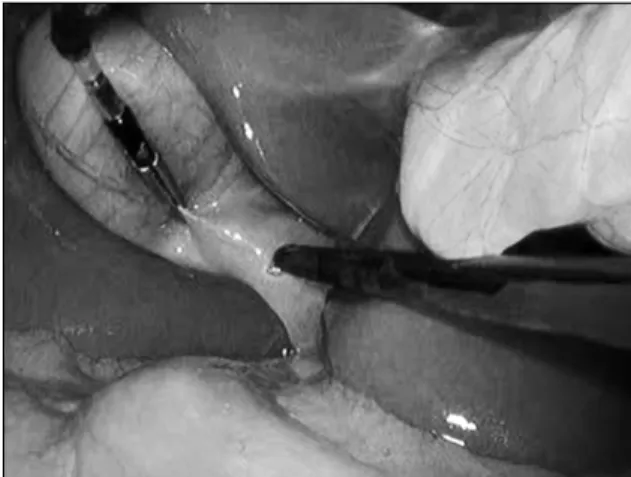
Fig. 1. Articulating grasper is being used at infundibulum, or Hartmann’s pouch, for lateral dissection without any stay suture for cephalad retraction of gall bladder body.
serted SILC operation. Articulating grasper was used at the infundibulum or Hartmann’s pouch for lateral dis- section without traction by stay suture or 2 mm instru- ments for cephalad retraction of gall bladder body (Fig. 1).
The gall bladder hilum was then dissected with dissector to expose the cystic duct and cystic artery which were clip- ped with 5 mm hemo-lock (Weck Closure Systems, Trian- gle Park, NC, USA) and a 5 mm Endoclip (Covidien Inc.), respectively and then divided with scissors. The gall blad- der was dissected from the gallbladder fossa with hook electrocautery device. To allow removal of the gallblad- der, the retrieval bag Endocatchbag (Covidien Inc.) was placed beneath the gallbladder fossa through the 10 mm port. The transumbilical wound was reapproximated with usual suture method. The operating process of conven- tional 3 port laparoscopic cholecystectomy was not sig- nificantly different from published operating method.
Conversion of SILC or CLC was defined as open chol- ecystectomy or insertion of additional port.
Management of postoperative pain and pain as- sessment
To control postoperative pain on the day of surgery, Kotoloc (Keromin, 30 mg/mL/ample, Ketorolac trometha- min, Hana Pham Co., Seoul, Korea) was injected one am- pule two times a day, intravenously. If patients com- plained of increased pain within 1 hour after injection of analgesic, narcotic pain reliever (Demerol, meperidine hy-
drochloride, 1 mg/mL/ample) was injected, half ampule, intravenously. From postoperative 1 day to discharge of hospital, oral analgesic (somalgen, Talniflumate, 370 mg/tablet, Kunwha Phamaceutical Co., Seoul, Korea) was administered three times a day. Postoperative pain was measured using the visual analogue scale (VAS) every 12 hours (AM 9 and PM 9) in hospitalization. VAS was grad- ed from 0 to 10. Patients were eligible for discharge when they tolerated a regular diet and VAS pain score was less than 4.
Data collection
Collected date included patient demographics (age, gender, BMI, ASA grade), postoperative laboratory find- ing (leukocyte count, liver function test, alanine amino- transferase, gamma-glutamyltransferase), clinicopatho- logic characteristics (diagnosis), and perioperative clinical finding (operation time, conversion rate, VAS pain score, total dose of analgesics, complication rate, length of hospi- tal stay). We evaluated satisfaction of cosmetic outcome through telephone interviews to all patients in this study at 3 months after operation. Satisfaction of cosmetic out- come was defined by each patient on 1 to 3 scale with 1 be- ing satisfaction, 2 being unconcern about wound and 3 be- ing dissatisfaction.
Statistical analysis
Results are expressed as median values with the inter- quartile range or mean values ± standard deviation. Con- tinuous variables were compared using Student's t-test, the Mann-Whitney U test or repeated measures analysis of variance. The relationship of postoperative pain and oper- ation time according cases was analyzed by correlation analysis and linear regression method, respectively. Dis- crete variables were analyzed with the chi-square test or Fisher's exact test. We performed correlation analysis be- tween several parameters and VAS pain score of post- operative 1, 2, and 3 day. Statistical analysis was per- formed using SPSS ver.14.0 (SPSS Inc., Chicago, IL, USA).
A probability of 0.05 or less was considered statistically significant.
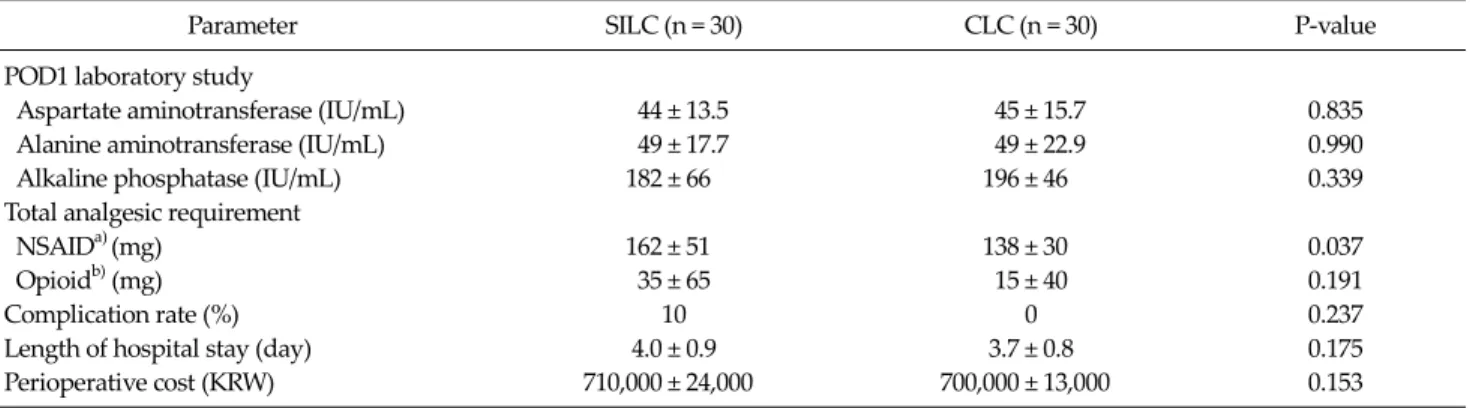
Table 3. Clinical outcomes of postoperative parameter
Parameter SILC (n = 30) CLC (n = 30) P-value
POD1 laboratory study
Aspartate aminotransferase (IU/mL) 44 ± 13.5 45 ± 15.7 0.835
Alanine aminotransferase (IU/mL) 49 ± 17.7 49 ± 22.9 0.990
Alkaline phosphatase (IU/mL) 182 ± 66 196 ± 46 0.339
Total analgesic requirement
NSAIDa) (mg) 162 ± 51 138 ± 30 0.037
Opioidb) (mg) 35 ± 65 15 ± 40 0.191
Complication rate (%) 10 0 0.237
Length of hospital stay (day) 4.0 ± 0.9 3.7 ± 0.8 0.175
Perioperative cost (KRW) 710,000 ± 24,000 700,000 ± 13,000 0.153
Values are presented as mean ± SD.
SILC, single incision laparoscopic cholecystectomy; CLC, conventional 3-port laparoscopic cholecystectomy; POD, postoperative day;
NSAID, nonsteroidal anti-inflammatory drug; KRW, Korean Won.
a)Kotoloc (keromin, 30 mg/mL/ample, ketorolac tromethamin). b)Demerol (meperidine hydrochloride, 50 mg/ample).
Table 1. Preoperative patient characteristics and surgery indica- tions
Characteristic SILC (n = 30)
CLC
(n = 30) P-value
Sex 0.192
Male 10 16
Female 20 14
Age (yr), mean ± SD (range) 39.0 ± 14.4 (25–92)
45.6 ± 13.8 (22–72)
0.135
BMI (kg/m2), mean ± SD (range) 23.1 ± 3.2 (17.8–27.9)
24.0 ± 2.3 (19.4–28.0)
0.182
Preoperative diagnosis 0.055
Gallbladder polyp 9 2
Chronic cholecystitis 13 15
Symptomatic gallstone 8 13
SILC, single incision laparoscopic cholecystectomy; CLC, con- ventional 3-port laparoscopic cholecystectomy; BMI, body mass index.
Table 2.Clinical outcome of intraoperative parameter
Parameter SILC
(n = 30)
CLC
(n = 30) P-value
Success rate (%) 93.3 100 0.453
Intraoperative bile leak (%) 10.0 3.3 0.617 Operation time (min),
mean ± SD (range)
78.5 ± 17.8 (53–130)
34.9 ± 5.75 (23–49)
0.001
Conversion rate (%) 6.7 0 0.492
SILC, single incision laparoscopic cholecystectomy; CLC, con- ventional 3-port laparoscopic cholecystectomy.
RESULT
From January 2011 to February 2012, there were 60 eligi- ble patients with benign gallbladder disease verified by ul- trasonography or computed tomography, who were ran- domized to SILC (n = 30) and CLC (n = 30). No one who participated in this study was eliminated.
Preoperative demographics
There were no significant differences between the SILC group and CLC group with regards to indication of sur- gery or medical or demographic variables (age, gender
distribution) (Table 1).
Intraoperative outcome
Operation time between SILS group and CLC group were 78.5 ± 17.8 and 34.9 ± 5.75, respectively. The SILC group took twice as long as the CLC group (P < 0.001).
Operation success rate between the two groups were 93.3% and 100%, respectively. The conversion rates were 6.7% (n = 2) and 0%, respectively (P = 0.492). The causes of two conversion case in of SILC group were ambiguous cystic duct anatomy and long operation time due to adhesion. There was no open cholecystectomy between groups. The two cases that needed an additional port oc- curred in the SILC group (Table 2).
Postoperative outcome
At postoperative 1 day, laboratory findings were similar
Fig. 2. Comparison of visual analogue scale (VAS) pain score (mean) during postoperative day between single incision laparo- scopic cholecystectomy (SILC) and conventional laparoscopic cholecystectomy (CLC). Differences at postoperative day (POD)2 and POD3 are statistically significant in independent t-test. In repeat measure analysis, P-value was 0.005.
Fig. 3. Evaluation of cosmetic outcome according to operative type through telephone survey. There was statistical difference between groups on cosmetic satisfaction. In chi-square analysis, P-value is less than 0.001.
for both the SILC group and CLC group. The complication rate between SILC and CLC groups were 10% (n = 3) and 0.0%, respectively and there was no significant difference (P = 0.237). The 3 cases of complication in SILC were all wound problems, seroma. There was no case of bile leak or common bile duct injury in either group. The mean length of hospital stay for the SILC was 4.0 ± 0.9, for the CLC group 3.7 ± 0.9. There was not statistically difference be- tween both groups (P = 0.175). Mean perioperative cost be- tween SILC and CLC were 710.000 Korean Won (KRW, the currency of South Korea) and 700.000 KRW, respectively.
There was no difference statistically (Table 3).
Analysis of postoperative pain
In correlation analysis, there was no significant relation- ship between operation time of all patients and VAS pain score. The relationship between operative time of each op- eration type and VAS pain score also did not show a sig- nificant association. Also, there was no association be- tween BMI and VAS pain score. However, in VAS the pain score according to operation type, the SILC group showed a significantly higher pain score than the CLC from post- operative day 1 to day 3 (P = 0.005) (Fig. 2). The total dose of analgesic also was significantly higher in SILC group (P
= 0.037) (Table 3).
Cosmetic outcome according to operation type We evaluated satisfaction of cosmetic outcome through telephone interviews to all patients in this study. Satisfac- tion of cosmetic outcome was defined on a 1 to 3 scale with 1 being satisfaction, 2 being unconcern about wound and 3 being dissatisfaction. There was statistically significant difference between groups on cosmetic satisfaction (P < 0.0001) (Fig. 3).
DISCUSSION
Laparoscopic cholecystectomy has become one of the most frequently performed procedures in visceral surgery.
Current efforts focus on minimizing trauma and improv- ing cosmesis by reduction of inserted trocars. The appear- ance of single-port technology in the recent years con- tinues this trend. SILC can predict better cosmetic out- come, reduced postoperative pain due to less operative
trauma, fewer complications, and quickly recovery. How- ever, the superiority of the SILC compared to the CLC, is still controversial. Since SILC was first introduced, within 2 to 3 years, operative indication and the benefits with re- gards to operation time reduction, postoperative pain, and cosmetic outcome have been actively studied. However, with the advent of any new surgical technique, patient safety must be the primary concern before more subjective outcomes such as cosmesis or pain. Many authors have been report that SILC was feasible and safe in selected pa- tients with uncomplicated gallstone disease or gallbladder polyp [6]. However, SILC is difficult to recommend in pa- tients who have a high BMI or acute cholecystitis because relatively high conversion rate to CLC, increasing compli- cation rate (bile leak by gall bladder rupture, wound in- fection), and prolonged operative time [7].
The operative time of SILC in several studies reported no statistically significant difference compared to CLC [8,9]. However, Wang et al. [10] by a meta-analysis of SILC clinical trials recently reported that SILC carries a longer operative time. In our study, mean operative time was 79 minutes, comparable with reports by Roberts et al. (80 mi- nutes) [11] and Solomon et al. (78 minutes) [12]. In our study, time consuming points that were occurred during SILC were as follows: 1) time from transumbilical incision to multiport insert; 2) traction of gall bladder for good op- erative field; 3) intracorporeal interruption between scope and instruments. To reduce operative time of SILC, in- troduction of instrument that can be more flexible, articu- lation, and more firm holding may be considered to re- duce interruptions between laparoscope and instruments, and can provide better exposure of the operation field.
Sasaki et al. [13] suggested using WLR (wire loop retrac- tor), anchoring suture, and 2 mm sized reusable instru- ment to reduce operative time. Also, in order to adapt to a new surgical technique, experience of several cases is needed. Rivas et al. [14] and Feinberg et al. [15] proposed a conservative learning curve of 20 to 25 cases for safe adoption of SILC. So we underwent 10 cases of SILC by one experienced laparoscopic surgeon as learning curve, and mean operative time was 89 minutes.
The reduction of postoperative pain is one of the pri- mary concerns on SILC. Recently published randomized
studies have suggested that patients undergoing SILC had similar pain score and total amount of analgesic within 24 hours after operation when compared with standard lapa- roscopic cholecystectomy [6,16]. In our study, VAS pain score of the SILC group was significantly higher than that of the CLC group and the total dose of analgesic also was significantly higher in SILC group though with no benefit in terms of postoperative hospital stay. We hypothesized that increasing operative time will increase postoperative pain because of prolonged stretching and ischemia of um- bilical wound by single multichannel port. However, the relationship between operative time according to oper- ative type and VAS pain score did not show in this study.
Another reason for high postoperative pain score of SILC group in this study may be considered that the effect of less port numbers on postoperative pain might be compro- mised by a large incision size [17]. Recently, we changed single multichannel port from SILS and Octo-port to handmade glove port that was made with Alexis wound retractor and hand glove in operation field. Since then, complains of postoperative pain have decreased. For this reason, we seemed to be analyzing degree of postopera- tive pain according to kind of single multichannel port.
SILC has been reported to have better cosmetic outcome compared with CLC. Our study also showed high level of satisfaction in SILC group. However, Ma et al. [17] and Garg et al. [18] reported that patients’ perceptions regard- ing cosmetic outcome after SILC and CLC were similar in both groups. Hey et al. [19] reported that patients ranked the level of risk for complications and postoperative pain above cosmetic results in determining their choice of pro- cedure, if sufficient contemporary data of SILC is pro- vided to patients
In summary, on the basis of our study, SILC have longer operative time and higher postoperative pain score.
However, SILC showed a high level of satisfaction in term of cosmetic outcome. SILC for cholecystectomy may at least be equal to CLC in term of efficacy and patient safety.
According to the literature, the superiority of SILC over CLC, seems to still be not accepted. Large, randomized, prospective studies will be required to investigate the po- tential benefits of the SILC technique such as reduced op- erative time, reduced postoperative pain, improved cosm-
esis, and improved patient satisfaction.
In conclusion, SILC may be recognized as an alternative for CLC in selected patients (with a low risk of adhesion or technical difficulty), despite longer operative time and higher postoperative pain. So, we propose as indication with the patient who want cosmetic satisfaction, and who have keloid skin characteristic, and who decide SILC with enough information about SILC.
CONFLICTS OF INTEREST
No potential conflict of interest relevant to this article was reported.
ACKNOWLEDGEMENTS
This paper was supported by Wonkang University in 2011.
REFERENCES
1. Litynski GS. Erich Muhe and the rejection of laparoscopic cholecystectomy (1985): a surgeon ahead of his time. JSLS 1998;2:341-6.
2. Navarra G, Pozza E, Occhionorelli S, Carcoforo P, Donini I.
One-wound laparoscopic cholecystectomy. Br J Surg 1997;
84:695.
3. Hong TH, You YK, Lee KH. Transumbilical single-port lap- aroscopic cholecystectomy: scarless cholecystectomy. Surg Endosc 2009;23:1393-7.
4. Kim BS, Kim KC, Choi YB. A comparison between single- incision and conventional laparoscopic cholecystectomy. J Laparoendosc Adv Surg Tech A 2012;22:443-7.
5. Choi SH, Hwang HK, Kang CM, Lee WJ. Single-fulcrum laparoscopic cholecystectomy: a single-incision and mul- ti-port technique. ANZ J Surg 2012;82:529-34.
6. Markar SR, Karthikesalingam A, Thrumurthy S, Muirhead L, Kinross J, Paraskeva P. Single-incision laparoscopic sur- gery (SILS) vs. conventional multiport cholecystectomy:
systematic review and meta-analysis. Surg Endosc 2012;26:
1205-13.
7. Han HJ, Choi SB, Kim WB, Choi SY. Single-incision multi- port laparoscopic cholecystectomy: things to overcome.
Arch Surg 2011;146:68-73.
8. Lai EC, Yang GP, Tang CN, Yih PC, Chan OC, Li MK.
Prospective randomized comparative study of single in- cision laparoscopic cholecystectomy versus conventional four-port laparoscopic cholecystectomy. Am J Surg 2011;
202:254-8.
9. Bucher P, Pugin F, Buchs NC, Ostermann S, Morel P.
Randomized clinical trial of laparoendoscopic single-site versus conventional laparoscopic cholecystectomy. Br J Surg 2011;98:1695-702.
10. Wang D, Wang Y, Ji ZL. Laparoendoscopic single-site chol- ecystectomy versus conventional laparoscopic cholecystec- tomy: a systematic review of randomized controlled trials.
ANZ J Surg 2012;82:303-10.
11. Roberts KE, Solomon D, Duffy AJ, Bell RL. Single-incision laparoscopic cholecystectomy: a surgeon's initial experi- ence with 56 consecutive cases and a review of the litera- ture. J Gastrointest Surg 2010;14:506-10.
12. Solomon D, Bell RL, Duffy AJ, Roberts KE. Single-port cholecystectomy: small scar, short learning curve. Surg Endosc 2010;24:2954-7.
13. Sasaki K, Watanabe G, Matsuda M, Hashimoto M. Original single-incision laparoscopic cholecystectomy for acute in- flammation of the gallbladder. World J Gastroenterol 2012;
18:944-51.
14. Rivas H, Varela E, Scott D. Single-incision laparoscopic cholecystectomy: initial evaluation of a large series of patients. Surg Endosc 2010;24:1403-12.
15. Feinberg EJ, Agaba E, Feinberg ML, Camacho D, Vemula- palli P. Single-incision laparoscopic cholecystectomy learn- ing curve experience seen in a single institution. Surg Laparosc Endosc Percutan Tech 2012;22:114-7.
16. Garg P, Thakur JD, Garg M, Menon GR. Single-incision lap- aroscopic cholecystectomy vs. conventional laparoscopic cholecystectomy: a meta-analysis of randomized controlled trials. J Gastrointest Surg 2012;16:1618-28.
17. Ma J, Cassera MA, Spaun GO, Hammill CW, Hansen PD, Aliabadi-Wahle S. Randomized controlled trial comparing single-port laparoscopic cholecystectomy and four-port laparoscopic cholecystectomy. Ann Surg 2011;254:22-7.
18. Garg P, Thakur JD, Raina NC, Mittal G, Garg M, Gupta V.
Comparison of cosmetic outcome between single-incision laparoscopic cholecystectomy and conventional laparo- scopic cholecystectomy: an objective study. J Laparoendosc Adv Surg Tech A 2012;22:127-30.
19. Hey J, Roberts KJ, Morris-Stiff GJ, Toogood GJ. Patient views through the keyhole: new perspectives on single-in- cision vs. multiport laparoscopic cholecystectomy. HPB (Oxford) 2012;14:242-6.