
Chemotherapy
Received: August 28, 2015 Accepted: October 15, 2015 Published online: May 26, 2017 Corresponding Author : Hee Jin Cheong, MD, PhD.
Division of Infectious Diseases, Department of Internal Medicine, Guro Hospital, Korea University College of Medicine, 148 Gurodong-ro, Guro-gu, Seoul 08308, Korea.
Tel: +82-2-2626-3050, Fax: +82-2-2626-1105 E-mail: [email protected]
This is an Open Access article distributed under the terms of the Creative Commons Attribution Non-Commercial License (http://creativecommons.org/licenses/by-nc/3.0) which permits unrestricted non-commercial use, distribution, and repro- duction in any medium, provided the original work is properly cited.
Copyrights © 2017 by The Korean Society of Infectious Diseases | Korean Society for Chemotherapy
www.icjournal.org
Campylobacter jejuni Bacteremia in a Liver Cirrhosis Patient and Review of Literature: A Case Study
Jin Gu Yoon
1, Saem Na Lee
1, Hak Jun Hyun
1, Min Joo Choi
1,2, Ji Ho Jeon
1,2, Eunju Jung
1,2, Seonghui Kang
1,2, Jeeyong Kim
3, Ji Yun Noh
1,2, Won Suk Choi
1,2, Joon Young Song
1,2, Hee Jin Cheong
1,2, and Woo Joo Kim
1,21Division of Infectious Diseases, Department of Internal Medicine, Korea University College of Medicine; 2Asia Pacific Influenza Institute, Korea University College of Medicine; 3Department of Laboratory Medicine, Korea University College of Medicine, Seoul, Korea
Campylobacter infection causes gastrointestinal symptoms such as abdominal pain or diarrhea. Occasionally, Campylobacter bacteremia affects immunocompromised patients; however, serious outcomes are known to be rare. Here, we present a case of a patient with Campylobacter bacteremia who had underlying liver cirrhosis. The patient had fever and diarrhea. These symp- toms subsided after treatment with cefotaxime. Campylobacter jejuni was isolated in the blood culture after 10 days. In addi- tion, previously reported cases of Campylobacter bacteremia in Asian countries were reviewed with respect to antimicrobial sensitivities.
Key Words: Campylobacter; Bacteremia; Liver Cirrhosis Infect Chemother 2017;49(3):230-235
ISSN 2093-2340 (Print) · ISSN 2092-6448 (Online)
Introduction
Campylobacter jejuni is one of the most common pathogens causing acute gastroenteritis in humans worldwide. It is usual- ly transmitted through the ingestion of contaminated water or through contact with infected foods. In general, the clinical symptoms of Campylobacter enteritis include diarrhea, ab- dominal pain and/or fever. In <0.1% of the cases, Campylo- bacter infection leads to extra-intestinal complications like Guillain-Barré syndrome [1].
Most Campylobacter infections are limited to the gastroin- testinal tract. Bacteremia or extra-intestinal infections are con- sidered rare. However, several reports on Campylobacter bac- teremia emphasize the importance of clinical suspicions of Campylobacter spp. due to their slow growth in culture media, and resistance against widely-used antibiotics, including ceph- alosporins. In this report, we elaborate on the case of a female patient with liver cirrhosis who suffered from C. jejuni bactere- mia. In addition, we present a literature review of the Campy- lobacter bacteremia cases reported in Asian countries.
Case Report
A 73-year-old woman with cryptogenic liver cirrhosis (Child- Pugh score 10, class C) was hospitalized due to drowsiness, which aggravated three days before her visit to the hospital.
Her initial vital signs were: blood pressure, 120/80 mmHg;
heart rate, 60 beats/min; respiratory rate, 20 breaths/min; and body temperature, 36.5°C. No specific abnormalities or symp- toms of infection were detected on physical examination. Ini- tial laboratory findings showed: white blood cell (WBC) count, 5,700/mm3 (neutrophil 60.2%); hemoglobin, 10.6 g/dL; platelet count, 56,000/mm3; sodium, 144 mmol/L; potassium, 4.1 mmol/L; blood urea nitrogen (BUN), 21.2 mg/dL; and creati- nine, 0.79 mg/dL. However, a liver function test showed elevat- ed levels of aspartate transaminase (328 IU/L), alanine trans- aminase (259 IU/L), and alkaline phosphatase (199 IU/L). The C-reactive protein level was found to be 5.62 mg/L (normal range: 0-5 mg/L). There were no acute lesions on brain mag- netic resonance imaging and a chest radiograph revealed mild cardiomegaly.
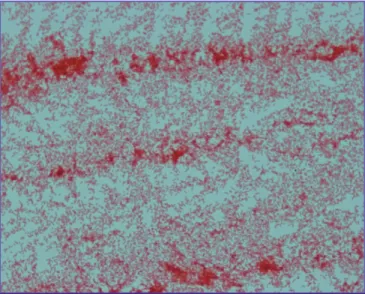
On the second day of hospitalization, a fever of 38.3°C was recorded, accompanied by chills and diarrhea. Cefotaxime (3 g/day) was administered as an empirical antibiotic to treat gastrointestinal infection. Initial fecal leukocyte tests and stool cultures yielded negative results, but after four days, a Gram-negative rod appeared in the blood culture. The patient was relieved of fever and diarrhea after two days, and cefotax- ime was continued for eight days. Finally, C. jejuni was isolated
in the blood culture (Fig. 1).
An antibiotic susceptibility test of the isolated C. jejuni was performed using the disk diffusion test, which is also called Kirby-Bauer antibiotic testing. The susceptibility was analyzed according to the epidemiological cut-off (ECOFF) values of the European Committee on Antimicrobial Susceptibility Testing (EUCAST) [2]. The isolated C. jejuni was showen to be resistant to ciprofloxacin and tetracycline but susceptible to erythromy- cin. In ceftazidime (16 mm), imipenem (39 mm), and ertapen- em (34 mm), relatively large zone diameters were observed;
however, there is no established breakpoint of Campylobacter against these, according to the EUCAST (Table 1, Fig. 2). The total duration of hospitalization of the patient was 12 days. On discharge, the antibiotic was changed to oral azithromycin (500 mg/day), to be had for a period of five days.
Figure 1. Microscopic finding of culture growth of Campylobacter jejuni from the patient’s blood sample. Multiple Gram-negative bacilli are ob- served (Magnification × 1,000).
Table 1. Antibiotic susceptibility of isolated Campylobacter jejuni: disk diffusion method standardized and checked by European Committee on Antimicrobial Susceptibility Testing (EUCAST)
Antibiotics Measurement (mm)
Zone diameter breakpoint (mm)
≥ S R<
Ciprofloxacin 6 26 26
Erythromycin 29 20 20
Tetracycline 11 30 30
Ceftazidime 16 ND ND
Imipenem 39 ND ND
Ertapenem 34 ND ND
S, susceptible; R, resistant; ND, no data.
Figure 2. Antibiotic susceptibility test for isolated Campylobacter jejuni by disk diffusion method.
CIP, ciprofloxacin; TE, tetracyclin; E, erythromycin; ETP, ertapenem; IPM, imipenem;
CAZ, ceftazidime.
Table 2. Reported Campylobacter bacteremia cases in Asian countries during 2000-2014 ReferencesStudy locationNumber of patientsUnderlying diseasesClinical featuresSubspecies (No.)Antibiotic susceptibility (susceptible/tested)Antibiotics usedOutcome Mori et al.(2014) [1] Japan7Acute leukemia: 1 Malignant lymphoma: 1 Liver cirrhosis and cancer: 2 Chronic hepatitis: 1 None: 2 Fever: 7 Vomit- ing: 3 Diarrhea: 2 C. jejuniGentamicin: (7/7) Clarithromycin: (6/6) Erythromycin: (6/6) Ciprofloxacin: (3/6) Levofloxacin: (3/6) Ceftriaxone+Levofloxacin: 1 Ciprofloxacin+Meropenem: 1 Meropenem: 1 Azithromycin: 1 Tosufloxacin: 1 None: 2
Recovered: 5 Unknown: 2 Yamagami et al. (2014) [6]Japan1XLA: 1FeverC. fetusCeftriaxone: N/A Erythromycin: N/A Levofloxacin: N/A Meropenem: S
MeropenemRecovered Suzuki et al.(2013) [7]Japan1Advanced bile duct cancer: 1NDC. showaeNDNDND Morishita et al. (2013) [8]Japan1Lumbar pyogenic spondyli- tis: 1NDC. lariNDPiperacillin/Tazobact- am+Erythromycin+ Tri- methoprim/Sulfamethox- azole
Recovered Liao et al.(2012) [9]Taiwan24Renal insufficiency: 10 Liver cirrhosis: 9 Malignancy: 8 Diabetes mellitus: 5 Heart failure: 2 Hypogammaglobulinemia: 1
Fever: 14 Diarrhea: 8 Abdominal pain: 7 C. coli (15) C. fetus (6) C. jejuni (3)
Ampicillin-Sulbactam: (18/24) Cefotaxime: (0/24) Ciprofloxacin: (8/24) Levofloxacin: (9/24) Ertapenem: (12/24) Meropenem: (24/24) Erythromycin: (5/24) Cephalosporin: 13 Fluoroquinolone: 5 Amoxicillin/Clavulanate: 3 Macrolide: 2
Recovered: 21 Mortality: 3 Abe et al.(2012) [10]Japan1Pheochromocytoma: 1Fever, FatigueC. fetusNDMeropenem→CiprofloxacinRecovered Shimizu et al.(2012) [11]Japan2ESRD: 2Fever: 2 Diarrhea: 2C. upsaliensis (1) C. fetus (1)
Ceftriaxone: (2/2) Gentamicin: (2/2) Erythromycin: (2/2) Levofloxacin: (0/2) Ceftriaxone+Gentamicin for C. upsaliensis Meropenem for C. fetus
Recovered: 2 Lang et al.(2009) [12]Taiwan1ESRD: 1NDC. jejuniNDCiprofloxacinRecovered Okada et al.(2008) [13]Japan1XLA: 1Fever, Leg painC. coliCefotaxime: R Gentamicin: S Imipenem, Meropenem: S Erythromycin: I Ciprofloxacin: S
Imipenem, Meropenem, Gentamicin, Ciprofloxacin, Minocycline, Azithromy- cin, Kanamycin
Recovered
Table 2. Continued. ReferencesStudy loca- tionNumber of patientsUnderlying diseasesClinical featuresSubspecies (No.)Antibiotic susceptibility (susceptible/tested)Antibiotics usedOutcome Arai et al.(2007) [14]Japan1XLA: 1Fever, ArthritisC. coliCeftazidime: S Erythromycin: RCeftazidime→Minocycline Cefepime and Meropenem for relapse
Recovered Jirapongsananuruk et al.(2006) [15]Thailand1XLA: 1Fever, DyspneaC. lariAminoglycoside: S Cefepime: S 1-3rd cephalosporin: R Fluoroquinolone: R
3rd cephalosporin+aminogly- coside, Amoxicillin/ Clavulanate
Recovered Teh et al.(2004) [16]Singapore1Ovarian vein thrombosis: 1Fever, Loin painC. fetusAmpicillin: S Aminoglycoside: SCeftriaxone→ClarithromycinRecovered Chuman et al. (2003) [17]Japan1Adult T cell leukemia: 1FeverC. fetusNDCefoperazone/SulbactamDeath after 1 month due to tumor pro- gression Woo et al.(2002) [18]Hong Kong8Liver cirrhosis: 4 Hepatocellular carcinoma: 2 Heart valve disease: 2 CKD: 1
Fever: 6 Diarrhea: 2 Abdominal pain: 3 C. fetusAmpicillin: (8/8) Gentamicin: (8/8) Ciprofloxacin: (7/8) Imipenem: (8/8) Penicillin+Gentamicin: 2 Ampicillin+Gentamicin: 1 Cefuroxime: 2 Amoxicillin/Clavulanate: 2 Ticarcillin/Clavulanate: 1
Recovered: 6 Mortality: 2 TotalJapan : 16 Hong Kong : 8 Taiwan : 25 Singapore : 1 Thailand : 1
51Underlying disease pres- ent: 49 No underlying disease: 2
C. fetus (19) C. coli (17) C. jejuni (11) Others (4) N/A, not applicable; ND, no data; S, susceptible; I, intermediate; R, resistant; XLA, X-liked agammaglobulinemia; TB, tuberculosis; CKD, chronic kidney disease; ESRD, end-stage renal disease.
Discussion
Campylobacter spp. are one of the major gastrointestinal pathogens. In the United States, 9% of all food-borne infections are caused by Campylobacter [3]. However, in South Korea, the involvement of Campylobacter in food-borne infections is considered to be low (2.5%, 2013) [4]. Campylobacter bactere- mia is rare, but it should not be ignored. We presented the case of C. jejuni bacteremia in a patient with liver cirrhosis. She suf- fered from fever and diarrhea, but recovered with the adminis- tration of empirical antibiotics and supportive care. Campylo- bacter grows slowly in culture media; occasionally 72-96 hours are required for primary isolation from biological samples [5].
In this case, C. jejuni was isolated after 10 days of culture.
Though Campylobacter bacteremia might resolve without an- tibiotic treatment in a normal host, it is important to know the local epidemiology of anti-microbial susceptibility of Campy- lobacter and to select appropriate empirical antibiotics to treat chronically ill patients with comorbidities.
The global burden of disease and epidemiologic characteris- tics of Campylobacter bacteremia in Asian countries were un- known. Thus, we reviewed the reported cases of Campylo- bacter bacteremia, published between 2000 and 2014 (Table 2) [1, 6-18]. A total of 51 Campylobacter bacteremia cases were identified (Taiwan, 25; Japan, 16; Hong Kong, 8; Singapore, 1;
Thailand, 1). A majority of the patients (49/51, 96.1%) suffered from underlying diseases such as hematologic malignancy, liv- er disease, renal disease, or cancer, all of which can cause the deterioration of host immunity. Most of the patients had a fe- ver (35/48, 72.9%), but diarrhea (14/48, 29.2%) and abdominal pain (9/48, 18.8%) were rare.
Microbiologically, C. fetus was found to be the most common strain (19/51, 37.3%) infecting these patients, followed by C.
coli (17/51, 33.3%) and C. jejuni (11/51, 21.6%). C. upsaliensis, C.
showae, and C. lari were also presented in several reports (Ta- ble 2) [1, 6-18]. Thus, if extra-intestinal symptoms manifest in a patient and a Gram stain of the blood sample suggests the presence of a Campylobacter spp., C. fetus, C. coli, or C. jejuni infection should be considered.
Generally, third generation cephalosporins with or without aminoglycoside, macrolide monotherapy, or fluoroquinolone monotherapy were used as empirical treatments for Campylo- bacter infection in Asia; however, resistance to such antibiotics was noted (Table 2)[1, 6-18]. Antibiotic susceptibility for fluo- roquinolones (ciprofloxacin: 19/40, 47.5%; levofloxacin: 13/33, 39.4%) and macrolides (erythromycin: 13/34, 38.2%) was gen- erally low. In addition, Campylobacter species were not sus-
ceptible to third generation cephalosporins (3/29, 10.3%).
However, they were consistently susceptible to carbapenem agents (imipenem: 9/9, 100%; meropenem: 26/26, 100%).
An optimal treatment regimen of Campylobacter infection is yet to be established. In this study, cefotaxime was adminis- tered as an empirical treatment, and this led to a favorable out- come in the patient. Although microbiological breakpoints of the disk susceptibility test for third generation cephalosporins against Campylobacter were not proposed by EUCAST, the Na- tional Committee for Clinical Laboratory Standards (NCCLS) guidelines present the breakpoint for cefotaxime as 23 mm [19].
Antibiotic susceptibility of C. jejuni which was isolated in our patients, to ceftazidime showed a diameter as 16mm. Thus, third generation cephalosporin were considered to have an in- termediate effect in such cases (Table 1). Definite breakpoints of Campylobacter for various antibiotics need to be established using the disk susceptibility test.
The rising antibiotic resistance of the Campylobacter spp. has been an issue. Since the late 1980s, fluoroquinolone resistance has been rising in several Asian and European countries, as well as in the United States. This could be attributed to local antibiotic usage in animal production. In South Korea, the an- timicrobial susceptibility of the Campylobacter spp. to fluoro- quinolone was found to be 79.5% (2006-2010). It was lower than erythromycin (87.2%) and gentamicin (92.3%), but higher than ampicillin (69.2%) and cephalothin (7.7%) [20]. The epi- demiology of Campylobacter antibiotic susceptibility varies depending on the area and time. Therefore, further investiga- tion on the local anti-microbial resistance trend of Campylo- bacter is required. Antibiotics should be selected carefully be- cause global antibiotic resistance is gradually increasing and inappropriate antibiotic usage could have fatal outcomes.
In conclusion, Campylobacter infection, with or without bac- teremia, should be considered if the patient has a fever or gas- trointestinal symptoms. Cases of Campylobacter bacteremia in Asia reveal C. fetus to be the main pathogen. Fluoroquinolones and macrolides would be considered as empirical treatment agents based on the local epidemiology of antibiotic resis- tance. As for the third generation cephalosporins, microbiolog- ical breakpoints should be established in the disk diffusion test with respect to clinical outcomes.
Conflicts of Interest
No conflicts of interest.
ORCID
Min Joo Choi https://orcid.org/0000-0002-2739-0948 Jin Gu Yoon https://orcid.org/0000-0003-3283-1880
References
1. Mori T, Hasegawa N, Sugita K, Shinjoh M, Nakamoto N, Shimizu T, Hori S, Iketani O, Fujiwara H, Takano Y, Iwata S.
Clinical features of bacteremia due to Campylobacter je- juni. Intern Med 2014;53:1941-4.
2. The European Committee on Antimicrobial Susceptibility Testing. Breakpoint tables for interpretation of MICs and zone diameters. Version 5.0, 2015. Available at: http://
www.eucast.org/fileadmin/src/media/PDFs/EUCAST_
files/Breakpoint_tables/v_5.0_Breakpoint_Table_01.pdf.
Accessed 30 June 2015.
3. Scallan E, Hoekstra RM, Angulo FJ, Tauxe RV, Widdowson MA, Roy SL, Jones JL, Griffin PM. Foodborne illness ac- quired in the United States--major pathogens. Emerg In- fect Dis 2011;17:7-15.
4. Korea Centers for Disease Control and Prevention (KCDC).
Epidemiological investigation of infectious diseases in Ko- rea annual report 2013. Osong: KCDC; 2014.
5. Allos BM, Blaser MJ. Campylobacter jejuni and related species. In: Mandell GL, Bennet JE, Dolin R, eds. Mandell, Douglas, and Bennett's principles and practice of infec- tious diseases, 7th ed: Philadelphia, PA: Churchill Living- stone Elsevier; 2010;2793-802.
6. Yamagami K, Miyashita T, Nakamura T, Shirano M, Na- kamura T, Kameda K, Nishijima M, Imanishi M, Yang X, Kanegane H. Campylobacter fetus bacteremia with pu- rulent pleurisy in a young adult with primary hypogam- maglobulinemia. Intern Med 2014;53:1221-5.
7. Suzuki J, Sugiyama T, Ito K, Hadano Y, Kawamura I, Okina- ka K, Kurai H, Ohkusu K, Ohmagari N. Campylobacter showae bacteremia with cholangitis. J Infect Chemother 2013;19:960-3.
8. Morishita S, Fujiwara H, Murota H, Maeda Y, Hara A, Horii T. Bloodstream infection caused by Campylobacter lari. J Infect Chemother 2013;19:333-7.
9. Liao CH, Chuang CY, Huang YT, Lee PI, Hsueh PR. Bacte- remia caused by antimicrobial resistant Campylobacter species at a medical center in Taiwan, 1998-2008. J Infect 2012;65:392-9.
10. Abe I, Nomura M, Watanabe M, Shimada S, Kohno M, Matsuda Y, Adachi M, Kawate H, Ohnaka K, Takayanagi R.
Pheochromocytoma crisis caused by Campylobacter fetus.
Int J Urol 2012;19:465-7.
11. Shimizu Y, Ishii A, Takahata A, Kajiyama T, Yamahatsu A, Io H, Kurusu A, Hamada C, Horikoshi S, Tomino Y. Cam- pylobacter bacteremia in hemodialysis patients by eating raw meat - the importance of sanitary education. Case Rep Nephrol Urol 2012;2:145-51.
12. Lang CL, Chiang CK, Hung KY, Wu KD. Campylobacter je- juni peritonitis and bacteremia in a patient undergoing continuous ambulatory peritoneal dialysis. Clin Nephrol 2009;71:96-8.
13. Okada H, Kitazawa T, Harada S, Itoyama S, Hatakeyama S, Ota Y, Koike K. Combined treatment with oral kanamycin and parenteral antibiotics for a case of persistent bactere- mia and intestinal carriage with Campylobacter coli. In- tern Med 2008;47:1363-6.
14. Arai A, Kitano A, Sawabe E, Kanegane H, Miyawaki T, Mi- ura O. Relapsing Campylobacter coli bacteremia with re- active arthritis in a patient with X-linked agammaglobu- linemia. Intern Med 2007;46:605-9.
15. Jirapongsananuruk O, Wanotayan K, Phongsamart W, Chokephaibulkit K, Visitsunthorn N, Luangwedchakarn V, Vanprapar N, Vichyanond P. Recurrent Campylobacter lari bacteremia in X-linked agammaglobulinemia: a case re- port and review. Asian Pac J Allergy Immunol 2006;24:171-4.
16. Teh HS, Chiang SH, Tan AG, Sng LH, Oh HM. A case of right loin pain: septic ovarian vein thrombosis due to Campylobacter fetus bacteraemia. Ann Acad Med Singa- pore 2004;33:385-8.
17. Chuman Y, Takata T, Sameshima H, Takeuchi S, Takatsuka Y, Makino T, Blaser MJ, Utsunomiya A. Campylobacter fe- tus bacteremia in a patient with adult T cell leukemia. Clin Infect Dis 2003;36:1497-8.
18. Woo PC, Leung KW, Tsoi HW, Wong SS, Teng JL, Yuen KY.
Thermo-tolerant Campylobacter fetus bacteraemia identi- fied by 16S ribosomal RNA gene sequencing: an emerging pathogen in immunocompromised patients. J Med Micro- biol 2002;51:740-6.
19. National Committee on Clinical Laboratory Standards (NCCLS). Performance standard for antimicrobial disk susceptibility tests, 6th ed. approved standard M2-A6.
Wayne, PA: NCCLS; 1997.
20. Cho IJ, Yim J, Lee Y, Kim MS, Seo Y, Chung HS, Yong D, Jeong SH, Lee K, Chong Y. Trends in isolation and antimi- crobial susceptibility of enteropathogenic bacteria in 2001-2010 at a Korean tertiary care hospital. Ann Clin Mi- crobiol 2013;16:45-51.

![Table 2. Continued. ReferencesStudy loca- tionNumber of patientsUnderlying diseasesClinicalfeaturesSubspecies (No.)Antibiotic susceptibility(susceptible/tested)Antibiotics usedOutcome Arai et al.(2007) [14]Japan1XLA: 1Fever, ArthritisC](https://thumb-ap.123doks.com/thumbv2/123dokinfo/5237795.129446/4.918.101.587.114.1135/referencesstudy-patientsunderlying-diseasesclinicalfeaturessubspecies-antibiotic-susceptibility-susceptible-antibiotics-arthritisc.webp)
