Vol. 29, No. 11 (2019)
727
선탄 경석 재활용 원료를 이용한 유리 용융 특성
이지선·김선욱·라용호·이영진·임태영·황종희·전대우·김진호†
한국세라믹기술원 광
·
디스플레이소재센터Properties of Glass Melting Using Recycled Refused Coal Ore
Ji-Sun Lee, Sun-Woog Kim, Yong-Ho Ra, Youngjin Lee, Tae-Young Lim, Jonghee Hwang, Dae-Woo Jeon and Jin-Ho Kim
†Korea Institute of Ceramic Engineering and Technology, Optic & Display Material Center, Jinju-si 66003, Republic of Korea
(Received August 18, 2019 : Revised October 13, 2019 : Accepted October 28, 2019)
Abstract
In this study, the glass melting properties are evaluated to examine the possibility of using refused coal ore as replacement for ceramic materials. To fabricate the glass, refused coal ore with calcium carbonate and sodium carbonate in it (which are added as supplementary materials) is put into an alumina crucible, melted at 1,200 ~ 1,500oC for 1 hr, and then annealed at 600oC for 2 hrs. We fabricate a black colored glass. The properties of the glass are measured by XRD (X-ray diffractometry) and TG-DTA (thermogravimetry-differential thermal analysis). Glass samples manufactured at more than 1,300oC with more than 60 % of refused coal ore are found by XRD to be non-crystalline in nature. In the case of the glass sample with 40 % of refused coal ore, from the sample melted at 1,200oC, a sodium aluminum phosphate peak, a disodium calcium silicate peak, and an unknown peak are observed. On the other hand, in the sample melted at 1,300oC, only the sodium aluminum phosphate peak and unknown peak are observed. And, peak changes that affect crystallization of the glass according to melting temperature are found. Therefore, it is concluded that glass with refused coal ore has good melting conditions at more than 1,200oC and so can be applied to the construction field for materials such as glass tile, foamed glass panels, etc.Key words
glass composition, glass melting condition, refused coal ore, XRD, glass properties.1.
서 론석탄 경석은 일반적으로 발생 형태에 따라 굴진 과정 에서 배출 된 굴진 경석(digging refuse)과 선탄 과정에 서 발생된 선탄 경석(coal-preparation refuse)로 구분된다.
대부분을 차지하고 있는 일반 사암계 선탄 경석과 이보다 카본 함량을 좀 더 많이 포함해 검은색을 띄는 쉘(shell) 이라고 불리는 쉘 타입 선탄 경석으로 나누어진다.
1)석탄광 개발에 따라 부수적으로 발생하는 석탄 경석이 그 동안 다량 발생되었으나, 마땅한 재활용 방법이 개 발되지 않았고 단순 매립 처리도 어려운 실정이어서 탄 광 주변에 장기적으로 적치되어 근본적인 처리가 이루
어 지지 않았기 때문에 자연 환경의 위해 요인으로 작 용되고 있다.
2-4)폐자원에 대한 재활용 연구는 그동안 화력 발전소에서 발생되는 석탄회, 하수 슬러지 등을 이용해 인공 경량 골재와 같은 연구들이 많이 수행되어왔다. 하지만 석탄 폐석 활용에 대한 연구는 시멘트 원료, 토목 분야, 요 업 분야, 세라믹 골재, 공업원료 등의 분야를 외국에서 다각적으로 개발되어 활용되고 있다.
5,6)반면 국내에서 는 점토 벽돌, 경량 골재와 같은 일반 요업 제품의 원 료로서 일부 활용 외에는 연구가 제대로 진행되지 않고 있다.
7-9)하지만 최근에 강원테크노파크, 강원도 삼척 등에서 선
†Corresponding author
E-Mail : [email protected] (J.-H. Kim, KICET)
©Materials Research Society of Korea, All rights reserved.
This is an Open-Access article distributed under the terms of the Creative Commons Attribution Non-Commercial License (http://creative- commons.org/licenses/by-nc/3.0) which permits unrestricted non-commercial use, distribution, and reproduction in any medium, provided the original work is properly cited.
다. 카본 함량이 좀 더 많은 쉘 타입 선탄 경석을 주 원 료로 하고, 부 원료 첨가제의 함량 조절과 용융 온도 변 화를 통해 용융 유리를 제조하고 그에 따른 열적 특성 을 평가함으로서 선탄 경석을 이용해서 유리 제조 가능 성을 확인하였다.
2.
실험 방법본 연구에서 사용한 선탄 경석의 화학 분석결과(inducti- vely coupled plasma spectrometer) 는 Table 1에 나타내 었다. 그리고, 부 원료 첨가제와 용융 온도 조건은 Table 2 에 나타내었다. Table 1에서 볼 수 있듯이 선탄 경석 의 주 성분은 실리카(SiO
2) 61.1 % 와 알루미나(Al
2O
3) 17.7 %, 카본(C) 함량이 9.31 %, 산화철(Fe
2O
3) 5.17 % 와
된 실험방법에 의해 알루미나 도가니에 넣고 전기로의 온도를 5
oC/min 의 속도로 승온 시켜 1,200
oC ~ 1,500
oC 에서 각각 60분 동안 용융하였다. 샘플링이 가능한 용융 유리는 흑연 몰드 위에 부어서 시편을 제작하고, 응력 제 거를 위해 서냉 온도(annealing temperature)인 600
oC ± 10
oC 유지된 서냉로에서 2시간 동안 유지 후 그대로 자 연 로냉시켜 최종 유리 샘플을 만들었다.
제조된 유리 시편에 대해서는 유리의 비정질상을 확인 하기 위해 X-선회절장치(X-ray, D/max -2500/PC, Rigaku corporation, JAPAN) 를 사용하였다. X-ray 회절 분석에 는 가속 전압 40 K, 가속 전류 200 mA, 스캔 속도 5°/
min 에서 Cu-Ka tube를 사용해 2θ = 5° ~ 90° 구간을 측 정하였다. 유리의 전이 온도는 Thermomechanical Analysis (TMA, TMA Q400, TA Instrument Korea) 를 이용하였고, 승온 속도는 10
oC/min 속도로 700
oC 까지 측정하였다. 유 리의 열적 변화는 시차열분석장비(TG/DTA, SHIMADZU DTG-60H, JAPAN) 를 이용하였다. 알루미나 팬에 시료 분말을 넣고 질소 분위기에서 승온 속도 5
oC/min 로 하 였으며, 측정 온도는 25
oC ~ 1,400
oC 범위로 하였다.
Table 1. Chemical composition of refused coal ore (Shell) (wt%).
SiO2 Al2O3 Fe2O3 TiO2 CaO MgO Na2O K2O P2O5 MnO BaO C SO3 Refused coal ore (Shell):CS 61.1 17.7 5.17 0.57 1.47 1.08 0.31 2.20 0.08 0.06 0.05 9.31 0.77
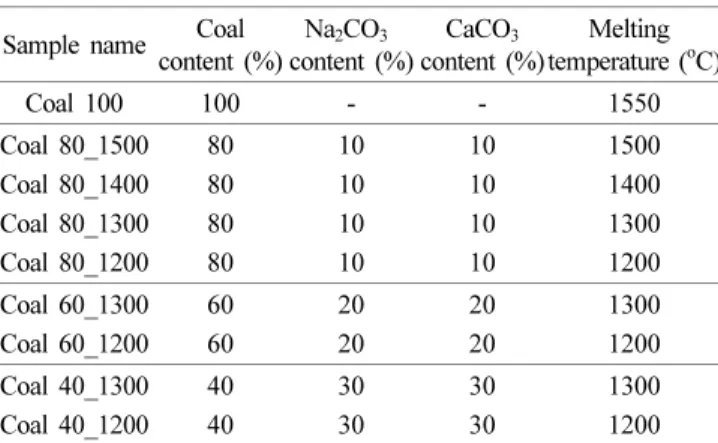
Table 2. Batch composition & melting condition of glass samples.
Sample name Coal content (%)
Na2CO3 content (%)
CaCO3 content (%)
Melting temperature (oC)
Coal 100 100 - - 1550
Coal 80_1500 80 10 10 1500
Coal 80_1400 80 10 10 1400
Coal 80_1300 80 10 10 1300
Coal 80_1200 80 10 10 1200
Coal 60_1300 60 20 20 1300
Coal 60_1200 60 20 20 1200
Coal 40_1300 40 30 30 1300
Coal 40_1200 40 30 30 1200
Fig. 1. Experimental procedure for preparing samples.
3.
결과 및 고찰3.1
선탄 경석 원료의 용융 특성
:경석 원료
100 %용융
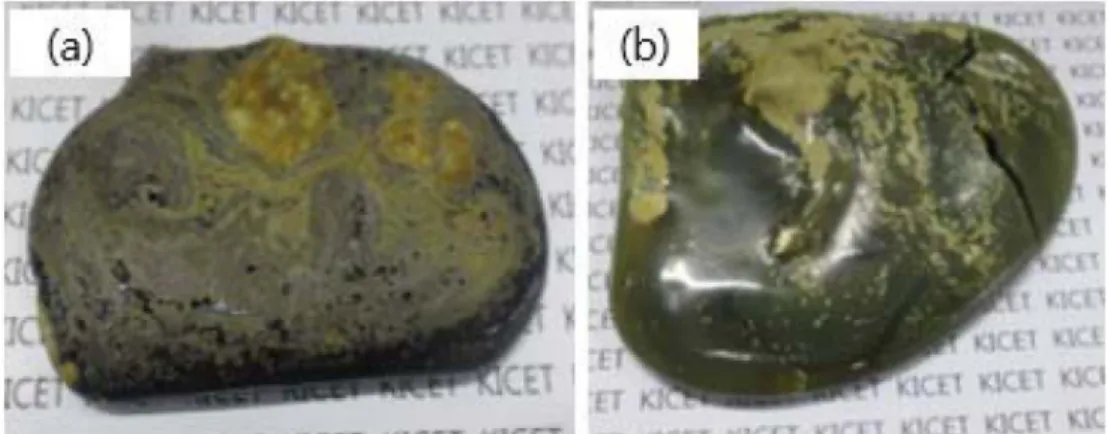
선탄 경석은 실리카와 알루미나, 산화철 함량이 높아 서 용융 온도가 높다. 또한 카본 함량이 많아 용융 시 다량의 기포가 발생해서 단독으로 용융하기가 어려운 단 점이 있다. Fig. 2는 선탄 경석 분말 원료(a)와 원료만 을 1,550
oC 에서 1시간 용융 후 얻어진 시편(b) 사진이 다. 용융된 상태라고 판단하기 어려울 정도의 형상을 보
여주며 덜 녹은 실리카와 알루미나로 추정되는 입자들 이 드문드문 보이는 것이 관찰되었다.
이를 통해 선탄 경석 분말 원료 만을 용융해서 유리 화 시키는 것은 불가능하다 판단하였고, 부 원료인 산 화나트륨과 탄산나트륨을 첨가시켜 용융 온도를 낮춰 유 리화 가능 온도 및 함량을 파악하고자 하였다. 용융 과 정 중 내구성 및 성형성을 향상시키는 물질인 산화 칼 슘(CaO)와 융제 (fluxing agent) 역할을 하는 산화 나트 륨(Na
2O) 의 화학 원료인 탄산칼슘(CaCO
3) 과 탄산나트륨 (Na
2CO
3) 을 각각 사용하였다.
Fig. 2. Photographs of coal powder (a) and melted sample (b).
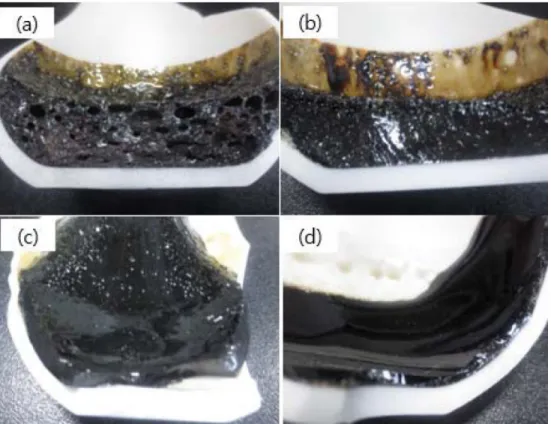
Fig. 3. Photographs for the glass sample obtained at different melting temperature: (a) 1,200oC, (b) 1,300oC, (c) 1,400oC and (d) 1,500oC.
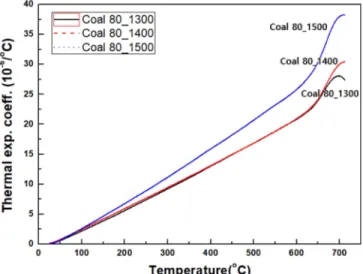
용융된 시편의 유리화 확인을 위해 DTA와 XRD 분 석을 실시하였다. Fig. 4, Fig. 5 그리고 Fig. 6는 TMA, DTA 그리고 XRD 분석 결과이다. 용융 상태의 유리가
선탄 경석의 XRD 회절 패턴 그래프는 Fig. 6(Coal 100_powder) 에 나타내었다. 분말은 주 결정상으로 quartz- low 상이 관찰되었다.
Coal80_1300~1500 샘플 피크는 intensity 값이 작고 background intensity 가 큰 전형적 비정질 패턴을 보여주 고 있다. 하지만 용융이 덜 된 Coal80_1200 경우는 비 정질 패턴에 결정화 피크가 관찰되었다.
3.3
선탄 경석 원료의 용융 특성
:경석 원료
60 %용융
앞서 비교적 고온인 1,400
oC 와 1,500
oC 에서는 용융 및 유리화 됨을 확인하였다. 그래서 경석의 함량을 60 % 로 낮추면서 비교적 낮은 온도인 1,200
oC 와 1,300
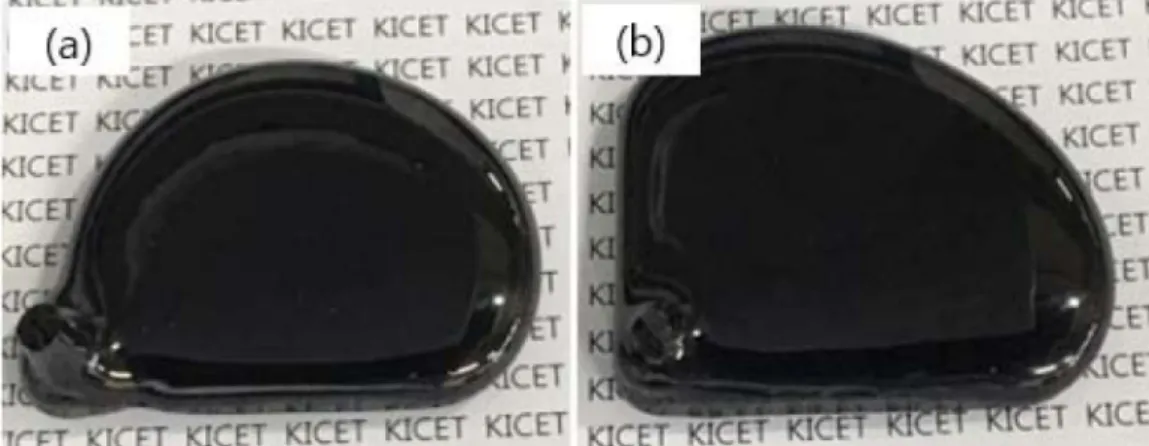
oC 에 서 유리화에 관한 실험을 진행하였고 그에 따른 유리 형 상을 Fig. 7에 나타내었다.
그림에서 볼 수 있듯이 유리화가 잘 진행되어 매끈한 표면을 갖는 Coal 60_1200(a)와 Coal 60_1300(b)의 유 리 샘플을 제조할 수 있었다.
용융된 시편의 유리화 확인을 위해 DTA와 XRD 분
Fig. 5. DTA curves for the glass sample obtained at different melting temperature.
Fig. 4. TMA curves for the glass sample obtained at different melting temperature.
Fig. 6. XRD patterns for the glass sample obtained at different melting temperature.
석을 실시 하였고, Fig. 8과 Fig. 9에 나타내었다.
DTA 분석 결과 640~650
oC 사이에서 유리전이온도 확 인 및 1,200
oC 이상에서 용융 패턴이 관찰되었다. XRD 패턴 분석 결과 1,200
oC 와1,300
oC 용융된 샘플 피크는 intensity 값이 작고 background intensity가 큰 전형적 비정질 패턴을 확인하였다. 이를 통해 경석의 함량을 60 % 낮추면 1,200
oC 온도에서도 유리화가 가능함을 확 인하였다.
3.4
선탄 경석 원료의 용융 특성
:경석 원료
40 %용융
Fig. 10 는 경석의 함량을 40 %로 더 낮추고 탄산나트 륨 30 % 그리고 탄산칼슘 30 % 벳치 조성을 1,200
oC 와 1,300
oC 에서 각각 용융한 샘플의 유리화에 관한 실 험을 진행하였고 그에 따른 유리 형상을 보여주었다.
Coal 40_1200(a) 와 Coal 40_1300(b) 모두에서 초록색 과 흰색을 띄며 용융이 덜 된 듯한 표면을 육안으로 관
찰하였다.
용융이 덜 된 부분을 XRF 성분 분석해 봤을 때, CaO 53 wt%, SiO
227 wt%, Fe
2O
317 wt% 정도 확인되었다.
이는 CaCO
3의 분해 온도는 약 825
oC 이지만, CaO 상 태에서는 녹는 온도가 2,613
oC 이다. 경석의 함량을 낮 추면서 CaO 과다로 인해 상분리 또는 결정화가 발생된 것으로 판단되었다.
Fig. 11 에서 용융 샘플 유리의 XRD 패턴 분석 결과 이다. 첫째, 1,200
oC 에서 용융한 Coal 40_1200 샘플은 소듐 알루미늄 포스페이트(sodium aluminum phosphate) 상, 디소듐 칼슘 실리케이트(disodium calcium silicate) 상 그리고 unknown 피크가 확인되었다.
둘째, 용융 온도 100
oC 를 올려 1,300
oC 에서 용융한 Coal 40_1300 샘플에서는 다이소듐 칼슘 실리케이트상이 없어지면서 소듐 알루미늄 포스페이트(sodium aluminum phosphate) 상과 unknown 피크를 관찰하였다. 이를 통해
Fig. 7. Photographs for the glass sample obtained at different melting temperature: (a) 1,200oC and (b) 1,300oCFig. 8. DTA curves for the glass sample obtained at different
melting temperature. Fig. 9. XRD patterns for the glass sample obtained at different
melting temperature.
온도 변화에 따라, 유리의 상 변화가 유리 용융에 영향 을 미치는 결정상을 확인하였다.
4.
결 론카본 함량이 9 % 이상 포함된 선탄 경석 원료를 이용 해서 유리 용융 및 유리화 가능성에 대해 확인하였다.
1,550
oC 에서 2시간 동안 용융 결과에서, 선탄 경석을 100 % 사용해서는 유리화 시키는 것이 불가능함을 확인 하였다. 부 원료인 탄산칼슘, 산화나트륨 첨가에 따른 유 리화 가능 온도 및 함량에 대해 관찰하였다.
Coal 80_1300 ~ 1500 샘플은 용융 및 유리화가 잘 되 었음을 샘플 사진과 XRD 패턴 분석 결과 확인하였다.
용융 온도를 1,200
oC 와 1,300
oC 낮추어서 실험을 진 행한 결과, Coal 60_1200 ~ 1300 샘플 역시도 원활한 용 융과 XRD 분석 결과 비정질의 유리가 확인되었다.
반면, 경석의 함량을 40 % 낮추고 탄산칼슘과 탄산나 트륨의 함량을 각각 30 %씩 포함한 Coal 40_1200 ~ 1300 샘플은 초록색과 흰색을 띄며 용융이 덜 된 듯한 표면 이 관찰되었다.
XRD 패턴 분석 결과, Coal 40_1200 샘플에서 보인 소듐 알루미늄 포스페이트(sodium aluminum phosphate) 상과 다이소듐 칼슘 실리케이트(disodium calcium silicate) 상, Coal 40_1300 샘플에서는 소듐 알루미늄 포스페이 트(sodium aluminum phosphate)상과 unknown 피크가 관찰되었다. 이를 통해 유리 용융 온도에 따라 유리의 결정화에 영향을 미치는 결정상을 확인하였다.
본 실험에서 채택한 경석을 40 % 초과해서 포함하는 유리는 양호한 용융 상태와 유리화를 보여준 것으로 판 단되어 충분히 실용화가 가능할 수 있을 것으로 판단되 었다.
Acknowledgments
The research is financially supported by a research grant (project No. R000614) from Ministry of Trade, Industry and Energy.
References
1. S. B. Jeong, Research Report of Korea Inst. Geosci.
Mineral Res., KR-04(C)-19 (2005).
2. H. H. Kwon, Y. S. Sim, J. S. Lee, T. H. Kim, J. A. Kim, S. H. Yoon and K. S. Nam, J. Mining Reclamation Technol., 1, 5 (2007).
3. Y. T. Kim and Y. G. Ryu, J. Korean Cryst. Growth and Cryst. Technol., 20, 185 (2010).
4. K. D. Kim and S. G. Kang, J. Korean Cryst. Growth and Cryst. Technol., 17, 277 (2007).
5. R. R. Menezes, H. S. Ferreira, G. A. Neves and H. C.
Fig. 11. XRD patterns for the glass sample obtained at different melting temperature.
Ferreira, J. Euro. Ceram. Soc. 25, 1149 (2005).
6. M. Dondi, G. Guarini and I. Venturi, J. Euro. Ceram.
Soc. 22, 1737 (2002).
7. K. W. Kim, Y. S. Doh and X. F. Li, J. Kor. Soc. Agricul.
Eng., 43, 132 (2001).
8. S. M. Han, D. Y. Shin and S. K. Kang, J. Kor. Soc.
Agricul. Eng., 35, 575(1998).
9. J. S. Lee, T. Y. Lim, M. J. Lee, J. H. Hwang, J. H. Kim and S. K. Hyun, J. Korean Cryst. Growth and Cryst.
Technol., 23, 180 (2013).
10. J. H. Kim, D. S. Kim and B. K. Ryu, Korean J. Met.
Mater., 55, 146 (2017).