An Overview of Different Techniques on the Microbial Community Structure, and Functional Diversity of Plant Growth Promoting Bacteria
Kiyoon Kim, Rashedul Islam, Abitha Benson, Manoharan Melvin Joe, Walitang Denver, Mak Chanratan, Poulami Chatterjee, Yeongyeong Kang, and Tongmin Sa*
Department of Environmental and Biological Chemistry, Chungbuk National University, Cheongju, Chungbuk, 26844, Republic of Korea
(Received: February 11 2016, Revised: April 26 2016, Accepted: April 27 2016)
Soil is a dynamic biological system, in which it is difficult to determine the composition of microbial communities. Knowledge of microbial diversity and function in soils are limited because of the taxonomic and methodological limitations associated with studying the organisms. In this review, approaches to measure microbial diversity in soil were discussed. Research on soil microbes can be categorized as structural diversity, functional diversity and genetic diversity studies, and these include cultivation based and cultivation independent methods. Cultivation independent technique to evaluate soil structural diversity include different techniques such as Phospholipid Fatty Acids (PLFA) and Fatty Acid Methyl Ester (FAME) analysis. Carbon source utilization pattern of soil microorganisms by Community Level Physiological Profiling (CLPP), catabolic responses by Substrate Induced Respiration technique (SIR) and soil microbial enzyme activities are discussed. Genetic diversity of soil microorganisms using molecular techniques such as 16S rDNA analysis Denaturing Gradient Gel Electrophoresis (DGGE) / Temperature Gradient Gel Electrophoresis (TGGE), Terminal Restriction Fragment Length Polymorphism (T-RFLP), Single Strand Conformation Polymorphism (SSCP), Restriction Fragment Length Polymorphism (RFLP) / Amplified Ribosomal DNA Restriction Analysis (ARDRA) and Ribosomal Intergenic Spacer Analysis (RISA) are also discussed. The chapter ends with a final conclusion on the advantages and disadvantages of different techniques and advances in molecular techniques to study the soil microbial diversity.
Key words: PLFA, FAME analysis, CLPP, SIR, DGGE, TGGE, T-RFLP, SSCP, RFLP, ARDRA, RISA
Different techniques used in the study of microbial community structure of plant growth promoting bacteria.
1).
*Corresponding author: Phone: +82432612561, Fax: +82432715921, E-mail: [email protected]
§Acknowledgement: This work was supported by the Strategic Initiative for Microbiomes in Agriculture and Food, Ministry of Agriculture (914004-4), Ministry of Agriculture, Food and Rural Affairs, Republic of Korea.
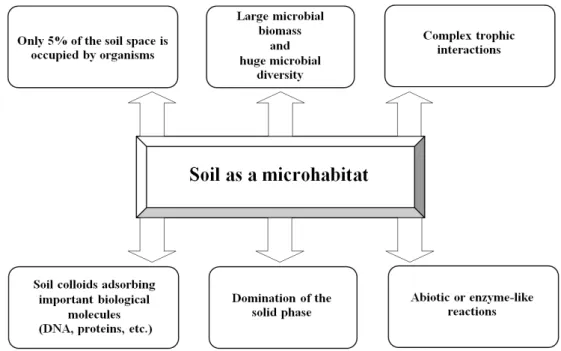
Fig. 1. Schematic representation of the main characteristics of soil as a microhabitat (Modified from Nannipieri et al., 2003).
Introduction
“Diversity” is defined as the species present in the system and function in the soil, which is necessary to study the function and sustainability of natural and managed ecosystem (Nannipieri et al., 2003). Lack of appropriate techniques to study soil microbes poses a great challenge in understanding the soil microbial community (Tiedje et al., 1999).
Shannon-Weaver index (Shannon and Weaver, 1949) is widely used for measuring microbial community diversity.
Limitation in Shannon-Weaver index is that richness and evenness are used for determining the index value. From molecular point of view, diversity often refers to the different type of sequences present in any habitat such as soil (Ogram, 2000).
The wealth of genetic complexity within soil by far exceeds that of any other habitat on earth (Torsvik et al., 2002). Soil is a complex microhabitat (Fig. 1) for the following distinctive properties. The microbial population in soil is very diverse. Soils are reported to contain 105– 108 bacteria, 106–107 actinomycetes and 105–106 fungal colony forming unit g-1 (Cresswell and Wellington, 1992). Likewise, one g of soil may contain 10 billion of bacteria, which contain about 4000–7000 different species, with a biomass density of 300–30,000 kg ha-1 (Rosello-Mora and Amann, 2001). The chemical, physical and biological characteristics of soil differ with both time and space as a result of various natural and man-made process. In the extensively available space in soil, the biological space, i.e., the space occupied by microorganisms, represents less than 5% of
the space (Ingham et al., 1985). Another significance of soil is the presence of ‘hot spots’ zones with increased biological activity accumulated organic matter (Parkin, 1987) and rhizosphere soil diversity (Pinton et al., 2001).
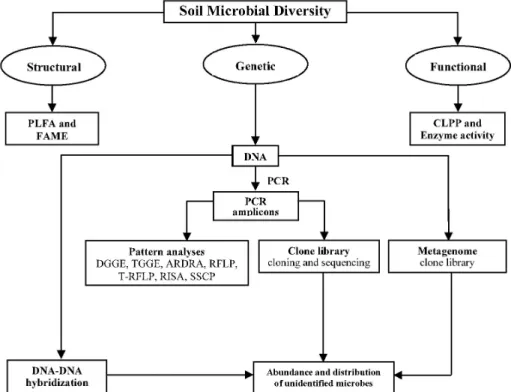
Approaches to measure microbial diversity in soil Micro- bial diversity in soil has been analyzed by various methods including cultivable and non-cultivable methods. Most of the active viable soil bacteria observed under a micro- scope are hard to cultivate on agar plates (Amann et al., 1995). A combination of both cultivable and non- cultivable approaches is required to get more accurate measure of the extent of microbial diversity in soil. In this context, the methods usually available for studying microbial diversity can be discussed under three categories viz. structural diversity, functional diversity and genetic diversity according to Fig. 2.
Structural diversity The structural or phenotypic analyses concept can be applied at a community levels, hence, they offer an integrated picture as to the physical, chemical and biotic state of the soil microbial community.
Phospholipid fatty acids (PLFA) and Fatty acid methyl ester (FAME) PLFA analysis is a relatively simple, inexpen- sive, sensitive, fast, and reproducible technique for assessing the structure of the living microbial community in soil ecosystems (Boschker and Middelburg, 2002, Dijkman, 2010). PLFAs have been used to determine differences in microbial community structure across different environmental gradients (Pratt et al., 2012). PLFAs are stable components of the cell wall of most microorganisms. They are polar
Fig. 2. Methods of accessing microbial diversity. CLPP community level physiological profiling, PLFA phospholipid fatty acids, FAME fatty acid methyl ester, PCR polymerase chain reaction, DGGE denaturing gradient gel electrophoresis, TGGE temperature gradient gel electrophoresis, ARDRA amplified rDNA restriction analysis, RFLP restriction fragment length polymorphism, T-RFLP terminal restriction fragment length polymorphism, RISA ribosomal intergenic spacer analysis, SSCP single-stranded conformation polymorphism
lipids specific for subgroups of microorganisms, e.g. gram- negative/gram-positive bacteria, methanotrophs, fungi, and actinobacteria (Zelles, 1999). PLFA profiles in general will not give information of species composition, but provide an overall picture, of the community structure. Alternatively, FAME method does not rely on culturing of microorga- nisms and fatty acid profile changes represents changes in the soil microbial population. FAME analysis is done with the fatty acids extracted from soil, which is then methylated, and analyzed with the help of gas chromato- graphy (Ibekwe and Kennedy, 1999). FAME profiles with multivariate analysis are used to study bacterial and/or fungal community changes to enable us to follow signature fatty acids of different groups of microorganisms. Since FAME analysis directly extracts fatty acids from soils, it overcomes the limitations of culture-dependent methods. Dis- advantage of this method, is that the individual fatty acids cannot be used to identify individual species due to the possibility that the same fatty acids can be found in one or more species and the amounts of fatty acids in individual species may also vary depending on numerous conditions such as the microbial growth conditions (Haack, 1994). Another drawback is that the samples should be processed shortly since profiles may change at -70°C for a year (Wu et al., 2008). Pratt (2012) used PLFA analysis to analyze the community structure of microbes in polycyclic
aromatic hydrocarbons (PAH) contaminated sediments.
Microbial diversity has been studied using PLFA in arable, grassland (Dungait et al., 2011), and strong aromatic liquor patchy arid and semi-arid landscapes of the Negev Desert (Ben-David, 2011).
Functional diversity Functional diversity is critical for any ecosystem functioning because of the variety of processes for which microbes are responsible. A loss of microbial taxon may not change the functioning of the system as different microbial taxon can carry out the same function, as this phenomenon is defined as the functional redundancy (Allison and Martiny, 2008). This means that even though anthropogenic activities might affect the genetic composition of the soil microbial communities, gross microbial processes and their role in maintaining soil quality could remain unaffected (Crecchio et al., 2004). Functional diversity in soils includes the magnitude and capacity of soil inhabitants such as that involved in cycling of nutrients, decomposition of various compounds and other transformations (Zak et al., 1994).
Community level physiological profiling (CLPP) Soil microbiologists over the last decade have been provided with numerous powerful tools for studying diversity and diversity effects at various levels. Carbon source utilization
patterns can be measured by the Biolog assay (Garland and Mills, 1991), and this assay is also named community level physiological profiling (CLPP). Studies have shown us that the diversity in soils is vast and that microbial populations change in response to external stimuli. CLPP approach has been used to investigate the influence of management effects on the soil functional or physiological diversity (Yan et al., 2000).
The Biolog assay depends on cell growth under specific conditions in the microtiter plate and thereby indicating only potential functional diversity. The number of inoculated cells are important for estimating the rate and degree of color development. On the other hand, the extraction method of the bacteria from soil are of less importance (Mayr and Hendriksen, 1999). Optical density reading several times during color development opens the possibility of calculating various growth parameters representing the physiology of the growth responsive populations (Preston- Mafham et al., 2002). CLPP has numerous advantages over other molecular and non-molecular techniques since it is relatively rapid, without specialized expertise requirements, and allows functional community characterization (Weber and Legge, 2009). Microbial functional diversity has been studied recently in soils amended with dairy sewage sludge (Frac et al., 2012), native and post-mining rehabilitation forest (Banning et al., 2012), ground water polluted agricultural soils (Janniche et al., 2012), sandy loam soil affected by long term application of organic amendments and mineral fertilizers (Hu et al., 2010).
Substrate induced respiration technique (SIR) A logical extension to the concept of functional analysis was pioneered by Degens et al. (2001) who developed a catabolic community profiling technique (SIR), in which the substrate is taken to the community. In this method the catabolic responses by soils to substrate were measured over the first 4 hours following addition, and before the possible occurrence of any cell division to detect the response of the in situ community. This method has been assessed for pollution-induced community tolerance to metals for lotic biofilms (Tlili et al., 2011). This technique was also used to study the carbon content in the soil microbial biomass during incubation pre-incubation of the soil samples collected in tundra, soddypodzolic soils and chernozems during different seasons (Ananyeva et al., 2011).
Enzymatic activity The enzymatic activity in the soil is mainly of microbial origin being derived from intra- cellular/cell associated/free enzymes. Discrimination based on free and cell associated enzyme activity can be used as a simple filtration step to separate microbial cells from soil extracts. Enzymes are considered as direct mediators
of biological catabolism of soil organic and mineral com ponents. Soil enzyme activities are closely related to organic matter, physical properties and microbial activity/
biomass of soil as well as changes in these parameters.
They provide early indications of changes related to soil health (Dick et al., 1996).
Genetic diversity The genetic diversity of soil microorga- nisms is considered as an indicator of the soil genetic resource. Different soil genetic microbial diversity methods are as mentioned below.
16S rDNA analysis The genetic diversity of soil microorga- nisms is an indicator of the genetic resource, which is the basis of all actual and potential functions. Genetic diversity of bacteria is most commonly studied through rDNA genes, which occur in all bacteria and show variations in base compositions. 16S rDNA genes are used for Eubacteria and Archaea phylogenetic affiliation and databases exist based on these sequences (e.g. www.ncbi.nlm.nih.gov/BLAST/) and http://rdp.cme. msu.edu/html/). Pisa et al. (2011) used culture independent approach for the evaluation of sugarcane soil microflora under different nitrogen fertilization regimes.
Based on the sequencing results, these authors reported dominance of different phylum in the ascending order as Proteobacteria (29.6%), Acidobacteria (23.4%), Actinobacteria (5.6%), Bacteroidetes (12.1%), and Firmicutes (10.2%). Among these Bacilli genus was found to be the most predominant and other plant growth promoting bacteria such as Azospirillum, Mesorhizobium, Rhizobium, Bradyrhizobium, and Burkholderia reported in the literature were found to have lesser occurrence.
Klindworth et al. (2013) evaluated the phylum spectrum of 512 primer pairs for in silico with respect to the SILVA 16S/18S rDNA reference dataset and recommended the S-D-Bact-0341-b-S-17/S-D-Bact-0785-a-A-21 as bacterial primer, with an amplicon size of 464 bp, based on sequenced metagenomes. Winsley et al. (2012) reported that the
“universal” 16S PCR (27F/519R) primers used lack sequence homology for many “candidate” divisions, which in turn limits diversity assessment. Furthermore, these authors designed a new primer set (356F/1064R), which offered a 50% increase in silico coverage. Yu et al. (2013) amplified the chloroplast and mitochondrion fragments of 16S/18S rDNA from D. officinale and reported that they shared a high nucleotide identity with the chloroplast (99–100%), mitochondrion (93–100%) from various plants, respectively, and they also shared 73–86% identities with the bacterial 16S rDNA sequences of GenBank. These authors also reported 16S rDNA-targeted primers fM1/ rC5 (5′-CCGCG TGNRBGAHGAAGGYYYT-3′)/ (5′-TAATCCTGTTTGCTC CCCAC-3′), which showed good specificity, when compared to the 16S/18S rDNAs of D. officinale, and perfect uni-
versality within bacteria except for Cyanobacteria. Smets et al. (2015) reported that addition of DNA from Aliivibrio fischeri or Thermus thermophilus, allowed quantification of soil microbial abundances due to strong positive correlation between total 16S rRNA gene estimations.
Denaturing gradient gel electrophoresis (DGGE)/temperature gradient gel electrophoresis (TGGE) Denaturing gradient gel electrophoresis (PCR-DGGE) and Temperature gradient gel electrophoresis (PCR-TGGE) are widely used methods for estimation of microbial community diversity (Muyzer et al., 1993; Heuer and Smalla, 1997). These methods are based on the variation in base composition and secondary structure of fragments of the 16S rDNA molecule. DNA is extracted from soil samples and amplified using PCR with universal primers targeting the 16S or 18S rRNA sequences. The 5΄-end (forward primer) contains 35–40 base pair GC clamp that have part of the DNA remains double stranded. In the absence of GC-lamp, the DNA would denature into single strands, in which the DNA melts in the domains, which are of sequence specific and migrate through the polyacrylamide gel differently (Muyzer, 1999).
Theoretically, DGGE separates DNA with one base-pair difference (Miller et al., 1999) and TGGE uses the same principle as that of DGGE except that the gradient is temperature based rather than that of chemical denaturants.
DGGE/TGGE has been used to assess the diversity of bacteria and fungi in the rhizosphere (Smalla et al., 2001), caused by changes of nutrient addition (Iwamoto et al., 2000) and addition of anthropogenic chemicals (Whiteley and Bailey, 2000). The partial community level finger- prints derived from DGGE/TGGE banding patterns have been applied for diversity studies based on intensity and number of the DNA bands between treatments. Smalla et al. (2011) analyzed the fingerprinting of 16S rRNA gene fragments amplified from four arable soils that include pelosol, gley, para brown soil, and podsol brown soils.
DGGE, along with T-RFLP and SSCP analyses and revealed that the clustering of fingerprints correlated with soil physicochemical properties. Sheibani et al. (2013) based on PCR-GGE identified Proteobacteria, Actinobacteria and Firmicutes as the most dominant groups in a corn agroecosystem in Quebec, Canada under all tillage and residue management treatments. These archaeal groups were diverse, with most individuals identified as belonging to phylum Crenarchaeota. Cerrone et al. (2012) evaluated the presence of ammonia-xidizing bacteria (AOB) in pilot- scale ultrafiltration membrane bioreactor (MBR) influenced by seasonal temperature under different operation conditions.
TGGE analysis, of partial ammoniamonoxygenase subunit A (amoA) genes reveals that temperature, and percentage of ammonia removal had a significant effect on AOB community
fingerprints. Pan et al. (2013) analyzed bacterial diversity based on DGGE analysis of 16S rRNA genes from 13 sites of the Great Wall Station, Fildes Peninsula, King George Island, Antarctica. From this study based on DGGE analysis it was revealed that the classes α-, β-, and λ-Proteobacteria, as well as the phylum Actinobacteria, as the dominant bacterial community. These authors also reported observable relationship between soil microbial biodiversity, and the human impact based on DGGE analysis.
Yu et al. (2013) reported that the primers fM1/rC5 and 515f-GC/rC5, overlap the V4 region of 16S rDNA, when subjected to nested PCR-DGGE to analyze endophytic bacterial diversity of D. officinale from three different sources in China. PCR-DGGE analysis of the root and stem samples of the plants showed 29 observed bands.
Most of the identified bacteria belong to Proteobacteria;
Burkholderia, was identified as the dominant genus with some having the function of nitrogen fixation. Fang et al.
(2014) analyzed repeated sulfadiazine (SDZ) containing treate- ments and chlortetracycline (CTC) residues under laboratory conditions. Phyla belonging to Firmicutes, Actinobacteria, and Proteobacteria were observed from a total of 11 specific bands in TGGE profiles. Cotta et al. (2014) studied the effects of transgenic and non-transgenic maize on nitrogen-transforming archea and bacteria in tropical soil based on PCR-DGGE analysis.
Terminal restriction fragment length polymorphism (T- RFLP) T-RFLP is used for the study of the diversity of 16S rDNA sequences of microbial communities. It is also based on PCR amplification of 16S rDNA with specific primers (Liu et al., 1997). Amplification with fluorescent tagged primers, results in fluorescent labeled PCR-products, when being cut with several restriction enzymes the labeled fragments are separated according to their size using agarose gels. Tipayno et al. (2012) used T-RFLP analysis for the determination of soil bacterial population structure and diversity under metal contamination and phytoremediation to assess the influence of soil conditions on the T-RFLP profile. Based on the results of T-RFLP analysis it was observed that richness and diversity indices were highest in either highly contaminated soils that have undergone phytoremediation or in soil with low contamina- tion, and significantly lowest in soils with high contamina- tion depending on the type of restriction enzyme used. Gao et al. (2012) based on T-RFLP analysis revealed that bacterial and fungal community played important roles in the soil ecosystem, and fungal community diversity and they acted as natural antagonists against various plant pathogens in Shandong province, China. These authors also reported that the strain P. fluorescens 2P24 showed strong inhibitory effect against Rastonia solanacearum,
Fusarium oxysporum and Rhizoctonia solani, etc., isolated from the wheat rhizosphere. Olliver et al. (2013) assessed the abundance and diversity of bacterial communities by 16S rRNA gene-based on qPCR and T-RFLP analysis across different soil depths from three sites located on the Tibetan Plateau. Based on the results of qPCR and T-RFLP analysis these authors reported that bacterial community structure was significantly influenced by soil depth due to seasonal freezing and thawing treatments. Giebler et al.
(2014) studied functional gene markers, alkB gene coding for the bacterial alkane monooxygenase, which might be suitable for monitoring ecosystem functions such as alkane degradation, when compared to the monitoring based on phylogenetic gene markers. Wetzel et al. (2014) documented the impact of tillage on arbuscular mycorrhizal AM fungal communities under temperate climate conditions and intensive agriculture in a fertile Loess area in Saxony (Germany).
These authors assessed the AM fungal diversity of this region based on sequence analysis and T-RFLP using the nested PCR-primers LR1/FLR2 and FLR3/FLR4 by morphological and spore identification.
Single strand conformation polymorphism (SSCP) SSCP technique relies on electrophoretic separation based on differences in DNA sequences and this technique like DGGE/TGGE, was originally developed for detecting novel polymorphisms/ point mutations occurring in DNA (Orita et al., 1989). DNA, when denaturized is denatured into single strands and each strand folds up into a configuration based on size and sequence. This feature of SSCP can separate single stranded DNA on an agarose gel according to folding and secondary structure (Lee et al., 1996).
Mnif et al. (2012) studied the composition, diversity, and microbial community changes using the polymerase chain reaction- single strand conformation polymorphism (PCR-SSCP) fingerprint method. Using this method these authors studied the microbial diversity in the Jebel Chakir discharge area, a sanitary landfill, in municipal waste in Tunis (Tunisia). These authors based on PCR-SSCP studies reported that, Archaea domain in all phylotypes and are related to CA11 group and one sequence belonged to the acetoclastic Methanosaeta cultivate gene. Gannoun et al.
(2007) monitored the effect of increasing the organic loading rates (OLRs) on the performance of the anaerobic co-digestion of olive mill (OMW) and abattoir wastewaters (AW) under mesophilic or thermophilic conditions using PCR-SSCP analysis. Bouasria et al. (2012) evaluated bacterial and fungal communities’ diversities using SSCP and multivariate variance analysis for testing the variations in microbial community composition in a pot culture study.
These authors reported that plant species contributed the most of the microbial beta diversity with 22% of the total
variance explained. Sanchez-Castro et al. (2012) studied the community composition of arbuscular mycorrhizal (AM) fungi in the roots of Genista cinerea, Rosmarinus officinalis, Lavandula latifolia, Thymus mastichina and T. zygis growing in a typical semi-arid Mediterranean ecosystem. These authors reported that AM fungal communities of G. cinerea, L. latifolia and T. mastichina were similar, while R.
officinalis and T. zygis tAM fungal communities were distant from this cluster. Kaplan et al. (2013) used soils from experimental fields of the Mashavera Valley in southeast Georgia to study the various degrees of trace metal contamination such as Cd, Cu, and Zn. The effects of remediation and without remediation on soil microbial diversity were compared with SSCP. Guida et al. (2014) addressed the issue of bacterial and fungal community diversity in Termini-Nerano and Massa Lubrense-Nerano region of Italy by fingerprints generated by SSCP and RAPD techniques. These authors observed that the microbial community in both soil types contributes to the bio- degradation process occurring during landslides, forming biofilms, which in turn led to the transformation or mineral formation. Singh et al. (2015) differentiated herbicide-resistant and herbicide-susceptible bacterial populations based on DNA-based markers in Phyllanthus minor populations. Primers designed in this study amplified the region carrying two reported mutations Trp2027 to Cys and Ile2041 to Asn, which conferring ACCase inhibitor resistance in several grass weeds subjected to SSCP for the detection of mutations.
Restriction fragment length polymorphism (RFLP)/amplified ribosomal DNA restriction analysis (ARDRA) RFLP, also called as ARDRA is used to study microbial diversity, based on DNA polymorphisms. Liu et al. (1997) digested PCR amplified rDNA with restriction enzyme (four base pair cutting enzyme). Tiedje et al., (1999) analyzed different fragment lengths either using agarose or non-denaturing polyacrylamide gel electrophoresis for executing the microbial community analysis. ARDRA is useful either for detecting microbial community’s structural changes or for the detection of specific phylogenetic groups (Liu et al., 1997).
Jose and Jebakumar (2012) in his study on the saltern soil samples selected a total of 12 representatives from the 69 actinomycete isolates, using ARDRA. Sequencing and analysis of 16S rDNA genes reveal that the members are affiliated to Micromonospora, Nocardia, Nocardiopsis, Nonomuraea Streptomyces, and Saccharopolyspora of actinobacterial genera. Mazinani and Asgharzadeh (2014) reported that the strains of Azotobacter mediate the nitrogen fixation process by reducing N2 to ammonia. For molecular analysis, the 16S rRNA gene was amplified using 27f and 1495r primers and the resulting PCR products were restricted with RsaI, HpaII and HhaI restriction enzymes.
Ribosomal DNA based cluster analysis in this study revealed intraspecific polymorphism and differentiated strains into two mains clusters, i.e., clusters A and B.
Moreover, it was observed that cluster A strains were related to the A. vinelandii, whereas the other cluster strains were related to the A. chroococcum and A. beijerinckii.
Zhou et al. (2013) in his study used three genus-specific primer sets targeted at the 16S rRNA gene of Sphingo- monas for the study on four contaminated soils from Shenfu petroleum-wastewater irrigation zone by constructing clone libraries, ARDRA and sequencing the represented ARDRA patterns. These authors used a newly developed primer set SA/429f-933r that could detect a larger spectrum (90%) of Sphingomonas strains with higher specificity.
These authors reported that a proportion of 9.7% of the cloned sequences discovered in this study were Sphingo- monas sequences, which are unknown until now, which suggest that new Sphingomonas sequences are present in soils from Shenfu irrigation zone. Ying et al. (2012) reported a culture-independent approach to evaluate the Panax ginseng rhizospheric and non-rhizospheric soil bacterial community for a period of 3 years. Universal primers 27f and 1492r were used to amplify 16S rRNA genes and clone libraries were created using the amplified 16S rRNA genes, and 192 clones were chosen for further sequencing. Sequencing and blast analysis showed that Bacillus, Acidobacteria, and Proteobacteria were the dominant populations in rhizospheric soil, with proteobacteria being the most dominant in non-rhizospheric soil. Chandna et al.
(2013) investigated compost bacterial diversity using molecular chronometer to reveal the bacterial phylogeny. Thirty- three bacterial isolates obtained from this compost analyzed based on 16S rRNA gene sequencing revealed the phylo- genetic lineage of class Bacilli, γ, βProteobacteria, and Actinobacteria. Among these lineages, isolates belonging to class Bacilli consisted of species from genera Bacillus, Staphylococcus, Lysinibacillus and Terribacillus. From phylum Actinobacteria: Microbacterium barkeri and Kocuria sp.
were identified. Through numerical analysis ARDRA was compared with 16S rRNA gene sequence and ARDRA results showed sufficiently similarly with 16S rRNA sequence analysis, but not overlapping.
Ribosomal intergenic spacer analysis (RISA) RISA utilizes the region between 16S and 23S rDNA and is amplified by primers targeting conserved regions of 16S and 23S rDNA. The amplified fragments vary considerably not only in size between species but also between the ribosomal operons within a single cell. The fragments are separated according to size by electrophoresis. Lisboa et al. (2015) studied fungistasis mediated by the soil microbiota as an important component of disease-suppressive soils. Soil
fungistasis was evaluated in terms of reduction of radial growth of F. graminearum, and bacterial diversity was assessed using RISA and found that the cropping systems tested, the vetch + black oat/maize + cowpea system revealed the populations with highest fungistasis and the oat/maize system revealed the least and reported that the manage- ment system affected the genetic profile of the bacteria isolated, with the systems from fungistatic soils showing greater similarity. Newman et al. (2015) studied the Microbial succession during leaf breakdown in a small- forested stream in west-central Georgia, USA, using various culture-independent techniques. Based on RISA analysis these authors revealed temporal shifts in dominant taxa within the phylum Proteobacteria, in which γProteo- bacteria dominated the pre-immersion and α- and β type of Proteobacteria dominated after 1 month with the latter groups containing taxa capable of using organic material to fuel further breakdown. Srivastava et al. (2009) evaluated the existence of bacterial population in the paddy fields of Eastern Uttar Pradesh, India and their relation to the prevailing soil physico-chemistry using multivariate statistical analyses, and culture independent 16S rRNA based PCR- DGGE and 16S–23S RISA. Out of 96 bands excised, 45 different phylotypes were obtained from both the techniques which elucidated the abundance of cyanobacteria over other soil bacterial population. Scytonema sp., Leptolyngbya sp. and different uncultured cyanobacterial sp. were the major genera found.
Advances in soil community analysis The advent of DNA sequencing methods has increased our understanding in the studies of soil community diversity through publicly available database such as NCBI (http://www.ncbi.nlm.nih.
gov/genome/), DDBJ (http://www.ddbj.nig.ac.jp/) and the European bioinformatics institute (http://www.ebi.ac.uk). These rapidly growing sequence in data base could be accessible through internet from all over the world. Though the use of 16s or 18s has been used as a common approach for evaluation the microbial diversity, the use of the techniques to target the region between different rRNA subunits such as Internal Transcribed Spaces (ITS) and the Ribosomal Intergenic Spacer Analysis (RISA) were used to differentiate the closely related species (Shimizu et al., 2001).
The studies on functional based metagenomics is gaining momentum because of their ability to identify clones based on functional gene expression. Microarray techniques in the form of geo clips that targets the genes involved in the geochemical cycling, Phyloclips that allow simultaneous detection of several functional gene groups and the catabolic clip that targets the genes that are involved in the organic pollutant degradation are used (Zhou et al., 2008). Proteomic analysis are used to identify the functional
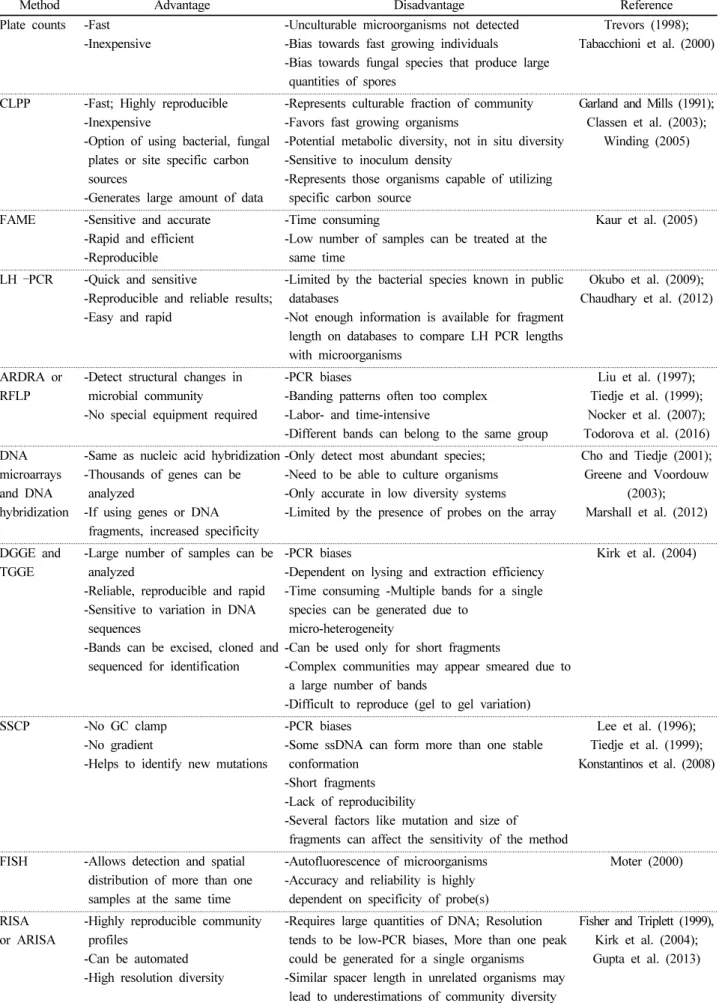
Table 1. Advantages and disadvantages of different methods to study soil microbial diversity (Modified from Kirk et al., 2004 and Florez et al., 2013).
Method Advantage Disadvantage Reference
Plate counts -Fast -Inexpensive
-Unculturable microorganisms not detected -Bias towards fast growing individuals
-Bias towards fungal species that produce large quantities of spores
Trevors (1998);
Tabacchioni et al. (2000)
CLPP -Fast; Highly reproducible -Inexpensive
-Option of using bacterial, fungal plates or site specific carbon sources
-Generates large amount of data
-Represents culturable fraction of community -Favors fast growing organisms
-Potential metabolic diversity, not in situ diversity -Sensitive to inoculum density
-Represents those organisms capable of utilizing specific carbon source
Garland and Mills (1991);
Classen et al. (2003);
Winding (2005)
FAME -Sensitive and accurate -Rapid and efficient -Reproducible
-Time consuming
-Low number of samples can be treated at the same time
Kaur et al. (2005)
LH –PCR -Quick and sensitive
-Reproducible and reliable results;
-Easy and rapid
-Limited by the bacterial species known in public databases
-Not enough information is available for fragment length on databases to compare LH PCR lengths with microorganisms
Okubo et al. (2009);
Chaudhary et al. (2012)
ARDRA or RFLP
-Detect structural changes in microbial community
-No special equipment required
-PCR biases
-Banding patterns often too complex -Labor- and time-intensive
-Different bands can belong to the same group
Liu et al. (1997);
Tiedje et al. (1999);
Nocker et al. (2007);
Todorova et al. (2016) DNA
microarrays and DNA hybridization
-Same as nucleic acid hybridization -Thousands of genes can be
analyzed
-If using genes or DNA fragments, increased specificity
-Only detect most abundant species;
-Need to be able to culture organisms -Only accurate in low diversity systems
-Limited by the presence of probes on the array
Cho and Tiedje (2001);
Greene and Voordouw (2003);
Marshall et al. (2012)
DGGE and TGGE
-Large number of samples can be analyzed
-Reliable, reproducible and rapid -Sensitive to variation in DNA
sequences
-Bands can be excised, cloned and sequenced for identification
-PCR biases
-Dependent on lysing and extraction efficiency -Time consuming -Multiple bands for a single
species can be generated due to micro-heterogeneity
-Can be used only for short fragments
-Complex communities may appear smeared due to a large number of bands
-Difficult to reproduce (gel to gel variation)
Kirk et al. (2004)
SSCP -No GC clamp
-No gradient
-Helps to identify new mutations
-PCR biases
-Some ssDNA can form more than one stable conformation
-Short fragments -Lack of reproducibility
-Several factors like mutation and size of fragments can affect the sensitivity of the method
Lee et al. (1996);
Tiedje et al. (1999);
Konstantinos et al. (2008)
FISH -Allows detection and spatial distribution of more than one samples at the same time
-Autofluorescence of microorganisms -Accuracy and reliability is highly
dependent on specificity of probe(s)
Moter (2000)
RISA or ARISA
-Highly reproducible community profiles
-Can be automated -High resolution diversity
-Requires large quantities of DNA; Resolution tends to be low-PCR biases, More than one peak could be generated for a single organisms -Similar spacer length in unrelated organisms may
lead to underestimations of community diversity
Fisher and Triplett (1999), Kirk et al. (2004);
Gupta et al. (2013)
role of biologically important proteins. Zhao et al (2004) identified the different proteins expressed responsible for fatty acid metabolism, transcription and small molecule transport when the bacteria is grown in the presence of the phenolic compounds. Kim et al. (2012) based on the proteome profiling identified the involvement of 27 enzymes required for pyrene degradation in Mycobacterium vanbaalenii PYR-1.
Advantages and disadvantages of different approaches Each of all the above mentioned methods provide valuable information about the microbial community, however, all have their own limitations. These arise not only from methodological limitations, but also from a lack of taxonomic knowledge. The advantages and disadvantages of different methods used to measure soil microbial diversity are depicted in Table 1. Proper understanding of the techniques, its advantage and disadvantage will be helpful for the proper interpretation of the study. The usage of various techniques explained depends on the researcher’s experimental objective of the chosen study. Though all the techniques has their own advantages and disadvantages, the researcher can chose his preference from one over another according to his framed hypothesis and available resources. Further the usage of technique depends on the sample, equipment availability and funds to carry out the experiments.
Knowledge on the ecological function of the microorganisms is needed to understand the interaction of microorganism with the environment. For instance studies on the enzymatic and biochemical study of the soil such as degradation of organic matter, nitrogen fixation, phosphorus solubilization, plant growth promotion/inhibition, mineralization, greenhouse gas emissions, filtration, and detoxification of polluted soils will provide knowledge on the direct influence of soil microorganisms. However, microbial biomass in soil, its biodiversity and DNA-based metagenomics cannot be done in these direct techniques. Since the microorganism present in the soil may be dormant. Therefore, microbial activity profiles and important microbial ecosystem functions could be studied through techniques such as FDA, SIP, FGAs probed with cDNA, and RNA-based next generation sequencing were found to be handful under these conditions.
The only limitation with the molecular methods to study the soil microbial diversity is that these techniques are expensive and limited to less microbial community. In the future, the cost of these techniques will decrease significantly with time. As of now, the combination of traditional methods with modern techniques provides a powerful approach, which will decrease the error rate and helps acquire robust data at a viable cost.
Conclusion
Soil is a complex and heterogeneous ecosystem and its characterization still imposes a significant challenge. In a managed soil, microbial biomass and microbial community structure and function are commonly used as indicators for soil quality and fertility. As shown in this review, the microbial diversity in the soil was analyzed using structural diversity, functional diversity and genetic diversity. Under structural diversity, PLFA and FAME were used in which culturing of microbes is not needed, whereas the disadvantage being the results may be confound by other microorga- nisms. Under functional diversity, CLPP was reviewed.
This method is a fast, inexpensive method to study microbial diversity, but it is very sensitive to inoculum density and can represent only the carbon utilizing bacteria. Under genetic diversity, 16S rDNA analysis and DGGE/TGGE are fast reliable method, where larger samples can be analyzed simultaneously, but it is very sensitive on sample handling and PCR biases. T-RFLP, SSCP, RFLP/ ARDRA and RISA were also reviewed, where the advantage being the ability to select the structural changes and disadvantage being the need to have more DNA and PCR biases.
Overall all the methods have its own advantage and disadvantage and can be selected according to the need to study the soil microbial diversity.
References
Allison, S.D. and J.B.H. Martiny. 2008. Resistance, resilience, and redundancy in microbial communities. Proc. Nat. Acad.
Sci. 105:1151-1159.
Amann, R., W. Ludwig, and K.H. Schleifer. 1995. Phylogenetic identification and in situ detection of individual microbial cells without cultivation. Microbiol. Rev. 59:143-169.
Ananyeva, N.D., E.A. Susyan, and E.G. Gavrilenko. 2011.
Determination of the soil microbial biomass carbon using the method of substrate-induced respiration. Eur. Soil Sci.
44(11):1215-1221.
Banning, N.C., B.M. Lalor, W.R. Cookson, A.H. Grigg, and D.V. Murphy. 2012. Analysis of soil microbial community level physiological profiles in native and post-mining rehabilitation forest: Which substrates discriminate?. Appl.
Soil Ecol. 56:27-34.
Ben-David, E.A., E. Zaady, Y. Sher, and A. Nejidat. 2011.
Assessment of the spatial distribution of soil microbial communities in patchy arid and semi-arid landscapes of the Negev Desert using combined PLFA and DGGE analyses.
FEMS. Microbiol. Ecol. 76(3):492-503.
Boschker, H.T.S. and J.J. Middelburg. 2002. Stable isotopes and biomarkers in microbial ecology. FEMS. Microbiol.
Ecol. 40(2):85-95.
Bouasria, A., T. Mustafa, F. De Bello, L. Zinger, G. Lemperiere, R.A. Geremia, and P. Choler. 2012. Changes in root-associated microbial communities are determined by speciesspecific plant growth responses to stress and disturbance. Euro. J.
Soil Biol. 52:59-66.
Cerrone, F., J.M. Poyatos, M. Molina-Muñoz, C. Cortés- Lorenzo, J. González-López, and B. Rodelas. 2012. Prevalence of Nitrosomonas cluster 7 populations in the ammonia- oxidizing community of a submerged membrane bioreactor treating urban wastewater under different operation conditions.
Bioproc. Biosyst. Eng. 36(7):901-910.
Chandna, P., S. Mallik, and R.C. Kuhad. 2013. Assessment of bacterial diversity in agricultural by-product compost by sequencing of cultivated isolates and amplified rDNA restriction analysis. Appl. Microbiol. Biotech. 97(15):6991- 7003.
Chaudhary, D.R., J. Saxena, N. Lorenz, L.K. Dick, and R.P.
Dick. 2012. Microbial Profiles of Rhizosphere and Bulk Soil Microbial Communities of Biofuel Crops Switch-grass (Panicum virgatum L.) and Jatropha (Jatropha curcas L.).
Appl. Environ. Soil Sci. 3:1-6.
Cho, J.C. and J.M. Tiedje. 2001. Bacterial species determina- tion from DNA-DNA hybridization by using genome fragments and DNA microarrays. Appl. Environ. Microbiol.
67:3677- 3682.
Cotta, S.R., A.C.F. Dias, I.E. Marriel, F.D. Andreote, L.
Seldin, and J.D. Van Elsas. 2014. Different effects of transgenic maize and nontransgenic maize on nitrogentransforming archaea and bacteria in tropical soils. Appl. Environ. Microbiol.
80(20):6437-6445.
Crecchio, C., M. Curci, M.D.R. Pizzigallo, P. Ricciuti, and P. Ruggiero. 2004. Effects of municipal solid waste compost amendments on soil enzyme activities and bacterial genetic diversity. Soil Biol. Biochem. 36:1595-1605.
Cresswell, N. and E.M.H. Wellington. 1992. Detection of genetic exchange in the terrestrial environment, p. 59-82.
In: E.M.H. Wellington and J.D. Van Elsas (ed.). Genetic interactions among microorganisms in the natural environment.
Pergamon Press, Oxford, UK. pp. 59-82.
Degens, B.P., L.A. Schipper, G.P. Sparling, and L.C. Duncan.
2001. Is the microbial community in a soil with reduced catabolic diversity resistant to stress or disturbance? Soil Biol. Biochem. 33:1143-1153.
Dick, R.P., D.P. Breakwell, and R.F. Turco. 1996. Soil enzyme activities and biodiversity measurements as integrative microbiological indicators, p. 247-271. In: J.W. Doran and A.J. Jones (ed.). Methods for assessing soil quality. Soil Science Society of America Special publication (SSSA), Madison, Wisconsin. pp. 49-50.
Dijkman, N.A., H.T.S. Boschker, L.J. Stal, and J.C. Kromkamp.
2010. Composition and heterogeneity of the microbial community in a coastal microbial mat as revealed by the
analysis of pigments and phospholipid-derived fatty acids.
J. Sea Res. 63(1):62-70.
Dungait, J.A.J., S.J. Kemmitt, L. Michallon, S. Guo, Q. Wen, P.C. Brookes, and R.P. Evershed. 2011. Variable responses of the soil microbial biomass to trace concentrations of 13C-labelled glucose, using 13C-PLFA analysis. Eur. J. Soil Sci. 62(1):117-126.
Fang, H., Y. Han, Y. Yin, X. Pan, and Y. Yu. 2014. Variations in dissipation rate, microbial function and antibiotic resistance due to repeated introductions of manure containing sulfadiazine and chlortetracycline to soil. Chemosphere 96:
51-56.
Fisher, M.M., and E.W. Triplett. 1999. Automated approach for ribosomal intergenic spacer analysis of microbial diversity and its application to freshwater bacterial communities. Appl.
Environ. Microbiol. 65:4630-4636.
Florez, R.V.A., L.C. Carvalhais, and P.M. Schenk. 2013.
Culture-independent molecular tools for soil and rhizosphere microbiology. Diversity 5(3):581-612.
Frąc, M., K. Oszust, and J. Lipiec. 2012. Community Level Physiological Profiles (CLPP), Characterization and Microbial Activity of Soil Amended with Dairy Sewage Sludge.
Sensors 12(12):3253-3268.
Gannoun, H., N.B. Othman, H. Bouallagui, and H. Moktar.
2007. Mesophilic and Thermophilic Anaerobic Co-digestion of Olive Mill Wastewaters and Abattoir Wastewaters in an Upflow Anaerobic Filter. Ind. Eng. Chem. Res. 46(21):
6737-6743.
Gao, G., D. Yin, S. Chen, F. Xia, J. Yang, Q. Li, and W.
Wang. 2012. Effect of biocontrol agent Pseudomonas fluorescens 2P24 on soil fungal community in cucumber rhizosphere using T-RFLP and DGGE. PloS One 7(2):
e31806.
Garland, J. and A. Mills. 1991. Classification and characterization of heterotrophic microbial communities on the basis of patterns of community-level sole-carbon-source utilization.
Appl. Environ. Microbiol. 57:2351-2359.
Giebler, J., L.Y. Wick, H. Harms, and A. Chatzinotas. 2014.
Evaluating T-RFLP protocols to sensitively analyze the genetic diversity and community changes of soil alkane degrading bacteria. Eur. J. Soil Biol. 65:107-113.
Greene, E.A. and G. Voordouw. 2003. Analysis of environmental microbial communities by reverse sample genome probing.
J. Microbiol. Methods 5:211-219.
Guida, M., P.L. Cannavacciuolo, M. Cesarano, M. Borra, E.
Biffali, R. D’Alessandro, and B. De Felice. 2014. Microbial diversity of landslide soils assessed by RFLP and SSCP fingerprints. J. Appl. Genetics 55(3):403-415.
Gupta, R., N. Mathimaran, A. Wiemken, T. Boller, V.S. Bisaria, and S. Sharma. 2014. Non-target effects of bioinoculants on rhizospheric microbial communities of Cajanus cajan. Appl.
Soil Ecol. 76:26-33.
Haack, S.K., H. Garchow, D.A. Odelson, L.J. Forney, and M.J. Klug. 1994. Accuracy, reproducibility, and interpretation of Fatty Acid methyl ester profiles of model bacterial communities. Appl. Environ. Microbiol. 60(7):2483-2493.
Heuer, H. and K. Smalla. 1997. Application of denaturing gradient gel electrophoresis and temperature gradient gel electrophoresis for studying soil microbial communities, p.
353-373. In: J.D. Van Elsas, J.T. Trevors, E.M.H. Wellington (ed.). Modern soil microbiology. Marcel Dekker, New York, pp. 353-373.
Hu, J., X. Lin, J. Wang, J. Dai, R. Chen, J. Zhang, and M.H.
Wong. 2010. Microbial functional diversity, metabolic quotient, and invertase activity of a sandy loam soil as affected by long-term application of organic amendment and mineral fertilizer. J. Soils Sediments 11(2):271-280.
Ibekwe, A.M. and A.C. Kennedy. 1999. Fatty acid methyl ester (FAME) profiles as a tool to investigate community structure of two agricultural soils. Plant Soil. 206:151-161.
Ingham, R.E., J.A. Trofymow, E.R. Ingham, and D.C.
Coleman. 1985. Interactions of bacteria, fungi, and their nematode grazers: effects on nutrient cycling and plant growth. Ecol. Monograph 55:119-140.
Janniche, G.S., H. Spliid, and H.J. Albrechtsen. 2012.
Microbial Community-Level Physiological Profiles (CLPP) and herbicide mineralization potential in groundwater affected by agricultural land use. J. Contam. Hydrol. 140-141:45-55.
Jose, P.A. and S.R.D. Jebakumar. 2012. Phylogenetic diversity of actinomycetes cultured from coastal multipond solar saltern in Tuticorin, India. Aquat. Biosyst. 8(1):23.
Kaplan, H., S. Ratering, T. Hanauer, P. Felix-Henningsen, and S. Schnell. 2013. Impact of trace metal contamination and in situ remediation on microbial diversity and respiratory activity of heavily polluted Kastanozems. Biol. Fert. Soils.
50(5):735-744.
Kaur, A., A. Chaudhary, A. Kaur, R. Choudhary, and R.
Kaushik. 2005. Phospholipid fatty acid - A bioindicator of environment monitoring and assessment in soil ecosystem.
Current Sci. 89(7):1103-1112.
Kim, S.J., J. Song, O. Kweon, R.D. Holland, D.W. Kim, J.
Kim, L.R. Yu, and C.E. Cerniglia. 2012. Functional Robustness of a Polycyclic Aromatic Hydrocarbon Metabolic Network Examined in a nidA Aromatic Ring-Hydroxylating Oxygenase Mutant of Mycobacterium vanbaalenii PYR-1. Appl. Environ.
Microbiol. 78(10):3715-3723.
Kirk, J.L., L.A. Beaudette, M. Hart, P. Moutoglis, J.N.
Klironomos, H. Lee, and J.T. Trevors. 2004. Methods of studying soil microbial diversity. J. Microbiol. Methods. 58:
169-188.
Klindworth, A., E. Pruesse, T. Schweer, J. Peplies, C. Quast, M. Horn, and F.O. Glöckner. 2013. Evaluation of general 16S ribosomal RNA gene PCR primers for classical and next-generation sequencing-based diversity studies. Nucleic
Acids Res. 41(1):e1.
Lee, D.H., Y.G. Zo, and S.J. Kim.1996. Non-radioactive method to study genetic profiles of natural bacterial communities by PCR single strand conformation polymo- rphism. Appl. Environ. Microbiol. 62:3112-3120.
Lisboa, B.B., C. Bayer, L.M.P. Passaglia, F.A.D.O. Camargo, A. Beneduzi, A. Ambrosini, and L.K. Vargas. 2015. Soil fungistasis against Fusarium graminearum under different crop management systems. Rev. Bras. Ciênc. Solo, 39(1):
69-77.
Liu, W.T., T.L. Marsh, H. Cheng, and L.J. Forney. 1997.
Characterization of microbial diversity by determining terminal restriction fragment length polymorphisms of genes encoding 16S rRNA. Appl. Environ. Microbiol. 63(11):
4516-22.
Marshall, I.P.G., D.R.V. Berggren, M.F. Azizian, L.C. Burow, L. Semprini, and A.M. Spormann. 2012. The Hydrogenase Chip: a tiling oligonucleotide DNA microarray technique for characterizing hydrogen-producing and -consuming microbes in microbial communities. Int. J. Syst. Evol. Microbiol.
6(4):814-26.
Mayr, C.A.W. and N.B. Hendriksen. 1999. Community level physiological profile of soil bacteria unaffected by extraction method. J. Microbiol. Methods. 36:29-33.
Mazinani, Z. and A. Asgharzadeh. 2014. Genetic diversity of Azotobacter strains isolated from soils by amplified ribosomal DNA restriction analysis. T. Sitologiia I. Genetika. 48(5):
26-35.
Miller, K.M., T.J. Ming, A.D. Schulze, and R.E. Withler.
1999. Denaturing Gradient Gel Electrophoresis (DGGE): a rapid and sensitive technique to screen nucleotide sequence variation in populations. BioTechniques. 27:1016-1030.
Mnif, S., A. Zayen, F. Karray, V. Bru-Adan, S. Loukil, J.J.
Godon, M. Chamkha, and S. Sayadi. 2012. Microbial po- pulation changes in anaerobic membrane bioreactor treating landfill leachate monitored by single-strand conformation polymorphism analysis of 16S rDNA gene fragments. Int.
Biodet. Biodeg. 73:50-59.
Moter, A. and U.B. Göbel. 2000. Fluorescence in situ hybri- dization (FISH) for direct visualization of microorganisms.
J. Microbial. Methods. 41(2):85-112.
Muyzer, G. 1999. DGGE/TGGE a method for identifying genes from natural ecosystems. Curr. Opin. Microbiol. 2: 317-322.
Muyzer, G., E.C. De Waal, and A.G. Uitterlinden. 1993.
Profiling of complex bacterial populations by denaturing gradient gel electro-phoresis analyses of polymerase chain reaction-amplified genes for 16S rRNA. Appl. Environ.
Microbiol. 59:695-700.
Nannipieri, P., J. Ascher, M.T. Ceccherini, L. Landi, G. Piet- ramellara, and G. Renella. 2003. Microbial diversity and soil functions. Eur. J. Soil Biol. 54:655-670.
Newman, M.M., M.R. Liles, and J.W. Feminella. 2015. Litter
Breakdown and Microbial Succession on Two Submerged Leaf Species in a Small Forested Stream. PloS One. 10(6):
e0130801.
Ogram, A. 2000. Soil molecular microbial ecology at age 20:
methodological challenges for the future. Soil Biol. Biochem.
32:1499-1504.
Ollivier, J., S. Yang, C. Dörfer, G. Welzl, P. Kühn, T. Scholter, D. Wagner, and M. Schloter. 2013. Bacterial community structure in soils of the Tibetan Plateau affected by dis- continuous permafrost or seasonal freezing. Biol. Fert.
Soils. 50(3):555-559.
Orita, M., Y. Suzuki, T. Sekiya, and K. Hayashi. 1989. A rapid and sensitive detection of point mutations and genetic polymorphisms using polymerase chain reaction. Genomics.
5:874-879.
Pan, Q., F. Wang, Y. Zhang, M. Cai, J. He, and H. Yang.
2013. Denaturing gradient gel electrophoresis fingerprinting of soil bacteria in the vicinity of the Chinese Great Wall Station, King George Island, Antarctica. J. Environ. Sci.
25(8):1649-1655.
Parkin, T.B. 1987. Soil microsites as a source of denitrification variability. Soil Sci. Soc. Am. J. 51:1194-1199.
Pinton, R., Z. Varanini, and P. Nannipieri. 2001. The Rhi- zosphere: Biochemistry and Organic Substances at the Soil- Plant Interface. Marcel Dekker, New York.
Pisa, G., G.S. Magnani, H. Weber, E.M. Souza, H. Faoro, R.
A. Monteiro, E. Daros, V. Baura, J.P. Bespalhok, F.O.
Pedros, and L.M. Cruz. 2011. Diversity of 16S rRNA genes from bacteria of sugarcane rhizosphere soil. Braz. J. Med.
Biol. Res. 44(12):1215-21.
Pratt, B., R. Riesen, and C.G. Johnston. 2012. PLFA Analyses of Microbial Communities Associated with PAH-Contaminated Riverbank Sediment. Microb. Ecol. 64(3):680-691.
Preston-Matham, J., L. Boddy, and P.F. Randerson. 2002.
Analysis of microbial community functional diversity using sole-carbon-source utilization profiles-a critique. FEMS Microbiol. Ecol. 42:1-14.
Rosello-Mora, R. and R. Amann. 2001. The species concept for prokaryotes. FEMS Microbiol. Rev. 25:39-67.
Sánchez-Castro, I., N. Ferrol, and J.M. Barea. 2012. Analyzing the community composition of arbuscular mycorrhizal fungi colonizing the roots of representative shrub land species in a Mediterranean ecosystem. J. Arid Environ. 80:1-9.
Shannon, C. and W. Weaver. 1949. The mathematical theory of communication. 10th ed., University of Illinois Press, Urbana, Illinois, USA.
Sheibani, S., S.F. Yanni, R. Wilhelm, J.K. Whalen, L.G.
Whyte, C.W. Greer, and C.A. Madramootoo. 2013. Soil bacteria and archaea found in long-term corn (Zea mays L.) agroecosystems in Quebec, Canada. Can. J. Soil Sci. 93(1):
45-57.
Shimizu, T. S., K. Ohshima, K. Ohtani, K. Hoshino, K.
Honjo, and H. Hayashi. 2001. Sequence heterogeneity of the ten rRNA operons in Clostridium perfringens. Syst.
Appl. Microbiol. 24:149-156.
Singh, R., D. Sharma, N. Raghav, R.S. Chhokar, and I.
Sharma. 2015. Molecular genotyping of herbicide resistance in P. minor: ACCase resistance. Appl. Biochem. Biotech.
175(3):1617-21.
Smalla, K., G. Wieland, A. Buchner, A. Zock, J. Parzy, S.
Kaiser, R. Roskot, H. Heuer, and G. Berg. 2001. Bulk and rhizosphere soil bacterial communities studied by denaturing gradient gel electrophoresis: plant-dependent enrichment and seasonal shifts revealed. Appl. Environ. Microbiol. 67:
4742-4751.
Smalla, K., M. Oros-Sichler, A. Milling, H. Heuer, S.
Baumgarte, R. Becker, G. Neuber, S. Kropf, A.Ulrich, and C.C. Tebbe. 2007. Bacterial diversity of soils assessed by DGGE, T-RFLP and SSCP fingerprints of PCR-amplified 16S rRNA gene fragments: do the different methods provide similar results?. J. Microbiol. Methods. 69(3):470-479.
Smets, W., J.W. Leff, M.A. Bradford, R.L. McCulley, S.
Lebeer, and N. Fierer. 2015. A method for simultaneous measurement of soil bacterial abundances and community composition via 16S rRNA gene sequencing. Peer J. Pre.
Prints. 3:e1622
Srivastava, A.K., P. Bhargava, A. Kumar, L.C. Rai, and B.A.
Neilan. 2009. Molecular characterization and the effect of salinity on cyanobacterial diversity in the rice fields of Eastern Uttar Pradesh, India. Saline Syst. 5:4-9.
Tabacchioni, S., L. Chiarini, A. Bevivino, C. Cantale, and C.
Dalmastri. 2000. Bias caused by using different isolation media for assessing the genetic diversity of a natural microbial population. Microb. Ecol. 40(3):169-176.
Tiedje, J.M., S. Asming-Brempong, K. Nüsslein, T.L. Marsh, and S.J. Flynn. 1999. Opening the black box of soil microbial diversity. Appl. Soil Ecol. 13:109-122.
Tipayno, S., C.G. Kim, and T. Sa. 2012. T-RFLP analysis of structural changes in soil bacterial communities in response to metal and metalloid contamination and initial phytoremediation. Appl. Soil Ecol. 61:137-146.
Tlili, A., M. Maréchal, A. Bérard, B. Volat, and B. Montuelle.
2011. Enhanced co-tolerance and co-sensitivity from long- term metal exposures of heterotrophic and autotrophic components of fluvial biofilms. Sci. Total Environ. 409(20):
4335-4343.
Torsvik, V., L. Øvreås, and T.F. Thingstad. 2002. Prokaryotic diversity - Magnitude, dynamics, and controlling factors.
Science. 296:1064-1066.
Trevors, J.T.1998. Bacterial biodiversity in soil with an emphasis on chemically-contaminated soils. Water Air Soil Poll. 101:45-67.
Weber, K.P. and R.L. Legge. 2009. One-dimensional metric for tracking bacterial community divergence using sole