217
INTRODUCTION
The incidence of breast cancer in Korea has continuously increased in recent years although it is still quite low compared to its incidence in European countries and the United States.
According to the cancer registration report issued by the Ministry of Health and Welfare, breast cancer ranked as the third most common cancer in women before 1998, when it became the second most common cancer, after stomach cancer, and in 2000 it accounted for about 15.1% of all cancers in Korean women.(1) Worldwide, breast cancer is the second most common female cancer, and the most common form in developed countries, such as the United States and several European countries. The estimate for the year 2000 was close to 1 million new cases per year worldwide, representing an increase of 23.9% over the period 1990∼2000 or more than a 2% increase per year.(2)
The Korean Breast Cancer Society (KBCS) filed the first baseline data on breast cancer after performing a nationwide survey in 1996. Using the same method we recently made an attempt at figuring out the clinical characteristics of breast cancer in Korea to form a consensus for early diagnosis and treatment on an annual basis. The role played by the KBCS in this area is becoming increasingly important because breast cancer is steadily on the increase, due to many factors, which include the popularity of the early cancer detection campaign and the rapid westernization of life style (high-fat diet, non-breast feeding, late marriage etc.). The purpose of this study was to identify the clinical characteristics and epide- miology of female breast cancer, including age distribution, therapeutic modalities used, disease stage diagnosed when first seen, various risk factors, and the chronological incidences compared to the earlier surveys of 1996 and 1998.
MATERIALS AND METHODS
The patients subjected to the current analysis were all newly diagnosed and underwent surgery from January through to
Clinical Characteristics of Breast Cancer Patients in Korea in Year 2000
Korean Breast Cancer Society
The Korean Breast Cancer Society conducted this nationwide multicenter survey in the year 2000 to determine the clinical characteristics of breast cancer and to compare the results with previous surveys, conducted in 1996 and 1998, to obtain an epidemiological pattern for breast cancer in Korea. Data were collected from 38 university and 45 surgical training hospitals. The total number of patients involved was 5,401 (median age=46 yr) with an estimated crude incidence of 23 patients per 100,000. Premenopausal women under age of 50 were 61.1%. Of these, 71.6% received mastectomy, 27%
breast conserving surgery, and 1.4% other surgical treat- ments. Fifty-four percent were diagnosed at stage II (AJCC classification) and the incidence of early cancer (stages 0 and I) was 31.5%. Comparisons with the earlier 1996 and 1998 results indicated that the number of breast cancer patients is increasing. As to the type of treatment, mastec- tomies were reduced and breast-conserving surgery in- creased, and an increase in the proportional incidence of early cancer was noted. The number of patients with risk factors, such as early menarche, late menopause, late first-delivery, and high fat diet were also found to have increased. Although our epidemiological survey was limited in terms of its duration, our findings suggest that breast cancer in Korean will continue to rise and that its clinical features will change closer to what is now observed in Western countries. (Journal of Korean Breast Cancer Society 2002;5:217-224)
ꠏꠏꠏꠏꠏꠏꠏꠏꠏꠏꠏꠏꠏꠏꠏꠏꠏꠏꠏꠏꠏꠏꠏꠏꠏꠏꠏꠏꠏꠏꠏꠏꠏꠏꠏꠏꠏꠏꠏꠏꠏꠏꠏꠏꠏ Key Words: Breast cancer, Incidence, Operation, Stage,
Korea
Correspondence: Sei Hyun Ahn, Department of Surgery, College of Medicine, University of Ulsan and Asan Medical Center, 388-1 Poongnap-dong, Songpa-gu, Seoul 138-736, Korea.
(Tel) 82-2-3010-3480, (Fax) 82-2-474-9027, (E-mail): ahnsh@
amc.seoul.kr
ꠏꠏꠏꠏꠏꠏꠏꠏꠏꠏꠏꠏꠏꠏꠏꠏꠏꠏꠏꠏꠏꠏꠏꠏꠏꠏꠏꠏꠏꠏꠏꠏꠏꠏꠏꠏꠏꠏꠏꠏꠏꠏꠏꠏꠏꠏꠏꠏꠏꠏꠏꠏꠏꠏꠏꠏꠏꠏꠏꠏꠏꠏꠏꠏꠏꠏꠏꠏꠏꠏꠏꠏꠏꠏꠏꠏꠏꠏꠏꠏꠏꠏꠏꠏꠏꠏꠏꠏꠏꠏꠏꠏꠏꠏꠏꠏꠏꠏ Table 1. Number of Korean breast cancer patients collected in 2000 and analyzed by age (year)
ꠚꠚꠚꠚꠚꠚꠚꠚꠚꠚꠚꠚꠚꠚꠚꠚꠚꠚꠚꠚꠚꠚꠚꠚꠚꠚꠚꠚꠚꠚꠚꠚꠚꠚꠚꠚꠚꠚꠚꠚꠚꠚꠚꠚꠚꠚꠚꠚꠚꠚꠚꠚꠚꠚꠚꠚꠚꠚꠚꠚꠚꠚꠚꠚꠚꠚꠚꠚꠚꠚꠚꠚꠚꠚꠚꠚꠚꠚꠚꠚꠚꠚꠚꠚꠚꠚꠚꠚꠚꠚꠚꠚꠚꠚꠚꠚꠚꠚꠚꠚꠚꠚꠚꠚꠚꠚꠚꠚꠚꠚꠚꠚꠚꠚꠚ
Hospital 10∼19 20∼29 30∼39 40∼49 50∼59 60∼69 70∼79 80∼ Unknown Total
ꠏꠏꠏꠏꠏꠏꠏꠏꠏꠏꠏꠏꠏꠏꠏꠏꠏꠏꠏꠏꠏꠏꠏꠏꠏꠏꠏꠏꠏꠏꠏꠏꠏꠏꠏꠏꠏꠏꠏꠏꠏꠏꠏꠏꠏꠏꠏꠏꠏꠏꠏꠏꠏꠏꠏꠏꠏꠏꠏꠏꠏꠏꠏꠏꠏꠏꠏꠏꠏꠏꠏꠏꠏꠏꠏꠏꠏꠏꠏꠏꠏꠏꠏꠏꠏꠏꠏꠏꠏꠏꠏꠏꠏꠏꠏꠏꠏꠏꠏꠏꠏꠏꠏꠏꠏꠏꠏꠏꠏꠏꠏꠏꠏꠏꠏ
Ajou Univ. 0 5 20 32 23 9 5 0 0 94
Catholic Univ. (Kangnam St. Mary's Hosp) 0 0 11 32 35 16 2 0 0 96
Catholic Univ. (Yuido St. Mary's Hosp) 0 0 5 22 15 5 3 0 0 50
Catholic Univ. of Taegu-Hyosung 0 0 2 9 7 3 1 0 0 22
Cheju Univ. (Cheju Medical Center) 0 0 0 1 0 2 0 0 0 3
Chonbuk National Univ. 0 0 9 18 3 2 1 0 0 33
Chonnam National Univ. 0 2 21 43 (1) 20 5 (1) 0 0 0 93
Chosun Univ. 0 5 8 14 10 5 2 0 0 44
Chung-Ang Univ. (Pildong Hosp) 0 0 5 7 5 3 3 0 0 23
Chung-Ang Univ. (Yongsan Hosp) 0 1 4 3 3 3 3 0 0 17
Chungbuk National Univ. 0 0 1 5 6 2 1 0 0 15
Chungnam National Univ. 0 2 28 61 25 8 0 1 2 127
Dankook Univ. Medical Center 0 1 8 9 11 7 3 0 0 39
Dong-A Univ. 0 3 8 27 16 12 2 0 0 68
Dongguk Univ. (Kyongju Hosp) 0 0 0 0 2 0 0 0 0 2
Eulji Univ. (Daejun Eulji Hosp) 0 0 4 3 5 11 2 0 0 25
Eulji Univ .(Eulji Hosp) 0 0 2 5 6 3 0 0 0 16
Ewha Woman's Univ. (Dongdaemoon Hosp) 0 0 3 1 3 1 0 0 0 8
Ewha Woman's Univ. (Mokdong Hosp) 0 0 12 23 7 4 0 0 0 46
Gachon Medical School (Gil Medical Center) 0 2 20 38 26 4 2 0 0 92
Gyeong-Sang National Univ. 0 0 5 8 7 6 3 0 0 29
Hallym Univ. (Chunchon Sacred Heart Hosp) 0 0 4 8 1 4 0 0 0 17
Hallym Univ. (Hangang Sacred Heart Hosp) 0 0 2 4 1 2 1 0 0 10
Hallym Univ. (Kang Dong Sacred Heart Hosp) 0 0 1 11 6 3 1 0 0 22
Hallym Univ. (Kangnam Sacred Heart Hosp) 0 1 2 7 8 5 0 0 0 23
Hanyang Univ. (Seoul Hosp) 0 2 13 23 23 3 2 0 0 66
Hanyang Univ .(Kuri Hosp) 0 1 4 8 1 4 0 0 0 17
Inha Univ. (Inchon Hosp) 0 0 18 24 23 10 3 0 (1) 0 79
Inha Univ. (Sungnam Hosp) 0 0 0 3 5 2 0 0 0 10
Inje Univ. (Ilsan Paik Hosp) 0 2 9 15 7 3 3 0 0 39
Inje Univ. (Pusan Paik Hosp) 0 1 21 30 17 10 2 0 0 81
Inje Univ .(Sanggye Paik Hosp) 0 0 12 15 8 9 (1) 1 2 0 48
Inje Univ. (Seoul Paik Hosp) 0 0 2 8 2 3 2 0 0 17
Keimyung Univ. (Dongsan Medical Center) 0 3 15 36 26 (1) 17 2 2 0 102
Konkuk Univ. Medical Ctr. 0 0 2 1 0 0 0 0 0 3
Korea Univ. (Ansan Hosp) 0 1 2 1 3 2 0 0 0 9
Korea Univ. (Anam Hosp) 0 1 9 19 20 9 2 0 0 60
Korea Univ. (Guro Hosp) 0 0 22 21 11 8 1 0 0 63
Kosin Univ. Gospel Hosp 1 3 38 90 54 18 4 1 0 209
Kwandong Univ. (Myongji Hosp) 0 0 1 1 1 2 0 0 0 5
Kyung Hee Univ. 0 0 6 12 6 6 0 0 0 30
Kyungpook National Univ. 0 4 19 48 28 (1) 15 2 (1) 1 0 119
Pochon CHA Univ. (CHA Gen. Hosp) 0 0 6 14 16 4 1 0 0 41
Pusan National Univ. 0 3 26 51 24 11 5 0 0 120
Seoul National Univ. 0 9 60 81 66 22 4 4 40 286
Soonchunhyang Univ. (Seoul Hosp) 1 1 11 16 19 (1) 3 2 (1) 1 0 56
Soonchunhyang Univ. (Chunan Hosp) 0 0 6 13 4 3 2 1 0 29
ꠏꠏꠏꠏꠏꠏꠏꠏꠏꠏꠏꠏꠏꠏꠏꠏꠏꠏꠏꠏꠏꠏꠏꠏꠏꠏꠏꠏꠏꠏꠏꠏꠏꠏꠏꠏꠏꠏꠏꠏꠏꠏꠏꠏꠏꠏꠏꠏꠏꠏꠏꠏꠏꠏꠏꠏꠏꠏꠏꠏꠏꠏꠏꠏꠏꠏꠏꠏꠏꠏꠏꠏꠏꠏꠏꠏꠏꠏꠏꠏꠏꠏꠏꠏꠏꠏꠏꠏꠏꠏꠏꠏꠏꠏꠏꠏꠏꠏꠏꠏꠏꠏꠏꠏꠏꠏꠏꠏꠏꠏꠏꠏꠏꠏꠏ
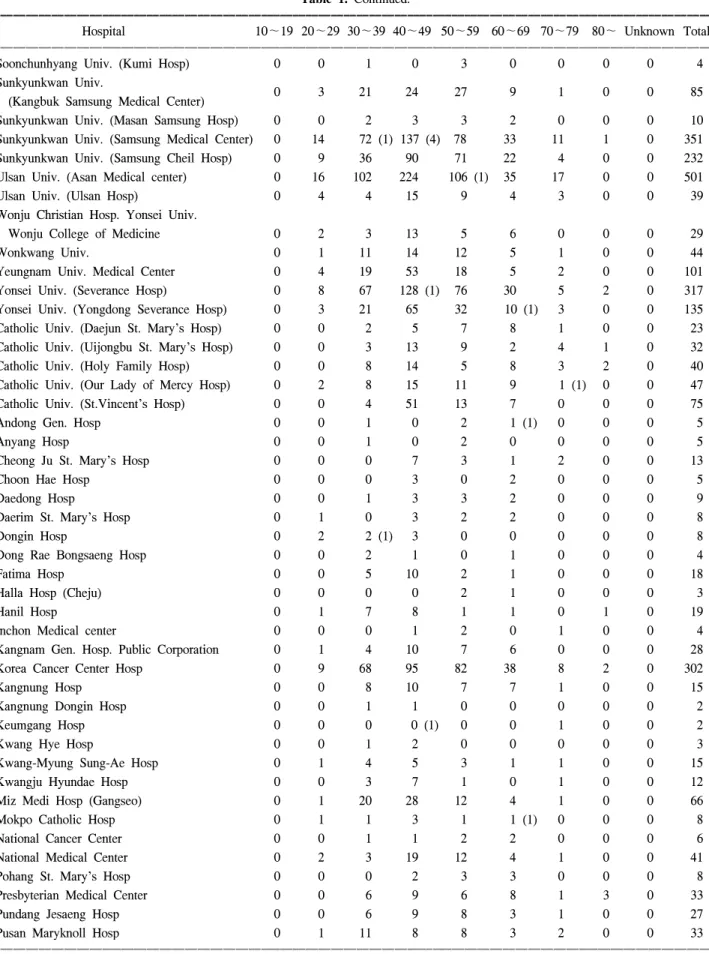
Table 1. Continued.
ꠚꠚꠚꠚꠚꠚꠚꠚꠚꠚꠚꠚꠚꠚꠚꠚꠚꠚꠚꠚꠚꠚꠚꠚꠚꠚꠚꠚꠚꠚꠚꠚꠚꠚꠚꠚꠚꠚꠚꠚꠚꠚꠚꠚꠚꠚꠚꠚꠚꠚꠚꠚꠚꠚꠚꠚꠚꠚꠚꠚꠚꠚꠚꠚꠚꠚꠚꠚꠚꠚꠚꠚꠚꠚꠚꠚꠚꠚꠚꠚꠚꠚꠚꠚꠚꠚꠚꠚꠚꠚꠚꠚꠚꠚꠚꠚꠚꠚꠚꠚꠚꠚꠚꠚꠚꠚꠚꠚꠚꠚꠚꠚꠚꠚꠚ
Hospital 10∼19 20∼29 30∼39 40∼49 50∼59 60∼69 70∼79 80∼ Unknown Total
ꠏꠏꠏꠏꠏꠏꠏꠏꠏꠏꠏꠏꠏꠏꠏꠏꠏꠏꠏꠏꠏꠏꠏꠏꠏꠏꠏꠏꠏꠏꠏꠏꠏꠏꠏꠏꠏꠏꠏꠏꠏꠏꠏꠏꠏꠏꠏꠏꠏꠏꠏꠏꠏꠏꠏꠏꠏꠏꠏꠏꠏꠏꠏꠏꠏꠏꠏꠏꠏꠏꠏꠏꠏꠏꠏꠏꠏꠏꠏꠏꠏꠏꠏꠏꠏꠏꠏꠏꠏꠏꠏꠏꠏꠏꠏꠏꠏꠏꠏꠏꠏꠏꠏꠏꠏꠏꠏꠏꠏꠏꠏꠏꠏꠏꠏ
Soonchunhyang Univ. (Kumi Hosp) 0 0 1 0 3 0 0 0 0 4
Sunkyunkwan Univ.
0 3 21 24 27 9 1 0 0 85
(Kangbuk Samsung Medical Center)
Sunkyunkwan Univ. (Masan Samsung Hosp) 0 0 2 3 3 2 0 0 0 10
Sunkyunkwan Univ. (Samsung Medical Center) 0 14 72 (1) 137 (4) 78 33 11 1 0 351
Sunkyunkwan Univ. (Samsung Cheil Hosp) 0 9 36 90 71 22 4 0 0 232
Ulsan Univ. (Asan Medical center) 0 16 102 224 106 (1) 35 17 0 0 501
Ulsan Univ. (Ulsan Hosp) 0 4 4 15 9 4 3 0 0 39
Wonju Christian Hosp. Yonsei Univ.
Wonju College of Medicine 0 2 3 13 5 6 0 0 0 29
Wonkwang Univ. 0 1 11 14 12 5 1 0 0 44
Yeungnam Univ. Medical Center 0 4 19 53 18 5 2 0 0 101
Yonsei Univ. (Severance Hosp) 0 8 67 128 (1) 76 30 5 2 0 317
Yonsei Univ. (Yongdong Severance Hosp) 0 3 21 65 32 10 (1) 3 0 0 135
Catholic Univ. (Daejun St. Mary's Hosp) 0 0 2 5 7 8 1 0 0 23
Catholic Univ. (Uijongbu St. Mary's Hosp) 0 0 3 13 9 2 4 1 0 32
Catholic Univ. (Holy Family Hosp) 0 0 8 14 5 8 3 2 0 40
Catholic Univ. (Our Lady of Mercy Hosp) 0 2 8 15 11 9 1 (1) 0 0 47
Catholic Univ. (St.Vincent's Hosp) 0 0 4 51 13 7 0 0 0 75
Andong Gen. Hosp 0 0 1 0 2 1 (1) 0 0 0 5
Anyang Hosp 0 0 1 0 2 0 0 0 0 5
Cheong Ju St. Mary's Hosp 0 0 0 7 3 1 2 0 0 13
Choon Hae Hosp 0 0 0 3 0 2 0 0 0 5
Daedong Hosp 0 0 1 3 3 2 0 0 0 9
Daerim St. Mary's Hosp 0 1 0 3 2 2 0 0 0 8
Dongin Hosp 0 2 2 (1) 3 0 0 0 0 0 8
Dong Rae Bongsaeng Hosp 0 0 2 1 0 1 0 0 0 4
Fatima Hosp 0 0 5 10 2 1 0 0 0 18
Halla Hosp (Cheju) 0 0 0 0 2 1 0 0 0 3
Hanil Hosp 0 1 7 8 1 1 0 1 0 19
Inchon Medical center 0 0 0 1 2 0 1 0 0 4
Kangnam Gen. Hosp. Public Corporation 0 1 4 10 7 6 0 0 0 28
Korea Cancer Center Hosp 0 9 68 95 82 38 8 2 0 302
Kangnung Hosp 0 0 8 10 7 7 1 0 0 15
Kangnung Dongin Hosp 0 0 1 1 0 0 0 0 0 2
Keumgang Hosp 0 0 0 0 (1) 0 0 1 0 0 2
Kwang Hye Hosp 0 0 1 2 0 0 0 0 0 3
Kwang-Myung Sung-Ae Hosp 0 1 4 5 3 1 1 0 0 15
Kwangju Hyundae Hosp 0 0 3 7 1 0 1 0 0 12
Miz Medi Hosp (Gangseo) 0 1 20 28 12 4 1 0 0 66
Mokpo Catholic Hosp 0 1 1 3 1 1 (1) 0 0 0 8
National Cancer Center 0 0 1 1 2 2 0 0 0 6
National Medical Center 0 2 3 19 12 4 1 0 0 41
Pohang St. Mary's Hosp 0 0 0 2 3 3 0 0 0 8
Presbyterian Medical Center 0 0 6 9 6 8 1 3 0 33
Pundang Jesaeng Hosp 0 0 6 9 8 3 1 0 0 27
Pusan Maryknoll Hosp 0 1 11 8 8 3 2 0 0 33
ꠏꠏꠏꠏꠏꠏꠏꠏꠏꠏꠏꠏꠏꠏꠏꠏꠏꠏꠏꠏꠏꠏꠏꠏꠏꠏꠏꠏꠏꠏꠏꠏꠏꠏꠏꠏꠏꠏꠏꠏꠏꠏꠏꠏꠏꠏꠏꠏꠏꠏꠏꠏꠏꠏꠏꠏꠏꠏꠏꠏꠏꠏꠏꠏꠏꠏꠏꠏꠏꠏꠏꠏꠏꠏꠏꠏꠏꠏꠏꠏꠏꠏꠏꠏꠏꠏꠏꠏꠏꠏꠏꠏꠏꠏꠏꠏꠏꠏꠏꠏꠏꠏꠏꠏꠏꠏꠏꠏꠏꠏꠏꠏꠏꠏꠏ
ꠏꠏꠏꠏꠏꠏꠏꠏꠏꠏꠏꠏꠏꠏꠏꠏꠏꠏꠏꠏꠏꠏꠏꠏꠏꠏꠏꠏꠏꠏꠏꠏꠏꠏꠏꠏꠏꠏꠏꠏꠏꠏꠏꠏꠏꠏꠏꠏꠏꠏꠏꠏꠏꠏꠏꠏꠏꠏꠏꠏꠏꠏꠏꠏꠏꠏꠏꠏꠏꠏꠏꠏꠏꠏꠏꠏꠏꠏꠏꠏꠏꠏꠏꠏꠏꠏꠏꠏꠏꠏꠏꠏꠏꠏꠏꠏꠏꠏ
December 2000 at hospitals in Korea. Nationwide, forty-one university hospitals and 69 surgical training hospitals were invited to participate in this study, and of these, excluding 3 university hospitals which had no breast cancer data by that time and 24 surgical training hospitals where data collection was difficult or which didnt reply, 38 university hospitals and 45 surgical training hospitals agreed to participate in the project. All data were received from participating hospitals in the form the recorded cancer registration sheets and information was arbitrarily grouped into essential and optional items. All participating hospitals answered the essential items including sex, age, the surgical method used, and the AJCC classification. The essential items were available for analysis in 5,401 patients. The optional items included symptoms and signs, physical findings, laboratory examination data, biologic markers, operative and histopathological findings, and risk
factors (optional data items are not presented in this article).
RESULTS 1) Sex and age distribution
There were 5,401 patients in total, 5,376 females (99.5%) and 25 males (0.5%) (Table 1). Thirty-nine percent were in their 40s (2,087 cases), 24.2% in the 50s (1,306 cases), 19.4%
in the 30s (1,045 cases), 10.9% in the 60s (588 cases), 2.9%
in the 70s (157 cases), 2.6% in the 20s (141 cases), 0.4% in the 80s (23 cases), and 0.1% in their second decade (3 cases).
Their median age was 46.0 years, the oldest was 87 years and the youngest 16 years (Table 2).
2) Operation methods
A total of 5,355 patients underwent operation. Modified Table 1. Continued.
ꠚꠚꠚꠚꠚꠚꠚꠚꠚꠚꠚꠚꠚꠚꠚꠚꠚꠚꠚꠚꠚꠚꠚꠚꠚꠚꠚꠚꠚꠚꠚꠚꠚꠚꠚꠚꠚꠚꠚꠚꠚꠚꠚꠚꠚꠚꠚꠚꠚꠚꠚꠚꠚꠚꠚꠚꠚꠚꠚꠚꠚꠚꠚꠚꠚꠚꠚꠚꠚꠚꠚꠚꠚꠚꠚꠚꠚꠚꠚꠚꠚꠚꠚꠚꠚꠚꠚꠚꠚꠚꠚꠚꠚꠚꠚꠚꠚꠚꠚꠚꠚꠚꠚꠚꠚꠚꠚꠚꠚꠚꠚꠚꠚꠚꠚ
Hospital 10∼19 20∼29 30∼39 40∼49 50∼59 60∼69 70∼79 80∼ Unknown Total
ꠏꠏꠏꠏꠏꠏꠏꠏꠏꠏꠏꠏꠏꠏꠏꠏꠏꠏꠏꠏꠏꠏꠏꠏꠏꠏꠏꠏꠏꠏꠏꠏꠏꠏꠏꠏꠏꠏꠏꠏꠏꠏꠏꠏꠏꠏꠏꠏꠏꠏꠏꠏꠏꠏꠏꠏꠏꠏꠏꠏꠏꠏꠏꠏꠏꠏꠏꠏꠏꠏꠏꠏꠏꠏꠏꠏꠏꠏꠏꠏꠏꠏꠏꠏꠏꠏꠏꠏꠏꠏꠏꠏꠏꠏꠏꠏꠏꠏꠏꠏꠏꠏꠏꠏꠏꠏꠏꠏꠏꠏꠏꠏꠏꠏꠏ
Pusan Medical Center 0 0 0 0 0 0 0 0 9 9
Pusan Adventist Hosp 0 0 0 1 0 0 0 0 0 1
Pusan St. Benedict's Hosp 0 0 1 7 4 1 0 0 0 13
Sejong Gen. Hosp 0 0 2 5 0 0 1 0 0 8
Seoul Adventist Hosp 0 0 4 7 2 0 0 0 0 13
Seoul Veterans Hosp 1 0 (1) 0 2 3 2 0 0 0 9
Shinseigae Seoul Breast Clinic 0 0 4 4 2 1 1 0 0 12
Sun Gen. Hosp 0 0 2 2 2 2 1 0 0 9
Sung-Ae Hosp 0 0 3 8 3 (1) 4 1 0 0 20
Sungnam Jungang Hosp 0 0 0 1 2 0 0 0 0 3
Sunlin Hosp. Handong Univ. 0 1 1 2 3 0 0 0 0 7
Ulsan Dong Kang Hosp 0 0 0 2 0 0 0 0 0 2
Wallace Memorial Baptist Hosp 0 0 3 11 10 2 0 0 0 26
ꠏꠏꠏꠏꠏꠏꠏꠏꠏꠏꠏꠏꠏꠏꠏꠏꠏꠏꠏꠏꠏꠏꠏꠏꠏꠏꠏꠏꠏꠏꠏꠏꠏꠏꠏꠏꠏꠏꠏꠏꠏꠏꠏꠏꠏꠏꠏꠏꠏꠏꠏꠏꠏꠏꠏꠏꠏꠏꠏꠏꠏꠏꠏꠏꠏꠏꠏꠏꠏꠏꠏꠏꠏꠏꠏꠏꠏꠏꠏꠏꠏꠏꠏꠏꠏꠏꠏꠏꠏꠏꠏꠏꠏꠏꠏꠏꠏꠏꠏꠏꠏꠏꠏꠏꠏꠏꠏꠏꠏꠏꠏꠏꠏꠏꠏ
Total 3 141 1,045 2,087 1,306 588 157 23 51 5,401
ꠏꠏꠏꠏꠏꠏꠏꠏꠏꠏꠏꠏꠏꠏꠏꠏꠏꠏꠏꠏꠏꠏꠏꠏꠏꠏꠏꠏꠏꠏꠏꠏꠏꠏꠏꠏꠏꠏꠏꠏꠏꠏꠏꠏꠏꠏꠏꠏꠏꠏꠏꠏꠏꠏꠏꠏꠏꠏꠏꠏꠏꠏꠏꠏꠏꠏꠏꠏꠏꠏꠏꠏꠏꠏꠏꠏꠏꠏꠏꠏꠏꠏꠏꠏꠏꠏꠏꠏꠏꠏꠏꠏꠏꠏꠏꠏꠏꠏꠏꠏꠏꠏꠏꠏꠏꠏꠏꠏꠏꠏꠏꠏꠏꠏꠏ ( ) for Male Breast Cancer.
Table 2. Age and sex distribution of Korean breast cancer patients in 2000
ꠚꠚꠚꠚꠚꠚꠚꠚꠚꠚꠚꠚꠚꠚꠚꠚꠚꠚꠚꠚꠚꠚꠚꠚꠚꠚꠚꠚꠚꠚꠚꠚꠚꠚꠚꠚꠚꠚꠚꠚꠚꠚꠚꠚꠚꠚꠚꠚꠚꠚꠚꠚꠚꠚꠚꠚꠚꠚꠚꠚꠚꠚꠚꠚꠚꠚꠚꠚꠚꠚꠚꠚꠚꠚꠚꠚꠚꠚꠚꠚꠚꠚꠚꠚꠚꠚꠚꠚꠚꠚꠚꠚꠚꠚꠚꠚꠚꠚꠚꠚꠚꠚꠚꠚꠚꠚꠚꠚꠚꠚꠚꠚꠚꠚꠚ
Age (years) 10∼19 20∼29 30∼39 40∼49 50∼59 60∼69 70∼79 80∼ Unk Total
ꠏꠏꠏꠏꠏꠏꠏꠏꠏꠏꠏꠏꠏꠏꠏꠏꠏꠏꠏꠏꠏꠏꠏꠏꠏꠏꠏꠏꠏꠏꠏꠏꠏꠏꠏꠏꠏꠏꠏꠏꠏꠏꠏꠏꠏꠏꠏꠏꠏꠏꠏꠏꠏꠏꠏꠏꠏꠏꠏꠏꠏꠏꠏꠏꠏꠏꠏꠏꠏꠏꠏꠏꠏꠏꠏꠏꠏꠏꠏꠏꠏꠏꠏꠏꠏꠏꠏꠏꠏꠏꠏꠏꠏꠏꠏꠏꠏꠏꠏꠏꠏꠏꠏꠏꠏꠏꠏꠏꠏꠏꠏꠏꠏꠏꠏ
Famale 3 140 1,043 2,080 1,301 583 153 22 51 5,376 (99.5%)
Male 0 1 2 7 5 5 4 1 0 25 (0.5%)
ꠏꠏꠏꠏꠏꠏꠏꠏꠏꠏꠏꠏꠏꠏꠏꠏꠏꠏꠏꠏꠏꠏꠏꠏꠏꠏꠏꠏꠏꠏꠏꠏꠏꠏꠏꠏꠏꠏꠏꠏꠏꠏꠏꠏꠏꠏꠏꠏꠏꠏꠏꠏꠏꠏꠏꠏꠏꠏꠏꠏꠏꠏꠏꠏꠏꠏꠏꠏꠏꠏꠏꠏꠏꠏꠏꠏꠏꠏꠏꠏꠏꠏꠏꠏꠏꠏꠏꠏꠏꠏꠏꠏꠏꠏꠏꠏꠏꠏꠏꠏꠏꠏꠏꠏꠏꠏꠏꠏꠏꠏꠏꠏꠏꠏꠏ
Total 3 141 1,045 2,087 1,306 588 157 23 51 5,401
ꠏꠏꠏꠏꠏꠏꠏꠏꠏꠏꠏꠏꠏꠏꠏꠏꠏꠏꠏꠏꠏꠏꠏꠏꠏꠏꠏꠏꠏꠏꠏꠏꠏꠏꠏꠏꠏꠏꠏꠏꠏꠏꠏꠏꠏꠏꠏꠏꠏꠏꠏꠏꠏꠏꠏꠏꠏꠏꠏꠏꠏꠏꠏꠏꠏꠏꠏꠏꠏꠏꠏꠏꠏꠏꠏꠏꠏꠏꠏꠏꠏꠏꠏꠏꠏꠏꠏꠏꠏꠏꠏꠏꠏꠏꠏꠏꠏꠏꠏꠏꠏꠏꠏꠏꠏꠏꠏꠏꠏꠏꠏꠏꠏꠏꠏ
% 0.1 2.6 19.4 38.7 24.2 10.9 2.9 0.4 0.8 100
ꠏꠏꠏꠏꠏꠏꠏꠏꠏꠏꠏꠏꠏꠏꠏꠏꠏꠏꠏꠏꠏꠏꠏꠏꠏꠏꠏꠏꠏꠏꠏꠏꠏꠏꠏꠏꠏꠏꠏꠏꠏꠏꠏꠏꠏꠏꠏꠏꠏꠏꠏꠏꠏꠏꠏꠏꠏꠏꠏꠏꠏꠏꠏꠏꠏꠏꠏꠏꠏꠏꠏꠏꠏꠏꠏꠏꠏꠏꠏꠏꠏꠏꠏꠏꠏꠏꠏꠏꠏꠏꠏꠏꠏꠏꠏꠏꠏꠏꠏꠏꠏꠏꠏꠏꠏꠏꠏꠏꠏꠏꠏꠏꠏꠏꠏ Unk = unknown. Youngest 16; Oldest 87; Median 46.0.
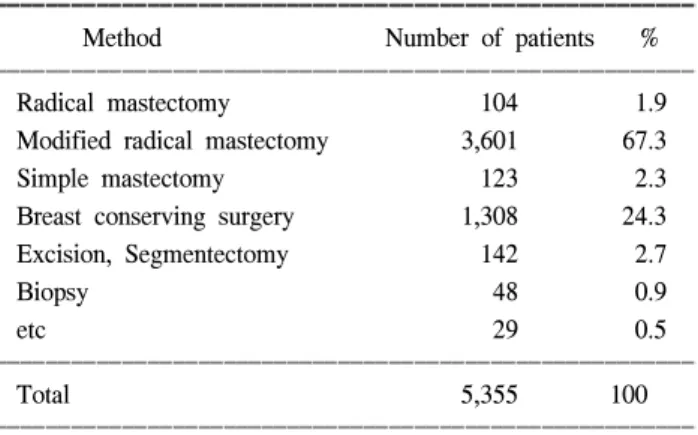
radical mastectomy was the most frequently used method and was conducted in 3,601 cases (67.3%). Breast-conserving sur- gery was performed in 1,450 cases (27.0%), simple mastectomy in 123 cases (2.3%), and radical mastectomy in 104 cases (1.9%). Of 1,450 cases treated with breast conserving surgery, lumpectomy or quadrantectomy with axillary dissection was performed in 1,308 cases (24.3%), and tumor resection only or segmentectomy without axillary dissection was performed in 142 cases (2.7%). Tissue biopsy was performed in 48 cases (0.9%) and other pathological methods were used in 29 cases (0.5%) (Table 3).
3) Staging according to American Joint Committee on Cancer (AJCC) classification
Excluding patients whose cancer staging was uncertain and other breast malignancies such as malignant phyllodes tumor and lymphoma, the breast cancer stages of 4,412 patients were:
Stage 0 in 273 cases (6.2%), stage I in 1,118 (25.3%), IIA in 1,432 (32.5%), IIB in 897 (20.3%), IIIA in 484 (11.0%), IIIB in 112 (2.5%), and IV in 96 cases (2.2%). The proportion of early cancer with stages 0 or I was 31.5% and stage II cancer was the most prevalent (52.8%) (Table 4).
DISCUSSION
The breast has ranked the second most common site of primary cancer in women in Korea since 1998, according to the Ministry of Health and Welfare (the Central Cancer Registry Program) and among female cancers, the proportion of breast cancer has steadily increased from 9.3% in 1982 to 15.1% in 2000.(1) According to Central Cancer Registry Programs annual reports cancers of the breast, colon, lung, and of the liver are on the increase but gastric and cervical cancers are decreasing. Such trends in cancer epidemiology in Korea could be, at least in part, related to a changing pattern of life-style toward that of the western countries. The incidence of breast cancer is known to be increasing everywhere in the world. Worldwide, an estimate of the incidence for the year 2000 is close to one million new cases per year reflecting an increase of 23.9% for the period from 1990 to 2000 or over 2% per year.(2) Worldwide, breast cancer is the second most common cancer among women, and, it is the most common cancer in women in developed countries such as the United States. Even in relatively low-incidence zones, such as China, India, and some South American countries, breast cancer is still the second most common cancer. In Japan, breast cancer has recently shifted to become the most common cancer in women, and this increased incidence has been related to older mothers at the first delivery, a rich intake of animal fat, and the increased use of mammographical screening.(3)
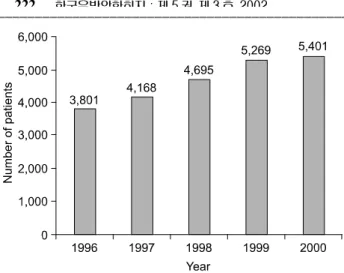
The KBCS has been conducting annual nationwide breast cancer surveys since 1996. These surveys have revealed that the numbers of new breast cancer patients have continuously increased from 3,801 patients in 1996,(4) through 4,168 in 1997 (5) and 4,695 in 1998 (6) to 5,401 in 2000 (Fig. 1). The crude incidence has also increased to 23 per 100,000 women year in 2000 from 16.7 in 1996 through 20.3 in 1998, although these incidences are nevertheless considerably lower than the world average (29.8 per 100,000 women). The present study revealed that the age distribution of breast cancer peaks in the 40s, which is followed by the 50s and 30s (Fig. 2). This distribution
Table 4. AJCC staging of Korean breast cancer patients in 2000
ꠚꠚꠚꠚꠚꠚꠚꠚꠚꠚꠚꠚꠚꠚꠚꠚꠚꠚꠚꠚꠚꠚꠚꠚꠚꠚꠚꠚꠚꠚꠚꠚꠚꠚꠚꠚꠚꠚꠚꠚꠚꠚꠚꠚꠚꠚꠚꠚꠚꠚꠚꠚꠚꠚꠚꠚꠚꠚꠚꠚꠚꠚꠚꠚꠚꠚꠚꠚꠚꠚꠚꠚꠚꠚꠚꠚꠚꠚꠚꠚꠚꠚꠚꠚꠚꠚꠚꠚꠚꠚꠚꠚꠚꠚꠚꠚꠚꠚꠚꠚꠚꠚꠚꠚꠚꠚꠚꠚꠚꠚꠚꠚꠚꠚꠚ
Stage 0 I IIA IIB IIIA IIIB IV Total
ꠏꠏꠏꠏꠏꠏꠏꠏꠏꠏꠏꠏꠏꠏꠏꠏꠏꠏꠏꠏꠏꠏꠏꠏꠏꠏꠏꠏꠏꠏꠏꠏꠏꠏꠏꠏꠏꠏꠏꠏꠏꠏꠏꠏꠏꠏꠏꠏꠏꠏꠏꠏꠏꠏꠏꠏꠏꠏꠏꠏꠏꠏꠏꠏꠏꠏꠏꠏꠏꠏꠏꠏꠏꠏꠏꠏꠏꠏꠏꠏꠏꠏꠏꠏꠏꠏꠏꠏꠏꠏꠏꠏꠏꠏꠏꠏꠏꠏꠏꠏꠏꠏꠏꠏꠏꠏꠏꠏꠏꠏꠏꠏꠏꠏꠏ
Number of patients 273 1,118 1,432 897 484 112 96 4,412
% 6.2 25.3 32.5 20.3 11.0 2.5 2.2 100
ꠏꠏꠏꠏꠏꠏꠏꠏꠏꠏꠏꠏꠏꠏꠏꠏꠏꠏꠏꠏꠏꠏꠏꠏꠏꠏꠏꠏꠏꠏꠏꠏꠏꠏꠏꠏꠏꠏꠏꠏꠏꠏꠏꠏꠏꠏꠏꠏꠏꠏꠏꠏꠏꠏꠏꠏꠏꠏꠏꠏꠏꠏꠏꠏꠏꠏꠏꠏꠏꠏꠏꠏꠏꠏꠏꠏꠏꠏꠏꠏꠏꠏꠏꠏꠏꠏꠏꠏꠏꠏꠏꠏꠏꠏꠏꠏꠏꠏꠏꠏꠏꠏꠏꠏꠏꠏꠏꠏꠏꠏꠏꠏꠏꠏꠏ Table 3. Operation method undertaken for Korean breast cancer
patients in 2000
ꠚꠚꠚꠚꠚꠚꠚꠚꠚꠚꠚꠚꠚꠚꠚꠚꠚꠚꠚꠚꠚꠚꠚꠚꠚꠚꠚꠚꠚꠚꠚꠚꠚꠚꠚꠚꠚꠚꠚꠚꠚꠚꠚꠚꠚꠚꠚꠚꠚꠚꠚꠚꠚꠚꠚ
Method Number of patients %
ꠏꠏꠏꠏꠏꠏꠏꠏꠏꠏꠏꠏꠏꠏꠏꠏꠏꠏꠏꠏꠏꠏꠏꠏꠏꠏꠏꠏꠏꠏꠏꠏꠏꠏꠏꠏꠏꠏꠏꠏꠏꠏꠏꠏꠏꠏꠏꠏꠏꠏꠏꠏꠏꠏꠏ
Radical mastectomy 104 1.9
Modified radical mastectomy 3,601 67.3
Simple mastectomy 123 2.3
Breast conserving surgery 1,308 24.3
Excision, Segmentectomy 142 2.7
Biopsy 48 0.9
etc 29 0.5
ꠏꠏꠏꠏꠏꠏꠏꠏꠏꠏꠏꠏꠏꠏꠏꠏꠏꠏꠏꠏꠏꠏꠏꠏꠏꠏꠏꠏꠏꠏꠏꠏꠏꠏꠏꠏꠏꠏꠏꠏꠏꠏꠏꠏꠏꠏꠏꠏꠏꠏꠏꠏꠏꠏꠏ
Total 5,355 100
ꠏꠏꠏꠏꠏꠏꠏꠏꠏꠏꠏꠏꠏꠏꠏꠏꠏꠏꠏꠏꠏꠏꠏꠏꠏꠏꠏꠏꠏꠏꠏꠏꠏꠏꠏꠏꠏꠏꠏꠏꠏꠏꠏꠏꠏꠏꠏꠏꠏꠏꠏꠏꠏꠏꠏ
ꠏꠏꠏꠏꠏꠏꠏꠏꠏꠏꠏꠏꠏꠏꠏꠏꠏꠏꠏꠏꠏꠏꠏꠏꠏꠏꠏꠏꠏꠏꠏꠏꠏꠏꠏꠏꠏꠏꠏꠏꠏꠏꠏꠏꠏꠏꠏꠏꠏꠏꠏꠏꠏꠏꠏꠏꠏꠏꠏꠏꠏꠏꠏꠏꠏꠏꠏꠏꠏꠏꠏꠏꠏꠏꠏꠏꠏꠏꠏꠏꠏꠏꠏꠏꠏꠏꠏꠏꠏꠏꠏꠏꠏꠏꠏꠏꠏꠏ
pattern has not changed since the initial survey made in 1996.
This curve shape has also been observed in other Asian countries. In contrast, the age distribution in the United States and in other western countries presents as a linear increase with age, with a peak age some 20∼30 years older than in Korea.
Unlike the United States, the population in our study included more premenopausal women than postmenopausal women. The American Cancer Society reported that the proportion of patients above 50 yr was 76.8% of all breast cancer patients with a peak incidence in the 70s.(7)
The incidence of male breast cancer in our series was 0.5%
(25 cases), which is lower than the 1% reported in western countries.
Regarding the types of surgery used in our series, breast- conserving surgery including wide excision and segmentectomy was performed in 27%, reflecting an increase of nearly 10%
since 1996. Based on the data collected during 10-year national
survey of breast carcinoma treatment at United States hospitals,
the American College of Surgeons Commission on Cancer and the American Cancer Society reported that a dramatic shift in the surgical treatment of breast carcinoma had occurred over the last 10 years.(8) The study revealed an increase in breast conserving surgery from 22% to 45.7%, which contrasted with a decreased use of modified radical mastectomies from 56.5%
to 42.8% in United States. Robert et al.(9) reporting on an Edinburgh study found that 25∼31% of patients received breast-conserving surgery. The National Cancer Institute Con- sensus Conference in 1990 indicated that breast-conserving surgery for stage I and stage II breast cancer resulted in no different overall and disease-free survival rate compared to radical surgery, but proved that the technique has less surgical complications and a better cosmetic effect.(10) It appears that breast-conserving surgery is also on the rise in Korea. The present study showed that mastectomy was performed most frequently, but that it is decreasing proportionately (79.7% in 1996 and 71.6% in 2000). On the other hand, breast-conserving surgery has been slowly increasing from 18.7% in 1996, 19.9%
in 1997, 23.8% in 1998, and 24.0% in 1999 to 27.0% in 2000 (Fig. 3). Such an increase is expected to continue as early detection measures including ultrasonographic and mammo- graphic screenings, reinforced with sono-guided biopsy, are Fig. 1. Annual number of breast cancer patients in Korea.
Fig. 2. Age distribution of Korean breast cancer patients in 2000.
Fig. 3. Operation method undertaken for breast cancer patients in Korea by year (%).
Fig. 4. The proportion of early breast cancer (stage 0 and I) in Korea by year (%).
more widely practiced.
Comparisons with previous nationwide surveys show that there has been a striking increase in the percentage of stage 0 and I tumors, i.e., from 23.8% in 1996 to 31.5% in 2000 (Fig. 4). In addition, increased early breast cancer detection using screening mammography seems to have helped increase the rate of DCIS from 4.2% in 1996 to 6% in 2000. Several studies performed in Korea, including our own,(11-14) indicate that breast cancer is most frequently diagnosed at stage II (31.8∼59.9%), whereas early cancer is detected in 9.3∼33%.
This rate is considerably lower than that in Western countries.
Bland et al. reported that the sum of stage 0 and I breast cancers was markedly increased from 42.5% in 1985 to 56.2%
in 1995 in the United States.(8)
Concerning the risk factors of breast cancer in Korea, the main epidemiological risk factors can be explained by the estrogen-augmented-by-progesterone hypothesis.(15) Thus, epi- demiologic studies performed in Korea (16) have shown that older age, a family history of breast cancer, early menarche, late menopause, a late full-term delivery, and of never-having a breast-fed child are the primary risk factors of breast cancer.
The incidence of patients having menarche starting before 13 years increased from 8% in 1996 through 10.2% in 1998 to 11.8% in 2000 (Table 5). The incidence of patients having menopause after 55 years also increased from 6.5% in 1996 through 0.2% in 1998 to 11.7% in 2000. The incidence of patients having a late first-delivery, of after 30 years of age, increased from 11.1% in 1996 to 12.3% in 2000. In post- menopausal women who had experienced a full term pregnancy and breast-feeding, a 4- to 7-fold reduction in risk was ob- served.(17) Moreover, this risk was negatively associated with the duration of breast-feeding. There was no increase in the number of patients who had breast fed in our study. The
incidence of patients with a family history of breast cancer in the present study was 4.8%, which is slightly higher than the 3.2% of 1996 and almost the same as the 5% of 1998.
A case-control study in Korea revealed that postmenopausal obesity is an important risk factor for the development of breast cancer, and that this may be related to the estrogen-augmented- by-progesterone hypothesis.(18) Obesity has been related to early menarche and late menopause.(19) The proportion of patients with obesity (BMI over 25) was 25.8% in this study.
Yoo et al. reported a positive correlation between breast cancer incidence and foods of animal origin, and a negative correlation between breast cancer and foods of vegetable origin.(20) It is presumed that a high-fat diet may contribute, perhaps indirectly, to the development of breast cancer. The present study showed a moderate increase in the incidence of patients on a high-fat diet from 5.6% in 1996 to 8.5% in 2000. Although the incidence in Korea is much lower than in Western countries, our survey findings suggest that there is no difference in breast cancer risk factors between Korea and Western countries. The rate of breast cancer development in Korea is expected to rise with an increase in high-caloric fat diets, due to the wester- nization of the Korean diet, fewer deliveries, and older age at the first-delivery. On an case-control study on risk factors of breast cancer among Korean, Ahn et al.(21) reported that there are similar risk factor profiles to those of other ethnic groups about the reproductive factors, such as parity, the age of the first full-term pregnancy, and obesity. However, definite result on effect of dietary factors of breast cancer was not observed on multivariate analysis in that study. The American Cancer Society reported that the currently known risk factors explain breast cancer in only one fourth of patients, and that therefore, further research is needed on risk factors.(22) In this context, it is encouraging that guidelines for the screening of breast cancer have been drawn by the Korean Breast Cancer Society.
It is essential that a nationwide survey of actual survival rate be conducted to ensure the appropriate and cost-effective treatment of breast cancer patients.
CONCLUSION
The Korean Breast Cancer Society has been conducting a nationwide survey on breast cancer, its clinical characteristics and epidemiology since 1996. Compared to the 1996 and 1998 surveys, the present study shows that there has been a continuous increase in the incidence of breast cancer, a decrease in the use of mastectomy and a corresponding increase in breast conserving surgery, an increase in the proportion of early Table 5. Proportion of breast cancer patients having risk factors
in Korea by year
ꠚꠚꠚꠚꠚꠚꠚꠚꠚꠚꠚꠚꠚꠚꠚꠚꠚꠚꠚꠚꠚꠚꠚꠚꠚꠚꠚꠚꠚꠚꠚꠚꠚꠚꠚꠚꠚꠚꠚꠚꠚꠚꠚꠚꠚꠚꠚꠚꠚꠚꠚꠚꠚꠚꠚ
Risk factor (%) 1996 1998 2000
ꠏꠏꠏꠏꠏꠏꠏꠏꠏꠏꠏꠏꠏꠏꠏꠏꠏꠏꠏꠏꠏꠏꠏꠏꠏꠏꠏꠏꠏꠏꠏꠏꠏꠏꠏꠏꠏꠏꠏꠏꠏꠏꠏꠏꠏꠏꠏꠏꠏꠏꠏꠏꠏꠏꠏ
Early menarche (<13) 8.0 7.7 11.8
Late menopause (>55) 6.5 10.2 11.7
Late first-delivery (>30) 11.1 10.2 12.3
No child 9.0 7.0 7.9
Unmarried 5.1 4.3 4.9
Milk feeding 21.2 17.8 20.7
High fat diet 5.6 7.1 8.5
Family history 3.2 5.0 4.8
Obesity (BMI>25) 31.7 32.5 25.8
ꠏꠏꠏꠏꠏꠏꠏꠏꠏꠏꠏꠏꠏꠏꠏꠏꠏꠏꠏꠏꠏꠏꠏꠏꠏꠏꠏꠏꠏꠏꠏꠏꠏꠏꠏꠏꠏꠏꠏꠏꠏꠏꠏꠏꠏꠏꠏꠏꠏꠏꠏꠏꠏꠏꠏ
ꠏꠏꠏꠏꠏꠏꠏꠏꠏꠏꠏꠏꠏꠏꠏꠏꠏꠏꠏꠏꠏꠏꠏꠏꠏꠏꠏꠏꠏꠏꠏꠏꠏꠏꠏꠏꠏꠏꠏꠏꠏꠏꠏꠏꠏꠏꠏꠏꠏꠏꠏꠏꠏꠏꠏꠏꠏꠏꠏꠏꠏꠏꠏꠏꠏꠏꠏꠏꠏꠏꠏꠏꠏꠏꠏꠏꠏꠏꠏꠏꠏꠏꠏꠏꠏꠏꠏꠏꠏꠏꠏꠏꠏꠏꠏꠏꠏꠏ cancer, and an increase in the number of patients with risk
factors, such as early menarche, late menopause, late first- delivery, and a high fat diet. These results suggest that breast cancer in Korea is set to continuously increase in the future and that the pattern of breast cancer in Korea is perhaps changing to that observed in Western countries.
REFERENCES
1) Ministry of Health and Welfare, Republic of Korea. Annual report of cancer registry programme in the Republic of Korea (2000.1 2000.12), 2002.
2) Farbers JF. The incidence of breast cancer: The global burden, Public Health Considerations. Semin Oncol 1997;24(Suppl I):
S1-20.
3) Kobayashi S. Trend of breast cancer clinic in Japan. The third biennial meeting of the Asian Breast Cancer Society (abstract) 2001:73.
4) The Korean Breast Cancer Study Group. Korean breast cancer data of 1996. J of Kor Sur Soc 1998;55:621-35.
5) The Korean Breast Cancer Society. Korean breast cancer data of 1997. J Korean Cancer Assoc 1999;31:1202-9.
6) The Korean Breast Cancer Society. Clinical characteristics of Korean breast cancer patients in 1998. J Korean Med Sci 2000;
15:569-79.
7) Parker SL, Tong T, Bolden S, Wingo PA. Cancer Statistics, 1997. CA Cancer J Clin 1997;47:5-27.
8) Bland IB, Menck HR, Scott-Conner CEH, Morrow M, Win- chester DJ, Winchester DP. The national cancer data base 10-year survey of breast cancer treatment at hospitals in the United States. Am Cancer Soc 1998;83:1262-73.
9) Robert MM, Alexander FE, Anderson TJ, Chetty U, Donnan PT, Forrest P, et al. Edinburgh trial of screening for breast cancer: mortality at seven years. Lancet 1990;335:241-6.
10) NIH Consensus conference. Treatment of early-stage breast cancer. JAMA 1991:265:391-5.
11) Son BH, Yoon HS, Kwak HS, Lee PC, Ko BK, Kim JS, et
al. Clinical analysis of breast cancer surgeries in Korea. J Korean Surg Soc 2001:60;470-6.
12) Min BS, Park CH, Bae SD. Clinical Study of the Breast Cancer. J Korean Surg Soc 1996;50:202-9.
13) Chun HK, Lee CH, Choi KH, Lee SD, Park YH. A Clinical Study & Late Results of Breast Cancer. J Korean Surg Soc 1995;48:170-9.
14) Oh SS, Lee CH, Choi EH, Park YG, Chung YS. Comparative Analysis of Results in Surgical Management of Breast Cancer.
J Korean Surg Soc 1990;39:304-12.
15) Pike MC, Spicer DV, Dahmoush L, Press MF. Estrogens, progesterones, normal breast cancer cell proliferation, and breast cancer risk. Epidemiol Rev 1993:15;17-35.
16) Yoo KY, Park SK, Sung JH, Kang D, Kim YC, Kang HS, et al. High risk group for female breast cancer in Korea. J Korean Cancer Assoc 1998:30;435-9.
17) Yoo KY, Kang D, Park SK, Kim SU, Shin A, Yoon H, et al. Epidemiology of breast cancer in Korea: occurrence, high-risk groups, and prevention. J Korean Med Sci 2002:17;
1-6.
18) Joo JS, Yoo KY, Shin MH, Noh DY, Choe KJ. Overweight related to the risk of breast cancer by menopausal status in Korea. J Korean Surg Soc 1994;46:937-48.
19) Yoo KY, Bae JM, Park ES, Ha MN, Suh JS, Noh DY, et al.
Obesity as a determinant of age at menarche and age at menopause in a cross-sectional survey in Yonchon County, Korea. Seoul J Med 1995;36:137-54.
20) Yoo KY, Kim DH, Shin MH, Noh DY, Choe KJ. Ecological correlation study on nutrients/foods intake and mortality for female breast cancer in Korea. Seoul J Med 1993;34:17-25.
21) Ahn SH, Park GC, Yun YY, Lee MS, Kim YS, Kim MK, et al. A Case-Control Study on the Risk Factors of Breast Cancer in Korea. J Korean Surg Soc 1996;50:26-35.
22) Seidman H, Stellman SD, Mushinski MH. A different pro- spective on breast cancer risk factors: some implications of the non-attributable risk. New York. American Cancer Society Professional Education Publication, 1983.