Urogenit Tract Infect 2019;14(2):55-59
http://crossmark.crossref.org/dialog/?doi=10.14777/uti.2019.14.2.55&domain=pdf&date_stamp=2019-8-25
Gabapentin for the Treatment of Chronic Pelvic Pain Syndrome in Patients with High Pain Score
Seok Cho, In-Rae Cho
Department of Urology, Inje University Ilsan Paik Hospital, Inje University College of Medicine, Goyang, Korea
Purpose: The underlying pathogenic mechanisms of chronic pelvic pain syndrome (CPPS) are unclear. A growing body of evidence suggests that the urogenital pain of CPPS may be neuropathic in origin. The objective of this study was to determine if gabapentin can be an effective treatment for the symptoms of CPPS with severe pain.
Materials and Methods: Thirty five males with CPPS (category IIIa 25, IIIb 10) and the National Institutes of Health Chronic Prostatitis Symptom Index (NIH-CPSI) total pain score ≥9 in the previous six months were enrolled in this study between October 2010 and December 2011. The dosage of gabapentin was increased from 300 mg/d to 600 mg/d during the first four weeks. The primary outcome was evaluated as an improvement in the NIH-CPSI from the baseline to week eight.
Results: This study examined 35 males with CPPS and a mean age of 54.2±9.8 years, mean disease duration of 34.2±27.7 months, and a mean prostate volume of 24.9±5.3 ml. The decrease in the total NIH-CPSI pain domain at four weeks was significant with no change observed after eight weeks. Between the category IIIa and IIIb CPPS patients, the change in the total pain domain was not significant.
Conclusions: Gabapentin may be effective in some males with CPPS who have a high pain score. More gabapentin may be useless and possibly harmful if gabapentin does not decrease the pain at four weeks.
Keywords: Chronic prostatitis with chronic pelvic pain syndrome; Gabapentin;
Pain; Prostatitis
Copyright 2019, Korean Association of Urogenital Tract Infection and Inflammation. All rights reserved.
This is an open access article distributed under the terms of the Creative Commons Attribution Non-Commercial License (http://creativecommons.org/licenses/by-nc/4.0) which permits unrestricted non-commercial use, distribution, and reproduction in any medium, provided the original work is properly cited.
Received: 26 July, 2019 Revised: 14 August, 2019 Accepted: 21 August, 2019
Correspondence to: In-Rae Cho
https://orcid.org/0000-0002-6331-5806 Department of Urology, Inje University Ilsan Paik Hospital, 170 Juhwa-ro, Ilsanseo-gu, Goyang 10380, Korea
Tel: +82-31-910-7230, Fax: +82-31-910-7239 E-mail: [email protected]
Original Article
INTRODUCTION
Prostatitis is the most common urological disease in young male patients [1]. Chronic prostatitis (CP) presents as uro- genital pain, voiding problems, and/or sexual dysfunction [2]. CP/chronic pelvic pain syndrome (CPPS) is more com- mon than chronic bacterial prostatitis, comprising more than 90% of CP cases [3].
Despite the high prevalence of CP/CPPS, most clinicians face difficulties in its diagnosis and treatment and have
significantly more problems managing prostatitis than pro- state cancer [4]. Most clinicians want simplified guidelines for the management of prostatitis, but appropriate evidence- based treatment guidelines for CP/CPPS are unavailable.
One of the reasons why it is difficult to establish treatment
guidelines is that the pathophysiology of CP/CPPS is not
completely understood. On the other hand, CP/CPPS appears
to be caused by stimuli, such as infection, urine reflux or
trauma in anatomically or genetically susceptible patients,
and is associated with local and central neuropathic
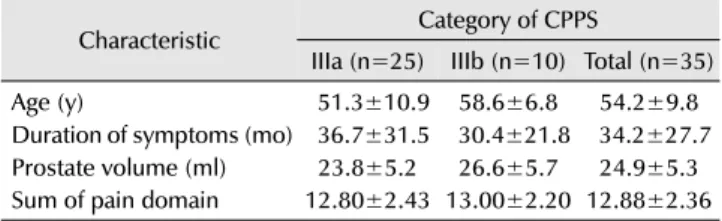
Table 1. Baseline characteristics of the patients
Characteristic Category of CPPS
IIIa (n=25) IIIb (n=10) Total (n=35)
Age (y) 51.3±10.9 58.6±6.8 54.2±9.8
Duration of symptoms (mo) 36.7±31.5 30.4±21.8 34.2±27.7 Prostate volume (ml) 23.8±5.2 26.6±5.7 24.9±5.3 Sum of pain domain 12.80±2.43 13.00±2.20 12.88±2.36 Values are presented as mean±standard deviation.
CPPS: chronic pelvic pain syndrome.
mechanisms involving areas outside the prostate or pelvic area [5,6]. CP/CPPS patients with neuropathic pain related to central nervous system sensitization respond to gaba- pentinoids in other chronic pain conditions, such as diabetic peripheral neuropathy or post-herpetic neuralgia [7].
This study examined the effects of gabapentin on CP/CPPS patients with severe pain that could not be controlled by traditional methods.
MATERIALS AND METHODS
1. Study Design
This was a prospective study design. After obtaining approval from the institutional review board, data were gathered prospectively between October 2010 and December 2011. Written informed consent was obtained from all patients prior to study enrollment. The inclusion criteria were as follows: age ≥18 years, symptoms of discomfort or pain in the pelvic region for the past six months, and National Institutes of Health Chronic Prostatitis Symptom Index (NIH-CPSI) question 4 score ≥9 out of 10. Patients with white blood cells in the urine or semen ( >5 to 9/high power field) were grouped into category IIIa. Patients with no white blood cells in the urine or semen ( <1 to 4/high powered field) were grouped into category IIIb. Patients with bacteriuria in the urine culture (category II) were excluded.
Patients were also excluded if they had chronic renal disease (calculated creatinine clearance <60 mL/min/1.73 m
2), congestive heart failure (New York Heart Association class III or IV), thrombocytopenia ( <100,000/l), bleeding diathesis, history of alcohol abuse, allergy to any anti-seizure medication, or sensitivity to gabapentinoids. A total of 35 CPPS male patients (category IIIa 25, IIIb 10) were enrolled in this study.
The gabapentin dosage was increased to 300 mg/d (100 mg orally three times daily) for two weeks, and then to 600 mg/d (200 mg orally three times daily) for two weeks if the patient was unsatisfied with the effects. When the appro- priate dosage was determined, it was maintained for eight weeks.
The patients completed the NIH-CPSI questionnaire, which contains questions regarding the severity of pain, voiding symptoms, and the quality of life impact at the baseline, and after four and eight weeks of treatment. The primary outcome was defined as a decrease (improvement) in the
NIH-CPSI pain domain ≤2 points from baseline to week eight.
2. Statistical Analysis
Statistical analyses were performed using IBM SPSS Statistics version 20.0 (IBM Corp., Armonk, NY, USA), and all reported p-values were two-sided with p<0.05 con- sidered significant. A Mann –Whitney U-test was applied to assess the differences in the continuous variables between the groups. The changes in the measurements over time between the groups were analyzed using the repeated measures analysis of variation and generalized linear model- repeated measures.
RESULTS
Twenty five patients (71.4%) had inflammatory CP/CPPS (category IIIa) and 10 patients (28.6%) had non-inflammatory CP/CPPS (category IIIb). The mean patient age was 51.3±
10.9 years, 58.6±6.8 years, and 54.2±9.8 in categories IIIa and IIIb and the total patients, respectively. The mean duration of the CPPS symptoms in category IIIa, IIIb groups and total patients was 36.7±31.5 months, 30.4±21.8 months, and 34.2±27.7 months, respectively. The prostate size in category IIIa and IIIb and total patients was 23.8±5.2 ml, 26.6±5.7 ml, and 24.9±5.3 ml, respectively. The mean NIH- CPSI pain domain in category IIIa and IIIb and total patients was 12.80±2.43, 13.00±2.20, and 12.88±2.36, respectively. No significant differences were observed between categories IIIa and IIIb with respect to the baseline characteristics. Table 1 lists the baseline patient characteristics.
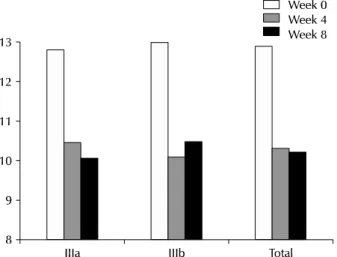
Table 2 presents the changes in the NIH-CPSI pain domain
from the baseline to the four and eight weeks of gabapentin
treatment. The NIH-CPSI pain score had improved signifi-
cantly in categories IIIa and IIIb by week four [-2.33±3.38
(p=0.0124) and -2.90±2.32 (p=0.0369), respectively]. In the
Table 2. Outcome measurements based on the NIH-CPSI pain domain at baseline, four weeks and four weeks Category of CPPS Sum of pain domain (differences from baseline)
Baseline At 4 weeks p-value
a)At 8 weeks p-value
b)p-value
c)IIIa (n=25) 12.80±2.43 10.47±3.77 (2.33±3.38) 0.0124 10.07±3.65 (2.73±3.22) 0.0031 0.7048 IIIb (n=10) 13.00±2.20 10.10±3.50 (2.90±2.32) 0.0369 10.50±4.30 (2.50±3.40) 0.1190 0.8221 Total (n=35) 12.88±2.36 10.32±3.67 (2.56±2.97) 0.0009 10.24±3.93 (2.64±3.31) 0.0011 0.9301 Values are presented as mean±standard deviation.
NIH-CPSI: National Institutes of Health Chronic Prostatitis Symptom Index, CPPS: chronic pelvic pain syndrome.
a)
Difference between baseline and 4 weeks;
b)difference between baseline and 8 weeks;
c)difference between four weeks and four weeks;
a-c)