http://crossmark.crossref.org/dialog/?doi=10.4111/kju.2014.55.10.629&domain=pdf&date_stamp=2014-10-16
Review Article
Current Status of Radical Prostatectomy for High-Risk Prostate Cancer
Ho Won Kang1, Joo Yong Lee1, Jong Kyou Kwon1, Seong Uk Jeh1, Hae Do Jung1, Young Deuk Choi1,2
1Department of Urology, Severance Hospital, Urological Science Institute, Yonsei University College of Medicine, Seoul,
2Robot and Minimal Invasive Surgery Center, Severance Hospital, Yonsei University College of Medicine, Seoul, Korea
Despite the wide application of prostate-specific antigen-based screening leading to a profound stage migration in prostate cancer (PC), a significant percentage of men are still being diagnosed with clinically high-risk disease that requires aggressive treatment. Optimal management in these patients remains challenging, and strong advocates for radical prostatectomy (RP), radiotherapy, androgen deprivation therapy, and, increasingly, a multimodal approach abound. Currently, surgery for high-risk PC is frequently applied. RP offers an attractive opportunity for tumor excision either as a definitive management or as a first step in multimodal therapy. Nevertheless, this approach is still controversial. In this review, we discuss the current evidence for the role of RP in this clinical setting, including surgical considerations and outcomes. The role of robot-assisted RP, which is increasingly utilized in Korea in this clinical scenario, is discussed.
Keywords: Prostatectomy; Prostatic neoplasms; Survival; Treatment outcome
This is an Open Access article distributed under the terms of the Creative Commons Attribution Non-Commercial License (http://creativecommons.org/licenses/by-nc/3.0) which permits unrestricted non-commercial use, distribution, and reproduction in any medium, provided the original work is properly cited.
Article History:
received 10 June, 2014 accepted 16 July, 2014
Corresponding Author:
Young Deuk Choi Department of Urology, Urological Science Institute and Clinical Trial Center for Medical Devices, Severance Hospital, Yonsei University College of Medicine, 50 Yonsei-ro, Seodaemun-gu, Seoul 120-752, Korea
TEL: +82-2-2228-2317 FAX: +82-2-312-2538 E-mail: [email protected]
INTRODUCTION
Approximately 15% to 26% of patients with prostate cancer (PC) will present with high-risk disease despite pros- tate-specific antigen (PSA) screening [1,2]. High-risk dis- ease is understood to be a significant predictor of pro- gressive, symptomatic disease or death from PC [3]. The widely accepted definition of high-risk PC was first pro- posed by D’Amico on the basis of a pretreatment Gleason score of 8, a clinical stage of at least T2c, or a presenting PSA level of 20 ng/mL [4].
The optimal management of patients with high-risk PC remains controversial [5-7]. Available therapeutic options include monotherapy by radical prostatectomy (RP) or combined modality approaches that include local treat- ments such as radiotherapy (RT) along with androgen dep- rivation therapy (ADT) or chemotherapy. High-risk PC pa- tients are at increased risk of locally advanced or micro- metastatic disease; therefore, it is reasonable to employ a more aggressive treatment plan targeting the local as well as the systemic components of the disease [8,9]. Considerations
for surgical management were often discarded in such in- dividuals owing to the increased risk of biochemical re- currence (BCR), systemic progression, and worse oncologic outcomes [10,11].
Currently, several studies have shown comparable onco- logic outcomes for RP relative to RT or ADT in the context of high-risk disease [12-15]. Zelefsky et al. [16] showed that RP was associated with a nearly 10% lower risk of pro- gression to metastasis and a lower cancer-specific mortal- ity (CSM) compared with high-dose RT in patients with high-risk PC. The 10-year outcomes from the Cancer of the Prostate Strategic Urological Research Endeavor (CaPSURE) database for men with high-risk PC treated with RP showed 90% local recurrence-free survival, 89%
systemic progression-free survival (PFS), 95% cancer-spe- cific survival (CSS), and 80% overall survival (OS) [17].
Even in the very-high-risk category using the Cancer of the Prostate Risk Assessment (CAPRA) score, approximately 20% of men will be cured with RP alone [2,18].
High-risk PC patients treated with RP have variable sur- vival outcomes, according to different high-risk definitions.
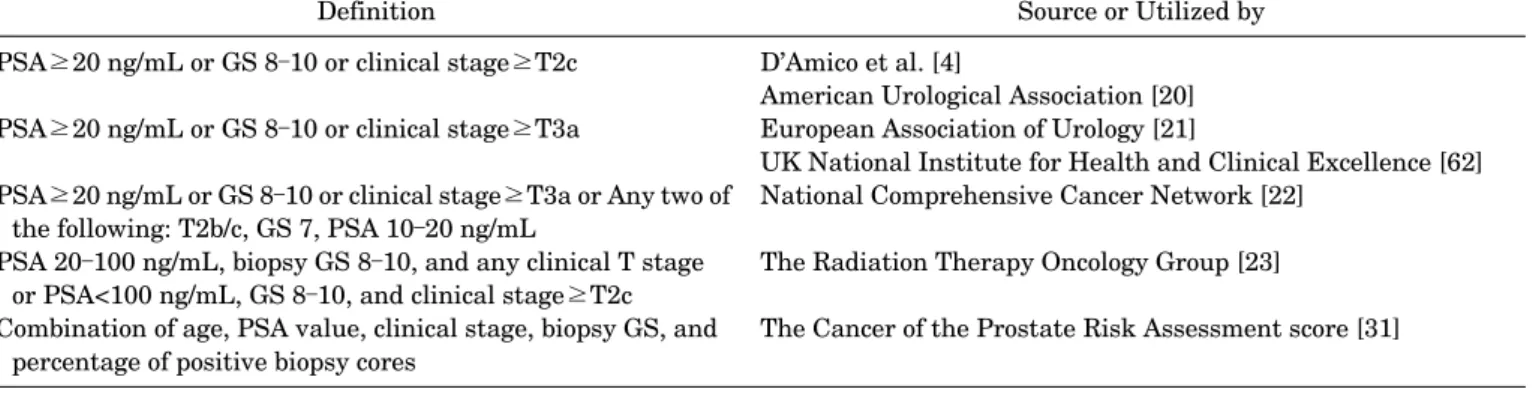
TABLE 1. Definition of high-risk prostate cancer
Definition Source or Utilized by
PSA≥20 ng/mL or GS 8–10 or clinical stage≥T2c PSA≥20 ng/mL or GS 8–10 or clinical stage≥T3a
PSA≥20 ng/mL or GS 8–10 or clinical stage≥T3a or Any two of the following: T2b/c, GS 7, PSA 10–20 ng/mL
PSA 20–100 ng/mL, biopsy GS 8–10, and any clinical T stage or PSA<100 ng/mL, GS 8–10, and clinical stage≥T2c Combination of age, PSA value, clinical stage, biopsy GS, and
percentage of positive biopsy cores
D’Amico et al. [4]
American Urological Association [20]
European Association of Urology [21]
UK National Institute for Health and Clinical Excellence [62]
National Comprehensive Cancer Network [22]
The Radiation Therapy Oncology Group [23]
The Cancer of the Prostate Risk Assessment score [31]
PSA, prostate-specific antigen; GS, Gleason score.
Nevertheless, independent of the definition, highly con- vincing, long-term CSS rates have been described. Frequent downgrading and downstaging, and a possible therapeutic role of local tumor debulking, support RP and extended pel- vic lymph node dissection (e-PLND) as primary manage- ment strategies during multimodality treatment [19].
However, many guidelines are reluctant to endorse RP as an equivalent treatment to RT and ADT [18].
The aim of this review was to define high-risk PC and to elaborate on the emerging evidence to support the role of RP as both a monotherapy and as part of a collaborative, multimodal approach in high-risk localized PC. The role of robot-assisted RP (RARP), which is increasingly being uti- lized in Korea for the surgical treatment of PC in this clin- ical scenario, is discussed.
WHAT IS HIGH-RISK PROSTATE CANCER?
Table 1 summarizes the contemporary and most widely used definitions of high-risk PC. The exact definition of high-risk PC is unclear, and a consensus has not yet been reached. This lack of consensus on a definition of high-risk disease represents a critical barrier for patient counseling, comparative assessment of treatment outcomes, and the design of randomized trials. High-risk, clinically localized disease was classically defined by D’Amico et al. [4] as any combination of the following factors: a PSA greater than 20 ng/mL, a Gleason score of 8 to 10, or a clinical stage of T2C or higher. The American Urological Association (AUA) has endorsed these D’Amico high-risk criteria [20]. More re- cently, the National Comprehensive Cancer Network (NCCN) and the European Association of Urology (EAU) modified this definition to include any combination of a clinical T3 stage, a PSA score greater than 20 ng/mL, or a Gleason score of 8 to 10 [21,22]. The Radiation Therapy Oncology Group also described a classification system to predict overall and cause-specific survival [23]. However, an estimation of patients’ risk of progression with this defi- nition is far from perfect, because these criteria encompass a heterogeneous group of patients.
Clinical stage is often inaccurate in localized PC. Digital
rectal exams fail to detect extracapsular extension in 30%
to 50% of patients. The role of clinical stage remains con- troversial, because it does not necessarily add information and displays interobserver variability [5,24,25]. In a recent review of the CaPSURE database, an inaccurate clinical stage was assigned to 35.4% of patients [24,26]. Pretreatment PSA can reflect not only cancer, but benign prostatic hyper- plasia or chronic inflammation [27]. Finally, biopsy down- grading after the final pathological assessment is a com- mon phenomenon, occurring in up to 45% of cases [28,29].
Because of these limitations, several multivariate risk assessment tools have been developed. The Kattan pre- operative nomogram uses a multivariate model that com- bines stage, PSA, and additional prostate biopsy in- formation to generate an estimate of the risk of treatment failure following RP [30]. Recently, Cooperberg et al. [31]
developed another high-risk PC definition: the CAPRA score. They added secondary parameters, including pros- tate biopsy profiles (biopsy Gleason score and percentage of positive biopsy cores) and patient age to the existing basic parameters. The CAPRA score ranges from 0 to 10, and a CAPRA score of 6 to 10 represents high-risk PC. This tool was recently updated, because both the CAPRA post- surgical score (CAPSA-S) and postoperative pathologic re- sults can be used to predict BCR after RP on a continuous scale. Additional variables such as extent of cancer in nee- dle biopsy, pretreatment PSA velocity, PSA doubling time, or the presence of a tertiary Gleason pattern have been sug- gested to optimize risk stratification [32].
To be clinically useful, criteria defining high-risk PC should reliably distinguish patients whose cancer is ame- nable to cure with local therapy alone from those who may require additional systemic therapy. Novel molecular markers that can both significantly enhance the prediction of relapse following therapy and identify locally advanced and occult metastatic disease are needed. Incorporating several known risk factors together with endorectal mag- netic resonance imaging findings, pretreatment PSA ve- locity, and additional data from prostate biopsies may pro- duce a more precise, high-risk disease definition.
TABLE 2. Outcomes of radical prostatectomy as monotherapy in high-risk prostate cancer Source Cases Definition OCD (%) Median
follow-up BCR-free
survival CSS MFS OS
Gerber et al. [63] 242 cT3 9 - 29% at 5 y 57% at 10 y 32% at 10 y -
Yossepowitch et al. [64] 957 D’Amico 43 4.3 y 68% at 5 y,
59% at 10 y - - -
Stephenson et al. [65] 1,962 D’Amico - 48 mo - 92% at 10 y,
81% at 15 y
- -
Loeb et al. [39] 175 D’Amico 36 8 y 68% at 10 y 92% at 10 y 84% at 10 y -
Walz et al. [11] 887 D’Amico - 2.4 y 47.4% at 5 y,
35.7% at 10 y
- - -
van den Ouden et al. [66] 83 cT3 18 52 mo 29% at 5 y 85% at 5 y,
72% at 10 y 69% at 5 y,
50% at 10 y 75% at 5 y, 60% at 10 y OCD, organ-confined disease; BCR, biochemical recurrence; CSS, cancer-specific survival; MFS, metastasis-free survival; OS, overall survival.
RATIONALE FOR SURGERY FOR HIGH-RISK PROSTATE CANCER
Traditionally, RP was not considered a viable treatment option for high-risk PC cases [33]. However, several recent studies of high-risk PC have presented another view (Table 2). In some high-risk PC patients, RP is a one-step modality for a cure, with excellent oncological prognosis. One of the most important benefits of RP compared with nonsurgical therapy is pathologic staging of both the primary cancer and regional lymph nodes. Although preoperative risk group stratification and nomograms may identify patients with adverse features, studies have established that pathologic variables, such as pathologic Gleason pattern and stage, more accurately predict who may benefit from additional therapy. In favorable situations, pathologic downgrading and downstaging at RP may potentially spare patients from receiving adjuvant therapy. In a re- view of the CaPSURE database, an inaccurate clinical stage was assigned to 35.4% of patients [24]. About one-third of high-grade (8-10) biopsy Gleason scores were subsequently downgraded at RP and 26% to 31% were shown to have organ- or specimen-confined disease [34,35].
A study by Abern et al. [36] on this issue of PC adds sig- nificantly to the literature by demonstrating that patho- logic downstaging occurs more frequently than previously reported and that patients who were downstaged had sur- vival outcomes that were similar to those of patients with intermediate- and low-risk PC.
Lymphadenectomy at the time of RP confers information about the level and extent of nodal involvement and may guide the initiation of earlier adjuvant ADT [37]. Multiple series suggest an approximately 10% to 20% 10-year dis- ease-free recurrence without adjuvant therapy following lymph node dissection for men with lymph node meta- stases [38]. Another potential benefit of RP for high-risk disease is the possible posttreatment avoidance of addi- tional therapy.
Approximately one-half of men with high-risk disease
will be cured with RP monotherapy and thus avoid any fur- ther treatment [9,39,40]. In one study, Yossepowitch et al.
[41] found that 35% to 76% of high-risk patients avoided secondary therapy altogether 10 years after surgery.
Joniau et al. [42] reported on a cohort of 51 men with very high-risk PC (cT3b-T4), in which 31.4% avoided ADT, and after a median follow-up of 9 years, the 10-year biochemical PFS (BPFS) rate was 45.8%. Using CaPSURE data, Meng et al. [17] showed that men receiving RT for high-risk PC are 3.5 times as likely to receive ADT as are patients treated with RP. Even if men ultimately require salvage ADT for disease control after RP, they may delay the time to ini- tiation of ADT. In a study by the Mayo Clinic on patients with cT3 disease, the average duration of freedom from ADT after RP monotherapy was 4.0 years [43].
Another advantage of RP is the expectation and sig- nificance of nondetectable PSA. After RP in completely ex- cised patients, serum PSA should decline to a non- detectable level. The sensitivity of post-RP PSA provides a prompt assessment of disease cure and control, allowing early recognition of recurrent disease and delivery of sal- vage RT if necessary. Primary treatment with RP allows for salvage RT with curative intent in the setting of a promptly recognized local recurrence. Even in patients with poorly differentiated disease and positive margins, re- currence after RP can be effectively treated with salvage radiation that may prevent metastatic progression.
Adjuvant or salvage RT cures another 50% of recurrences, representing a three-fold reduction of death from PC after surgery with minimal additional morbidity [44].
ROLE OF SURGERY IN THE TREATMENT OF LOCALLY ADVANCED PROSTATE CANCER Until recently, surgical treatment had not been used in lo- cally advanced PC. The role of RP in patients with locally advanced PC has been debated, because the combination of RT and hormone therapy is coming to be used more fre- quently for locally advanced PC. Today, according to the
EAU and AUA guidelines, RP is a reasonable treatment op- tion for selected PC patients with cT3a disease, a Gleason score of 8 to 10, or PSA>20 [21]. Moreover, surgery is consid- ered by the NCCN to be an acceptable primary treatment option for selected patients with low-volume, high-risk PC and a limited number of adverse prognostic factors [45]. In a series from the Memorial Sloan-Kettering Center, of 176 men with cT3 over a 20-year period, the role and effective- ness of RP were reviewed. Within this cohort, only 64 men received neoadjuvant hormone therapy. Fifty-three pa- tients were downstaged to organ-confined disease after pathological evaluation, and more than one-half (52%) of patients remained free of disease recurrence following RP [46]. In a Mayo Clinic study of men undergoing RP, cT3 was found in 841 of the 5,662 patients (15%) studied. Of these 841, 661 men (79%) did not receive neoadjuvant hormone therapy. After a pathological review of these patients, 223 (27%) were found to be overstaged, and in fact had or- gan-confined disease [35]. It is important to note that sur- gery can identify a substantial subset of men with favorable features in whom additional therapy is not indicated.
Another feature to attribute a very high-risk stratification is the presence of positive regional lymph nodes [19].
Recently, Engel et al. [47] found a doubled risk of overall mortality when RP was abandoned compared with com- pleted RP for patients in whom positive lymph nodes were found at the time of surgery. They concluded that RP may have a survival benefit, and the abandonment of RP in node-positive cases may not be justified. A systematic re- view by Verhagen et al. [48] concluded that there was a clin- ically important survival benefit in men with node-positive disease who received ADT when local control of the primary tumor is achieved.
ROBOTIC PROSTATECTOMY FOR HIGH-RISK PROSTATE CANCER
Traditionally, RP in high-risk PC is performed by use of an open approach. During the last several years, however, an increasing number of publications have discussed the use of minimally invasive techniques, particularly RARP [42].
The increasing availability of robotic technology to urolo- gists has expanded the roles and indications for RARP, in- cluding recent reports of this approach in a high-risk setting. A recent retrospective analysis studied 913 pa- tients with high-risk PC treated with open RP or minimally invasive RP with e-PLND and aimed to compare the patho- logical and short-term BCR-free survival outcomes for dif- ferent therapeutic approaches. Of all patients, 81.4% un- derwent open RP, 11.5% underwent RARP, and 7.1% un- derwent laparoscopic RP (LRP). The authors demon- strated BCR-free survival rates of 56.3%, 67.8%, and 41.1%, respectively, and positive surgical margin (PSM) rates of 29.4%, 34.3%, and 27.7% for open retropubic RP, RARP, and LRP, respectively. An e-PLND was performed, and 10.8% of positive nodes were found in the open retro- pubic RP group compared with 3.5% in the minimally in-
vasive RP group. The authors concluded that equivalent rates of PSM and short-term BPFS between open RP and minimally invasive RP were observed [49]. However, major limitations were differences in the cumulative number of high-risk factors, short follow-up, nonstandardized e-PLND, and nerve-sparing indications.
Punnen et al. [50] compared outcomes of 233 high-risk RARP cases with 177 high-risk RRP cases from a single institution. RARP patients had less blood loss and similar pathological outcomes compared to RRP patients. Overall PSM rates were 29% and 23%, respectively, and RFS rates at 4 years were 66% and 79% for RARP and RRP, respectively. Similarly, Busch et al. [51] noted that RARP demonstrated similar oncologic outcomes compared to RRP and LRP in a propensity-score-matched cohort of pa- tients with high-risk PC.
Strong debate surrounds the feasibility and role of ro- botic surgery in performing e-PLND. A recent series of 143 robotic e-PLND patients with intermediate or high-risk PC according to the D’Amico classification showed a median number of 20 (range, 9–65) excised nodes with positive node rates of 13% and without Clavien-Dindo complications in 82% of cases, thus confirming the technical feasibility of the procedure with minimally invasive surgery [52]. These promising results must be confirmed by randomized clin- ical trials, which will be vital to achieve optimal onco- logical, functional, and sexual outcomes, bearing in mind the high risk of cancer progression in this group of patients.
THE SURGICAL APPROACH AS PART OF MULTIMODAL THERAPY
With respect to the treatment of high- and very-high-risk PC in general, the failure of RRP or RT alone (monotherapy) is well recognized, and multimodal therapy may be needed. In well-selected patients, RP combined with adjuvant or salvage treatment when needed may re- sult in better outcomes than RT alone, similar to the combi- nation of RT plus hormone therapy [9]. Definitive therapy for high-risk PC, often requiring a multimodal approach, appears to provide the greatest long-term survival benefit.
According to the recent EAU guidelines, patients must be informed about the possible need for a multimodal ap- proach because neoadjuvant hormone therapy has not been shown to increase BPFS and OS and is not recom- mended in these guidelines [6,53,54].
Although hormone therapy may decrease the size of the tumor and prostate overall, hormone therapy can induce a mild-to-moderate desmoplastic reaction around the pros- tate, obscuring tissue planes around the periprostatic fascia. In a minority of patients, dissection of the prerectal planes is difficult, and the rectum can be adherent to the posterior prostate. In addition, RP in an extremely small prostate after hormone therapy can be slightly more challenging. This added challenge is mostly due to the des- moplastic reaction as well as to difficulty in identifying the contours of the prostate and the normal tissue planes for
neurovascular preservation [25].
Adjuvant hormone therapy has a definite role in the management of high-risk patients after RP. Adjuvant hor- mone therapy has its most relevant clinical utility after RP in node-positive patients. However, the effect of adjuvant ADT on OS remains unclear, and it appears to be influenced by the individual risk profile. The classic study of Messing et al. [37,55] demonstrated improvement in PSA- and can- cer-free survival and OS for hormone therapy immediately following RP for node-positive PC. More recently, Boorjian et al. [56] analyzed data for 507 patients with node-positive PC following RP. In this trial, patients with immediate ADT had a statistically significantly decreased risk of bio- chemical and local recurrence. There was no statistically significant difference, however, in the rate of systemic pro- gression or CSS between the two groups. Therefore, the ad- vantages of adjuvant hormone therapy after RP are debatable.
Recently, Lee et al. [57] evaluated the competing risks of CSM after initial therapy with RP versus RT in men with clinically localized high-risk PC. Their study had several differences compared with previous reports: (1) relatively long follow-up periods; (2) RP performed by a single sur- geon; and (3) the first data in an Asian population. They demonstrated that 5-year estimates of CSS rates for men treated with RP and RT were 96.5% (95% confidence inter- val [CI], 94.2–98.9) and 88.3% (95% CI, 82.8–94.3), respectively. Cumulative incidence estimates for CSM us- ing competing risks were statistically lower in men receiv- ing RP versus RT (p=0.002). They summarized that initial treatment with RP versus RT was associated with a de- creased risk of CSM in men with clinically localized high-risk PC.
Definitive results from a large randomized trial are war- ranted to define the role of adjuvant hormone therapy in high-risk PC. Hormone therapy has also been investigated as an adjuvant therapy to RP in high-risk PC patients, even though few randomized trials are available. Postoperative adjuvant RT after RP for high-risk PC also remains controversial. The results of three randomized trials of postoperative adjuvant RT in high-risk patients, typically categorized by adverse pathology, such as pathologic stage T3-4N0 with PSM, extracapsular extension of disease, or seminal vesicle invasion, have been reported. All detected improvements in BPFS were in association with accept- able rates of toxicity [58-60]. However, only one trial, a sec- ondary analysis of the Southwest Oncology Group 8794 tri- al, noted marked improvement in OS following post- operative adjuvant RT [61].
CONCLUSIONS
Currently, surgery for high-risk PC is applied frequently.
Nevertheless, this approach is still controversial. Because there is no standard definition of high-risk PC, outcome comparisons between series and treatment approaches are hampered. However, RP can provide durable local control,
long-term CSS, and accurate pathologic staging and may guide further individualized treatment. RP with extended pelvic lymphadenectomy delivers very good cancer-related outcomes in high- and very-high-risk PC, often within a multimodal approach. Definitive results from a large randomized trial are warranted to define the role of ad- juvant hormone therapy and RT in high-risk PC.
Minimally invasive surgery is showing promising results, but further studies are needed to support its role compared to open RP and e-PLND as the gold standard.
CONFLICTS OF INTEREST
The authors have nothing to disclose.
ACKNOWLEDGMENTS
This study was supported by a grant from the Korean Foundation for Cancer Research (CB-2011-04-02), Republic of Korea.
REFERENCES
1. Cooperberg MR, Lubeck DP, Mehta SS, Carroll PR; CaPSURE.
Time trends in clinical risk stratification for prostate cancer: im- plications for outcomes (data from CaPSURE). J Urol 2003;170(6 Pt 2):S21-5.
2. Cooperberg MR, Cowan J, Broering JM, Carroll PR. High-risk prostate cancer in the United States, 1990-2007. World J Urol 2008;26:211-8.
3. Schroder FH, Hugosson J, Roobol MJ, Tammela TL, Ciatto S, Nelen V, et al. Prostate-cancer mortality at 11 years of follow-up.
N Engl J Med 2012;366:981-90.
4. D'Amico AV, Whittington R, Malkowicz SB, Schultz D, Blank K, Broderick GA, et al. Biochemical outcome after radical prostatec- tomy, external beam radiation therapy, or interstitial radiation therapy for clinically localized prostate cancer. JAMA 1998;280:969-74.
5. Bastian PJ, Boorjian SA, Bossi A, Briganti A, Heidenreich A, Freedland SJ, et al. High-risk prostate cancer: from definition to contemporary management. Eur Urol 2012;61:1096-106.
6. Mottet N, Bellmunt J, Bolla M, Joniau S, Mason M, Matveev V, et al. EAU guidelines on prostate cancer. Part II: treatment of ad- vanced, relapsing, and castration-resistant prostate cancer.
Actas Urol Esp 2011;35:565-79.
7. Montie JE. Initial therapy with radical prostatectomy for high risk localized prostate cancer. J Urol 2006;176(6 Pt 2):S27-9.
8. Goldberg H, Baniel J, Yossepowitch O. Defining high-risk pros- tate cancer. Curr Opin Urol 2013;23:337-41.
9. Van Poppel H, Joniau S. An analysis of radical prostatectomy in advanced stage and high-grade prostate cancer. Eur Urol 2008;53:253-9.
10. Grossfeld GD, Latini DM, Lubeck DP, Mehta SS, Carroll PR.
Predicting recurrence after radical prostatectomy for patients with high risk prostate cancer. J Urol 2003;169:157-63.
11. Walz J, Joniau S, Chun FK, Isbarn H, Jeldres C, Yossepowitch O, et al. Pathological results and rates of treatment failure in high-risk prostate cancer patients after radical prostatectomy.
BJU Int 2011;107:765-70.
12. Boorjian SA, Karnes RJ, Viterbo R, Rangel LJ, Bergstralh EJ, Horwitz EM, et al. Long-term survival after radical prostatec- tomy versus external-beam radiotherapy for patients with
high-risk prostate cancer. Cancer 2011;117:2883-91.
13. Petrelli F, Vavassori I, Coinu A, Borgonovo K, Sarti E, Barni S.
Radical prostatectomy or radiotherapy in high-risk prostate can- cer: a systematic review and metaanalysis. Clin Genitourin Cancer 2014;12:215-24.
14. Borza T, Kibel AS. Local treatment of high risk prostate cancer:
role of surgery and radiation therapy. Cancer 2014;120:1608-10.
15. Karnes RJ, Blute ML. The role for radical prostatectomy in ad- vanced prostate cancer. In: Klein EA, Jones JS, editors.
Management of prostate cancer. New York: Springer; 2013. p.
271-80
16. Zelefsky MJ, Eastham JA, Cronin AM, Fuks Z, Zhang Z, Yamada Y, et al. Metastasis after radical prostatectomy or external beam radiotherapy for patients with clinically localized prostate can- cer: a comparison of clinical cohorts adjusted for case mix. J Clin Oncol 2010;28:1508-13.
17. Meng MV, Elkin EP, Latini DM, Duchane J, Carroll PR.
Treatment of patients with high risk localized prostate cancer: re- sults from cancer of the prostate strategic urological research en- deavor (CaPSURE). J Urol 2005;173:1557-61.
18. Ischia J, Gleave M. Radical prostatectomy in high-risk prostate cancer. Int J Urol 2013;20:290-300.
19. Joniau S, Tosco L, Briganti A, Vanden Broeck T, Gontero P, Karnes RJ, et al. Results of surgery for high-risk prostate cancer.
Curr Opin Urol 2013;23:342-8.
20. Thompson I, Thrasher JB, Aus G, Burnett AL, Canby-Hagino ED, Cookson MS, et al. Guideline for the management of clinically lo- calized prostate cancer: 2007 update. J Urol 2007;177:2106-31.
21. Heidenreich A, Bellmunt J, Bolla M, Joniau S, Mason M, Matveev V, et al. EAU guidelines on prostate cancer. Part 1: screening, di- agnosis, and treatment of clinically localised disease. Eur Urol 2011;59:61-71.
22. Mohler JL, Armstrong AJ, Bahnson RR, Boston B, Busby JE, D’Amico AV, et al. Prostate cancer, version 3.2012 featured up- dates to the NCCN guidelines. J Natl Compr Canc Netw 2012;10:
1081-7.
23. Roach M, Lu J, Pilepich MV, Asbell SO, Mohiuddin M, Terry R, et al. Four prognostic groups predict long-term survival from prostate cancer following radiotherapy alone on Radiation Therapy Oncology Group clinical trials. Int J Radiat Oncol Biol Phys 2000;47:609-15.
24. Reese AC, Sadetsky N, Carroll PR, Cooperberg MR. Inaccuracies in assignment of clinical stage for localized prostate cancer.
Cancer 2011;117:283-9.
25. Ghavamian R, Williams SK, Hakimi AA. High-risk prostate can- cer: the role of radical prostatectomy for local therapy. Future Oncol 2011;7:543-50.
26. Grossfeld GD, Chang JJ, Broering JM, Li YP, Lubeck DP, Flanders SC, et al. Under staging and under grading in a con- temporary series of patients undergoing radical prostatectomy:
results from the Cancer of the Prostate Strategic Urologic Research Endeavor database. J Urol 2001;165:851-6.
27. Eastham JA, Riedel E, Scardino PT, Shike M, Fleisher M, Schatzkin A, et al. Variation of serum prostate-specific antigen levels: an evaluation of year-to-year fluctuations. JAMA 2003;
289:2695-700.
28. Moussa AS, Li J, Soriano M, Klein EA, Dong F, Jones JS. Prostate biopsy clinical and pathological variables that predict significant grading changes in patients with intermediate and high grade prostate cancer. BJU Int 2009;103:43-8.
29. Donohue JF, Bianco FJ Jr, Kuroiwa K, Vickers AJ, Wheeler TM, Scardino PT, et al. Poorly differentiated prostate cancer treated
with radical prostatectomy: long-term outcome and incidence of pathological downgrading. J Urol 2006;176:991-5.
30. Kattan MW, Eastham JA, Stapleton AM, Wheeler TM, Scardino PT. A preoperative nomogram for disease recurrence following radical prostatectomy for prostate cancer. J Natl Cancer Inst 1998;90:766-71.
31. Cooperberg MR, Pasta DJ, Elkin EP, Litwin MS, Latini DM, Du Chane J, et al. The University of California, San Francisco Cancer of the Prostate Risk Assessment score: a straightforward and reli- able preoperative predictor of disease recurrence after radical prostatectomy. J Urol 2005;173:1938-42.
32. Cooperberg MR, Hilton JF, Carroll PR. The CAPRA-S score: a straightforward tool for improved prediction of outcomes after radical prostatectomy. Cancer 2011;117:5039-46.
33. Chung BH. The role of radical prostatectomy in high-risk prostate cancer. Prostate Int 2013;1:95-101.
34. Boorjian SA, Karnes RJ, Crispen PL, Rangel LJ, Bergstralh EJ, Sebo TJ, et al. The impact of discordance between biopsy and pathological Gleason scores on survival after radical prostatec- tomy. J Urol 2009;181:95-104.
35. Rosenthal SA, Sandler HM. Treatment strategies for high-risk locally advanced prostate cancer. Nat Rev Urol 2010;7:31-8.
36. Abern MR, Terris MK, Aronson WJ, Kane CJ, Amling CL, Cooperberg MR, et al. The impact of pathologic staging on the long-term oncologic outcomes of patients with clinically high-risk prostate cancer. Cancer 2014;120:1656-62.
37. Messing EM, Manola J, Yao J, Kiernan M, Crawford D, Wilding G, et al. Immediate versus deferred androgen deprivation treat- ment in patients with node-positive prostate cancer after radical prostatectomy and pelvic lymphadenectomy. Lancet Oncol 2006;7:472-9.
38. Touijer KA, Mazzola CR, Sjoberg DD, Scardino PT, Eastham JA.
Long-term outcomes of patients with lymph node metastasis treated with radical prostatectomy without adjuvant an- drogen-deprivation therapy. Eur Urol 2014;65:20-5.
39. Loeb S, Schaeffer EM, Trock BJ, Epstein JI, Humphreys EB, Walsh PC. What are the outcomes of radical prostatectomy for high-risk prostate cancer? Urology 2010;76:710-4.
40. Freedland SJ, Partin AW, Humphreys EB, Mangold LA, Walsh PC. Radical prostatectomy for clinical stage T3a disease. Cancer 2007;109:1273-8.
41. Yossepowitch O, Eggener SE, Serio AM, Carver BS, Bianco FJ Jr, Scardino PT, et al. Secondary therapy, metastatic progression, and cancer-specific mortality in men with clinically high-risk prostate cancer treated with radical prostatectomy. Eur Urol 2008;53:950-9.
42. Joniau S, Hsu CY, Gontero P, Spahn M, Van Poppel H. Radical prostatectomy in very high-risk localized prostate cancer:
long-term outcomes and outcome predictors. Scand J Urol Nephrol 2012;46:164-71.
43. Ward JF, Slezak JM, Blute ML, Bergstralh EJ, Zincke H. Radical prostatectomy for clinically advanced (cT3) prostate cancer since the advent of prostate-specific antigen testing: 15-year outcome.
BJU Int 2005;95:751-6.
44. Trock BJ, Han M, Freedland SJ, Humphreys EB, DeWeese TL, Partin AW, et al. Prostate cancer-specific survival following sal- vage radiotherapy vs observation in men with biochemical re- currence after radical prostatectomy. JAMA 2008;299:2760-9.
45. Mohler JL, Armstrong AJ, Bahnson RR, Boston B, Busby JE, D'Amico AV, et al. Prostate cancer, Version 3.2012: featured up- dates to the NCCN guidelines. J Natl Compr Canc Netw 2012;10:1081-7.
46. Carver BS, Bianco FJ Jr, Scardino PT, Eastham JA. Long-term outcome following radical prostatectomy in men with clinical stage T3 prostate cancer. J Urol 2006;176:564-8.
47. Engel J, Bastian PJ, Baur H, Beer V, Chaussy C, Gschwend JE, et al. Survival benefit of radical prostatectomy in lymph node-pos- itive patients with prostate cancer. Eur Urol 2010;57:754-61.
48. Verhagen PC, Schroder FH, Collette L, Bangma CH. Does local treatment of the prostate in advanced and/or lymph node meta- static disease improve efficacy of androgen-deprivation therapy?
A systematic review. Eur Urol 2010;58:261-9.
49. Pierorazio PM, Mullins JK, Eifler JB, Voth K, Hyams ES, Han M, et al. Contemporaneous comparison of open vs minimally-in- vasive radical prostatectomy for high-risk prostate cancer. BJU Int 2013 ;112:751-7.
50. Punnen S, Meng MV, Cooperberg MR, Greene KL, Cowan JE, Carroll PR. How does robot-assisted radical prostatectomy (RARP) compare with open surgery in men with high-risk pros- tate cancer? BJU Int 2013;112:E314-20.
51. Busch J, Magheli A, Leva N, Hinz S, Ferrari M, Friedersdorff F, et al. Matched comparison of outcomes following open and minimally invasive radical prostatectomy for high-risk patients. World J Urol 2014 Mar 9 [Epub]. http://dx.doi.org/10.1007/s00345-014-1270-0.
52. Yuh B, Artibani W, Heidenreich A, Kimm S, Menon M, Novara G, et al. The role of robot-assisted radical prostatectomy and pel- vic lymph node dissection in the management of high-risk pros- tate cancer: a systematic review. Eur Urol 2014;65:918-27.
53. Kumar S, Shelley M, Harrison C, Coles B, Wilt TJ, Mason MD.
Neo-adjuvant and adjuvant hormone therapy for localised and lo- cally advanced prostate cancer. Cochrane Database Syst Rev 2006;(4):CD006019.
54. Shelley MD, Kumar S, Wilt T, Staffurth J, Coles B, Mason MD.
A systematic review and meta-analysis of randomised trials of neo-adjuvant hormone therapy for localised and locally advanced prostate carcinoma. Cancer Treat Rev 2009;35:9-17.
55. Messing EM, Manola J, Sarosdy M, Wilding G, Crawford ED, Trump D. Immediate hormonal therapy compared with ob- servation after radical prostatectomy and pelvic lymphadenec- tomy in men with node-positive prostate cancer. N Engl J Med 1999;341:1781-8.
56. Boorjian SA, Thompson RH, Siddiqui S, Bagniewski S, Bergstralh EJ, Karnes RJ, et al. Long-term outcome after radical prostatectomy for patients with lymph node positive prostate can- cer in the prostate specific antigen era. J Urol 2007;178(3 Pt 1):864-71.
57. Lee JY, Cho KS, Kwon JK, Jeh SU, Kang HW, Diaz RR, et al. A competing risk analysis of cancer-specific mortality of initial treat- ment with radical prostatectomy versus radiation therapy in clin- ically localized high-risk prostate cancer. ann surg oncol. 2014 May 20 [Epub]. http://dx.doi.org/10.1245/s10434-014-3780-9 58. Wiegel T, Bottke D, Steiner U, Siegmann A, Golz R, Störkel S, et
al. Phase III postoperative adjuvant radiotherapy after radical prostatectomy compared with radical prostatectomy alone in pT3 prostate cancer with postoperative undetectable prostate-specif- ic antigen: ARO 96-02/AUO AP 09/95. J Clin Oncol 2009;27:
2924-30.
59. Thompson IM Jr, Tangen CM, Paradelo J, Lucia MS, Miller G, Troyer D, et al. Adjuvant radiotherapy for pathologically ad- vanced prostate cancer: a randomized clinical trial. JAMA 2006;296:2329-35.
60. Bolla M, van Poppel H, Collette L, van Cangh P, Vekemans K, Da Pozzo L, et al. Postoperative radiotherapy after radical prostatec- tomy: a randomised controlled trial (EORTC trial 22911). Lancet 2005;366:572-8.
61. Thompson IM, Tangen CM, Paradelo J, Lucia MS, Miller G, Troyer D, et al. Adjuvant radiotherapy for pathological T3N0M0 prostate cancer significantly reduces risk of metastases and im- proves survival: long-term followup of a randomized clinical trial.
J Urol 2009;181:956-62.
62. Graham J, Baker M, Macbeth F, Titshall V; Guideline Development Group. Diagnosis and treatment of prostate cancer:
summary of NICE guidance. BMJ 2008;336:610-2.
63. Gerber GS, Thisted RA, Chodak GW, Schroder FH, Frohmuller HG, Scardino PT, et al. Results of radical prostatectomy in men with locally advanced prostate cancer: multi-institutional pooled analysis. Eur Urol 1997;32:385-90.
64. Yossepowitch O, Eggener SE, Bianco FJ Jr, Carver BS, Serio A, Scardino PT, et al. Radical prostatectomy for clinically localized, high risk prostate cancer: critical analysis of risk assessment methods. J Urol 2007;178:493-9.
65. Stephenson AJ, Kattan MW, Eastham JA, Bianco FJ Jr, Yossepowitch O, Vickers AJ, et al. Prostate cancer-specific mor- tality after radical prostatectomy for patients treated in the pros- tate-specific antigen era. J Clin Oncol 2009;27:4300-5.
66. van den Ouden D, Hop WC, Schroder FH. Progression in and sur- vival of patients with locally advanced prostate cancer (T3) treat- ed with radical prostatectomy as monotherapy. J Urol 1998;160:
1392-7.