• 검색 결과가 없습니다.

Poly(lactic acid)/Wood Flour/Montmorillonite Nanocomposites (II) : Thermal properties

N/A
N/A
Protected

Academic year: 2021

Share "Poly(lactic acid)/Wood Flour/Montmorillonite Nanocomposites (II) : Thermal properties"

Copied!
6
0
0

로드 중.... (전체 텍스트 보기)

전체 글

(1)

*1 Received on April 30, 2009; accepted on July 3, 2009

*2 Department of Material Science and Engineering, Korea University, Seoul 136-701, Korea

*3 Division of Environmental Material Engineering Department of Forest Products Korea Forest Research Institute, Seoul 130-712, Korea

Corresponding author : Sun-Young Lee (e-mail: [email protected])

Poly(lactic acid)/Wood Flour/Montmorillonite Nanocomposites (II) : Thermal properties* 1

Jin-Sung Kim *

2

, Sun-Young Lee *

3†

, Geum-Hyun Doh *

3

, In-Aeh Kang *

3

, and Ho-Gyu Yoon *

2

ABSTRACT

This study investigates the thermal properties of nanocomposites prepared from poly(lactic acid) (PLA), wood flour (WF) and montmorillonite (MMT) by melt compounding with a twin screw extruder. In order to enhance the mechanical properties of PLA/WF composites, maleic anhydride grafted PLA (MAPLA) is synthesized as a compatibilizer. MAPLA prepared in the laboratory is characterized using FR-IR. From SEM microphotographs, the presence of MAPLA has a positive effect on the mechanical properties of WF-reinforced PLA composites. The addition of WF/MAPLA into neat PLA increased the glass transition temperature (T

g

). The addition of 1 to 5 wt% MMT into PLA/WF/MAPLA composite decreases the T

g

. The cold crystallization temperature (T

cc

) was decreased by the addition of MMT. The MMT could act as effective nucleating sites of PLA crystallization. The thermal stability evaluated by thermogravimetric analysis (TGA) is improved with the contents of MMT up to 3 wt%.

Keywords : thermal properties, PLA, wood flour, TGA, DSC

1. INTRODUCTION

The utilization of lignocellulosics and poly- mers from renewable resources has recently at- tracted increasing attention, due to environ- mental concerns and the depletion of petroleum resources[1-4]. Polymers from renewable re- sources can be classified into natural polymers such as starch[5-7], protein and cellulose[8-10], and synthetic polymers[11-13]. The develop- ment of synthetic polymers using monomers

from natural resources provides a new direction for the development of biodegradable polymers.

One of the most promising biodegradable

polymers is poly(lactic acid) (PLA), which can

be derived from renewable resources, because

of its desired mechanical strength, thermal plas-

ticity, and biocompatibility[13,14]. The PLA has

been used for many applications including gro-

cery and composting bags, automobile panels,

textiles, and bio-absorbable medical materials

[15,16]. The high bulk density of wood flour

(2)

(WF), as well as its low cost and availability, makes it attractive to composite manufacturers and users[17].

Montmorillonite (MMT) is hydrous alumi- no-silicate clay composed of unitsmade up of two silica tetrahedral sheets with a central alu- mina octahedral sheet so that the oxygen ions of octahedral sheet do also belong to the tetra- hedral sheet. The structure of montmorillonite has been established by Hendricks[18]. From electron microscopy[19], it is basically com- posed of aggregates, whose size range: 0.1∼10 µm, that is made up by association of a number of primary particle, which, in turn, are composed of a number of super-imposed lamellae. The height of the primary particle is 80∼100 Å, and the diameter is 300 Å, and the thickness of the la- mella is 9.6∼10 Å. Thus, each primary particle contains approximately 8 lamella or 16 planes.

The combination of WF and thermoplastic polymers presents a number of problems[20].

However, incompatibility between the fiber and matrix causes a poor interfacial adhesion be- tween hydrophilic wood and the hydrophobic plastic matrix, therefore resulting in poor ability to transfer stress from the matrix to the fiber re- ducing mechanical strengths and ductility[21].

In this study investigates the physical proper- ties of the PLA/WF/MAPLA composites filled with organically modified MMT was investi- gated. In order to enhance the mechanical prop- erties of PLA/WF composites, MAPLA was synthesized as a compatibilizer. The thermal properties of the resultant composites were characterized by differential scanning calorimetr (DSC) and thermogravimetric analysis (TGA).

2. EXPERIMENTAL 2.1. Materials

The polylactic acid (PLA) was supplied by

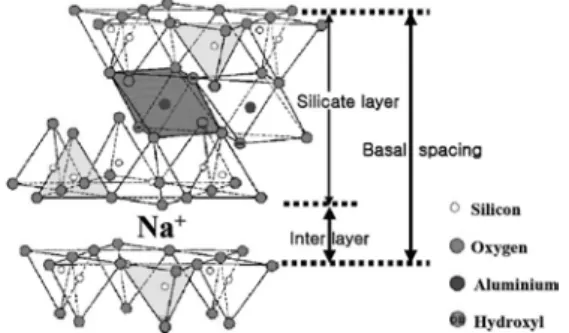
Fig. 1. Structures of layered materials.

NatureWorks of USA. Its molecular weight (Mw) is 159,000 g/mol and melt flow index is 10∼30 g/10 min. Maleic anhydride was purchased from Sigma-Aldrich (USA). 2,5-Dimethyl-2,5-di-(tert- butylperoxy) hexane organic peroxide (Luperox 101) was provided by SEKI ARKEMA Co., LTD. Organically modified montmorillonite (MMT, Cloisite 30B) was obtained from Southern Clay Products Co. and used as received without fur- ther purification. The chemical structure of the MMT is shown in Fig. 1. The organic modifier for clay 30B is methyl tallow bis-2-hydroxyethyl quaternary ammonium ion (65% C18, 30% C16, 5% C14). The wood flour used in this study was obtained from J.Retenmaier & Sohn Co., Germany and Its particle size is 80∼100 mesh (70∼150 µm).

2.2. MAPLA Preparation

The MAPLA was prepared by using a twin- screw extruder (19 mm diameter screw and L/D

= 40, Bautek Co, Korea). The PLA, 10 phr

MAH and 4 phr peroxide were premixed in a

rotating mixer before being added into the hop-

per of the extruder. The temperature of the ex-

truder were set as 160 to 180°C from feeding

to barrel zones. MAPLA was purified by dis-

solving in chloroform and precipitated by add-

ing a large amount of n-pentane. The precipitate

was filtrated by using 0.2 µm membrane filter.

(3)

The sample were dried in the vacuum oven at 60°C for 24 h.

2.3. Composite Preparations

Before preparing composites, the raw materi- als were dried in a vacuum oven at 60°C for 24 h. Compounding was carried out through a melt mixing method by using the twin screw ex- truder. The temperature of the extruder were set as 190 to 210°C from feeding to barrel zones, respectively. The screw speed of the extruder was set at 100∼150 rpm. The products were dried in a vacuum oven at 60°C for at least 24 h.

2.4. DSC and TGA

The morphology of the PLA/WF composites was obtained by scanning electron microscopy (model: HITACHI S-4200) at an accelerated voltage of 15 kV after silver coating. The crys- talline melting and recrystallization behavior was measured by a differential scanning calo- rimetry (TA Instruments DSC 2910) at a heat- ing rate of 10°C/min in N

2

atmosphere. The change in weight of sample due to decom- position was measured by using a thermogravi- metric analyzer (TGA) on a TA Instruments TGA-2050. Analysis was done under an N

2

at- mosphere from room temperature to 700°C at a heating rate of 10°C/min.

3. RESULTS and DISCUSSION

3.1. SEM Photographs of Composites

Fig. 2 shows the SEM images of PLA/WF (70/

30 wt%) composites with and without MAPLA.

As shown in Fig. 2(a), the gaps between PLA and WF for the fractured composites without MAPLA is observed indicating poor internal bonding. This is related to the lower mechanical properties of the composites. The addition of

(a) (b)

Fig. 2. SEM morphology of the PLA/WF compo- sites; (a) without MAPLA, (b) with 2 wt%

MAPLA.

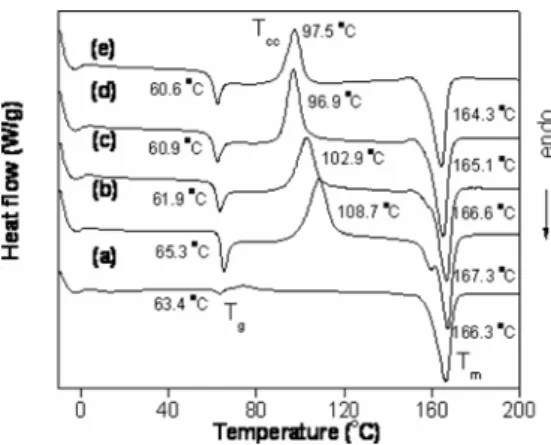
Fig. 3. DSC thermograms of neat PLA and PLA composites; (a) neat PLA, (b) PLA/WF/MAPLA (68/30/2), (c) PLA/WF/MMT/MAPLA (67/

30/1/2 wt%), (d) PLA/WF/MMT/MAPLA (65/

30/3/2 wt%), (e) PLA/WF/MMT/MAPLA (63/

30/5/2 wt%).

MAPLA facilitates the affinity between PLA and WF resulting in stronger adhesion and the phase boundary is unconspicuous in Fig. 2(b).

Hence, the presence of MAPLA has a positive effect on the mechanical properties of WF-re- inforced PLA composites in comparison with composites made without MAPLA.

3.2. DSC Analysis

The DSC thermograms of neat PLA and PLA composites are shown in Fig. 3. The glass tran- sition temperature (T

g

) of neat PLA is 63.4°C.

The glass transition temperature of PLA/WF/

(4)

MAPLA (68/30/2 wt%) was increased from 63.4°C to 65.3°C. This indicates that a weak in- teraction, possibly some hydrogen bonding, might have existed between WF and PLA be- cause of the carbonyl groups in the PLA and hydroxyl groups in the WF. The addition of MMT into PLA/WF/MAPLA composite as the function of the MMT contents from 1 to 5 wt%

decreases the T

g

. The T

g

depends primarily on chain intermolecular attraction, molecular weight, branching and steric effects[22]. In this study of nanocomposite system, the intermolecular at- tractions of PLA segments seem to be inter- rupted by the charged MMT, and subsequently the PLA backbone chains additionally gain the segmental mobility. It can also be addressed that the MMT may provide steric factors that seemingly increase the chain mobility of PLA backbones.

In DSC thermograms of neat PLA, there is no cold crystallization temperature (T

cc

) peak.

This result implies that the neat PLA heated from -10°C to 200°C at a heating rate 10°C/min remain amorphous. However, the cold crystal- lization temperature of PLA composites filled with MMT was observed with the peak tem- perature. The T

cc

was decreased by the addition of MMT. The nano sized layered silicates of MMT provide large surface area due to their as- pect ratio and thus it is reasonable to consider that the MMT could act as effective nucleating sites of PLA crystallization. The increased nu- cleating sites are likely to facilitate the PLA crystallization process in the PLA nanocom- posite system, and thus the T

cc

is decreased by the addition of MMT[23]. In Fig. 3, it can be seen that the melting temperature (T

m

) of PLA/

WF/MMT/MAPLA composites are lower than that of PLA/WF/MAPLA composite because the incorporated MMT increases the number of small crystallites and subsequently lowers the overall crystallinity of the PLA.

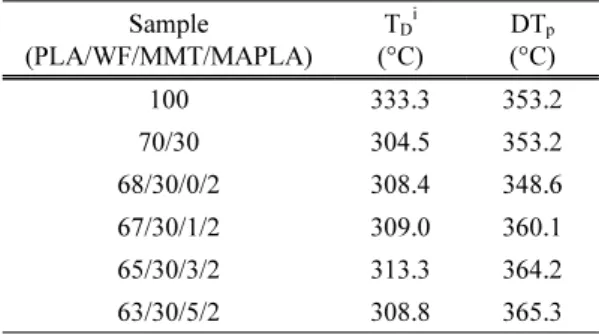
Table 1. Thermal properties of PLA composite reinforced with WF

Sample

(PLA/WF/MMT/MAPLA)

T

Di

(°C)

DT

p

(°C)

100 333.3 353.2

70/30 304.5 353.2

68/30/0/2 308.4 348.6

67/30/1/2 309.0 360.1

65/30/3/2 313.3 364.2

63/30/5/2 308.8 365.3

T

Di

: initial decomposition temperature at 5% weight loss

DT

p

: thermal peak temperature

Fig. 4. TGA thermograms of neat PLA and PLA composites.

3.3. TGA Analysis

Fig. 4 shows the thermal decomposition of neat PLA and PLA composites. The addition of WF decreases the decomposition temperature of PLA composites compared to neat PLA. Table 1 shows the initial decomposition temperature (T

Di

) at a weight loss of 5% and derivative ther- mogravimetry (DT

p

) of PLA composites. The DT

p

was obtained from the differentiation of weight change by temperature. The T

Di

of neat PLA decreases from 333.3°C to 304.5°C with the addition of 30 wt% WF. It can be seen that the thermal stability of WF is lower than that of PLA. The T

Di

of PLA/WF/MAPLA composite at

(5)

2 wt% MAPLA level was increased by about 4°C compared to PLA/WF (70/30 wt%) compo- site, but the DT

p

was decreased by 4.6°C.

The addition of MMT increases the thermal stability of WF reinforced PLA composistes.

The initial decomposition temperature of PLA /WF/MMT/MAPLA (65/30/3/2 wt%) composite was increased by 4.9°C compared to PLA/WF/

MAPLA (68/30/2 wt%) composite. The DT

p

was also increased by 15.6°C. However, the ad- dition of 5 wt% MMT into PLA/WF/MAPLA composite showed no more increase in thermal stability. The increase in the T

Di

is attributed to the hindered diffusion of volatile decomposition products caused by the silicate layers. It is gen- erally believed that the introduction inorganic components in to organic materials can improve their thermal stabilities.

4. CONCLUSIONS

This study investigates the thermal properties of composites prepared from PLA, WF and MMT by melt compounding. In order to en- hance the interfacial adhesion between hydro- philic WF and hydrophobic PLA that maleic anhydride grafted PLA (MAPLA) was synthe- sized and used as a compatibilizer. From SEM microphotographs, the presence of MAPLA has a positive effect on the mechanical properties of WF-reinforced PLA composites in comparison with composites made without MAPLA. The addition of WF/MAPLA into neat PLA in- creased the T

g

. The addition of MMT into PLA/

WF/MAPLA composite as the function of the MMT contents from 1 to 5 wt% decreases the T

g

. The T

cc

of PLA composites filled with MMT was observed with the peak temperature.

The T

cc

was decreased by the addition of MMT.

The MMT could act as effective nucleating sites of PLA crystallization. The thermal stability was improved by the addition of 3 wt% MMT,

while at the loading level of 5 wt%, the initial decomposition temperature was decreased by about 4.5°C. The addition of MMT effectively improves the thermal stability of the PLA com- posites.

REFERENCES

1. Yang, H. S., H. J. Kim, H. J. Park, B. J. Lee, and T. S. Hwang. 2004. Rice-husk filled poly- propylene composites; mechanical and morpho- logical study. Composite Structures 63: 305 ~ 312.

2. Lee, S. Y., H. S. Yang, H. J. Kim, C. S. Jeong, B. S. Lim, and J. N. Lee. 2004. Creep behavior and manufacturing paramenters of wood flour fil- led polypropylene composites. Composite Struc- tures 65: 459~469.

3. Lee, S. Y., I. A. Kang, G. H. Doh, H. G. Yoon, and B. D. Park. 2008. Thermal and mechanical properties of wood flour/talc-filled polylactic acid composites: effect of filler content and cou- pling treatment. Journal of Thermoplastic Com- posite Materials 21: 209~223.

4. Yu, L., K. Dean, and L. Li. 2006. Polymer blends and composites from renewable resources. Pro- gress in Polymer Science 31: 576 ~602.

5. Mohanty, A. K., M. Misra, and G. Hinrichsen, 2000. Biofibers, biodegradable polymers and bio- composites: An overview. Macromolecular Materials and Engineering 276/277: 1~24.

6. Raya, S. S., K. Yamada, M. Okamoto, and K.

Ueda. 2003. New polylactide-layered silicate nano- composites. 2. concurrent improvements of mate- rial properties, biodegradability and melt rheology.

Polymer 44: 857~866.

7. Iannace, S., R. Ali, and L. Nicolais. 2001. Bio- degradation of aliphatic polyester composites re- inforced with Abaca fiber. Journal of Applied Polymer Science 79: 1084~1091.

8. Eichhorn, S. J., C. A. Baillie, N. Zafeiropoulos, L. Y. Mwaikambo, M. P. Ansell, and A. Dufresne.

2001. Current international research into cellulo- sic fibres and composites. Journal of Materials Science 36: 2107 ~2131.

9. Mathew, A. P. and A. Dufresne. 2002. Morpho-

(6)

logical Investigation of nanocomposites from sor- bitol plasticized starch and tunicin whiskers.

Biomacromolecules 3: 609 ~617.

10. Morin, A. and A. Dufresne. 2002. Nanocompos- ites of chitin whiskers from riftia tubes and poly (caprolactone). Macromolecules 35: 2190~2199.

11. Huda, M. S., L. T. Drzal, A. K. Mohanty, and M. Misra. 2006. Chopped glass and recycled newspaper as reinforced fibers in injection mold- ed poly(lactic acid) (PLA) composites: A com- parative study. Composite. Science and Technology 66: 1813~1824.

12. Huda, M. S., A. K. Mohanty, L. T. Drzal, E.

Schut, and M. Misra. 2005. Green composites from recycled cellulose and poly(lactic acid): Physico- mechanical and morphological properties evalua- tion. Journal of Materials Science 40: 4221~

4229.

13. Ke, T. and X. Sun. Physical properties of poly (lactic acid) and starch composites with various blending ratios. Cereal Chemistry 77: 761~768.

14. Van de Velde, K. and P. Kiekens. Biopolymers:

overview of several properties and consequences on their applications. Polymer Testing 21: 433~

442 (2002).

15. Bleach, N. C., S. N. Nazhat, K. E. Tanner, M.

Kellomaki, and P. Tormala. 2002. Effect of filler content on mechanical and dynamic mechanical properties of particulate biphasic calcium phos- phate-polylactide composites. Biomaterials 23:

1579 ~1585.

16. Kasuga, T., Y. Ota, M. Nogami, and Y. Abe.

2001. Preparation and mechanical properties of polylactic acid composites containing hydrox- yapatite fibers. Biomaterials 2: 19~23.

17. Clemons, C. 2002. Wood plastic composites in the United States: the interfacing of two in- dustries. Forest Products Journal 52: 10 ~18.

18. Hendricks, S. B. 1942. Lattice structure of clay minerals and some properties of clays. Journal of Geology 50: 276~290.

19. Mering, J. 1946. On the hydration of montmorillonite.

Transanctions of the Faraday Society 42: 205 ~ 219.

20. Kazayawoko, M. and J. J. Balatinecz. 1995. Adhe- sion mechanisms in wood fiber polypropylene composites. Forest Products Society. Madison, WI. 81.

21. Febrianto F., M. Yoshioka, Y. Nagai, W. Syafii, and N. Shiraishi. 2006. Characterization of com- posites of wood flour and polylactic acid. Mokchae Konghak 34(5): 67~78.

22. Cowie, J. M. G. 1991. Polymer, chemistry &

physics of modern materials, New York, Chapmen

& Hall.

23. Lee, J. H., T. G. Park, H. S. Park, D. S. Lee, Y.

K. Lee, S. C. Yoon, and J. D. Nam. 2003.

Thermal and mechanical characteristics of poly

(lactic acid) nanocomposites scaffold. Biomaterials

24: 2773~2778.

수치

Fig. 1. Structures of layered materials.
Fig. 3. DSC thermograms of neat PLA and PLA  composites; (a) neat PLA, (b) PLA/WF/MAPLA  (68/30/2), (c) PLA/WF/MMT/MAPLA (67/
Table 1. Thermal properties of PLA composite  reinforced with WF Sample (PLA/WF/MMT/MAPLA) T D i (°C) DT p(°C) 100 333.3 353.2 70/30 304.5 353.2 68/30/0/2 308.4 348.6 67/30/1/2 309.0 360.1 65/30/3/2 313.3 364.2 63/30/5/2 308.8 365.3 T D i

참조

관련 문서

This study reports sensitivity enhancement method of a temperature sensor based on fiber Bragg grating (FBG) in combination with an auxiliary materials with a

Chitosan/Carbopol ® 971NF (poly acrylic acid) interpolymer complexes were prepared in pH 3.0, 4.0 and 5.0 medium to control the ratio of chitosan and Carbopol ® 971NF in

Spoilage potential of psychrotrophic lactic acid bacteria (LAB) species: Leuconostoc gelidum subsp. gasicomitatum and Lactococcus piscium , on sweet bell

 Manipulation of protein’s amino acid sequence to change its function or properties.

The purpose and necessity of this study was to investigate the effects of lactic acid fatigue and body oxidation through myofascial relaxation exercise using small tools

Probiotic properties of lactic acid bacteria isolated from mukeunji, a long-term ripened kimchi. Journal of Food

Effect of mulberry leaf powder containing the lactic acid bacteria on body weight gain, food intake and food efficiency ratio in a constipation model

Degradation of PE and PP into fuel oil by using solid acid and non-acid catalyst (Sakata et.. of liquid products from thermal and catalytic degradation of (a) HDPE at 430 °C