J. Miner. Soc. Korea, 22(1), 23-34 (March, 2009)
1)
Study of Iodide Adsorption on Organobentonite using X-ray Absorption Spectroscopy
X-선 흡수분광기를 이용한 유기벤토나이트의 요오드 흡착연구
Jihae Yoon (윤 지 해)1,2,*․Juyoung Ha (하 주 영)1․Jinyeon Hwang (황 진 연)2․ Byoung-Hoon Hwang (황 병 훈)2․Gordon E. Brown, Jr.1,3
1Department of Geological & Environmental Science, Stanford University, Stanford, CA 94305-2115, USA (스탠포드대학교 지질환경과학과)
2Division of Earth Environmental System, Pusan National University, Busan 609-735, Korea (부산대학교 지구환경시스템학부)
3Stanford Synchrotron Radiation Laboratory, SLAC, 2575 Sand Hill Road, MS 69, Menlo Park, CA 94025, USA (스탠포드 싱크로트론 방사선 연구소)
ABSTRACT : The adsorption of iodide on untreated bentonite and bentonites modified with organic cation (i.e., hexadecylpyridinium chloride monohydrate (HDP+)) was investigated, and the organo- bentonites were characterized using uptake measurements, µ-XRD, and electrophoretic mobilities measurement. Uptake measurements indicate that bentonite has a high affinity for HDP+. Our µ-XRD study indicates that organobentonites significantly expanded in basal spacing and organic cations were substantially intercalated into the interlayer spaces of bentonite. The electrophoretic mobility indicates that organobentonite tht is modified with organic cations in excess of the CEC of bentonite is completely different from untreated bentonite in the surface charge distribution. We found significant differences in adsorption capacities of iodide depending on the bentonite properties as follows: iodide adsorption capacities were 439 mmol/kg for the bentonite modified with HDP+ at an equivalent amount corresponding to 200% of the CEC of bentonite whereas no adsorption of iodide was observed for the untreated bentonite. The molecular environments of iodine adsorbed on organobentonites were further studied using I K-edge and LIII-edge x-ray absorption spectroscopy (XAS). The X-ray absorption near-edge structure (XANES) of iodine spectra from organobentonites was similar to that of KI reference solution. Linear combination fitting of EXAFS data suggests the fraction of iodine reacted with the organic compound increased with increasing loading of the organic compound on organobentonites. In this study, we observed significant differences in the adsorption environments of iodide depending on the modified property of bentonite and suggest that an organobentonite has potential as reactive barrier material around a nuclear waste repository containing anionic radioactive iodide.
Key words : hexadecylpyridinium chloride monohydrate (HDP), organobentonite, iodine, adsorption, XAS
*교신저자: [email protected]
요약 : 유기양이온(hexadecylpyridinium chloride monohydrate (HDP+))으로 개질시킨 유기벤토나이 트의 특성을 유기탄소함량 측정, 마이크로-X 선회절 분석, 전기영동 이동성 측정을 이용하여 관찰 하고, 무처리 벤토나이트와 유기벤토나이트의 요오드에 대한 흡착성을 비교 조사하였다. 벤토나이 트는 유기양이온인 HDP+에 대해서 높은 친화력을 보여주었다. 마이크로-X선 회절 분석 결과에 의 하면 유기벤토나이트는 저면 간격에 있어서 현저하게 팽창을 하였고, 이는 유기 양이온이 벤토나 이트의 층간에 충분히 삽입되었음을 의미한다. 전기영동 이동성 측정에 의하면벤토나이트의 양이 온 교환 용량 이상의 유기 양이온으로 치환시킨 유기벤토나이트의 경우 무처리 벤토나이트와 전혀 다른 표면 전하분포를 나타냄을 알 수 있다. 요오드의 흡착능에 있어서, 무처리 벤토나이트는 요오 드를 전혀 흡착하지 못한 반면, 벤토나이트의 양이온 교환용량의 200% 양으로 개질 시킨 유기벤토 나이트의 경우 요오드 439 mmol/kg를 흡착하였다. 유기 벤토나이트에 흡착된 요오드의 분자 환경 은 요오드 K-edge와 LIII-edge X-선 흡수 분광을 이용하여 연구하였다. 유기벤토나이트의 요오드 X 선 흡수 변연 구조를 통해 유기벤토나이트에 흡착된 요오드의 경우 KI 표준용액의 구조와 유사함 을 알 수 있었다. 광범위 X-선 흡수 미세구조의 선형 결합 분석결과는 유기 복합체와 반응한 요오 드의 비율이 벤토나이트에 흡착된 유기 복합체의 양이 증가함에 따라 같이 증가함을 나타냈다. 본 연구를 통해, 벤토나이트의 개질 특성에 의해 요오드의 흡착 환경이 현저하게 달라짐을 관찰할 수 있었으며, 음이온성 방사성 요오드를 포함하는 핵폐기물 저장소 주변의 방어벽 물질로 유기벤토나 이트의 적용 가능성을 살펴 볼 수 있었다.
주요어 : HDP, 유기벤토나이트, 요오드, 흡착, X-선 흡수 분광
Introduction
Iodine exists in the environment at low con- centrations; however, it is an essential element in geological and biological processes. Iodine is indispensable to most living organisms and is especially needed for the human diet, i.e., humans’
thyroid glands to produce thyroid hormones that are essential for growth, the nervous system, and the metabolism. In contrast, if too much iodine enters and remains in humans’ bodies, the iodine will destroy thyroid gland or can cause goiter, thyroid nodules or cancer (Risher et al., 2004).
Furthermore, iodine radioisotopes (129I and 131I) generated during the processing of nuclear energy and nuclear testing and were consisted of spent nuclear fuel as a fission-product are released into the environment as contaminants, which results in a serious environmental problem (Buraglio et al., 2001; Hou et al., 2003; Hu et al., 2005; Kodama et al., 2006; Bruno and Ewing, 2006). Most radioactive forms of iodine change very quickly (seconds to days) to stable elements. However, 129I changes very slowly (τ1/2 = 1.57 × 10⁷ years), and its levels build up in the environment. Moreover, iodine radioisotopes are released instantaneously upon contact with water (Bruno and Ewing, 2006),
therefore they represent a potential threat to the environment and human health.
Disposal of radioactive iodine as well as other radionuclides often involves the burial of a waste form containing the radioactive materials, which is surrounded by a barrier (or backfill) material that would adsorb the radionuclides if they were released from their primary waste form. Bentonite (mainly consists of montmorillonite) is often used as a backfill material in the barrier of a nuclear waste repository, but it is an ineffective adsorbent for anionic contaminants. However, the replace- ment of inorganic cations in montmorillonite by organic cations via ion exchange converts the clay mineral into an effective anion adsorbent. An ex- ample of this is organo-montmorillonite, which is organic cations are substitutedinto the interlayer region of the montmorillonite. Montmorillonite has cation substitutions sites in both the tetrahe- dral and octahedral sheets, and substitutions of ions of the same valence are common in octahe- dral sheets. Isomorphic substitutions by ions of lesser charge, substantially Si4+ by Al3+ in the tetrahedral sheets and Fe3+ or Al3+ by Fe2+ or Mg2+ in the octahedral sheets, produce resultant negative charges on the sheets, which are ba- lanced by interlayer cations, such as alkali-metal
cation Na+, alkaline- earth-metal Ca2+ and Mg2+
ions. The replacement of inorganic cations by organic cations such as organic quaternary am- monium or pyridinium in interlayer converts the clay surfaces from hydrophilic to hydrophobic, hence the characteristics of organobentonites are remarkably different from untreated montmo- rillonite (Theng, 1974; Lagaly, 1981; Johnston, 1996). When organic compounds are grafted onto clay minerals, it has often been observed that minerals can adsorb more organic cations than suggested by theirexchanged CEC amount. Ad- sorption above the exchanged CEC amount of the minerals is due to the hydrophobic bonding between the aliphatic tails of the organic com- pounds (Mortland, 1986; Xu and Boyd, 1995a;
1995b; Deng and Dixon, 2002). Adsorbed or- ganic compounds in montmorillonite can be arranged in monolayers, bilayers, or in pseudo- trimolecular arrangements as well as paraffin type arrangement depending on their aliphatic chain length and mineral charge density (Deng and Dixon, 2002). Using these properties, organo -montmorillonites can be used as adsorbents for deleterious anionic radionuclides such as iodide in barriers around nuclear waste repositories (Bors et al., 2000).
A considerable number of studies have been made on the use of clays and clay minerals modified with organic compounds to reduce or remove hazardous contaminants from water and soils. Organoclays has been studied as adsorbent for organic contaminants such as neutral organic contaminants (NOCs) (Sheng et al., 1996; Chun et al., 2003), BTEX (benzene, toluene, ethyl- benzene and xzylene), phenol (Mortland et al., 1986; Smith and Jaffe, 1994; Koh and Dixon, 2001; Shen, 2002), acid dye (Özcan et al., 2004), and anionic pollutants (Darder et al., 2003; Vujakovi et al., 2003; Li et al., 2007;
Zhu and Zhu, 2007), e.g., nitrate (Li et al., 2003; Özcan et al., 2005), chromate (Krishna et al., 2001; Li et al., 2003; Maryuk et al., 2005), anionic radionuclides (Bors et al., 1997, 2000;
Riebe et al., 2005; Dultz et al., 2005; Riebe and Bunnenberg, 2007), and anionic tungsten
species (Gecol et al., 2005). Furthermore, dur- ing the last several decades, considerable studies have been made to qualify suitable adsorbents that can immobilize or delay the migration of radioiodine that would be released from nuclear wastes (Strickert et al., 1978; Haq et al., 1980;
Couture and Seitz, 1983; Gradev, 1987; Huie et al., 1988; Ikeda et al., 1994; Balsley et al., 1996; Bors et al., 1997, 2000; Kang et al., 1999; Kaplan et al., 2000; Riebe et al., 2005).
Previous iodine studies mainly have been about the significance of its speciation in iodine retention and transportation in natural environ- ment, inorganic and organic-bound forms of iodine, and the molecular mechanism of iodine interaction with natural organic matter (NOM) (Bors et al., 1988; Sheppard and Thibault, 1992;
Fuge, 1996; Stipanicev and Branica, 1996; Ya- mada et al., 1999; Radlinger and Heumann, 2000; Ashworth et al., 2003; Hu et al., 2005).
Despite extensive investigations of organophillic clays and clay minerals as adsorbents over the past several decades, most of these types of studies have utilized only macroscopic measure- ments. The molecular-scale characterization of structures and compositions of reactive sites on organoclays in contact with aqueous solutions are poorly understood, mainly due to the complexities of the interfaces and scarcity of appropriate analy- tical tools for probing such complex systems.
X-ray absorption spectroscopy (XAS), includ- ing both X-ray absorption near-edge structure (XANES) and extended X-ray absorption fine structure (EXAFS), is an element specific and non-destructive technique to substantiate environ- ment of adsorbate at mineral-water interface.
However, only a few studies using XAS have investigated the iodine speciation and the iodine molecular environment in natural system (Fuhr- mann et al., 1998; Reed et al., 2002; Kodama et al., 2006; Schlegel et al., 2006; Yamaguchi et al., 2006; Shimamoto and Takahashi, 2008) and cement-based materials (Bonhoure et al., 2002), and none to organobentonite applying for nuclear waste repository. Therefore, this study is focused on investigating the properties of bento-
Table 1. Chemical formula, molecular weight, and structure of organic compound
Chemical name Chemical formula Molecular weight (g/mol) Structure Hexadecylpyridinium
chloride monohydrate (HDP)
C21H38ClN⋅H2O 358.01
nites modified with an organic cation (i.e., hexa- decylpyridinium chloride monohydrate (HDP+)), noted as organobentonite hereon, and we em- ployed XAS to elucidate the adsorption environ- ment of iodine on organobentonite as a reactive barrier material around a nuclear waste reposi- tory at a molecular-level.
Materials and Methods
Samples
Commercial bentonite (Opazil) provided by SÜD-CHEMIE Korea Co. was used in our ex- periment. The bentonite was activated with NaCO3
during the manufacturing process. The reported CEC value for this material is 101 meq/100 g. It mainly consists of Na-montmorillonite (About 98%) and minor amounts of quartz asimpurities.
The Na-activated bentonite was used without any further treatment for this study.
Hexadecylpyridinium chloride monohydrate (HDP) was used as an organic compound for the pre- paration of organobentonites. Table 1 presents the organic cation used to modify bentonite. Organic compound used in this investigation was pur- chased from Sigma-Aldrich Company, Inc.
Sorptioin Isotherms of Organic Compounds and Dissolution Measurement
The Batch equilibration isotherm was deter- mined 0.2 g bentonite samples weighed into 15- mL centrifuge tubes; 10-mL of DDI water solu- tions containing quantities of HDP equivalent to 0.2∼4.0 times the CEC of bentonite were added to these tubes. After then, these suspensions were shaken for 24 hr, and the mixtures were centri- fuged at 6000 rpm for 30 min. Finally, the supernatants were filtered and the concentrations
of organic compounds were analyzed by a TOC analyzer (TOC-5000A, Shimadzu).
The dissolved sodium concentration was check- ed in filtered supernatants using inductively coupled plasma (ICP) spectrometer. A TJA IRIS Advantage/1000 Radial ICAP spectrometer eq- uipped with a solid state CID detector was used for this measurement.
Organic Modification of the Bentonites The organic compound solutions as three di- fferent concentrations of 101 meq/100 g, 202 meq/100 g, and 404 meq/100 g of bentonite were added in 2.0 g of bentonite. The bentonites modified with the organic cation at equivalent amount to 100%, 200%, and 400% of the CEC of bentonite, referred as organobentonite-I, organo- bentonite-II, and organobentonite-III, respectively.
The mixtures were shaken for 24 hr and then werecentrifuged at 6000 rpm for 30 min. After centrifugation, the supernatants werediscarded and the solids were washed with distilled water three times. Organobentonites were frozen immediately and freeze-dried for further experiments. Synthe- sized organobentonites were investigated by a micro X-Ray Diffraction (µ-XRD) instrument using at beam line 11-3 at the Stanford Synchrotron Radiation Laboratory (SSRL, Stanford, CA), and surface charge of untreated bentonite and organo- bentonite was checked by measuring the velocity of the particles using an electrophoremeter (Malvern Instruments ZEN3601 Zetasizer Nano- ZS). For the electrophoretic mobilities measure- ment, the bentonite and organobentonite disper- sions were prepared at concentration 1 g dm-3 in DDI water and mixed for 24 hr with a magnetic stirrer. Experiments were performed in pH ranging from 2 to 12 by batch experiment.
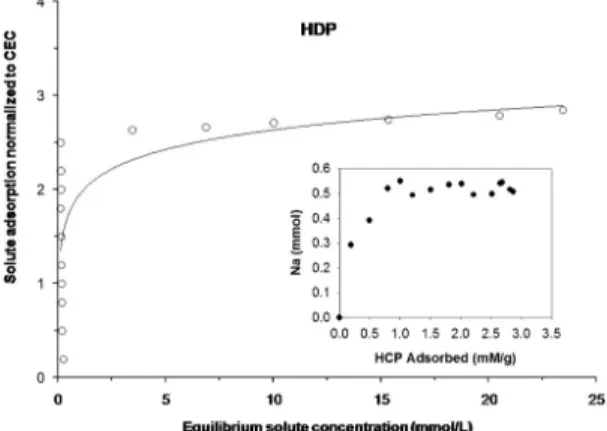
Fig. 1. Adsorption isotherm of HDP cation on ben- tonite. The inset shows the concentration of Na dissolved from the bentonite interlayer as a function of HDP loading.
Anion Adsorption
The anion adsorption experiments were con- ducted for 0.2 g of untreated bentonite and ben- tonite treated with HDP as 200% CEC equivalent amount of bentonite with 40.0 mL of iodide solutions (KI) at various ionic strength conditions of iodide (7.8 × 10⁻⁴ ∼ 7.8 × 10⁻² mol/L). The mixtures were shaken at room temperature for 24 hr. After reaction was completed, the liquid phases were separated from the solids by centri- fugation at 6000 rpm for 30 min. The superna- tants were filtered, and the concentrations of anion were analyzed by Ion chromatograph (DIONEXDX -500).
X-ray Absorption Spectroscopy (XAS)
Iodine LIII-edge XAS spectra werecollected at the Stanford Synchrotron Radiation Laboratory (SSRL) using beam line 10-2 at 4557 eV. The X-ray beam was unfocused on a Si(111) mono- chromator crystal (Φ = 90°). Fluorescence-yield EXAFS data at Iodine LIII-edge were collected using a Ge detector. The monochromator was calibrated by using a Ti foil standard and by setting the first maximum of the Ti K-edge at 4966.8 eV. For this experiment, organobentonites were saturated with iodine equilibrating 0.2 g of organobentonites containing quantities of HDP equivalent to 1, 2, and 4.0 times the CEC of bentonite, respectively, with 40.0 mL of 0.5M KI for 48 hr. Iodine K-edge XAS spectra was collected at the Stanford Synchrotron Radiation Laboratory (SSRL), on beam line 11-2 at 33139 K, using a cryogenically cooled double-crystal Si (220) monochromator. Fluorescence-yield EXAFS data at the iodine K-edge were collected using a Lytle detector, filled with Ar gas. For this ex- periment, organobentonites were saturated with iodine equilibrating 0.2 g of organobentonites containing quantities of HDP equivalent to 2 times the CEC of bentonite, with 40.0 mL of 6 × 10⁻³ M KI for 24 hr. As reference materials of iodine LIII-edge and K-edge XAS spectra, 0.2 M KI and KIO3 and 0.1 M KI and KIO3 were used,
respectively. EXAFS spectra were extracted from the averaged data files by pre-edge subtraction followed by spline fitting using Sixpack.
Results and Discussions
Organic Compound Adsorption Isotherms HDP+ uptake measurements indicate that ben- tonite has a high affinity for HDP+. Increasing [HDP+](aq) results in an increase in HDP+ uptake on bentonite by up to 284% of the CEC equi- valents of bentonite (Fig. 1). The large amounts of HDP+ uptake indicate that multi-layering adsorption occurred during the reaction. In the beginning of reaction, HDP+ adsorbed by cati- onic exchange in the interlayer, while the loading of HDP+ in excess of the CEC of bentonite caused by hydrophobic bonding (Van der Waals interactions) between the hydrophobic C-chains (Theng, 1974; Lagaly, 1981; Xu and Boyd, 1995a, 1995b; Deng and Dixon, 2002). The inset of Fig. 1 shows the concentration of Na dis- solved from the bentonite as a function of organic cations loading. As shown in the inset, there is a strong correlation between the amount of HDP+ adsorbed and the amount of Na+ released from the bentonite: an increase in HDP+ uptake on ben-
Fig. 2. µ-XRD patterns of (A) bentonite (1.27 nm), (B) organobentonite-I (2.19 nm), (C) organobentonite
-II (3.93 nm), and (D) organobentonite-III (3.99 nm). Fig. 3. Electrophoretic mobilities of untreated ben- tonite and organobentonite-II.
tonite causes a concomitant increase in Na re- leased as a result of the replacement of ex- changeable inorganic cations in bentonite inter- layers with organic compounds.
Phase Identification of Organobentonite The d001 spacing of untreated bentonite was 1.27 nm and those of organobentonite-I, organo- bentonite-II, and organobentonite-III showed 2.19 nm, 3.93 nm, and 3.99 nm, respectively, at room temperature based µ-XRD pattern (Fig. 2).
Based on the data of Paradies and Habben (1993), thoughthe height of pyridinium cation is different depending on the orientation of the pyridinium cation, the length of the long alkyl chain is about 2.4 nm and that of the pyri- dinium cation is around 0.27 nm when the HDP+ lies stretched out. The µ-XRD pattern implies that the organobentonites significantly expanded in basal spacing depending on the charge density of the bentonite. For organo- bentonite-I, the long aliphatic chain of HDP+ was intercalated into the interlayer of mont- morillonite as a pseudotrimolecular layer or a paraffin-type monomolecular arrangement, while in case of organobentonite-II and organoben-
tonite-III, it was substantially inserted as an inclined or perpendicular bilayer paraffin com- plexes structure (Deng and Dixon, 2002). The basal spacings and intensities of the organo- bentonites are increased with increasing uptake amount of organic cations used in synthesis.
Electrophoretic Mobility
The results obtained for electrophoretic mo- bilities values measured against pH (Fig. 3).
The electrophoretic mobility of untreated ben- tonite was negative for the whole pH range (pH 2∼12). On the contrary, that of organobentonite -II was found tohave the positive electrophoretic mobility in the whole pH range observed. This result supports the µ-XRD pattern of organo- bentonite-II. This study is important in the analysis of the electrokinetic properties of clays due to its effect on the charge distribution of the particle surface. Consequently, organoben- tonite that is modified with organic cations in excess of the CEC of bentonite is completely different from untreated bentonite in the surface charge distribution.
Table 2. Fitted langmuir parameters for adsorption of iodide by organobentonite-II
Sample Kads
(L/mmol)
Γmax (mmol/kg) r2 Iodide on
organobentonite-II 127 439 0.999 Fig. 4. Langmuir adsorption isotherm of iodide ad- sorption on organobentonite-II.
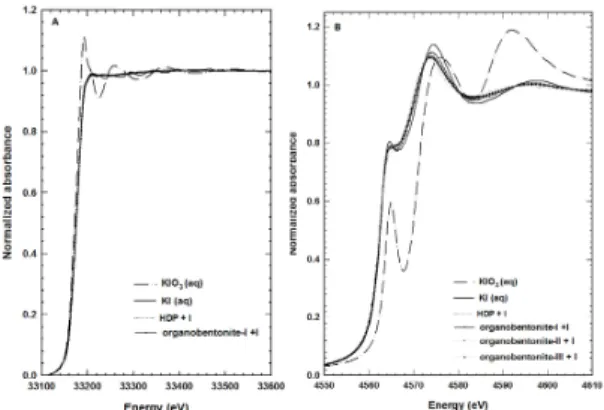
Fig. 5. Iodine K-edge (A) and LIII-edge (B) XANES spectra of reference compounds and samples studied.
Iodineadsorption Characteristics
When A + B ⇌ AB means simple adsorp- tion, the equilibrium constant, Kads, is given by as below:
[AB] = Kabs
[A][B]
where A = surface site of adsorbent B = adsorbate in solution AB = adsorbate on surface sites
The Langmuir isotherm can be expressed as following equation (Stumm and Morgan, 1996;
Kang et al., 1999),
Γ = Γmax Kads[B]
1 + Kads[B]
where Γ is the amount of anion adsorbed (mmol/kg), Γmax is the maximum adsorption cap- acity (mmol/kg), Kads is the equilibrium constant (L/mmol), [B] is the equilibrium concentration of
the anion (mmol/L).
Iodine adsorption was well described by the Langmuir isotherm with correlation coefficient (r2) exceeding 0.999 (Table 2). Iodide adsor- ption behavior of untreated bentonite and the organobentonite was very different: untreated bentonite did not adsorb iodide at all, whereas organobentonite-IIshowed excellent adsorption capacities for iodide (Fig. 4, Table 2). The maximum iodide adsorption capacities and the equilibrium constant, Kads, for organobentonite-II were 439 mmol/kg and 127 L/mmol, respec- tively. This result signifies that bentonite was turned into a highly efficient anion adsorbent by insertion of organic cation into interlayer.
X-ray Absorption Spectroscopy (XAS) Since the core hole lifetime increases re- gularly and rapidly with the increase in the atomic number for a given electronic level (Brown et al., 1988), LIII-edge XANES could be more effectivefor the speciation of iodine. Even though K-edge XANES shows the featureless spectra in increasing atomic number, K-edge XANES spectra are more obvious than those of LIII-edge on distinguishing iodide from iodate (Fig. 5(A)) (Shimamoto and Takahashi, 2008).
Fig. 5(B) depicts that XANES spectra for re- ferences and samples display peaks at 4564.5 and 4573~4576 eV. Visual inspection of Fig. 5 suggests that the main absorption edge shift to
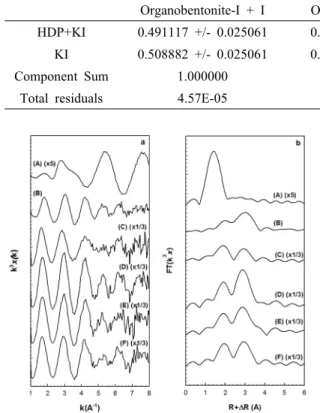
Fig. 6. (a) Iodine LIII-edge EXAFS spectra for re- ferences and samples studied. (b) comparison of selected Fourier transforms (FTs) for iodine in re- ferences and samples studied. (A) KIO3(aq), (B) KI(aq), (C) HDP + I, (D) organobentonite-I + I, (E) organobentonite-II + I, and (F) organobentonite-III + I.
Table 3. Fraction of HDP+KI and KI determined by linear combination fitting shown in Fig. 7
Organobentonite-I + I Organobentonite-II + I Organobentonite-III + I HDP+KI 0.491117 +/- 0.025061 0.644924 +/- 0.018977 0.772394 +/- 0.016179 KI 0.508882 +/- 0.025061 0.355075 +/- 0.018977 0.227605 +/- 0.016179
Component Sum 1.000000 1.000000 0.999999
Total residuals 4.57E-05 5.92E-07 1.46E-05
higher energies with increasing I. This edge shift can be traced by the shift of the half-height of the normalized absorption edge, from 4564.5 eV in KI ( I = -1) to 4564.9 eV in KIO3 ( I = 5).
This reliance of the edge position with the formal oxidation state is well documented (Brown et al., 1988). The XANES spectra of iodine adsorbed organobentonites were found to be similar to the spectra of KIreference solution (Fig. 5). This suggests that iodine with I = -1 is predominant in all of examined iodine in organobentonite.
Fig. 6 presentsthat the iodine LIII-edge spectra and comparison of Fourier transform for iodine in references and samples studied. The spectral discordances observed for the X-ray adsorption edges of KIO3 reference and iodine in organo-
bentonites and KI reference (Fig. 6a). X(k) for samples and KI reference all display oscillation maxima near 1.8, 3.0, 4.2 Å-1. However, X(k) for KIO3 reference figures oscillation maxima near 1.75, 2.75, 5.35 Å-1. The FT peaks near R + ΔR = 1.9 Å are attributed to the contribution from the carbon atom bonded to iodine and peaks near 2.9 Å are related to contribution from oxygen atom (Fig. 6b). Iodine in the reference samples is predominately bound by oxygen molecules (I-O), 3.6 Å for KI and 1.8 Å for KIO3. Quantitative analysis of EXAFS spec- tra of organobentonite samples indicates that iodine is bound to carbon and the coordination number and interatomic distances between I-C varied depending on the organic concentration on bentonite. The detailed investigation into the molecular environment of adsorbed anions will be executed using FEFF EXAFS fitting. In con- clusion, analysis of X-ray absorption spectra for iodine adsorbed organobentonites suggests that the presence of iodine- carbon bonds and it suggests that XANES and EXAFS spectra and FT display distinct patterns that could be used as a fingerprint of iodine molecular environ- ment.
Linear combination fitting of EXAFS data offers an alternative method of quantifying or- ganic compounds bonding with iodine and iodine is not bonded on organobentonites depending on different loading amount of organic compounds.
0.25 M KI reacted with 0.5 M HDP and 0.2 M KI were used as references for this fitting.
Linear combination fitting of EXAFS data sugg- ests the fraction of iodine reacted with the organic compound increased from 49% to 77%
with increasing loading of the organic com- pound on organobentonites. (Table 3, Fig. 7).
Fig. 7. Linear combination fitting of iodine LIII-edge EXAFS spectra for I-adsorbed organobentonites (fit data: dotted lines; experimental data: solid lines).
Conclusions
The adsorption behavior of HDP on bentonite shows a typical L-type isotherm representing continuous and stable adsorption in excess of twice the cation exchange capacity of bentonite.
Results from electrophoretic mobility and µ- XRD diffraction analysis revealed that organo- bentonite, which is manufactured by the ex- changeable inorganic cations have been replaced by organic cations in the interlayer of bentonite was completely different from untreated ben- tonite in the surface charge distribution and d- spacing. This means that the organobentonites significantly expanded in basal spacing, and organic cations were substantially intercalated into the interlayer spaces of bentonite. IC analysis data also showed that organobentonite has excellent adsorption efficiency for iodine. EXAFS spectro- scopy measurements can explain the characteri- stics of organobentonite, stability and mechanism of adsorption occurring in surface and interface at the molecular level. Therefore, the precision analysis will be executed by model compound work. These stable and persistent characteristics and the relatively low price of HDP point that it is proper to apply to nuclear waste repository.
These results can help explain the adsorption environment of iodide on organobentonite and also highlight the possible role of organoben- tonites as a reactive barrier material around a
nuclear waste repository containing radioactive iodine.
Acknowledgements
This work was supported by the Korea Re- search Foundation Grant funded by the Korean Government (MOEHRD) (KRF-2006-352-C00078).
We greatly appreciate the assistance of Guang- chao Li in IC and ICP analysis, and John Bargar, Joe Rogers, and Samuel Webb for beam line support. We are grateful to an anonymous re- viewer for his helpful comments which improved the manuscript.
References
Ashworth, D.J., Shaw, G., Butler, A.P., and Ciciani, L. (2003) Soil transport and plant uptake of radio-iodine from near-surface groundwater. J.
Environ. Radioact., 70, 99-114.
Balsley, S.D., Brady, P.V., Krumhansl, J.L., and Anderson, H.L. (1996) Iodide Retention by Metal Sulfide Surfaces: Cinnabar and Chalcocite. Envi- ron. Sci. Technol., 30, 3025-3027.
Bonhoure, I., Scheidegger, A.M., Wieland, E., and Dahn, R. (2002) Iodine species uptake by cement and CSH studied by I K-edge X-ray absorption spectroscopy. Radiochim. Acta, 90, 647-651.
Bors, J., Dultz, S., and Riebe, B. (2000) Organo- philic bentonites as adsorbents for radionuclides:
I. Adsorption of ionic fission products. Appl. Clay Sci., 16, 1-13.
Bors, J., Gorny, A., and Dultz, S. (1997) Iodide, caesium and strontium adsorption by organophilic vermiculite. Clay Miner., 32, 21-28.
Bors, J., Martens, R., and Kuhn, W. (1988) Studies on the role of natural and anthropogenic organic substances in the mobility of radio-iodine in soils.
Radiochim. Acta, 44/45, 201-206.
Brown, G.E., Jr., Calas, G., Waychunas, G.A., and Petiau, J. (1988) X-ray absorption spectroscopy and its applications in mineralogy and geoche- mistry. In: Haqthorne, F.C. (Ed), Spectroscopic methodsin mineralogy and Geochemistry, Minera- logical society of America, Reviews in Miner- alogy, Washington DC, 18, 431-512.
Bruno, J. and Ewing, R.C. (2006) Spent nuclear fuel.
Elements, 2, 343-349.
Buraglio, N., Aldahan, A., Possnert, G., and Vin- tersved, I. (2001) I-129 from the nuclear repro- cessing facilities traced in precipitation and runoff in northern Europe. Environ. Sci. Technol, 35, 1579-1586.
Chun, Y., Sheng, G., and Boyd, S.A. (2003) Sor- ptive characteristics of tetraalkylammonium-ex- changed smectite clays. Clays Clay Miner., 51, 415-420.
Couture, R.A. and Seitz, M.G. (1983) Sorption of anions of iodine by iron oxides and kaolinite.
Nucl. Chem. Waste Manage., 4, 301-306.
Darder, M., Colilla, M., and Ruiz-Hitzky, E. (2003) Biopolymer-Clay Nanocomposites Based on Chi- tosan Intercalated in Montmorillonite. Chem.
Mater., 15, 3774-3780.
Deng, Y. and Dixon, J.B. (2002) Soil organic matter and organic-mineral interaction. In: Dixon, J.B.
and Schulze, D.G., Soil Mineralogy with En- vironmental Applications, Madison, Wisconsin, 69-107.
Dultz, S., Riebe, B., and Bunnenberg, C. (2005) Temperature effects on iodine adsorption on organo-clay minerals: II. Structural effects. Appl.
Clay Sci., 28, 17-30.
Fuge, R. (1996) Geochemistry of iodine in relation to iodine deficiency diseases. Geological Society, London, Special Publications, 113, 201-211.
Fuhrmann, M., Bajt, S., and Schoonen, M.A.A.
(1998) Sorption of iodine on minerals investigated by X-ray absorption near edge structure (XANES) and 125I tracer sorption experiments. Appl. Geo- chem., 13, 127-141.
Gecol, H., Ergican, E., and Miakatsindila, P. (2005) Biosorbent for tungsten species removal from water: Effects of co-occurring inorganic species. J.
Colloid Interface Sci., 292, 344-353.
Gradev, G.D. (1987) Sorption of iodide ions on cationic forms of clinoptilolite. J. Radioanal. Nucl.
Chem., 116, 341-346.
Haq, Z., Bancroft, G.M., Fyfe, W.S., Bird, G., and Lopata, V.J. (1980) Sorption of iodide on copper.
Environ. Sci. Technol., 14, 1106-1110.
Hou, X.L., Fogh, C.L., Kucera, J., Andersson, K.G., Dahlgaard, H., and Nielsen, S.P. (2003) Iodine- 129 and Caesium-137 in Chernobyl contaminated soil and their chemical fractionation. Sci. Total Environ., 308, 97-109.
Hu, Q., Zhao, P., Moran, J.E., and Seaman, J.C.
(2005) Sorption and transport of iodine species in sediments from the Savannah River and Hanford Sites. J. Contam. Hydrol., 78,185-205.
Huie, Z., Zishu, Z., and Lanying, Z. (1988) Sorption of radionuclides technetium and iodine on mi- nerals. Radiochim. Acta, 44/45, 143-145.
Ikeda, Y., Sazarashi, M., Tsuji, M., and Seki, R.
(1994) Adsorption of I- ions on cinnabar for 129I waste management. Radiochim. Acta, 65, 195- 198.
Johnston, C.T. (1996) Sorption of organic com- pounds on clay minerals: A surface functional group approach. In: B.L. Sawhney, (ed.), Organic Pollutants in the Environments, CMS Workshop Lectures, 8, The Clay Mineral Society, Boulder, Colorado, 1-44.
Kang, M.J., Chun, K.S., Rhee, S.W., and Do, Y.
(1999) Comparison of sorption behavior of I- and TcO4-
on Mg/Al layered double hydroxide. Radio- chim. Acta, 85, 57-63.
Kaplan, D.I., Serne, R.J., Parker, K.E., and Kutnya- kov, I.V. (2000) Iodide Sorption to Subsurface Sediments and Illitic Minerals. Environ. Sci.
Technol., 34, 399-405.
Kodama, S., Takahashi, Y., Okumura, K., and Uruga, T. (2006) Speciation of iodine in solid environ- mental samples by iodine K-edge XANES: Appli- cation to soils and ferromanganese oxides. Sci.
Total Environ., 363, 275-284.
Koh, S.M. and Dixon, J.B. (2001) Preparation and application of organo-minerals as sorbents of phenol, benzene and toluene. Appl. Clay Sci., 18, 111-122.
Krishna, B.S., Murty, D.S.R., and Jai Prakash, B.S.
(2001) Surfactant-modified clay as adsorbent for chromate. Appl. Clay Sci., 20, 65-71.
Lagaly, G. (1981) Characterization of clays by organic compounds. Clay Miner., 16, 1-21.
Li, Z., Beachner, R., McManama, Z., and Hanlie, H.
(2007) Sorption of arsenic by surfactant-modified zeolite and kaolinite. Microporous and Mesopo- rous Materials, Zeolite ’06 (Proceedings of the 7th International Conference on the Occurrence, Properties and Utilization of Natural Zeolites), 1 October, 105, 291-297.
Li, Z., Willms, C.A., and Kniola, K. (2003) Removal of anionic contaminants using surfactant-modified palygorskite and sepiolite. Clays Clay Miner., 51,
445-451.
Maryuk, O., Pikus, S., Olszewska, E., Majdan, M., Skrzypek, H., and Zieba, E. (2005) Benzyldi- methyloctadecylammonium bentonite in chromates adsorption. Mater. Letters, 59, 2015-2017.
Mortland, M.M. (1986) Mechanisms of adsorption of non-humic organic species by clay. In: Huang, P.M. and Schnitzer, M. Interactions of Soil Minerals with Natural Organics and Microbes, Soil Science Society of America, Madison, Wis- consin. 59-76.
Mortland, M.M., Shaobai, S., and Boyd, S.A. (1986) Clay-organic complexes as adsorbents for phenol and chlorophenols. Clays Clay Miner., 34, 581 -585.
Özcan, A.S., Erdem, B., and Özcan, A. (2004) Adsorption of Acid Blue 193 from aqueous solutions onto Na-bentonite and DTMA-bentonite.
J. Colloid Interface Sci., 280, 44-54.
Ozcan, A., Sahin, M., and Ozcan, A.S. (2005) Ad- sorption of Nitrate Ions onto Sepiolite and Sur- factant-modified Sepiolite. Adsorp. Sci. Technol., 23, 323-333.
Paradies, H.H. and Habben, F. (1993) Structure of N-hexadecylpyridinium chloride monohydrate. Acta Cryst., C49, 744-747.
Radlinger, G. and Heumann, K.G. (2000) Transfor- mation of Iodide in Natural and Wastewater Systems by Fixation on Humic Substances. Envi- ron. Sci. Technol., 34, 3932-3936.
Reed, W.A., May, I., Livens, F.R., Charnock, J.M., Jeapes, A.P., Gresley, M., Mitchell, R.M., and Knight, P. (2002) XANES fingerprinting of iodine species in solution and speciation of iodine in spent solvent from nuclear fuel reprocessing. J.
Anal. Atom. Spectrom., 17, 541-543.
Riebe, B. and Bunnenberg, C. (2007) Influence of temperature pre-treatment and high-molar saline solutions on the adsorption capacity of organo- clay minerals. Phys. Chem. Earth, Parts A/B/C, 32, 581-587.
Riebe, B., Dultz, S., and Bunnenberg, C. (2005) Temperature effects on iodine adsorption on organo -clay minerals I. Influence of pretreatment and adsorption temperature. Appl. Clay Sci., 28, 9-16.
Risher, J., Diamond, G., Swarts, S.G., and Amata, R.
(2004) Toxicological profile for Iodine. Agency for Toxic Substances and Disease Registry (ATSDR), US Department of Health and Human
Services, Washington DC, 1-9.
Schlegel, M.L., Reiller, P., Mercier-Bion, F., Barre, N., and Moulin, V. (2006) Molecular environment of iodine in naturally iodinated humic substances:
Insight from X-ray absorption spectroscopy. Geo- chim. Cosmochim. Acta, 70, 5536-5551.
Shen, Y.H. (2002) Removal of phenol from water by adsorption-flocculation using organobentonite.
Water Res., 36, 1107-1114.
Sheng, G., Xu, S., and Boyd, S.A. (1996) Cosorption of organic contaminants from water by hexadecy- ltrimethylammonium-exchanged clays. Water Res., 30, 1483-1489.
Sheppard, M.I. and Thibault, D.H. (1992) Chemical behaviour of iodine in organic and mineral soils.
Appl. Geochem., 7, 265-272.
Shimamoto, Y.S. and Takahashi, Y. (2008) Supe- riority of K-edge XANES over LIII-edge XANES in the Speciation of Iodine in Natural Soils. Anal.
Sci., 24, 405-409.
Smith, J.A. Associate Member, ASCE and Jaffe, P.R. (1994) Benzene transport through landfill liners containing organophilic bentonite. J. Envi- ron. Eng., 120, 1559-1577.
Stipanicev, V. and Branica, M. (1996) Iodine specia- tion in the water column of the Rogoznica Lake (Eastern Adriatic Coast). Sci. Total Environ., 182, 1-9.
Strickert, R., Friedman, A.M., and Fried, S. (1978) Sorption of technetium and iodine radioisotopes by various minerals. Trans. Am. Nucl. Soc, 28, ANS annual meeting, San Diego, CA, USA, 365-366.
Stumm, W. and Morgan, J.J. (1996) Aquatic Chemis- try: Chemical Equilibria and Rates in Natural Waters. John Wiley & Sons, New York, 1022p.
Theng, B.K.G. (1974) The chemistry of clay-organic reactions. Wiley, New York. 343p.
Vujaković, A., Daković, A., Lemić, J., Radosavl- jević-Mihajlović, A., and Tomašević-Čanović, M.
(2003) Adsorption of inorganic anionic contami- nants on surfactant modified minerals. J. Serb.
Chem. Soc., 68, 833-841.
Xu, S. and Boyd, S.A. (1995a) Cationic Surfactant Adsorption by Swelling and Nonswelling Layer Silicates. Langmuir, 11, 2508-2514.
Xu, S. and Boyd, S.A. (1995b) Cationic surfactant sorption to a vermiculitic subsoil via hydrophobic bonding. Environ. Sci. Technol., 29, 312-320.
Yamada, H., Kiriyama, T., Onagawa, Y., Hisamori,
I., Miyazaki, C., and Yonebayashi, K. (1999) Speciation of iodine in soils. Soil Sci. Plant Nutr., 45, 563-568.
Yamaguchi, N., Nakano, M., Tanida, H., Fujiwara, H., and Kihou, N. (2006) Redox reaction of io- dine in paddy soil investigated by field observa- tion and the I K-Edge XANES fingerprinting method. J. Environ. Radioact., 86, 212-226.
Zhu, L. and Zhu, R. (2007) Simultaneous sorption of organic compounds and phosphate to inorganic- organic bentonites from water. Separ. Purif. Tech- nol., 54, 71-76.
접수일(2009년 2월 4일), 수정일(1차 : 2009년 3월 12일), 게재확정일(2009년 3월 13일)