Introduction
Watermelon, Citrullus lanatus (Thumb.) Matsum. and Nakai, from the family Cucurbitaceae, is one of the most economically important and widely cultivated fruit vegetable crops. Watermelons have many nutrients containing diverse vitamins, lycopene, antioxidants and amino acids and these therapeutic compounds attract consumers (Perkins-Veazie, 2009).
Watermelon is cultivated in most regions of Korea. In
2016, the growing area of watermelon was 13,440 ha and its yield was estimated as 4,242 ton/ha (KOSIS, 2017).
Nowadays new types of watermelon have been developed in response to the market demand for fruits with a smaller size, healthful ingredients and high quality (Galdeano-Gomez et al., 2017). Particularly, small-sized watermelons, which weights range from 3 to 5 ㎏, have become more and more popular, because they have attributed the convenient transport and attracted consumers due to the increase of single-person households and nuclear families. Lifestyle changes have also generated new consumption patterns, which facilitate the development of new small-sized watermelon cultivar (Park and Cho, 2012).
Characteristics of Growth, Yield, and Physiological Responses of Small-Sized Watermelons to Different Soil Moisture Contents Affected by
Irrigation Starting Point in a Plastic Greenhouse
Yoon-Sun Huh
1*, Eun-Jeong Kim
2, Sol-Ji Noh
2, Yu-Min Jeon
2, Sung-Won Park
2, Geon-Sig Yun
2, Tae-Il Kim
3, and Young-Ho Kim
41
Researcher, Department of Crop Research, Chungcheongbuk-do Agricultural Research and Extension Services, Cheongju 28130, Korea
2
Researcher, Watermelon Research Institute, Chungcheongbuk-do Agricultural Research and Extension Services, Eumseong 27668, Korea
3
Senior Researcher, Watermelon Research Institute, Chungcheongbuk-do Agricultural Research and Extension Services, Eumseong 27668, Korea
4
Senior Researcher, Department of Crop Research, Chungcheongbuk-do Agricultural Research and Extension Services, Cheongju 28130, Korea
Abstract. Watermelon yield mainly depends on soil water content controlled by irrigation in a plastic greenhouse. In this study, we investigated the effect of different soil moisture contents affected by irrigation starting point on growth, yield, and physiological responses of small-sized watermelons. Irrigation was initiated at 5 different levels of soil water content as a starting point with soil moisture detecting sensor after 14 days of transplanting, and stopped at 7 ~ 10 days before harvest. These treatments were compared with the conventional periodic irrigation as control. When soil had the lowest moisture content (-50 kPa), the overall shoot growth was retarded, but the root length and root dry weight increased. The photosynthetic parameters (photosynthetic rate, stomatal conductance, and transpiration rate) of watermelon leaves decreased significantly in the lowest soil moisture content (-50 kPa). On the other hand, the photosynthetic rates of watermelon leaves grown with irrigation starting point between -20 and -40 kPa were observed to be higher than those of other treatments. Fruit set rate and marketable fruit yield increased significantly at –30 kPa and –40 kPa. Proline, abscisic acid (ABA), total phenol and citrulline, which are known to contribute to stress tolerance under drought condition, increased as soil water content decreased, particularly, the largest increases were recorded at –50 kPa.
From these results, it was found that an appropriate water supply adjusted with an irrigation starting point between -30 and -40 kPa could help to keep favorable soil water content during the cultivation of small-sized watermelons, promoting the marketable fruit production as well as inducing the vigorous plant growth and reproductive development.
Additional key words : ABA, citrulline, marketable fruit yield, phenolic compound, proline, small-sized watermelon, water stress
*Corresponding author: [email protected]
Received July 21, 2020; Revised September 16, 2020;
Accepted September 16, 2020
Fruit quality and productivity of watermelon are affected by water management and agronomic practices (Proietti et al., 2008). Especially an adequate supply of water is essential for high productivity (Desai and Patil, 1984;
Elmstrom et al., 1981; Singh and Singh, 1978). But large quantities of water are wasted by conventional irrigation method during the early and middle stages of growth (Srinivas et al., 1989). Most growers tend to reduce slightly the water supply during the flowering phase to enhance the fruit number and yield, but without measuring the soil or the plant water status (González et al., 2009). Crop growth and development usually depend on irrigation, but inappropriate irrigation practice may result in water stress, which leads to the reduction of plant growth and yield (Hartz, 1997; Jaimez et al., 1999; Kirnak et al., 2002). Water stress may induce the limitation of leaf growth and increase of stomatal resistance, which are associated with a decrease of water and mineral nutrition flow from roots. It affects net assimilation, and decreases the production and allocation of carbohydrates to the epigenous plant parts, including fruits (Shaw et al., 2002).
However, many recent reports have shown that the maintenance of a slight water deficit can improve the partitioning of carbohydrates to reproductive structures such as fruit and control excessive vegetative growth, which was called ‘regulated deficit irrigation’ (Chalmers et al., 1986). This technique can result in more efficient water consumption and improve product quality (Kirnak et al., 2002; Şimşek et al., 2004). Similar results were also reported in watermelon and mini-watermelon. Regulated deficit irrigation could regulate the distribution of photosynthesis products and ratio between root and shoot, and balance the relationship between vegetative and reproductive growing of watermelon and mini-watermelon in greenhouse (González et al., 2009; Zheng and Jian, 2009).
In these studies, we tried to investigate the effect of different soil moisture contents affected by irrigation starting point on growth, yield and physiological responses of small-sized watermelon, and find the optimum irrigation condition for the favorable plant growth and marketable fruit production of small-sized watermelon.
Materials and methods
1. Plant materials, cultivation and treatment
Breeding line producing small-sized watermelon, SWM2, which was grafted onto bottle gourd (Lagenaria siceraria) rootstock, was cultivated at greenhouses in Watermelon Research Institute of Chungcheongbukdo Agricultural Research and Extension Service. These plants were transplanted on 4 April 2018, and ripe fruits were harvested on 5 July 2018. Each plant had three main shoots and two fruits, which were set between the 14th and 21st nodes. The experiment was arranged in a randomized complete block design with three replications. Each experimental block took up an area of 15 m
2and 18 plants were planted with 30 × 250 cm spacing in each block.
Irrigation was respectively controlled at 5 different levels of soil moisture content (-10, -20, -30, -40 and –50 kPa) as a starting point using soil moisture sensor (NetaSense, NETAFIM, Israel), and adjusted at 60 minute intervals with irrigation controller (NMC-PRO, NETAFIM, Israel). 5 levels of soil moisture content contained the soil matric potential (SMP) values between well-watered status and water deficit status of clay loam soil on which watermelons are conventionally cultivated in a greenhouse.
These treatments were also compared with the periodic irrigation as control, which supplied water every two to three days. The control of irrigation was initiated after 14 days of transplanting and stopped at 7 ~ 10 days before harvest. Soil water content was consistently monitored at 60 minute intervals in each block during the growth period.
The changes of daily air temperature and relative humidity in greenhouse were measured at minute intervals using Humidity and Temperature Data Logger (TR-72wf, TandD, Japan). The mean day and night temperature were 17.2 ± 1.
3℃ and 12.0 ± 1.2℃, and the mean day and night relative humidity were 65.7 ± 4.2 % and 68.0 ± 3.8 % during the cultivation period (Fig. 1).
2. Measurement of plant growth parameters
After 90 days of transplanting, the characteristics of plants
and fruits were investigated. 30 plants and their fruits were
measured in each treatment. The stem diameter, internode
length, leaf length, leaf width, leaf number, root length, root
diameter, root number and dry weight were measured. The fruit set rate, fruit weight, fruit length, fruit diameter, soluble solids, marketable fruit yield were also examined.
3. Measurement of leaf photosynthesis
After 70 days of transplanting, the photosynthetic characteristics of plants were examined. 30 plants were measured in each treatment. Leaf gas change was measured on a clear day using a portable open photosynthesis system (LI-6400, LI-COR, USA). All measurements were taken when leaf temperature was maintained at 20℃, relative humidity was adjusted between 50% and 65%, and vapor pressure deficit (VPD) was controlled between 0.8 and 1.2 kPa. CO
2concentration within the chamber was maintained at 370 μmol·mol
-1, and light intensity was also maintained at 800 μmol·m
-2·s
-1.
4. Assay of proline content
Proline analysis was performed according to the method described by Bates et al. (1973). 250 mg of leaves were homogenized in 3 mL of 3% aqueous sulfosalicylic acid and the residue was removed by centrifugation. 2 mL of the
homogenized supernatant was reacted with 1 mL of acid-ninhydrin and 1 mL of glacial acetic acid for 1 hour at 100°C. The reaction mixture was extracted with 2 mL toluene, mixed vigorously and left at room temperature for 30 minutes. 1 mL of upper phase was warmed to room temperature and its absorbance at 520nm was determined with a spectrophotometer (SoftMax Pro, Molecular Device Co., USA).
5. Determination of abscisic acid (ABA) content
250 mg of leaves were extracted in 2 mL of 80% methanol containing 250 mg of insoluble PVP according to Kobashi et al. (2001) and Heidari and Moaveni (2009). After homo- genizing, the extracts were incubated at 4℃ under darkness.
Centrifuged supernatant was passed through a Sep-pak C
18cartridge. After removal of methanol through reduced pressure, the residues were taken up in TBS-buffer (Tris- buffered saline; 150 mM NaCl, 1 mM MgCl
2, 50 mM Tris, pH 7.8) and applied to an immunological ABA assay (ELISA) using Phytodetek Immunoassay Kit (AGDIA, USA).
6. Determination of total phenolic content
Total phenolic content was determined using the Folin- Ciocalteu method according to Chun et al. (2003). Total phenolics were extracted by homogenizing about 500 mg of leaves in 2 mL of 95% methanol. Gallic acid was used as a standard phenolic compound. 1 mL of the filtered extracts was mixed with 2.5 mL of 10% Folin-Ciocalteu reagent.
After 5 minutes, 2 mL of saturated sodium carbonate (75 mg
‧L
-1) was added and the solution was incubated for 90 minutes at 30℃, The absorbance at 765 nm was measured with a spectrophotometer (SoftMax Pro, Molecular Device Co., USA).
7. Quantification of citrulline content
Citrulline in leaves was extracted by homogenizing about 500 mg of leaves in 2.5 mL of methanol-chloroform- water (12 : 5 : 3 in volume) according to Kawasaki et al. (2000).
After centrifugation, the supernatant was removed, and then 3 mL of H
2O and 2 mL of chloroform were added to the extracts and mixed vigorously. The aqueous phase was removed and the organic phase was re-extracted with an Fig. 1. The changes of daily mean air temperature and relative humidity
in greenhouse during the cultivation of small-sized watermelons.
additional 5 mL of H
2O. The aqueous extracts were evaporated to dryness at 40℃ and dissolved in 1 mL of H
2O.
These extracts were measured with High-Speed Amino Acid Analyzer (L-8900, Hitachi, Japan).
8. Statistical analysis
Data from each experiment were subjected to Duncan`s multiple range test using SAS program (Version 6.21, SAS Institute Inc., Cary, NC, USA).
Results and Discussion
1. Shoot and root growth characteristics of small-sized watermelons under different soil moisture contents affected by an irrigation starting point
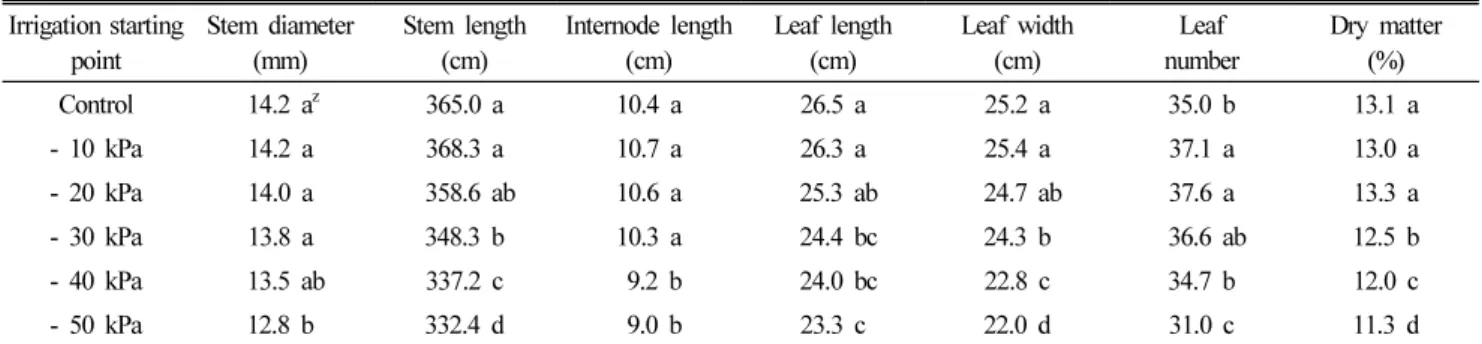
Table 1 showed the effect of different soil moisture contents affected by irrigation starting point on the shoot growth characteristics of small-sized watermelons. The lowest soil moisture condition (-50 kPa) significantly retarded the overall shoot growth in comparison to the plants under control and higher soil moisture conditions.
Widaryanto et al. (2017) indicated that reducing the water
supply to 50% in the vegetative stage gave a negative effect on the growth and yield of melon. Under the deficit irrigation regime, the yield and growth were also considerably reduced in eggplants and tomatoes (Kirnak et al., 2001; Pulupol et al., 1996).
Growth and morphological characteristics of roots were also affected by irrigation regimes (Table 2 and Fig. 2).
Lower soil moisture conditions increased root dry weight percentage as well as its length and diameter, but decreased the root number. It could be conjectured that watermelon plants would elongate their main roots and develop root distribution against soil water stress. Pandey et al. (1984) and Sponchiado et al. (1980) showed that plants could change root distribution to avoid drought stress. Soybean (Hoogenboom et al., 1987) and sorghum (Merrill and Rawlins, 1979) appeared to grow with deeper root systems when available water decreased. The root/shoot ratio of eggplants increased when the applied amount of water decreased (Kirnak et al., 2001). The deposition of suberin in exodermis and endodermis cells of roots as well as the root growth for an escape from drying soil were also reported in
Table 1. Influences of different soil moisture contents affected by irrigation starting point on the shoot growth characteristics of small-sized watermelons.
Irrigation starting
point Stem diameter
(mm) Stem length
(cm) Internode length
(cm) Leaf length
(cm) Leaf width
(cm) Leaf
number Dry matter (%)
Control 14.2 a
z365.0 a 10.4 a 26.5 a 25.2 a 35.0 b 13.1 a
- 10 kPa 14.2 a 368.3 a 10.7 a 26.3 a 25.4 a 37.1 a 13.0 a
- 20 kPa 14.0 a 358.6 ab 10.6 a 25.3 ab 24.7 ab 37.6 a 13.3 a
- 30 kPa 13.8 a 348.3 b 10.3 a 24.4 bc 24.3 b 36.6 ab 12.5 b
- 40 kPa 13.5 ab 337.2 c 9.2 b 24.0 bc 22.8 c 34.7 b 12.0 c
- 50 kPa 12.8 b 332.4 d 9.0 b 23.3 c 22.0 d 31.0 c 11.3 d
z
Means followed by the same letter within columns are not significantly different at the 5% level of significant using Duncan’s multiple range test.
Table 2. Effect of different soil moisture contents affected by irrigation starting point on the root growth characteristics of small-sized watermelons.
Irrigation starting point Root length
(cm) Root diameter
(mm) Root number Dry weight
(%)
Control 76.5 e
z1.9 c 14.0 b 16.5 e
- 10 kPa 72.2 f 1.9 c 15.2 a 16.1 e
- 20 kPa 83.0 d 2.0 c 12.9 c 17.0 d
- 30 kPa 98.4 c 2.4 b 10.3 d 18.6 c
- 40 kPa 109.0 b 2.6 a 8.7 e 19.3 b
- 50 kPa 115.8 a 2.6 a 7.6 f 20.1 a
z
Means followed by the same letter within columns are not significantly different at the 5% level of significant using Duncan’s multiple range test.
wild olive plants under severe water stress (Lo Gullo et al., 1998; Rodriguez Dominguez and Brodribb, 2020).
Oliveira et al. (2012) reported that the maintenance of an adequate water content in the soil enabled a greater water and nutrient absorption, which is responsible for increase of the photoassimilates translocated from the leaves to reproductive organs. Water deficit affects negatively the rates of photosynthesis due to the decreased CO
2availability resulted from stomatal closure (Chaves et al., 2009; Flexas et al., 2006), and from changes in photosynthetic metabolism (Lawlor, 2002). The root hydraulic conductance during water stress can drive an early stomatal closure which affects directly transpiration and photosynthesis (Rodriguez Dominguez and Brodribb, 2020).
Our results showed that irrigation regimes could significantly affect the overall shoot and root growths of small-sized watermelon plants, which ability to change their root distribution in the soil might be the one of important adaptative responses for drought avoidance.
2. Photosynthetic characteristics of small-sized water- melons under different soil moisture contents affected by irrigation starting point
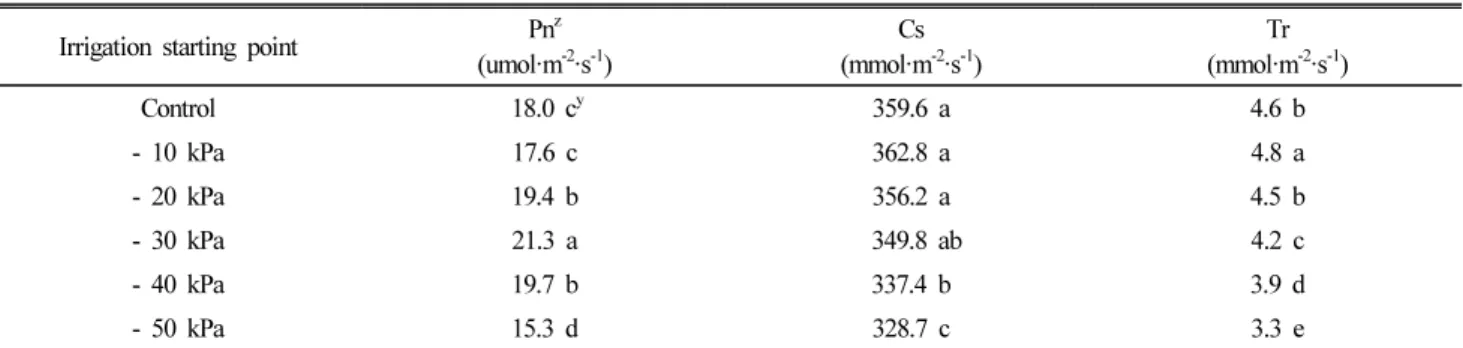
Table 3 showed the effect of different soil moisture contents affected by irrigation starting point on the photosynthetic characteristics of small-sized watermelons.
The photosynthetic rates of watermelon plants grown with irrigation starting point between -20 and -40 kPa were observed to be higher than those of other treatments.
Particularly, the highest rate was obtained at -30 kPa, it increased significantly by 18% as compared to control, and by 39% as compared to -50 kPa. On the other hand, the photosynthetic rates, stomatal conductance as well as transpiration rate of small-sized watermelon plants decreased significantly under drought stress (-50 kPa). From these results, it was found that an inappropriate irrigation could result in water deficit stress of small-sized watermelons, which led to the reduction of their photosynthetic activity.
Environmental stresses have a direct effect on the photosynthetic apparatus, essentially by disrupting all major components of photosynthesis including the thylakoid electron transport, the carbon reduction cycle and the stomatal control of the CO
2supply, with peroxidative destruction of lipids and water balance disturbance (Allen and Ort, 2001). Particularly, water stress reduces the rates of photosynthesis because the CO
2assimilation and net photosynthesis decrease due to restricted stomatal opening (Pirasteh-Anosheh et al., 2016). Drought stress can also limit the gas exchange parameters of crop plants, resulting from a decrease in leaf expansion, impaired photosynthetic machinery, premature leaf senescence, oxidation of chloroplast lipids and changes in the structure of pigments and proteins (Menconi et al., 1995). The ability of crop plants to acclimate to unfavorable environments is directly or indirectly related to their ability to acclimate at the level of photosynthesis, which consequently affects the growth and yield (Chandra, 2003).
3. Fruit characteristics and marketable yield of small- sized watermelons under different soil moisture contents affected by an irrigation starting point Fruit characteristics and marketable yield were compared under diverse soil moisture conditions (Table 4 and Fig. 3).
Fig. 2. Morphological comparison of roots under different soil moisture
conditions affected by an irrigation starting point.
The highest fruit set rate and marketable fruit yield were observed at -30 kPa and -40 kPa, which might lead to the favorable reproductive development and growth of watermelons. Particularly, marketable yield increased significantly by 11 ~ 14% as compared to control, and by 36 ~ 40% as compared to -50 kPa. On the other hand, the fruit weight and marketable fruit yield decreased significantly at -50 kPa. The soil moisture conditions controlled between -30 kPa and -50 kPa considerably induced the increase of soluble solids in comparison to the higher soil moisture conditions.
From these results, it was found that properly controlled irrigation treatment could induce the high marketable fruit yield and save irrigation water.
Many studies have reported the effects of irrigation on yield and fruit quality characteristics. Water deficit applied before and after fruit set decreased fruit number and size (Leskovar et al., 1999). Yield and some yield components such as fruit height and rind thickness were unfavorably affected by deficit irrigation during the cultivation of watermelons (Erdem et al., 2001). The decline in marketable Table 3. Effect of different soil moisture contents affected by irrigation starting point on the photosynthetic characteristics of small-sized watermelons.
Irrigation starting point Pn
z(umol‧m
-2‧s
-1) Cs
(mmol‧m
-2‧s
-1) Tr
(mmol‧m
-2‧s
-1)
Control 18.0 c
y359.6 a 4.6 b
- 10 kPa 17.6 c 362.8 a 4.8 a
- 20 kPa 19.4 b 356.2 a 4.5 b
- 30 kPa 21.3 a 349.8 ab 4.2 c
- 40 kPa 19.7 b 337.4 b 3.9 d
- 50 kPa 15.3 d 328.7 c 3.3 e
z
Pn: photosynthetic rate, Cs : stomatal conductance, Tr : transpiration rate.
y
Means followed by the same letter within columns are not significantly different at the 5% level of significant using Duncan’s multiple range test.
Table 4. Effect of different soil moisture contents affected by irrigation starting point on the fruit characteristics of small-sized watermelons.
Irrigation starting
point Fruit set rate
(%) Fruit weight
(kg) Fruit length
(cm) Fruit diameter
(cm) Soluble solids
(°Brix) Marketable fruit yield (kg/10 a)
Control 80.3 b
z3.6 a
z26.1 a 18.2 a 11.0 b 4,637 c
- 10 kPa 78.9 b 3.6 a 26.4 a 18.4 a 10.8 b 4,545 c
- 20 kPa 81.1 b 3.6 a 25.8 a 17.9 a 10.8 b 4,876 b
- 30 kPa 84.7 a 3.4 b 25.0 ab 17.0 b 12.3 a 5,305 a
- 40 kPa 85.5 a 3.2 c 24.3 b 16.4 c 12.4 a 5,144 a
- 50 kPa 82.9 b 2.9 d 23.5 c 15.7 d 12.6 a 3,794 d
z
Means followed by the same letter within columns are not significantly different at the 5% level of significant using Duncan’s multiple range test.
Fig. 3. Morphological comparison of small-sized watermelon fruits under different soil moisture conditions affected by an irrigation starting point.
yield of grafted mini-watermelons resulted from deficit irrigation regimes (Rouphael et al., 2008). The highest fruit yield of mini-watermelon was recorded at irrigation regimes with 1.0 and 0.75 of ev aportranspiration (ET) rate, as compared to 0.5 ET (Proietti et al., 2008). Furthermore, deficit irrigation directly reduced the total marketable yield of diploid and triploid watermelons, but fruit growth and quality would be less affected in triploid than in diploid watermelons (Leskovar et al., 2004). Limited irrigation lowered the marketable yield of diploid and triploid watermelon by 15 ~ 36%, increasing the yield of small fruits (Bang et al., 2004).
The soluble solids of watermelon pulp decreased and fruit skin cracks increased due to the excess of water (Saraiva et al., 2017). During the maturation stage, the decrease in the amount of irrigated water about 25% to 30% was critical for optimizing the fruit soluble solid contents (Sousa et al., 2011).
4. Comparison of proline and ABA contents of small- sized watermelons under different soil moisture contents affected by an irrigation starting point Fig. 4 and Fig. 5 showed the proline and ABA contents of small-sized watermelons cultivated under respective soil moisture conditions affected by the irrigation starting point.
Lower soil moisture conditions induced the accumulation of proline and ABA in small-sized watermelon plants, their highest contents were observed at -50 kPa. Proline content of watermelon plants under drought stress (-50 kPa) increased significantly by 5.8 ~ 6.5 times and ABA also increased by 1.9 ~ 2.0 times as compared to control and –10 kPa. These results suggested that proline and ABA accumulation might be associated with water deficit stress and could contribute to adaption and tolerance of watermelon plants against environmental stress conditions.
When plants are subjected to water stress, they have evolved complex physiological and biochemical adaptation mechanisms. Under drought stress, plants stop growing and accumulate solutes in cells for maintenance of cell volume and turgor against dehydration, which is referred as osmotic adjustment (Nomani, 1998; Patakas et al., 2002). Proline is one of the major organic osmolytes that accumulate in a variety of plant species in response to environmental
stresses such as drought, salinity, extreme temperatures, UV radiation, and heavy metals. It is thought to have positive effects on enzyme and membrane integrity along with adaptive roles in mediating osmotic adjustment in plants grown under stress conditions (Ashraf and Foolad, 2007).
Endogenous ABA is also known to be rapidly produced during drought, and play a role in triggering a cascade of physiological responses such as stomatal closure (Behnam et al., 2013; Endo et al., 2008: Iuchi et al., 2001; Osakabe et al., 2014).
5. Comparison of total phenolics contents of small-sized watermelons under different soil moisture contents affected by an irrigation starting point
Total phenolics contents of small-sized watermelon plants were compared under diverse soil moisture conditions (Fig.
6). Phenolics were gradually accumulated when the soil had lower water contents, its highest content was observed at -50 kPa. It increased significantly by 1.9 ~ 2.0 times as compared Fig. 4. Proline contents of small-sized watermelons under different soil
moisture conditions affected by an irrigation starting point.
Fig. 5. ABA contents of small-sized watermelons under different soil
moisture conditions affected by an irrigation starting point.
to control and -10 kPa. From these results, it was supposed that feasible adaptation ability such as accumulation of phenolic compounds might be acquired for growth and survival under the unfavorable environments in watermelon plants.
In response to stress, the synthesis of phenolic compounds is activated in plants (Mandal et al., 2009). They are mainly involved in protection against different types of stress, and play as an important antioxidant which helps plants to survive stress conditions (Ayaz et al., 2000; Mittler, 2002).
6. Comparison of citrulline contents of small-sized watermelons under different soil moisture contents affected by irrigation starting point
Fig. 7 showed the citrulline contents of small-sized watermelons cultivated under different soil moisture conditions affected by an irrigation starting point. It was found that citrulline content also increased significantly when soil moisture content got lower. The highest content was recorded at -50 kPa, and it increased considerably by 10.3 ~ 10.7 times as compared to control and -10 kPa.
Citrulline is a non-essential amino acid first identified from the juice of watermelon (Wada, 1930). It has also been isolated in other cucurbitaceous fruits including bitter melon, cucumber, muskmelon, pumpkin, bottle gourd, dishrag gourd, and wax gourd (Rimando and Perkins- Veazie, 2005). The accumulation of citrulline in response to drought stress in wild watermelon is a unique phenomenon in C3 plants, and it is a novel compatible solute involved in the maintenance of cellular osmolarity during abiotic stresses (Akashi et al., 2001).
The citrulline amount of melon doubled in the salt tolerant variety in comparison to the salt sensitive variety under salt stress (Dasgan et al., 2009). Kawasaki et al. (2000) reported that ArgE-related polypeptide and citrulline of wild watermelon leaves increased by 3.8 ~ 4 times as compared to control (well-watered wild watermelons) when watering was withheld for 3 days. But they decreased to the level of control at 4 days after re-watering. It has been reported that side chains of arginine residues in a polypeptide are particularly sensitive to oxidation by hydroxyl radicals, indicating that citrulline, which is structurally analogous to arginine, may also have high reactivity toward hydroxyl
radicals (Amici et al., 1989). Akashi et al. (2001) and Yokota et al. (2002) also reported that the accumulated citrulline could contribute to protect green tissues such as leaves from the secondary oxidative stress induced under drought conditions because in vitro it behaves as a more potent hydroxyl radical scavenger than compatible solutes like mannitol, proline and glycinebetaine.
From these results, it was found that citrulline accumu- lation might help small-sized watermelon plants adapt to water stress conditions for growth and survival.
Acknowledgement
This work was carried out with the support of Research Program for Agriculture Science and Technology Develop- ment (Project No. PJ012608042018), Rural Development Administration, Republic of Korea.
Fig. 6. Total phenolics contents of small-sized watermelons under different soil moisture conditions affected by an irrigation starting point.
Fig. 7. Citrulline contents of small-sized watermelons under different
soil moisture conditions affected by an irrigation starting point.
Literature Cited
Akashi, K., C. Miyake, and A. Yokota. 2001. Citrulline, a novel compatible solute in drought‐tolerant wild watermelon leaves, is an efficient hydroxyl radical scavenger. Febs Letters. 508:438-442.
Allen, D.J. and D.R. Ort. 2001. Impact of chilling temperatures on photosynthesis in warm climate plants. Trends in Plant Science. 6:36-42.
Amici, A., R.L. Levine, L. Tsai and E.R. Stadtman. 1989.
Conversion of amino acid residues in proteins and amino acid homopolymers to carbonyl derivatives by metal- catalyzed oxidation reactions. Journal of Biological Chemistry. 264:3341-3346.
Ashraf, M. and M.R. Foolad. 2007. Roles of glycine betaine and proline in improving plant abiotic stress resistance.
Environmental and experimental botany. 59:206-216.
Ayaz, F.A., A. Kadioglu, and R. Turgut. 2000. Water stress effects on the content of low molecular weight carbohydrates and phenolic acids in Ctenanthe setosa (Rosc.) Eichler.
Canadian Journal of Plant Sciences. 80:373-378.
Bang, H., D.I. Leskovar, D.A. Bender, and K. Crosby. 2004.
Deficit irrigation impact on lycopene, soluble solids, firmness and yield of diploid and triploid watermelon in three distinct environments. The Journal of Horticultural Science and Biotechnology. 79:885-890.
Bates, L.S., R.P. Waldren, and I.D. Teare. 1973. Rapid determination of free proline for water-stress studies. Plant Soil. 39:205-207.
Behnam, B., S. Iuchi, M. Fujita, Y. Fujita, H. Takasaki, Y.
Osakabe, K. Yamaguchi-Shinozaki, M. Kobayashi, and K.
Shinozaki. 2013. Characterization of the promoter region of an Arabidopsis gene for 9-cis-epoxycarotenoid dioxygenase involved in dehydration-inducible transcription. DNA Research. 20:315-324.
Chalmers, D.J., G. Burge, P.H. Jerie, and P.D. Mitchell. 1986.
The mechanism of regulation of ‘Bartlett’ pear fruit and vegetative growth by irrigation with holding and regulated deficit irrigation. Journal of the American Society for Horticultural Science. 111:904-907.
Chandra, S. 2003. Effects of leaf age on transpiration and energy exchange of Ficus glomerata, a multipurpose tree species of central Himalayas. Physiology and Molecular Biology of Plants. 9:255-260.
Chaves, M.M., J. Flexas, and C. Pinheiro. 2009. Photosynthesis under drought and salt stress: regulation mechanisms from whole plant to cell. Annals of Botany. 103:551-560.
Chun, O.K., D. Kim, and C.Y. Lee. 2003. Superoxide radical scavenging activity of the major polyphenols in fresh plums.
Journal of agricultural and food chemistry. 51:8067-8072.
Dasgan, H.Y., S. Kusvuran, K. Abak, L. Leport, F. Larher, and
A. Bouchereau. 2009. The relationship between citrulline accumulation and salt tolerance during the vegetative growth of melon (Cucumis melo L.). Plant, Soil and Environment, 55:51-57.
Desai, J.B. and V.K. Patil. 1984. Effects of N, P and K on the fruit yield of watermelon. Journal of Maharashtra Agricultural University. 9:308-309.
Elmstrom, G.W., B.J. Locascio, and J.M. Myers. 1981.
Watermelon response to drip and sprinkler irrigation.
Proceedings of the Florida State Horticultural Society.
94:161.
Endo, A., Y. Sawada, H. Takahashi, M. Okamoto, K. Ikegami, H. Koiwai, M. Seo, T. Toyomasu, W. Mitsuhashi, K.
Shinozaki, M. Nakazono, Y. Kamiya, T. Koshiba, and E.
Nambara. 2008. Drought induction of Arabidopsis 9-cis- epoxycarotenoid dioxygenase occurs in vascular parenchyma cells. Plant Physiology. 147:1984-1993.
Erdem, Y., A.N. Yüksel, and A.H. Orta. 2001. The effects of deficit irrigation on watermelon yield, water use and quality characteristics. Pakistan Journal of Biological Sciences.
4:785-789.
Flexas, J., J. Bota, J. Galmés, H. Medrano, and M. Ribas-Carbó.
2006. Keeping a positive carbon balance under adverse conditions: responses of photosynthesis and respiration to water stress. Physiologia Plantarum. 127:343-352.
Galdeano-Gomez, E., J.A. Zepeda-Zepeda, L. Piedra-Munoz, and L.L. Vega-Lopez. 2017. Family farm’s features influen- cing socio-economic sustainability: An analysis of the agri-food sector in southeast Spain. New Medit. 16:50-62.
González, A.M., S. Bonachela, and M.D. Fernández. 2009.
Regulated deficit irrigation in green bean and watermelon greenhouse crops. Scientia horticulturae. 122:527-531.
Hartz, T.K. 1997. Effects of drip irrigation scheduling on muskmelon yield and quality. Scientia Horticulturae.
69:117-122.
Heidari, Y. and P. Moaveni. 2009. Study of drought stress on ABA accumulation and proline among in different genotypes forage corn. Research journal of biological sciences.
4:1121-1124.
Hoogenboom, G., M.G. Huck, and C.M. Peterson. 1987. Root growth rate of soybean as affected by drought stress.
Agronomy Journal. 79:607-614.
Iuchi, S., M. Kobayashi, T. Taji, M. Naramoto, M. Seki, T.
Kato, S. Tabata, Y. Kakubari, K. Yamaguchi-Shinozaki, and K. Shinozaki. 2001. Regulation of drought tolerance by gene manipulation of 9-cis-epoxycarotenoid dioxygenase, a key enzyme in abscisic acid biosynthesis in Arabidopsis. Plant Journal. 27:325-333.
Jaimez, R.E., F. Rada, and C. Garcıa-Núnez. 1999. The effect
of irrigation frequency on water and carbon relations in three
cultivars of sweet pepper (Capsicum chinense Jacq), in a
tropical semiarid region. Scientia Horticulturae. 81:301-308.
Kawasaki, S., C. Miyake, T. Kohchi, S. Fujii, M. Uchida, and A. Yokota. 2000. Responses of wild watermelon to drought stress: accumulation of an ArgE homologue and citrulline in leaves during water deficits. Plant and Cell Physiology. 41:
864-873.
Kirnak, H., C. Kaya, I. Tas, and D. Higgs. 2001. The influence of water deficit on vegetative growth, physiology, fruit yield and quality in eggplants. Bulgarian Journal of Plant Physiology. 27:34-46.
Kirnak, H., I. Tas, C. Kaya, and D. Higgs. 2002. Effects of deficit irrigation on growth, yield and fruit quality of eggplant under semi-arid conditions. Australian Journal of Agricultural Research. 53:1367-1373.
Kobashi, K., S. Sugaya, H. Gemma, and S. Iwahori. 2001.
Effect of abscisic acid (ABA) on sugar accumulation in the flesh tissue of peach fruit at the start of the maturation stage.
Plant Growth Regulation. 35:215-223.
KOSIS. 2017. Agricultural area survey. Korean Statistical Information Service.
Lawlor, D.W. 2002. Limitation to photosynthesis in water- stressed leaves: stomata vs. metabolism and the role of ATP.
Annals of Botany. 89:871-885.
Leskovar, D.I., P. Perkins-Veazie, and A. Meiri. 1999. Deficit irrigation affects yield and quality of triploid and diploid watermelon. HortScience. 34:523
Leskovar, D.I., H. Bang, K. Crosby, N. Maness, A. Franco, and P. Perkins-Veazie. 2004. Lycopene, carbohydrates, ascorbic acid and yield components of diploid and triploid watermelon cultivars are affected by deficit irrigation. The Journal of Horticultural Science and Biotechnology.
79:75-81.
Lo Gullo, M.A., A. Nardini, S. Salleo, and M.T. Tyree. 1998.
Changes in root hydraulic conductance of Olea oleaster seedlings following drought stress and irrigation. New Phytologist. 140:25-31.
Mandal, S., S. Yadav, S. Yadav, and R.K. Nema. 2009.
Antioxidants: A review. Journal of Chemical. Pharmacology.
Res. 1:102-104.
Menconi, M., C.L.M. Sgherri, C. Pinzino ,and F. Navari-Izzo.
1995. Activated oxygen production and detoxification in wheat plants subjected to a water deficit programme. Journal of Experimental Botany. 46:1123-1130.
Merrill, S.D. and S.L. Rawlins. 1979. Distribution and Growth of Sorghum Roots in Response to Irrigation Frequency 1.
Agronomy Journal. 71:738-745.
Mittler, R. 2002. Oxidative stress, antioxidants and stress tolerance. Trends in plant science. 7:405-410.
Nomani, H. 1998. Plant water relations and control of cell elongation at low water potentials. Journal of Plant Research. 111:373-382.
Oliveira, P.G.F., O.D.C. Moreira, L. Branco, R.N. Costa, and C.N. Dias. 2012. Efficiency of use of production factors
water and potassium in the watermelon crop irrigated with water of reuse. Revista Brasileira de Engenharia Agricola e Ambiental. 16:153-158.
Osakabe, Y., K. Osakabe, K. Shinozaki, and L.S.P. Tran. 2014.
Response of plants to water stress. Frontiers in Plant Science. 5:86.
Pandey, R.K., W.A.T. Herrera, A.N. Villegas, and J.W.
Pendleton. 1984. Drought response of grain legumes under irrigation gradient: III. Plant growth. Agronomy Journal.
76:557-560.
Park, Y. and S. Cho. 2012. Watermelon production and breeding in South Korea. Israel Journal of Plant Sciences.
60:415-423.
Patakas, A., N. Nikolaou, E. Zioziou, K. Radoglou, and B.
Noitsakis. 2002. The role of organic solute and ion accumulation in osmotic adjustment in drought-stressed grapevines. Plant Science. 163:361-367.
Perkins-Veazie, P. 2009. Cucurbits, watermelon, and benefits to human health. IV International Symposium on Cucurbits.
871:25-32
Pirasteh-Anosheh, H., A. Saed-Moucheshi, H. Pakniyat, and M. Pessarakli. 2016. Stomatal responses to drought stress.
Water stress and crop plants. 24-40.
Proietti, S., Y. Rouphael, G. Colla, M. Cardarelli, M. De Agazio, M. Zacchini, E. Rea, S. Moscatello, and A. Battistelli.
2008. Fruit quality of mini‐watermelon as affected by grafting and irrigation regimes. Journal of the Science of Food and Agriculture. 88:1107-1114.
Pulupol, L.U., M.H. Behboudia, and K.J. Fisher. 1996. Growth, yield and postharvest attributes of glasshouse tomatoes produced under deficit irrigation. HortScience. 31: 926-929.
Rimando, A.M. and P.M. Perkins-Veazie. 2005. Determination of citrulline in watermelon rind. Journal of Chromatography A. 1078:196-200.
Rodriguez Dominguez, C.M. and T.J. Brodribb. 2020. Declining root water transport drives stomatal closure in olive under moderate water stress. New Phytologist. 225:126-134.
Rouphael, Y., M. Cardarelli, G. Colla, and E. Rea. 2008. Yield, mineral composition, water relations, and water use efficiency of grafted mini-watermelon plants under deficit irrigation. HortScience. 43:730-736.
Saraiva, K.R., T.V.D.A. Viana, F. Bezerra, M. Lima, S.C.
Costa, and R.S. Gondim. 2017. Regulated deficit irrigation and different mulch types on fruit quality and yield of watermelon. Revista Caatinga. 30:437-446.
Shaw, B., T.H. Thomas, and D.T. Cooke. 2002. Responses of sugar beet (Beta vulgaris L.) to drought and nutrient deficiency stress. Plant Growth Regulation. 37:77-83 Şimşek, M., M. Kaçıra, and T. Tonkaz. 2004. The effects of
different drip irrigation regimes on watermelon [Citrullus
lanatus (Thunb.)] yield and yield components under semi-arid
climatic conditions. Australian Journal of Agricultural
Research. 55:1149-1157.
Singh, S.D and P. Singh. 1978. Value of drip irrigation compared with conventional irrigation for vegetable production in a hot arid climate 1. Agronomy Journal.
70:945-947.
Sousa, J.R.M., E.S. Oliveira, J.A.C. Wanderley, F.C.G. Alvino, and M.E.B. Brito. 2012. Efeito do estresse hídrico sobre características de pós-colheita da melancieira. Agropecuaria Cientifica No Seiarido. 8:46-53.
Sponchiado, B.N., J.W. White, J.A. Castillo, and P.G. Jones.
1980. Root growth of four common bean cultivars in relation to drought tolerance in environments with contrasting soil types. Experimental Agriculture. 25:249-257.
Srinivas, K., D.M. Hegde ,and G.V. Havanagi. 1989. Irrigation studies on watermelon (Citrullus lanatus (Thunb) Matsum et Nakai). Irrigation Science. 10:293-301.
Wada, M. 1930. Ueber Citrulline, eine neue Aminosäurein Pressaft der Wassermelone, Citrullus vulgaris Schrad.
Biochem. Zeit. 224:420-429.
Widaryanto, E., K.P. Wicaksono, and H. Najiyah. 2017.
Drought Effect Simulation on the Growth and Yield Quality of Melon (Cucumis melo L.). Journal of Agronomy.
16:147-153.
Yokota, A., S. Kawasaki, M. Iwano, C. Nakamura, C. Miyake, and K. Akashi. 2002. Citrulline and DRIP‐1 protein (ArgE homologue) in drought tolerance of wild watermelon.
Annals of Botany. 89:825-832.
Zheng, J.C. and X.M.W. Jian. 2009. Effect of regulated deficit irrigation on water use efficiency and fruit quality of mini- watermelon in greenhouse. Journal of Nuclear Agricultural Sciences. 1:37.
소형 수박 시설 재배 시 관수개시점에 따른 토양수분 함량별 생육, 수량 및 생리적 반응 특성 구명
허윤선
1* ㆍ 김은정
2ㆍ 노솔지
2ㆍ 전유민
2ㆍ 박성원
2ㆍ 윤건식
2ㆍ 김태일
3ㆍ 김영호
41
충청북도농업기술원 작물연구과 지방농업연구사,
2충청북도농업기술원 수박연구소 지방농업연구사,
3