• 검색 결과가 없습니다.

Effects of Preoperative Autologous Blood Donation in Patients Undergoing Minimally Invasive Cardiac Surgery

N/A
N/A
Protected

Academic year: 2021

Share "Effects of Preoperative Autologous Blood Donation in Patients Undergoing Minimally Invasive Cardiac Surgery"

Copied!
7
0
0

로드 중.... (전체 텍스트 보기)

전체 글

(1)

ISSN: 2233-601X (Print) ISSN: 2093-6516 (Online)

This paper was presented at the 49th Fall Meeting of the Korean Society for Thoracic and Cardiovascular Surgery.

Received: March 6, 2019, Revised: June 1, 2019, Accepted: June 5, 2019, Published online: December 5, 2019

Corresponding author: Hyung Gon Je, Department of Cardiothoracic Surgery, Pusan National University Yangsan Hospital, 20 Geumo-ro, Mulgeum-eup, Yangsan 50612, Korea

(Tel) 82-55-360-2127 (Fax) 82-55-360-2157 (E-mail) [email protected]

© The Korean Society for Thoracic and Cardiovascular Surgery. 2019. All right reserved.

This is an open access article distributed under the terms of the Creative Commons Attribution Non-Commercial License (http://creativecommons.org/

licenses/by-nc/4.0) which permits unrestricted non-commercial use, distribution, and reproduction in any medium, provided the original work is properly cited.

Effects of Preoperative Autologous Blood Donation in Patients Undergoing Minimally Invasive Cardiac Surgery

Mi Hee Lim, M.D. 1 , Hyung Gon Je, M.D., Ph.D. 1 , Min Ho Ju, M.D. 1 , Ji Hye Lee, R.N. 2 , Hye Rim Oh, R.N. 2 , Ye Ri Kim, R.N. 2

Departments of

1

Cardiothoracic Surgery and

2

Nursing, Pusan National University Yangsan Hospital, Medical Research Institute of Pusan National University, Yangsan, Korea

Background: Preoperative autologous blood donation (PABD) is a conservation strategy for reducing allogenic blood transfusion (ABT) during minimally invasive cardiac surgery (MICS). We aimed to evaluate the effects of PABD on the frequency of ABT and clinical outcomes in patients undergoing MICS. Methods: We enrolled 113 patients (47.8±13.1 years, 50 men) undergoing MICS without preoperative anemia (hemoglobin >11 g/dL) between 2014 and 2017. Of these patients, 69 (the PABD group) donated autologous blood pre- operatively and were compared to the non-PABD group (n=44). We analyzed the frequency of perioperative ABT and clinical outcomes. Results: Baseline characteristics did not significantly differ between groups, al- though preoperative hemoglobin levels were lower in the PABD group. All operations were performed using a minimally invasive approach. Patients’ surgical profiles were similar. There were no cases of mortality or significant differences in early postoperative outcomes. During the early postoperative period, hemoglobin lev- els were higher in the PABD group. No significant difference was found in the frequency of ABT. Conclusion:

Although the PABD group had higher postoperative hemoglobin levels, there was no clear clinical benefit in the early postoperative period, despite a great deal of effort and additional cost. Additional PABD in the set- ting of strict policies for blood conservation was ineffective in reducing ABT for young and relatively healthy patients who underwent MICS.

Key words: 1. Minimally invasive cardiac surgery 2. Minimally invasive surgery

3. Blood transfusion 4. Prognosis

Introduction

Allogenic blood transfusion (ABT) is frequently re- quired in patients undergoing cardiac surgery be- cause of hemodilution and perioperative bleeding [1].

ABT during the perioperative period can cause ad- verse events such as infectious diseases, lung injury,

and immune rejection [2,3]. In addition, several re- ports have found postoperative ABT to be associated with an increased risk of early and late morbidity or mortality [4]. Over the past few decades, various ef- forts have been made to reduce the frequency of ABT to improve outcomes and reduce ABT-related complications [1].

https://doi.org/10.5090/kjtcs.2019.52.6.385

(2)

Fig. 1. Exclusion criteria for study enrollment. NYHA, New York Heart Association; ABD, autologous blood donation.

Recent studies have shown that ABT during car- diac surgery can be reduced through various blood conservation strategies, such as intraoperative autolo- gous blood donation, retrograde autologous priming (RAP), using shorter circuits, and postoperative he- mofiltration [5-9]. Additionally, preoperative autolo- gous blood donation (PABD) has been proposed as a blood conservation method [10].

The use of PABD markedly increased from the 1980s to the early 1990s. PABD is known to have several advantages. A meta-analysis of multiple stud- ies demonstrated that PABD reduced postoperative ABT [11]. This effect can reduce transfusion-trans- mitted viral or infectious diseases and can avoid im- mune-mediated complications by reducing the use of allogenic blood or blood components. PABD also in- creases erythropoietin secretion and promotes blood production by removing a considerable amount of blood from the patient [12].

Recently, however, there has been controversy re- garding the effort-effectiveness of PABD. The safety of ABT has been ensured compared to the past, and

the frequency of cardiac surgery-related blood trans- fusion has been reduced through advances in tech- nologies and surgical strategies [13,14]. The effect of PABD in this recent strict setting for blood con- servation and minimally invasive cardiac surgery (MICS) has not yet been well established. Therefore, we conducted this study to evaluate the effects of additional PABD in the recent rigorous blood con- servation setting during MICS in terms of clinical outcomes and the frequency of ABT.

Methods

1) Patients

Our study included 325 patients who underwent

MICS performed by a single surgeon from January

2015 to July 2017. Given that we introduced the

PABD program in January 2016, patients who under-

went the procedure in 2015 were included as con-

trols (the non-PABD group), and those who under-

went the procedure in 2016 comprised the cohort

group (the PABD group) (Fig. 1).

(3)

Patients with preoperative hemoglobin (Hb) levels

> 11 g/dL were included in this study. We excluded patients with severe aortic stenosis, coronary artery disease, old age (>70 years), low body weight (<50 kg in men, <45 kg in women), infective endocarditis, and sternotomy. Urgent and emergent operations were also excluded. The exclusion criteria for blood donation were in accordance with the World Health Organization blood donation guideline [15]. Ultimately, this study enrolled 69 patients in the PABD group and 44 in the non-PABD group.

Data from the PABD group were collected pro- spectively after obtaining Pusan National University Yangsan Hospital Institutional Review Board approval (IRB approval no., L-2017405) and patients’ informed consent. We compared the prospective PABD group to the non-PABD group reviewed retrospectively.

2) Preoperative autologous blood donation

After the choice was made at the outpatient clinic for the patients to undergo surgery, patients who were able to donate blood were referred to the Department of Laboratory Medicine for preoperative blood donation. No patients withdrew from blood donation for surgery. PABD was performed 2–3 weeks prior to surgery. Male and female patients do- nated 400 mL and 320 mL of blood, respectively.

Each blood bag contained 100 mL of blood preserva- tion fluid and was used to store 400–500 mL of whole blood. The blood bags were stored at 0°C–4°C in a blood bank. After blood donation, patients were infused with 500 mL of normal saline and instructed to take 256 mg of ferric sulfate per day. Blood dona- tion was stopped immediately in the event of any side effects, such as dizziness or syncope. One pa- tient showed dizziness during PABD; however, the symptom improved after saline infusion. No other pa- tients complained of any other symptoms. Only 1 pack of blood was donated at a time, and the num- ber of blood donations was determined according to the period before surgery. All blood donations were completed at least 1 week before surgery.

3) Transfusion strategy

The trigger for intraoperative transfusion was an Hb level <6 g/dL or hematocrit (HCT) <18%. The trigger for postoperative packed red blood cell (PRBC) transfusion was an Hb level <7 g/dL, HCT

< 21%, or evidence of persistent bleeding (>200 mL/hr for at least 3 hours). The trigger for platelet transfusion was a platelet count ≤70,000/μL. The same transfusion guidelines were applied to both groups [15]. In the PABD group, the stored autolo- gous blood was used first when blood transfusion was needed. After transfusion of the stored autolo- gous blood, allogenic blood was transfused according to the abovementioned criteria. All stored blood ob- tained by PABD was used during the perioperative period, and no blood was wasted.

4) Blood conservation strategy during minimally invasive cardiac surgery

In addition to PABD, various strict strategies for blood conservation were implemented to reduce the need for ABT during and after MICS. The car- diopulmonary circuit was made as short as possible to reduce the priming volume, and a cell saver was used routinely in all MICS procedures. We tried to perform RAP (n=35, 31%) in as many patients as possible, and post-cardiopulmonary bypass ultra-he- mofiltration was performed in all patients. Drugs for hemostasis, such as tranexamic acid and amino-meth- yl-benzoic acid, were routinely used postoperatively.

5) Clinical follow-up and definition

Arterial blood gas testing every 2 to 4 hours and 2 complete blood count tests (CBCs) were used to monitor Hb within 24 hours after surgery. If there was no bleeding tendency, Hb levels were confirmed by a routine CBC once every 2 days. An additional CBC was performed 1 week after discharge at the outpatient clinic.

Early mortality was defined as death within 30 days after surgery. Low cardiac output syndrome was defined as the administration of a combination of dopamine and dobutamine of 20 μg/kg/min or more, or a combination of norepinephrine and epinephrine at 0.2 μg/kg/min or more for hemodynamic stability.

Any one of the following circumstances was consid-

ered a pulmonary complication: prolonged ventilation

support (>24 hours), clinically confirmed pneumo-

nia, or re-intubation. The following criteria were

used to define renal failure: new-onset dialysis, a

3-fold increase in the serum creatinine level, anuria

for 12 hours after surgery, or a urine output <0.3

mL/kg/hr for 24 hours.

(4)

Table 1. Preoperative baseline characteristics (N=113)

Characteristic Non-PABD group (n=44) PABD group (n=69) p-value

Age (yr) 48.4±11.5 47.4±14.1 0.69

Female 28 (63.6) 35 (50.7) 0.25

Body weight (kg) 63.1±11.4 65.3±12.6 0.35

Hypertension 17 (38.6) 24 (34.8) 0.83

Diabetes mellitus 4 (9.1) 5 (7.2) 0.45

Prior cardiac surgery 1 (2.3) 2 (2.9) > 0.99

New York Heart Association functional class III or IV 12 (27.3) 17 (24.6) > 0.99

Left ventricular ejection fraction 62.0±9.0 60.4±8.5 0.37

EuroSCORE II

a)

1.0 (0.8–1.7) 0.9 (0.7–1.5) 0.95

Preoperative hemoglobin (g/dL) 13.4±2.0 12.5±1.6 0.012

Values are presented as mean±standard deviation, number (%), or median (range).

PABD, preoperative autologous blood donation.

a)

European System for Cardiac Operative Risk Evaluation II.

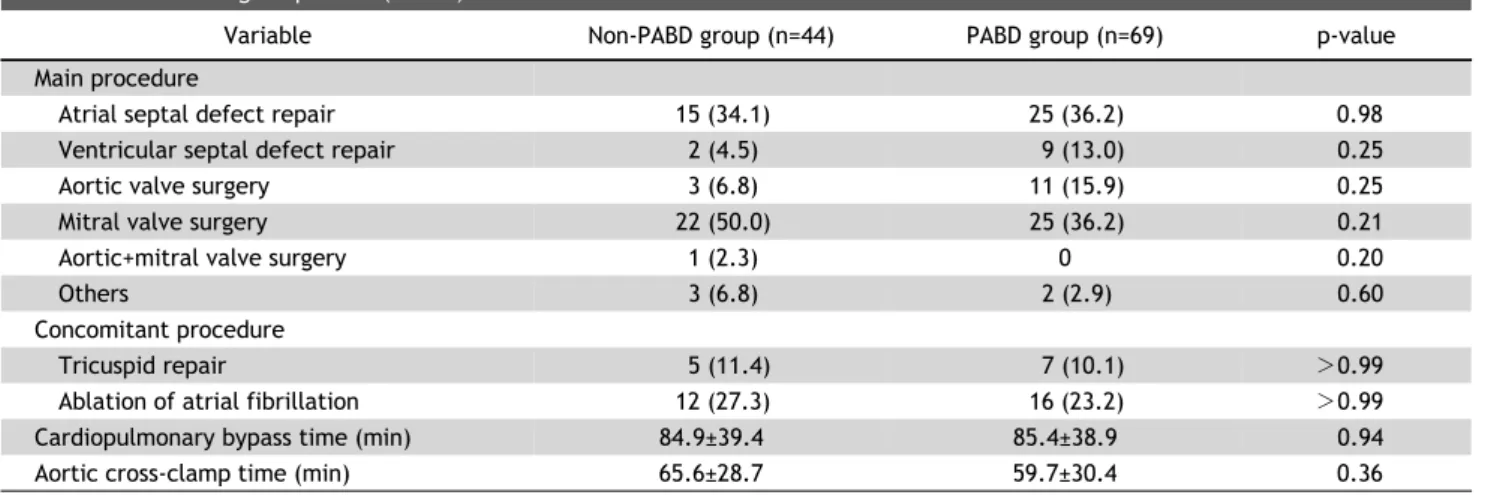
Table 2. Patients’ surgical profiles (N=113)

Variable Non-PABD group (n=44) PABD group (n=69) p-value

Main procedure

Atrial septal defect repair 15 (34.1) 25 (36.2) 0.98

Ventricular septal defect repair 2 (4.5) 9 (13.0) 0.25

Aortic valve surgery 3 (6.8) 11 (15.9) 0.25

Mitral valve surgery 22 (50.0) 25 (36.2) 0.21

Aortic+mitral valve surgery 1 (2.3) 0 0.20

Others 3 (6.8) 2 (2.9) 0.60

Concomitant procedure

Tricuspid repair 5 (11.4) 7 (10.1) >0.99

Ablation of atrial fibrillation 12 (27.3) 16 (23.2) >0.99

Cardiopulmonary bypass time (min) 84.9±39.4 85.4±38.9 0.94

Aortic cross-clamp time (min) 65.6±28.7 59.7±30.4 0.36

Values are presented as number (%) or mean±standard deviation.

PABD, preoperative autologous blood donation.

6) Statistical methods

The data were analyzed using IBM SPSS Software for Windows ver. 22.1 (IBM Corp., Armonk, NY, USA) and presented as means, numbers, or ratios as appropriate. The Pearson chi-square test was used for descriptive univariate statistics, whereas the t-test was used for normally distributed data. The Mann- Whitney U-test was used for group comparisons of continuous non-Gaussian distributed variables. Two- tailed p-values were derived from the calculated test statistics, and p-values <0.05 was considered to in- dicate statistical significance.

Results

1) Baseline characteristics and surgical profiles There were no significant differences in the base- line characteristics between groups, except for the preoperative Hb levels. Hb levels were significantly higher in the non-PABD group on the day before sur- gery (Table 1). The average EuroSCORE II (European System for Cardiac Operative Risk Evaluation II) of all patients was 1.46, demonstrating that relatively low-risk patients were included in the study.

All patients in both groups underwent a right

mini-thoracotomy with peripheral cannulation. There

were no significant differences in the type of surgery

performed between the 2 groups, and the car-

(5)

Table 3. Clinical outcomes during hospitalization after surgery

Variable Non-PABD group (n=44) PABD group (n=69) p-value

Early mortality 0 0

Intensive care unit stay (day) 1.2±1.4 1.2±0.5 0.85

Hospital stay (day) 4.0 (3–5) 4.0 (3–5) 0.91

Major complications

Acute renal failure 0 0

Pulmonary complication 3 (6.8) 2 (2.9) 0.60

Low cardiac output syndrome 3 (6.8) 6 (8.7) >0.99

Reoperation for bleeding control 0 2 (2.6) 0.68

Chest tube drainage volume within 12 hours (mL) 205 (150–372) 234 (173–346) 0.17

Allogenic red blood cell transfusion 1 (2.3) 8 (11.6) 0.15

Values are presented as number (%), mean±standard deviation, or median (range).

PABD, preoperative autologous blood donation.

Fig. 2. Trend of hemoglobin changes during the perioperative period. ABD, autologous blood donation.

diopulmonary bypass and aortic cross-clamp times were similar (Table 2).

2) Clinical outcomes

There were no cases of early mortality in either group, and the incidence of major complications, such as acute renal failure, low cardiac output syn- drome, and pulmonary complications, was not sig- nificantly different between the PABD and the non-PABD groups. In total, 100 patients (88%) un- derwent immediate extubation in the operating room after surgery. Trend of hemoglobin changes during the perioperative period (Fig. 2). The amount of chest tube drainage and the incidence of ABT tended to be higher in the PABD group, although these dif- ferences were not statistically significant (Table 3).

The duration of the intensive care unit (ICU) stay was within 24 hours, and all patients were dis-

charged within 1 week. During a mean follow-up of 33.8±8.6 months, there were 2 late deaths. The caus- es of death were a traffic accident and trauma, not medical problems.

3) Allogenic blood transfusion

ABT was performed in 10 patients (8.8%) during the study period. Eight patients were in the PABD group and 2 in the non-PABD group, respectively. All 10 patients who underwent transfusion received fresh frozen plasma, whereas 9 patients received PRBC and 5 patients received platelets. Seven pa- tients underwent transfusion in the operating room and ICU, and 5 patients underwent transfusion in the ICU owing to an increased chest tube drainage vol- ume and a decreased Hb level. Two patients, both in the PABD group, underwent exploration for bleeding control. There was no additional ABT after discharge at the outpatient clinic.

Discussion

Through the evaluation of 113 relatively low-risk patients without preoperative anemia, the present study showed that the overall clinical outcomes were good, with no early mortality and a low incidence of major complications in both the PABD and non-PABD groups. Although the PABD group showed higher Hb levels than the non-PABD group during the early postoperative period, there were no significant differ- ences in the clinical outcomes between both groups.

Although there were no statistically significant differ-

ences, the incidence of ABT was higher in the PABD

(6)

group (2.3% versus 11.6%), contrary to our ex- pectations. In strict blood conservation settings where MICS is the mainstay, the PABD strategy was safe and feasible, however its effort-effectiveness was less clinically meaningful in the present study.

In the 1980s and early 1990s, the use of PABD markedly increased to avoid ABT-related complica- tions, such as transmission of the hepatitis B, C, and human immunodeficiency viruses [16]. Over the past 20 years, the safety of allogenic transfusions has been established, the risk of ABT-related infections has significantly reduced, and the use of PABD has also decreased [12]. There are some potential issues of concern regarding PABD, such as sudden symptom deterioration, an increased infection rate, and cum- bersomeness for the patient. Despite this trend, some clinicians still use PABD as a blood conservation strategy. A meta-analysis of multiple surgical proce- dures revealed that the PABD group was less likely to require allogenic transfusion than the non-PABD group (odds ratio [OR], 0.17; 95% confidence interval [CI], 0.08–0.32). However, overall transfusion (auto- logous+allogenic) was more frequent in the PABD group (OR, 3.03; 95% CI, 1.7–5.4) [11]. In the pres- ent study, all blood stored through PABD was trans- fused to each patient. The frequency of ABT—exclud- ing autologous transfusion—did not show a statisti- cally significant difference; however, numerically, ABT was 5 times as frequent in the PABD group (2.3%

versus 11.6%, p=0.15). Our results showed that PABD was ineffective in reducing the rate of ABT.

The reported frequency of perioperative ABT in cardiac surgery ranged from 40% to 90% in various studies [1]. However, ABT related to cardiac surgery is gradually becoming less common due to advances in surgical strategies and technologies [14]. In this cohort, only 8.0% of patients received ABT during the perioperative period. These results may be due to the fact that these patients underwent MICS, re- ceived strict transfusion interventions, and were rela- tively low-surgical-risk patients.

Nevertheless, this study may have some clinical implications. Gradually, MICS is expanding in cardiac surgery, and the present paper is the first report of the effects of PABD in patients undergoing MICS.

Additionally, this study sought to determine the ef- fects of PABD in recent MICS procedures with im- proved blood transfusion rates and a strict blood

conservation strategy.

In contrast to our expectations, ABT was more common in the PABD group, and a larger amount of fluid was drained via chest tubes within 12 hours in the PABD group. The specific causes of these results are unclear; however, there are some possible explanations. First, it is assumed that surgery was performed before Hb levels completely recovered af- ter the blood donation. Second, the autologous blood was stored as whole blood without separation of blood components, which likely resulted in lost func- tionality of platelets and clotting factors. Third, addi- tional PABD may have less clinical impact in sit- uations where strict blood conservation strategies are already in place.

The effort-effectiveness of PABD has been a topic of debate. Recently, the safety and availability of allo- genic blood components have been ensured, raising more controversies about the effort-effectiveness of PABD, which requires additional efforts to be made by several medical team members and use of resources. PABD also imposes additional costs and hospital visits on patients, and sometimes these pro- cedures cause discomfort to the patients. In addition, the effort-effectiveness of PABD becomes even more unfavorable if its clinical effectiveness cannot be guaranteed, as in the present study.

This study has several limitations. First, the sample size and the number of ABT events were insufficient to yield statistically significant results. Second, it is unreasonable to apply these results to the general population, because of the exclusion of high-risk pa- tients after the selection of patients suitable for blood donation. Patients undergoing certain com- monly performed procedures, such as coronary ar- tery bypass grafting or aortic valve replacement due to aortic stenosis, were excluded from this study be- cause they were vulnerable to ischemia; thus, PABD was not possible. Since these patients were excluded from this study, it is difficult to apply our results to these patients. Third, a historical control group was compared with a prospective cohort group to in- crease the number of patients included in this study.

Therefore, the patients in each group did not under- go surgery during the same period; thus, there may have been differences that we could not identify.

However, the baseline characteristics of the 2 groups

were similar without adjusting the data, all proce-

(7)

dures were performed by a single surgeon, and the prospectively collected data boosted the reliability of the study. In addition, the operative date of the co- hort and control groups did not differ by more than 2 years.

In conclusion, the present study found that addi- tional PABD in the setting of strict policies for blood conservation was ineffective in reducing ABT during MICS, especially in relatively young and healthy pa- tients with low surgical risk. Despite a great deal of effort and additional cost, this method did not have clinical benefits in the early postoperative period.

Conflict of interest

No potential conflict of interest relevant to this ar- ticle was reported.

ORCID

Mi Hee Lim: https://orcid.org/0000-0002-0167-7836 Hyung Gon Je: https://orcid.org/0000-0003-4713-2898 Min Ho Ju: https://orcid.org/0000-0001-7839-8598 Ji Hye Lee: https://orcid.org/0000-0001-9339-1407 Hye Rim Oh: https://orcid.org/0000-0003-4903-5784 Ye Ri Kim: https://orcid.org/0000-0001-6589-0778

References

1. Society of Thoracic Surgeons Blood Conservation Guideline Task Force, Ferraris VA, Brown JR, et al. 2011 Update to the Society of Thoracic Surgeons and the Society of Cardiovascular Anesthesiologists blood conservation clin- ical practice guidelines. Ann Thorac Surg 2011;91:944-82.

2. Leal-Noval SR, Rincon-Ferrari MD, Garcia-Curiel A, et al.

Transfusion of blood components and postoperative in- fection in patients undergoing cardiac surgery. Chest 2001;119:1461-8.

3. Horvath KA, Acker MA, Chang H, et al. Blood transfusion and infection after cardiac surgery. Ann Thorac Surg 2013;95:2194-201.

4. Engoren MC, Habib RH, Zacharias A, Schwann TA, Riordan CJ, Durham SJ. Effect of blood transfusion on long-term

survival after cardiac operation. Ann Thorac Surg 2002;

74:1180-6.

5. Balachandran S, Cross MH, Karthikeyan S, Mulpur A, Hansbro SD, Hobson P. Retrograde autologous priming of the cardiopulmonary bypass circuit reduces blood trans- fusion after coronary artery surgery. Ann Thorac Surg 2002;73:1912-8.

6. Teman N, Delavari N, Romano M, Prager R, Yang B, Haft J.

Effects of autologous priming on blood conservation after cardiac surgery. Perfusion 2014;29:333-9.

7. Baikoussis NG, Papakonstantinou NA, Apostolakis E. The

“benefits” of the mini-extracorporeal circulation in the minimal invasive cardiac surgery era. J Cardiol 2014;63:

391-6.

8. Luciani GB, Menon T, Vecchi B, Auriemma S, Mazzucco A.

Modified ultrafiltration reduces morbidity after adult car- diac operations: a prospective, randomized clinical trial.

Circulation 2001;104(12 Suppl 1):I253-9.

9. Kim KI, Lee WY, Kim HS, Kim S. Open heart surgery with- out transfusion. Korean J Thorac Cardiovasc Surg 2009;42:

184-92.

10. Kim DK, Chang BC, Cho JM, et al. Use of predonated banked autologous blood in open heart surgery. Korean J Thorac Cardiovasc Surg 1992;25:685-92.

11. Forgie MA, Wells PS, Laupacis A, Fergusson D. Preoperative autologous donation decreases allogeneic transfusion but increases exposure to all red blood cell transfusion: re- sults of a meta-analysis. International Study of Perioperative Transfusion (ISPOT) Investigators. Arch Intern Med 1998;

158:610-6.

12. Karkouti K, McCluskey S. Pro: preoperative autologous blood donation has a role in cardiac surgery. J Cardiothorac Vasc Anesth 2003;17:121-5.

13. Muirhead B. Con: preoperative autologous donation has no role in cardiac surgery. J Cardiothorac Vasc Anesth 2003;

17:126-8.

14. Hassan M, Miao Y, Maraey A, et al. Minimally invasive aort- ic valve replacement: cost-benefit analysis of minister- notomy versus minithoracotomy approach. J Heart Valve Dis 2015;24:531-9.

15. World Health Organization. Blood donor selection: guide- lines on assessing donor suitability for blood donation.

Geneva: World Health Organization; 2012.

16. Brecher ME, Goodnough LT. The rise and fall of pre- operative autologous blood donation. Transfusion 2001;

41:1459-62.

수치

Fig. 1. Exclusion criteria for study enrollment. NYHA, New York Heart Association; ABD, autologous blood donation.
Table 2. Patients’ surgical profiles (N=113)
Fig. 2. Trend of hemoglobin changes during the perioperative period. ABD, autologous blood donation.

참조

관련 문서

Abstract: This study was aimed to investigate the adhesion control standards of pain relieving patch (PRP) drugs and to survey it′s adverse effects on the skin of patients

This showed that the surgical outcome was successfulin 269 patients (98.89%),butthe revision surgery due to surgicalrelapse was performed in three patients.Of 152 patients

The purpose of this study was to identify the frequency and related factors of advanced airway management for patients with cardiac arrest by the

The locations of aneurysms were middle cerebral artery in 15 patients, cerebral artery in 15 patients, cerebral artery in 15 patients, cerebral artery in

With these results, we can suggest the hypothesis that increased cardiac output in the patients who administered ketamine increased muscle blood flow, and this is the

To assess the clinical usefulness of performing Q-PCR in practice as a diagnostic technique, we compared blindly the Q-PCR results using blood samples of the

 A novel and rapid prognostic nomogram was developed using quick Sequential Organ Failure Assessment score and mean platelet volume to identify cancer patients with

□ The least-upper-bound property (sometimes called completeness or supremum property) is a fundamental property of the real number system. The least-upper-bound