ORIGINAL ARTICLE
진행성 대장암 환자에서 FOLFOX4 복합화학약물 치료의 실패 후 2차 요법으로 FOLFIRI 복합화학약물 치료의 효과와 안전성
김재현, 박선자, 박무인, 문 원, 김성은, 구기환, 송성은, 김제훈
고신대학교 의과대학 내과학교실
FOLFIRI as Second-line Chemotherapy after Failure of FOLFOX4 in Advanced Colorectal Cancer: A Korean Single-center Experience
Jae Hyun Kim, Seun Ja Park, Moo In Park, Won Moon, Sung Eun Kim, Ki Hwan Ku, Sung Eun Song and Je Hun Kim Department of Internal Medicine, Kosin University College of Medicine, Busan, Korea
Background/Aims: The incidence of colorectal cancer has been increasing every year in Korea. Irinotecan- or oxaliplatin-based regimens including biologic agents are known to be effective in patients with advanced colorectal cancer. But in practice, FOLFOX (combination of oxaliplatin, 5-fluorouracil, and leucovorin) or FOLFIRI (combination of irinotecan, 5-fluorouracil, and leucovorin) regimens without biologic agents are more commonly used in Korea due to of the high costs of biologic agents.
The aim of this study was to evaluate the efficacy and toxicity of FOLFIRI following FOLFOX4 in patients with advanced colorectal cancer.
Methods: A total of 54 patients with advanced colorectal cancer who were treated between May 2005 and May 2013 with FOLFOX4 as first-line chemotherapy and with FOLFIRI as second-line chemotherapy at Kosin University Gospel Hospital (Busan, Korea) were reviewed retrospectively.
Results: A total of 54 patients received second-line FOLFIRI chemotherapy. Five patients (9.3%) had a partial response, 29 patients (53.7%) had a stable disease. The median overall survival was 8.90 months and the median time to progression was 4.33 months. Toxicities were tolerable.
Conclusions: In a Korean population, FOLFIRI as second-line chemotherapy is effective and well tolerated in patients with advanced colorectal cancer after failure of FOLFOX4. Although the efficacy of FOLFIRI in this study was lower than that of second-line FOLFIRI with biologic agents, these results can help in the formulation of a treatment strategy for financially troubled patients. (Korean J Gastroenterol 2014;63:18-24)
Key Words: Colorectal cancer; Chemotherapy; IFL protocol; FOLFOX 4 protocol
Received October 24, 2013. Revised November 17, 2013. Accepted December 2, 2013.
CC This is an open access article distributed under the terms of the Creative Commons Attribution Non-Commercial License (http://creativecommons.org/licenses/
by-nc/3.0) which permits unrestricted non-commercial use, distribution, and reproduction in any medium, provided the original work is properly cited.
교신저자: 박선자, 602-702, 부산시 서구 감천로 262, 고신대학교 의과대학 내과학교실
Correspondence to: Seun Ja Park, Division of Gastroenterology, Department of Internal Medicine, Kosin University College of Medicine, 262 Gamcheon-ro, Seo-gu, Busan 602-702, Korea. Tel: +82-51-990-5061, Fax: +82-51-990-5055, E-mail: [email protected]
Financial support: None. Conflict of interest: None.
INTRODUCTION
Colorectal cancer is ranked as the third leading cause of cancer-related death in the world. In Korea, according to data from the Korean National Cancer Center, the incidence of col- orectal cancer has been increasing every year. The age-stand-
ardized incidence rate of colorectal cancer in men was 27.0 per 100,000 in 1999 and 49.8 per 100,000 in 2010 and in women was 17.1 per 100,000 in 1999 and 26.4 per 100,000 in 2010. The age-standardized mortality rate of colorectal cancer was 10.8%, and its 5-year overall survival rate was 72.6% in 2006-2010.1
Although surgery is potentially curative, about one-third of newly diagnosed patients have distant metastasis and are not candidates for curative surgery.2 Chemotherapy is an ef- fective method for improving overall survival and quality of life of advanced colorectal cancer patients. Standard active agents currently available include 5-fluorouracil/leucovorin, capecitabine, oxaliplatin, irinotecan, and new biological agents that target vascular endothelial growth factor (VEGF) or epidermal growth factor receptor (EGFR). At present, sev- eral studies have recommended oxaliplatin- or irinote- can-based regimens2-6 as first-line chemotherapies for ad- vanced colorectal cancer. Five chemotherapy regimens are recommended in the NCCN (National Comprehensive Cancer Network) 2013 guidelines: FOLFOX (combination of oxaliplat- in, 5-fluorouracil, and leucovorin); FOLFIRI (combination of iri- notecan, 5-fluorouracil, and leucovorin); CapeOX (combina- tion of capecitabine and oxaliplatin); infusional 5-FU/LV (5-fluorouracil/leucovorin) or capecitabine; and FOLFOXIRI (infusional 5-FU/LV, oxaliplatin, and irinotecan). Biologic agents including bevacizumab, cetuximab, or panitumumab can be used as a part of the initial therapy.7
Despite recent developments in the treatment of ad- vanced colorectal cancer, the median overall survival of pa- tients treated with first-line chemotherapy is less than 24 months, and most patients who initially respond to first-line chemotherapy ultimately become unresponsive and may re- quire second-line chemotherapy. The recommended treat- ment options after initial progression depend chiefly on the initial treatment regimen. FOLFOX and FOLFIRI regimens are generally used as initial therapies and have similar response rates and times to progression.8 Tournigand et al.4 reported that the two sequences (FOLFOX→FOLFIRI vs. FOLFIRI→
FOLFOX) were similar in efficacy and showed no significant difference of median overall survival or time to progression.
In patients with advanced colorectal cancer, these regimens can be combined with biologic agents that have been shown to improve the overall survival compared to treatment with- out biologic agents.9 In Korea, however, due to the high costs of biologic agents, the majority of patients cannot easily opt to use them. In practice, therefore, a FOLFOX or FOLFIRI regi- men without biologic agents is more commonly used in Korea as chemotherapy for patients with advanced colorectal cancer. However, there are few data available regarding the efficacy and toxicity of second-line irinotecan-based chemo-
therapy without biologic agents for treatment of advanced colorectal cancer in a Korean population.
We treated with FOLFOX4 as the first-line therapy for pa- tients with advanced colorectal cancer and then used FOLFIRI as second-line therapy for patients that failed to ach- ieve remission with FOLFOX4. In this study, we aimed to eval- uate the efficacy and toxicity of FOLFIRI following FOLFOX4 in patients with advanced colorectal cancer.
SUBJECTS AND METHODS
1. Patients
A total of 54 patients with advanced colorectal cancer were treated with FOLFOX4 as first-line chemotherapy and were then treated with FOLFIRI as second-line chemotherapy for disease progression between May 2005 and May 2013 at Kosin University Gospel Hospital (Busan, Korea), and their cases were reviewed retrospectively. Patients who were his- tologically confirmed to have metastatic or recurrent color- ectal cancer were included. Other criteria for inclusion were an age of 40 to 85 years and Eastern Clinical Oncology Group (ECOG) performance status of 2 or less. Patients that had in- adequate bone marrow or organ functions including white blood cell count <3× 10⁹/L; platelet count <80×109/L; cre- atinine clearance <50 mL/min; serum bilirubin level >2.0 g/dL; or serum transaminase level >3 times the upper nor- mal limit were excluded. This study was approved by the Institutional Review Board of the Kosin University College of Medicine (No. 13-104).
2. Treatment schedule and dose reduction
Every other week, the second-line chemotherapy FOLFIRI regimen consisted of a two-hour intravenous infusion of irino- tecan 180 mg/m2 and leucovorin 100 mg/m2 (on day 1) and of a 400 mg/m2 bolus followed by a 22-hour intravenous in- fusion of 600 mg/m2 of 5-fluorouracil (on days 1 and 2). On day 0, a blood test was performed on all patients. If the pa- tients had neutropenia (<1,500/mm3), thrombocytopenia (<80×109/L), or severe non-hematologic toxicity, chemo- therapy was delayed. If the patients had neutropenic fever, neutropenia, or thrombocytopenia ≥NCI-CTCAE (National Cancer Institute-Common Terminology Criteria for Adverse Events) grade 3 lasting three days or more or poor quality of life resulting from non-hematologic toxicities, a dose reduc-
Table 1. Patient Characteristics
Characteristic Data
Gender
Male 38 (70.4)
Female 16 (29.6)
Age (yr) 65 (46-82)
ECOG performance status
0 8 (14.8)
1 33 (61.1)
2 13 (24.1)
Previous operation Yes
Low anterior resection Segmentectomy Miles operation Right hemicolectomy Left hemicolectomy
17 (31.5) 8 (14.8) 4 (7.4) 3 (5.5) 1 (1.9) 1 (1.9)
No 37 (68.5)
Location of primary tumor Ascending colon Transverse colon Descending colon Sigmoid colon Rectum
8 (14.8) 3 (5.5) 0 (0) 19 (35.2) 24 (44.5) Site of metastasis
Lungs Liver
Lungs and liver Lymph nodes only Brain
Bone Differentiation
9 (16.6) 27 (50.0) 10 (18.5) 6 (11.1) 1 (1.9) 1 (1.9)
Well Moderate Poorly Unknown
11 (20.4) 32 (59.2)
0 (0) 11 (20.4) Complete blood count
Hemoglobin (g/dL) White blood cell (×109/L)
11.7 (9.0-14.5) 7.050 (3.0-16.7)
Platelet (×109/L) 192 (83-457)
First-line FOLFOX4 cycles 11 (3-27) Second-line FOLFIRI cycles 8 (2-46) Values are presented as n (%) or median (range).
ECOG, Eastern Clinical Oncology Group; FOLFOX, combination of oxaliplatin, 5-fluorouracil, and leucovorin; FOLFIRI, combination of irinotecan, 5-fluorouracil, and leucovorin.
tion of irinotecan and 5-fluorouracil was considered.
3. Assessment of efficacy and toxicity
Before starting second-line chemotherapy, every patient underwent medical history documentation, physical exami- nation, a blood test, chest X-rays, upper endoscopic examina- tion, colonoscopic examination, and abdominal CT scans.
Physical examination, chest X-rays, and the blood test were performed before each chemotherapy cycle. Abdominal CT scans were examined every three cycles or when progression of the disease was suspected. Tumor response was as- sessed as a complete response (CR), partial response (PR), stable disease (SD), or progressive disease (PD), as per re- vised RECIST (Response Evaluation Criteria in Solid Tumors) guidelines (version 1.1). All CRs and PRs required con- firmation at least four weeks after they were first noted. If there were no measurable lesions, evaluable lesions were assessed. Response rate was defined as a sum of CR and PR, and disease control rate was defined as a sum of CR, PR, and SD. Toxicity was evaluated as per the NCI-CTCAE (ver. 4.02) at each chemotherapy cycle.
4. Statistical analysis
The overall survival was measured from the first day of FOLFIRI chemotherapy to the date of death or of the final fol- low-up. The time to progression was measured from the first day of FOLFIRI chemotherapy to the date of disease pro- gression or of the final follow-up. The overall survival and time to progression were estimated via the Kaplan-Meier method.
IBM SPSS Statistics version 20.0 (IBM Co., Armonk, NY, USA) was used for statistical analysis.
RESULTS
1. Patient characteristics
Among the 54 patients examined, the median age was 65 years (range, 46-82 years); 38 patients were male and 16 pa- tients were female. Forty-six (85.2%) patients had an ECOG performance status of 1 or 2. 37 patients in stage IV during initial diagnosis were in an inoperable state; 6 patients in stage IV during initial diagnosis underwent palliative surgery;
and 11 patients in stage III during initial diagnosis underwent curative surgery and recurred/metastasized during adjuvant chemotherapy. The most common locations of primary tu-
mors were the rectum and sigmoid colon (79.6%), and the most common metastatic site was the liver (50.0%). Eleven patients (20.4%) had well-differentiated tumors, and 32 pa- tients (59.3%) had moderate tumor differentiation. The me- dian hemoglobin level was 11.7 g/dL, and the median plate- let count was 192×109/L. These results are summarized in Table 1.
Fig. 1. Overall survival (OS) curve of patients with advanced colo- rectal cancer who treated with FOLFIRI after failed FOLFOX4.
FOLFIRI, combination of irinotecan, 5-fluorouracil, and leucovorin;
FOLFOX, combination of oxaliplatin, 5-fluorouracil, and leucovorin.
Fig. 2. Time to progression (TTP) curve of patients with advanced colorectal cancer who treated with FOLFIRI after failed FOLFOX4.
FOLFIRI, combination of irinotecan, 5-fluorouracil, and leucovorin;
FOLFOX, combination of oxaliplatin, 5-fluorouracil, and leucovorin.
Table 2. Treatment Efficacy of FOLFIRI as Second-line Chemo- therapy after Failure of FOLFOX4 in Advanced Colorectal Cancer
Response Patient
Complete response 0 (0)
Partial response 5 (9.2)
Stable disease 29 (53.7)
Progressive disease 13 (24.1)
Not assessable 7 (13.0)
Values are presented as n (%).
FOLFIRI, combination of irinotecan, 5-fluorouracil, and leucovorin;
FOLFOX, combination of oxaliplatin, 5-fluorouracil, and leucovorin.
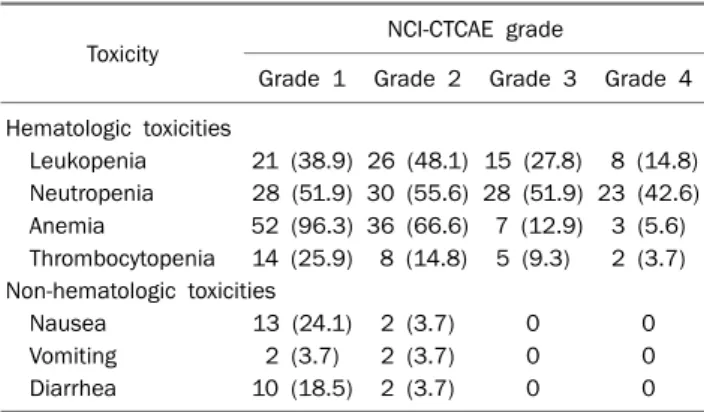
Table 3. Toxicity Profiles of FOLFIRI as Second-line Chemotherapy after Failure of FOLFOX4 in Advanced Colorectal Cancer (per Patient)
Toxicity NCI-CTCAE grade
Grade 1 Grade 2 Grade 3 Grade 4 Hematologic toxicities
Leukopenia 21 (38.9) 26 (48.1) 15 (27.8) 8 (14.8) Neutropenia 28 (51.9) 30 (55.6) 28 (51.9) 23 (42.6) Anemia 52 (96.3) 36 (66.6) 7 (12.9) 3 (5.6) Thrombocytopenia 14 (25.9) 8 (14.8) 5 (9.3) 2 (3.7) Non-hematologic toxicities
Nausea 13 (24.1) 2 (3.7) 0 0
Vomiting 2 (3.7) 2 (3.7) 0 0
Diarrhea 10 (18.5) 2 (3.7) 0 0
Values are presented as n (%).
NCI-CTCAE, National Cancer Institute-Common Terminology Criteria for Adverse Events (ver. 4.02); FOLFIRI, combination of irinotecan, 5-fluorouracil, and leucovorin; FOLFOX, combination of oxaliplatin, 5-fluorouracil, and leucovorin.
2. Efficacy of treatment
The median number of first-line FOLFOX4 chemotherapy cycles per patient was 11 (range, 3-27), and the median num- ber of second-line FOLFIRI chemotherapy cycles per patient was eight (range, 2-46). No patients had complete response (0%), five patients had partial response (9.3%), and 29 pa- tients had stable disease (53.7%). The response rate was 9.3%, and the disease control rate was 63.0%. Thirteen pa- tients had progressive disease (24.1%), and tumor re- sponses could not be assessed in seven patients (13.0%).
These results are summarized in Table 2. Twenty-three pa- tients experienced a change of chemotherapy regimens as a result of disease progression (42.6%).
The median overall survival for the FOLFIRI regimen was 8.90 months (95% confidence interval, 5.76-12.04 months) (Fig. 1), and the median time to progression for the FOLFIRI regimen was 4.33 months (95% confidence interval, 2.51-6.16 months) (Fig. 2).
3. Toxicity
Patients received a total of 426 cycles of FOLFIRI chemotherapy. The most common toxicity was neutropenia, which occurred in 43 patients (79.6%). Grade 3 or 4 anemia occurred in nine patients (16.7%), grade 3 or 4 neutropenia occurred in 34 patients (62.9%), and grade 3 or 4 thrombocy- topenia occurred in six patients (11.1%). Five patients had neutropenic fever that improved after treatment with G-CSF (granulocyte-colony stimulating factor) and antibiotics.
Twelve patients required dose reduction (22.2%) due to neutropenia. No deaths occurred due to toxicity. Non-hema- tologic toxicities consisted primarily of nausea and vomiting
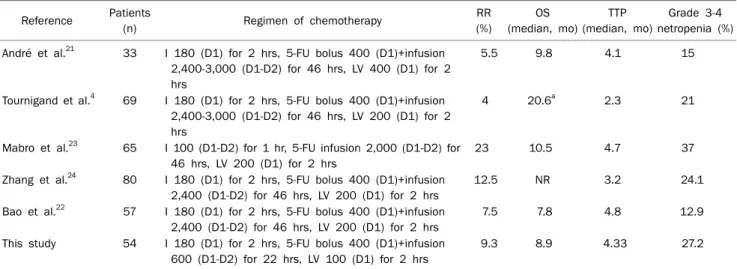
Table 4. Comparison with Other Studies Using Second-line FOLFIRI Chemotherapy
Reference Patients
(n) Regimen of chemotherapy RR
(%)
OS (median, mo)
TTP (median, mo)
Grade 3-4 netropenia (%) André et al.21 33 I 180 (D1) for 2 hrs, 5-FU bolus 400 (D1)+infusion
2,400-3,000 (D1-D2) for 46 hrs, LV 400 (D1) for 2 hrs
5.5 9.8 4.1 15
Tournigand et al.4 69 I 180 (D1) for 2 hrs, 5-FU bolus 400 (D1)+infusion 2,400-3,000 (D1-D2) for 46 hrs, LV 200 (D1) for 2 hrs
4 20.6a 2.3 21
Mabro et al.23 65 I 100 (D1-D2) for 1 hr, 5-FU infusion 2,000 (D1-D2) for 46 hrs, LV 200 (D1) for 2 hrs
23 10.5 4.7 37
Zhang et al.24 80 I 180 (D1) for 2 hrs, 5-FU bolus 400 (D1)+infusion 2,400 (D1-D2) for 46 hrs, LV 200 (D1) for 2 hrs
12.5 NR 3.2 24.1
Bao et al.22 57 I 180 (D1) for 2 hrs, 5-FU bolus 400 (D1)+infusion 2,400 (D1-D2) for 46 hrs, LV 200 (D1) for 2 hrs
7.5 7.8 4.8 12.9
This study 54 I 180 (D1) for 2 hrs, 5-FU bolus 400 (D1)+infusion 600 (D1-D2) for 22 hrs, LV 100 (D1) for 2 hrs
9.3 8.9 4.33 27.2
FOLFIRI, combination of irinotecan, 5-fluorouracil, and leucovorin; RR, response rate; OS, overall survival; TTP, time to progression; I, irinotecan; 5-FU, 5-fluorouracil; LV, leucovorin; NR, not reported.
aFrom the first day of first line chemotherapy to death.
although grade 1 or 2 diarrhea occurred in 11 patients (20.4%). Toxicity profiles are summarized in Table 3.
DISCUSSION
Irinotecan, a semisynthetic analogue of the natural alka- loid camptothecin, binds to the topoisomerase I-DNA com- plex and is involved in the unwinding of DNA during replication.10 It was clinically introduced in the late 1980s and has demonstrated antitumor activity against advanced colorectal cancer when used alone as first-line or second-line treatment.11,12 The main toxicities observed with irinotecan are delayed-onset diarrhea, nausea, vomiting, neutropenia, fatigue, alopecia, and acute cholinergic-like syndrome.13 The activity of irinotecan against untreated and fluorouracil-re- sistant colorectal cancer is the basis of the FOLFIRI regimen.
Saltz et al.14 reported that the FOLFIRI regimen is superior to irinotecan alone; the objective response rate was 50% vs.
29%, the mean overall survival was 14.8 months vs. 12.0 months, and the mean progression-free survival was 7.0 months vs. 4.2 months. Goldberg and Gill15 reported that the overall response rate was 56% for FOLFIRI as first-line ther- apy and 4% for FOLFIRI as second-line therapy; the overall progression-free survivals were of 8.5 months for FOLFIRI as first-line therapy and 2.5 months for FOLFIRI as second-line therapy.
Pooled results from several randomized phase II studies
of patients with advanced colorectal cancer have shown that the addition of bevacizumab to FOLFOX or FOLFIRI sig- nificantly improved the overall survival and response rates compared to results of those regimens in the absence of bevacizumab.16,17 Beretta et al.18 reported that the results of a pooled analysis of 11 papers including 435 advanced color- ectal cancer patients treated with FOLFIRI plus bevacizumab as second-line therapy yielded a pooled response rate (RR) of 26% and a median time to progression and overall survival of 8.3 and 17.2 months, respectively. Cetuximab and pan- itumumab (EGFR inhibitors) are also used in combination with FOLFIRI or FOLFOX as initial therapy options for ad- vanced colorectal cancer, and a recent meta-analysis con- cluded that the use of EGFR inhibitors is effective in the treat- ment of metastatic colorectal cancer with wild-type KRAS.19 Bevacizumab and cetuximab were approved by the Korean Food and Drug Administration in 2005, and panitumumab was approved in 2012. However, at present, Korean health insurance does not cover the use of biologic agents, and thus the cost of bevacizumab, cetuximab, or panitumomab is very high. Lee et al.20 reported that, the cost in Korea of adding bevacizumab is 3,553 USD per month, and the mean total cost per life-year gained is 32,385 USD. Although the addi- tion of bevacizumab to FOLFIRI or FOLFOX can improve clin- ical outcomes in patients with advanced colorectal cancer, the addition of biologic agents can be a major economic bur- den to patients without health insurance. In practice, the ma-
jority of patients in Korea with advanced colorectal cancer have been treated with FOLFIRI or FOLFOX without biologic agents.
This study aimed to assess the efficacy and toxicity of FOLFIRI without biologic agents as second-line chemo- therapy after a failure of FOLFOX4 in patients with advanced colorectal cancer in a Korean population. In this study, RR was 9.3%. The median overall survival and median time to progression were 8.9 months and 4.33 months, respectively.
Several phase II studies shown in Table 4 have reported the efficacy of the FOLFIRI regimen as second-line chemo- therapy after failure of the FOLFOX regimen,7 with results similar to ours. In those studies, the RR range was 4-23%, the median overall survival range was 7.8-10.5 months, and the median time to progression range was 2.3-4.8 months.4,21-24 The treatment was well-tolerated and neutropenia was the most frequently observed grade 3 or 4 toxicity (27.2%).
Previous studies showed that grade 3 or 4 neutropenia oc- curred in about 12.9-37.0% of patients with advanced color- ectal cancer treated with second-line FOLFIRI. In this study, there was no grade 3 or 4 diarrhea and 11 patients (20.4%) had grade 1 or 2 diarrhea. The rate of grade 3 or 4 diarrhea was reported to be 29% in French patients,4 2.4% in Chinese patients,24 and 0% in Korean patients treated with 180 mg/m2 irinotecan.7,25,26 These differences in incidence of di- arrhea could be explained by ethnic allelic differences in ur- idine diphosphate glucuronosyltransferase 1 (UGT1A1).
Irinotecan is metabolized to SN-38, which causes diarrhea and is inactivated by UGT1A1. The UGT1A1 (TA) 6/6 genotype is significantly more common in Asians than in Caucasians (76% vs. 46%).27 The comparison between data from this study and that from other studies using second-line FOLFIRI chemotherapy is summarized in Table 4.
In conclusion, the results of this study emphasize the effi- cacy of FOLFIRI as second-line chemotherapy after failure of FOLFOX4 in advanced colorectal cancer in a Korean popu- lation. Although the efficacy of FOLFIRI in this study was lower than that of second-line FOLFIRI with biologic agents, these results can help in the formulation of a treatment strategy for financially troubled patients.
REFERENCES
1. Jung KW, Won YJ, Kong HJ, Oh CM, Seo HG, Lee JS. Cancer sta-
tistics in Korea: incidence, mortality, survival and prevalence in 2010. Cancer Res Treat 2013;45:1-14.
2. Casado-Saenz E, Feliu J, Gomez-España MA, Sanchez-Gastaldo A, Garcia-Carbonero R. SEOM clinical guidelines for the treat- ment of advanced colorectal cancer 2013. Clin Transl Oncol 2013;15:996-1003.
3. de Gramont A, Figer A, Seymour M, et al. Leucovorin and fluo- rouracil with or without oxaliplatin as first-line treatment in ad- vanced colorectal cancer. J Clin Oncol 2000;18:2938-2947.
4. Tournigand C, André T, Achille E, et al. FOLFIRI followed by FOLFOX6 or the reverse sequence in advanced colorectal cancer:
a randomized GERCOR study. J Clin Oncol 2004;22:229-237.
5. Douillard JY, Cunningham D, Roth AD, et al. Irinotecan combined with fluorouracil compared with fluorouracil alone as first-line treatment for metastatic colorectal cancer: a multicentre rando- mised trial. Lancet 2000;355:1041-1047.
6. Rothenberg ML, Oza AM, Bigelow RH, et al. Superiority of ox- aliplatin and fluorouracil-leucovorin compared with either ther- apy alone in patients with progressive colorectal cancer after iri- notecan and fluorouracil-leucovorin: interim results of a phase III trial. J Clin Oncol 2003;21:2059-2069.
7. NCCN clinical practice guidelines in oncology. Colon cancer ver 2. 2014. [Internet]. Washington (PA): National Comprehensive Cancer Network; 2014 [updated 2013 Nov 6; cited 2013 Nov 26]. Available from: http://www.nccn.org/professionals/physician_
gls/pdf/colon.pdf
8. Colucci G, Gebbia V, Paoletti G, et al; Gruppo Oncologico Dell'Italia Meridionale. Phase III randomized trial of FOLFIRI versus FOLFOX4 in the treatment of advanced colorectal cancer: a multi- center study of the Gruppo Oncologico Dell'Italia Meridionale. J Clin Oncol 2005;23:4866-4875.
9. Hochster HS, Hart LL, Ramanathan RK, et al. Safety and efficacy of oxaliplatin and fluoropyrimidine regimens with or without bev- acizumab as first-line treatment of metastatic colorectal can- cer: results of the TREE Study. J Clin Oncol 2008;26:3523-3529.
10. Kawato Y, Aonuma M, Hirota Y, Kuga H, Sato K. Intracellular roles of SN-38, a metabolite of the camptothecin derivative CPT-11, in the antitumor effect of CPT-11. Cancer Res 1991;51:4187-4191.
11. Conti JA, Kemeny NE, Saltz LB, et al. Irinotecan is an active agent in untreated patients with metastatic colorectal cancer. J Clin Oncol 1996;14:709-715.
12. Pitot HC, Wender DB, O'Connell MJ, et al. Phase II trial of irinote- can in patients with metastatic colorectal carcinoma. J Clin Oncol 1997;15:2910-2919.
13. Vanhoefer U, Harstrick A, Achterrath W, Cao S, Seeber S, Rustum YM. Irinotecan in the treatment of colorectal cancer: clinical overview. J Clin Oncol 2001;19:1501-1518.
14. Saltz LB, Cox JV, Blanke C, et al. Irinotecan plus fluorouracil and leucovorin for metastatic colorectal cancer. Irinotecan Study Group. N Engl J Med 2000;343:905-914.
15. Goldberg RM, Gill S. Recent phase III trials of fluorouracil, irinote- can, and oxaliplatin as chemotherapy for metastatic colorectal cancer. Cancer Chemother Pharmacol 2004;54(Suppl 1):S57- S64.
16. Hurwitz H, Fehrenbacher L, Novotny W, et al. Bevacizumab plus irinotecan, fluorouracil, and leucovorin for metastatic colorectal
cancer. N Engl J Med 2004;350:2335-2342.
17. Kabbinavar FF, Schulz J, McCleod M, et al. Addition of bev- acizumab to bolus fluorouracil and leucovorin in first-line meta- static colorectal cancer: results of a randomized phase II trial. J Clin Oncol 2005;23:3697-3705.
18. Beretta GD, Petrelli F, Stinco S, et al. FOLFIRI + bevacizumab as second-line therapy for metastatic colorectal cancer pretreated with oxaliplatin: a pooled analysis of published trials. Med Oncol 2013;30:486.
19. Vale CL, Tierney JF, Fisher D, et al. Does anti-EGFR therapy im- prove outcome in advanced colorectal cancer? A systematic re- view and meta-analysis. Cancer Treat Rev 2012;38:618-625.
20. Lee EK, Revil C, Ngoh CA, et al. Clinical and cost effectiveness of bevacizumab + FOLFIRI combination versus FOLFIRI alone as first-line treatment of metastatic colorectal cancer in South Korea. Clin Ther 2012;34:1408-1419.
21. André T, Louvet C, Maindrault-Goebel F, et al. CPT-11 (irinotecan) addition to bimonthly, high-dose leucovorin and bolus and con- tinuous-infusion 5-fluorouracil (FOLFIRI) for pretreated meta- static colorectal cancer. GERCOR. Eur J Cancer 1999;35:1343- 1347.
22. Bao HY, Fang WJ, Zhang XC, et al. Phase II study of FOLFIRI regi- men in patients with advanced colorectal cancer refractory to
fluoropyrimidine and oxaliplatin. Cancer Chemother Pharmacol 2011;67:147-152.
23. Mabro M, Artru P, André T, et al. A phase II study of FOLFIRI-3 (double infusion of irinotecan combined with LV5FU) after FOLFOX in advanced colorectal cancer patients. Br J Cancer 2006;94:1287-1292.
24. Zhang W, Zhao ZY, Wu Q, et al. Multicenter phase II study of modi- fied FOLFIRI regimen in the advanced colorectal cancer patient refractory to fluoropyrimidine and oxaliplatin. Zhonghua Zhong Liu Za Zhi 2006;28:788-790.
25. Jeon EK, Hong SH, Kim TH, et al. Modified FOLFIRI as second-line chemotherapy after failure of modified FOLFOX-4 in advanced gastric cancer. Cancer Res Treat 2011;43:148-153.
26. Kang SH, Kim JI, Moon HS, et al. Oxaliplatin and leucovorin plus fluorouracil versus irinotecan and leucovorin plus fluorouracil combination chemotherapy as a first-line treatment in patients with metastatic or recurred gastric adenocarcinoma. Korean J Gastroenterol 2010;55:26-32.
27. Liu JY, Qu K, Sferruzza AD, Bender RA. Distribution of the UGT1A1*28 polymorphism in Caucasian and Asian populations in the US: a genomic analysis of 138 healthy individuals. Antican- cer Drugs 2007;18:693-696.