Korean J Gastroenterol Vol. 70 No. 1, 50-53 https://doi.org/10.4166/kjg.2017.70.1.50 pISSN 1598-9992 eISSN 2233-6869
CASE REPORT
Korean J Gastroenterol, Vol. 70 No. 1, July 2017 www.kjg.or.kr
미코플라스마에 의해 폐침범 없이 발생한 중증 급성 간염 1예
정한택, 오재영, 송정은, 김병석, 이창형
대구가톨릭대학교 의과대학 대구가톨릭대학교병원 소화기내과
Mycoplasma pneumoniae-associated Hepatitis without Lung Involvement
Han Taek Jeong, Jae Young Oh, Jung Eun Song, Byung Seok Kim and Chang Hyeong Lee
Division of Gastroenterology, Department of Internal Medicine, Daegu Catholic University Medical Center, Catholic University of Daegu School of Medicine, Daegu, Korea
Mycoplasma pneumoniae (M. pneumoniae) is a major cause of community acquired respiratory infections. And it also causes a num- ber of extrapulmonary manifestations including cardiovascular, dermatological, musculoskeletal, and hematological systems. But, acute hepatitis without lung involvement is rare in adults. Here, we report a case of 32-year-old man who presented with fever, chilling, myalgia, and headache. Biochemical analysis showed severely impaired liver function and leukopenia. Laboratory tests and liver biop- sy demonstrated a hepatocellular pattern of M. pneumoniae-associated acute hepatitis. Clinical symptoms and laboratory parame- ters are improved rapidly under treatment with macrolide. Therefore, We recommend that phsycians should consider a possibility of M. pneumoniae infection in acute hepatitis without lung and extrapulmonary involvement, when other more frequent causes have been excluded. (Korean J Gastroenterol 2017;70:50-53)
Key Words: Mycoplasma pneumoniae; Hepatitis; Adult; Leukopenia
Received May 2, 2017. Revised July 3, 2017. Accepted July 12, 2017.
CC This is an open access article distributed under the terms of the Creative Commons Attribution Non-Commercial License (http://creativecommons.org/licenses/
by-nc/4.0) which permits unrestricted non-commercial use, distribution, and reproduction in any medium, provided the original work is properly cited.
Copyright © 2017. Korean Society of Gastroenterology.
교신저자: 이창형, 42472, 대구시 남구 두류공원로 17길 33, 대구가톨릭대학교 의과대학 대구가톨릭대학교병원 소화기내과
Correspondence to: Chang Hyeong Lee, Division of Gastroenterology, Department of Internal Medicine, Daegu Catholic University Medical Center, Catholic University of Daegu School of Medicine, 33 Duryugongwon-ro 17-gil, Nam-gu, Daegu 42472, Korea. Tel: +82-53-650-3000, Fax: +82-53-623-7507, E-mail: [email protected] Financial support: None. Conflict of interest: None.
INTRODUCTION
Mycoplasma pneumoniae (M. pneumoniae) is a major cause of community acquired respiratory infections in both children and adults. M. pneumoniae infection also can cause a number of extrapulmonary manifestations including car- diovascular, dermatological, digestive organ, hematological/
hematopoietic system, musculoskeletal, sensory organ, and urogenital tract manifestations.1 Some cases of M. pneumo- niae-associated acute hepatitis without lung and extrapul- monary involvement in adults have been reported, but all of them did not present severe clinical manifestations. We re- port here the case of M. pneumoniae-associated acute hep-
atitis with severe clinical manifestations in an adult patient.
CASE REPORT
A previously healthy 32-year-old man was admitted to emergency room with fever, chilling, generalized myalgia and headache for 3 days. The patient was not alcoholic, and he did not take any herbs and drugs. There was no recent travel history. Physical examination on admission was normal, ex- cept fever (38.5°C). Initial laboratory test demonstrated a white blood cell count (WBC) of 3.0×10³/μL, hemoglobin of 14.9 g/dL, platelet count of 160×103/μL, aspartate amino- transferase (AST) of 174 U/L, alanine aminotransferase (ALT)
Jeong HT, et al. Acute Hepatitis with Severe Clinical Manifestation 51
Vol. 70 No. 1, July 2017 Fig. 1. Time course of liver function parameters during hospitalization
period. The hospital day 1 means the first day the patient visited hospital. Arrow indicates start of macrolide therapy. Note the rapid re- gression of T-bil, WBC, and ALT level, while ALP level remains elevated. T-bil, total bilirubin; WBC, white blood cell count; ALT, ala- nine aminotransferase; ALP, alkaline phosphatase.
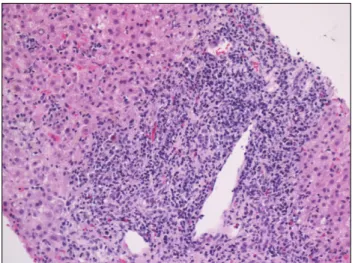
Fig. 2. Microscopic finding of liver needle biopsy. The picture shows many lymphocytes infiltration (H&E, ×200).
of 177 U/L, alkaline phosphatase (ALP) of 83 U/L, total bilir- ubin (T-bil) of 0.6 mg/dL, gamma glutamyltranspeptidase of 110 U/L, and C-reactive protein of 5.5 mg/L (normal range,
<5.0 mg/L). Antibody to hepatitis A virus, hepatitis B surface antigen and antibody to hepatitis C virus were negative, but antibody to hepatitis B surface antigen was positive. Chest and abdominal computed tomography did not reveal any ab- normal finding except adrenal incidentaloma. Cerebrospinal fluid analysis and urinalysis were also normal. Further, blood and urine culture were negative. The result of peripheral blood smear showed decreased WBC with toxic granules and vacuoles, indicative of acute inflammatory reaction. The pa- tient was discharged from hospital with medication including antipyretics, pain killer and hepatotonics.
Two days later, the patient visted hospital for clinical fol- low-up. He still suffered from fever (38.1°C), chilling, and myalgia. Follow-up laboratory tests were deteriorated. They demonstrated a WBC of 2.1×10³/μL with absolute neutrophil count of 1.1×10³/μL, hemoglobin of 14.8 g/dL, platelet count of 124×103 /μL, AST of 1,405 U/L, ALT of 1,466 U/L, ALP of 185 U/L, T-bil of 1.5 mg/dL, and C-reactive protein of 5.4 mg/L. He was admitted to hospital again for further evalu- ation, and treated with broad spectrum antibiotics (3rd gen- eration cephalosporin) and hepatotonics, but elevation of liv- er function parameters were progressed as follows; AST of 2,913 U/L, ALT of 3,068 U/L, ALP of 185 U/L, T-bil 3.3 of mg/dL, and gamma glutamyltranspeptidase of of 329 U/L on
the 3rd day of hospitalization. Initial prothrombin time was within normal range, but follow-up prothrombin time was ele- vated to 17.2 sec (normal range, 11.5-15 sec) on the same day. Antinuclear antibody, anti-neutrophilic cytoplasmic anti- body and antimitochondrial antibody were negative. Imm- unoglobulin M antibodies aginst herpes simplex virus, cyto- megalovirus, epstain-barr virus, hantavirus, leptospira, and orientia tsutsugamushi. Tsutsugamushi were also negative.
Lastly, immunoglobulin M antibody against M. pneumoniae by chemiluminescent immunoassay (index value is 10) was positive twice on repeated test (18, 27 respectively).
Antibiotic therapy was changed to azithromycin (500 mg orally once daily) on clinical suspicion of M. pneumoniae- associated hepatitis. Liver biopsy was also performed.
Symptomatic and laboratory recovery occurred on the 8th day of hospitalization. The patient was discharged from hospital on the 13th day of hospitalization, and eight days later, liver function tests returned to normal range (Fig. 1).
The liver biospy revealed acute hepatitis with mild lobular activity, moderate porto-periportal activity and no fibrosis so that we could be more certain of M. pneumoniae-associated acute hepatitis (Fig. 2), but M. pneumoniae DNA was not detected in liver tissue using polymerase chain reaction assay.
DISCUSSION
M. pneumoniae infections can involve both upper and the lower respiratory tracts and occur worldwide in children and
52 정한택 등. 미코플라스마에 의해 폐침범 없이 발생한 중증 간염 1예
The Korean Journal of Gastroenterology
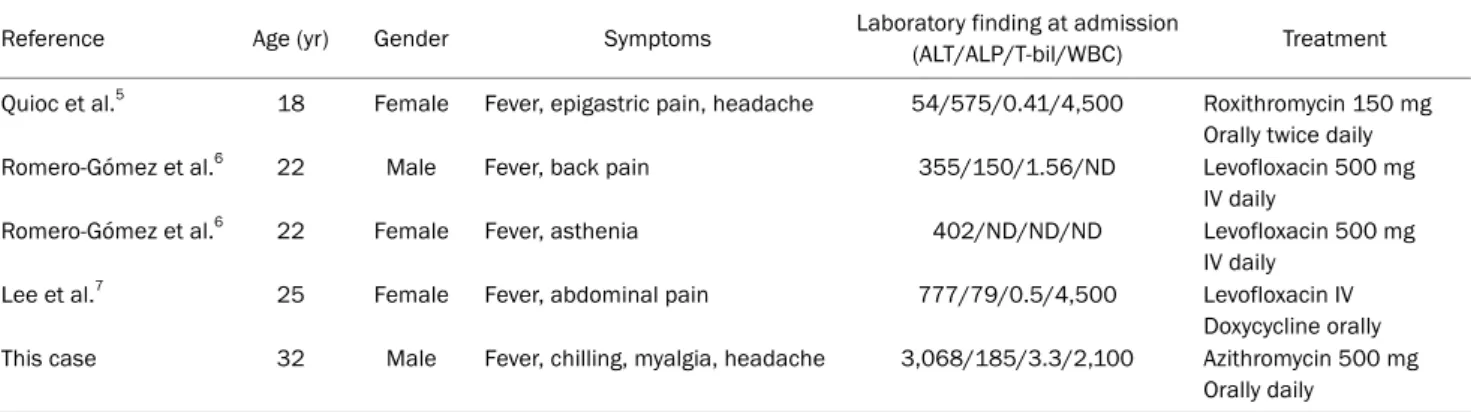
Table 1. Clinical Features of Patients with Mycoplasma pneumoniae-associated Acute Hepatitis without Lung Involvement in Adults
Reference Age (yr) Gender Symptoms Laboratory finding at admission
(ALT/ALP/T-bil/WBC) Treatment Quioc et al.5 18 Female Fever, epigastric pain, headache 54/575/0.41/4,500 Roxithromycin 150 mg
Orally twice daily
Romero-Gómez et al.6 22 Male Fever, back pain 355/150/1.56/ND Levofloxacin 500 mg
IV daily
Romero-Gómez et al.6 22 Female Fever, asthenia 402/ND/ND/ND Levofloxacin 500 mg
IV daily
Lee et al.7 25 Female Fever, abdominal pain 777/79/0.5/4,500 Levofloxacin IV
Doxycycline orally This case 32 Male Fever, chilling, myalgia, headache 3,068/185/3.3/2,100 Azithromycin 500 mg
Orally daily
ALT, alanine aminotransferase; ALP, alkaline phosphatase; T-bil, total bilirubin; WBC, white blood cell count; ND, not determined; IV, intravenous.
adults.2 It also causes a wide variety of extrapulmonary dis- ease including almost all organs of the human body.1 The in- cidence of M. pneumoniae-associated hepatitis was re- ported ranging from 7-21% and usually occurred with pneumonia.3,4 The most noticeable manifestation of M.
pneumoniae-associated hepatitis is an elevation of ALT level in both adults and children. On the other hand, pulmonary in- filtration is more common in children than in adults.3,4 Shin et al.4 and Kim et al.3 investigated the incidence and clinical characterestics of M. pneumoniae-associated hepatitis in adults and children respectively. All of children had pulmo- nary infiltration, according to findings of Kim et al.3 Similarly, most of adults, according to findings of Shin et al.,4 showed typical signs and symptoms of M. pneumoniae infection such as atypical pneumonia (64%), pleural effusion (32%), and respiratory symptoms including cough, sputum, and chest discomfort (76%). But, there was no description of whether extrapulmonary infections such as urinary tract infection, musculoskeletal infection, etc. were excluded. Further, ele- vations of aminotransferases were mostly mild. Thus, the conclusion of Shin et al.4 is that 21% of patients who had both respiratory or other infections and serologically-confirmed M. pneumoniae infection occurred with impaired liver function.
A few cases of M. pneumoniae-associated acute hepatitis without lung and extrapulmonary involvement in adults are summarized in Table 1.5-7 All patients in these cases had a fe- ver and showed impaired liver function test. But, our case showed most severe hepatitis. Liver biopsy was only per- formed in our case, and it helped us to be certain of M. pneu- moniae-associated acute hepatitis.
Although the pathogenesis of M. pneumoniae-associated
hepatitis remains largely unknown, there are two major theories. One is immune modulation, and the other is direct invasion of M. pneumoniae.1-4 In accordance with these theo- ries, hepatic involvement could be classified into two types based on 7 days between onset of symptoms and peak liver enzyme level. The one is an early-onset hepatitis, in which hematogeneously transferred M. pneumoniae causes in- flammation at the local site by inducing cytokines, and the oth- er is a late-onset hepatitis caused by the appearance of auto- immune antibodies or localization of an immune complex.1,4,8 Grüllich et al.9 and Quioc et al.5 respectively reported two cas- es of M. pneumoniae-associated acute hepatitis with choles- tatic pattern of liver enzymes, and explained that rapid im- provement under antibiotics suggests a direct infection of hepatobiliary tract. On the other hand, Lee et al.7 reported M.
pneumoniae-associated acute hepatitis with hepatocellular pattern of liver enzymes, and explained that the persistent liv- er enzyme elevation may have been mediated by immunologic mechanism.Therefore, immunomodulatory effects of macro- lides to suppress immune response of the host might work.1 In this case, the time interval from onset of symptoms to peak liver function test was 9 days, and although the liver biopsy was performed on the day after macrolide initiation, liver tis- sue mycoplasma polymerase chain reaction was negative.
These suggest M. pneumoniae-associated acute hepatitis is more likely attributed to immuned-mediated mechanism.
Another interesting feature in this patient was a leukopenia.
There are many hematological manifestations due to M.
pneumoniae infection including autoimmune hemolytic ane- mia, hemophagocytic syndrome, disseminated intravascular coagulation, thrombocytopenia purpura, and infectious mononucleosis.1,2 However leukopenia is rare.1,3 This manifes-
Jeong HT, et al. Acute Hepatitis with Severe Clinical Manifestation 53
Vol. 70 No. 1, July 2017
tation could be also explained by immune-mediated mecha- nism such as autoimmunity and immune dysregulation.1,10-12 M. pneumoniae adhesion proteins and glycolipids of the cell membrane with mammalian tissues is a well-known example of molecular mimicry that may trigger autoimmune disorders.1 Therefore, in addition to antibody against M. pneumoniae, a variety of cross-reactive antibodies may develop through mo- lecular mimicry. And these antibodies might contribute to leukopenia in our case.1,2
In conclusion, this case demonstrates that M. pneumo- niae-associated acute severe hepatitis without lung and ex- trapulmonary involvement can occur in immunocompetent adult. The patient presented fever, chilling, myalgia and headache without any respiratory symptoms. And symptoms and laboratory test are improved rapidly under appropriate antibiotic administration. Therfore, we recommend that physicians should consider a possibility of M. pneumoniae in- fection in acute hepatitis without lung and extrapulmonary involvement when other more frequent causes have been excluded.
REFERENCES
1. Narita M. Pathogenesis of extrapulmonary manifestations of my- coplasma pneumoniae infection with special reference to pneumonia. J Infect Chemother 2010;16:162-169.
2. Waites KB, Talkington DF. Mycoplasma pneumoniae and its role as a human pathogen. Clin Microbiol Rev 2004;17:697-728, ta-
ble of contents.
3. Kim KW, Sung JJ, Tchah H, et al. Hepatitis associated with myco- plasma pneumoniae infection in Korean children: a prospective study. Korean J Pediatr 2015;58:211-217.
4. Shin SR, Park SH, Kim JH, et al. Clinical characteristics of patients with mycoplasma pneumoniae-related acute hepatitis.
Digestion 2012;86:302-308.
5. Quioc JJ, Trabut JB, Drouhin F, et al. Acute cholestatic hepatitis revealing mycoplasma pneumoniae infection without lung in- volvement in an adult patient. Eur J Gastroenterol Hepatol 2009;
21:220-221.
6. Romero-Gómez M, Otero MA, Sánchez-Muñoz D, et al. Acute hep- atitis due to mycoplasma pneumoniae infection without lung in- volvement in adult patients. J Hepatol 2006;44:827-828.
7. Lee SW, Yang SS, Chang CS, Yeh HJ, Chow WK. Mycoplasma pneumonia-associated acute hepatitis in an adult patient with- out lung infection. J Chin Med Assoc 2009;72:204-206.
8. Fan Q, Meng J, Li P, Liu Z, Sun Y, Yan P. Pathogenesis and associa- tion of mycoplasma pneumoniae infection with cardiac and hep- atic damage. Microbiol Immunol 2015;59:375-380.
9. Grüllich C, Baumert TF, Blum HE. Acute mycoplasma pneumo- niae infection presenting as cholestatic hepatitis. J Clin Microbiol 2003;41:514-515.
10. Chen CJ, Juan CJ, Hsu ML, Lai YS, Lin SP, Cheng SN. Mycoplasma pneumoniae infection presenting as neutropenia, thrombocyto- penia, and acute hepatitis in a child. J Microbiol Immunol Infect 2004;37:128-130.
11. Celik AD, Eker A, Yukugkural Z, et al. Mycoplasma pneumoniae pneumonia presenting with febrile neutropenia. Respir Med Extra 2007;3:64-66.
12. Okoli K, Gupta A, Irani F, Kasmani R. Immune thrombocytopenia associated with mycoplasma pneumoniae infection: a case re- port and review of literature. Blood Coagul Fibrinolysis 2009;20:
595-598.