Dose-dependent Effects of Dietary Folate on Aortic Relaxation and Hepatic C-reactive protein Levels in C57BL/6 Mice
Eunhee Kong1, Syeda T. Hasan2, Hyeran Jang3, Ella M. Zimmerly3, Sang-Woon Choi3 and Mohsen Meydani2*
1Department of Family Medicine, College of Medicine, Kosin University, Busan 602-702, Korea
2Vascular Biology Laboratory, Jean Mayer USDA Human Nutrition Research Center on Aging, Tufts University, Boston, MA 02111, USA
3Vitamins and Carcinogenesis Laboratory, Jean Mayer USDA Human Nutrition Research Center on Aging, Tufts University, Boston, MA 02111, USA Received April 28, 2015 /Revised June 25, 2015 /Accepted August 18, 2015
Endothelial dysfunction is an initial step in atherosclerosis. B vitamins (B6, B12, and folate) are im- portant contributing factors to vascular homeostasis. Deficiencies in these B vitamins induce car- diovascular diseases by altering vascular homeostasis. Folate plays important roles in nitric oxide ho- meostasis in the endothelium. To determine the dose-dependent effect of dietary folate on athero- sclerosis, we studied aortic relaxation and hepatic C-reactive protein (CRP) levels in C57BL/6 mice.
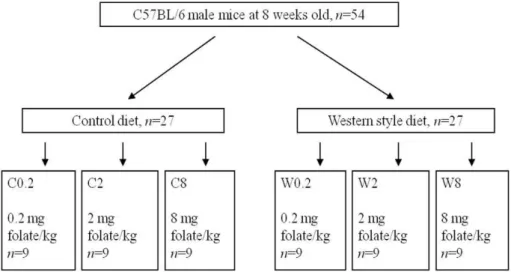
In this study, a total of 54 male C57BL/6, 8-wk old mice were split into 2 dietary groups (control and Western style diet). Each diet group was divided into 3 subgroups according to dietary folate dosage (0.2, 2, and 8 mg/kg). After 18 months, the relaxation response seen in aortic rings from mice fed 0.2 or 2 mg folate/kg in both diet groups. However, the aortic relaxation response was not seen and no differences were observed in mice fed 8mg folate/kg in either diet group (p<0.05). Hepatic CRP levels at all folate dosages (0.2, 2, 8 mg folate/kg) were higher in the groups fed a Western style diet than in mice fed a control diet (p=0.035). CRP levels were lower in mice fed 0.2 mg folate/kg than in mice fed 2 or 8 mg folate/kg in both diet groups (p<0.05). These results indicate that in C57BL/6 mice 0.2 mg folate/kg may be enough to prevent atherosclerosis by inducing the relaxation responses of the aorta and by reducing levels of hepatic CRP, regardless of dietary style.
Key words : C-reactive protein, folate, relaxation
*Corresponding author
*Tel : +82-51-990-6155, Fax : +82-51-990-3045
*E-mail : [email protected]
This is an Open-Access article distributed under the terms of the Creative Commons Attribution Non-Commercial License (http://creativecommons.org/licenses/by-nc/3.0) which permits unrestricted non-commercial use, distribution, and reproduction in any medium, provided the original work is properly cited.
Journal of Life Science 2015 Vol. 25. No. 8. 889~895 DOI : http://dx.doi.org/10.5352/JLS.2015.25.8.889
Introduction
The Western style diet is characterized by a high fat con- tent, low level of fiber, and deficiencies in the B vitamins (B6, B12, and folate). These B vitamins are important con- tributing factors to vascular homeostasis. Deficiencies in these B vitamins are important contributing factors to the high prevalence of cardiovascular diseases by altering vas- cular homeostasis and stimulating inflammation [7].
Endothelial dysfunction is one of the initial steps in the de- velopment of atherosclerosis [18]. It is characterized by a re- duced capacity for the production of and availability of nitric oxide (NO) [13]. Folate plays important roles in NO homeo- stasis of the endothelium [12]. A deficiency in folate in rats
elevated liver lipids, protein oxidation, and vascular gen- eration of superoxide radical (O2•ˉ), which led to decreased NO bioavailability to the vascular system [14, 17]. Thus, the association between folate and endothelial cell function is of clinical importance. Nevertheless, as of today, few studies have investigated the effect of folate on endothelium-de- pendent relaxation. Therefore, we hypothesized that dietary folate would be associated with endothelium-dependent re- laxation caused by the NO bioavailability. Isolated thoracic aortas are widely used to assess the endothelial ability to release NO [4]. It has also been shown that dietary folate reduces serum C-reactive protein (CRP) levels [14, 17]. CRP is a systemic marker of inflammation and a predictor of car- diovascular disease (CVD). It is synthesized by the liver and participates in the pathogenesis of atherosclerosis through activation of endothelial cells [20]. Thus, we also hypothe- sized that dietary folate would decrease hepatic CRP levels.
To determine the dose-dependent effect of dietary folate on atherosclerosis, we studied aortic relaxation and hepatic CRP levels in C57BL/6 mice.
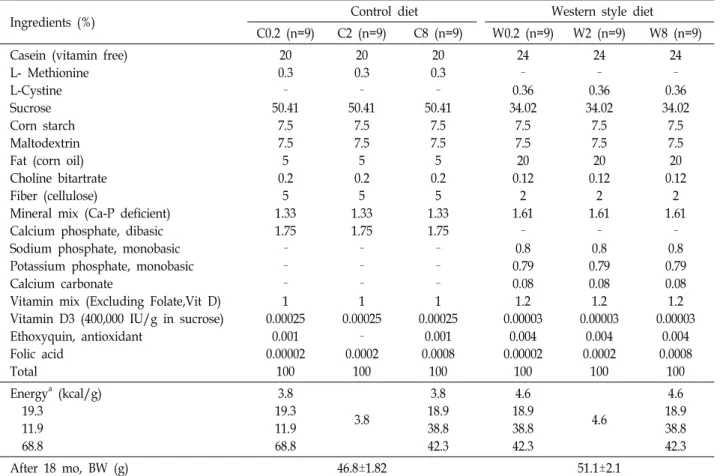
Table 1. Composition of the control (C) and Western style (W) diets
Ingredients (%) Control diet Western style diet
C0.2 (n=9) C2 (n=9) C8 (n=9) W0.2 (n=9) W2 (n=9) W8 (n=9) Casein (vitamin free)
L- Methionine L-Cystine Sucrose Corn starch Maltodextrin Fat (corn oil) Choline bitartrate Fiber (cellulose)
Mineral mix (Ca-P deficient) Calcium phosphate, dibasic Sodium phosphate, monobasic Potassium phosphate, monobasic Calcium carbonate
Vitamin mix (Excluding Folate,Vit D) Vitamin D3 (400,000 IU/g in sucrose) Ethoxyquin, antioxidant
Folic acid Total
20 0.3 – 50.41
7.5 7.5 5 0.2
5 1.33 1.75 – – – 1 0.00025
0.001 0.00002
100
20 0.3 – 50.41
7.5 7.5 5 0.2
5 1.33 1.75 – – – 1 0.00025
– 0.0002
100
20 0.3 – 50.41
7.5 7.5 5 0.2
5 1.33 1.75 – – – 1 0.00025
0.001 0.0008
100
24 – 0.36 34.02
7.5 7.5 20 0.12
2 1.61
– 0.8 0.79 0.08 1.2 0.00003
0.004 0.00002
100
24 – 0.36 34.02
7.5 7.5 20 0.12
2 1.61
– 0.8 0.79 0.08 1.2 0.00003
0.004 0.0002
100
24 – 0.36 34.02
7.5 7.5 20 0.12
2 1.61
– 0.8 0.79 0.08 1.2 0.00003
0.004 0.0008
100 Energya (kcal/g)
19.3 11.9 68.8
3.8 19.3 11.9 68.8
3.8
3.8 18.9 38.8 42.3
4.6 18.9 38.8 42.3
4.6
4.6 18.9 38.8 42.3
After 18 mo, BW (g) 46.8±1.82 51.1±2.1
Dietary groups: C0.2 (0.2 mg folate/kg control diet), C2 (2 mg folate/kg control diet), C8 (8 mg folate/kg control diet), W0.2 (0.2 mg folate/kg Western style diet), W2 (2 mg folate/kg Western style diet), and W8 (8 mg folate/kg Western style diet).
aThe estimate of caloric content was based on the standard physiological fuel values for protein, fat, and carbohydrate of 4, 9 and 4, respectively.
nutrients (folic acid, methionine and choline) (Table 1). The mice fed 0.2 mg folate/kg represented the low level of folate commonly found in a Western style human diet. The mice fed 8 mg folate/kg represented the level of folate consumed by a Western human population receiving more than the necessary amount of folate through flour fortification, multi-
the W diet. At the end of the 72 wks of dietary treatment, the mice were sacrificed by CO2 exposure.
Measurement of aortic relaxation
The thoracic aortas of the mice were rapidly excised and immediately placed in Krebs buffer (119 mmol/l NaCl, 4.7
Fig. 1. Experimental design of the control (C) and Western-style (W) diets.
mmol/l KCl, 24 mmol/l NaHCO3, 1.2 mmol/l KH2PO4, 0.0023 mmol/l EDTA, 1.2 mmol/l MgCl2, 11 mmol/l glu- cose, and 2.5 mmol/l CaCl2 [pH 7.4]). Loose connective tis- sues in the adventitia of the thoracic aorta were carefully removed without damage to the endothelial surface. The aorta was cut into cylindrical rings at 2.5 mm intervals from the origin of the left subclavian artery in the direction of the descending thoracic aorta. Aortic rings were mounted on two L-shaped, stainless steel arms of a multi chamber myograph (DMT-USA. Inc., Atlanta, GA, USA). In each chamber, one arm of the myograph was fixed to a forced displacement transducer for continuous recording of the iso- metric tension, and the other arm was attached to a calibrat- ing device.
Experiments with the mounted aortic rings were per- formed in an incubating chamber bath containing Krebs buf- fer with a continuous aeration of oxygen at 37℃ according to the methods of Zhu et al [22]. The aortic segments were allowed to equilibrate in Krebs buffer for 1 hr prior to the start of the experiment. The optimal resting tension in all aortic rings of mice was adjusted to 9 millinewton (mN).
Following the equilibration period, the contractile capacity of each aortic ring was examined by applying 1.25 mol/l KCl (Sigma Chemical Co., Saint Louis, MO, USA) and then applied increasing concentrations of phenylephrine (Sigma) (Phe, 0.01-10 μmol/l). The aortic rings were rinsed with Krebs buffer 3 times for 10 min each. After stabilization, the aortic rings were stimulated with 0.3 μmol/l Phe. After con- traction caused by Phe, relaxation responses were recorded by applying the increased concentrations of acetylcholine (Sigma) (Ach, 0.01-10 μmol/l), an endothelial-dependent
vasodilator. The relaxation responses were expressed as a percentage of the initial pre-contraction level induced by Phe.
Measurement of hepatic CRP
The livers of the mice were removed, snap-frozen in liq- uid nitrogen, and stored at -80°C until analysis. The liver tissues were homogenized in lysis buffer [50 mmol/l Tris-HCl, 10 mmol/l EDTA, 1% Tween 20, 1 mmol/l phenyl- methylsulfonyl fluoride, 10 μmol/l leupeptin (pH 7.4), and protease inhibitor] using a PowerGen 125 homogenizer (Fisher Scientific, Pittsburgh, PA, USA) [2, 9] and incubated on ice for 2 hr. The homogenates were centrifuged at 8000
× g at 4°C for 30 min. The supernatants were collected for ELISA. The total protein levels were measured using the Pierce BCATM protein assay kit (Thermo Scientific, Rockford, IL, USA). Hepatic CRP levels were measured by a sand- wich-type ELISA (R&D Systems). The commercial antibodies used were rhCRP (R&D Systems), hmpCRP (monoclonal, R&D Systems), and GAM-HRP conjugate (Bio-Rad). A spe- cific anti-human CRP antibody was coated onto microtiter plates at 4oC and left overnight. Blocking solution was ap- plied for 2 hr at room temperature to block the remaining protein-binding sites in the coated wells, followed by wash- ing (2 times, 1 min each). The diluted supernatant liquid (appropriately 200 μg protein) and anti-human CRP Ab used as the standard were added in triplicate into each well of the plates. After washing (4 times, 1 min each), diluted de- tection Ab was added into the wells and incubated for 2 h at room temperature. Plates were washed (4 times, 1 min each) and incubated with horseradish peroxidase-conjugated
A B
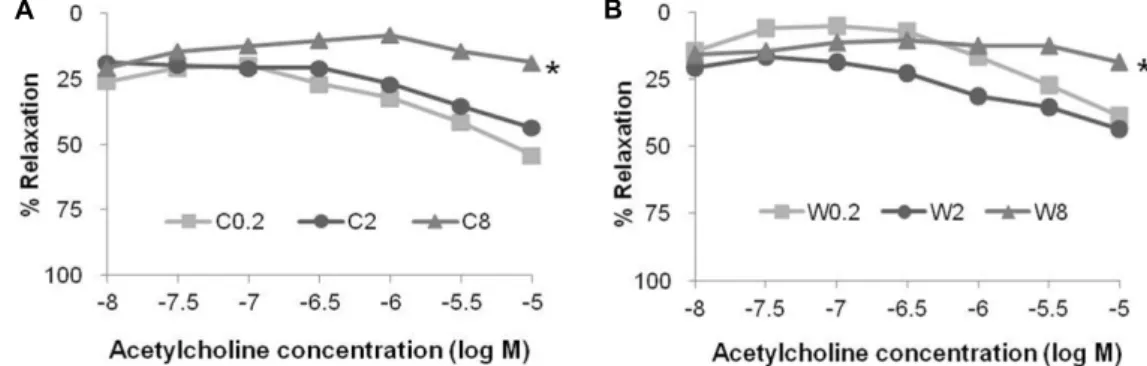
Fig. 2. Acetylcholine (Ach)-induced % relaxation of aortic rings from mice fed control (C) or Western-style (W) diets for 18 mo.
Aortic rings from proximal segments of the thoracic aorta were subjected to contraction using phenylephrine (Phe, 0.3 μmol/l).
This was followed by the application of increasing concentrations of Ach (0.01-10 μmol/l). The Ach-induced % relaxation response was seen in aortic rings from mice fed 0.2 or 2 mg folate/kg in both diet groups. However, it was not seen in aortic rings from mice fed 8mg folate/kg in either diet group. (A) Ach-induced % relaxation was small in the aortic rings of mice fed the C8 diet, compared to that of aortas from mice fed other C diets (p=0.042). (B) It was also less in the aortic rings of mice fed the W8 diet, compared to that of aortas from mice fed 2 or 8 mg folate/kg on the W diet (p=0.045).
Dietary groups: C0.2 (0.2 mg folate/kg control diet), C2 (2 mg folate/kg control diet), C8 (8 mg folate/kg control diet), W0.2 (0.2 mg folate/kg Western style diet), W2 (2 mg folate/kg Western style diet), and W8 (8 mg folate/kg Western style diet). n=9/diet group. Values are mean ± SEM. * p<0.05 was obtained by Kruskal Wallis test.
Results are presented as mean ± SEM. Vascular responses (Phe contractions and Ach % relaxations) and hepatic CRP levels were compared among dietary subgroups (C0.2, C2, C8, W0.2, W2, and W8). Data were analyzed by Kruskal Wallis test. A relevant post-hoc analysis was performed using a Tukey’s honestly significant difference (HSD) test. A P-val- ue <0.05 was considered statistically significant. SPSS for Windows (version 20.0, SPSS Inc., Chicago, IL, USA) was used for data analyses.
Results
Relaxation responses of aortic rings
The Ach-induced % relaxations of aortic rings from mice fed either the C or W diet are shown in Fig. 2. Aortic rings from proximal segments of thoracic aortas were subjected
Hepatic CRP
Hepatic CRP levels from mice fed the C or W diets are shown in Fig. 3. Hepatic CRP levels were higher in the groups fed the W diet at all folate dosages (0.2, 2, and 8 mg folate/kg) than in groups fed the C diet (p=0.035). Levels were lower in mice fed the C0.2 diet than in mice fed 2 or 8 mg folate/kg on the C diet (p=0.041). Levels were also lower in mice fed the W0.2 diet than in mice fed other W diets (p=0.030).
Discussion
Aortas from mice fed 0.2 or 2 mg folate/kg along with either a W or C diet showed Ach-% relaxation responses in this study. We also found that hepatic CRP levels were
Fig. 3. Hepatic C-reactive protein (CRP) levels in mice fed con- trol (C) or Western style (W) diets for 18 mo. Mice fed a W diet, irrespective of folate dose (0.2, 2, 8 mg fo- late/kg), had increases their hepatic CRP levels com- pared to mice that consumed a C diet (p=0.035). CRP was lower in mice fed C0.2 than in mice in the 2 or 8 mg folate/kg C diet groups (p=0.041). CRP was also low- er in mice fed W0.2 than in mice fed other W diets (p=0.030). Dietary groups: C0.2 (0.2 mg folate/kg control diet), C2 (2 mg folate/kg control diet), C8 (8 mg fo- late/kg control diet), W0.2 (0.2 mg folate/kg Western style diet), W2 (2 mg folate/kg Western style diet), and W8 (8 mg folate/kg Western style diet). n=9/diet group.
Values are mean ± SEM. * p<0.05 was obtained by Kruskal Wallis test.
low in mice fed 0.2 mg folate/kg along with either the W or C diet.
Relaxation of the normal rabbit aorta in response to Ach is mediated in large part by NO [6]. The presence of suffi- cient amounts of the active metabolites of folate, i.e., 5-meth- yltetrahydrofolate (5-MTHF), is necessary for activation of NO synthase (eNOS) to produce NO [16]. However, a long- term overdose of folate may lead to eNOS uncoupling from its substrate, which results in decreased NO formation [21].
Our observation that a long-term overdose of folate (C8 and W8 diets) has a negative impact on vascular relaxation is in accordance with the above notion. In support of this con- cept, Lentz and colleagues reported that long-term B vitamin supplementation did not prevent endothelial dysfunction and atherosclerosis in monkeys fed an atherogenic diet [11].
In placebo-controlled, randomized clinical trials, healthy in- dividuals who consumed folate supplements for 1 to 2 years showed no improvement in the stiffness of the common car- otid artery [19].
CRP is synthesized by the liver and secreted into the cir- culation in response to acute changes in diet, toxins, drugs, and inflammatory diseases [3]. CRP has been reported to impair endothelial vasoreactivity by inhibiting NO pro- duction through down-regulating eNOS activity [10]. This was suggested to occur through the uncoupling of eNOS via increasing reactive oxygen species, which leads to de-
creased dimerization and phosphorylation of eNOS at Ser-117 [15]. In the present study, we measured CRP levels in the liver where it is mainly produced. Regardless of folate dosage in the diet, the levels of hepatic CRP in mice fed W diets were higher than in mice fed C diets. A greater amount of adipose tissue contributes to systemic in- flammation and high levels of CRP. This association between being overweight and having high levels of CRP has been reported in humans [20]. In this study, the higher levels of hepatic CRP may have been related to higher body weights (BW) and larger amounts of adipose tissue in mice fed the W diet (BW=51.1±2.1 g), compared to mice fed the C diet (BW=46.8±1.82 g).
To our knowledge, the association of hepatic CRP in hu- mans with dietary folate dosage has not been reported.
Therefore, this is the first time that reduced hepatic CRP levels have been reported to be associated with a low folate dose (0.2 mg folate/kg). Our novel observation will need to be confirmed in further studies.
The present study had several limitations. We were not able to measure the vasocontracting or vasodilating factors from the endothelium. In addition to NO, the vascular endo- thelium is known to release other vasodilator substances, such as prostacyclin and endothelium-derived hyper- polarizing factor [1, 5, 6]. Thus, we cannot exclude the possi- bility that an increase in the release of contracting factors from the endothelium or an increase in the sensitivity of vascular smooth muscle cells to endothelium-derived con- tracting factors may have also occurred. The essential mech- anisms behind this discrepancy need to be explored further.
Moreover, a prospective study with a more representative population is warranted in order to validate our results.
The present study showed that it is important to find the optimum concentration relative to the target. 0.2 mg fo- late/kg in C57BL/6 mice may be enough to prevent athero- sclerosis by inducing the relaxation response of the aorta and reducing levels of hepatic CRP, regardless of dietary style.
Declaration of interest
All coauthors accept responsibility for the content of the manuscript. The authors declare that there are no conflicts of interest. This project was supported in part by USDA Contract #58-1950-7-707 and by the National Institute of Health Grant R01 AG025834 (SWC). The contents of this publication do not necessarily reflect the views or politics
M. 2008. Validated sandwich ELISA for the quantification of tissue transglutaminase in tissue homogenates and cell lysates of multiple species. J. Immunol. Methods 332, 142-150.
3. Calabro, P., Willerson, J. T. and Yeh, E. T. 2003. Inflammato- ry cytokines stimulated C-reactive protein production by human coronary artery smooth muscle cells. Circulation 108, 1930-1932.
4. Choi, M. S., Jang, Y. Y., Lee, W. S., Song, J. H. and Shin, Y. K. 2003. Dietary ascorbate supplementation reduces oxi- dative tissue damage and expression of iNOS in the kidney of streptozotocin induced diabetic rats. Kor. J. Physiol.
Pharmacol. 7, 39-45.
5. Edith-Rodriguez, J., Resendiz-Albor, A. A., Arciniega- Martinez, I. M., Campos-Rodriguez, R., Hong, E., Huang, F. and Villafana, S. 2013. Effect of early diabetes on the ex- pression of alpha-1 adrenergic receptors in aorta and carotid arteries of Wistar Kyoto and spontaneously hypertensive rats. Clin. Exp. Hypertens. 35, 389-395.
6. Feletou, M., Kohler, R. and Vanhoutte, P. M. 2012. Nitric oxide: orchestrator of endothelium-dependent responses.
Ann. Med. 44, 694-716.
7. Fletcher, R. H. and Fairfield, K. M. 2002. Vitamins for chron- ic disease prevention in adults: clinical applications. JAMA 287, 3127-3129.
8. Gentile, M., Panico, S., Rubba, F., Mattiello, A., Chiodini, P., Jossa, F., Marotta, G., Pauciullo, P. and Rubba, P. 2010.
Obesity, overweight, and weight gain over adult life are main determinants of elevated hs-CRP in a cohort of Mediterranean women. Eur. J. Clin. Nutr. 64, 873-878.
9. Hsu, T. C., Huang, C. Y., Chiang, S. Y., Lai, W. X., Tsai, C. H. and Tzang, B. S. 2008. Transglutaminase inhibitor cyst- amine alleviates the abnormality in liver from NZB/W F1 mice. Eur. J. Pharmacol. 579, 382-389.
10. Jialal, I., Verma, S. and Devaraj, S. 2009. Inhibition of endo- thelial nitric oxide synthase by C-reactive protein: clinical
C-reactive protein decreases endothelial nitric oxide syn- thase activity via uncoupling. J. Mol. Cell. Cardiol. 43, 780-791.
16. Stroes, E. S., van Faassen, E. E., Yo, M., Martasek, P., Boer, P., Govers, R. and Rabelink, T. J. 2000. Folic acid reverts dysfunction of endothelial nitric oxide synthase. Circ. Res.
86, 1129-1134.
17. Symons, J. D., Rutledge, J. C., Simonsen, U. and Pattathu, R. A. 2006. Vascular dysfunction produced by hyper- homocysteinemia is more severe in the presence of low folate. Am. J. Physiol. Heart Circ. Physiol. 290, H181-191.
18. Symons, J. D., Zaid, U. B., Athanassious, C. N., Mullick, A.
E., Lentz, S. R. and Rutledge, J. C. 2006. Influence of folate on arterial permeability and stiffness in the absence or pres- ence of hyperhomocysteinemia. Arterioscler. Thromb. Vasc.
Biol. 26, 814-818.
19. van Dijk, R. A., Rauwerda, J. A., Steyn, M., Twisk, J. W.
and Stehouwer, C. D. 2001. Long-term homocysteine-low- ering treatment with folic acid plus pyridoxine is associated with decreased blood pressure but not with improved bra- chial artery endothelium-dependent vasodilation or carotid artery stiffness: a 2-year, randomized, placebo-controlled trial. Arterioscler. Thromb. Vasc Biol. 21, 2072-2079.
20. Venugopal, S. K., Devaraj, S., Yuhanna, I., Shaul, P. and Jialal, I. 2002. Demonstration that C-reactive protein de- creases eNOS expression and bioactivity in human aortic endothelial cells. Circulation 106, 1439-1441.
21. Wilmink, H. W., Stroes, E. S., Erkelens, W. D., Gerritsen, W. B., Wever, R., Banga, J. D. and Rabelink, T. J. 2000.
Influence of folic acid on postprandial endothelial dysfunction. Arterioscler. Thromb. Vasc. Biol. 20, 185-188.
22. Zhu, Y., Bian, Z., Lu, P., Karas, R. H., Bao, L., Cox, D., Hodgin, J., Shaul, P. W., Thoren, P., Smithies, O., Gustafsson, J. A.
and Mendelsohn, M. E. 2002. Abnormal vascular function and hypertension in mice deficient in estrogen receptor beta.
Science 295, 505-508.
초록:C57BL/6 쥐의 대동맥 이완과 간 C반응단백질 수준에 미치는 섭취엽산의 용량의존 효과
공은희1․하산시다2․장혜란3․짐머리엘라3․최상운3․메이다니모슨2*
(1고신대학교의과대학 가정의학과교실, 2터프스대학 잔메이어 인간영양연구소 혈관생물 연구실, 3터프스대학 잔메
이어 인간영양연구소 비타민과 암연구실)
혈관내피세포 기능장애는 동맥경화증 발생의 초기단계이다. 비타민B군(B6, B12, 엽산)은 혈관항상성에 중요한 인자이다. 이들 비타민B군이 결핍되면 혈관항상성에 변화가 생겨 심혈관질환을 유발한다. 비타민B군 중 엽산은 내피세포에서 산화질소 항상성에 중요한 역할을 한다. 동맥경화증에 관련된 섭취엽산의 용량의존적 효과를 알기 위해, C57BL/6 쥐의 대동맥이완과 간 C반응단백질 수준을 연구하였다. 본 연구는 총 54마리의 C57BL/6 쥐를 서 양식이군과 대조식이군으로 나누고, 각각은 다시 엽산섭취용량(0.2, 2, 8mg/kg)에 따라 3형태의 하위집단으로 나 누었다. 18개월 동안의 식이섭취후, 양군의 8mg/kg 엽산섭취용량에서는 대동맥 이완반응을 전혀 나타내지 않았 고 양군의 차이도 없었다(p<0.05). 모든 엽산섭취용량(0.2, 2, 8mg/kg)에서 간 C반응단백질 수준은 대조식이군보 다 서양식이군에서 더 높았다(p=0.035). 양군의 간 C반응단백질 수준은 0.2 mg/kg 엽산섭취용량에서 가장 낮았다 (p<0.05). 결론적으로, C57BL/6 쥐에서 식이에 관계없이 0.2 mg/kg 엽산섭취용량만으로도 대동맥의 이완반응을 유도하고 간 C반응단백질 수준을 낮춤으로써 동맥경화증을 충분히 예방할 수 있다.