www.earticle.net
사료 내 Hot Melt Extrusion 가공된 황산아연의 첨가가 이유자돈의 사양성적, 영양소 소화율, 소장의 형태학적 변화 및 분중 아연 배출에 미치는 영향
김민주1#· 심영호2#· 최요한1· 김광열1· Abdolreza Hosseindoust1· 이송이3· 남수영3· 구자성3· 강위수4· 조현종3
· 채병조1*
강원대학교 동물생명과학대학1, ㈜사조바이오피드2, 강원대학교 약학대학3, 강원대학교 의생명과학대학4
Effects of Supplementation of Hot Melt Extrusion Processed Zinc Sulfate on Growth Performance, Nutrients Digestibility, Small Intestinal Morphologyand
Excretion of Zinc in Weanling Pigs
Min Ju Kim1#, Young Ho Shim2#, Yo Han Choi1, Kwang Yeol Kim1, Abdolreza Hosseindoust1, Song Yi Lee3, Suyeong Nam3, Ja Seong Koo3, Wie-Soo Kang4, Hyun-Jong Cho3 and Byung-Jo Chae1*
1College of Animal Life Sciences, Kangwon National University, Chuncheon 24341, Korea
2Sajo Bio Feed Co., Ltd., Hampyeong 57136, Korea
3College of Pharmacy, Kangwon National University, Chuncheon 24341, Korea
4School of Bioscience and Biotechnology, Kangwon National University, Chuncheon 24341, Korea
ABSTRACT1)
The objective of this experiment was to determine the effect of supplementation of hot melt extrusion (HME) processed Zn sulfate on growth performance, nutrients digestibility, small intestinal morphology and excretion of Zn in weanling pigs. A total of 200 piglets of mixed sex randomly allotted to four treatments on the basis of initial BW (7.15±0.81 kg). There were five replicates in each treatment with 10 pigs per replicate.
The experimental treatments consisted of: 1) basal diet containing ZnSO4; 2) basal diet containing Zn-Methionine (ZnMet); 3) basal diet containing low level of nano-Zn as HME (ZnHME50); 4) basal diet containing medium level of nano-Zn as HME ZnSO4 (Zn-HME75). The average daily gain was improved by the ZnMet and ZnHME75 compared with the pigs fed ZnSO4 supplemented diets (p=0.009). Moreover, ZnHME75 and ZnMet affected on the ATTD of CP during phase 2 (p=0.014). The villus height (VH) was affected by increasing when pigs fed diets supplemented the ZnHME75 (P=0.044). The pigs fed diets supplemented ZnHME50 had significantly the lowest (p=0.037) Zn content in liver compared with other treatments. The Zn content in the feces was significantly higher (p<0.001) in ZnSO4 and ZnMet compared with ZnHME50 or ZnHME75. In conclusion, it could be concluded that dietary Zn can be reduced by 25%
with ZnHME without any detrimental effect on performance of weanling pigs.
(Key words: Zinc sources, HME process, Nanoparticle, Weanling pigs, Zinc)
* Correspondence author: Byung-Jo Chae, Department of Animal Life Science, Kangwon National University, Chuncheon 24341, Korea. Tel: +82-33-250-8616, E-mail: [email protected]
# These authors contributed equally to this work.
This is an Open Access article distributed under the terms of the Creative Commons Attribution Non-Commercial License (http://creativecommons.org/licenses/by-nc-nd/3.0/deed.ko), which permits unrestricted non-commercial use, distribution, and reproduction in any medium, provided the original work is properly cited. The moral rights of the named author(s) have been asserted.
[Provider:earticle] Download by IP 118.70.52.165 at Monday, December 20, 2021 7:51 PM
www.earticle.net
INTRODUCTION
Zinc participates in various physiological processes asan essential trace mineral for normal growth and maintenanceof pigs and has been found to be present in over 200 metalloenzymes (Prasad, 1984; Kendrick et al., 1992).
The Zn requirement for weanling pigs is presented 80 to 100 mg/kg by NRC (2012) to ensure the maximum performance and avoid Zn deficiency symptoms.
However, the delivery technique and bioavailability of Zn may show different effects on Zn utilization.
Previous studies have shown that, varied production performances were observed in different sources of Zn, inorganic (sulfate, oxide) or organic (amino acid, peptide) (Baiarzhal et al., 2008; Schlegel et al., 2013).
However, greater bioavailability of organic Zn was observed in comparison with inorganic Zn, inorganic Zn extensively used in diets formulation due to low cost and commercial availability than organic Zn (Dibner et al., 2007; Ezzati et al., 2013; Zhao et al., 2014).
On the other hand, high dose of dietary Zn is mainly excreted via faeces and may contribute to undesirable accumulations of Zn in the soil of agricultural land (Kickinger et al., 2008, 2010). In order to minimize environmental pollution, European regulations moved to a drastic reduction of maximal Zn concentration in pig diets from 150 to 250 mg/kg (Official Journal of the European Union L187, 11–15). Such a reduction of safety margins should favour the formulation of pig diets with improved Zn bioavailability (Revy et al., 2004). Nanoparticles are being used to increase the bioavailability of minerals due to the micronized size and the high surface reactivity (Davda and Labhasetwar, 2002; Rajendran et al., 2013). Nanoparticles have been reported a new characteristics of higher absorption efficiencies (Chaudhry and Castle, 2011; Albanese et al., 2012).
Hot melt extrusion (HME) processed ZnSO4 has been known as a new processing technology in developing molecular dispersions of active pharmaceutical ingredients into varied polymer (Crowley et al., 2007; Maniruzzaman et al., 2012). This technology can lead to increase solubility and bioavailability of water insoluble compounds
and uniform dispersion of nanoparticles (Mcginity and Koleng, 1997; Jones, 2008; Singhal et al., 2011). This technique can be used effectively in trace minerals processing to improve the bioavailability of trace minerals and reduced the environmental load. We hypothesized that nanoparticle ZnSO4 in HME process (ZnHME) improves the bioavailability of Zn and thus be more efficient than ZnSO4. The objectives of the current study were to investigate the effect of supplementation of ZnHME on growth performance, nutrients digestibility, small intestinal morphology and excretion of Zn in weanling pigs.
MATERIALS AND METHODS
The experiment was conducted at the facility of Kangwon National University farm and was approved by the Institutional Animal Care and Use Committee of Kangwon National University, Chuncheon, Republic of Korea.
Preparation of ZnHME
ZnHME is prepared by the method of Lee (2017).
ZnHME was produced from Zn sulfate (35%) using hot melt extrusion techniques by maintaining optimum processing conditions. The optimum conditions during HME operations are: temperature, 100-120℃; speed of screw, 200 rpm; diameter of die, 1.0 mm. Soluplus was used to disperse the Zn molecule as a polymer and mixed in proper rations and then extruded to produce final product of ZnHME. The particle size of Zn ranged from 50 to 100 nm.
Animal, diets and management
A total of 200 piglets (Yorkshire × Landrace × Duroc) of mixed sex randomly allotted to four treatments on the basis of initial BW average weight (7.15±0.81 kg). There were five replicates in each treatment with 10 pigs per replicates. The piglets were housed in partially slotted
[Provider:earticle] Download by IP 118.70.52.165 at Monday, December 20, 2021 7:51 PM
www.earticle.net
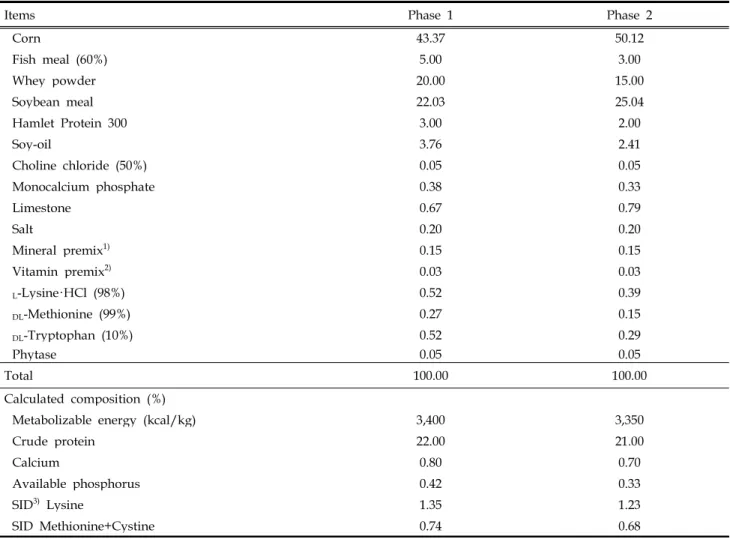
Table 1. Formula and chemical composition of experimental diets (as-fed basis)
Items Phase 1 Phase 2
Corn 43.37 50.12
Fish meal (60%) 5.00 3.00
Whey powder 20.00 15.00
Soybean meal 22.03 25.04
Hamlet Protein 300 3.00 2.00
Soy-oil 3.76 2.41
Choline chloride (50%) 0.05 0.05
Monocalcium phosphate 0.38 0.33
Limestone 0.67 0.79
Salt 0.20 0.20
Mineral premix1) 0.15 0.15
Vitamin premix2) 0.03 0.03
L-Lysine·HCl (98%) 0.52 0.39
DL-Methionine (99%) 0.27 0.15
DL-Tryptophan (10%) 0.52 0.29
Phytase 0.05 0.05
Total 100.00 100.00
Calculated composition (%)
Metabolizable energy (kcal/kg) 3,400 3,350
Crude protein 22.00 21.00
Calcium 0.80 0.70
Available phosphorus 0.42 0.33
SID3) Lysine 1.35 1.23
SID Methionine+Cystine 0.74 0.68
1)Supplied per kilogram of diet: 45 mg iron, 0.25 mg cobalt, 50 mg copper, 15 mg manganese, 0.35 mg iodine, 0.13 mg selenium.
2)Supplied per kilogram of diet: 16,000 IU vitamin A, 3,000 IU vitamin D3, 40 IU vitamin E, 5.0 mg vitamin K3, 5.0 mg vitamin B1, 20 mg vitamin B2, 4 mg vitamin B6, 0.08 mg vitamin B12, 40 mg pantothenic acid, 75 mg niacin, 0.15 mg biotin, 0.65 mg folic acid.
3)Standardized ileal digestible.
and concrete floor pens with a pen size of 2.80×5.00 m.
All the pens were equipped with a self-feeder and nipple drinker to allow ad libitum access to feed and water. The experimental diets exceeded the nutrient requirements as suggested by NRC (2012) and were fed in meal form for two phases (phase 1 from d 0 to 14, phase 2 from d 15 to 28) for total of 28 days and has been presented in Table 1. Treatments consisted of: 1) basal diet+100 mg/kg of additional Zn from ZnSO4; 2) basal diet+100 mg/kg of additional Zn from Zn-Methionine (ZnMet); 3) basal diet+50 mg/kgof additional Zn from HME ZnSO4 (ZnHME50); and 4)
basal diet+75 mg/kg of additional Zn from HME ZnSO4
(ZnHME75).
Sampling and measurements
The pigs were weighed individually at the start and at the end of the phases. The feed consumption was calculated at the end of each phase to calculate average daily gain (ADG), average daily feed intake (ADFI) and gain to feed ratio (G/F). To determine the effect of different treatments on the apparent total tract digestibility (ATTD), chromic oxide (0.25%) was added
[Provider:earticle] Download by IP 118.70.52.165 at Monday, December 20, 2021 7:51 PM
www.earticle.net
in each diet fecal grab samples were collected during the last 5 days of each phase of the experiment to determine the ATTD of dry matter (DM), gross energy (GE) and crude protein (CP). The fecal samples were then pooled within pen, dried in a forced air oven at 60℃ for 72 h, grounded in a Wiley Mill (Thomas Model 4 Wiley Mill, Thomas Scientific, Swedesboro, NJ) using a 1-mm screen and used for chemical analysis.
After the feeding trial, ten pigs from each treatment (two pigs per pen) were slaughtered. Blood samples (10 ml) were collected from two pigs per pen and collected anterior vena cava into tubes containing sodium heparin.
Serum samples were separated after centrifugation at 3,000×g for 15 min at 4℃ and then stored at – 20℃ until analysis.
Chemical analysis
Analysis for each samples was done in triplicate for DM (Method 930.15) and CP (Method 990.03), according to the methods of AOAC (2007). Gross energy of diets and excreta were measured using a bomb calorimeter (Model 1261, Parr Instrument, Molin, IL, USA), while chromium concentrations were determined with an automated spectrophotometer (Shimadzu, Japan) according to the procedure described by Fenton and Fenton (1979).
Zn content in feed, feces, serum and liver were determined on the dissolved ashes prepared by AOAC (2007) using inductively coupled plasma emission spectroscopy (ICP). The current study feed and feces samples were measured in triplicates for Zn determination and 1 g of ground feed, feces samples were dry ashed for 1 h in a muffle furnace at 600℃.
Then, the ashed samples were allowed to cool, dissolved by adding 10 ml 50% HCl (v/v) and kept for overnight with covered. The samples were filtered using Whatman filter paper in a 100 ml flask known as volumetric flask by washing crucibles 2-3 times and diluted with deionized distilled water and Zn concentrations were measured by ICP. Serum samples, 1 ml samples were measured in a porcelain crucibles and oven dried for 4 hours at 105℃ and then ashed for 1h at 600℃ in a muffle furnace. Liver samples were dried for 24 h at 105
℃ and ground in a stainless steel blade grinder. 1 g of liver samples were measured and dry ashed at 600℃ for 1 h in a muffle furnace. Then dry ashed serum and liver ash samples were dissolved by adding 10 ml 50% HCl (v/v) and kept for overnight with covered. The samples were filtered using Whatman filter in a 100 ml flask known as volumetric flask by washing crucibles 2-3 times and diluted with deionized distilled water and Zn concentrations were measured by ICP.
Small intestinal morphology
Three cross-sections for each intestinal sample were prepared after staining with azure A and eosin using standard paraffin embedding procedures (Uni et al., 1998). Well-oriented crypt-villus groups (total 10 intact) were chosen in triplicates for analyzing each intestinal cross-section. Crypt depth was characterized as the depth of the invagination between next to the villi and height of villus was determined from the villus crypt junction to the edge of the villi. By using an image processing and analyzing system all of the morphological characteristics were measured (crypt depth or villus height) in 10-μm increments (Media Cyber genetics, Optimus software version 6.5, North Reading, MA, USA).
Statistical analysis
Statistical analysis of the current experimental data were completed by using the GLM procedure of SAS (SAS Inst. Inc., Cary, NC, USA)in a randomized block design. Significant differences among the treatment means were partitioned by using Tukey’s Honestly Significant Difference test. Pens were considered the experimental unit for growth performance, nutrients digestibility and fecal Zn concentration, whereas individual pig was used as experimental unit for analysis of small intestinal morphology and Zn concentration of serum and liver parameters. Probability values of <0.05 were considered significant.
[Provider:earticle] Download by IP 118.70.52.165 at Monday, December 20, 2021 7:51 PM
www.earticle.net
RESULIS
Growth performance and nutrients digestibility
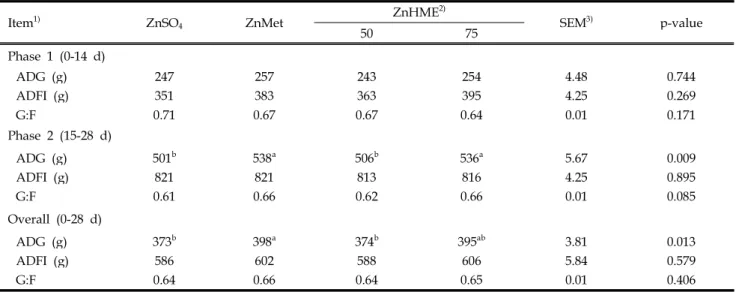
The results for ADG, ADFI, and G:F are shown in Table 2. ADG, ADFI, and G:F were not affected by treatments (p>0.05) in phase 1. The ADG was improved by the ZnMet and ZnHME75 compared with the pigs fed ZnSO4 supplemented diets (p=0.009). The G:F was
also tended to increase by the ZnMet and ZnHME75 (p<0.085) during the phase 2.
The effects of ZnHME supplementation on the apparent total tract digestibility (ATTD) of nutrients are presented in Table 3. There were no effects ofZnHME or ZnMet on the ATTD of DM, GE, and CP in phase 1 (p>0.05). However, ZnHME75 or ZnMet improved the ATTD of CP during phase 2 (p=0.014).
Table 2. Effect of dietary Zn concentration and source on growth performance in weanling pigs
Item1) ZnSO4 ZnMet ZnHME2)
SEM3) p-value
50 75
Phase 1 (0-14 d) ADG (g) ADFI (g) G:F
247 351 0.71
257 383 0.67
243 363 0.67
254 395 0.64
4.48 4.25 0.01
0.744 0.269 0.171 Phase 2 (15-28 d)
ADG (g) ADFI (g) G:F
501b 821 0.61
538a 821 0.66
506b 813 0.62
536a 816 0.66
5.67 4.25 0.01
0.009 0.895 0.085 Overall (0-28 d)
ADG (g) ADFI (g) G:F
373b 586 0.64
398a 602 0.66
374b 588 0.64
395ab 606 0.65
3.81 5.84 0.01
0.013 0.579 0.406 Data are means of five replicates of ten pig per replicate pens.
1)Zn content (mg/kg diet): ZnSO4, 100 mg; ZnMet (Zn-methionine; organic), 100 mg; ZnHME50, 50 mg; ZnHME75, 75 mg.
2)Hot melt extrusion produce Zn sulfate.
3)Standard error of means.
abMeans within a column with unlike superscripts differ significantly (p<0.05).
Table 3. Effect of dietary Zn concentration and source on nutrient digestibility in weanling pigs
Item1) ZnSO4 ZnMet ZnHME2)
SEM3) p-value
50 75
Phase 1 (d 14) DM
GE CP
83.79 82.63 76.16
84.62 84.02 76.82
83.32 82.17 75.43
84.24 84.25 76.73
1.17 1.23 1.65
0.988 0.938 0.993 Phase 2 (d 28)
DM GE CP
82.37 81.92 73.52b
83.65 82.60 77.07a
81.70 81.27 73.93b
83.34 82.27 76.77a
1.20 1.23 0.57
0.955 0.988 0.014 Data are means of five replicates of ten pig per replicate pens.
1)Zn content (mg/kg diet): ZnSO4, 100 mg; ZnMet (Zn-methionine; organic), 100 mg; ZnHME50, 50 mg; ZnHME75, 75 mg.
2)Hot melt extrusion produce Zn sulfate.
3)Standard error of means.
abMeanswithin a column with unlike superscripts differ significantly (p<0.05).
[Provider:earticle] Download by IP 118.70.52.165 at Monday, December 20, 2021 7:51 PM
www.earticle.net
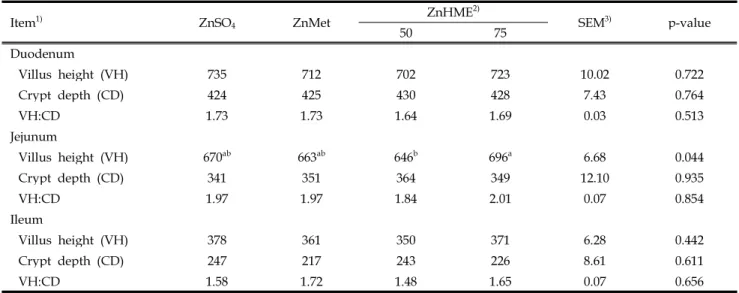
Table 4. Effect of dietary Zn concentration and source on small intestinal morphology in weanling pigs (at d 28)
Item1) ZnSO4 ZnMet ZnHME2)
SEM3) p-value
50 75
Duodenum
Villus height (VH) 735 712 702 723 10.02 0.722
Crypt depth (CD) 424 425 430 428 7.43 0.764
VH:CD 1.73 1.73 1.64 1.69 0.03 0.513
Jejunum
Villus height (VH) 670ab 663ab 646b 696a 6.68 0.044
Crypt depth (CD) 341 351 364 349 12.10 0.935
VH:CD 1.97 1.97 1.84 2.01 0.07 0.854
Ileum
Villus height (VH) 378 361 350 371 6.28 0.442
Crypt depth (CD) 247 217 243 226 8.61 0.611
VH:CD 1.58 1.72 1.48 1.65 0.07 0.656
Data are means of five replicates of two pigs per replicate pens.
1)Zn content (mg/kg diet): ZnSO4, 100 mg; ZnMet (Zn-methionine; organic), 100 mg; ZnHME50, 50 mg; ZnHME75, 75 mg.
2)Hot melt extrusion produce Zn sulfate.
3)Standard error of means.
abMeans within a column with unlike superscripts differ significantly (p<0.05).
Table 5. Effect of dietary Zn concentration and source on serum, liver and feces in weanling pigs (at d 28)
Item1) ZnSO4 ZnMet ZnHME2)
SEM3) p-value
50 75
Serum (mg/L)4) 1.67 1.71 1.54 1.59 0.03 0.106
Liver (mg/kg)4) 175.26ab 184.53a 166.58b 177.68ab 2.36 0.037
Feces (mg/kg)5) 867.53a 850.33a 443.08c 739.83b 44.05 <0.001
1)Zn content (mg/kg diet): ZnSO4, 100 mg; ZnMet (Zn-methionine; organic), 100 mg; ZnHME50, 50 mg; ZnHME75, 75 mg.
2)Hot melt extrusion produce Zn sulfate.
3)Standard error of means.
4)Data are means of five replicates of two pigs per replicate pens.
5)Data are means of five replicates of ten pig per replicate pens.
abcMeans within a column with unlike superscripts differ significantly (p<0.05).
Small intestinal morphology
There were no effects of ZnHME or ZnMet on VH, CD, and VH:CD ratio in duodenum and ileum (p>0.05).
The villus height (VH) was affected by increasing when pigs fed diets supplemented ZnHME 75 (p=0.044).
Zn retention and excretion
The Zn content in serum, liver, and feces presented in Table 5. The pigs fed diets supplemented ZnHME50 had significantly a lower (p=0.037) Zn content in liver
compared with ZnMet treatment. The Zn content in the feces was significantly higher (p<0.001) in ZnSO4 and ZnMet compared with ZnHME50 or ZnHME75.
DISCUSSION
Growth performance and nutrients digestibility
The supplementation of Zn either with ZnSO4 or amino acid chelates of Zn, to a low-Zn basal diet improved performance (Cheng et al., 1998). In this study,
[Provider:earticle] Download by IP 118.70.52.165 at Monday, December 20, 2021 7:51 PM
www.earticle.net
pigs fed diets supplemented ZnMet or ZnHME75 improved performance in phase 2. The chelated Zn can be utilized and absorbed easily in the body than inorganic Zn (Wedekind et al., 1992; Swiatkiewicz et al., 2001; Cao et al., 2002). Similar to our results, Wang (2010) reported the ADG was enhanced for pigs fed 100 mg/kg of Zn as Zn-Gly but there was no effects on ADFI. However, Cheng (1998) reported the ADG was not affected by Zn sources when pigs fed diets added 100 mg/kg ZnSO4 or ZnLys each. In our study, digestibility of CP was higher in diets supplemented with ZnMet or ZnHME75 than the diet supplemented with ZnSO4 or ZnHME50. Supplementation of Zn in pig’s diet may stimulate the synthesis of digestive enzymes, resulting in a better digestion and absorption of nutrients and potentially improving growth performance (Hedemann et al., 2006). As with our experimental results, Li etal. (2016) reported that digestibility of CP and crude fat was increased in piglets supplemented with 120 mg/kg Zn as nano Zn, organic Zn or ZnO in the diet than control. In contrast to the present results, Carlson et al (2003) found that the activity of carboxypeptidase, trypsin, and lipase in pancreatic tissue was lower in pigs fed 2,500 mg/kg of Zn compared with pigs fed 100 mg/kg of Zn. Therefore, the result was obtained the effect of improving CP digestibility.
Small intestinal morphology
The villus height at the beginning of weanling period is dramatically reduced to 75% of pre-weaning within 24 h (Hampson, 1986). On the other hand, crypt depths are generally increased by environmental and psychological stress (Pluske et al., 1996; Spreeuwenberg et al., 2001;
Hedemann et al., 2003). Zn promote reconstruction of reduced jejunal villus height (Hedemann et al., 2006).
The length of small intestinal villi is reduced during a Zn deficient period. However, the Zn supplementation returns the villus height to a normal size within a short period of time (Southon et al., 1986). In this study, the villus height in jejunum of pigs fed diet contained 75
mg/kg Zn was improved compared with 50 mg/kg Zn concentration at jejunum. The 75 mg/kg to nanoparticle HME Zn might have a similar effect to a dose of 100 mg/kg Zn in sulfate form or organic forms. Studies showed that organic form or nanoparticles of minerals have higher bioavailability than inorganic sources particularly in monogastric animals (Hill et al., 2014;
Swain et al., 2016; Sheikh et al., 2016). Similar results were obtained in this study that only 75% of Zn requirement as nanoparticle HME improved jejunal villus height. However, there was no Zn effect in organic form. These results may be due to higher bioavailability of Zn nanoparticles. Consistent with our result, Ali et al (2017) reported that chickens fed diet supplemented with 40 mg/kg of nanoparticle ZnO was increased jejunal villus height than 80 mg/kg of ZnO.
Nanoparticle Zn may have comparable effects on improving jejunal morphology to high dose of traditional Zn in weanling pigs (Xi, 2017). Increased villus height and villus area are associated with greater absorption of nutrients (Awad et al., 2008). Therefore, the similar result was also showed in the present study.
Zn retention and excretion
Minerals in serum may be used as an indicator of mineral status of the weanling pigs. Increasing Zn supplementation in diet increased Zn concentration in serum which is in agreement with previous studies (Martinez et al., 2005; Rincker et al., 2005). Walk et al (2012) reported that as Zn supplementation in diet increased, the Zn concentration in the serum increased at first phase in pigs. However, there was no difference depending on the supplemented Zn concentration at second phase. The present study showed that there were no effects of Zn sources on the concentration of Zn in serum at second phase. The retention of Zn in pig’s liver was significantly lower in diets supplemented with ZnHME50 than ZnMet, while ZnHME75 showed a similar result to ZnSO4 or ZnMet. A previous study showed that the increased levels of Zn in the liver of pigs when supplemented with 3,000 mg/kg of Zn from
[Provider:earticle] Download by IP 118.70.52.165 at Monday, December 20, 2021 7:51 PM
www.earticle.net
ZnO but not in pigs supplemented with 500 mg/kg of Zn from ZnO (Case and Carlson, 2002). Schell and Kornegay (1996) reported that pigs fed Zn-methionine had greater Zn concentration in liver than pigs fed inorganic Zn as ZnO. Fecal excretion of Zn is directly related to the quantity of Zn consumed regardless of the Zn source (Carlson et al., 2004). In our experiment, the Zn concentration of fecal excretion significantly increased by increasing the Zn concentration of diet. The pigs fed 100 mg/kg of Zn from Zn-methionine had decreased fecal Zn concentration compared with pigs fed 100 mg/kg of Zn from ZnSO4. Wang et al., (2010) demonstrated that pigs were fed organic sources of Zn excreted markedly less Zn in the manure compared with pigs fed pharmacological concentration of Zn as ZnO.
The absorption of ZnHME might be enhanced by HME processing methods. This improved bioavailability results in better utilization and less excretion of Zn into the environment.
CONCLUSION
The results of present study showed that the supplementation of 75 mg/kg of ZnHME in diet showed the same growth performance and nutrients digestibility as observed in ZnSO4 or ZnMet (100 mg/kg). ZnHME75 could also decrease Zn excretion in feces in weanling pig compared with ZnSO4and ZnMet. Therefore, the dietary Zn can be reduced by 25% with ZnHME without any adverse impacts on performance of weanling pigs.
ACKNOWLEDGMENT
This work was supported by Korea Institute of Planning and Evaluation for Technology in Food, Agriculture, Forestry and Fisheries (IPET) through Agri-Bio industry Technology Development Program, funded by Ministry of Agriculture, Food and Rural Affairs (MAFRA) (No. 116073-03-2-CG000).
REFERENCES
1. Albanese, A., Tang, P. S. and Chan, W. C. 2012. The effect of nanoparticle size, shape, and surface chemistry on biological systems. Annu. Rev. Biomed.
Eng. 14:1–6.
2. Ali, S., Masood, S., Zaneb, H., Faseeh-ur-Rehman, H., Masood, S., Khan, M. U. R. and ur Rehman, H. 2017.
Supplementation of Zinc Oxide nanoparticles has beneficial effects on intestinal morphology in broiler chicken. Pak. Vet. J. 2074-7764 (online).
3. AOAC. 2007. Official Methods of Analysis of the Association of Official Analytical Chemists International.
18th ed. Gaithersburg, MD, USA.
4. Awad, W., Ghareeb, K. and Böhm, J. 2008. Intestinal structure and function of broiler chickens on diets supplemented with a synbiotic containing Enterococcus faecium and oligosaccharides. Int. J. Mol. Sci.
9(11):2205-2216.
5. Baiarzhal, M., Zilova, I. S., Gmoshinskii, I. V., Buchanova, A. V., Sheviakova, L. V., Makhova, N. N.
and Mazo, V. K. 2008. Comparative evaluation of zinc organic and inorganic form bioavailability in vivo. Vopr. Pitan. 77(1):34-37.
6. Cao, J., Henry, P. R., Davis, S. R., Cousins, R. J., Miles, R. D., Littell, R. C. and Ammerman, C. B. 2002.
Relative bioavailability of organic zinc sources based on tissue zinc and metallothionein in chicks fed conventional dietary zinc concentrations. Anim. Feed Sci. Technol. 101(1):161-170.
7. Carlson, D. 2003. The physiological role of dietary zinc and copper in weaned piglets, with emphasis on zinc and intestinal mucosal function. Ph.D. Thesis, The Royal Veterinary and Agricultural University, Copenhagen, Denmark.
8. Carlson, D., Poulsen, H. D. and Sehested, J. 2004.
Influence of weaning and effect of post weaning dietary zinc and copper on electrophysiological response to glucose, theophyllineand 5-HT in piglet small intestinal mucosa. Comp. Biochem. Physiol., Part A Mol. Integr. Physiol. 137(4):757-765.
9. Carlson, M. S., Boren, C. A., Wu, C., Huntington, C.
[Provider:earticle] Download by IP 118.70.52.165 at Monday, December 20, 2021 7:51 PM
www.earticle.net
E., Bollinger, D. W. and Veum, T. L. 2004. Evaluation of various inclusion rates of organic zinc either as polysaccharide or proteinate complex on the growth performance, plasma, and excretion of nursery pigs. J.
Anim. Sci. 82(5):1359-1366.
10. Case, C. L. and Carlson, M. S. 2002. Effect of feeding organic and inorganic sources of additional zinc on growth performance and zinc balance in nursery pigs. J. Anim. Sci. 80(7):1917-1924.
11. Chaudhry, Q. and Castle, L. 2011. Food applications of nanotechnologies: an overview of opportunities and challenges for developing countries. Trends Food Sci. Technol. 22:595–603.
12. Cheng, J., Kornegay, E. T. and Schell, T. 1998.
Influence of dietary lysine on the utilization of zinc from zinc sulfate and a zinc-lysine complex by young pigs. J. Anim. Sci. 76(4):1064-1074.
13. Crowley, M. M., Zhang, F., Repka, M. A., Thumma, S., Upadhye, S. B., Kumar Battu, S., McGinity, J. W.
and Martin, C. 2007. Pharmaceutical applications of hot-melt extrusion: part I. Drug Dev. Ind.
Pharm. 33(9):909-926.
14. Davda, J. and Labhasetwar, V. 2002. Characterization of nanoparticle uptake by endothelial cells. Int. J.
Pharm. 233:51–59.
15. Dibner, J. J., Richards, D., Kitchell, M. L. and Quiroz, M. A. 2007. Metabolic challenges and early bone development. J. Appl. Poult. Res. 16:167-174.
16. Ezzati, M. S., Bozorgmehrifard, M. H., Bijanzad, P., Rasoulinezhad, S., Moomivand, H., Faramarzi, S., Ghaedi, A., Ghabel, H. and Stabraghi, E. 2013. Effects of different levels of zinc supplementation on broilers performance and immunity response to Newcastle disease vaccine. Eur. J. Exp. Biol. 3(5):497- 501.
17. Fenton, T. W. and Fenton, M. 1979. An improved procedure for the determination of chromic oxide in feed and feces. Can. J. Anim. Sci. 59(3):631-634.
18. Hampson, D. J. 1986. Alterations in piglet small intestinal structure at weaning. Res. Vet. Sci. 40(1):
32-40.
19. Hedemann, M. S., Højsgaard, S. and Jensen, B. B.
2003. Small intestinal morphology and activity of intestinal peptidases in piglets around weaning. J.
Anim. Physiol. Anim. Nutr. 87(1-2):32-41.
20. Hedemann, M. S., Jensen, B. B. and Poulsen, H. D.
2006. Influence of dietary zinc and copper on digestive enzyme activity and intestinal morphology in weaned pigs. J. Anim. Sci. 84(12):3310-3320.
21. Hill, G. M., Mahan, D. C. and Jolliff, J. S. 2014.
Comparison of organic and inorganic zinc sources to maximize growth and meet the zinc needs of the nursery pig. J. Anim. Sci. 92(4):1582-1594.
22. Jones, D. S. 2008. Engineering drug delivery using polymer extrusion/injection moulding technologies.
School of Pharmacy. 4:9.
23. Kendrick, M. J., May, M. T., Plishka, M. J. and Robinson, K. D. 1992. Metals in Biological Systems.
In Metals in Biological Systems. MidsomerNorton, Avon, Great Britain pp. 142-149.
24. Kickinger, T., Humer, J., Aichberger, K., Wurzner, H.
and Windisch, W. 2008. Survey on zinc and copper contents in dung from Austrian livestock production. Die Bodenkultur. 101(59):1-4.
25. Kickinger, T., Wurzner, H. and Windisch, W. 2010.
Zinc and copper in feeds, slurry and soils from Austrian pig fattening farms feeding commercial complete feedor feed mixtures produced on-farm. Die Bodenkultur. 60:47-58.
26. Lee, S. Y., Nam, S. E., Choi, Y. H., Kim, M. J., Koo, J. S., Chae, B. J., Kang, W. S. and Cho, H. J. 2017.
Fabrication and characterizations of hot-melt extruded nanocomposites based on zinc sulfate monohydrate and soluplus. Appl Sci. 7(9):902.
27. Li, M. Z., Huang, J. T., Tsai, Y. H., Mao, S. Y., Fu, C.
M. and Lien, T. F. 2016. Nanosize of zinc oxide and the effects on zinc digestibility, growth performances, immune response and serum parameters of weanling piglets. Anim. Sci. J. 87:1379–1385.
28. Maniruzzaman, M., Boateng, J. S., Snowden, M. J.
and Douroumis, D. 2012. A review of hot-melt extrusion: process technology to pharmaceutical products. ISRN Pharm.
29. Martinez, M. M., Link, J. E. and Hill, G. M. 2005.
[Provider:earticle] Download by IP 118.70.52.165 at Monday, December 20, 2021 7:51 PM
www.earticle.net
Dietary pharmacological or excess zinc and phytase effects on tissue mineral concentrations, metallothionein, and apparent mineral retention in the newly weaned pig. Biol. Trace Elem. Res. 105(1):97-115.
30. Mcginity, J. W. and Koleng, J. J. 1997. Preparation and evaluation of rapid-release granules using a novel hot-melt extrusion technique. In Pharmaceutical Technology Conference. 2:153-154.
31. NRC. 2012. Nutrient Requirements of Swine. 11th ed.
National. Academic. Press, Washington, DC. USA.
32. Pluske, J. R., Hampson, D. J. and Williams, I. H.
1997. Factors influencing the structure and function of the small intestine in the weaned pig: a review. Livest. Prod. Sci. 51(1):215-236.
33. Prasad, A. S. 1984. Discovery and importance of zinc in human nutrition. Fed. Proc. 43:13.
34. Rajendran, D., Thulasi, A., Jash, S., Selvaraju, S. and Rao, S. B. 2013. Synthesis and application of nano minerals in livestock industry. In: Animal Nutrition and Reproductive Physiology (Recent Concepts).
Satish Serial Publishing House, Delhi, pp. 517–530.
35. Revy, P. S., Jondreville, C., Dourmad, J. Y. and Nys, Y. 2004. Effect of zinc supplemented as either an organic or an inorganic source and of microbial phytase on zinc and other minerals utilisation by weanling pigs. Anim. Feed Sci. Technol. 116(1):93- 112.
36. Rincker, M. J., Hill, G. M., Link, J. E., Meyer, A. M.
and Rowntree, J. E. 2005. Effects of dietary zinc and iron supplementation on mineral excretion, body composition, and mineral status of nursery pigs. J.
Anim. Sci. 83(12):2762-2774.
37. SAS. 2012. SAS Software for PC. Release 9.3, SAS Institute. Ins, Cart, NC, USA.
38. Schell, T. C. and Kornegay, E. T. 1996. Zinc concentration in tissues and performance of weanling pigs fed pharmacological levels of zinc from ZnO, Zn-methionine, Zn-lysine, or ZnSO4. J. Anim.
Sci. 74(7):1584-1593.
39. Schlegel, P., Sauvant, D. and Jondreville, C. 2013.
Bioavailability of zinc sources and their interaction with phytates in broilers and piglets. Animal. 7(1):
47-59.
40. Sheikh, A. A., Aggarwal, A. and Aarif, O. 2016.
Effect of in vitro zinc supplementation on HSPs expression and Interleukin 10 production in heat treated peripheral blood mononuclear cells of transition Sahiwal and Karan Fries cows. J. Therm.
Biol. 56:68-76.
41. Singhal, S., Lohar, V. K. and Arora, V. 2011. Hot melt extrusion technique.
42. Southon, S., Gee, J. M., Bayliss, C. E., Wyatt, G. M., Horn, N. and Johnson, I. T. 1986. Intestinal microflora, morphology and enzyme activity in zinc-deficient and Zn-supplemented rats. Br. J.
Nutr. 55(3):603-611.
43. Spreeuwenberg, M. A. M., Verdonk, J. M. A. J., Gaskins, H. R. and Verstegen, M. W. A. 2001. Small intestine epithelial barrier function is compromised in pigs with low feed intake at weaning. J.
Nutr. 131(5):1520-1527.
44. Swain, P.S ., Rao, S. B., Rajendran, D., Dominic, G.
and Selvaraju, S. 2016. Nano zinc, an alternative to conventional zinc as animal feed supplement: a review. Anim. Nutr. 2:134–141.
45. Swiatkiewicz, S., Koreleski, J. and Zhong, D. 2001.
The bioavailability of zinc from inorganic and organic sources in broiler chickens as affected by addition of phytase. J. Anim. Feed Sci. 10:317-328.
46. Uni, Z., Noy, Y. and Sklan, D. 1998. Posthatch development of mucosal function in the broiler small intestine. Poult. Sci. 77:75–82.
47. Walk, C. L., Srinongkote, S. and Wilcock, P. 2013.
Influence of a microbial phytase and zinc oxide on young pig growth performance and serum minerals. J. Anim. Sci. 91(1):286-291.
48. Wang, Y., Tang, J. W., Ma, W. Q. and Feng, J. 2010.
Dietary zinc glycine chelate on growth performance, tissue mineral concentrations, and serum enzyme activity in weanling piglets. Biol. Trace Elem.
Res. 133(3):325-334.
49. Wedekind, K. J., Hortin, A. E. and Baker, D. H. 1992.
Methodology for assessing zinc bioavailability:
Efficacy estimates for zinc-methionine, zinc sulfate,
[Provider:earticle] Download by IP 118.70.52.165 at Monday, December 20, 2021 7:51 PM
www.earticle.net
and zinc oxide. J. Anim. Sci. 70(1):178-187.
50. Xia, T., Lai, W., Han, M., Ma, X. and Zhang, L. 2017.
Dietary ZnO nanoparticles alters intestinal microbiota and inflammation response in weaned piglets.
Oncotarget.
51. Zhao, C. Y., Tan, S. X., Xiao, X. Y., Qiu, X. S., Pan, J.
Q. and Tang, Z. X. 2014. Effects of dietary zinc oxide
nanoparticles on growth performance and antioxidative status in broilers. Biol. Trace Elem.
Res. 160(3):361-367.
(Received 17 October 2017, Revised 18 December 2017, Accepted 18 December 2017)
[Provider:earticle] Download by IP 118.70.52.165 at Monday, December 20, 2021 7:51 PM