• 검색 결과가 없습니다.

The Hydrogenation Behaviors of V-xAl (x=1, 5wt.%) Composites by Mechanical Alloying

N/A
N/A
Protected

Academic year: 2021

Share "The Hydrogenation Behaviors of V-xAl (x=1, 5wt.%) Composites by Mechanical Alloying"

Copied!
7
0
0

로드 중.... (전체 텍스트 보기)

전체 글

(1)

기계적 합금화법으로 제조한 V-xAl (x=1, 5wt.%) 복합재료의 수소화 반응 거동

김경일*, 홍태환*

*충주대학교 신소재공학과 / 친환경에너지 부품 연구센터

The Hydrogenation Behaviors of V-xAl (x=1, 5wt.%) Composites by Mechanical Alloying

KYEONGIL KIM*, TAEWHAN HONG*

*Grad. School of Hydrogen Univ.

*Department of Materials Science and Engineering, Chungju National University, 50 Daehak-ro, Chungju-si, Chungbuk 380-702, Korea

ABSTRACT

Recently, one of the hydrogen production methods has attracted using dense metallic membrane. It has high hydrogen permeation and selectivity which hardly could adopt industrial product because of high cost, hydrogen embrittlment and thermal stability. Meanwhile, vanadium has high hydrogen solubility and it use to instead of Pd-Ag amorphous membrane. Aluminum carried out blocking hydrogen diffusion on grain boundary therefore protecting hydrogen embrittlement. Most of dense metallic membrane is solution diffusion mechanism. The solution diffusion mechanism was very similar hydrogen storing steps such as steps of metal hydride. Thus, V-Al composites were fabricated to use hydrogen induced mechanical alloying. The fabricated V-Al composites were characterized by XRD, SEM, EDS and simultaneous TG/DSC analyses. The hydrogenation behaviors were evaluated using a Sievert’s type automatic PCT apparatus. The hydrogenation behaviors of V-Al composites was evaluated too low hydrogen stored capacity and fast hydrogenation kinetics.

In PCI results, V-Al composites had low hydrogen solubility, in spite of that, hydrogen kinetics was calculated very fast and hydrogen absorption/desorption contents were same capacity.

KEY WORDS : Hydrogenation(수소화 반응), Kinetics(반응속도), Mechanical alloying(기계적 합금화), Solution diffusion(용해 확산)

Corresponding author : [email protected]

[

접수일

: 2011.7.29

수정일

: 2011.8.16

게재확정일

: 2011.8.22 ]

1. Introduction

Research is actively being carried out on alter-

native energy sources to replace the primary energy

source, fossil fuels, due to both their depletion and

environmental issues. Among such sources, hydrogen

energy offers abundant resources and is easy to

generate using various chemical and electric methods.

(2)

Also, combustion of hydrogen results in 3 time greater efficiency than fossil fuel combustion without emitting pollutants. Accordingly, numerous studies are being carried out on production, storage, utili- zation, and transportation of hydrogen and hydrogen energy.

Among the methods to produce hydrogen, the use of metal membranes offers an advantage of easy production of hydrogen with high purity through a simple filtering process

1)

. Production of hydrogen with high purity is possible through a process in which hydrogen particles dissociate from the surface of the metal membrane and then diffuse through the membrane. This type of mechanism is referred to as solution diffusion. This process is quite similar to the behaviors of metallic alloys for hydrogen storage, which involves absorption of hydrogen into the metal and desorption under certain pressure at certain temperature

2)

. In particular, hydrogen storage amount, hydrogenation speed, and hydrogenation temperature are highly important factors for metallic alloys for hydrogen storage, whereas for a metal membrane for hydrogen purification, hydrogen solu- bility and diffusion rate, or hydrogenation kinetics, are very important factors

3,4)

. Also, it is believed that the formation of reliable hydrides such as hydrogen storage materials will under mine the hydrogen permeability level and rate. Therefore, a material whose behavior accelerates the dissociation speed and diffuses hydrogen at a very fast speed within the membrane following the absorption behavior would make a highly suitable hydrogen membrane candidate for the purpose of manu- facturing highly pure hydrogen

5)

.

Meanwhile, in order realize commercial application of fuel cells such as proton exchange membrane fuel cells (PEMFCs), a technology to produce hydrogen with high purity is urgently needed. Using palladium, a membrane capable of purifying hydrogen to a

high level can be manufactured. However, due to the high cost involved in membrane manufacture, active research is ongoing to reduce the use of Pd, a relatively costly metal, in Pd-Ag type, amorphous membranes, and there have been a large number of prior studies on metal membranes

6)

. Among candidate metals, those having a body centered cubic (BCC) structure such as vanadium, zirconium, and titanium are known to have very high hydro- gen solubility and diffusion rate. However, they have a disadvantage of short cycling upon membrane manufacture due to hydrogen’s high embrittle- ment

7)

. In order to address this short coming, some researchers have focused on mitigated hydrogen embrittlement by restraining excessive generation of hydrides through the addition of metals such as aluminum

8)

.

Therefore, using prior research as a reference, this study investigates hydrogen behaviors of V-Al alloys, a material for manufacturing hydrogen with high purity. The results of such hydrogenation behaviors will have great importance in manu- facturing metal membranes for hydrogen and will lend a better understanding of hydrogen permeation behaviors.

2. Experimental procedure

Vanadium and aluminum powders were charged in an atmosphere-controlled steel container with Cr steel balls and milled for 12 hours using a planetary mill. The atmosphere was formed to have 2MPa hydrogen, and the ball to powder weight ratio was 30:1. Also, the mill’s rotation speed was 200rpm.

X-ray diffraction analysis (XRD, D8 Advance,

Bruker) using a Cu Kα ray of 1.5405Å was per-

formed to analyze the crystal structure of the

synthesized composite powder, and image mapping

(3)

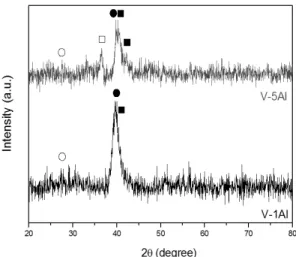
Fig. 1 Results of XRD patterns on V-1Al and V-5Al alloy (

; V

2

H,

; VH

2

,

;VH

0.8

,

; AlH

4

)

using scanning electron microscopy (SEM, Quanta-400, FEI) and energy dispersive spectroscopy (EDS) was carried out to assess the surface shape and distribution of additives. Moreover, in order to predict V-Al alloys’ hydrogenation behaviors, the correlation with temperature was examined using thermo gravimetric/differential scanning calorimetry (TG/DSC, STA 409PC Luxx, Netczch). By using the Bruner-Emmett-Teller surface analysis (BET, BELsorp mini-II, BEL) method, changes in the hydrogenation behaviors following changes in the specific surface area were reviewed. To evaluate hydrogenation properties, Sievert’s type pressure- composition-temperature (PCT, BELsorp HP, BEL) was used to observe hydrogenation behaviors following changes in temperature and pressure.

3. Results and discussion

Figure 1 shows the results of the XRD pattern analysis on V-Al alloys. When MA is carried out in a high pressure hydrogen atmosphere, mainly peaks with low X-ray diffraction intensity were detected. This is presumably because V-Al alloys

are located between balls during milling, and the particles are milled via impact. Also, particles of vanadium, which leads to hydrogen embrittlement, were reduced to nanosize during the milling process.

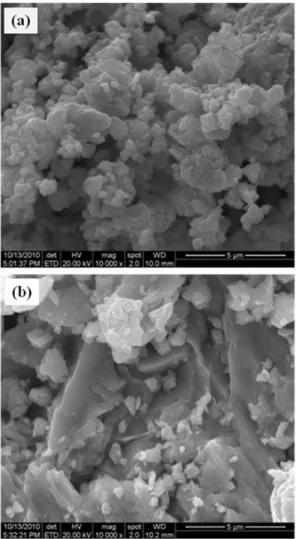
Moreover, when milling was performed in a hydro- gen atmosphere, vanadium hydride (VH) and aluminum hydride (AlH) peaks were detected throughout the material. This finding is similar to the results from SEM surface morphology observation. The surface morphology observation revealed that finely milled vanadium due to hydrogen embrittlement was distributed evenly, and that powders tended to aggregate when aluminum content was high.

This is attributable to aluminum’s ductile nature, which makes aluminum difficult to mill and it tends to elongate instead. Furthermore, because of ductility, aluminum particles do not decrease but rather grow larger in size. With a greater amount of added aluminum, the aggregation of particles caused by ductility intensified. As such, V-1wt.%Al (V-1Al) alloy is believed to have favorable hydro- genation speed. V-1A alloys displayed morphology of distributed spherical particles, but overall the particles tended to aggregate. V-5wt.%Al (V-5Al) alloys also showed an overall morphology of dis- tributed spherical particles, but unlike V-1Al alloys, they showed a wide, tile-shape morphology caused by the high ductility of aluminum, as shown in figure 2 (b).

Figure 3 shows the result of a specific surface

area analysis using a BET device. The BET

analysis revealed that V-1Al alloys’ surface area,

pore volume, and pore diameter were 9.14 m

2

/g,

3.923×10

-3

cm

3

/g, and 5.385 nm, respectively. Also,

V-5Al alloys’surface area, pore volume, and pore diameter

were measured as 1.612 m

2

/g, 1.53×10

-3

cm

3

/g, and

3.785nm, respectively. When more aluminum was

added, higher pore volume and pore diameter were

measured for V-1Al, compared to V-5Al. Therefore,

(4)

Fig. 2 The surface morphologies of V-1Al and V-5Al composites

Fig. 3 The result of specific surface area on V-1Al and V-5Al composites

when more aluminum was added, the specific surface area became smaller.

The V-Al alloys synthesized via a hydrogen induced mechanical alloying method are expected to have a positive influence on hydrogenation speed, as fine, nano-size particles are distributed over a wide range, leading to a larger specific surface area and shorter hydrogen diffusion distance

9)

.

TG analysis showed that the dehydrogenation amounts for V-1Al and V-5Al alloys are -0.03 mg and -0.09 mg, representing weight loss of

-0.04% and -0.62%, respectively. Also, at this point, dehydrogenation’s starting temperature was measured as 638.3K and 628.5K, and the results of the DSC analysis showed a similar tendency to those of the TG analysis. The reaction enthalpy value and dehydrogenation starting temperature of the V-1Al alloys were calculated as -414.9J/g and 580.4K. Also, the same parameters for V-5Al alloys was measured as -296.5J/g and 589.1K.

According to a TG analysis of Mg

2

Ni-H pre-

viously performed by S.Orimo et al., when there

is a large amount of hydrides within the alloys,

the dehydrogenation amount increases. Based on

the find in reported by S.Orimo et al., the following

conclusions could be obtained from V-Al alloys as

well

10)

. It is believed that V-5Al alloys will have

a greater hydrogenations peed than V-1Al alloys,

as the former has a large dehydrogenation amount

and low reaction enthalpy value ; consequently,

catalyst effects based on the amount of added Al

appear to be more dominant than the relation

between particle size or specific surface area, and

hydrogenation.

(5)

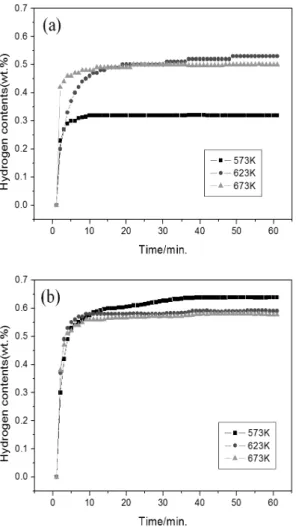
Fig. 4 The absorption profiles of V-1Al (a) and V-5Al (b) composites under 0.5MP

Figure 4 shows the results of a hydrogenation speed analysis following variation of the V-Al alloy’s temperature in a 0.5MPa hydrogen atmosphere.

As found in BET and TG/DSC analyses, the reaction speed and hydrogen absorption amount of V-5Al alloys were excellent. V-1Al alloys reached a maximum hydrogen storage of 0.52 wt.% at 623K, whereas V-5Al alloys showed a maximum hydrogen absorption amount of 0.64 wt.% at 573K.

In the case of V-5Al alloys, hydrogenation took place over all temperature sections within the first 5 minutes from the outset of the experiment.

Meanwhile, in the case of V-1Al alloys, the slope value of the hydrogenation behavior curve was generally evaluated to be lower than that of V-5Al alloys. However, the reaction curve of V-1Al alloys at 673K shows that hydrogenation was completed within a similar time frame to V-5Al alloys. The increase of available hydrogen storage despite larger content of Al is presumably attributable to the generation of numerous aluminum hydride (AlH) phases within the V-Al alloys. Also as for AlH, instead of chemically stable hydrides, unstable hydrides are generated, leading to easy dehydrogenation at a specific temperature under specific pressure conditions.

Based on the analysis of the dehydrogenation speed of V-Al alloys with varying temperature, the following conclusions could be drawn. Unlike the absorption action, desorption completed within a very short time, while V-5Al alloys had a faster desorption speed than V-1Al alloys. Also, the amount absorbed in the 573K-673K temperature section was dissociated entirely. Therefore, the hydro- genation association of V-Al, or the combination of VH with hydrogen with AlH phase, is expected to be generally lower than that of typical hydrogen storage alloy materials.

Figure 5 shows V-1Al alloys’ hydrogenation

behaviors following hydrogen pressure change at

623K. With typical hydrogen storage alloys, a

plateau region in which α phase and β phase

coexist is found. However, in the case of V-Al

alloys, no plateau region was detected. This is

presumably because V-Al alloys have only a

physical absorption phase due to hydrogen

pressure. It was also confirmed that a maximum of

0.53wt.% hydrogen was absorbed at 0.5 MPa and

hydrogen pressure decreased, leading to a reduced

amount of hydrogen absorption; finally, when all

the reactions were completed, there was no

(6)

Fig. 5 Hydriding/dehydriding curves of V-1Al composite on 623K

residual hydrogen left. Consequently, V-Al alloys are believed to enable fast hydrogenation and dehydrogenation behaviors at low pressure. When hydrogen membranes capable of generating hydrogen with high purity are manufactured, V-Al alloys will be a favorable material in terms of solution diffusion behaviors. Also, the study team plans to perform repeated experiments on hydrogenation behaviors to examine the reduction of hydrogen permeability efficiency due to hydrogen’s ductility.

4. Conclusion

Through synthesis of V-Al alloys using a hydrogen-induced mechanical alloying method in a hydrogen atmosphere, powders of composite materials with large amounts of evenly distributed VH phase and AlH phase were obtained. Also, contrary to the expectation that hydrogenation would improve due to reduced particle sizes, the change involving hydrogenation was greater when varying amounts of aluminum were added, rather than when the particle size decreased. These results can be verified through TG/DSC analyses and kinetics

analyses.

Continued research is required in order to apply V-Al alloys to hydrogen membranes for high purity, rather than as a hydrogen storage material.

Dehydrogenation behaviors originating from fast hydrogen absorption and low reaction of hydrides work quite favorably on solution diffusion and thus are applicable. However, more experiments must be performed to determine efficiency reduction trends. Also, research on hydrogen permeability and selectivity involving direct manufacture of polycrystalline membranes must be performed as well.

Acknowledgment

This work was supported by Korea Institute of Science and Technology (KIST) (2E22132-11-063).

References

1) Kazuki Akamatsu, Yudai Ohta, Takashi Sungawara, Nozomu Kanno, Kenichi Tonokura, Tadashi Hattori and Shin-ichi Nakao, “Stable high-purity hydrogen production by dehydrogenation of cyclohexane using a membrane reactor with neither carrier gas nor sweep gas”, J. Membr. Sci., Vol. 330, 2009, p. 1.

2) Yao Zhang, Qi-Feng Tian, Shu-Sheng Liu and Li-Xian Sun, J. Power Sources, Vol. 185, 2008, p. 1514.

3) Sumita Srivastava and O.N. Srivastava, J. Alloys Compd., “Hydrogenation behaviour with regard to storage capacity, kinetics, stability and ther- modynamic behaviour of hydrogen storage com- posite alloys, LaNi

5

/La

2

Ni

7

, LaNi

3

”, Vol. 290, 1999, p. 250.

4) Y. Sakamoto, S. Hirata and H. Nishikawa, J.

the Less Common Metals, Vol. 88, 1982, p.

387.

(7)

5) M. Engin Ayturk and Yi Hua Ma, J. Membr.

Sci., “Electroless Pd and Ag deposition kinetics of the composite Pd and Pd/Ag membranes synthesized from agitated plating baths”, Vol.

330, 2009, p. 233.

6) Jianhua Tong, Ryuichi Shirai, Yukari Kashima and Yasuyuki Matsumura, “Preparation of a pinhole-free Pd-Ag membrane on a porous metal support for pure hydrogen separation”, J. Membr.

Sci., Vol. 260, 2005, p. 84.

7) G. Song, M.E. Kellam, D. Liang and M.D. Dolan,

“Influence of processing conditions on the micro- structure and permeability of BCC V-Ni mem- branes”, J. Membr. Sci., Vol. 363, 2010, p. 309.

8) C. Nishimura, T. Ozaki, M. Komaki and Y.

Zhang, J. Alloys Compd., “Hydrogen permeation and transmission electron microscope observations of V–Al alloys”, Vol. 356-357, 2003, p. 295.

9) Kyeong-Il Kim, Young-sung Kim and Tae-Whan Hong, “Hydrogenation properties on MgH

x

-Sc

2

O

3

Composites by Mechanical Alloying”, Tran. of the Korea Hydrogen and New Energy Society, Vol. 21, 2010, p. 81.

10) S. Orimo and H. Fujii, “Hydriding properties of the Mg

2

Ni-H system synthesized by reactive mechanical grinding”, J. Alloys Compd., Vol.

232, 1996, p. L16.

수치

Fig. 1 Results of XRD patterns on V-1Al and V-5Al alloy  ( ■ ; V 2 H,  □ ; VH 2 ,  ● ;VH 0.8 ,  ○ ; AlH 4 )
Fig. 3 The result of specific surface area on V-1Al and V-5Al  composites
Fig. 4 The absorption profiles of V-1Al (a) and V-5Al (b)  composites under 0.5MP
Fig. 5 Hydriding/dehydriding curves of V-1Al composite on  623K

참조

관련 문서

Population (toe/mil.. Generating Facilities Unite: MW.. Electric Power Generation by Facilities Unit: GWh.. Electric Power Generation by Energy Source Unit: GWh..

Final Energy Consumption by Source Final Energy Consumption by Sector Final Energy Consumption by year Seoul City.. Busan City Daegu City Incheon City Gwangju

3.. Monthly Energy Statistics contains basic data on the supply and demand statistics of major energy sources such as oil, gas, coal, and electricity as well

Directed Energy Deposition (DED) processes selectively dissolve and solidify the material using a high density energy source to produce a desired product. In

The world is facing environmental problems such as global warming due to the excessive use of fossil energy and energy issues, expanding the use and de-

environmental burdens associated with a product, process, or activity by identifying energy and materials used and. wastes released

fully developed sea: unlimited fetch and duration of wind; wind energy input is balanced by energy dissipation due to wave breaking.. growing sea: limited fetch and

 Because at high Reynolds numbers the rate at which large eddies extract energy from the mean flow is broadly matched to the rate of transfer of energy across the energy