
Invited Review
Appl. Chem. Eng., Vol. 25, No. 3, June 2014, 233-236http://dx.doi.org/10.14478/ace.2014.1049
233
유기발광 다이오드(OLED) 및 이를 위한 청색형광체
박영일†⋅김진철⋅서봉국⋅조득희
한국화학연구원 그린정밀화학연구센터 (2014년 5월 8일 접수)
Recent Research Highlights in Blue Fluorescent Emitters in Organic Light-Emitting Diodes
Young IL Park
†, Jin Chul Kim, Bongkuk Seo, and Deug-Hee Cho
Research Center for Green Fine Chemicals, Korea Research Institute of Chemical Technology, Ulsan 681-802, Korea (Received May 8, 2014)
유기발광 다이오드(Organic light emitting diodes)는 차세대 평판디스플레이로 학문적으로나 산업적으로 많은 관심을 받 고 있다. 그러나 고성능 유기발광 다이오드의 생산을 위해서는 극복해야 할 많은 과제들이 여전히 남아있다. 그중 청색 발광물질은 자체의 넓은 밴드갭으로 인해 녹색과 적색 발광재료에 비해 낮은 효율을 보이고 있다. 그러므로 많은 사람 들이 높은 효율을 가진 청색 발광물질을 개발하기 위해 많은 노력을 기울이고 있다. 따라서 본 논문에서는 유기발광 다이오드의 기본개념과 청색 발광물질의 개발에 대해 간략하게 소개하였다.
Organic light emitting diodes (OLEDs) received much attention from both academia and industry as the next-generation flat panel displays. However, to produce high quality OLEDs, there are still many challenges to overcome. Especially, in full color OLEDs, the intrinsic wide band gap of the blue emitting materials results in inferior efficiency compared to those of green and red emitting materials. Therefore, extensive research efforts have been devoted to develop efficient blue emitting materials.
This review briefly summarizes the basics of OLEDs and introduces highlights of research efforts in blue-emitting materials.
Keywords: Organic light emitting diodes, OLEDs blue emitting material, π -conjugated organic materials, Electroluminescence
1. Introduction
1)
Organic light emitting diodes (OLEDs) are optical electronic devices based on the photoluminescent properties of π-conjugated organic materials. During past two decades, the study of OLEDs has received much attention from both academia and industry as next-generation flat panel displays because of their remarkable advantages such as self-emitting, high brightness, full-color emission, low driving voltage and fast response time[1,2]. Recently, OLED technology was successfully commercialized by some major display companies and mainly applied to small electronics like mobile phones and digital cameras. However, to produce high quality OLED, there are still many challenges to overcome. Especially, in full color OLEDs, the intrinsic wide band gap of the blue emitting materials results in inferior efficiency compared to those of green and red emitting materials.
Therefore, in recent years, many research efforts have been devoted to
† Corresponding Author: Korea Research Institute of Chemical Technology, Research Center for Green Fine Chemicals, 45, Jongga-ro, Jung-gu, Ulsan 681-802, Korea
Tel: +82-52-241-6022 e-mail: [email protected]
pISSN: 1225-0112 eISSN: 1228-4505 @ 2014 The Korean Society of Industrial and Engineering Chemistry. All rights reserved.
develop efficient blue emitting materials. This review briefly summarizes basics of OLED and introduces research highlights in blue-emitting materials.
2. Working principle of OLED
A typical OLED is composed of few nanometer thickness thin layer of OLED material placed between two electrodes. One of two electrodes should be transparent, so that the light which is created passes through when applying a voltage[3]. OLED materials are π -conjugated organic small molecules which are able to generate electroluminescence (EL). EL is a phenomenon in which the light of specific wavelength is created from the exciton made by electrons and holes injected into the thin film of organic material through cathode and anode (see Figure 1). Since discovery of EL from a single crystal of anthracene by Pope et al in 1963, OLED was firstly demonstrated by Helfrich et al and Mehlrhk et al in 1965[4,5]. After that, numerous conjugated organic molecules have been synthesized and reported to exhibit EL ranging from red to green and blue to realize full-color flat panel displays to date.
In order to fabricate full color OLED displays, red[6-7],
green[8-9] and blue-light emitters[10,11] with high EL efficiencies,
234
박영일⋅김진철⋅서봉국⋅조득희공업화학, 제 25권 제 3호, 2014
Figure 1. Schematic overview of OLED device.
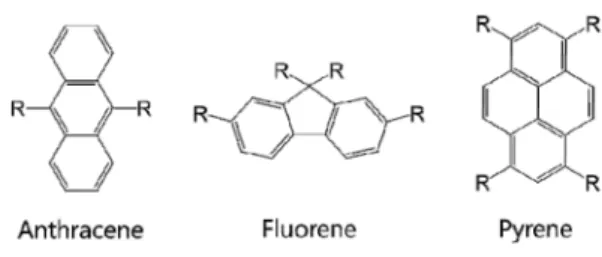
Figure 2. Representative blue emitting moiety.
good thermal properties, and long device lifetimes as well as pure color coordinates (1931 Commission Internationale de l’Eclairage x,y coordinates (CIE (x,y)) are needed. To meet these requirements, good emitting materials should have the following common properties: 1) the emission wavelengths are suitable for producing each of the RGB colors; 2) a narrow full width at half maximum (FWHM), which produces pure colors; 3) highly efficient EL property; and 4) long device life times.
3. Research Highlight in Blue Fluorescent Emitters
Blue emitting materials exhibit low efficiencies and short device lifetimes because a wide band gap of the materials are generally mismatched with the HOMO (highest occupied molecular orbital) and LUMO (lowest unoccupied molecular orbital) levels of the other hole and electron transporting layer in OLED device[11]. For the reason, there has been tremendous interests to develop blue emitting materials with pure and highly efficient[12,13]. Efforts to achieve highly efficient blue emitting materials have sought to 1) control the emission wavelength by managing the properties of the π-conjugation system in molecules that have high quantum efficiencies, such as anthracene, fluorine and pyrene (see Figure 2) 2) reduce packing between molecules and limit emission quenching by introducing bulky side groups. These methods enhance the purity and stability of the blue materials with high photon conversion efficiencies[14-16].
4,4-Bis(2,2-diphenylvinyl)-1,1′ -biphenyl (DPVBi), the most famous blue emitting material, was first reported by Hosokawa at Idemitsu Kosan in 1995[17]. Device made with ITO / CuPc (20 nm) / TPD (60 nm) / DPVBi (40 nm) / Alq3 (20 nm) / Mg:Ag (120 nm) showed an efficiency of 2.0 cd/A. However, since DPVBi inherently owned low
PL quantum efficiency (38%) and glass transition temperature (65 ℃), efficiency and life time of the device was not satisfactory. To overcome these limits, DPVBi having anthracene moiety (DPVPA) was synthesized. In a device, DPVPA achieved a high efficiency of 4.0 cd/A[18].
In 2000, Kodak Group presented a device based on 9,10-di-naph- thalen-2-yl-anthracene (AND) as the host and tetra-t-butylperylene (TBP) as the dopant. Structure of the manufactured device was ITO / CuPc (25 nm) / NPB (50 nm) / ADN:TBP (30 nm) / Alq3 (40 nm) / Mg:Ag (9:1, 200 nm)[19]. The device showed 3.5 cd/A in efficiency and coordinates of (0.15, 0.23) in CIE. Remarkably, the device recorded 4000 hours of de- vice life-time under initial luminance condition of 636 cd/m, but in prac- tice, low glass transition temperature of ADN (95 ℃) and poor film mor- phology limited its possibility in use as a real manufacturing product.
Accordingly, TBADN bearing t-butyl unit was proposed[20].
Introduction of t-butyl unit enabled to improve morphology of the film but donating effect of t-butyl unit resulted in a red shift of photo- luminescence (PL), bringing difficulty in materialization of pure blue color. Besides, reduction of carrier mobility by t-butyl unit was observed. To make up these demerits, finally, 2-Methyl-9,10-di-naph- thalen-2-yl-anthracene (MADN) which has a methyl unit at 2 position of anthracene unit of ADN was proposed. High glass transition temper- ature (120 ℃) and good film morphology of MADN allowed excellent deep blue color in color coordinates of (0.15, 0.10)[21].
S. A. Jenekhe et al. have synthesized a series of highly fluorescent blue-emitting n-type oligomers based on a 6,6′ -bis(4-phenylquinoline) core. Simple bilayer OLEDs, which is without ETL layer, employing the oligoquinolines as the emissive and electron-transport materials were found to have stable blue EL with high efficiencies and excellent blue color CIE coordinates (see Figure 3). OLEDs made from the oli- goquinoline with biphenyl end groups, B2PPQ, in particular, had the highest efficiencies (7.12 cd/A, EQE 6.56% at 1175 cd/m
2) in non-dop- ed device. These results demonstrate that the new oligoquinolines are very promising blue emitters and electron-transport materials for devel- oping high-efficiency OLEDs with a simple architecture[22].
P-type non-doped OLED materials have also been developed. Tao et
al. designed anthracene derivatives with triphenylamine in side group to
help hole injection (see Figure 4). The compounds, which is
anthracene-triphenylamine derivative exhibit strong blue emission with
유기발광 다이오드(OLED) 및 이를 위한 청색형광체
235
Appl. Chem. Eng., Vol. 25, No. 3, 2014
Figure 3. N-type oligomers based on a 6,6′ -bis(4-phenylquinoline) core[22].
Figure 4. P-type nondoped materials based on anthracene-triphenylamine derivatives[23].
Figure 5. Multi-functional fluorine-based oligomers with spiro-annulated tirarylamines[24].
Figure 6. Dual core blue emission materials[10].
quantum yields of 0.44∼0.48 and maximum efficiency of 7.9 cd/A in non-doped device. Remarkably, Hole transporting layer (HTL)-free two-layer device architecture allows higher powder efficiency compared to other non-doped fluorescent blue OLEDs (∼6.8 lm/W)[23].
Recently, Jiang et al. suggested multifunctional fluorine-based oligomers with spiro-annulated carbazole (see Figure 5). Nobility of this work is to minimize undesired suppression of EL caused by the photo/thermal oxidation at 9-position of fluorine unit to ketonic defect by introducing spiro-linkage in chemical structure using carba- zole-cored ladder-type molecules. Authors expected that implantation of carbazole provided improved hole injection and transportation.
Furthermore the spiro-configuration would effectively impede the inter- molecular π-π interactions and consequently lead to the amorphous morphology of a ladder-type molecule[24].
J. W. Park et al. have described new blue emission materials based on a type of dual core concept (see Figure 6). These chromophore ma- terials with orthogonally bonded dual cores exhibited stronger fluo- rescence and electroluminescence with about two times higher external quantum efficiency (EQE) values and two times longer blue emission lifetimes than their single core counterparts. One of the dual core de- rivatives, TP-AP-TP, exhibited an ELmax value of 456 nm and a high luminance EQE of 7.51% when used in a non-doped EL device. A de-
vice based on TP-AP-TP showed twice the lifetime of a device based on the commercialized material, 2-methyl-9,10-bis(naphthalen-2-yl) an- thracene (MADN)[10].
4. Conclusions and outlook
In this article, we briefly summarized fundamentals of OLED and introduced recent research highlights in blue-emitting materials. So far, as mentioned above, current research activities have mainly centered on development of economical and durable fluorescent emitters with high emitting quantum yield and stability to commercialize OLED displays. However, in the future, the solution process such as roll-to-roll and ink-jet has to be achieved to produce large area, flexi- ble OLED display and lighting. A related material also has to be developed. These efforts are very crucial research fields to cut pro- duction cost of next generation high performance OLED displays.
References
1. C. L. Ho and W. Y. Wong, Small-molecular blue phosphorescent
236
박영일⋅김진철⋅서봉국⋅조득희공업화학, 제 25권 제 3호, 2014
![Figure 5. Multi-functional fluorine-based oligomers with spiro-annulated tirarylamines[24].](https://thumb-ap.123doks.com/thumbv2/123dokinfo/5036791.310591/3.892.165.731.350.443/figure-multi-functional-fluorine-based-oligomers-annulated-tirarylamines.webp)
