서 론
유방암은 우리나라 여성의 발생률 2위 암으로 유방의 방 사선 치료는 관상피내암 이나 침윤성 암에서 유방의 부분 혹은 전 절제술을 시행 받은 경우의 모든 환자에게 시행되 며1) 이때, 폐나 심장을 보호하거나 이전의 방사선 이력이 있는 경우, 혹은 거대 유방인 경우, 일반적인 바로 누운 자 세(Supine position)가 아닌 엎드린 자세(Prone position)
로 방사선 치료를 시행 할 수 있다.2-6)엎드린 자세로 방사선 치료 시 바로 누운 자세로 치료할 때 보다 치료부위의 과다 선량 영역을 감소시키고 균등한 선량 분포를 얻을 수 있을 뿐 아니라, 치료 부의 주위 정상 조직의 급성 장해를 줄일 수 있는 장점이 있다.7~11) 하지만, 엎드린 자세의 치료는 많 은 장점에도 불구하고 바로 누운 자세에 비해 반대편 유방 을 압박하여 환자가 자세를 유지하기 어려우며 치료 과정 중 자세확인이 어렵다는 단점이 있다. 또한, 사방향이 거의 수평에 가까운 조사방향을 사용함으로써 자세 오차가 발생 할 경우, 반대편 유방의 급격한 선량 증가가 발생할 수 있 다. 이에 본 연구는 Human Phantom(Anderson Rando Phantom. USA)을 이용하여 바로 누운 자세와 엎드린 자세
책임저자 : 박수연, 삼성서울병원 방사선종양학과 서울시 강남구 일원동 50번지, 135-710 Tel : 02)3410-2654
E-mail:[email protected]
좌측 유방암 환자의 방사선 치료 시
환자자세에 따른 반대편 유방의 산란선량 측정
삼성서울병원 방사선종양학과
핵심용어 :반대편 유방, 사방향 조사, 엎드린 자세
주찬성・박수연・김종식・최병기・정윤선・박 원
목 적 :좌측 유방암 환자의 방사선 치료 시 바로 누운 자세 및 엎드린 자세 에 따른 환자 자세변화 시 발생하는 반대편 유방의 산란선량을 사 향 조사방법에 따라 측정하여 분석하고자 한다.
대상 및 방법 :Human Phantom (Anderson Rando Phantom. USA)을 대상으로 실제 좌측 유방암 환자로 가정한 후, Supine용 Breast Board와 본원에서 주문 제작된 Prone Breast Board를 이용하여 처방선량 50 Gy/25회로 치료계획(Conventional technique, Field-in-Field, IMRT)을 수립하 였다. 치료 계획 수립 후 Human Phantom 의 중심축을 기준점으로 하여 우측방향으로 0 mm, 10 mm, 30 mm, 50 mm 떨어진 위치에 유리 선량 계(GD-302M, SRS Technol, Japan)를 부착한 후 환자 자세에 따른 치료 방법에 따라 산란선량을 측정하였다. 이 때 각각의 자세 측정 시 모의치료 계획과 동일한 자세를 유지하기 위해 측정 전 EPID를 이용하여 L-gram 촬영을 실시하였으며 Prone-Device를 이용한 측정 시에는 동일한 입사 점 을 확인하기 위해 Human Phantom 에 입사점을 표시하여 5회 측정된 평균값으로 각각의 치료계획 선량과 비교 분석하였다.
결 과 :각각의 자세에 따른 치료방법에 따라 반대 측 유방의 산란선량을 측정한 결과 바로 누운 자세가 엎드린 자세에 비하여 평균 1.2%~1.8%
이상 치료계획 선량 보다 증가함을 보였고 엎드린 자세일 때는 오히려 치료계획 선량보다 평균 0.81~0.9% 이상 감소함을 보였다. 그러나 엎드린 자세 일 때 반대 측 유방의 위치 별 흡수선량 값은 바로 누운 자세일 때 비하여 총 처방선량의 평균 2.7%로 최대 4% 이상 나타났으며 Conventional technique이 Field-in-Field나 IMRT 비하여 평균 3.3%이상 높게 나타남을 보였다.
결 론 :본 연구는 Human Phantom 을 이용하여 좌측 유방암 환자의 방사선 치료 시 환자의 자세 변화에 따른 반대편 유방의 산란선량을 치료 방 법 별로 비교분석 하였다. 실제 환자의 자세 변화에 따른 유방변화를 가정하여 Human Phantom을 위치시켰으나 실제 환자의 개별적 특성에 따라 차이가 발생할 수 있으며 특히 엎드린 자세 시 환자의 자세 재현의 어려움에 따른 오차가 더욱 크게 발생할 수 있다. 이런 오차로 인하여 좌측 폐 및 심장 등의 선량을 급격히 줄여주는 장점에도 불구하고 반대측 유방에 산란선량을 증가시킬 수 있는 가능성이 있음을 확인하였다. 따라서 실제 환자 를 대상으로 prone position을 적용할 경우, 치료방법 및 환자 자세확인을 위한 정확한 검증과정의 임상적 노력이 필요할 것으로 사료된다.
로 치료 시 반대편 유방에 발생되는 산란선량을 각각의 치 료방법에 따라 평가 해 보았다.
대상 및 방법
1. 실험재료
- Human Phantom (Anderson Rando Phantom, USA) - Breast Board (CICICO, USA)
- CT simulator (RT16, GE, USA) - Pinnacle 9.8 (Philips Healthcare, USA) - Glass dosimeter (GD-302M, SRS Tech, Japan)
- Gafchromic EBT3 (Ashland ISP Advanced Materials, NJ, USA)
- Novalis Tx (Varian™, USA)
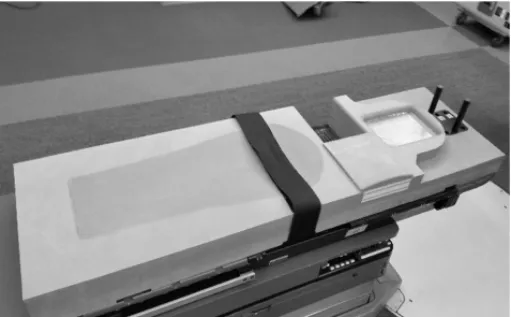
- SMC Prone Breast Board (Customized Order)는 경화 폴리우레탄으로 제작되었으며 가로, 세로, 높이가 각각 50 cm, 150 cm, 17cm, 중량은 6.5 kg 이다. 여기에는 우측 유방을 최대한 몸의 중심으로부터 먼 곳에 위치시 킬 수 있게 동일한 소재의 Wedge Block을 부착하였으 며 Board를 Couch에 부착할 수 있게 2개의 Board Holder를 설치하였다. 치료 시 환자의 몸이 돌아가는
것을 방지하기 위해 Board이 중심부위에 밸크로를 부 착하였으며 환자의 팔이 항상 같은 위치에 고정될 수 있 게 아세탈 재질의 Arm Holder를 설치하였다. 또한 정확 한 환자의 위치를 확인 할 수 있도록 Board의 우측 부위 에 눈금을 부착하여 사용하였다 [Fig. 1].
2. 실험방법
Human Phantom을 대상으로 실제 좌측 유방암 환자로 가정한 후, 선량측정을 위한 치료계획을 각 자세 별로 2 tangential, Field-In-Field, IMRT의 3가지 방법으로 수립하 Fig 1. SMC Prone Breast Board
Table 1. The Point dose of comparisons: Planned Versus Measurement (cGy) 1-1. Supine position
2 Tangential Field-In-Field IMRT
Cal measure ratio Cal measure ratio Cal measure ratio
0 mm 1.51 2.15 1.42 1.28 2.00 1.57 1.50 2.37 1.58
10 mm 1.80 1.79 1.00 1.05 1.79 1.70 1.06 1.73 1.63
30 mm 1.20 1.71 1.42 1.02 1.71 1.68 0.70 1.63 2.32
50 mm 1.60 1,85 1.16 1.05 1.74 1.66 0.97 1.61 1.66
1-2.Prone position
2 Tangential Field-In-Field IMRT
Cal measure ratio Cal measure ratio Cal measure ratio 0 mm 10.50 10.54 1.00 7.50 6.50 0.87 11.30 9.12 0.81
10 mm 7.60 8.29 1.09 3.40 3.99 1.17 6.40 8.19 1.28
30 mm 5.80 3.86 0.67 3.10 3.37 1.09 5.30 5.15 0.97
50 mm 5.70 2.69 0.47 2.80 2,58 0.92 1.90 1.71 0.90
였으며 일선량 200 cGy, 총 치료횟수 25회, 총 선량 50 Gy 로, RTOG guideline에 따라 치료계획을 수립하였다. 환자 자세재현을 위한 Phantom의 위치는 바로 누운 자세와 엎드 린 자세로 실제 유방암 환자의 방사선 치료 시와 동일하게 가정하였으며, 자세 재현에 따른 환자 유방 모양의 변화를 Human Phantom의 Breast Phantom의 두께와 Phantom의
기울기를 조정하여 적용하였다. 자세 재현을 위한 확인영상 은 측정 전 EPID를 이용하여 L-gram 촬영을 실시하였으며 특히, Prone Breast board를 이용한 측정 시에는 Beam의 동일한 입사점을 확인하기 위해 Human Phantom에 입사점 을 표시하여 자세 검증을 실시하였다.
측정을 위한 유리 선량계의 부착점(GD-302M, SRS Tech,
A
B
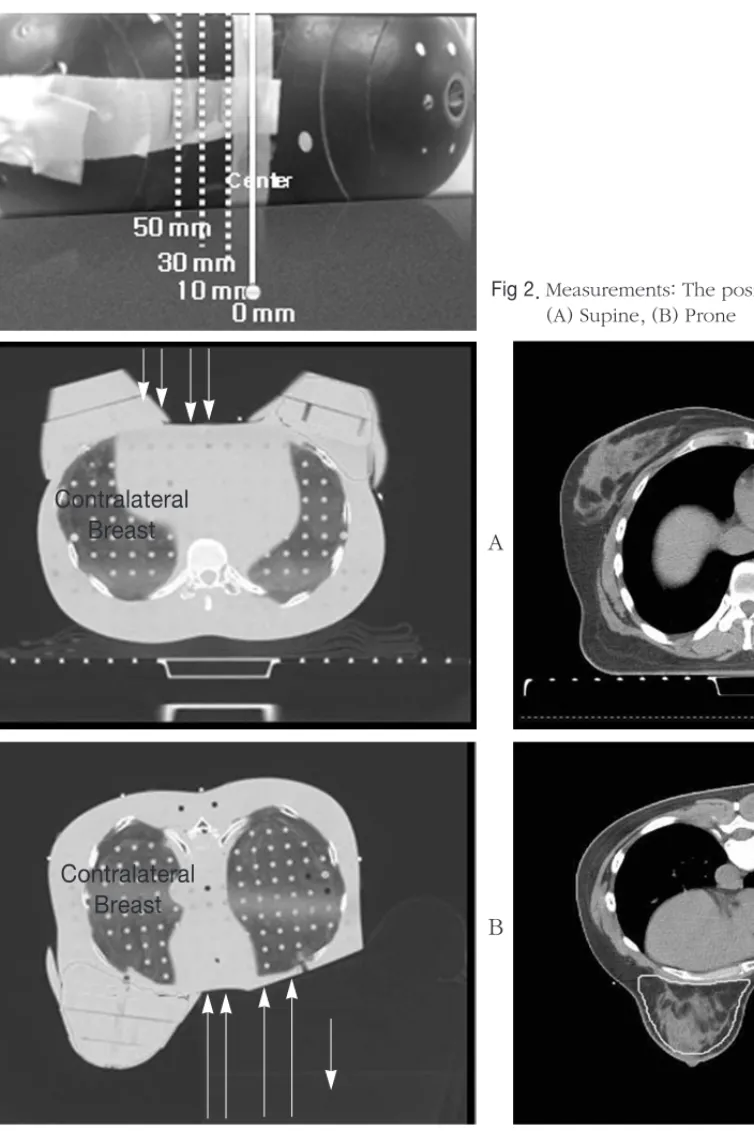
Fig 2. Measurements: The position of the glass dosimeter.
(A) Supine, (B) Prone
Contralateral Breast
Contralateral
Breast
Japan)은 Human Phantom 의 중심축을 기준으로 0 mm, 우측방향으로 10 mm, 30 mm, 50 mm 의 위치로 5회 반복 측정하여 평균값을 구하였다 [Fig. 2]. 이 때, 반대편 유방의 3가지 치료방법에 따른 최대선량, 평균선량 및 V2 (2 Gy가 들어가는 선량의 용적)를 구하였고, 유리 선량계를 이용한 측정값을 구하여 총 선량으로 환산한 뒤 실제 계획 선량 값 과 비교 분석하였다.
결 과
각 자세에 따른 치료계획은 모두 RTOG Guideline을 만 족하였다. [Fig. 3]. 반대편 유방의 치료계획 별 최대선량, 평 균선량, V2를 분석한 결과 바로 누운 자세 및 엎드린 자세 모두 최대 계획선량 50 Gy의 3.6~5.7%로 엎드린 자세 일 때가 평균선량 및 V2를 포함하여 바로 누운 자세에 비하여
2 Tangential Field-In-Field IMRT
Supine
Prone
Fig 3. All treatment Planning: RTOG guideline satisfaction (2-Tangential, Field-In-Field, IMRT)
Fig 4.
Contralateral breast volume dose of each treatment planning.
(Prescribed dose of 3.6~5.7%).
(A) Supine, (B) Prone
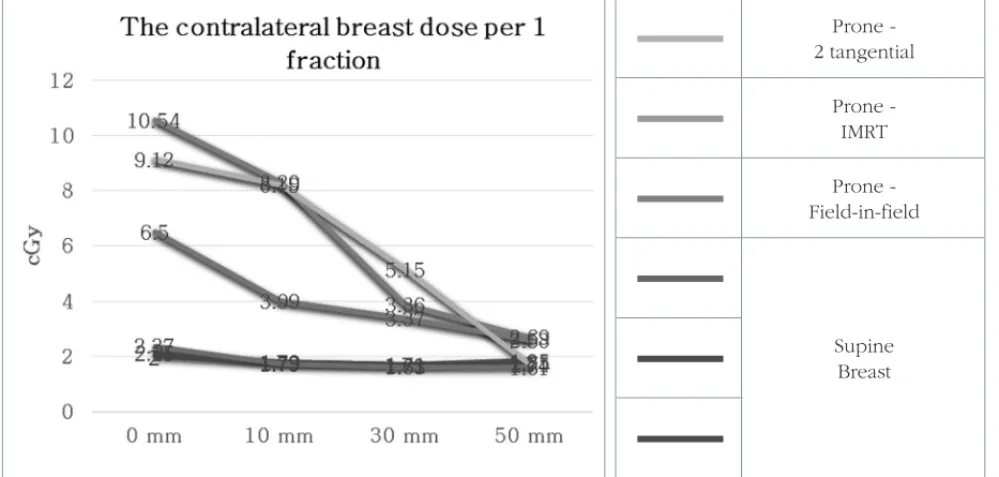
대체로 높게 나타남을 알 수 있었다 [Fig. 4]. 또한 각 위치 별 유리 선량계의 측정결과 엎드린 자세 일 때의 선량이 바 로 누운 자세일 때의 선량 보다 높게 나타났으며[Fig. 5], 특 히 바로 누운 자세의 최대 측정값 평균 2.23 cGy는 엎드린 자세의 최대 선량 점 10.54 cGy의 20% 값으로 이는 엎드린 자세의 선량분포곡선의 20% 영역으로서, 엎드린 자세일 때 산란선량 영역이 바로 누운 자세 일 때 보다 좀 더 넓어지는 것을 확인 할 수 있었다 [Fig. 6]. 계획 선량 값 및 측정 값의
비율을 살펴보면 바로 누운 자세 일 때 치료 계획 별로 1에 서 2.3배 이상 증가하는 경향을 보였으며 엎드린 자세일 때 는 거의 모든 치료방법이 1보다 같거나 낮은 수준을 보였 다. 따라서 엎드린 자세에서는 치료 계획 선량 값을 거의 유 지하는 수준임을 확인 할 수 있었다. [Table .1].
결 론
본 연구는 Human Phantom을 이용하여 좌측 유방암 환 자의 방사선 치료 시 환자의 자세 변화에 따른 반대편 유방 의 산란선량을 치료 방법 별로 비교 분석 하였다. 유방암의 방사선 치료 시 발생되는 치료 반대편 유방의 산란선량을 바로 누운 자세와 엎드린 자세로 각각 비교한 결과, 치료 계 획선량은 치료 방법과 무관하게 엎드린 자세 일 때 평균 10 cGy로 바로 누운 자세의 평균 2 cGy 보다 높게 나타났다.
이와 반면에 실제 측정 결과, 바로 누운 자세 일 때가 계획 선량에 비해 1~2.3배 증가함을 보였고, 엎드린 자세 일 때 에는 후방 산란선량 및 Prone Breast board 등의 감쇄로 인 한 영향으로 측정결과가 계획 선량에 비해 오히려 같거나 낮은 선량 값을 보였다. 그러나 엎드린 자세에서 거의 수평 으로 입사 되어야 하는 방사선 치료방향의 특성상 잠재적으 로는 엎드린 자세가 바로 누운 자세 일 때 보다 반대편 유방 Fig 5. Measurement results for each position: Point Dose. (A) Prone 2 tangential, (B) Prone IMRT, (C) Prone
Field-in-field, (D) Supine
Prone - 2 tangential
Prone - IMRT Prone - Field-in-field
Supine Breast
Fig 6. Dose profile on prone surface dose
에 더 많은 산란선량을 기여할 것으로 예측하였다. 실제 환 자의 자세변화에 따른 유방의 변화를 가정하여 Human Phantom을 위치 시켰으나 실제 환자의 개별적 특성에 따라 차이가 발생 할 수 있으며 특히 엎드린 자세의 치료 시 환자 의 자세 재현의 어려움에 따른 오차가 더욱 크게 발생할 수 있다. 이런 오차로 인하여 좌측 폐 및 심장 등의 선량을 급 격히 줄여주는 장점에도 불구하고 반대 측 유방에 산란선량 을 증가 시킬 수 있는 가능성이 있음을 확인 하였다. 이와 같은 임상적으로 엎드린 자세를 이용한 유방암 환자의 방사 선 치료를 시행하기 위해서는 반대편 유방의 압박을 완화 하면서 산란선량을 감소시키기 위해 환자 체형별로 적합한 각도로 거상 시킬 수 있는 환자 맞춤형 Device가 필요하며, 신중한 치료 환자의 선택으로 엎드린 자세 치료의 장점을 최대한 활용해야 될 것으로 사료된다. 또한 치료 시 정확한 자세 재현 및 검증과 함께 치료 중 환자의 자세변화를 확인 할 수 있는 장치 또한 반대편 유방의 산란 선량을 줄이기 위 한 방법이 될 것이라고 사료된다.
참고문헌
1. 홍채선, 주상규, 박주영: Large Pendulous Breast 환 자의 방사선 치료에 있어서 엎드린 자세의 유용성 평 가. 대한방사선치료기술학회지 2008; 37-43
2. Mulliez T, Speleers B, Madani I, et al: Whole breast radiotherapy in prone and supine position: is there a place for multi-beam IMRT. Radiat Oncol Biol Phys 2013;8:151
3. Robert E, Leonard K, Ning J, et al: Treatment Techniques to Reduce Cardiac Irradiation for breast Cancer Patients Treated with Breast-Conserving Surgery and Radiation Therapy: A Review. Frontiers in Oncology 2014;4:327
4. Marco K, Laura M, Tina C, et al: Prone versus supine position for adjuvant breast radiotherapy: a prospective study in patients with pendulous breasts. Radiat Oncol Biol Phys 2013;8:232
5. Chirag S, Shahed B, Sameer B, et al: Cardiac dose sparing and avoidance techniques in breast cancer radiotherapy. Radiotherapy and Oncology 2014;112:9-16
6. Sara R, Lucio T, Edy I, et al: Whole-breast irradiation: a subgroup analysis of criteria to stratify for prone position treatment. Medical Dosimetry 2011;37:186-191
7. Blichert-Toft M, Roce C, Anderson J, et al: Danish randomized trial comparing breast conservation therapy with mastectomy: Six years of life-table analysis. Danish breast cancer Cooperative Group. J natl Cancer Inst Monograms 1992;11:19-25
8. Buchholz TA, Gurgoze E, Bice WS, et al:
Dosimetric analysis of intact breast irradiation in off- axis planes. Int J Radiat Oncol Biol Phys 1997;39:261-267
9. Neal AJ, Torr M, Helyer S, et al: Correlation of breast dose heterogeneity with breast size using 3D CT planning and dose-volume histograms. Radiat Oncol Biol Phys 1995;34:210-218
10. Gray JR, McComick B, Cox L, et al: Primary breast irradiation in large-breasted or heavy women:
analysis of cosmetic outcome. Int J Radiat Oncol Biol Phys 1991;21:347-354
11. Ray GR, Fish VJ: Biopsy and definitive radiation therapy in stage Ⅰ and Ⅱ adenocarcinoma of the female breast: Analysis of cosmesis and the role of electron beam supplementation. Int J Radiat Oncol Biol Phys 1999;9:813-818
Purpose :To evaluate Contralateral Breast Doses with Supine and Prone Positions for tangential Irradiation techniques for left- sided breast Cancer
Materials and Methods : We performed measurements for contralateral doses using Human Phantom at each other three plans (conventional technique, Field-in-Field, IMRT, with prescription of 50 Gy/25fx). For the measurement of contralateral doses we used Glass dosimeters on the 4 points of Human Phantom surface (0 mm, 10 mm, 30 mm, 50 mm). For the position check at every measurements, we had taken portal images using EPID and denoted the incident points on the human phantom for checking the constancy of incident points.
Results :The contralateral doses in supine position showed a little higher doses than those in prone position. In the planning study, contralateral doses in the prone position increased mean doses of 1.2% to 1.8% at each positions while those in the supine positions showed mean dose decreases of 0.8% to 0.9%. The measurements using glass dosimeters resulted in dose increases (mean: 2.7%, maximum: 4% of the prescribed dose) in the prone position. In addition, the delivery techniques of Field-in-field and IMRT showed mean doses of 3% higher than conventional technique.
Conclusion : We evaluated contralateral breast doses depending on different positions of supine and prone for tangential irradiations. For the phantom simulation of set-up variation effects on contralateral dose evaluation, although we used humanoid phantom for planning and measurements comparisons, it would be more or less worse set-up constancy in a real patient.
Therefore, more careful selection of determination of patient set-up for the breast tangential irradiation, especially in the left- sided breast, should be considered for unwanted dose increases to left lung and heart. In conclusion, intensive patient monitoring and improved patient set-up verification efforts should be necessary for the application of prone position for tangential irradiation of left-sided breast cancer.
Chan Seong Joo, Su Yeon Park, JongSik Kim, Byeong Gi Choi, Yoonsun Chung, Won Park
Contralateral Breast Doses Depending on Treatment Set-up Positions
for Left-sided Breast Tangential Irradiation
Department of Radiation Oncology at Samsung Seoul Hospital
Abstract
Keyword :left-sided breast, tangential irradiation, prone position