Received:May 17, 2018, Revised:(1st) June 29, 2018, (2nd) July 26, 2018, Accepted:July 26, 2018 Corresponding to:Kyeong-Yae Sohng http://orcid.org/0000-0002-4391-4481
Department of Nursing, College of Nursing, The Catholic University of Korea, 222 Banpo-daero, Seocho-gu, Seoul 06591, Korea.
E-mail:[email protected]
Ji Hyeon Ju http://orcid.org/0000-0001-7541-9103
Division of Rheumatology, Department of Internal Medicine, Seoul St. Mary’s Hospital, College of Medicine, The Catholic University of Korea, 222 Banpo-daero, Seocho-gu, Seoul 06591, Korea. E-mail : [email protected]
Copyright ⓒ 2018 by The Korean College of Rheumatology. All rights reserved.
This is a Open Access article, which permits unrestricted non-commerical use, distribution, and reproduction in any medium, provided the original work is properly cited.
Effects of Individual Education Using a Treating-to-target Strategy in Patients with Rheumatoid Arthritis
Seung In Paek1, Seung Min Jung2, Jennifer Lee3, Seung-Ki Kwok3, Wan-Uk Kim3, Sung-Hwan Park3, Ji Hyeon Ju3, Kyeong-Yae Sohng4
1Department of Internal Medicine, Seoul St. Mary's Hospital, The Catholic University of Korea, 2Division of Rheumatology, Department of Internal Medicine, Yonsei University College of Medicine, 3Division of Rheumatology, Department of Internal Medicine, Seoul St. Mary’s Hospital, College of Medicine, The Catholic University of Korea, 4Department of Nursing, College of Nursing, The Catholic University of Korea, Seoul, Korea
Objective. To examine effects of an individual education program using the treating rheumatoid arthritis to target (RA T2T) strat- egy in patients with moderate-severe rheumatoid arthritis. Methods. Patients were assigned randomly to an educational inter- vention (n=33) or conventional care group (n=33). The intervention was a nurse-delivered 9-month educational program con- sisting of 3 monthly sessions and monthly telephone counseling. The assessments occurred at the baseline and every 3 months in both groups, but only the intervention group completed the 9-month education follow-up. The outcome variables included the disease activity (DAS28), functional disability (KHAQ), fatigue (FACIT-Fatigue), and quality of life (SF-36). Repeated meas- ures ANOVA and a Bonferroni multiple comparison were used to evaluate the outcome variables comparing the groups and follow-up times. Results. Significant interactions were observed between the groups and follow-up times in the disease activity (p=0.041), fatigue (p=0.042), and physical (p=0.006) and mental (p=0.031) health-related quality of life, but there was no significant interaction in the functional disability (p=0.110). Significant differences were noted between the groups at the 9-month period (p=0.048) in disease activity and fatigue, and at the 6-month (p=0.023) and 9-month periods (p=0.027) in the physical health-related quality of life. Conclusion. This education program using the RA T2T strategy had significant benefits on the disease activity, fatigue, and quality of life in patients with moderate to severe rheumatoid arthritis, and the results sug- gested that this contributed to positive clinical outcomes as a good practical nursing intervention. (J Rheum Dis 2018;25:255-262) Key Words. Rheumatoid arthritis, Patient education, Quality of life
INTRODUCTION
Rheumatoid arthritis (RA) is a common autoimmune disease that is associated with progress disability, sys- temic complications, early death and socioeconomic costs [1]. The primary goal of treatment is to maximize long term health-related quality of life (QoL) through control of symptom, prevention of structural damage, normalization of function and social participation [2].
Pain, fatigue, joint damage and functional disability
caused by RA are factors that affect QoL of the patient [3]
and disease activity is a good predictor of joint damage, functional disability [4].
Recently the European League Against Rheumatism (EULAR) proposed that treating RA to target (RA T2T), which aimed to achieve the treatment goal of clinical re- mission or low disease activity through measuring dis- ease activity and adjusting therapy [5].
In recent decades, there have been advances in treat- ment of RA, along with the development of new ther-
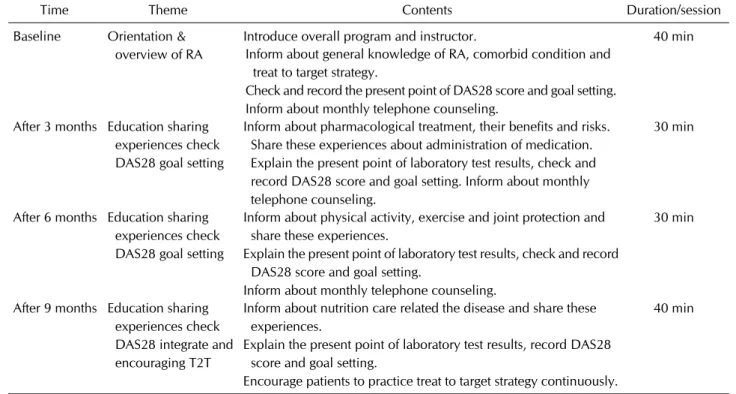
Table 1. Education program using RA T2T strategy
Time Theme Contents Duration/session
Baseline Orientation &
overview of RA
Introduce overall program and instructor. 40 min
Inform about general knowledge of RA, comorbid condition and treat to target strategy.
Check and record the present point of DAS28 score and goal setting.
Inform about monthly telephone counseling.
After 3 months Education sharing experiences check DAS28 goal setting
Inform about pharmacological treatment, their benefits and risks.
Share these experiences about administration of medication.
Explain the present point of laboratory test results, check and record DAS28 score and goal setting. Inform about monthly telephone counseling.
30 min
After 6 months Education sharing experiences check DAS28 goal setting
Inform about physical activity, exercise and joint protection and share these experiences.
Explain the present point of laboratory test results, check and record DAS28 score and goal setting.
Inform about monthly telephone counseling.
30 min
After 9 months Education sharing experiences check DAS28 integrate and encouraging T2T
Inform about nutrition care related the disease and share these experiences.
Explain the present point of laboratory test results, record DAS28 score and goal setting.
Encourage patients to practice treat to target strategy continuously.
40 min
RA T2T: treating rheumatoid arthritis to target, DAS28: disease activity score in 28 joints.
apeutic agents. However despite such efforts, patients still endure pain and fatigue, which requires the im- plementation of a holistic approach to care [6,7].
Accordingly, if collaboration of RA T2T strategy and pa- tient education which based on the autonomy, shared de- cision making may be expected more positive effects on treatment of RA.
So this study aimed to identify the effects that in- dividualized nursing education program incorporating RA T2T strategy and patient education on disease activity, functional disabilities, fatigue, and quality of life in pa- tients with moderate-severe RA.
MATERIALS AND METHODS
Participants
We consecutively enrolled 70 patients with RA in this study during from November 2014 to January 2016 at clinic of rheumatology Seoul St. Mary’s Hospital in Korea.
All participants were randomly assigned to an ex- perimental intervention or conventional care group as a control group using 2010 Microsoft Excel program (Microsoft, Redmond, WA, USA). This study was ap- proved by the Institutional Review Board (IRB) of Seoul St Mary’s Hospital (IRB no. KIRB-00486-004) and all
participants provided their informed consent prior to per- form the study procedure. The inclusion criteria were as follows:
(i) Patients who diagnosed with RA according to the re- vised classification criteria of 1987 American College of Rheumatology (ACR) or 2010 ACR/EULAR diagnostic criteria [8,9]
(ii) Those who exceeded a disease activity score of 3.2 based on Disease Activity Score in 28 joints-erythrocyte sedimentation rate (DAS28-ESR) [10]
(iii) Those with no history of rheumatic diseases other than Sjögren’s syndrome
(iv) Those with no experience in RA education programs and clinical intervention studies
Sample size
The sample size was determined by referencing a pre- vious study that showed reduction in disease activity fol- lowing education [11], and between-groups mean differ- ence of 0.7, significance level of α=0.05, and statistical power (1-β) of 0.80 were assumed. The PASS 13 pro- gram indicated that total 54 participants were required and 30% drop-out rate was anticipated, we aimed to re- cruit 70 participants. During the study period, 4 partic- ipants (2 in the experimental and 2 in control group)
Table 2. Baseline characteristics of patients with rheumatoid arthritis
Characteristics Experimental group (n=33) Control group (n=33) t or χ2 p-value
Age (yr) 45.88±11.66 46.48±12.74 −0.20 0.841
Gender * 0.999
Female 30 (90.91) 29 (87.88)
Male 3 (9.09) 4 (12.12)
Educational level 0.00 0.999
≤High school 14 (42.42) 15 (45.45)
≥College 19 (57.58) 18 (54.55)
Job 0.00 0.999
Yes 19 (57.58) 18 (54.55)
No 14 (42.42) 15 (45.45)
Regular exercise 1.07 0.302
Yes 9 (27.27) 14 (42.42)
No 24 (72.73) 19 (57.58)
Height (cm) 160.58±6.29 160.48±5.76 0.06 0.951
Weight (kg) 56.76±10.80 59.18±12.12 −0.86 0.394
Disease duration (mo) 57.36±72.21 59.67±75.79 −0.13 0.900
Methotrexate use * 0.999
Yes 31 (93.94) 31 (93.94)
No 2 (6.06) 2 (6.06)
Steroid use * 0.258
Yes 31 (93.94) 27 (81.82))
No 2 (6.06) 6 (18.18)
Rheumatoid factor * 0.999
Positive 33 (100) 32 (96.97)
Negative 0 (0) 1 (3.03)
ESR (mm/h) 42.00±15.97 40.76±19.60 0.28 0.779
DAS28 (score) 4.61±0.83 4.53±1.06 0.36 0.723
KHAQ (score) 0.70±0.56 0.76±0.63 −0.39 0.701
FACIT-F (score) 32.42±12.32 33.03±10.07 −0.22 0.828
Quality of life (SF-36 score)
Physical component summary 38.21±7.26 39.04±7.86 −0.44 0.658
Mental component summary 44.35±9.23 46.18±11.72 −0.71 0.483
Values are presented as mean±standard deviation or number (%). ESR: erythrocyte sedimentation rate, DAS28: disease activity score in 28 joints, KHAQ: Korean health assessment questionnaire, FACIT-F: functional assessment of chronic illness therapy-fatigue scale, SF-36: short form- 36. *Fisher’s exact test.
dropped out due to hospitalization and personal schedule so total 66 participants were analyzed for this study.
Intervention: education using the RA T2T strategy
Education using the RA T2T strategy was performed on- ly on experimental group and over a 9-month period, which included telephone counseling for motivational purposes and 4 individualized education sessions.Each session lasted 30∼40 minutes and was conducted at the baseline and 3, 6, and 9 months in the rheumatol- ogy outpatient clinic. At each session, participants were measured disease activity, functional disability, fatigue, and QoL by a self-report questionnaire. The contents of
the education program were comprised of overview of RA, pharmacological treatment, education on physical activities and nutrition, laboratory test results, and ach- ievement of disease activity and set goal.
In cases where the disease activity reached the goal, the participants were encouraged for sustained maintenance, whereas in cases the goal was not reached, additional ef- forts were shared for achieving a goal. Moreover, tele- phone counseling (total of 8 sessions in 1 month interval with 20 minutes per session) was conducted for motivat- ing and monitoring administration of medication, treat- ment compliance and physical activities (Table 1) [7].
The education program was constructed based on 10
Figure 1. Mean scores on (A) disease activity, (B) functional disability, (C) fatigue. DAS28: disease activity score in 28 joints, KHAQ: Korean health assessment questionnaire, FACIT-F: functional assessment of chronic illness ther- apy-fatigue scale. Data are presented as mean±standard error. *p-value by repeated measures ANOVA. †p=0.048, Bonferroni corrected significance.
recommendation of RA T2T proposed by EULAR [5]. The content validity was validated by two professors of rheu- matology and nursing professor with research experience in RA patient education.
Outcome measures: disease activity
Disease activity was measured using DAS28-ESR, which can show a score range of 0 to 9.4 points, include tender and swollen joint counts among 28 joints, as well as ESR (mm/h) and the overall health status of the sub- ject measured by a 100 mm visual analogue scale.
DAS28 scores can be categorized into <2.6 as re- mission, ≤3.2 as low disease activity, >3.2 and ≤5.1 as moderate disease activity and ˃5.1 as high disease activity [10].
Outcome measures: functional disability
Functional disability was measured by the Korean Health Assessment Questionnaire (KHAQ) validated in Korean by Bae et al. [12], which was developed as the HAQ for assessing RA health status [13].
The KHAQ assesses the level of difficulties experienced in
activities of daily living for the previous one week and we used a disability index comprised of 20 items in 8 catego- ries, which included dressing and grooming, arising, eating, walking, hygiene, reach, grabbing, and outside activities.
Outcome measures: fatigue
Fatigue was measured using the Korean version of the Functional Assessment of Chronic Illness Therapy (FACIT)- Fatigue scale, developed from FACIT. The tool was used with license agreement from FACIT and the score means that higher scores indicating lower fatigue levels [14].
Outcome measures: quality of life
QoL was measured using the health-related QoL meas- urement tool Short form health survey 36 (SF-36) devel- oped by Ware and Sherbourne [15], and was used after approve of the Korean version of SF-36 guidelines, and statistics software from Medical Outcomes Trust and Quality Metric Incorporated (QM026092). This con- sisted of 8 health domain scales of physical function, role-physical, bodily pain, general health, vitality, social function, role-emotional and mental health. These con-
Figure 2. Mean scores on (A) physical component summary, (B) mental component summary. Data are presented as mean±stand- ard error. *p-value by repeated measures ANOVA. †p=0.023, ‡p=0.027, Bonferroni corrected significance.
Table 3. Remission achievement rate by the time point
Time Remission achievement Experimental group (n=33) Control group (n=33) χ2 p-value
3 months Yes 8 (24.24) 1 (3.03) * 0.027
No 25 (75.76) 32 (96.97)
6 months Yes 14 (42.42) 4 (12.12) 6.19 0.013
No 19 (57.58) 29 (87.88)
9 months Yes 15 (45.45) 7 (21.21) 3.34 0.068
No 18 (54.55) 26 (78.79)
Values are presented as number (%). *Fisher’s exact test.
cepts along with both physical health component summary (PCS) and mental health component summary (MCS). The score means that higher score indicating higher QoL.
Statistical analysis
Data were analyzed using the R language program (R Foundation for Statistical Computing, Vienna, Austria).
Participant characteristics were analyzed by descriptive statistics, while chi-square test, Fisher’s exact test, and t-tests were used for testing homogeneity and differences in DAS28 scores. The between-group differences in ef- fects were analyzed by repeated measures ANOVA and Bonferroni multiple comparison.
RESULTS
Participant characteristics and homogeneity test
The experimental and control group showed no sig- nificant differences in the general characteristics and clin- ical features (Table 2).At baseline disease activity, functional disability, fatigue, and QoL measured in both two groups also showed no
significant differences between the groups (Table 2).
Disease activity
There were significant interactions between the groups and follow-up times in DAS28 score (p=0.041) (Figure 1A). Multiple comparisons of the baseline and different time points showed significant differences at 9 month time point (p=0.048) (Figure 1A). There were significant differences in the rate who achieved remission at 3 month (p=0.027) and 6 month time point (p=0.013) (Table 3).
Functional disability
There were no significant interactions between the groups and follow-up times in functional disability (p=0.110) (Figure 1B).
Fatigue
There were significant interactions between the groups and follow-up times in fatigue (p=0.042) (Figure 1C).
Multiple comparisons of the baseline and different time points showed significant differences between the groups at 9 month time point (p=0.048) (Figure 1C).
Quality of life
There were significant interactions between the groups and follow-up times in the PCS (p=0.006) (Figure 2A) and MCS of QoL (p=0.031) (Figure 2B). Multiple compar- isons of the baseline and different time points showed sig- nificant differences at 6 month (p=0.023) and 9 month (p=0.027) time point only on PCS of QoL (Figure 2A).
DISCUSSION
RA is a chronic inflammatory disease that requires long-term treatment and management, and as such, pa- tient education is recommended as an integral part in es- tablished recommendations for the management of ar- thritis [16].
Recent perspectives on patient education have gone be- yond passive knowledge delivery by health professionals to focusing on autonomous behavioral changes through shared decision making and collaboration [7,16].
This study focused on motivating patients to achieve their treatment goal by applying the principles of patient education based on shared decision making and collabo- ration in RA T2T strategy. Previous studies reported de- creases in disease activity of 0.3∼0.7 points following pa- tient education that performed as individualized or group education programs [11,17-19]. The education using RA T2T strategy in this study was differentiated by present- ing and sharing individualized treatment goal for each participant and providing continued collaboration for achieving goal.
The significance of this study can be found that the ex- perimental group showed a decrease in disease activity by 1.98 points following the education program, which was a greater improvement effect than in previous studies, and that differences were also found in the remission rate.
In this study, functional disability showed no significant interactions between the groups and follow-up times.
This was consistent with some Korean studies that did not show decrease in functional disability following edu- cation [20,21], but some previous studies showed de- creases following education [22], while other studies were unable to test the effects [11,23,24]. The baseline functional disability score in the experimental and con- trol group was 0.7 and 0.76, which fell under the category of mild disability (<1.0) [11]. It is thought that at the baseline, functional disability of the participants was not severe and thus may have been limited in expressing any decrease and that the study period of 9 months may have
been too short as well.
Along with fatigue and pain, functional disability is one of the major symptoms in patient with RA and this should be measured as it also serves as an important indicator for determining improvement in the disease [25,26]. A pre- vious study reported decrease in fatigue following 8 weeks of education [20] which was supported by the im- provement in fatigue in this study.
Because of the study design, the causal relationships be- tween the variables could not be determined. However, it can be inferred that patients who participated in the edu- cation program were able to achieve reduction in disease activity and improvements in physical symptoms of pain and fatigue by promoting positive health management through motivational enhancement and behavioral changes [7,27].
In previous studies, various factors that affect QoL in pa- tient with RA were identified, which included disease ac- tivity, functional disability, pain, and fatigue [3,28,29], and it is proposed that the reductions in pain, fatigue, functional disability, and disease activity seen in the ex- perimental group of the present study would have a pos- itive effect on the participants’ QoL.
In terms of QoL, the PCS, MCS showed significant inter- actions between the groups and follow-up times. These findings supported the results of studies that reported improved QoL following self-help management educa- tion [30] and that a nurse-led education program was ef- fective in improving overall QoL in patient with arthritis [19].
The ultimate goal of RA treatment is to improve the QoL in the patient and the goal of patient education is also to promote patients being able to maintain high QoL through practicing positive health management on their own [16], and thus the fact that this study show improved QoL following education using the RA T2T strategy can be viewed as significant.
Multiple comparisons between the baseline and differ- ent time points in this study showed significant differ- ences between the groups in disease activity and fatigue at 9 months and the PCS of QoL at 6 and 9 month time point. This demonstrated that an intervention period of 9 months is required to achieve the improvement of disease activity following the education program using RA T2T strategy.
In this study the physician in charge conducted without any information of group assignment. The study had the limitation of being a mid-term study so follow-up study is
recommended, in which the effects of long-term educa- tion, lasting over a year, can be tested with a more study population from various clinical settings.
CONCLUSION
In conclusion, individualized education using the RA T2T strategy was an effective nursing intervention for achieving reduction in disease activity and fatigue, and improving QoL in the participants. Moreover, such a pro- gram is expected to be used in the future as a clinical ther- apeutic education program for improving disease activity and QoL.
ACKNOWLEDGMENTS
This work was supported by the research fund of Rheumatology Research Foundation (RRF-2014-03).
CONFLICT OF INTEREST
No potential conflict of interest relevant to this article was reported.
REFERENCES
1. McInnes IB, Schett G. The pathogenesis of rheumatoid arthritis. N Engl J Med 2011;365:2205-19.
2. Korean College of Rheumatology. KCR textbook of rheumatology. Seoul, Koonja, 2014.
3. Gong G, Mao J. Health-related quality of life among Chinese patients with rheumatoid arthritis: the predictive roles of fatigue, functional disability, self-efficacy, and social support. Nurs Res 2016;65:55-67.
4. Welsing PM, van Gestel AM, Swinkels HL, Kiemeney LA, van Riel PL. The relationship between disease activity, joint destruction, and functional capacity over the course of rheu- matoid arthritis. Arthritis Rheum 2001;44:2009-17.
5. Smolen JS, Aletaha D, Bijlsma JW, Breedveld FC, Boumpas D, Burmester G, et al. Treating rheumatoid arthritis to tar- get: recommendations of an international task force. Ann Rheum Dis 2010;69:631-7.
6. Pollard LC, Choy EH, Gonzalez J, Khoshaba B, Scott DL.
Fatigue in rheumatoid arthritis reflects pain, not disease activity. Rheumatology (Oxford) 2006;45:885-9.
7. Georgopoulou S, Prothero L, Lempp H, Galloway J, Sturt J.
Motivational interviewing: relevance in the treatment of rheumatoid arthritis? Rheumatology (Oxford) 2016;55:
1348-56.
8. Arnett FC, Edworthy SM, Bloch DA, McShane DJ, Fries JF, Cooper NS, et al. The American Rheumatism Association 1987 revised criteria for the classification of rheumatoid arthritis. Arthritis Rheum 1988;31:315-24.
9. Aletaha D, Neogi T, Silman AJ, Funovits J, Felson DT,
Bingham CO 3rd, et al. 2010 Rheumatoid arthritis classi- fication criteria: an American College of Rheumatology/
European League Against Rheumatism collaborative initiative. Arthritis Rheum 2010;62:2569-81.
10. Fransen J, van Riel PL. The disease activity score and the EULAR response criteria. Clin Exp Rheumatol 2005;23(5 Suppl 39):S93-9.
11. Abourazzak F, El Mansouri L, Huchet D, Lozac'hmeur R, Hajjaj-Hassouni N, Ingels A, et al. Long-term effects of ther- apeutic education for patients with rheumatoid arthritis.
Joint Bone Spine 2009;76:648-53.
12. Bae SC, Cook EF, Kim SY. Psychometric evaluation of a Korean Health Assessment Questionnaire for clinical research. J Rheumatol 1998;25:1975-9.
13. Fries JF, Spitz P, Kraines RG, Holman HR. Measurement of patient outcome in arthritis. Arthritis Rheum 1980;23:
137-45.
14. Cella D, Yount S, Sorensen M, Chartash E, Sengupta N, Grober J. Validation of the functional assessment of chronic illness therapy fatigue scale relative to other instrumentation in patients with rheumatoid arthritis. J Rheumatol 2005;
32:811-9.
15. Ware JE Jr, Sherbourne CD. The MOS 36-item short-form health survey (SF-36). I. Conceptual framework and item selection. Med Care 1992;30:473-83.
16. Zangi HA, Ndosi M, Adams J, Andersen L, Bode C, Boström C, et al. EULAR recommendations for patient education for people with inflammatory arthritis. Ann Rheum Dis 2015;
74:954-62.
17. van Lankveld W, van Helmond T, Näring G, de Rooij DJ, van den Hoogen F. Partner participation in cognitive-behavioral self-management group treatment for patients with rheu- matoid arthritis. J Rheumatol 2004;31:1738-45.
18. Grønning K, Skomsvoll JF, Rannestad T, Steinsbekk A. The effect of an educational programme consisting of group and individual arthritis education for patients with poly- arthritis--a randomised controlled trial. Patient Educ Couns 2012;88:113-20.
19. Grønning K, Rannestad T, Skomsvoll JF, Rygg LØ, Steinsbekk A. Long-term effects of a nurse-led group and in- dividual patient education programme for patients with chronic inflammatory polyarthritis - a randomised con- trolled trial. J Clin Nurs 2014;23:1005-17.
20. Park IH. Effects of empowerment education program for the patients having rheumatoid arthritis on empowerment, health status and self-care activities [thesis]. Seoul: Chung- Ang University; 2001.
21. Lee EN, Choi EO, Hwang EJ. The effects of a self-help em- powerment strategy program on the empowerment and health status of rheumatoid arthritis patients. J Korean Acad Adult Nurs 2003;15:393-401.
22. Masiero S, Boniolo A, Wassermann L, Machiedo H, Volante D, Punzi L. Effects of an educational-behavioral joint pro- tection program on people with moderate to severe rheuma- toid arthritis: a randomized controlled trial. Clin Rheumatol 2007;26:2043-50.
23. Helliwell PS, O'Hara M, Holdsworth J, Hesselden A, King T, Evans P. A 12-month randomized controlled trial of patient education on radiographic changes and quality of life in ear- ly rheumatoid arthritis. Rheumatology (Oxford) 1999;38:
303-8.
24. Giraudet-Le Quintrec JS, Mayoux-Benhamou A, Ravaud P, Champion K, Dernis E, Zerkak D, et al. Effect of a collective educational program for patients with rheumatoid arthritis:
a prospective 12-month randomized controlled trial. J Rheumatol 2007;34:1684-91.
25. Klareskog L, Catrina AI, Paget S. Rheumatoid arthritis.
Lancet 2009;373:659-72.
26. Hewlett S, Cockshott Z, Byron M, Kitchen K, Tipler S, Pope D, et al. Patients’ perceptions of fatigue in rheumatoid ar- thritis: overwhelming, uncontrollable, ignored. Arthritis Rheum 2005;53:697-702.
27. Lorig K, Holman HR. Long-term outcomes of an arthritis self-management study: effects of reinforcement efforts.
Soc Sci Med 1989;29:221-4.
28. Kim EJ. Influencing factors on quality of life in patients with rheumatoid arthritis [thesis]. Gimhae: Inje University; 2011.
29. Cho SK, Kim D, Jun JB, Bae SC, Sung YK. Factors influenc- ing quality of life (QOL) for Korean patients with rheuma- toid arthritis (RA). Rheumatol Int 2013;33:93-102.
30. Kim HJ. The effects of self-management program on self-ef- ficacy and quality of life for women with rheumatoid arthri- tis [thesis]. Suwon: Ajou University; 2008.