1)
†
To whom correspondence should be addressed.
Department of Civil and Environmental Engineering, Kongju National University E-mail: [email protected]
∙ K. S. Farheen Dept. of Civil and Environ. Eng, Kongju National University, Korea / M.S student ([email protected])
∙ N. J. Reyes Dept. of Civil and Environ. Eng, Kongju National University, Korea / Ph.D student ([email protected])
∙ L. H. Kim Dept. of Civil and Environ. Eng, Kongju National University, Korea / Professor ([email protected])
Constructed Wetlands in Treating Domestic and Industrial Wastewater in India: A Review
K. S. Farheen・N. J. Reyes・L. H. Kim
†Department of Civil and Environmental Engineering, Kongju National University, Republic of Korea
인도의 가정 및 산업 폐수 처리를 위한 인공습지: 총론
케이 에스 파르헨・나쉬 제트 레예스・김이형† 공주대학교 건설환경공학과
(Received : 05 July 2021, Revised : 28 July 2021, Accepted : 28 July 2021)
Abstract
Surface water pollution is a serious environmental problem in developing countries, like India, due to the unregulated discharge of untreated wastewater. To overcome this, the constructed wetlands (CWs) have been proven to be an efficient technology for wastewater treatment. In this study, different existing and experimental facilities were reviewed to be able to determine the current status of constructed wetlands in India. Based on the collected data from published literature, industrial wastewater contained the highest average chemical oxygen demand (COD), biochemical oxygen demand (BOD). In terms of total nitrogen (TN), Total phosphorous (TP), the lowest concentration was found on domestic wastewater. Vertical flow constructed wetlands (VFCW) and Horizontal flow constructed wetland (HFCW) were more effective in removing TSS, BOD, TP in domestic and industrial wastewater, whereas hybrid constructed wetlands (HCW) showed the highest removal for COD. The use of constructed wetlands as advanced wastewater treatment facilities in India yielded better water quality. The treatment of wastewater using constructed wetlands also enabled further reuse of wastewater for irrigation and other agricultural purposes. Overall, this study can be beneficial in evaluating and promoting the use of constructed wetlands in India.
Key words : Constructed wetland, nature-based solution, water quality, subsurface flow, free-surface flow
요 약
인디아와 같은 개발 도상국에서는 규제없는 폐수 방류가 지표수 수질에 심각한 영향을 주고 있다. 인공습지(CW)는 생태학적 기작에 의하여 폐수 처리를 함으로써 수질정화와 함께 다양한 효과를 제공하는 효율적인 기술이다. 본 연구 는 인디아의 폐수처리를 위해 조성된 다양한 형태의 인공습지에 대하여 자료를 정리하고 분석함으로써 객관적 효과 평가를 수행하고자 수행되었다. 연구에 사용된 인공습지 데이터는 기출판된 문헌에서 수집되었으며, 산업폐수의 경우 화학적 산소요구량(COD), 생화학적 산소요구량(BOD)이 높게 나타났다. 인디아의 생활하수 총질소(TN)와 총인(TP) 은 산업폐수보다 낮은 농도를 보였다. 수직흐름 인공습지(VFCW)와 수평흐름 인공습지(HFCW)는 생활하수 및 산업 폐수의 TSS, BOD, TP 제거에 효과적으로 나타났다. 그러나 COD는 하이브리드 인공습지(HCW)에서 높은 제거율을 보였다. 인도에서는 인공습지를 폐수처리 시설의 고도처리로 활용될 경우 수질이 크게 향상되는 것으로 나타났다. 인 공습지의 방류수 수질은 관개용수 및 기타 농업용수로 활용가능한 수질로 평가되었다. 본 연구결과는 인디아의 지역 적 특성에 적정한 인공습지 설계에 기여할 것으로 평가된다.
핵심용어 : 수질, 인공습지, 자연기반해법, 자유수면흐름, 지표흐름, 지하흐름
K. S. Farheen・N. J. Reyes・L. H. Kim 243
1. Introduction
The Democratic Socialist Republic of India is the second-most populous nation in the world with a total population of 1.38 billion as of 2020 (Ministry of statics and program implementation). The rapid increase in population resulted in the emergence of several issues regarding the availability of resources (i.e., food, water, and energy) and the environment. Apart from the rising demand for necessities, population growth entails greater environmental concerns due to the increase in the rate of pollutant generation. Open defecation was considered one of the most alarming sanitation and environmental issue in India. In 2015, approximately 61% of rural households and 11% of urban households in India do not have toilets. Significant improvements in sanitation services were seen after the implementation of flagship programs and campaigns, such as the Swachh Bharat Mission or Clean India Mission. In the year 2019 rural and urban areas have 100% and 97.22% individual household toilet ownership (National Institution for Transforming India (NITI Aayog, 2020; Curtis, V. et al., 2019). Despite the elimination of the open defecation practice, wastewater treatment remains one of the biggest environmental challenges in India. As of 2020, only 30% of the households in India are connected to a sewer system. Moreover, the total amount of wastewater generated throughout the country amounted to 61,754 MLD but only 37% (22,963 MLD) are being accommodated by the wastewater treatment facilities (ENVIS Center on Hygiene, Sanitation, Sewage Treatment System and Technology, 2021).
Proper wastewater management is essential in maintaining a sustainable environment and ensuring the health and safety of the whole population; however, financial and economic factors remain the primary constraint for developing countries.
The available wastewater treatment technologies do not have a direct economic return and thus, undertakings for wastewater management are oftentimes overlooked in terms of project development and budget allocation. In a report published by the Central Pollution Control Board (CPCB), only 522 out of 816 sewage treatment plants (STPs) in India are operational (CPCB, 2015). The number and treatment capacities of wastewater treatment plants in India are relatively low considering the large population. This gave rise to water-related issues such as water scarcity, health concerns, and economic consequences due to the widespread contamination of water resources. Among the 32 major cities in India, 22 experience daily water shortages as a result of high-water demand, transmission losses, and water pollution. Indian rivers are still used for bathing, washing clothes, and other daily activities
despite the waters being considered unsafe due to the mixture of hazardous and organic pollutants. In the review conducted by Dwivedi. et. al. (2018), the water in the Ganga River, the largest river in India contains high loads of pathogenic organisms that make it not suitable for domestic and animal use. It was also associated with high counts of water-borne and enteric diseases such as cholera, dysentery, hepatitis-A, and typhoid, among others (Kataki et al., 2021).
The construction, operation, and maintenance of conventional wastewater treatment plants (WWTPs) are usually costly. In the case study conducted by Singh and Kazmi (2018), the typical costs for constructing different types of WWTPs in the north side of India varied from 7.6 to 153.8 USD/person, whereas the operation and maintenance costs ranged from 3 to 18 USD/person. Recent wastewater management schemes introduced the use of nature-based solutions (NBS) as an alternative to conventional treatment technologies. Facilities, such as constructed wetlands, are increasingly utilized to treat wastewaters from various sources. At present, the use of Constructed wetlands (CWs) in India has substantially grown especially in rural and peri-urban areas. Apart from the treatment of domestic wastewater, CWs are also being utilized throughout the country to treat livestock, dairy, and gray wastewater (Rana et al., 2020). This study compiled different published kinds of literature regarding the current status of constructed wetlands research in India. The data gathered from the recent publications were also summarized to perform a systematic review of the characteristics, performance, and applications of CWs in India.
2. Materials and methods
2.1 Study Area and Climate Characteristics India is a South Asian country (between latitudes 8°4'N and 37°6'N and longitudes 68°7'E and 97°25'E) with a total land area of 3.287 million km2. The country has distinct geographical features such as the Himalayas in the northern boundary, the northern plains which extend up to 300 km wide, and plateaus with elevations ranging from 300 m to 900 m (National Institute of Hydrology, n.d).
Apart from its distinct and massive land features, India also has diverse water resources. There are more than 760,000 surface water bodies in the country with an estimated utilizable volume of 690 billion m3, whereas groundwater reserves provide an additional 433 billion m3 of utilizable water resources for the country (Central water commission, Department of water resources, River Development and Ganga Rejuvenation, 2021). Despite the
large volumes of utilizable water, the country experiences serious water scarcity problems due to the unequal spatial distribution of water resources and high population density.
The Ganga Basin, the largest river basin in India, holds the largest utilizable water volume in the country; however, water scarcity is widespread in the area due to the high population density and water demand. On the other hand, the Brahmaputra, and Barak Basins account for 31% of the country’s annual water resources despite its relatively small spatial coverage (7.3% of India’s total land area) and population. The uneven allocation of supply and demand ultimately resulted in several water-related issues across India.
The climate patterns in India are greatly influenced by its geographic features such as the Himalayas in the north and the Thar Desert in the west. There are six climate zones in the country based on the Köppen-Geiger climate classification.
The southern regions experience a tropical climate, whereas the northern areas have temperate to alpine climates with sustained winter snowfall. Huge temperature gaps can also be observed across the country. The average annual temperature in the northern parts is -5°C, whereas tropical regions exhibit temperatures of up to 30°C (Dimitrova et al., 2020; Senapati et al., 2014). Based on the India Meteorological Department’s available rainfall records from 1961 to 2010 exhibited in Fig. 1, most Indian states receive 727 mm to 1,291 mm of annual rainfall. The state of Meghalaya had the highest average annual rainfall (3,979 mm), whereas western states such as Punjab, Haryana, Rajasthan, and Gujarat had relatively lesser amounts of rainfall amounting
to 400 mm to 727.2 mm.
2.2 Data Sources and Collection
A standard search for published literature in Scopus was conducted to determine the trends and status of CWs research in India. The article analyzes 64 papers on constructed wetlands research, supporting literature from past times has been referenced for a more in-depth study. The query was conducted on April 14, 2021, and the keywords used in the search were
“constructed wetland,” “artificial wetland,” “engineered wetland,” and “treatment wetlands.” These keywords were used in combination with the term “India” to return articles or publications specifically conducted in the study area. The search period was set from 1995 and up to the date when the query was conducted. Pertinent data such as CWs type, location, and treatment efficiencies, among others were synthesized to evaluate the effectiveness and current applications of CWs in India. The pollutant removal performances of Indian CWs were also compared to the efficiencies of the CWs from other countries to determine the potential factors affecting the performance of the facilities.
3. Results and discussion
3.1 CWs Research Trends in India
The trend of CW-related publications in India was exhibited in Fig. 2. A total of 99 relevant documents were found in the Scopus database. The earliest publication indexed
Fig. 1. (a) Six climate types in India (Adapted from Dimitrova & Bora, 2020), and (b) annual rainfall depth in different Indian states
(1961 to 2010), (Adapted from India Meteorological Department, n.d.).
K. S. Farheen・N. J. Reyes・L. H. Kim 245
in Scopus about the CWs in India was studied by Juwarkar et al. (1995), which discussed a 90m x 30m CW was installed at the Sainik school, Bhubaneshwar in the state of Orissa. The facility employs a downflow system and served as an additional treatment for primary treated domestic wastewater (Juwarkar et al., 1995). In terms of the document type, most of the items found in the database were research articles (79%) and conference papers (12%). The number of publications fluctuated throughout the years but showed a generally increasing trend with a 5-year average rate of the increasing amount to two documents, indicating a growing research interest in the field of CW technologies.
3.2 Distribution of CWs in India
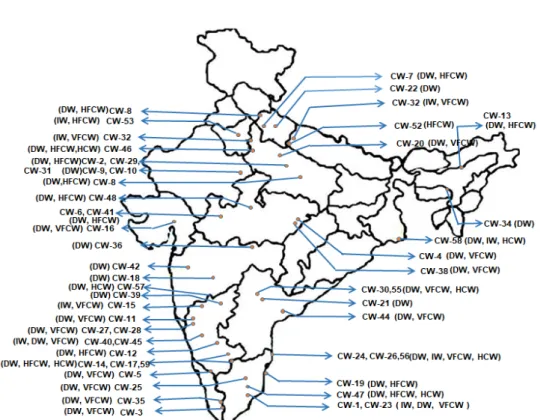
Based on reviewed kinds of literature the state-wise distribution of CWs as shown in Fig. 3, and it has been studied that Andhra Pradesh has more number of CWs followed by Madhya Pradesh, Uttar Pradesh, Orissa, and Gujarath as 3/4th of its total area under aquatic vegetation and 2.6 mha are man-made wetlands in which 70% are under paddy cultivation.
The ecosystem of the CW provides various benefits such as a source of nutrition, hydration, and safe water for human beings, The north side of India experiences a subtropical humid climate according to this study the most dominant wetlands are SSFCW (sub-surface flow constructed wetlands), but in the case of the south side of India experiences hot and semiarid climate the dominant wetland is a free surface flow constructed wetland.
According to literature survey, 55 CWs were identified
and used for this study in which 69% (38 out of 55 ) of wetlands were constructed as pilot scale, 27% (15 out of 55) were built as field scale and the rest of wetlands were undefined. In the map, 59 CWs were shown, in that some of the studies used two types of treatment systems and included the map.
The pilot-scale wetlands were mainly constructed on campus, where domestic wastewater (43%) and industrial wastewater (12%) are treated. The treatment of sewage involves removing nutrients with the help of macrophytes, which are of the most ecological and economic importance. Plants act as biofilters in wastewater treatment technology wetland plants play a role of a supplement of oxygen from leaf to root zone, utilization of organic matter and nutrient for their growth, providing roots surface area for microbial growth and release of organic carbon for microbes (Vymazal et al., 2011). As demonstrated in Fig. 4, it was found that most of the plant species used in CWs in India were Canna indica, Typha latifolia, and Phragmites australis comprising 65% of all the plant species.
As per reviewed papers, the most regularly used emergent vegetation in constructed wetlands includes phragmites Australis (19%), Typha angustifolia (12%), canna Indica (24%) are therefore having high nutrient removal and have high aboveground biomass for winter insulation in cold and temperate regions (Čížková-Končalová et al., 1996; Květ et al., 1999). The HFCW treated using macrophytes li phragmites Australis showed an overall removal efficiency of 95% for COD, 93% for BOD, 96% for TOC, 93% for TN, 92% for TSS, 91% for TP.
Fig. 2. The annual number of publications related to the CWs in India is indexed in Scopus.
Fig. 4. The distribution of plant species applied to CWs in India.
3.3 Influent and Effluent Characteristics of Wastewater Wastewater before treatment needs to be characterized to know the influent composition for successful design and operation of sewage. However, the influence of wastewater released on receiving waters can be estimated by its oxygen demand (Alramahi et al., 2018). As shown in Fig. 5, based
on collected data from published literature, industrial wastewater contained the highest average COD and BOD, amounting to 3,514 mg/L and 1,471.4 mg/L organic matter in the industrial wastewater (Jozwiakowski et al., 2013). In terms of TN and TP, the lowest concentration was found in domestic sewage, with an average of 48.8 mg/L and 7.94 mg/L as it decreases over time and seems to be high when the plants are young, the root length density is low per unit of substrate volume, and substrate adsorption is highly active (Goncalves et al., 2021).
The highest concentration in BOD and COD is in industrial wastewater, discharged from the distillery is an unwanted dark brown to black complex wastewater industries utilizing sugarcane molasses as raw materials for alcohol production having the highest influent of BOD (9,800 mg/L) and COD (18,700 mg/L) (Chandra et al., 2012). The distribution of industrial effluent consists of constituents like inorganic, biodegradable, non-biodegradable organic matter, high heavy metals.
In Akanksha et al.(2020) report two HFCW systems were used to treat domestic wastewater, influent having BOD (208 mg/L),
Fig. 3. The site distribution of constructed wetlands (CWs) in India. (where: Constructed wetland number-1 (CW-1)), HFCW:
Horizontal flow constructed wetland, VFCW: Vertical flow constructed wetland, HCW: Hybrid constructed wetland, DW: Domestic wastewater, IW: Industrial wastewater. (Ref. CW: 1. Arivoli et al., 2015; 2. Choudary et al., 2013; 3. Jaya et al., 2012; 4. Barya et al., 2020; 5. Prashant et al., 2013; 6. Rai et al., 2015; 7. Rampuri et al., 2020; 8. Chavan et al., 2020; 9. Shashibhushana et al., 2020;
10. Benny et al., 2020; 11. Jamwal et al., 2021; 12. Rana et al., 2014; 13. Kumar et al., 2017; 14. Baskar et al., 2014; 15. Kulshrestha et al., 2019; 16. Srinivastav et al., 2011; 17. Minakshi et al., 2019; 18. Shrinithivihahshini et al., 2016; 19. Jayabalan et al., 2020; 20.
Talekar et al., 2018; 21. Upadhyay et al., 2017; 22. Tilak et al., 2017; 23. Alvarez et al., 2017; 24. Asheesh et al., 2012; 25. Haritash et al., 2017; 26. Gupta et al., 2018; 27. Tahseen et al., 2016; 28. Khan et al., 2020; 29. Baryaa et al., 2020; 30. Rajimol et al., 2016;
31. Nongmaithem et al., 2017; 32. Billori et al., 2013; 33. Sharma et al, 2014; 34. Ojoawa et al., 2015; 35. Ramprasad et al., 2017;
36. Rani et al., 2011; 37. Singh et al., 2010; 38. Sutar et al., 2019; 39. Singh et al., 2015; 40. Chaturvedi et al., 2008; 41. Sudarshan
et al., 2018; 42. Koli et at., 2020; 43. Ramprasad et al., 2016, 2017; 44. Rana et al., 2011).
K. S. Farheen・N. J. Reyes・L. H. Kim 247
Fig. 5. Exhibits the concentrations at inflow (in) and outflow (out) in domestic and industrial wastewater.
COD (466 mg/L), TN (76.37mg/L), wetland received influent with varying features; nevertheless, the abundance of nitrogen species was more or less comparable, but there was a substantial variation in organics content, which might be attributed to the intensity of produced sewage Because of the use of floor cleaning chemicals that reduced biological processes but exerted COD effects, this difference was more evident in COD values than in BOD values.
3.4 Removal Efficiency of Constructed Wetlands Studies have found that the CWs obtain high removal efficiency at high temperatures rather than at low temperatures (Dondi et al., 2017). Both ecological factors such as temperature, pH, and DO, as well as operational parameters such as carbon availability, Hydraulic loading rate(HLR), Hydraulic Retention Time(HRT), pollutant loads, recirculation, carbon to nitrogen C/N ratios, plant harvesting techniques, the addition of extra organic matter, and bioaugmentation of specific microorganisms, are critical to achieving long-term contaminant removal efficiency.
In the pollutant removal mechanism, the removal of the organic element in CWs are divided into three categories, they are physical treatment (it involves sedimentation, filtration, volatilization), chemical treatment (oxidation, reduction, adsorption, and precipitation), and biological treatment (involving nitrification, denitrification, biodegradation, phytodegradation, phytovolatilization) by microorganisms under aerobic and anaerobic conditions. In other words, flowing particles take away organic pollutants, particles settled in wetlands are decomposed by microorganisms (Reza et al., 2020).
As exhibited in Fig. 6, In comparison with domestic and Industrial wastewater treatment Horizontal Flow CWs showed excellent results at BOD(85%), COD(82%), Vertical Flow CWs having overall contaminant removals of domestic, industrial, is TP(95%), TSS(84%), whereas removal efficiency in Hybrid CWs showed removal of BOD(98%), COD(93%), TN(83%).
Ramprasad et al., (2018) studied using the HFCW system and
Fig. 6. The removal efficiency of different constructed wetland types for domestic and industrial wastewater.
VFCW showed an overall removal efficiency of (95%) for COD, (93%) for BOD, (93%) for TN, (91%) for TSS, (91%) for TP, and whereas the removal efficiency of the VFCW system was found to be (97%) for COD, (94%) for BOD, (95%) for TN, (93%) for TSS, (92%) for TP.
The report of Shashibhuvana et al. (2020) showed HFCW system is used with a hydraulic retention time of 3 days and the removal efficiency of the pollutants is BOD (90%), COD (82%). As a result, it is inferred that anaerobic degradation is one of the major barriers for the elimination of organic matter, as indicated by BOD and COD.
4. Conclusion
In the removal of fertilizers and other contaminants from wastewater streams, CW can be built as biofilters to replicate the features of natural wetlands. The goal of this study was to describe current trends and status of built wetlands in developing nations such as India. The country has been facing a water crisis, treatment of wastewater is still an evolving concept in India, so the management of wastewater is an important issue. Also, India is a highly urbanized country that must have many acceptable and functioning treatment technologies for wastewater treatment and reuse. To succeed in sustainable reuse of treated wastewater, it is necessary to develop and explore funding and revenue options through various technical infrastructure, business models and restore water users This study found that vertical flow constructed wetlands are more effective at removing TSS and BOD as compared to horizontal flow constructed wetlands, and hybrid constructed wetlands.
HCWs were found to be capable of efficiently removing COD and TN. Meanwhile, HFCW showed the highest TP of pollutant removal among all the other types of wetlands. Lastly, there is a need for future research to develop techniques to improve treatment efficiencies, which could be accomplished through microbial augmentation, artificial aeration, a variety of supporting media, and the addition of additional carbon, tidal
action, step feeding, baffled flow, and mixed systems. The use of constructed wetlands as advanced wastewater treatment facilities in India yielded better water quality. The treatment of wastewater using constructed wetlands also enabled further reuse of wastewater for irrigation and other agricultural purposes. Both ecological and operational factors, such as carbon availability, hydraulic loading rate (HLR), hydraulic retention time (HRT), pollutant loads, recirculation, C/N ratios, plant harvesting techniques, the addition of extra organic matter, and bioaugmentation of specific microorganisms, are critical for achieving long-term contaminant removal efficacy. Overall, this study can be beneficial in evaluating and promoting the use of constructed wetlands in India.
References
Álvarez, J. A., Ávila, C., Otter, P., Kilian, R., Istenič, D., Rolletschek, M., and Arias, C. A. (2017). Constructed wetlands and solar-driven disinfection technologies for sustainable wastewater treatment and reclamation in rural India: SWINGS project,
Water Science and Technology
, pp. 76(6). [https://doi.org/10.2166/wst.2017.329].Alramahi, M., Beszédes, S., and Keszthelyi, S. G., (2018).
Biodegradability and Characterization of Industrial Wastewater in Hungary.2nd
Int. Conference on Biosystems and Food Engineering,
Budapest.Anand, N., and Bhandary, R, (2017). Assessment of Secondary Treatment Efficiency of Dairy Wastewater using Pilot Constructed Wetland with Lemongrass (Cymbopogan flexuosus),
J. of Energy Research and Environmental Technology
, pp. 209-214.Arivoli, A., R. Mohanraj, and R. Seenivasan. (2015).
Application of vertical flow constructed wetland in treatment of heavy metals from pulp and paper industry wastewater.
Environmental Science and Pollution Research
. [https://doi.org/10.1007/s11356-015-4594-4].Bakhshoodeh,R., Alavi,N., Oldham, C. Rafael M. Santos, Ali Akbar Babaei, Jan Vymazal, and Pooya Paydary, (2020).
Constructed wetlands for landfill leachate treatment: A review,
Ecological Engineering
. [https://doi.org/10.1016/j.ecoleng.2020.105725].
Barya, M. P., Gupta, D., Thakur, T. K., Shukla, R., Singh, G., and Mishra, V. K. (2020). Phytoremediation performance of Acorus calamus and Canna indica for the treatment of primary treated domestic sewage through vertical subsurface flow constructed wetlands: a field-scale study.
Water Practice and Technology
, pp. 528-539.[https://doi.org/10.2166/wpt.2020.042].
Barya, Mahesh Prasad, (2020). Phytoremediation performance of Acorus calamus and Canna indica for the treatment
of primary treated domestic sewage through vertical subsurface flow constructed wetlands: a field-scale study.
Water Practice and Technology,
pp.528-539. [https://doi.org/10.2166/wpt.2020.042].
Baskar, G., and Thattai, D. V., (2014). Effect of vegetation and retention time on wastewater treatment in pilot scale constructed wetlands in a tropical campus.
BIOINFO Environment and Pollution
.Bassi, Kumar,D.N., Sharma,A.M., Saradhi,P., (2014). Status of wetlands in India: A review of extent, ecosystem benefits, threats and management strategies,
J. of Hydrology:
Regional Studies
, pp. 1-19. [https://doi.org/10.1016/j.ejrh.2014.07.001].
Benny, C., and Chakraborty, S. (2020). Continuous removals of phenol, organics, thiocyanate and nitrogen in horizontal subsurface flow constructed wetland.
J. of Water Process Engineering
,pp. 33. [https://doi.org/10.1016/j.jwpe.2019.101099].
Billore, S. K., (2013) Treatment of wastewater and restoration of aquatic systems through an eco-technology based constructed treatment wetlands–a successful experience in Central India.
Water science and technology
. [https://doi.org/10.2166/wst.2013.401].
Central Pollution Control Board (CPCB) of India, 2015.
[https://thewire.in/urban/70-of-urban-indias-sewage- is-untreated.
Central Water Commission, Department of water resources, River Development and Ganga Rejuvenation, 2021.
[http://www.cwc.gov.in/water-resource-estimation].
Chaturvedi, S., Chandra, R., and Rai, V. (2007). Multiple antibiotic resistance patterns of rhizospheric bacteria isolated from Phragmites australis growing in constructed wetland for distillergy effluent treatment.
J. of Environmental Biology
, pp. 29(1).Chandra,R., Bharagava,RN., Kapley,A.,Hemant,J.P. (2012).
Characterization of Phragmites cummunis rhizosphere bacterial communities and metabolic products during the two-stage sequential treatment of post methanated distillery effluent by bacteria and wetland plants,
Bioresource Technology
, pp. 78-86. [https://doi.org/10.1016/j.biortech.2011.09.132].
Cheema, P., Jain, K., and Mani, A. (2014). Constructed Wetlands-a Natural Solution for Wastewater Menace.
Energy Technology and Ecological Concerns: A Contemporary Approach
,Choudhary, A.K., Kumar, S., and Sharma,C.,(2013) Removal of chlorophenolics from pulp and paper mill wastewater through constructed wetland."
Water environment research
, pp. 54-62. [https://doi.org/10.2175/106143012 X13415215907419].Chavan, R., and Mutnuri, S. (2020). Domestic wastewater
K. S. Farheen・N. J. Reyes・L. H. Kim 249
treatment by constructed wetland and microalgal treatment system for the production of value-added products.
Environmental technology
. pp. 1-14. [https://doi.org/10.1080/09593330.2020.1726471].
Dhanya, G., and D. S. Jaya. (2013). Pollutant removal in wastewater by Vetiver grass in constructed wetland system.
Int. J. of Engineering Research and Technology
(IJERT).Dimitrova, A., Bora, J.K., (2020) Monsoon weather and early childhood health in India.
PLoS ONE
. pp. 15(4).[https://doi.org/10.1371/journal.pone.0231479].
Donde,O.O., Xiao,B. (2017). Understanding wastewater treatment mechanisms: a review on detection, removal, and purification efficiencies of faecal bacteria indicators across constructed wetlands.
Environmental Reviews
, pp.25(4). [https://doi.org/10.1139/er-2017-0017]
ENVIS Centre on Hygiene, Sanitation, Sewage Treatment Systems and Technology, (2021). [https://www.thethirdpole.
net/en/pollution/waterwaste-management-in-india/]
Gupta, A., and Nath, J. R. (2018). Kitchen greywater treatment in a constructed wetland microcosm using aquatic macrophytes.
Water quality management
, pp. 141-149.[https://doi.org/10.1007/978-981-10-5795-3_13].
Haritash, A. K., Dutta, S., and Sharma, A. (2017). Phosphate uptake and translocation in a tropical Canna-based constructed wetland.
Ecological Processes
, pp. 1-7.[https://doi.org/10.1186/s13717-017-0079-3].
Indian Metrological Department (2021). [https://www.imdtvm.
gov.in/index.php?option=com_content&task=view&id=
29&Itemid=43].
Jayakumar, K. V., and Dandigi, M. N. (2003). A cost effective environmentally friendly treatment of Municipal wastewater using constructed wetlands for developing countries.
World Water & Environmental Resources Congress,
pp. 1-11.[https://doi.org/10.1061/40685(2003)254].
Jayabalan, J. B., Amirthalingam, S., Sekar, S., Santhanam, N.
K., and Manoharan, S. (2020). Treatment of textile effluent using sub surface flow constructed wetlands. AIP Conference Proceedings. AIP Publishing LLC. [https://doi.org/
10.1063/5.0011062].
Jamwal, P., Raj, A. V., Raveendran, L., Shirin, S., Connelly, S., Yeluripati, J., and Tamburini, M. (2021). Evaluating the performance of horizontal sub-surface flow constructed wetlands: A case study from southern India.
Ecological Engineering
, pp. 162, [https://doi.org/10.1016/j.ecoleng.2021.106170].
Juwarkar, A.S., Oke,B., Juwarkar,. Patnaik, S.M., (1995).
Domestic wastewater treatment through constructed wetland in India,
Water Science and Technology
, pp.291-294. [https://doi.org/10.1016/0273-1223(95)00637-0].
Kadaverugu, R., Shingare, R. P., Raghunathan, K., Juwarkar, A. A., Thawale, P. R., and Singh, S. K. (2016). The role
of sand, marble chips and Typha latifolia in domestic wastewater treatment–a column study on constructed wetlands.
Environmental technology
, pp. 37(19). [https://doi.org/10.1080/09593330.2016.1153156].
Kataki, S., Chatterjee, S., Vairale, M. G., Dwivedi, S. K., and Gupta, D. K. (2021). Constructed wetland, an eco-technology for wastewater treatment: A review on types of wastewater treated and components of the technology (macrophyte, biolfilm and substrate).
J. of Environmental Management
, pp. 283. [https://doi.org/10.1016/j.jenvman.2021.111986].
Koli, M., and Munavalli, G. (2020). Development of field-scale composite biorack constructed wetland–startup phase.
In
E3S Web of Conferences
. [https://doi.org/10.1051/e3sconf/202017006009].
Kumar, M., and Singh, R. (2017). Performance evaluation of semi continuous vertical flow constructed wetlands (SC-VF-CWs) for municipal wastewater treatment.
Bioresource technology
, pp. 232. [https://doi.org/10.1016/j.biortech.2017.02.026].
Kulshrestha, K., and Khalil, N., (2019). Performance Assessment of the Vertical Flow Constructed Wetlands Treating Effluent from the UASB Reactor–A Demonstration in a Tropical Climatic Region.
Int.J. of Recent Technology and Engineering (IJRTE
). [https://doi.org/ 10.35940/ijrte.D2378.118419].
Minakshi, D., Sharma, P. K., Rani, A., and Malaviya, P. (2019).
Phosphorous Removal Potential of Vertical Constructed Wetlands Filled with Different Filter Materials.
J. of Graphic Era University
, pp. 53-63.Naveen,B.P., Mahapatra, D., Sitharam,T.G., Sivapullaiah, P.V., and Ramachandra,T.V., (2017). Physico-chemical and biological characterization of urban municipal landfill leachate,
Environmental Pollution
, pp. 1-12. [https://doi.org/10.1016/j.envpol.2016.09.002].
National Institution for Transforming India (NITI Aayog), Annual reports (2019-2020). Curtis, V. (2019). Explaining the outcomes of the Clean India campaign, institutional behaviour and sanitation transformation in India.
BMJ global health
, pp. 4(5). [https://doi.org/10.1136/bmjgh- 2019-001892].Ojoawo, S. O., Udayakumar, G., and Naik, P. (2015).
Phytoremediation of phosphorus and nitrogen with Canna x generalis reeds in domestic wastewater through NMAMIT constructed wetland.
Aquatic Procedia
, pp.349-356. [https://doi.org/10.1016/j.aqpro.2015.02.047].
National Institute of Hydrology. [https://ncert.nic.in/textbook/
pdf/iess102.pdf]
Rai, U. N., Upadhyay, A. K., Singh, N. K., Dwivedi, S., and Tripathi, R. D., (2015). Seasonal applicability of horizontal sub-surface flow constructed wetland for trace elements
and nutrient removal from urban wastes to conserve Ganga River water quality at Haridwar, India.
Ecological engineering
, pp. 115-122. [https://doi.org/10.1016/j.ecoleng.2015.04.039].
Ramprasad, C., and Philip, L. (2016). Surfactants and personal care products removal in pilot scale horizontal and vertical flow constructed wetlands while treating greywater.
Chemical Engineering Journal
, pp.458-468. [https://doi.org/10.1016/j.cej.2015.08.092].
Ramprasad, C., Smith, C. S., Memon, F. A., and Philip, L.
(2017). Removal of chemical and microbial contaminants from greywater using a novel constructed wetland: grow.
Ecological Engineering
, pp. 55-65. [https://doi.org/10.1016/j.ecoleng.2017.05.022].
Rampuria, A., Gupta,A.K.P., Brighu,U.(2020). Nitrogen transformation processes and mass balance in deep constructed wetlands treating sewage, exploring the anammox contribution,
Bioresource Technology
. [https://doi.org/10.1016/j.biortech.2020.123737].
Ramprasad, C., Philip,L.(2018). Greywater Treatment Using Horizontal, Vertical and Hybrid Flow Constructed Wetlands. Current Science, pp. 155-165. [https://doi.
org/10.18520/cs/v114/i01/155-165].
Rana, S., Jana, J., Bag, S. K., Roy, S. M., Biswas, J. K., Ganguly, S., and Jana, B. B. (2011). Performance of constructed wetlands in the reduction of cadmium in a sewage treatment cum fish farm at Kalyani, West Bengal, India.
Ecological Engineering
, pp. 2096-2100. [https://doi.org/10.1016/j.ecoleng.2011.08.002].
Rana V., Maiti S.K. (2020) Municipal and Industrial Wastewater Treatment Using Constructed Wetlands. In:
Shmaefsky B. (eds) Phytoremediation. Concepts and Strategies in Plant Sciences.
Phytoremediation Insitu applications
, pp. 329-339. [https://doi.org/10.1007/978-3-030-00099-8_10].
Rani, N., Maheshwari, R. C., Kumar, V., and Vijay, V. K.
(2011). Purification of pulp and paper mill effluent through Typha and Canna using constructed wetlands technology.
J. of Water Reuse and Desalination
, pp. 237-242.[https://doi.org/10.2166/wrd.2011.045].
Rajimol, R., Hebbara, M., Dasog, G., Manjunatha, M., and Kumara, P. (2016). Semi-surface horizontal flow constructed wetland treatment of domestic sewage effluent:
effect on soil properties.
The ecoscan,
pp. 513-516.Saeed, T., Miah, M. J., Khan, T., and Ove, A. (2020). Pollutant removal employing tidal flow constructed wetlands: media and feeding strategies.
Chemical Engineering Journal
, pp.382. [https://doi.org/10.1016/j.cej.2019.122874].
Senapati,S. G., Vijaya, (2014). Climate change and coastal ecosystem in India: Issues in perspectives.
Int. J.
Environmental Sciences,
pp. 530 and 543. [https://doi.org/10.6088/ijes.2014050100047].
Shrinithivihahshini, N. D., Devi, R. C., Viji, R., Mahamuni, D., and Mary, M. S. (2016). Management of Grey Water with Bio-beds Using Phytotechnology.
Integrated Waste Management in India
, pp. 191-206. [https://doi.org/10.1007/978-3-319-27228-3_18].
Shashibhuvana,H.S.(2020). In-situ biochemical procs monitoring and spatial variation of micro-environmental condition in constructed wetland.
Int. J. Environmental Engineering
, [https://doi.org/10.1504/IJEE.2020.107434].Singh, N. K., and Kazmi, A. A. (2018). Performance and cost analysis of decentralized wastewater treatment plants in Northern India: case study.
J. of Water Resources Planning and Management
, pp. 144(3). [https://doi.org/10.1061/(ASCE)WR.1943-5452.0000886].
Singh, P. K., Sharma, K. P., Sharma, S., Swami, R. C., and Sharma, S. (2010). Polishing of biomethanated spent wash (primary treated) in constructed wetland: A bench scale study.
Indian. Journal of Biotechnology
, pp. 313-318.Singh, R. P., Fu, D., Huang, J., and Fu, D. (2015). Pollutant removal efficiency of mesocosm HSSF-constructed wetlands treating highway runoff with different filter materials and HRT
. Desalination and Water Treatment
, pp. 103-112. [https://doi.org/10.2166/wst.2014.413].Soundaryanayaki,K., Gandhimathi,R. (2020). Enhancing the nitrogen removal of vertical flow constructed wetland by using organic media.
Desalination and Water Treatment
, pp. 125-140. [https://doi.org/10.5004/dwt.2020.24927].Sudarsan, J. S., Annadurai, R., Mukhopadhyay, M., Chakraborty, P., and Nithiyanantham, S. (2018). Domestic wastewater treatment using constructed wetland: an efficient and alternative way.
Sustainable Water Resources Management
, pp. 4(4). [https://doi.org/10.1007/s40899- 017-0164-x].Sutar, R. S., Kumar, D., Kamble, K. A., Kumar, D., Parikh, Y., and Asolekar, S. R. (2019). Significance of constructed wetlands for enhancing reuse of treated sewages in rural India.
Waste Management and Resource Efficiency
, pp.1221-1229. [https://doi.org/10.1007/978-981-10-7290- 1_101].
Talekar, G. V., Sharma, P., Yadav, A., Clauwaert, P., Rabaey, K., and Mutnuri, S. (2018). Sanitation of blackwater via sequential wetland and electrochemical treatment.
NPJ Clean Water
, pp. 1-9. [https://doi.org/10.1038/s41545- 018-0014-x].Tilak, A. S., Wani, S. P., Datta, A., Patil, M. D., Kaushal, M., and Reddy, K. R. (2017). Evaluation of Ageratum conyzoides in field scale constructed wetlands (CWs) for domestic wastewater treatment.
Water Science and Technology
, pp. 75(10). [https://doi.org/10.2166/wst.2017.119].
K. S. Farheen・N. J. Reyes・L. H. Kim 251
Upadhyay, A. K., Singh, N. K., Bankoti, N. S., and Rai, U.
N. (2017). Designing and construction of simulated constructed wetland for treatment of sewage containing metals.
Environmental technology
, pp. 38(21). [https://doi.org/10.1080/09593330.2016.1273396].
Vymazal, J. (2011) Plants used in constructed wetlands with horizontal subsurface flow: a review.
Hydrobiologia
, pp.133–156. [https://doi.org/10.1007/s10750-011-0738-9].
Haritash, A. K., Dutta, S., and Sharma, A. (2017). Phosphate
uptake and translocation in a tropical Canna-based constructed wetland.
Ecological Processes
, pp. 1-7.[https://doi.org/10.1186/s13717-017-0079-3].
Yadav, A. K., Dash, P., Mohanty, A., Abbassi, R., and Mishra, B. K. (2012). Performance assessment of innovative constructed wetland-microbial fuel cell for electricity production and dye removal.
Ecological Engineering
, pp.126-131. [https://doi.org/10.1016/j.ecoleng.2012.06.029].