Introduction
Clustering of asthmatics in families indicates that a genetic component is certainly operating. In a twin study with 7,000 same-sex born between the late 18th and the early 19th, the
concordance rate for self-reported asthma in a monozygotic twin was 4 times higher than that in dizygotic twins (19% vs.
4.5%)
1. The heritability of asthma has been estimated up to 60% and thought to be determined by genetic factors such as nucleotide variants. Thus, the identification of single nucleo- tide polymorphisms (SNPs) associated with asthma and its traits has been tried for the past three decades. As the result, more than 100 loci have been found to be linked to asthma.
Recently, genome-wide SNP association studies (GWASs) have confirmed that the SNPs on the genes involving antigen presentation (HLA-DR/DQ), inflammation (ORMDL3-GSD- MB), and TH1/TH2 processes (IL33, IL1RL1-IL18R1, RAD50- IL13, and TSLP-WDR36) are strongly associated with asthma and its subphenotypes. However, odd ratios (ORs) of these SNPs range from 0.5 to 2.0
2. Attributable fractions of these SNPs to the risk of asthma were 0.269 for early-onset asthma and 0.057 for late-onset asthma. This indicates that the SNPs discovered even by the GWASs explain limited genetic effects on the risk of asthma, especially in adult asthmatics, and that their contribution to the development of asthma is smaller than expected, which was named as “missing heritability.”
Epigenetic Changes in Asthma: Role of DNA CpG Methylation
Da-Jeong Bae, Ph.D.
1, Ji Ae Jun, M.S.
1, Hun Soo Chang, Ph.D.
2, Jong Sook Park, M.D., Ph.D.
3and Choon-Sik Park, M.D., Ph.D.
31
Department of Interdisciplinary Program in Biomedical Science Major, Soonchunhyang Graduate School, Bucheon,
2
Department of Environmental Health Sciences, Soonchunhyang University, Asan,
3Division of Allergy and Respiratory Medicine, Genome Research Center, Soonchunhyang University Bucheon Hospital, Bucheon, Korea
For the past three decades, more than a thousand of genetic studies have been performed to find out the genetic variants responsible for the risk of asthma. Until now, all of the discovered single nucleotide polymorphisms have explained genetic effects less than initially expected. Thus, clarification of environmental factors has been brought up to overcome the ‘missing’ heritability. The most exciting solution is epigenesis because it intervenes at the junction between the genome and the environment. Epigenesis is an alteration of genetic expression without changes of DNA sequence caused by environmental factors such as nutrients, allergens, cigarette smoke, air pollutants, use of drugs and infectious agents during pre- and post-natal periods and even in adulthood. Three major forms of epigenesis are composed of DNA methylation, histone modifications, and specific microRNA. Recently, several studies have been published on epigenesis in asthma and allergy as a powerful tool for research of genetic heritability in asthma albeit epigenetic changes are at the starting point to obtain the data on specific phenotypes of asthma. In this presentation, we mainly review the potential role of DNA CpG methylation in the risk of asthma and its sub-phenotypes including nonsteroidal anti-inflammatory exacerbated respiratory diseases.
Keywords: Asthma; Gene; Environment; Aspirin; Epigenesis
Address for correspondence: Choon-Sik Park, M.D., Ph.D.
Division of Allergy and Respiratory Medicine, Genome Research Center, Soonchunhyang University Bucheon Hospital, 170 Jomaru-ro, Wonmi-gu, Bucheon 14584, Korea
Phone: 82-32-621-5105, Fax: 82-32-621-5023 E-mail: [email protected]
Received: Dec. 26, 2018 Revised: Apr. 19, 2019 Accepted: Aug. 30, 2019 Published online: Nov. 7, 2019
cc It is identical to the Creative Commons Attribution Non-Commercial License (http://creativecommons.org/licenses/by-nc/4.0/).
Copyright © 2020
The Korean Academy of Tuberculosis and Respiratory Diseases.
Considerations of Environmental Factors to Solve the Missing Heritability before
the Introduction of Epigenetics
One of the causative factors related to the missing heri- tability was regarded as inconsideration of environmental contributors in the well-defined specific phenotypes
3. Thus, investigation of gene-environment (GxE) interactions has been studied in candidate genes and candidate environ- mental exposures: The well-known and extensively studied candidate interactions are the interactions between the CD14 gene and environmental exposure to endotoxin (an essential component of the gram-negative bacteria walls). The T-allele (CD14/-159, rs2569190C>T) having a higher density of the membranous CD14 receptor in circulating mononuclear cells is a risk factor for allergen sensitization at high levels endo- toxin exposure whereas the C-allele having a lower density of the membranous CD14 receptor is the risk factor at low levels of exposure
4. Another example is that SNPs on GSDML, ORM- DL3, IKZF3, and ZPBP2 of chromosome 17q21 are associated
with early-onset of asthma under the influence of exposure to tobacco smoke
5.
The impact of the genetic variants on asthma may be en- hanced in occupational diseases: A GWAS study demonstrat- ed that SNPs of CTNNA3 (catenin alpha 3, alpha-T catenin) were significantly associated with the TDI-induced broncho- spasm (OR, 5.84 for rs10762058)
6. A drug-induced reaction such as nonsteroidal anti-inflammatory exacerbated respira- tory disease (NERD) is also a good example of GxE interac- tion. In the cysteinyl leukotriene pathway, LTC4S, ALOX5, CysLTR1 , and CysLTR2 have NERD-associated SNPs, of which OR range from 1.88 up to 9.78
7. SNPs on HLA-DP1 dis- covered by GWAS also showed good OR
8. However, SNPs dis- covered so far even under the consideration of environmental factors have shown small genetic effects on asthma and sub- phenotypes. Furthermore, the combined available data of GWAS and exonic SNPs indicate that the risk of asthma and its sub-phenotypes are mainly associated with the non-coding variants, which locate on “junk DNA of old concept.”
Human genome is composed of 3,000 million base pairs of DNA (3,000 Mb) including both protein-noncoding DNA in which contains about 20,000 functioning genes constituting only 1.5% of the total genome
9. Recently, the international En- cyclopedia of DNA Elements project discovered that the non- coding DNA has functional roles in regulating and promoting gene expression and is involved in the epigenetic activity and complex networks of genetic interactions
10. Very recently, a multi-ancestry association study of Trans-National Asthma Genetic Consortium including 142,000 asthmatic and non- asthmatic subjects demonstrated 878 SNPs having genome- wide significance at 18 loci
11, which are preferentially located near epigenetic markers characterizing gene enhancers in im- mune cells. Thus, the investigation of epigenetic marks in im- mune cells and airway epithelial cells has provided additional insight into the hereditary of asthma.
Definition and Mechanisms of Epigenetics
The prevalence of asthma worldwide has been increased for the past three decades, during which changes in genetic variants rarely occurred. Thus, exposal to changing expo- somes (a large set of several environmental exposures: Diet, toxins, hormones impact and so on) has induced several dif- ferent phenotypes of asthma
12. In 1958, Nanney borrowed the term describing the inherited phenomena that could not be explained by conventional genetics, and then epigenetics was concisely defined in 2007 with the following three criteria:
(1) a change in the activity of a gene that does not involve a mutation, (2) initiated by environment signals, and (3) mitoti- cally or meiotically inherited in the absence of the change in nucleotide sequence of genomic DNA
13. The mechanisms of epigenetics include (1) DNA CpG methylation, (2) histone de- formation, and (3) non-coding RNA. In this review, DNA CpG methylation is mainly discussed.
The DNA methylation is the covalent addition of a methyl group to a cytosine residue in a CpG dinucleotide: cytosine of DNA methylation is converted to 5’ methylcytosine via a
Cytosine 5 Methyl-cytosine'
Methyl group DNMT1
DNMT3A DNMT3B
SAM
H
CHNH
C C N
O
H N
C
CHNH
C C N
O
H N
C
CH
Figure 1. The DNA methylation is the
covalent addition of a methyl group to a cytosine residue in a CpG dinucleotide.
DNMT: DNA methyltransferase; SAM: S
adenosyl methionine.
covalent bond of a methyl group (Figure 1). DNA methylation is carried out in CpG occupying 1% of DNA bases in human somatic cells. Thus the total number of CpG sites in humans is approximately 28 million
14, and 70% to 80% of the human DNA CpG bases are methylated. CpG islands are typically 300–3,000 base pairs in length and are in or near approxi- mately 40% of promoters of mammalian genes. In biochemis- try, the DNA methyltransferase family of enzymes catalyze the transfer of a methyl group to DNA. De novo methyltransferas- es ( DNMT3A and DNMT3B) newly methylate cytosines and express mainly in early embryo development. Maintenance methyltransferases ( DNMT1) add methylation to DNA when one strand of DNA is already methylated (Figure 2). Methyla- tion of CpG islands induces a series of changes up to histone deformation. As methylation increases in CpG islands by DNMT3, binding of methyl CpG binding proteins (MBP) in- creases at this site. MBP induces histone deacetylation by in- ducing histone deacetylase (HDAC) in the nucleus, increases histone methylation and chromatin becomes heterochroma- tin state, and finally gene expression is suppressed.
A large body of research has implicated specific time pe- riods when individuals seem to be more susceptible to the effects of environmental exposures and other asthma triggers.
These include prenatal development, early childhood, and adolescence. During these time periods, epigenetic modifica- tions may be more likely to develop. In adult-onset asthma, it has been uncertain when epigenetic modifications develop during a lifetime. An additional question has been whether adulthood, a period when asthma often remits, may also be a period when critical epigenetic changes can be depro- grammed.
Besides the skin, the lung is the only organ that is in direct contact with the external environment. Thus, epigenetic changes occur in buccal mucosa, nasal epithelium, and bronchial epithelium as the first step in the body. Although bronchial epithelium is the best site to reflect the epigenetic changes of asthma to inhaled environmental factors, nasal
and buccal cells have been frequently used for studies of the epigenetic changes as easily measurable surrogates for respi- ratory tract epithelium, especially in children.
CpG Methylation of the Airway Epithelium
Human skin and lung are generally considered to have the large surface area exposed to the external environment. Esti- mates of the surface areas that depend on height, weight, and other assumptions have led to widely accepted surface area values of 2 m
2for the skin, and 50 m
2for the lung
15. Thus, lung epithelial cells are mostly affected by methylation
16,17. Envi- ronmental stimuli affecting airway epithelium are categorized into outdoor and indoor factors. Outdoor stimuli that trigger or exacerbate asthma include pollens, molds, microbial and viral pathogens, environmental tobacco smoke (ETS), and ambient air pollution (AAP) such as ozone and particulate matters (PM)
12. Indoor environmental factors include aller- gens derived from dust mites, cockroaches and pets, volatile organic compounds and fine PMs especially smaller than 2.5 μM (PM
2.5). Two methods have been applied to the study of DNA CpG methylation like SNP studies: Candidate gene ap- proaches and epigenome-wide association study (EWAS).
DNA methylation using a bisulfite sequencing of candidate genes demonstrated that exhaled NO concentration is well associated with hypomethylation of arginase-nitric oxide syn- thase (ARG1 and 2) in buccal cells
18and hypomethylation of interleukin 6 (IL6) and inducible nitric oxide synthase in nasal epithelia (Table 1)
19. Methylation status is diverse depending on kinds of target cells tested in the same tissue. Hypermeth- ylated CpGs are on the promoter region (–550 to +87) of ADAM33-expressing bronchial epithelial cells, while hypo- methylated ones (–362 to +80) are on ADAM33-expressing fibroblasts of asthmatics
20. Hypermethylation on ADAM33 in bronchial epithelial cells is strongly associated with BHR, irrespective of asthma status
20. This is in contrast to ADAM33
(DNMT1)
CH3
CH3
Demethylase
CH3
CH3 CH3
CH3
De novomethyltransferase (DNMT3a, 3b and DNMT1?)
DNA replication
CH3
CH3 CH3
CH3 CH3
CH3
CH3
CH3 CH3
CH3
Maintenance
DNA methyltransferase
CH3
CH3 CH3
CH3
CH3
CH3
CH3
CH3
Figure 2. The DNA methyltransferase
family of enzymes catalyze the transfer
of a methyl group to DNA. De novo
methyltransferases (DNMT3A and DN-
MT3B) newly methylate cytosines and
express mainly in early embryo develop-
ment. Maintenance methyltransferases
(DNMT1) add methylation to DNA when
one strand of DNA is already methylated.
hypomethylation in fibroblasts, which is speculated to be in- volved in airway remodeling
21. A candidate CpG methylation approach
22, used buccal mucosa of child asthmatics on 1,505 CpG loci across 807 genes and identified a small number of DNA methylation signatures (8 sites in atopics and 6 CpGs unique to asthmatics); hypomethylation of cytokeratin 5 (KRT5), and hypermethylation of signal transducer and acti- vator of transcription 5A ( STAT5A) and cysteine-rich protein 1 ( CRIP1). STAT5A transcription factor (TF) is activated by various pro-Th2 cytokines such as IL2, IL7, or TSLP. CRIP1 plays a role in cell motility, adhesion, and structure through interaction with the cytoskeletal protein actin. The promoters of STAT5A and CRIP1 are hypermethylated in the epithelium of asthmatic children, resulting in decreased expression of STAT5A.
Recently, EWAS has been launched to search for changes of global CpG methylations and results of early studies are listed in Table 2
22-24.
Using a chip containing 27,578 CpG loci covering more than 14,000 human RefSeq genes
23, we have demonstrated a dif- ferential methylation of CpG sites in bronchial mucosa in Der- matophagoides species–specific IgE positive atopic compared
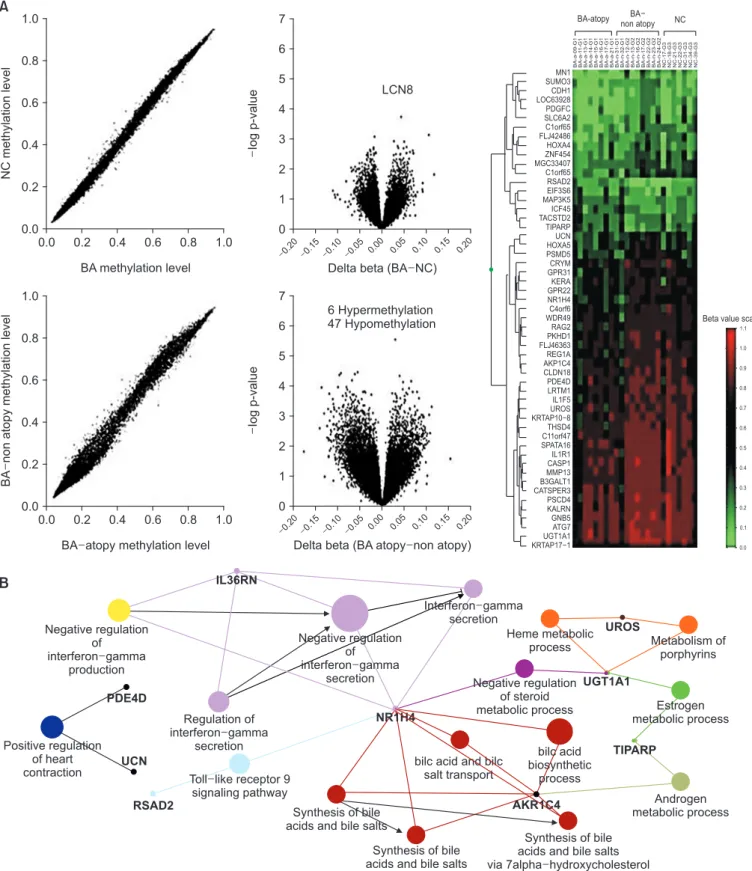
to those of non-atopic asthmatics (hypermethylated 6 loci in 6 genes and hypomethylated 49 loci in 48 genes) (Figure 3A).
Of the 54 differentially methylated genes (DMG) (Figure 3B),
interleukin 36 receptor antagonist (IL36RN, IL1F5) and nu- clear receptor subfamily 1, group H, member 4 (NR1H4) are related with interferon γ (IFN-γ) pathway which is involved in IgE regulation and anti-viral activity. IL-36 indirectly induces IFN-γ secretion by T cell, and Th1 polarization
25. NR1H4 known as bile acid receptor (BAR) is expressed at high levels in the liver and intestine. Chenodeoxycholic acid and other bile acids are natural ligands for BAR, which is translocated to the cell nucleus to bind to hormone response elements on DNA. Interestingly, BAR regulates the expression and activity of epithelial transport proteins involved in fluid homeostasis, such as cystic fibrosis transmembrane conduction regulator (CFTR)
26. It is unknown why this gene dominantly expressed by the cholangial ducts is methylated in bronchial epithelium.
Since they are hypomethylated in atopy compared to non- atopy, they may be elevated in gene expression, and nega- tively regulate IFN-γ pathway leading to suppression of atopic manifestation.
In addition to these genes, the atopics had hypomethylated caspase 1, which activates IL18, an IL-1–like cytokine to in- crease IgE production in CD4
+T cells. IL-18 and T-cell recep- tor–mediated stimulation could induce naïve CD4
+T cells to develop into IL-4–producing cells in vitro. IL1R1 is a receptor for IL1A, IL1B, and IL1RN which mediates interleukin-1-de- pendent activation of nuclear factor κB and mitogen-activated Table 1. List of asthma-associated DNA methylations on candidate genes
Cell source Phenotype Subject Gene Status Reference
Buccal cells Exhaled NO Childhood asthma ARG1, ARG2 Hypermethylation Breton et al.
18Nasal epithelium Exhaled NO Childhood asthma IL6, iNOS Hypomethylation Breton et al.
18Bronchial fibroblasts Remodeling Asthma ADAM33 Hypomethylated Baccarelli et al.
19Bronchial epithelium BHR Asthma ADAM33 Hypermethylation Baccarelli et al.
19NO: nitric oxide; ARG1 and 2: arginase-nitric oxide synthase 1 and 2; IL6: interleukin 6; iNOS: inducible nitric oxide synthase; ADAM33:
ADAM metallopeptidase domain 33; BHR: bronchial hyperreactivity.
Table 2. List of asthma-associated DNA methylations on EWAS
Cell source Size of contents Phenotype Subject Gene Status Reference
Bronchial epithelium
1,505 CpGs (807 genes)
Asthma Childhood asthma KRT5, CRIP1 Hypomethylation Stefanowicz et al.
22Bronchial
epithelium
1,505 CpGs (807 genes)
Asthma Childhood asthma STAT5A Hypermethylation Stefanowicz et al.
22Bronchial mucosa 27,578 CpGs
(15,000 genes)
Atopy Adult asthma 49 Loci in 48 genes* Hypomethylation Kim et al.
23Bronchial mucosa 27,578 CpGs (15,000 genes)
Atopy Adult asthma 6 Loci in 6 genes* Hypermethylation Kim et al.
23Buccal cells 1,505 CpGs (807 genes)
Smoking effect
†Children AluYb8 and LINE1 Hypomethylation Breton et al.
24*Names of the genes and listed in Figure 3.
†Prenatal cigarette smoke exposure.
EWAS: epigenome-wide association study; KRT5: keratin 5; CRIP1: cysteine rich protein 1; STAT5A: signal transducer and activator of tran-
scription 5A; AluYb8: a short interspersed nucleotide element; LINE1: long interspersed nucleotide element.
0.0 1.0
0.8
0.6
0.4
0.2
1.0
NCmethylationlevel
BA methylation level 0.0
0.2 0.4 0.6 0.8
1.0 0.0
1.0
0.8
0.6
0.4
0.2
BAnonatopymethylationlevel
BA atopy methylation level 0.0
0.2 0.4 0.6 0.8
7 6 5 4 3
2 1
Iogp-value
Delta beta (BA atopy non atopy) 0
6 Hypermethylation 47 Hypomethylation 7
6 5
4 3 2 1
Iogp-value
Delta beta (BA NC) 0
BA-a-09-G1BA-a-11-G1BA-a-13-G1BA-a-14-G1 BA-a-15-G1BA-a-16-G1BA-a-17-G1 BA-a-21-G1BA-n-31-G1BA-n-32-G1BA-n-12-G2 BA-n-13-G2BA-n-16-G2BA-n-17-G2BA-n-22-G2 BA-n-23-G2BA-n-24-G2NC-17-G3NC-18-G3 NC-21-G3NC-22-G3NC-31-G3NC-34-G3 NC-39-G3
BA-atopy BA non atopy- NC
Beta value scale MN1
SUMO3 CDH1 LOC63928 PDGFC SLC6A2 C1orf65 FLJ42486 HOXA4 ZNF454 MGC33407 C1orf65 RSAD2 EIF3S6 MAP3K5 ICF45 TACSTD2 TIPARP UCN HOXA5 PSMD5 CRYM GPR31 KERA GPR22 NR1H4 C4orf6 WDR49 RAG2 PKHD1 FLJ46363 REG1A AKP1C4 CLDN18 PDE4D LRTM1 IL1F5 UROS KRTAP10 8 THSD4 C11orf47 SPATA16 IL1R1 CASP1 MMP13 B3GALT1 CATSPER3 PSCD4 KALRN GNB5 ATG7 UGT1A1 KRTAP17 1 -
-
1.1
1.0
0.9
0.8
0.7
0.6
0.5
0.4
0.3
0.2
0.1
0.0
0.20 0.15 0.10 0.05 0.00 0.05 0.10 0.15 0.20
LCN8
A
B
IL36RNNegative regulation of interferon gamma
production
Positive regulation of heart contraction
PDE4D
UCN
RSAD2
Toll like receptor 9 signaling pathway Regulation of interferon gamma
secretion
Negative regulation of interferon gamma
secretion
Interferon gamma secretion
Heme metabolic UROS
process Metabolism of
porphyrins UGT1A1
Negative regulation of steroid
metabolic process Estrogen
metabolic process
TIPARP
Androgen metabolic process NR1H4
AKR1C4 bilc acid and bilc
salt transport
bilc acid biosynthetic
process
Synthesis of bile acids and bile salts
Synthesis of bile acids and bile salts via 27 hydroxycholesterol
Synthesis of bile acids and bile salts via 7alpha hydroxycholesterol
0.20 0.15 0.10 0.05 0.00 0.05 0.10 0.15 0.20
Figure 3. Differential methylation of CpG sites in bronchial mucosa between Dermatophilosis’s species-specific IgE positive atopic and non-
atopic asthmatics (A), a network analysis of 54 differentially methylated genes (B). BA: bronchial asthma; NC: normal control.
protein kinase which are main mediators. Furthermore, IL1β mediates co-stimulation of IFN-γ production from Th1 cells
27. Thus, hypomethylated CASP1 and IL1R1 are expected to ele- vate their gene levels with alteration of Th1 regulation. In addi- tion, radical SAM domain-containing 2 ( RSAD2), also known as virus inhibitory protein (Viperin) is hypermethylated in atopic compared to non-atopic asthma. This protein plays a major role in the antiviral state induced by type I and type II interferon function via the regulation of the Toll-like receptor (TLR) 7 and TLR9-IRAK1 signaling axis in plasma dendritic cells. Thus, the decrease of RSAD2 gene may be a relation of respiratory viral infection-susceptibility in atopics.
CpG Methylation of the Immune Cells
Despite of the limitation that cells are present in different proportions among cases and control subjects, many meth- ylation studies have relied on DNA isolated from unfraction- ated peripheralblood leukocytes (PBL) due to easy access and availability. Moreover, methods have been recently developed to infer the proportion of immune cell populations in PBL from the DNA methylation data. In addition, asthma has ma- jor immunologic components of pathogenesis and epigenetic mechanisms specifically affect the expression of TFs involved in the development of Th1, Th2, Th17, and regulatory T cell (Treg) cells. Thus, DNA methylation profiles of PBL have been very useful to identify the epigenetic change of immune status.
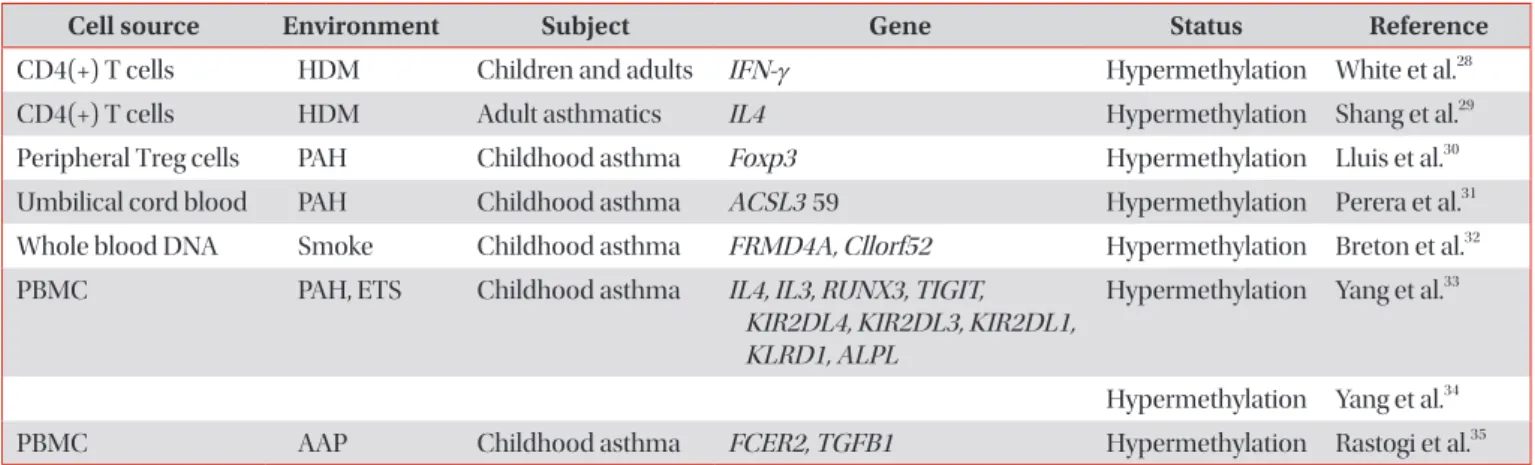
Results of early studies CpG methylation changes of immune cells are summarized in Table 3
28-35.
Asthmatics, especially atopics, have hypomethylation of IL-4 promoter and hypermethylation of IFN-γ promoter of T cells. In vitro differentiation of CD4
+T cells down the Th1 pathway is accompanied by progressive demethylation of
CpG sites in the IFN-γ promoter, which is mostly marked in the neonate
28. House dust mites increase unmethylation of CpG in the IL-4 gene on CD4
+T cells with concomitantly increased gene levels
36. AAP also initiate the transformation of Th1 to Th2 cells
37, leading to increase of the pro-atopic cas- cade of Th2 cytokines (IL-4 and IL-13) in the bronchoalveolar lavage, sputum, and blood of patients with asthma. Regulatory T cell numbers are reduced in the lung and peripheral blood of subjects with asthma. Forkhead box transcription factor 3 (Foxp3) is important in Treg-cell development and function.
Increased exposure to AAP leads to hypermethylation of the Foxp3 locus
38.
Recently, EWAS has revealed new differentially methylated CpG (DMC): Asthmatics living in the inner city had 55 DMCs, some of which are involved in T-lymphocyte biologies such as runt-related transcription factor 3 (RUNX3) as well as IL4 and IL13. RUNX3 is a TF to regulate CD4/CD8 T-lymphocyte development by interacting with T-box and silencing IL-4 expression. In addition, other genes involved in the matura- tion and function of T lymphocytes (TIGIT) and nautral killer cells (KIR2DL4, KIR2DL3, KIR3DL1, and KLRD1) are also differently methylated. Highly striking DMCs are located on biologically noble genes: alkaline phosphatase, tissue- nonspecific isozyme (ALPL), which modulates host-bacterial interactions by dephosphorylating lipopolysaccharide and Kruppel-like factor 6 (KLF6), which activates iNO2 synthase 1 and transforming growth factor β during influenza A virus and respiratory syncytial virus infection. Also, ALPL discrimi- nates eosinophilic asthma from other inflammatory pheno- types
39. Additional DMCs in the promoter have been found on candidate genes including arachidonate 12-lipoxygenase (ALOX12), CCL5, IL2RA, TBX21, and FCER2
40. Taken togeth- er, these data indicate that many of asthma-related genes may be differentially expressed by changes of CpG methylation as
Table 3. List of asthma-associated DNA methylations of peripheral, umbilical cord blood, and bronchoalveolar lavage cells
Cell source Environment Subject Gene Status Reference
CD4(+) T cells HDM Children and adults IFN-γ Hypermethylation White et al.
28CD4(+) T cells HDM Adult asthmatics IL4 Hypermethylation Shang et al.
29Peripheral Treg cells PAH Childhood asthma Foxp3 Hypermethylation Lluis et al.
30Umbilical cord blood PAH Childhood asthma ACSL3 59 Hypermethylation Perera et al.
31Whole blood DNA Smoke Childhood asthma FRMD4A, Cllorf52 Hypermethylation Breton et al.
32PBMC PAH, ETS Childhood asthma IL4, IL3, RUNX3, TIGIT,
KIR2DL4, KIR2DL3, KIR2DL1, KLRD1, ALPL
Hypermethylation Yang et al.
33Hypermethylation Yang et al.
34PBMC AAP Childhood asthma FCER2, TGFB1 Hypermethylation Rastogi et al.
35HDM: house dust mites; IFN-γ: interferon γ; IL4: interleukin 4; Treg: regulatory T cell; PAH: polyaromatic hydrocarbon; ACSL3: acyl-CoA syn-
thetase long chain family member 3; FRMD4A: FERM domain containing 4A; PBMC: peripheral blood mononuclear cell; ETS: environmental
tobacco smoke; RUNX3: runt-related transcription factor 3; TIGIT: T-cell immunoreceptor with Ig and ITIM domains; KIR: killer cell immuno-
globulin-like receptor; AAP: ambient air pollution.
well as genetic variants.
Smoke and Air Pollutants-Related CpG Methylation and Its Mechanism
Among the atmospheric environmental factors, smoking is the most important risk factor of asthma. Birth cohort stud- ies have demonstrated childhood asthma incidence to be higher in mothers who smoked during pregnancy
41. Cigarette smoke modulates gene expression through DNA damage and subsequent recruitment of DNMTs via several mecha- nisms: carcinogens in cigarette smoke such as polycyclic aromatic hydrocarbon (PAH) can cause double-stranded breaks damage of DNA following recruitment of DNMT1 to modulate methylation state
42. In fact, prenatal tobacco smoke is associated with lower DNA methylation for AluYb8 (short interspersed nucleotide element) repetitive elements and long interspersed nucleotide element (LINE1) in buccal cells in children, especially in those with the common GSTM1 null genotype
24, suggesting a novel interaction between DNA CpG methylation and genotypic variants.
EWAS demonstrated that cigarette smoke results in global hypomethylation: maternal smoking is associated with the placenta with some DMCs, which exhibit altered gene expres- sion patterns
43. In a study using whole blood DNA samples of age 5–12 with an available history of intrauterine exposure to smoke, 19 CpG loci of 27,578 loci were significantly associ- ated with prenatal smoke. Among them, smoke exposure was associated with the 2% increase in mean CpG methylation in FRMD4A and Cllorf52 compared to no exposure (Table 3).
The epigenetic modification of the FRMD4A plays a role in conferring an increased risk of nicotine dependence in the offspring of mothers who smoke during pregnancy
44.
AAP also has a profound epigenetic effect on not only immune cells but also airway epithelium even in the fetal period. In a longitudinal cohort of 700 children in New York City, the prevalence of asthma (25%) is among the highest in the United States. This high risk may in part be caused by transplacental exposure to traffic-related PAHs
31. Fetal tissues demonstrated epigenetic markers: methylation of the long- chain-fatty-acid—CoA ligase 3 ( ACSL3) in cases of maternal airborne PAH exposure exceeding 2.41 ng/m
3and asthma symptoms in children before age 5. Thus, methylated ACSL3 in umbilical cord cells may be a surrogate endpoint for trans- placental PAH exposure and/or a potential biomarker for en- vironmentally-related childhood asthma. In addition to ETS, low maternal intake of foods containing vitamin E and zinc or use of antibiotics during pregnancy may increase the risk for childhood asthma
45, however, in-depth discussion is omitted here because they did not directly contact with the airways.
Relation of CpG Methylation with SNPs and Transcriptome
Very recently, an EWAS was published as the first study to combine with an extensive validation and replication study of CpG sites in more than 5,000 children
46. This large consor- tium-based meta-analysis identified 14 DMC sites in whole blood in childhood asthma and the DMC continued until ado- lescence. There asthma-associated CpG sites were annotated to eosinophils and CD8
+T cells and natural killer cells. Thus, asthma-associated DNA methylation patterns identified in this study are likely to be the result of postnatal environmental influences, pathophysiological processes related to asthma, or both. Importantly, strongly reduced methylation of the CpG sites in purified eosinophils retained an association with asth- ma, highlighting that eosinophils are epigenetically altered in asthma. Furthermore, CpG site-related SNPs (cgSNPs) and relation with transcriptome were evaluated with the differ- entially CpG methylation using in silico analysis. Some SNPs influence the existence of CpG sites, where DNA modification such as methylation occurs. These SNPs can lead to gain or loss of CpG sites and are defined as cgSNPs. Mutations involv- ing loss of CpG sites were associated with reduced levels of methylation in about 20% of CpG sites using The Cancer Ge- nome Atlas (TCGA) data
47. Thus, SNPs regulating blood eo- sinophil counts significantly overlap with DMCs on the genes, such as IL5, IL33, IL1RL1, and TSLP
48.
Environmental Factor-Induced Temporal Changes of CpG Methylation
Despite the potential clinical relevance, the interpretation of
cross-sectional epigenetic studies on asthma is problematic
because it is impossible to determine whether the alteration of
methylation is a cause or a consequence. Accordingly, the tra-
jectory analysis of prenatal and early postnatal period or those
of changes after the experimental challenge of environmental
factors are good models to solve time- and environment-
dependent epigenetic changes. Very recently, a study using
buccal cells from 10-year-old monozygotic twin children
identified asthma-associated DMCs, which were mapped to
genes that cluster in immunoregulatory and proinflamma-
tory pathways (Table 4)
49-54. Among the top-ranked genes,
heparan-alpha-glucosaminide N-acetyltransferase (HGSNAT)
was consistently hypermethylated in asthma-affected twins
compared to their unaffected co-twins. Interestingly, HGSNAT
gene expression in the lysosomal pathway is down-regulated
in pediatric allergic asthma cases compared to controls. Also,
persistently discordant for asthma at age 18 is associated with
the hypomethylated homeobox protein HB24 (HLX), which
has been previously implicated in childhood asthma as a
regulator of Th
1differentiation and a suppressor of TH
2com-
mitment. In another birth cohort trajectory study of childhood asthma, neonatal immune cells in cord blood mononuclear cells harbored 589 DMCs that distinguished children who did and did not have asthma by age 9
50. Among them, SMAD3 methylation in the neonates with maternal asthma was strongly and positively associated with neonatal production of cord blood mononuclear cell-derived IL-1β, an innate inflam- matory mediator.
From a couple of years ago, longitudinal changes of epig- enome have been studied on bronchial epithelium after inhalation of allergens, air pollutants or other triggering agents. Sequential insults with allergens and diesel extracts (DE) significantly accentuate changes in CpG methylation in comparison with a single exposure: in adult subjects with birch pollen allergy, while exposure to allergen alone led to changes in seven CpG sites at 48 hours, when the same lung was exposed to allergen and DE separated by approximately 4 weeks, more than 500 DMCs were observed
51. These find- ings suggest that specific exposures can prime the lung for changes in DNA methylation induced by a subsequent insult.
Of particular note, a significant decrease in DNA methylation was found in response to allergen following prior DE exposure in eight CpGs located upstream of the promoter of the T-box transcription factor 3 (TBX3), a member of T-box family of TFs. In the other hand, a significant decrease in DNA methyla- tion in response to DE following prior allergen exposure was present in 19 CpGs associated with homeotic (Hox) genes family
51. This data indicates that the sequences of exposures to environmental factors are more critical for the gene expres- sion induced by altered CpG methylation.
AAP has been regarded as hazardous even in short-term exposure of several days. Using six-day integrated levels of air pollutants in urban children who live in New York City (age 9–14), indoor exposure to fine PM
2.5and vanadium (V) are associated with decreased lung function and altered buccal cell DNA methylation of IL4 and IFN-γ, respectively
55. A very interesting study on the epigenetic effect of exercise was per- formed in these children: exercise decreases DNA methyla- tion on the promoter of FOXP3, an indicator of greater Treg function in cases of higher black carbon (BC) exposure (>1,200 Table 4. List of methylation using trajectory analysis and experimental exposure to environmental factors
Cell source Environment Phenotype Subject DMC Methylated gene* Reference
Buccal cell Tobacco smoke and microbial and viral agents
Asthma at age 10 37 MZ twin pairs Top 10 DMC Hypermethylated HGSNAT
Murphy et al.
49Buccal cell Tobacco smoke and microbial and viral agents
Asthma at age 18 37 MZ twin pairs Top 10 DMC Hypomethylated HLX
Murphy et al.
49Cord blood cell
Maternal, paternal asthma, smoking during pregnancy
Asthma at age 9 Infant immune study 589 DMC Hypermethylated SMAD3
DeVries et al.
50Bronchial epithelium
Diesel exhaust and allergen
Acute airway injury at 48 hours
Adult asthmatics Adult asthmatics
7 DMC Hypomethylated TBX3
Clifford et al.
51Bronchial epithelium
Diesel exhaust and allergen
Repeated injury after 4 weeks
Childhood asthmatics 500 DMC Hypomethylated Hox gene
Clifford et al.
51Buccal cell PM
2.5and vanadium 6 Days’ exposure Childhood asthmatics 13 DMC Hypomethylated IL4 and
hypermethylated IFN-γ
Lovinsky-Desir et al.
52Buccal cell Black carbon Exercise Childhood asthmatics 9 DMC Hypomethylated
FOXP3 Jung et al.
53Buccal cell Black carbon 5 Days after
exposure
Childhood asthmatics 4 DMC Hypomethylated IL4, NOS2A
Jung et al.
53PBMC NO
2, CO, and PM
2.52 Years exposure Childhood asthmatics Hypomethylated Foxp3, IL10
Prunicki et al.
54*Representative genes are presented: HGSNAT (heparan alpha glucosamine N-acetyltransferase), HLX (homeobox protein HB24), SMAD3 (SMAD family member 3), TBX3 (T-Box transcription factor TBX3), Hox (homeobox), IL4 (interleukin 4), IFN-γ (interferon γ), FOXP3 (fork- head box p3), NOS2A (nitric oxide synthase 2).
MZ: monozygotic; DMC: differentially‐methylated CpG site; PM
2.5: particulate matters especially smaller than 2.5 μM; PBMC: peripheral
blood mononuclear cell.
ng/m
3) with concomitant increase of lung function, but not in lower BC exposure
52. In the same children, higher levels of BC were associated with lower methylation of IL4 promoter CpG
−48and NOS2A CpG
+5099with increased FeNO, and this association was more apparent especially in cockroach sen- sitized children
53. Very recently, short- and long-term (up to 2 years) exposure to NO
2, CO, and PM
2.5were revealed to link to regional DNA methylation differences including Foxp3 and IL10 in peripheral blood mononuclear cell of asthmatics.
Furthermore, for any given individual, these changes tend to be sustained over time up to 2 years
54. Thus, these trajectory and experimental challenge studies revealed that epigenetic mechanisms are working as causative contributors to the ge- netic changes of asthma.
Global Changes in CpG Methylation of Nasal Polyps from Subjects with NERD
Epidemiological studies have shown that regular use of non-steroidal anti-inflammatory drugs (NSAIDs) reduces the risk of the development of at least some cancers via well- known targets including cyclooxygenase (COX) 1 and COX2, and other intracellular pathways
56. Also, NSAIDs induce promoter demethylation of secreted protein acidic and rich in cysteine gene (SPARC, Osteonectin) by repressing DNMT expression
57. In agreement with experimental data, an epi- demiological study has shown that chronic aspirin use may be associated with a lower prevalence of E-cadherin (CDH1) promoter methylation in non-neoplastic gastric mucosa
58. However, there are few studies on DNA CpG methylation in
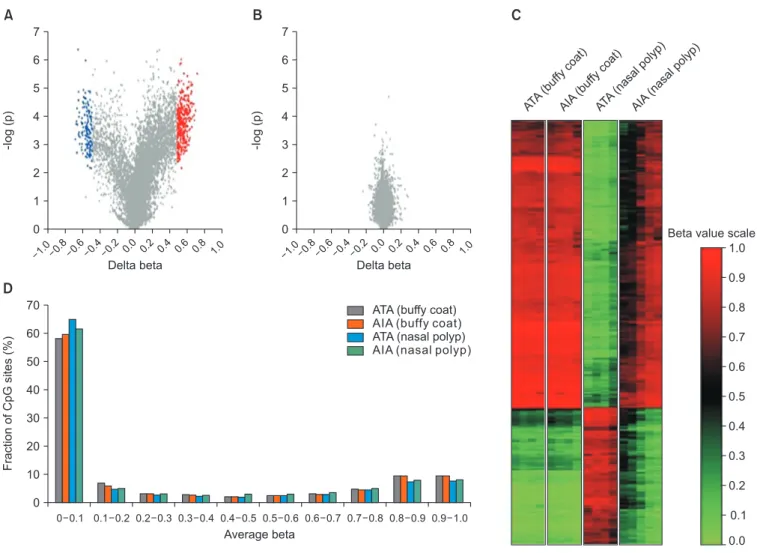
Figure 4. Summary of DNA methylation data. (A, B) Volcano plot of differential methylation level between aspirin-induced asthma (AIA) and
aspirin-tolerant asthma (ATA) in nasal polyp tissues (A) and buffy coat samples (B). Red dots: delta-beta≥0.5 and p≤0.01, blue dots: delta beta
≤–0.5 and p≤0.01, grey dots: –0.5≤Deltabeta≤0.5 and p>0.01. Delta-Beta: difference of DNA methylation level (subtracting the DNA methyla- tion level of ATA from AIA). –log(p): log-transformed t-test p-values. (C) Distribution of the DNA methylation level of AIA and ATA in buffy coat and nasal polyp. Average beta: DNA methylation level (0 to 1). (D) Heatmap of 490 differentially methylated CpGs between AIA and ATA in buffy coat and nasal polyp.
1.0 7 6
5 4 3 2
1
-Iog(p)
Delta beta 0
0.8 0.6 0.4 0.2 0.0 0.2 0.4 0.6 0.8 1.0 1.0 7 6
5 4 3 2
1
-Iog(p)
Delta beta 0
0.8 0.6 0.4 0.2 0.0 0.2 0.4 0.6 0.8 1.0
0 0.1 70 60 50
40 30 20 FractionofCpGsites(%) 10
Average beta 0
ATA(buf fycoat)
AIA (buf
fycoat) ATA(nasal
polyp)
AIA (nasal
polyp)
Beta value scale 1.0
0.0 0.9
0.8
0.7
0.6
0.5
0.4
0.3
0.2
0.1 0.2 0.2 0.3 0.3 0.4 0.4 0.5 0.5 0.6 0.6 0.7 0.7 0.8 0.8 0.9 0.9 1.0 0.1 ATA (buffy coat) AIA (buffy coat) ATA (nasal polyp) AIA (nasal polyp)
A B C
D
NERD. In a genome-wide CpG methylation study using nasal polyps in subjects with NERD and aspirin-tolerant asthma patients
59, 332 CpG sites on 296 genes were hypomethylated, and 158 sites on 141 genes were hypermethylated in NERD (Figure 4). Thus, NERD associated-proportion of global DMC is 1.78% (490/27,587 CpGs), which was about 10 times greater than 0.19% (53/27,578 CpGs) in atopic bronchial epithelium
23. The 490 DMCs are located on 437 genes, thus the global pro- portion of DMG is 3.02% (437/14,457 genes). Ontology clas- sification demonstrated 259 genes on arachidonate pathways (Table 5). Among them, 66 genes are differentially methylated (25.48%), which is 10 times greater than that (3.02%) of global DMG, indicating that genes in arachidonate pathways are much more labile to CpG methylation in NERD. It has been well known that genetic variants in arachidonate pathways such as LCT4s, 5LO, Cyst LR1, and Cyst LR2 exert their genet- ic effects on the development of NERD
7. Taken together, these data indicate that the subjects with NERD may have geneti- cally and epigenetically susceptible genes on arachidonate pathways to NSAIDs or other factors and that the interrelation between genetic and epigenetic impacts should be evaluated.
Finally, these genetic variants and epigenetic markers would be developed to predict the risk of NERD in the near future.
Epigenetic Therapy
Since the DNA CpG methylation changes described above are much more reversible than the DNA mutation, many treatment strategies are currently under investigation. Studies in dietary manipulation have demonstrated that methyl-rich diets are associated with hypermethylation of the epigenome.
In humans, methyl donors for DNA methylation are mostly derived from dietary methyl groups nutrients (folate, vitamin B12, and choline) act as methyl donors. Methyl donors affect DNA methylation and immune responses such as Th17, Th1/
Th2 balance and Treg generation in concert with vitamins (A, C, D, and E). While these findings have generated consider- able interests, their relevance to clinical efficacy is still unclear because of the high doses of methyl donors employed in the dietary intervention and insufficient evidence to recommend the use of any vitamin supplement or nutrient acting as a methyl donor for the prevention or treatment of asthma.
Dysregulation of epigenetic events leads to cardiovascular disease, neurological disorders, metabolic disorders, and cancer and asthma as well. Therefore, identifying drugs that inhibit these epigenetic changes are of great clinical interest in all clinical fields. There are major classes of epigenetic drugs currently in use, such as DNA methylation inhibiting drugs, bromodomain inhibitors, histone acetyltransferase inhibitors, HDAC inhibitors, protein methyltransferase inhibitors, and histone methylation inhibitors. In the present review, methyla- tion inhibiting drugs are discussed. From the U.S. Food and Drug Administration, 5-azacytidine (Aza; market name Vida- za), a DNMT inhibitor, was approved in 2004 and decitabine was approved in 2006
60. Recently zebularine, 5-fluoro-2’- deoxycytidine was recognized and has been studied as an anticancer therapeutic agent. RG108 is a relatively new small molecule DNA methylation inhibitor that is currently being investigated. This drug does not intercalate into target DNA or bind to the DNMT1 gene, but rather binds to and directly inhibits the DNMT1 enzyme active site. However, the above- mentioned drugs are currently studied for clinical application to date.
Conclusion
Epigenetic influences and mechanisms have been clari- fied in allergic diseases and asthma, but there are still many questions to be solved yet. The most complex situation is when both the gene and the environment are unknown.
Also, the lack of exposomes is a big huddle to solve the gene- epigenome-environment interaction. Thus, more information on exposomes is collected such as microbiome, metabolome, indoor living conditions, socioeconomic status, and stress.
Additional measurement of miRNA and histone modifica- tion will be conducted together, and all of these data will be Table 5. Number of DMG in arachidonic acid pathways in
NERD compared to those in ATA
Ontology No. ofgenes DMG,
p<0.05 Percentage