• 검색 결과가 없습니다.

Application of UPOV Data for the Analysis of Genetic Variation in Rose Cultivars

N/A
N/A
Protected

Academic year: 2021

Share "Application of UPOV Data for the Analysis of Genetic Variation in Rose Cultivars"

Copied!
7
0
0

로드 중.... (전체 텍스트 보기)

전체 글

(1)

Kor. J. Hort. Sci. Technol. 29(3):240-246, 2011

Application of UPOV Data for the Analysis of Genetic Variation in Rose Cultivars

Gi-Jun Kim

1

, Young-Ha Song

2

, Gwang-Yeon Gi

3

, Seong-Tae Kim

4

, Ja-Hyun Lee

2

, and Tae-Ho Han

2,5*

1

Asiaseed Breeding Institute, Gwangju 464-863, Korea

2

Division of Plant Biotechnology, Chonnam National University, Gwangju 500-757, Korea

3

Horticultural Research Division, Jeonnam Agricultural Research & Extension Services, Naju 520-715, Korea

4

National Institute of Horticultural & Herbal Science, Rural Development Administration, Suwon 440-760, Korea

5

Institution of Agricultural Science and Technology, Chonnam National University, Gwangju 500-757, Korea

Abstract. The principal objective of this study was to estimate the availability of morphological data on the basis of the guidelines of the International Union for the Protection of New Varieties of Plants (UPOV) with regard to the identification of the rose germplasm. The correlation of morphological traits and random amplified polymorphic DNA (RAPD) marker data among 44 rose cultivars was assessed via a mantel test.

Thirty eight phenotypes were employed for morphological analysis. Sixteenprimers were utilized for RAPD analysis, and these generated 225 polymorphic bands. The dendrogram based on the RAPD markersgrouped 44 rose cultivars according to their horticultural types. No significant correlation was observed between the morphological and RAPD marker data. We concluded that current UPOV traits could not be applied to studygenetic variation. Further studies onmorphological traits are required for the analysis of genetic variation among cultivars.

Additional key words: breeding, cultivar, fingerprint, molecular marker, RAPD

*Corresponding author: [email protected]

※ Received 28 April 2010; Accepted 22 April 2011. This Study was supported by Technology Development Program for Agriculture and Forestry, Ministry for Agriculture, Forestry and Fisheries, Republic of Korea.

Introduction

Rose is the most economically important ornamental crop world-wide. The genus Rosa consists of approximately 100 wild species and 20,000 commercial rose cultivars (Rajapakse et al., 2001). The number of chromosomes in the rose varies from 2n = 2x = 14 to 2n = 8x = 56. Also, frequent occurrences of spontaneous and artificial hybridizations have resulted in a complex genetic relationship among rose cultivars. Their incessant interspecific hybridizations, including artificial and spontaneous crossing, as well as extremely complex genetic mechanisms, render species diversity, and make it difficult to classify rose cultivars (Jan et al., 1999).

The emergence of the molecular marker technique has provided theefficient and effective identification of genetic diversity in plants. PCR-based marker techniques including random amplified polymorphic DNA (RAPD) and amplified fragment length polymorphism (AFLP) have been continuously applied to the rose. These markers have been recognized as efficient tools for analysis of the genetic diversity of rose

cultivars and species (Babaei et al., 2007; Debener et al., 2004; Esselink et al., 2003; Jan et al., 1999; Torres et al., 1993; Vosman et al., 2004). Notably, the RAPD marker technique has been shown to be reliable with regard to cultivars identification among rose (Debener et al., 1996, 1997; Jan et al., 1999; Millian et al., 1995; Mohapatra and Rout, 2005; Torres et al., 1993). The rose cultivars in this study were assessed via the previously selected RAPD markers, for later use as a reference. Another technique for cultivar identification involves the study of morphological traits in the rose. These UPOV guidelines have been developed in an effort to ensure the novelty of new cultivars. Thus, we assumed that this UPOV trait data might be utilized by breeders to estimate genetic diversity among cultivars. Traits that are less profoundly affected by the environment are used as the UPOV guidelines.

The objective of this study, then,was to assess the appli-

cation of UPOV trait data in a cultivar diversity study. This

was verifiedby comparing with the results of RAPD marker

data, using the mantel test (Rohlf, 1998).

(2)

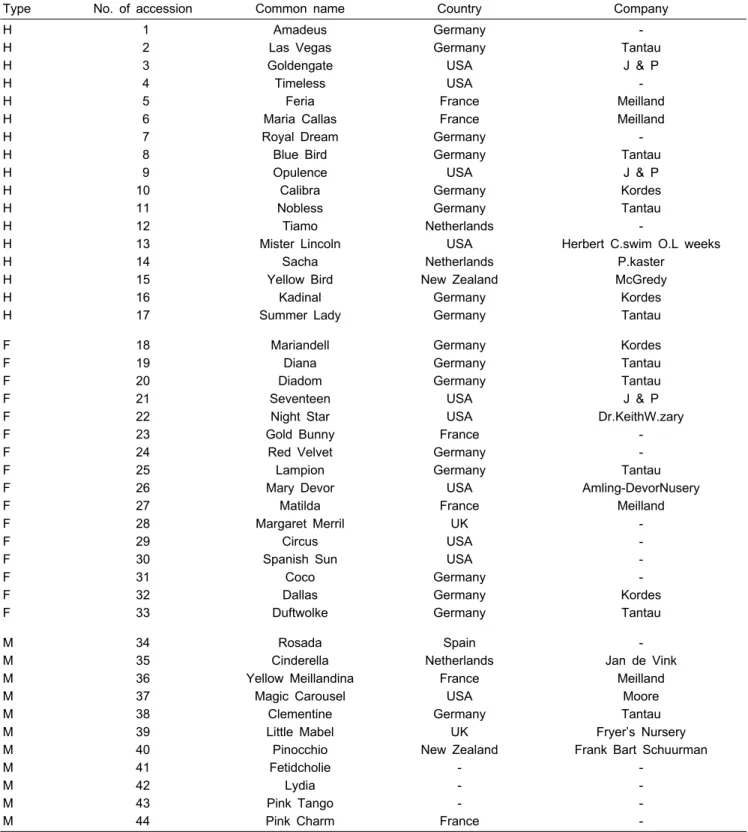
Table 1. Rose plant materials used in RAPD analysis.

Type No. of accession Common name Country Company

H H H H H H H H H H H H H H H H H

1 2 3 4 5 6 7 8 9 10 11 12 13 14 15 16 17

Amadeus Las Vegas Goldengate Timeless

Feria Maria Callas Royal Dream

Blue Bird Opulence Calibra Nobless

Tiamo Mister Lincoln

Sacha Yellow Bird

Kadinal Summer Lady

Germany Germany

USA USA France France Germany Germany

USA Germany Germany Netherlands

USA Netherlands New Zealand

Germany Germany

- Tantau

J & P - Meilland Meilland

- Tantau

J & P Kordes Tantau

-

Herbert C.swim O.L weeks P.kaster

McGredy Kordes Tantau F

F F F F F F F F F F F F F F F

18 19 20 21 22 23 24 25 26 27 28 29 30 31 32 33

Mariandell Diana Diadom Seventeen Night Star Gold Bunny

Red Velvet Lampion Mary Devor

Matilda Margaret Merril

Circus Spanish Sun

Coco Dallas Duftwolke

Germany Germany Germany

USA USA France Germany Germany

USA France

UK USA USA Germany Germany Germany

Kordes Tantau Tantau J & P Dr.KeithW.zary

- - Tantau Amling-DevorNusery

Meilland - - - - Kordes Tantau M

M M M M M M M M M M

34 35 36 37 38 39 40 41 42 43 44

Rosada Cinderella Yellow Meillandina

Magic Carousel Clementine Little Mabel Pinocchio Fetidcholie

Lydia Pink Tango Pink Charm

Spain Netherlands

France USA Germany

UK New Zealand

- - - France

- Jan de Vink

Meilland Moore Tantau Fryer’s Nursery Frank Bart Schuurman

- - - - H: hybrid tea, F: floribunda, M: miniature.

Materials and Methods

Plant Materials

The 44 cultivars utilized in this study consisted of 17 Hybrid Tea, 16 Floribunda, and 11 miniature cultivars nurtured at the Jeonnam Agricultural Research and Extension Service

(JARES, Korea) (Table 1). Fresh leaves from the rose

cultivars were collected and frozen in liquid nitrogen. The

leaf powder was then stored at -70℃ until use. DNA was

extracted from the leaf powder using DNeasy plant mini-kits

(Qiagen, USA).

(3)

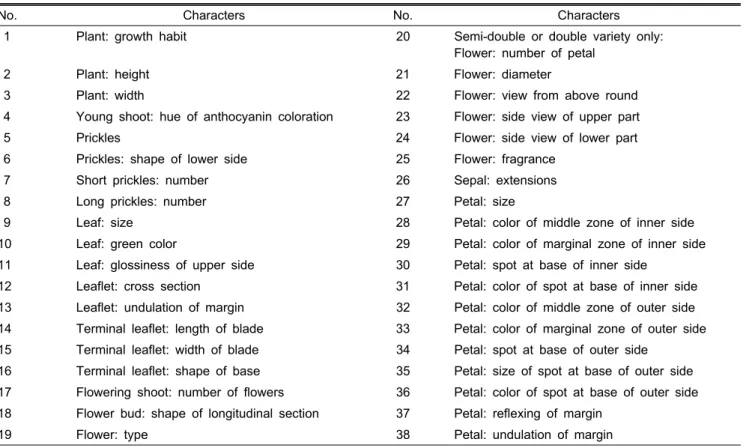
Table 2. List of morphological characters measured by the International Union for Protection of New Varieties of Plants.

No. Characters No. Characters

1 Plant: growth habit 20 Semi-double or double variety only:

Flower: number of petal

2 Plant: height 21 Flower: diameter

3 Plant: width 22 Flower: view from above round

4 Young shoot: hue of anthocyanin coloration 23 Flower: side view of upper part

5 Prickles 24 Flower: side view of lower part

6 Prickles: shape of lower side 25 Flower: fragrance

7 Short prickles: number 26 Sepal: extensions

8 Long prickles: number 27 Petal: size

9 Leaf: size 28 Petal: color of middle zone of inner side

10 Leaf: green color 29 Petal: color of marginal zone of inner side

11 Leaf: glossiness of upper side 30 Petal: spot at base of inner side

12 Leaflet: cross section 31 Petal: color of spot at base of inner side

13 Leaflet: undulation of margin 32 Petal: color of middle zone of outer side 14 Terminal leaflet: length of blade 33 Petal: color of marginal zone of outer side 15 Terminal leaflet: width of blade 34 Petal: spot at base of outer side

16 Terminal leaflet: shape of base 35 Petal: size of spot at base of outer side 17 Flowering shoot: number of flowers 36 Petal: color of spot at base of outer side 18 Flower bud: shape of longitudinal section 37 Petal: reflexing of margin

19 Flower: type 38 Petal: undulation of margin

Table 3. RAPD primers used for rose cultivar analysis and number of polymorphic bands.

Primers Sequence 5’→3’

GC content (%)

No. of polymorphic

bands

A-11 ACTGACCTAGTT 41.7 12

A-15 ATCGCGGAATAT 41.7 14

N-8005 GAAACGGGTG 60 18

N-8034 GCCGCTACTA 60 13

N-8038 GGTCCCTGAC 70 12

N-8045 CAAACGTCGG 60 13

N-8062 GACCGCAAGT 60 8

N-8072 CTTAGGGCAC 60 18

N-8079 GTGTGCCGTT 60 16

OPA-07 GAAACGGGTG 60 12

OPA-10 GTGATCGCAG 60 13

OPB-08 GTCCACACGG 70 15

OPB-17 AGGGAACGAG 60 16

OPD-12 CACCGTATCC 60 12

OPI-11 ACATGCCGTA 50 18

OPG-12 CAGCTCACGA 60 15

Morphological Data Description

The morphological traits of the rose cultivars in this study were generously provided from a previous investigations conducted by JARES. The morphological traits of the rose cultivars were measured in 38 phenotypes (Table 2). The phenotypic assessments were applied to the UPOV guidelines established for the rose.

RAPD Analysis

RAPD analysis was conducted twice for all the materials in order to verify reproducibility. For the RAPD analysis, fourteen 10 bp primers (Bioneer, Korea; Operon Technology, USA) and two 12 bp primers (BEX, Japan) were employed (Kim et al., 2006) (Table 3). The PCR reaction solution was prepared essentially as described by Kim et al. (2006). The PCR reactions were conducted with a PCT-200 DNA engine (MJ research, USA). The amplification program was performed as follows: 5 min at 95℃ for initial denaturation, 40 cycles at denaturation temperature of 95℃ for 1 min, annealing at 38℃ for 2 min, and extension for 2 min at 72℃. For the final extension, the samples were incubated for 7 min at 72℃. The amplified fragments were electrophoresed on 0.8% agarose gel containing ethidium bromide (EtBr) 0.5 μ g・L

-1

in 1 × TAE buffer at 140 V for 1hour, and the number of polymorphic and total bands were analyzed under UV

light (Core bio, Korea). The sizes of the amplified DNA

productswere determined using a 1 kb size marker (Bioneer,

Korea).

(4)

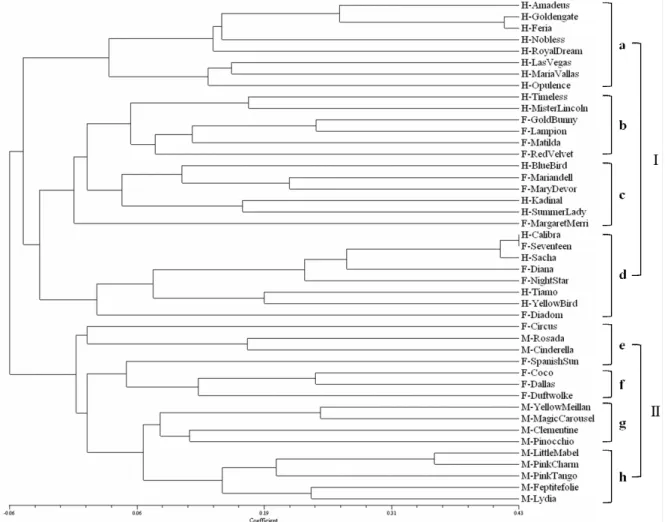
Fig. 1. Classification of the 44 rose cultivars constructed on the basis of RAPD data. H: hybrid tea, F: floribunda, M: miniature.

Data Analysis

The presence and absence of amplified bands were scored as 1 and 0, respectively. Morphological data were transformed into a binary form. The genetic dissimilarity matrix was calculated using the coefficients of Nei and Li (1979). Cluster analysis was conducted based on the unweighted pair group method with arithmetic averages (UPGMA) using NTSYS-pc version 2.0 software (Rohlf, 1998). Correspondence between the morphological and RAPD marker data of rose cultivars were conducted via mantel test using the NTSYS-pc version 2.0 software package (Rohlf, 1998).

Results

Genetic Relations among the Rose Cultivars Using RAPD Marker

44 rose cultivars were assessed with regard to genetic diversity. The total number of amplified bands was 225 (Table 3). The genetic dissimilarity of 44 cultivars varied from-0.06 to 0.43. The dendrogram was constructed via cluster analysis and generated two major groups. Group I

and II were divided into 4 sub-groups, respectively (Fig.

1). Group I included Hybrid tea and Floribunda. Sub-group I-a was clustered with Hybrid tea. Sub-group I-b, c, and d were mixed with Hybrid tea and Floribunda. Insub-group I-d, the genetic similarity between ‘Calibra’ (HT) and ‘Seventeen’

(FL) was as high as 0.64. This confirmed that Hybrid tea and Floribunda roses share a close genetic background (Fig.

1). Group II was consisted of Floribunda and miniature roses.

Sub-group II-f was clustered with Floribunda. Sub-group II-e, g, and h were grouped with miniature roses.

Consequently, the relationships of the 44 cultivars deter- mined on the basis of their genetic distances were clustered precisely in the dendrogram constructed using the RAPD markers.

Morphological Analysis of Rose Germplasm

The application of morphological traits in the diversity

study was assessed on the basis of the guidelines established

by the International Union for the Protection of New Varieties

of Plants (UPOV) with 38 established roses (Table 2). The

similarity coefficients determined using morphological traits

(5)

Fig. 2. Clustering of 44 rose cultivars based on morphological data. H: hybrid tea, F: floribunda, M: miniature.

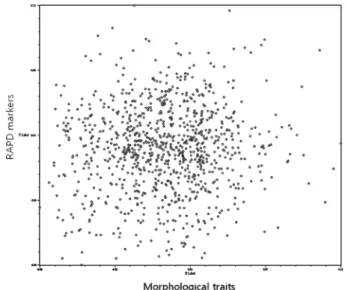
Fig. 3. Comparison between morphological and RAPD data using Mantel test of NTSYS-pc software.

was from -0.07 to 0.54 (Fig. 2). The similarity matrix was then employed in the construction of a dendrogram via the unweighted pair group arithmetic average method (UPGMA).

‘Maria Callas’ and ‘Kadinal’ showed a similarity of 0.47 among the 44 cultivars assessed in this study. Hybrid tea, Floribunda, and miniature cultivars were mixed within 44 rose cultivars (Fig. 2). Consequently, diversity analysis based on 38 morphological traits could not distinguish rose types in accordance with their genetic backgrounds.

Comparison between RAPD Markers and Morphological Data

Two dendrograms based on molecular markers and mor- phological traits data did not correspond to each other. The level of coincidence between two dendrograms could be measured via the estimation of the level of correlation of similarity coefficients. The correlation analysis was conducted with the mantel test using the NTSYSpc program (Fig. 3).

This resulted in no relation (r = 0.05). The lack of a detectable correlation confirmed that any of the results could not be

used to assess their genetic diversity. We inferred from these

results that the RAPD data was biologically applicable and,

moreover,the traits must be investigated from the viewpoint

(6)

of their use in cultivar diversityanalysis.

Discussion

Breeding efficiency has been shown to be accelerated via the screening, investigation, classification, and evaluation of the germplasm (Diaby and Casler, 2003). Until the present, a classification system based on morphological traits has been generally utilized for the identification of rose cultivars.

Although cultivar identification schemes based on morpho- logical traits has certain limitations, including the overlap of morphological variations and the influence of environmental conditions (Jan et al., 1999), it also has advantages, including simplicity, speed, and low cost (Matínez et al., 2003). Molecular markershave been successfully applied to the identification of species and cultivars,principally because they are not affected by environmental conditions (Mariċ et al., 2004; Mohapatra and Rout, 2005).

In this study, RAPD markers could be used to distinguish clearly among 44 rose cultivars. The dendrogram indicated that Hybrid tea and Floribunda roses were clustered together (Fig. 1). The miniature roses were clustered separately from the Hybrid tea and Floribunda roses (Fig. 1). This result indicates that the Hybrid tea and Floribunda roses are gene- tically closer than the miniature roses.

These results were consistent with the previous results reported by Debener et al. (1996) and Mohapartra and Rout (2005). They reported that the Hybrid tea and Floribunda roses were very genetically similar, because the Hybrid tea roses were ancestors of Floribunda roses (Roberts et al., 2003). Also, the tiniest wild roses were identified as a major ancestor of miniature roses (Roberts et al., 2003) and the presence of Floribunda within miniature group II-e may be attributed to the origin of one of the ancestorsin a miniature type (Robert et al., 2003; Zlesak, 2006). Genetic relationship of various rose cultivars using RAPD markers was in agreement with rose taxonomy. Moreover, we reported that RAPD marker could be useful tool for rose pedigree and parentage deter- mination in previous study (Kim et al., 2008).

The clustering results obtained on the basis of the mor- phological data evidenced a very complicated set of genetic relationships. The study of the pepper (Lefebvre et al., 2001) and grapevine (Matínez et al., 2003) yielded a better separated dendrogram based on the morphological characteristics between cultivars. In this study, the mantel test evidenced no correlation between the morphological and RAPD marker data. The low correlations between morphological and RAPD marker data have been similarly reported in the pepper (Kwon et al., 2005; Lefebvre et al., 2001).

Our experiment was predicated on the hypothesis that UPOV

morphological traits could be objectively measured and utilized in studies of genetic diversity and cultivar identification. This would provide an alternative method by which genetic diversity measurements can be made in a simple, fast, and inexpensive fashion, as compared to molecular marker tools. However, we detected no correlation between morphological and RAPD marker genetic distances, as has been shown in other studies, including the pepper (Kwon et al., 2005; Lefebvre et al., 2001), wheat (Marić et al., 2004), and grapevine (Matínez et al., 2003).

Consequently, in order to identify cultivars of rose using UPOV morphological data, we must prepare objective data for statistical analysis via the removal of environmentally influenced morphological data or repeated data measurements that were conducted in many recurrent plants and under a variety of environmental conditions.

Literature Cited

Babaei, A., S.R. Tabaei-Aghdaei, M. Khosh-Khui, R. Omidbaigi, M.R. Naghavi, G.D. Esselink, and M.J.M. Smulders. 2007.

Microsatellite analysis of Damask rose (Rosa damascena Mill) accessions from various regions in Iran reveals multiple genotypes. BMC Plant Bio. 7:12.

Debener, T., C. Bartels, and L. Mattiesch. 1996. RAPD analysis of genetic variation between a group of rose cultivars and selected wild rose species. Mol. Breeding 2:321-327.

Debener, T., C. Bartels, and W. Spethmann. 1997. Parentage analysis in interspecific crosses between rose species with RAPD markers. Gartenbauwissenschaft 62:180-184.

Debener, T., M. Linde, and A. Dohm. 2004. The utilization of molecular tools for rose breeding and genetics. Acta Hort.

630:29-42.

Diaby, M. and M.D. Casler. 2003. RAPD marker variation among smooth bromegrass cultivars. Crop Sci. 43:1538-1547.

Esselink, G.D., M.J.M. Smulders, and B. Vosman. 2003. Identi- fication of cut rose (Rosa hybrida) and rootstock varieties using robust sequence tagged microsatellite site markers. Theor.

Appl. Genet. 106:277-286.

Jan, C.H., D.H. Byrne, J. Manhart, and H. Wilson. 1999. Rose germplasm analysis with RAPD markers. Hort. Sci. 34:341-345.

Kim, G.J., J.K. Choi, G.Y. Gi, K.B. Lim, and T.H. Han. 2006.

Selection of RAPD primers for efficient fingerprinting in roses. Kor. J. Hort. Sci. Technol. 24:253-257.

Kim, G.J., G.Y. Gi, J.H. Lee, Y.H. Joung, Y.H. Song, and T.H.

Han. 2008. Application of RAPD marker for the detection of parentage from known rose pedigrees. Hort. Environ.

Biotechnol. 49:253-257.

Kwon, Y.S., J.M. Lee, G.B. Yi, S.I. Yi, K.M. Kim, E.H. Soh, K.M. Bae, E.K. Park, I.H. Song, and B.D. Kim. 2005. Use of SSR markers to complement tests of distinctiveness, uniformity, and stability (DUS) of pepper (Capsicum annuum L.) varieties.

Mol. Cells 19:428-435.

Lefebvre, V., B. Goffinet, J.C. Chauvet, B. Caromel, P. Signoret,

R. Brand, and A. Palloix. 2001. Evaluation of genetic distances

(7)

between pepper inbred lines for cultivar protection purposes:

comparison of AFLP, RAPD, and phenotypic data. Theor.

Appl. Genet. 102:741-750.

Marić, S., S. Bolariċ, J. Martinčiċ, I. Pejiċ, and V. Kozumplik.

2004. Genetic diversity of hexaploid wheat cultivars estimated by RAPD markers, morphological traits and coefficients of parentage. Plant Breeding 123:366-369.

Matínez, L., P. Cavagnaro, R. Masuelli, and J. Rodríguez. 2003.

Evaluation of diversity among argentine grapevine (Vitisvinifera L.) varieties using morphological data and AFLP markers.

Elec. J. Biotech. 6:241-250.

Millan, T., F. Osuna, S. Cobos, A.M. Torres, and J.I. Cubero.

1995. Using RAPDs to study phylogenetic relationships in Rosa. Theor. Appl. Genet. 92:273-277.

Mohapatra, A. and G.R. Rout. 2005. Identification and analysis of genetic variation among rose cultivars using random ampli- fied polymorphic DNA. J. Phys. Sci. 60:611-617.

Nei, M. and W.H. Li. 1979.Mathematical model for studying genetic variation in terms of restriction endonucleases. Proc.

Natl. Acad. Sci. USA 76:5269-5273.

Rajapakse, S., D.H. Byrne, L. Zhang, N. Anderson, K. Arumu- ganathan, and R.E. Ballard. 2001. Two genetic linkage maps of tetraploid roses. Theor. Appl. Genet. 103:575-583.

Roberts, A.V., T. Deberner, and S. Gudin. 2003. Encyclopedia of rose science 1. Elsevier Academic Press. Oxford.

Rohlf, F.J. 1998. NTSYS-pc numerical taxonomy and multivariate analysis system, Version 2.0. Exeter Publications, New York.

Torres, A.M., T. Millian, and J.I. Cubero. 1993. Identifying rose cultivars using random amplified polymorphic DNA markers.

Hort. Sci. 28:333-334.

Vosman, B., D. Visser, J.R. Van der Voort, M.J.M. Smulders, and F. Van Eeuwijk. 2004. The establishment of ‘essential derivation’ among rose varieties, using AFLP. Theor. Appl.

Genet. 109:1718-1725.

Zlesak, D.C. 2006. Rose: Rosa × hybrida, p. 695-738. In: N.O.

Anderson (ed.). Flower breeding and genetics: Issues, challenges

and opportunities for the 21st century. Springer, Dordrecht.

수치

Table 1. Rose plant materials used in RAPD analysis.
Table 2. List of morphological characters measured by the International Union for Protection of New Varieties of Plants.
Fig. 1. Classification of the 44 rose cultivars constructed on the basis of RAPD data
Fig. 3. Comparison between morphological and RAPD data  using Mantel test of NTSYS-pc software

참조

관련 문서

It considers the energy use of the different components that are involved in the distribution and viewing of video content: data centres and content delivery networks

After first field tests, we expect electric passenger drones or eVTOL aircraft (short for electric vertical take-off and landing) to start providing commercial mobility

1 John Owen, Justification by Faith Alone, in The Works of John Owen, ed. John Bolt, trans. Scott Clark, "Do This and Live: Christ's Active Obedience as the

The experimental data were adopted for this analysis on the base of cold storage technology of modified atmosphere package(MAP) for seven months from March

The daily variation of the extreme temperature, correlation between continentality and oceanity, and extreme value occurrence time were studied for the

This study was carried out to select superior soybean cultivars for forage production and to determine the optimum plant density and phosphate rate for

 Procedure for creating the equipment failure rate data segment of a CPQRA analysis data base.  Define

In this paper, we developed a data management system for shipboard machinery equipment and the monitoring application for the verification of the utility, and we