녹두나물 재배온도에 따른 페놀화합물 함량과 DPPH, ADH 및 ALDH 활성
김동관*† ・ 손동모* ・ 천상욱** ・ 이경동*** ・ 김경호**** ・ 임요섭*****
*전남농업기술원, **(주)이파리넷, ***동신대학교, ****농촌진흥청, *****순천대학교
Phenolic Compounds Content and DPPH, ADH, ALDH Activities of Mungbean Sprout Based on Growth Temperature
Dong-Kwan Kim*†, Dong-Mo Son*, Sang-Uk Chon**, Kyung-Dong Lee***, and Kyong-Ho Kim****, and Yo-Sup Rim*****
*Jeollanamdo Agricultural Research and Extension Services, Naju 520-715, Korea
**EFARINET Co. Ltd., TBI Center, Chonsun University, Gwangju 501-759, Korea
***Department of Oriental Medicine Materials, Dongshin University, Naju 520-714, Korea
****Rural Development Administration, Suwon 441-707, Korea
*****Collage of Bio Industry Science, Sunchon National University, Sunchon 540-742, Korea
1
†Corresponding author: (Phone) +82-61-330-2563
(E-mail) [email protected] <Received March 5, 2008>
ABSTRACT This study is to analyze the effects of the
growth temperature of mungbean sprouts (15~30±1℃) on the yield ratio, content of phenolic compounds and DPPH (1,1-diphenyl-2-picrylhydrazyl), ADH (alcohol dehydrogenase), ALDH (aldehyde dehydrogenase) activities of the sprouts.When the growth temperature of mungbean sprouts was higher, the yield ratio of the sprouts was higher while the hard seed rate was lower, but 25±1℃ and 30±1℃ showed no regular tendency. The content of the total phenol from the ethanol extract of the sprouts was higher in the growth temperature of 15±1, 20±1, and 25±1℃, while the content of total flavonoid was higher in the growth temperature of 15±1 and 20±1℃. The DPPH radical scavenging activity of the ethanol extract of the sprouts was higher when the growth temperature was lower, while the activity of ADH and ALDH showed no regular tendency according to the growth temperature. Considering the yield ratio, content of phenolic compounds, biological activities of mungbean sprouts, the optimum cultivation temperature of mungbean sprouts may be 20~25℃.
Keywords : mungbean sprout, growth temperature, phenolic
compounds, DPPH, ADH, ALDH녹두나물은 vitamin과 무기질의 급원으로서 우수한 식품 이나 우리나라의 경우 콩나물에 비해 소비량이 한정되어 있 다. 녹두나물에 관한 연구로 침종 후 aeration 기간과 온도에 따른 녹두나물 생장 변화(Kang et al., 2004b), 녹두나물 성 장과정 중 질소화합물, 유리아미노산, 지질 및 지방산 변화 (Kim, 1981; Kim 1982) 및 녹두나물 생즙의 간 보호활성 (Choi et al., 1998) 정도이다. 반면에 콩나물은 재배온도, 관 수간격, 관수량, 수온, 재배용기, 미생물 제어기술, aeration 온도와 기간(Bae et al., 2002; Choi et al., 2000; Kang et al., 2004a; Kim et al., 2000b; Kim et al., 2000c) 등 다양한 재 배기술이 검토되었다. 그리나 녹두나물의 재배환경에 따른 페놀화합물 함량이나 항산화활성 등 기능성에 관여하는 요 인에 대한 보고는 미미하다. 페놀화합물은 치환될 수 있는 치환기를 가진 방향족 고리 구조를 가지고 있는 이차대사물 의 총칭으로서 화학적으로 이질적인 것이 많으며 지용성 및 수용성 등의 성질을 갖는다. 이들 화합물의 대부분은 shiki- micacid pathway에 의해 합성된 방향족 물질이며 과일, 채 소, 포도주 및 차에서 분리되는 성분으로 여러 가지 기능성 을 나타내고 있다(Duthie & Alan, 2000). 식물체내에 존재 하는 페놀성 화합물이 각종 라디칼에 대한 소거작용이 있어 페놀성 화합물 함량과 라디칼 소거능은 정의 상관관계가 있 으며 이 페놀성 화합물 함량은 잠재적인 항산화성을 검증하 는 일차적인 실험 자료가 될 수 있다(Velioglu et al., 1998).
페놀화합물은 단순 페놀류, 페놀산 및 hydroxycinnamic acid 파생물질 그리고 flavonoids 등 세 가지 종류가 주류를 이루 며 이들은 다양한 식품영양학적 특성을 지니면서도 항산화
성, 항돌연변이성 및 항암성을 지니고 있다(Namiki, 1990).
숙취는 술을 마신 후에 나타나는 두통, 구토, 오한, 식은땀을 수반하는 현상으로 객관적인 제반의 증상으로는 인식과 운 동능력 저하, 혈액학적 변화 및 호르몬의 변화(Wiese et al., 2000)로서 숙취의 원인은 탈수, 알콜 및 알콜대사물(아세트 알데히드, 포름알데히드, 아세톤 등)의 독성, 흡수 장애에 의 한 영양소(혈당, 비타민, 무기질 등) 결핍으로 알려져 있다. 섭 취된 체내의 알콜은 ADH(alcohol dehydrogenase)에 의해 아 세트알데히드가 되고 다시 ALDH(aldehyde dehydrogenase)에 의해 산화되어 acetic acid로 되고 일부는 요나 CO2로 배설 된다고 보고(Lieber, 1994)되고 있다. 그러한 알콜은 섭취량 에 따라 간 대사에 여러 가지 영향을 미치는 것으로 알려져 있는데 알코올 그 자체보다는 산화과정에서 생성된 아세트 알데히드와 NADH가 간세포에 손상을 가져오게 된다고 한 다. 따라서 알코올의 대사율은 ADH와 ALDH의 활성에 영 향을 주는 요인들에 의해 조절된다. 그러나 콩나물, 미나리, 무 추출물의 용매분획별 Saccharomyces cerevisiae의 ADH 활성은 무기물, 아미노산 등의 상승효과를 얻을 수 있는 수 용성 분획물에서 높다는 보고(Kang et al., 2002)와 같은 결 과는 있으나 녹두나물의 ADH, ALDH의 활성에 관한 연구는 거의 없는 실정이다. 따라서 본 연구는 녹두나물 재배온도가 나물의 생육과 품질, 페놀화합물 함량, 항산화활성, ADH와 ALDH활성에 미치는 영향을 구명하여 기능성 녹두나물 생 산기술 수립에 적용하고자 수행하였다.
재료 및 방법
생육과 품질
재배온도의 차이가 녹두 나물의 품질과 생리활성물질 함 량 및 기능성 개선에 미치는 영향을 알아보고자 시험품종으 로 금성녹두와 어울녹두를 이용하여 15, 20, 25 및 30℃로 달리하여 재배하였다. 나물수율은 나물 재배용 원료곡인 녹 두의 종실중 대비 나물재배 후 나물 생체중의 비로, 경실비 율은 나물 재배용 원료곡인 녹두의 종실중 대비 나물 재배 후에도 발아하지 않은 종실중의 비로 나타냈다. 건조나물비 는 수확한 나물의 생체중 대비 건조중의 비로, 조추출물비 는 나물의 건조중 대비 조추출물 비로 나타냈다. 나물 재배 용 녹두 원료곡과 나물 재배 후 나물, 경실 등의 무게는 40℃
에서 72시간 건조 후 측정하였다. 녹두나물 조추출물의 무 게는 건조 나물을 80% ethanol에 48시간 추출하고 rotary evaporator(Eyela, Tokyo)로 농축하고 동결건조기(MCFD-8508) 로 완전 건조하여 측정하였다.
페놀화합물 함량
재배온도별 녹두나물 조추출물의 총페놀과 총플라보노이 드 함량 측정용 시료는 추출 농축 건조한 시료를 1 mg / 1 ml 로 조정하여 사용하였다. 총페놀 함량은 페놀성물질인 pho- sphomolybdic acid와 반응하여 청색을 나타내는 것을 이용 한 Folin-Denis법(Lister et al., 1994; Nowak et al., 1992)으 로 측정하였다. 즉, well plate에 시료액 70 uL와 Folin- Denis시약 70 uL를 혼합하여 3분간 실온에 방치한 후 10%
Na2CO3 용액 70 uL를 가하여 실온에서 60분간 정치시킨 후 분광광도계(Multiskan Spectrum, Thermo)로 760 nm에서 흡광도를 측정하였다. 이때 표준검량선은 tannic acid(Sigma Co., USA)를 이용하여 작성하였다. 총플라보노이드 함량은 well plate에 시료액 40 uL와 diethylene glycol 160 uL를 혼합하고 여기에 1 N-NaOH용액 40 uL 가하여 잘 혼합한 후 37℃에서 60분간 반응시킨 후 분광광도계(Multiskan Spec- trum, Thermo)로 420 nm에서 흡광도를 측정하였다. 이때 표준검량선은 naringin(Sigma Co., USA)을 이용하여 작성 하였다(Lister et al., 1994).
DPPH, ADH 및 ALDH 활성
재배온도별 녹두나물 조추출물의 항산화활성, ADH 및 ALDH활성 측정용 시료는 추출 농축 건조한 시료를 1 mg
/ 1 ml로 조정하여 사용하였다. DPPH에 의한 항산화활성 측정은 DPPH 용액(0.15 mM DPPH methanol solution) 4 mL과 시료액 1 mL를 voltex로 혼합하고 실온에 30분간 방 치 한 후 분광광도계(Multiskan Spectrum, Thermo)로 517 nm 에서 흡광도를 측정하였다. 이때 BHA와 BHT용액은 1,000 μ g/kg 농도로 하여 동일한 방법으로 흡광도를 측정하였다.
Electron donating ability(EDA)는 시료액 첨가와 무첨가의 흡광도 차이를 백분율로 표시하였다(Kang, 2001; Kim et al., 2000a; Nowak et al., 1992). EDA(%) = (1-실험구의 흡광 도/대조구의 흡광도)×100. ADH와 ALDH활성 측정은 분광 광도계(Multiskan Spectrum, Thermo)로 304 nm에서 NADH 생성속도를 지료로 실시하였다. ADH활성은 ethanol assay kit(Roche Co., Germany)의 procedure에 따라 20℃에서 측 정 산출하였고, ALDH활성은 acetaldehyde assay kit(Roche Co., Germany)의 procedure에 따라 25℃에서 측정 산출하 였다.
결과 및 고찰 생육과 품질
어울녹두와 금성녹두의 녹두나물 재배온도(15~30±1℃)
34 4a†356a 336a 348a
323a 337a
212b 24 0b
0 100 200 300 4 00
Total phenolic compound(mg/g)
15± 1 20± 1 25± 1 30± 1
Gro wing te mpe ra ture (℃ )
Owo o l K eums eo ng
Fig. 1. Effect of ethanol extracts from the young sprouts of mungbean grown under different cultural temperatures, total phenolic compound contents. †Mean separation within columns by DMRT at 5% level.
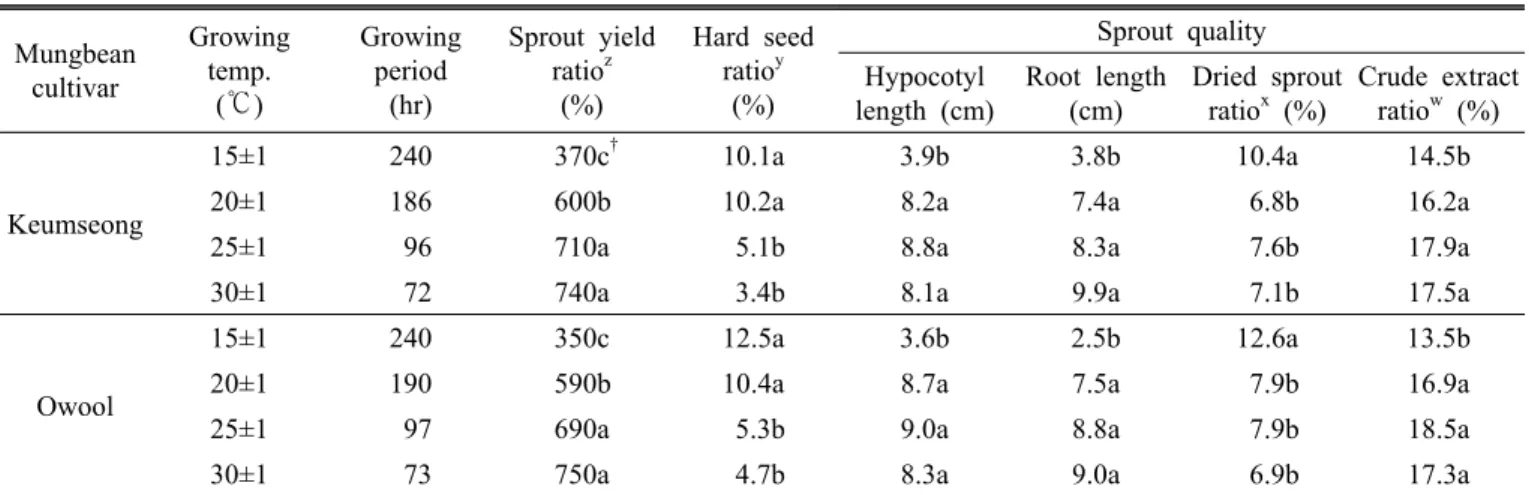
Table 1. Plant growth and sprout quality of the young sprouts from mungbean grown under different cultural temperatures.
Mungbean cultivar
Growing temp.
(℃)
Growing period
(hr)
Sprout yield ratioz
(%)
Hard seed ratioy
(%)
Sprout quality Hypocotyl
length (cm)
Root length (cm)
Dried sprout ratiox (%)
Crude extract ratiow (%)
Keumseong
15±1 240 370c† 10.1a 3.9b 3.8b 10.4a 14.5b
20±1 186 600b 10.2a 8.2a 7.4a 6.8b 16.2a
25±1 96 710a 5.1b 8.8a 8.3a 7.6b 17.9a
30±1 72 740a 3.4b 8.1a 9.9a 7.1b 17.5a
Owool
15±1 240 350c 12.5a 3.6b 2.5b 12.6a 13.5b
20±1 190 590b 10.4a 8.7a 7.5a 7.9b 16.9a
25±1 97 690a 5.3b 9.0a 8.8a 7.9b 18.5a
30±1 73 750a 4.7b 8.3a 9.0a 6.9b 17.3a
†Mean separation within columns by DMRT at 5% level.
zSprout yield ratio: fresh sprout weight/material seed weight×100, yHard seed ratio: non-emerging seed weight/material seed weight×100, xDried sprout ratio: dried sprout weight/fresh sprout weight×100, wCrude extract ratio: crude 80% EtOH extract weight after evaporation/dried sprout weight×100.
에 따른 나물의 생육, 수율 및 품질을 검토하였다. 녹두나물 재배온도별 재배기간은 Table 1과 같이 15±1℃ 조건 240시 간, 30±1℃ 조건 72시간으로 재배온도가 낮을수록 현저하 게 길었다. 원료 녹두 대비 나물수율은 재배온도가 높을수 록 높았으나 25±1℃와 30±1℃는 유의차는 없었다. 나물생 산 후 원료 녹두 대비 경실비율은 재배온도가 낮을수록 유 의하게 많아 나물수율을 떨어뜨리는 요인이 되었고 15±1℃
와 20±1℃간, 25±1℃와 30±1℃간에는 유의차가 없었다.
나물의 배축장과 주근장은 재배온도가 15±1℃일 때 매우 작아 나물수율을 크게 떨어뜨리는 요인이 되었고 기타 재배 온도 간은 유의차가 없었다. 나물생산 직후 생체중 대비 건 물중비율은 재배온도가 낮은 15±1℃은 매우 높은 반면 기 타 재배온도 간은 유의차가 없었다. 그리고 건조한 나물 대 비 80% ethanol 조추출물의 비율은 15±1℃ 조건이 가장 낮 았고 기타 재배온도 간은 차이가 없었다. 이처럼 나물의 생 체중 대비 건물중비, 배축장, 주근장 및 나물수율 등이 재배 온도 20~30±1℃ 조건에서 큰 차이가 없는 것은 정상적인 상품이 될 때까지 재배하였기 때문으로 재배온도의 영향으 로 판단하기는 곤란하다. 반면에 원료 녹두 대비 경실비율 은 재배온도와 관계가 매우 깊어 재배온도가 낮을수록 재배 기간에 상관없이 높았다. 그리고 재배온도 15±1℃ 조건은 재배기간이 매우 길었지만 배축과 뿌리 생육에는 한계가 있 었다. 즉, 아열대 원산인 녹두는 15℃가 생육한계온도로 세 포벽의 구조와 기능에 영향을 미치고 15℃ 이하에서는 미 토콘드리아와 엽록체의 막지질 열변이가 발생하며(Raisin
et al., 1976), 발아율은 25℃ 이하에서는 완만하게 감소하
다 14℃ 이하에서는 급격하게 감소하며 11.5℃ 이하에서는 사실상 정지한다(Simon et al., 1976)는 보고와 매우 밀접한 결과였다. 따라서 이상의 녹두나물 외관품위와 재배기간 등 을 고려해 볼 때 최저 20℃ 이상 25℃ 전・후에서 재배해야 할 것으로 판단된다.
페놀화합물 함량
재배온도에 따른 녹두나물 80% ethanol 조추출물의 총페 놀 함량은 Fig. 1과 같이 재배온도가 가장 낮은 15±1℃에서 어울녹두 344 mg/g 금성녹두 356 mg/g로 가장 많았으나 20±1℃나 25±1℃와 유의차는 없었고, 재배온도 30±1℃는 어울녹두 212 mg/g, 금성녹두 240 mg/g으로 현저하게 적었
175a† 154a
171a
160a 158a
110b
97b 88b
0 50 100 150 200
Total flavonoid (mg/g)
15± 1 20± 1 25± 1 30± 1
Gro wing te mpe ra ture (℃ ) Owo o l
Ke ums eo ng 285a†292a
330a
287a 299a
259a 269a 296a
0 100 200 300 4 00
ADH activity (%)
15± 1 20± 1 25± 1 30± 1
Gro wing te mpe ra ture (℃ )
O wo o l K eu ms e o ng
Fig. 2. Effect of ethanol extracts from the young sprouts of mungbean grown under different cultural temperatures, total flavonoid contents. †Mean separation within columns by DMRT at 5% level.
Fig. 3. Effect of ethanol extracts from the young sprouts of mungbean grown under different cultural temperatures, on ADH activity. †Mean separation within columns by DMRT at 5% level.
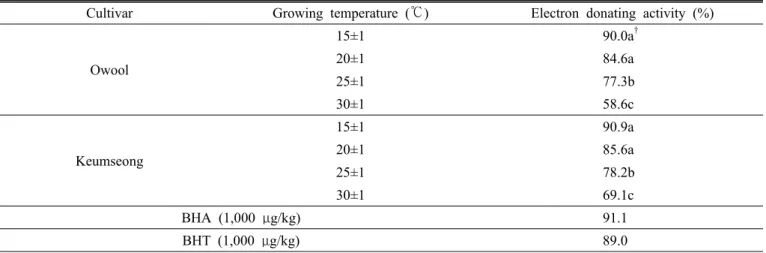
Table 2. DPPH radical scavenging activity of methanol extracts from the young sprouts of mungbean grown under different cultural temperatures.
Cultivar Growing temperature (℃) Electron donating activity (%)
Owool
15±1 90.0a†
20±1 84.6a
25±1 77.3b
30±1 58.6c
Keumseong
15±1 90.9a
20±1 85.6a
25±1 78.2b
30±1 69.1c
BHA (1,000 μg/kg) 91.1
BHT (1,000 μg/kg) 89.0
†Mean separation within columns by DMRT at 5% level.
다. 80% ethanol 조추출물의 총플라보노이드 함량은 Fig. 2 와 같이 어울녹두는 총페놀 함량과 유사하게 재배온도 15, 20, 25±1℃는 각각 175, 171, 158 mg/g으로 많았으나 상호 유의차는 없었고 30±1℃는 88 mg/g으로 유의하게 적었으 며, 반면에 금성녹두는 재배온도 15, 20±1℃에서 각각 154, 160 mg/g으로 많았으나 상호 유의차가 없었고 25, 30±1℃
는 저온에서보다 유의하게 적었다.
DPPH, ADH 및 ALDH 활성
재배온도에 따른 녹두나물 80% ethanol 조추출물의 DPPH 검정법에 의한 항산화활성을 측정한 결과는 Table 2와 같 다. 어울녹두와 금성녹두 모두 재배온도가 15±1℃에서 30±
1℃로 높아질수록 비례해서 DPPH 라디칼 소거활성은 낮 았으나, 15±1℃에서 어울녹두 90.0% 금성녹두 90.9%, 20±
1℃에서 어울녹두 84.6% 금성녹두 85.6%로 두 재배온도 간 차이는 없었다. 녹두나물 80% ethanol 조추출물의 ADH 활성은 ethanol assay kit(Roche Co.)를 이용하여 측정한 결 과 Fig. 3과 같이 재배온도에 따라 일정한 경향을 보이지 않 았고 품종간 차이도 크지 않았다. ALDH활성은 acetaldehyde assay kit(Roche Co.)를 사용하여 측정한 결과 Fig. 4와 같 이 어울녹두는 재배온도 15, 20±1℃에서 각각 126, 113%
로 높았고 25, 30±1℃에서는 낮아 재배온도 간 차이를 보 였으나 금성녹두는 ADH활성과 유사하게 재배온도 간 차이 가 없었다. 따라서 녹두나물 재배온도가 ADH나 ALDH활 성에 미치는 영향은 좀더 면밀한 검토를 실시해야 할 것으 로 판단된다.
본 연구는 가장 기본적으로 녹두나물 재배온도가 나물의 생육, 품질, 페놀화합물 함량, 기능성 등에 미치는 영향을
검토한 결과로 과거 관련 보고가 거의 없어 발전적인 연구 를 위한 기초적인 자료로 활용이 가능할 것으로 판단된다.
그리고 이상의 재배기간, 나물수율, 경실비율, 외관 품질, 페놀화합물 함량, 항산화활성 등을 종합해볼 때 녹두나물 재배온도는 20℃ 이상 25℃ 전・후로 보아지므로 이들 온도 범위에서 좀더 세밀한 연구가 진행되어야 할 것으로 판단된다.
126a†
98a 113a
102a
71b 112a
61b 95a
0 30 60 90 120 150
ALDH activity (%)
15± 1 20± 1 25± 1 30± 1
Gro wing te mpe ra ture (℃ )
O wo o l K eu ms e o ng
Fig. 4. Effect of ethanol extracts from the young sprouts of mungbean grown under different cultural temperatures, on ALDH activity. †Mean separation within columns by DMRT at 5% level.
사 사
본 논문은 농촌진흥청 연구비 지원에 의해 수행된 결과의 일부이며 이에 감사드립니다.
적 요
본 연구는 녹두나물 재배온도(15~30±1℃)에 따른 나물의 생육과 수율, 페놀화합물 함량, DPPH와 ADH 및 ALDH활 성에 미치는 영향을 분석하였다.
1. 녹두나물 재배온도가 높을수록 나물 생산수율은 높고, 경실비율은 낮았으나 25±1℃와 30±1℃는 큰 차이가 없었다.
2. 녹두나물의 ethanol 추출물의 총페놀 함량은 재배온도 15±1, 20±1, 25±1℃, 총플라보노이드 함량은 재배온도 15±
1, 20±1℃에서 많았다.
3. 녹두나물 ethanol 추출물의 DPPH 라디칼 소거활성은 재배온도가 낮을수록 높았고, ADH와 ALDH활성은 재배온 도 간 일정한 경향을 보이지 않았다.
4. 이상의 녹두나물 생산수율, 페놀화합물 함량, 생리활성 등을 고려해볼 때 녹두나물 재배 최적온도는 20~25℃로 보 아진다.
인용문헌
Bae, K. G., S. W. Nam, K. N. Kim, and Y. H. Hwang. 2002.
Effect of microbe control and water temperature on early growth and yield of soybean sprouts. Korean J. Crop Sci.
47(6) : 453-458.
Choi, H. D., S. S. Kim, S. R. Kim, and B. Y. Lee. 2000.
Effect of irrigation solutions on growth and rot of soybean sprouts. Korean J. Food Sci. Technol. 32(5) : 1122-1127.
Choi, I. H., S. O. Kim, K. S. Kim, and M. Y. Lee. 1998.
Effect of mungbean sprouts juice on cadmium-induced hepatotoxicity in rats. J. Korean Soc. Food Sci. Nutr. 27(5) : 980-986.
Duthie, G. C., and Alan. 2000. Plant-derived phenolic antio- xidants. Current opinion in clinical nutrition and metabolic care. Lippincott Williams and Wilkins. 3 : 447-45.
Kang, B. K., S. T. Jung, and S. J. Kim. 2002. Effects of vegetable extracts by solvent separation on alcohol dehydro- genase activity from Saccharomyces cerevisiae. Korean J.
Food Sci. Technol. 43(2) : 244-248.
Kang, G. H. 2001. Antioxidative activity of phenolic com- pounds isolated from safflower (Carthamus tinctorius L.) seeds. M. S. thesis. Catholic University of Daegu.
Kang, J. H., B. S. Jeon, Y. J. Cho, C. J. Park, S. Y. Yoon, and S. H. Jeon. 2004a. Effects of aeration temperature and period after BA treatment on growth and lateral root for- mation of soybean sprouts. Korean J. Crop Sci. 49(3) : 216- 221.
Kang, J. H., Y. S. Ryu, S. Y. Yoon, S. H. Jeon, and S. H.
Cho. 2004b. Effects of aeration period and temperature after imbibition on growth of mungbean sprouts. Koera J. Crop Sci. 49(6) : 472-476.
Kim, H. H., B. S. Jun, S. K. Kim, J. Y. Cha, and Y. S. Cho.
2000a. Polyphenolic compound content and antioxidative activities by extracts from seed, sprout and flower of saff- lower (Carthamus tinctorius L.) J. Korean Soc. Food Sci.
Nutr. 29 : 1127-1132.
Kim, K. J. 1982. Changes of lipid and free fatty acid in mungbean sprouts during growth. Korean Home Economics Association 20(2) : 85-89.
Kim, K. J. 1981. Changes of nitrogen compounds and free amino acid of mungbean sprout. Korean Home Economics Asso- ciation 19(1) : 25-31.
Kim, S. L., J. J. Hwang, Y. K. Son, J. Song, K. Y. Park, and K. S. Choi. 2000b. Culture methods for the production of clean soybean sprouts. I. Effect on growth of soybean sprouts under the temperature control of culture and water supply.
Korea Soybean Digest. 17(1) : 69-75.
Kim, S. L., J. Song, J. C. Song, J. J. Hwang, and H. S. Hur.
2000c. Culture methods for the production of clean soybean sprouts. II. Effect on the growth of soybean sprouts accord- ing to interval and quantity of water supply. Korea Soybean
Digest. 17(1) : 76-83.
Lieber, C. S. 1994. Alcohol and the liver: Update. Gastro- enterology 106 : 1085-1090.
Lister, C. E., J. E. Lancaster, and K. H. Sutton. 1994. Develop- mental changes in the concentration and composition of flavonoids in skin of a red and a green apple cultivar. J.
Sci. Food Agric. 64 : 155-161.
Namiki, M. 1990. Critical reviews in Food Sci. Nutr. 29 : 273- 300.
Nowak, K., R. Kujawa, and R. Zademowski. 1992. Antioxi- dative and antibacteral properties of phenolic compounds in rapeseed. Fat Sci. Technol. 94 : 149-152.
Raisin, A., J. K., and E. A. Chapman. 1976. Membrane phase change in chilling-sensitive Vigna radiata and their signifi- cance to growth. Australian J. Pl. Physiol. 3 : 291-299.
Simon, B., E. W., A. Minchin, N. M. McMenamin, and J. M.
Smith. 1976. The low temperature limit for seed germi- nation. New Phytol. 301-311.
Velioglu, Y. S., G. Mazza, L. Gao, and B. D. Oomah. 1998.
Antioxidant activity and total phenolics in selected fruits, vegetables, and grain products. J. Agricul. Food Chem. 46 : 4113-4117.
Wiese, J. G., M. G. Shlipak, and W. S. Browner. 2000. The alcohol hangover. Ann. Inter. Med. 132(11) : 897-902.