http://dx.doi.org/10.7840/kics.2014.39A.3.121
Performance Improvement Using Iterative Two-Dimensional Soft Output Viterbi Algorithm Associated with Noise Filter for
Holographic Data Storage Systems
Dinh-Chi Nguyen, Jaejin Lee°
ABSTRACT
Demand of the data storage becomes more and more growing. This requests the next generation of storage devices to have the dominated storage capability associated with superfast read/write rate. Holographic data storage (HDS) is investigated for a long time and is considered to be a candidate for the future storage system.
However, it has two-dimensional intersymbol interference that conventional one-dimensional detection solutions have not yet handled strictly because of the complexity level of system as well as the cost. We propose a new scheme that combines iterative soft output Viterbi algorithm with noise filter for improving the bit error rate performance of HDS.
Key Words : Colored Noise, Holographic Data Storage (HDS), Intersymbol Interference (ISI), Soft Output Viterbi Algorithm (SOVA)
※ 이 논문은 2013년도 정부(교육부)의 재원으로 한국연구재단의 지원을 받아 수행된 기초연구사업임(No. 2013R1A1A2059077).
First Author : 숭실대학교 정보통신전자공학부 정보저장 및 통신 연구실, 학생회원
° Corresponding Author : 숭실대학교 정보통신전자공학부 정보저장 및 통신 연구실, [email protected], 종신회원
논문번호 : KICS2014-02-058, Received February 13, 2014; Reviewed February 17, 2014; Accepted February 19, 2014
Ⅰ. Introduction
Digital data has become one of the most important parts nowadays and creates the increasing demand of data storage systems. This fact requires data storage systems to have high density, short access time, fast input and output transfer rate.
Holographic data storage (HDS) system is considered as a promissing candidate for next generation storage systems. However, the system has the problem of two-dimensional intersymbol interference (2D ISI) that causes the degradation for system performance. In [1], Kim and Lee proposed iterative two-dimensional soft output Viterbi algorithm (I-2D SOVA) for bit-patterned media storage, and as another effort, they also introduced noise filter (NF) scheme for this system in [2].
Those solutions have already brought the good results for improving system performance.
Moreover, in [3] Kim and Lee proofed the Modified 2D SOVA (M-2D SOVA) to contribute to the decrease of BER in HDS. The use of I-2D SOVA associated with NF scheme, however, has not yet been thoroughly researched. In order to continue Kim and Lee’s research, we propose a new solution for HDS that is based on combining I-2D SOVA and NF schemes.
The rest of this paper is arranged as follow.
Section II presents I-2D SOVA that is applied to HDS channel and the function of NF. The simulation results are illustrated and discussed in section III. The conclusions are summarized in section IV.
Ⅱ. System Model Analysis
2.1 Channel Model in HDS System
In general, HDS can be modeled as a
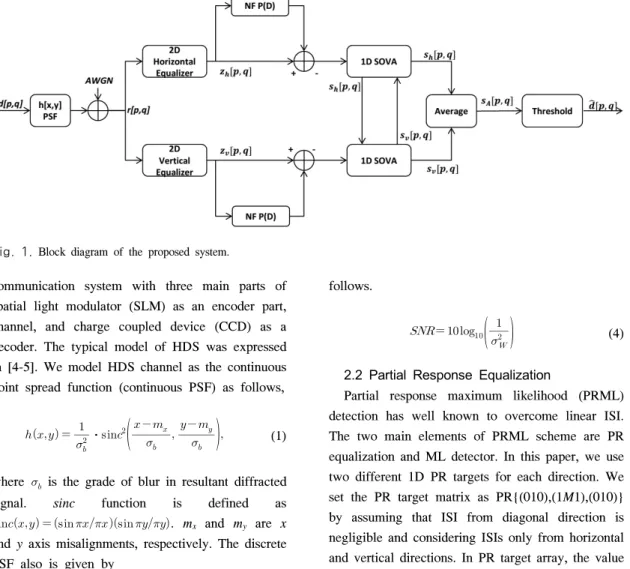
Fig. 1. Block diagram of the proposed system.
communication system with three main parts of spatial light modulator (SLM) as an encoder part, channel, and charge coupled device (CCD) as a decoder. The typical model of HDS was expressed in [4-5]. We model HDS channel as the continuous point spread function (continuous PSF) as follows,
⋅
(1)
where
is the grade of blur in resultant diffracted signal.
sincfunction is defined as
. m
xand m
yare x and y axis misalignments, respectively. The discrete PSF also is given by
(2)
where the linear fill factor of CCD is equal to 1.
From (1), HDS channel is affected by three main factors, namely, the grade of blur of diffracted signals (2D ISI), the amount of misalignment, and noise. We also limit the range of discrete PSF by a 5×5 matrix. If the input data is d[p,q], the signal at equalizer input r[p,q] is
⊗
(3) where n[p,q] is AWGN element and the operator
⊗is 2D convolution. The system SNR is defined as
follows.
(4)
2.2 Partial Response Equalization
Partial response maximum likelihood (PRML) detection has well known to overcome linear ISI.
The two main elements of PRML scheme are PR equalization and ML detector. In this paper, we use two different 1D PR targets for each direction. We set the PR target matrix as PR{(010),(1M1),(010)}
by assuming that ISI from diagonal direction is negligible and considering ISIs only from horizontal and vertical directions. In PR target array, the value of M shows the weight of the current pixel, others express the level of ISI from the neighbor pixels in both directions. The symbol “1” means the pixel affects the considering pixel with the amount of weight 1 and “0” means no influence.
The equalization methods are firstly used in communication systems. The equalization circuit in PRML system makes the received signal be asymptotically in the form of a given PR target. For PR target, we set the 1×3 vector in horizontal direction and the 3×1 vector for vertical direction.
We use two 2D equalizers with the 5
×5 array
coefficients to obtain these PR targets. These
equalizers have the same input r[p,q], and its
coefficients is updated using LMS algorithm to obey
MSE criterion. The mathematical basis of updating
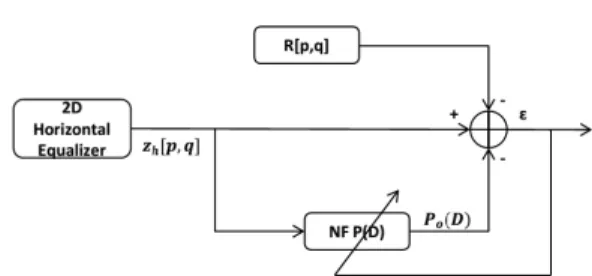
Fig. 2. Block diagram of the NF coefficient updating scheme in horizontal direction through training
process as follows.
⊗
(5)
⋅⋅
(6)
where z[p,q] is the equalizer output,
is the coefficients of equalizer,
that is the step-size of LMS algorithm equals to 5
×10
-6, and
is the difference between the output of equalizer and reference value R[p,q]. The reference value is target value that calculated by the multiplication between input data and PR vector on each direction, i.e.,
⊗
(7) where f[p,q] is the matrix of PR target coefficients.
In detail, for horizontal direction, the PR target vector denotes f
h[q] and for the other directiondenotes f
v[p].2.3 Noise Filter
One of the disadvantages of linear equalizer is noise enhancement. The equalizer, in nature, is FIR (Finite Impulse Response) filter. When the filter is linear time-invariant (LTI) and stable, it converts white noise into colored noise. As a consequence, this effect causes a significant degradation of the system performance because it is clear to show that Viterbi detection scheme has only the best performance for AWGN. Noise filter is one of solutions to avoid the effect that investigated for a long time
[6]. Before inputting SOVA detection, the equalizer output is passed by NF. The polynomial of noise predictor P(D) is as follows,
⋅(8)
where
is the i
thcoefficient of NF, D is the delay operator, and N is the length of noise predictor.
Through training the optimum coefficients of P(D) are found by LMS algorithm and MSE criterion are also applied to update them,
⋅⋅
(9)
where
is the step-size of LMS algorithm, which equals to 5
×10
-6; and
is calculated by
(10) where z[p,q] is the output of equalizer and P
o(D) isthe output of noise predictor circuit.
2.4 SOVA Detector
After training, the signal continue coming into detection unit. Soft output Viterbi algorithm (SOVA) detection is the modified version of pure Viterbi Algorithm. It outputs the soft value of log likelihood ratio (LLR). 2D SOVA is proposed by Kim and Lee to apply to HDS in [7-8]. They also suggested the different versions of 2D SOVA, namely, M-2D SOVA and I-2D SOVA. In this paper, we use I-2D SOVA that offered in [1] combining with the noise predictor technique for investigating BER performance of HDS system.
The operating principle of iterative SOVA is basically a direction receives the extrinsic information from the other direction. The manner helps it to consider the effect of the adjacent lines.
The procedure is applied to each 1D SOVA over
each direction in the same method. When the
process repeats for more than one time, better
detection performance can be expected. For
conventional 1D SOVA, we assume the horizontal
direction does not get extrinsic informations f개m
the vertical direction, i.e., it just cares about the
positions of (p-1,q), (p,q), (p+1,q) for calculating its
branch metric (BM) at (p,q) position. However, in
I-2D SOVA, 1D SOVA in horizontal direction
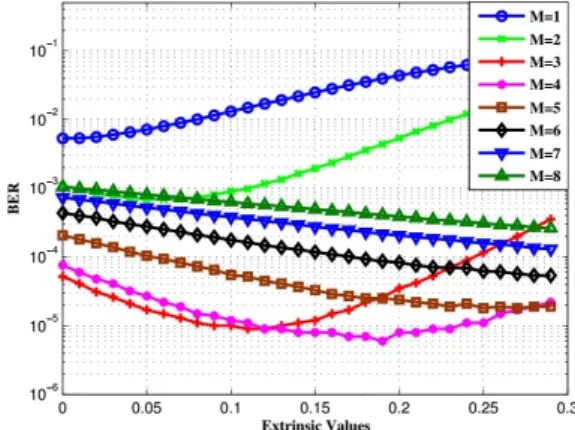
Fig. 3. BER performance according to values of M and extrinsic information in HDS system using the combining scheme (SNR: 15dB, the blur grade: 1.85, misalignment:
0%)
considers (p,q-1), (p,q+1) positions, too. The
extrinsic information makes the detection quality be improved.
Applying noise filter on each direction, it is necessary to modify the BM calculation of SOVA.
The BM for vertical direction is calculated as follows,
⋅
⋅
(11)
⋅ (12)
where s
jand s
kare the current state and the next state. z
v[p,q] is the vertical equalizer output. and
are decisions in s
jand s
k;. ExV is theextrinsic value.
is the difference between the equalizer output and a value passing through the PR target at the (p,q-i) position.
We focus on the two latter terms in (11). In the vertical direction, ExV is extrinsic information from
(p-1,q) and (p+1,q) positions. Extrinsic value isdetermined as,
±
± ≥
(13) where
βvalues are experimentally determined.
sh[p±1,q] is the output of 1D-SOVA for horizontal
direction at (p+1,q) and (p-1,q) positions. For the horizontal direction, ExV is also calculated in the same manner.
The final output of I-2D SOVA is determined by
(14)
≥ (15)
Ⅲ. Simulation Results And Discussion
3.1 Simulation Setup
We simulated 1000 pages with the size of 1024×1024 pixels for each page. Channel is modeled using 5×5 array coefficients. PR target matrix has a size of 3
×3 and each direction includes a vector of three elements. We use the two equalizers with the size of 5
×5 coefficients to reach these PR target values on each way. The number of taps for noise filter is selected by 4 because of the system complexity level, and the step-size of LMS for NF equals to 5
×10
-6. The grade of blur is fixed at 1.85.
3.2 Simulation Result
We carried out simulation to experimentally determine the optimum values of M and ExV when SNR is 15dB, no misalignment, and
is 1.85. For each values of M, we specify the optimum ExV. Fig.
3 shows these optimum values of M and ExV equal to 4 and 0.19, respectively.
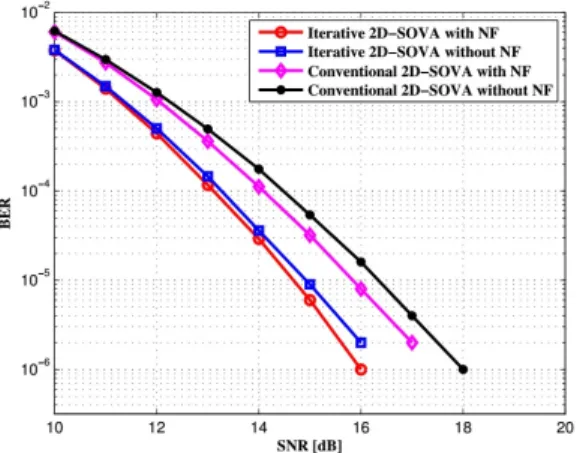
Figure 4 compares the system quality in four
cases, namely, I-2D SOVA with NF, I-2D SOVA
without NF, conventional 2D-SOVA, conventional
2D-SOVA with NF. The case with NF always have
better performance than that without NF. The
proposed scheme, at BER
, performs 0.2dB
better than iterative 2D SOVA without NF, 1dB
better than conventional 2D SOVA with NF, and
2dB better than conventional 2D SOVA without NF.
We also looked into the quality of the proposed system when there is misalignment. These misalignments values are selected, one by one, with 10% and 20% in both the x-axis and y-axis. As in the foresighted result, in Fig. 5, the system with NF has a better BER performance than that without NF, especially, when there is larger misalignment.
Fig. 4. Comparision of BER performance
Fig. 5. BER performance in accordance with misalignment
Ⅳ. Conclusion
In this paper, we propose the combining scheme of iterative 2D SOVA and noise filter in order to mitigate the unwanted effects of 2D ISI that occurs in high density HDS systems. From the simulation, the set of optimum values for the proposed system are M=4, ExV=0.19, N=4, and the step-size of LMS
algorithm equals to 5
×10
-5. From results, the collaboration of two schemes brings improved BER performance.
References
[1] J. Kim and J. Lee, “Iterative two-dimensional soft output Viterbi algorithm for patterned media,” IEEE Trans. Magn., vol. 47, no. 3, pp. 594-597, Mar. 2011.
[2] J. Kim and J. Lee, “Two-dimensional soft output Viterbi algorithm with noise filter for patterned media storage,” J. Appl. Phys., vol.
109, no. 7, pp. 07B742, Jul. 2011.
[3] J. Kim and J. Lee, “Modified two-dimensional soft output Viterbi algorithm for holographic data storage,” Jpn. J. Appl. Phys., vol. 49, no.
8, pp. 08KB03, Aug. 2010.
[4] M. Keskinoz and B. V. K. V. Kumar,
“Efficient modeling of volume holographic storage channels (VHSC),” in Proc. SPIE, vol.
4090, pp. 205-210, 2000.
[5] V. Vadde and B. V. K. V. Kumar, “Channel modeling and estimation for intrapage equalization in pixel-matched volume holographic data storage,” Appl. Opt., vol. 38, no. 20, pp. 4374-4386, 1999.
[6] J. D. Coker, E. Eleftheriou, R. L. Galbraith, and W. Hirt, “Noise-predictive maximum likelihood (NPML) detection,” IEEE Trans.
Magn., vol. 34, no. 1, pp. 110-117, Jan. 1998.
[7] J. Kim and J. Lee, “Performance of two-dimensional soft output Viterbi algorithm for holographic data storage,” J. KICS, vol.
37, no. 10, pp. 815-820, Oct. 2012.
[8] J. Kim and J. Lee, “Two-dimensional SOVA
and LDPC codes for holographic data storage
system,” IEEE Trans. Magn., vol. 45, no. 5,
pp. 2260-2263, May 2009.
누엔딘지
(Dinh-Chi Nguyen)
2012년 6월 : Military Technical Academy, 전기전자공학과 학사 2013년 3월~현재 : 숭실대학교
석사과정
<관심분야> 정보저장장치용 변 조부호 및 신호처리
이 재 진