• 검색 결과가 없습니다.

Inhibitory Effects of ECQ on Indomethacin-Induced Gastric Damage in Rats

N/A
N/A
Protected

Academic year: 2022

Share "Inhibitory Effects of ECQ on Indomethacin-Induced Gastric Damage in Rats"

Copied!
6
0
0

로드 중.... (전체 텍스트 보기)

전체 글

(1)

399 http://dx.doi.org/10.4196/kjpp.2012.16.6.399

ABBREVIATIONS: CAT, catalase; CMC, carboxy methyl cellulose;

ECQ, extracts containing QGC; GAPDH, glyceraldehyde-3-phosphate dehydrogenase; GSH, glutathione sulfhydryl; HETAB, hexadecyl trimethyl ammonium bromide; IND, indomethacin; MDA, malondial- dehyde; MPO, myeloperoxidase; QGC, quercetin-3-O-β-D-glucuro- nopyranoside; ROS, reactive oxygen species; SOD, superoxide dismutase; TMB, tetra methylbenzidine; TBA, thiobarbituric acid;

TBARS, thiobarbituric acid reactive substances.

Received October 19, 2012, Revised November 6, 2012, Accepted November 22, 2012

Corresponding to: Uy Dong Sohn, Department of Pharmacology, College of Pharmacy, Chung-Ang University, 221, Heukseok-dong, Dongjak-gu, Seoul 156-756, Korea. (Tel) 82-2-820-5614, (Fax) 82-2- 826-8752, (E-mail) [email protected]

This is an Open Access article distributed under the terms of the Creative Commons Attribution Non-Commercial License (http://

creativecommons.org/licenses/by-nc/3.0) which permits unrestricted non-commercial use, distribution, and reproduction in any medium, provided the original work is properly cited.
Inhibitory Effects of ECQ on Indomethacin-Induced Gastric Damage in Rats

Juho Jung, Yoonjin Nam, and Uy Dong Sohn

Department of Pharmacology, College of Pharmacy, Chung-Ang University, Seoul 156-756, Korea

We investigated inhibitory effects of extract containing quercetin-3-O-β-D-glucuronopyranoside (ECQ) extracted from Rumex Aquaticus Herba on indomethacin-induced gastric damage in Rats. Gastritis was induced in male Sprague-Dawley rats (200∼ 220 g) by oral administration of indomethacin at a dose of 40 mg/kg. One hour before administration of indomethacin, animals were orally pretreated with ECQ at doses of 0.3, 1, 3 or 10 mg/kg. Six hours after indomethacin administration, the rats were sacrificed and the stomach was excised and opened along the greater curvature, and the surface area of gastric lesion was measured using optical microscope. Superoxide dismutase (SOD), catalase (CAT), myeloperoxidase (MPO) activities and malondialdehyde (MDA) levels were measured by ELISA.

Western blot analysis was performed to detect protein expression of SOD-2. Linear hemorrhagic mucosal lesions were observed in the stomach 6 hours after oral administration of indomethacin. Pretreatment with ECQ significantly reduced the severity of the lesions in a dose-dependent manner. It also inhibited the reductions in SOD and CAT activities and SOD expression by the indomethacin-induced gastric damage. In addition, the pretreatment with ECQ significantly suppressed the elevation of the MPO activity and the MDA levels induced by indomethacin. These results suggest that ECQ has the inhibitory effects via antioxidative action against indomethacin-induced gastritis in rats.

Key Words: Extract, Flavonoid, Indomethacin-induced gastritis, QGC, Rats

INTRODUCTION

Non-steroidal anti-inflammatory drugs (NSAIDs) are wide- ly used in the treatment of fever, pain and inflammation.

However, these drugs have some side effects, especially on the gastrointestinal tract such as gastric mucosal erosions, ulcerations, bleeding, and perforations [1,2].

Infection by Helicobacter pylori is a leading cause of pep- tic ulcer disease without associations with NSAIDs. H. pylo- ri colonizes the deep mucosal layers coated in the gastric mucosa and presumably disrupts their protective proper- ties. H. pylori is thought to infect clinically all patients with chronic active gastritis. NSAIDs such as aspirin also inter- fere with the protective mucus layer by inhibiting mucosal cyclooxygenase activity and reducing levels of mucosal prostaglandins. Many people with H. pylori colonization or taking NSAIDs do not suffer from gastritis or peptic ulcer disease, which indicates that other important causative fac-

tors can be involved [3].

Reactive oxygen species (ROS) which cause lipid perox- idation, have been known to play a critical role in the devel- opment of pathogenesis in acute gastric damage induced by stress, ethanol and NSAIDs [4,5]. Thus, much attention has been attracted on ROS which includes oxygen ions, free radicals, and peroxides. When ROS attack to cells, the cells defend themselves using radical scavenging enzymes such as superoxide dismutase (SOD) and catalase (CAT). There- fore their antioxidative activity is very important for pro- tection of gastric damage [6].

SOD catalyzes the dismutation of superoxide into oxygen and hydrogen peroxide. SOD is an important to defend cells from toxic reactive oxygen species [7]. Previous researches demonstrated that antioxidative ability, as determined SOD activity, was decreased in indomethacin-induced gastric ul- cer rat [8]. In addition, CAT catalyzes the decomposition of hydrogen peroxide to water and oxygen molecules. There- fore, the enzymes should quickly less dangerous substances to prevent cell damage [9,10].

Flavonoids, secondary metabolites in the plants, have

been recognized to possess anti-inflammatory, anti-oxidant,

(2)

anti-allergic, hepatoprotective, anti-thrombotic, anti-viral, and anti-carcinogenic activities [11,12]. The flavonoids are typical phenolic compounds acting as potent metal chela- tors and free radical scavengers [13].

The major component in the extract used in this study is quercetin-3-O-β-D-glucuronopyranoside (QGC). QGC is a flavonoid glycoside extracted from a Rumex Aquaticus Herba through a series of steps. Rumex Aquaticus is a family of Polygonaceae. In the traditional oriental medicine, this plant has been used as a drug for disinfestation, diarrhea, antipyretic drug, edema, jaundice and constipation. In the previous study performed in our research group, QGC is more potent than a quercetin on inhibition of experimental reflux esophagitis and indomethacin-induced gastritis in Sprague-Dawley rats, in vivo [14]. The efficacies of QGC were caused by decreasing ulcer index, gastric volume, total acidity and thiobarbituric acid reactive substance (TBARS).

Our previous study indicated that QGC induces HO-1 known as one of the anitoxidative enzymes in cultured feline esophageal epithelial cells [15].

The aim of the present study is (i) to evaluate the gastro- protective effect of extract containing quercetin-3-O-β- D-glucuronopyranoside (ECQ) on indomethacin-induced gastric lesions in rat; (ii) to determine the effect of ECQ on the activity or the expression of antioxidative enzymes, such as SOD and CAT; and (iii) to study its effects on the activity of myeloperoxidase (MPO) as a marker of neu- trophil infiltration and the TBARS level as an index of lipid peroxidation in indomethacin-induced gastritis model.

METHODS Materials

ECQ was thankfully supplied by Pharmacal Botany Resources Laboratory (Prof. Whang, Chung-Ang Univ., Seoul, Korea). It was extracted from Rumex Aquaticus with ethanol and subsequently partitioned between chloroform and water to provide a chloroform-soluble fraction and a water-soluble fraction. ECQ is a water-soluble fraction and we used ECQ containing 8∼10% QGC. The chemical struc- ture of QGC was shown in our previous study [15]. SOD assay kit was from Sigma Chemical Co. (St Louis, MO, USA), CAT assay kit was an Express EIA kit from Cayman chemical (Ann arbor, MI, USA), and MDA assay kits were purchased from BioRad (Cell Biolabs, Inc.). Trichloroacetic acid (TCA), indomethacin, carboxymethylcellulose (CMC), thiobarbituric acid (TBA), n-butanol, hexadecyltrimethl- yammonium bromide (HETAB), hydrogen peroxide and di- methylformamide were purchased form Sigma (St. Louis, MO, USA). Superoxide dismutase-2 and GAPDH antibody were purchased from Santa Cruz Biotechnology (Santa Cruz, CA, USA). Protein assay kits were purchased from BioRad (Richmond, CA, USA).

Animals

Male Sprague-Dawley rats with a body weight of about 200∼220 g were used for the experiments. The animals were group-housed in cages with wire-net floors to prevent coprophagy in a room controlled for temperature (24∼25

o

C) and humidity (70∼75%) and were fed a normal laboratory diet (Samtako Bio). The rats were starved for 24 hours be- fore the experiments, but were freely allowed to drink

water. For experiments, animals were randomized into groups of n=5. All animal experiments were approved by the Institutional Animal Care and Use Committee of Chung-Ang University, in accordance with the guide for the Care and Use of Laboratory Animals in Seoul, Korea.

Evaluation of indomethacin-induced gastritis Gastric mucosal injury was produced by intragastric gav- age of 40 mg/kg of indomethacin, suspended in 0.5% carbox- ymethylcellulose (CMC). ECQ was given orally one hour be- fore indomethacin administration. The volume of the ex- tract or vehicle was 2 ml/kg of body weight. Six hours after the indomethacin administration, the animals were sacri- ficed with an overdose of ether and their stomachs were excised, opened along the greater curvature and spread out with pins on a board. The area (mm

2

) of mucosal erosive lesions was measured under a dissecting microscope with a squared grid (X10; Olympus, Tokyo, Japan).

Biochemical investigation of stomach tissues

After the macroscopic analyses, SOD and CAT activities, SOD expression, MPO and MDA levels in rat stomach tis- sues were determined. To prepare the tissue homogenates, stomach tissues were cut with iris scissors. The grinded tis- sues were then treated with 2.0 ml of appropriate buffer.

The mixtures were homogenized on ice using a homogenizer (TMZ-20DN, TAEMIN, Korea) for 30 sec, 3 times. Homoge- nates were filtered and centrifuged by using a refrigerated centrifuge at 4

o

C. Then, these supernatants were used for the determination of the enzymatic activities. All assays were carried out at room temperature in duplicate.

TBARS assay (MDA levels)

Lipid peroxidation was determined according to the method of Buege and Aust by measuring spectrophoto- metrically the formation of thiobarbituric acid reactive sub- stances (TBARS) [16]. Stomach tissue was homogenized on ice for 30 sec, 3 times (TME-20DN, TAEMIN, Korea), soni- cated in 1 ml of Tris-HCl buffer (pH 7.0). After centrifuga- tion at 12,000 g for 20 min at 4

o

C (Micro17TR, Hanil, Korea), 0.9 ml of 8% trichloroacetic acid (TCA) was added to 0.3 ml of supernatant. The sample was again centrifuged at 10,000 g at 4

o

C for 5 min. Then 0.25 ml of TBA (1%) was added to 1 ml aliquot of supernatant and the resulting solution was heated at 100

o

C for 20 min. The tubes were cooled, 2 ml of n-butanol was added and each tube was vor- texed for 90 sec. After centrifugation at 3,000 g for 5 min at 4

o

C, 1 ml of the n-butanol phase was utilized for TBARS assay at 532 nm (UV-160A, Shimadzu, Japan) against ma- londialdehyde (MDA) standards. Results were expressed as ng/mg protein.

Measurement of SOD-2 and catalase activity

Stomach tissue was homogenized on ice in 5 ml of 50

mM potassium phosphate buffer (pH 7.4, containing 1 mM

EDTA) per gram tissue. After centrifugation at 10,000 g

for 15 min at 4

o

C, the supernatant was removed for assay-

ing SOD and catalase using each assay kit. Assays were

performed according to the manufacturer’s instruction.

(3)

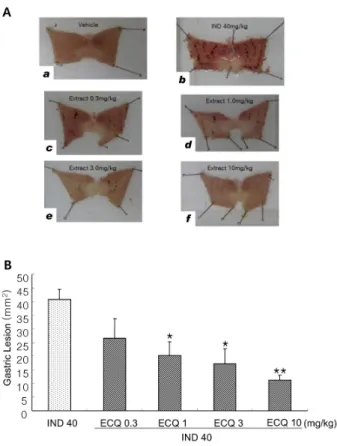
Fig. 1. Protective Effect of ECQ on gastric lesions induced by indomethacin (IND) in rats. (A) Representative macroscopic findings of the gastric lesions induced by IND 40 mg/kg in rats:

(a) Vehicle group, (b) IND group, (c∼f) One hour before oral administration of IND 40 mg/kg, animals were orally pretreated with ECQ at dose of 0.3, 1.0, 3.0, or 10 mg/kg, respectively. Six hours later, the animals were then sacrificed by cervical dislocation and the stomach was harvested. (B) Macroscopic damage was quantified by measuring the extent of the gastric mucosal lesions.

Each value represents the mean±S.E.M. (n=5 per group). *p<0.01 and **p<0.001 vs. IND group.

Measurements of mucosal MPO levels

The MPO assay was modified from previously described method [17]. One milliliter of the leukocyte suspension was centrifuged at 620×g at 4

o

C for 2 min. The precipitate was suspended in 1 ml of 80 mM sodium phosphate buffer, pH 5.4, containing 0.5% Hexadecyltrimethlyammonium bromide (0.5% HETAB solution), freeze-thawed 3 times and centri- fuged at 1,400×g at 4

o

C for 5 min. Duplicate 30 μl samples of resulting supernatant were poured into a 96-well micro- titer plate. For the assay, 200 μl of a mixture containing 100 μl phosphate buffered saline, 85 μl of 0.22 M sodium phosphate buffer, pH 5.4, and 15 μl of 0.017% hydrogen peroxide was added to each well. The reaction was started by the addition of 20 μl of 18.4 mM TMB·HCl in 8% aque- ous dimethylformamide. Plates were stirred and incubated at 37

o

C for 3 min and then placed on ice where the reaction was stopped by addition of 30 μl of 1.46 M sodium acetate, pH 3.0 to each well. The MPO value was calculated by measuring the absorbance of samples at 620 nm (OD value) and comparing to a MPO standard.

Protein determination

The protein concentration of the supernatant in each re- action vial was measured spectrophotometrically using the Bio-Rad assay kit (Bio-Rad Chemical Devision, Richmond, CA). Absorption was monitored at 595 nm.

Western blot analysis

Equal amounts of protein from each sample were sub- jected to electrophoresis on a 12% SDS-polyacrylamide gel and transferred to a nitrocellulose (NC) membrane, using power supply, Power Pac 1000 (Bio-Rad, Melville, NY). To block nonspecific binding, the NC membrane was incubated in 5% nonfat dry milk in PBS for 60 min followed by three rinses in milk-free PBS. The membranes were incubated for 1 hour with shaking with primary antibodies raised against SOD-2 followed by three washes with PBS contain- ing 0.05% Tween 20. This was followed by 60 min in- cubation in horseradish peroxidase-conjugated secondary antibody. Detection was performed with an enhanced chem- iluminescence agent. Molecular masses were estimated by comparison with a prestained molecular mass. To confirm uniformity of protein loading, the same blots was sub- sequently stripped with western blot stripping buffer and reproved with GAPDH antibody. Developed films were scanned and analyzed densitometrically using Scion Image.

Percent of SOD-2 expression was calculated as the ratios of SOD-2 to GAPDH.

Data analysis

The data are expressed as the means±S.E.M. of n sepa- rate experiments and the statistical differences between means were determined by Student’s t-test (two-tailed), with p<0.05 considered as significant.

RESULTS

Effect of ECQ on indomethacin-induced gastric hemo- rrhagic lesions

Six hours after oral administration of indomethacin 40 mg/kg, gross linear hemorrhagic mucosal lesions were ob- served in the gastric mucosa, and pretreatment with ECQ markedly reduced the number and severity of these lesions (Fig. 1A). Quantitative measurement for the gastric lesions is shown in Fig. 1B. Pretreatment with ECQ reduced the areas of gastric lesions induced by indomethacin in a dose-dependent manner. In particular, ECQ at dose of 10 mg/kg significantly prevented the gastric damage by 75%

(p<0.001)compared to indomethacin group, while pretreat-

ment of ECQ at dose of 0.3 mg/kg decreased the gastric

damage by 25% compared to indomethacin group. Pretreat-

ment with ECQ at dose of 1 mg/kg and 3 mg/kg also sig-

nificantly reduced the gastric damage induced by indome-

thacin (p<0.01).

(4)

Fig. 2. Effect of ECQ on indomethacin (IND)-induced gastric mucosal SOD activity in rats. ECQ (0.3, 1.0, 3.0, or 10 mg/kg) were pretreated one hour before administration of IND, and then SOD activity was estimated 6 hours after the IND administration. Each value represents the mean±S.E.M. (n=5 per group). *p<0.001 vs.

vehicle group,

#

p<0.05 vs. IND group.

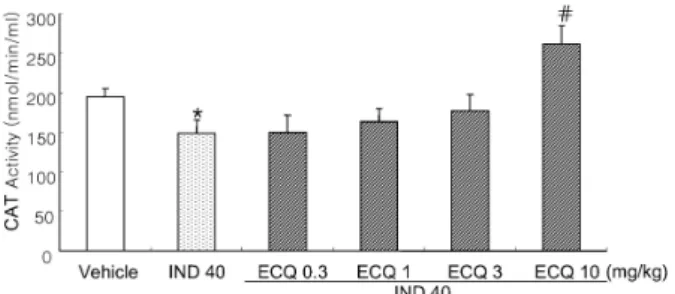
Fig. 3. Effect of ECQ on indomethacin (IND)-induced gastric mucosal CAT activity in rats. ECQ (0.3, 1.0, 3.0, or 10 mg/kg) were given one hour before administration of IND, and then CAT activity was estimated 6 hours after the IND administration. Each value represents the mean±S.E.M. (n=5 per group). *p<0.05 vs. vehicle group,

#

p<0.01 vs. IND group.

Fig. 5. Effect of ECQ on indomethacin (IND)-induced gastric MPO activity in rats. ECQ (0.3, 1.0, 3.0, or 10 mg/kg) were pretreated one hour before administration of IND, and then MPO activity was estimated 6 hours after the IND administration. Each value represents the mean±S.E.M. (n=5 per group). *p<0.05 vs. vehicle group,

#

p<0.05 vs. IND group.

Fig. 4. The expression of SOD-2 in indomethacin (IND) treated groups with or without ECQ. ECQ (0.3, 1.0, 3.0, or 10 mg/kg) were pretreated one hour before administration of IND, and then SOD-2 expression was detected by Western blot analysis 6 hours after the IND administration (The representative blot is shown). Each value represents the mean±S.E.M. (n=5 per group). *p<0.05 vs. vehicle group,

#

p<0.05 vs. IND group.

Effect of ECQ on SOD or CAT activities in indome- thacin-induced gastric damage

Oral administration of indomethacin 40 mg/kg induced a marked decrease in SOD activity compared to vehicle group. However, pretreatment with ECQ seemed to show increase in the activity of SOD in a dose-dependent man- ner. In particular, ECQ at dose of 10 mg/kg almost com- pletely restored the loss of SOD activity induced by in- domethacin in gastric mucosa (Fig. 2).

Indomethacin administration also showed a reduction in CAT activity compared to vehicle group, and pretreatment with ECQ tended to induce an increase in the activity of CAT in a dose-dependent manner. Pretreatment with ECQ at dose of 10 mg/kg significantly increased CAT activity compared to indomethacin group (Fig. 3).

Effect of ECQ on expression of SOD-2 in indomethacin- induced gastric damage

SOD-2 expression was significantly decreased by 20% in the group treated with indomethacin alone compared to ve- hicle group. However, pretreatment with ECQ seemed to induce an increase in the SOD-2/GAPDH ratio compared to indomethacin alone group. Interestingly, ECQ at dose

of 10 mg/kg significantly increased the SOD-2/GAPDH ratio compared to indomethacin group in gastric mucosa (Fig. 4).

Effect of ECQ on MPO levels in indomethacin-induced gastric damage

To estimate the degree of mucosal infiltration by neu- trophils elicited by oral administration of indomethacin 40 mg/kg, the MPO levels were measured with or without pre- treatment of ECQ in the gastric mucosa. In the group of rats that received indomethacin alone, MPO activity was significantly increased by 189% compared to vehicle group.

However, pretreatment of ECQ tended to induce a reduc- tion in the MPO activity in a dose-dependent manner.

Especially, pretreatment of ECQ at the dose of 10 mg/kg significantly reduced the MPO levels by 75.3% compared to indomethacin group (Fig. 5).

Effect of ECQ on MDA levels in indomethacin-induced gastric damage

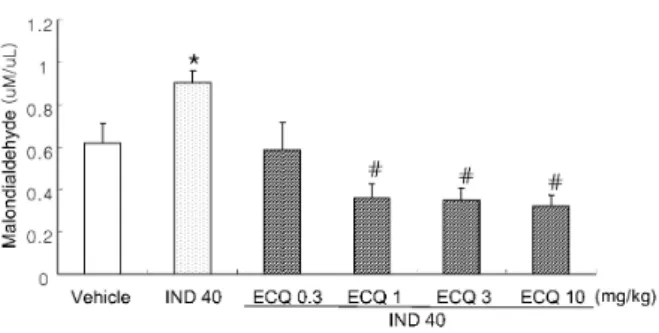
As shown in the Fig. 6, MDA levels used as an index

of lipid peroxidation in the gastric tissue, were significantly

higher in the indomethacin alone group than in the vehicle

(5)

Fig. 6. Effect of ECQ on indomethacin (IND)-induced increases in gastric MDA level in rats. ECQ (0.3, 1.0, 3.0, or 10 mg/kg) were pretreated one hour before IND administration, and then MDA level was estimated 6 hours after the IND administration. Each value represents the mean±S.E.M. (n=5 per group). *p<0.05 vs.

vehicle group,

#

p<0.01 vs. IND group.

group. On the other hand, pretreatment of ECQ at dose of 1, 3 and 10 mg/kg significantly prevented the increase of the MDA levels induced by indomethacin.

DISCUSSION

Flavonoids are naturally occurring plant polyphenols found in abundance in the fruit, vegetables and plant-de- rive beverages such as green tea. It is well known that fla- vonoids have anti-inflammation and anti-oxidative effects [18]. Quercetin, a flavonoid, has been shown to chelate iron ions [19] or to scavenge superoxide anions [20,21]. It has been reported to exert anti-inflammatory [22], anti-throm- botic [23], anti-bacterial and anti-tumoral [24] effects: it prevents gastric mucosal lesions produced by ethanol [25], cold-restraint stress, and the HCl plus ethanol [26]. Inter- estingly, our previous study revealed that QGC is more po- tent than a quercetin on inhibition of experimental reflux esophagitis and indomethacin-induced gastritis in Sprague- Dawley rats: Oral administration of QGC decreased ulcer index, injury area, gastric volume and acid output, and in- creased gastric pH. The elevation of MDA levels in reflux esophagitis was aslo inhibited by QGC, but not by quercetin [14]. Therefore, we have continued to focus on investigating the effects of QGC and its mechanism on upper gastro- intestinal damage: QGC protection from indomethacin-in- duced damage is associated with increased gastric mucus secretion, inhibition of free radical production by activated neutrophils via ICAM-1, and the downregulation of pro-in- flammatory cytokine [27]; the cytoprotective effect of QGC against ethanol-induced cell damage may involve inhibition of ROS generation and downstream activation of the ERK 1/2 in cultured feline esophageal epithelial cells [28]. Our previous study also revealed that QGC could result in en- hanced antioxidant enzyme defense system via HO-1 ex- pression and Nrf2 translocation involving both the ERK and PI3K-Akt pathways as well as partly PKC pathways in cultured feline esophageal epithelial cells [15].

In the present study, we investigated the protective ef- fects of extract containing 8∼10% QGC against gastric damage induced by oral administration of indomethacin.

The result suggested that the extract at 10 mg/kg has a protective effect and an anti-oxidative effect on indometha- cin-induced gastric damage. The pretreatment with ECQ by oral administration significantly reduced the indometha-

cin-induced gastric damage with an increase in the activ- ities of antioxidative enzymes such as SOD and catalase, and significantly increased SOD-2 expression. Some au- thors have demonstrated that oxygen free radicals were di- rectly implicated in the pathogenesis of indomethacin-in- duced mucosal damage [29]. Free radicals can also alter the cellular antioxidant defense system including SOD and CAT [30]. This might lead to aggravated tissue damage dur- ing stomach ulceration [31].

In the present study, when the MPO levels were meas- ured in the gastric mucosa in order to estimate the degree of mucosal infiltration by neutrophils elicited by treatment with indomethacin, the pretreatment with ECQ by oral ad- ministration attenuated MPO activity. The circulating neu- trophils play a critical role in the pathogenesis of mucosal lesions provoked by NSAIDs [1], acetic acid [32], and etha- nol [33]. These leukocytes might contribute to gastric ulcer- ation by various mechanisms, such as production of reactive oxygen metabolites or release of proteases and lipid media- tors such as leukotrienes and PAF which affect vascular tone and permeability, exacerbating tissues ischemia [34].

Leukotrienes which are potent vasoconstrictors, have been identified in the gastric mucosa, particularly after exposure to ethanol. They exert various biological actions including vasoconstrictive effect, that could contribute to their role as mediators of ischemic and tissue damage.

It is well known that induction of gastric lesions by in- domethacin is the oxidative damage with its dual events of reactive oxygen species (ROS) generation and lipid perox- idation [35,36]. Indomethacin activates the polymorphonu- clear leucocytes in peripheral blood and enhances the re- lease of ROS from these cells [37]. ROS induce lipid perox- idation which is believed to be an important cause of de- struction and damage of the cellular membranes. In the present study, the involvement of extensive lipid perox- idation in indomethacin-induced gastric damage was evi- denced by the accumulation of MDA level, as an index of lipid peroxidation, and MPO activity, as a marker of neu- trophil aggregation, which was probably substantial enough to contribute to the gastritis. However, the pretreatment with ECQ also reversed the elevation of MDA levels in- duced by indomethacin. Therefore, the inhibitory activity of ECQ may result from its ability to scavenge ROS pro- duced by indomethacin administration which initiate lipid peroxidation.

Taken together, the pretreatment with ECQ was proven to protect against gastric damage, which is susceptible to NSAIDs in rats. The underlying mechanism of gastro- protective effects of the ECQ on gastric damage induced by indomethacin could be related to its anti-inflammatory actions and its antioxidant properties, which reduce MDA levels and MPO activity and increase SOD and CAT activ- ities and SOD-2 expression. This ECQ was also proven to be safe in our recent study which examined the acute tox- icity and the general pharmacological action of the ECQ to search for any side effects in rats, mice, guinea pigs, and cats [38]. Therefore, the results suggest that ECQ could be a promising new drug for the prevention of NSAIDs-in- duced gastric damage.

ACKNOWLEDGEMENTS

This research was supported by the Chung-Ang University

Research Scholarship Grants in 2011∼2012.

(6)

REFERENCES

1. Wallace JL, Keenan CM, Granger DN. Gastric ulceration indu- ced by nonsteroidal anti-inflammatory drugs is a neutrophil- dependent process. Am J Physiol. 1990;259:G462-G467.

2. Zhang X, Tajima K, Kageyama K, Kyoi T. Irsogladine maleate suppresses indomethacin-induced elevation of proinflammatory cytokines and gastric injury in rats. World J Gastroenterol.

2008;14:4784-4790.

3. Goenka MK, Majumder S, Sethy PK, Chakraborty M. Helico- bacter pylori negative, non-steroidal anti-inflammatory drug- negative peptic ulcers in India. Indian J Gastroenterol. 2011;

30:33-37.

4. Banerjee RK. Nonsteroidal anti-inflammatory drugs inhibit gastric peroxidase activity. Biochim Biophys Acta. 1990;1034:

275-280.

5. Das D, Bandyopadhyay D, Bhattacharjee M, Banerjee RK.

Hydroxyl radical is the major causative factor in stress-induced gastric ulceration. Free Radic Biol Med. 1997;23:8-18.

6. Abdallah DM, El-Abhar HS, Abdel-Aziz DH. TEMPOL, a mem- brane-permeable radical scavenger, attenuates gastric mucosal damage induced by ischemia/reperfusion: a key role for supero- xide anion. Eur J Pharmacol. 2009;603:93-97.

7. Sugino N. The role of oxygen radical-mediated signaling path- ways in endometrial function. Placenta. 2007;28 Suppl A:S133- S136.

8. Bandyopadhyay SK, Pakrashi SC, Pakrashi A. The role of anti- oxidant activity of Phyllanthus emblica fruits on prevention from indomethacin induced gastric ulcer. J Ethnopharmacol.

2000;70:171-176.

9. Gaetani GF, Ferraris AM, Rolfo M, Mangerini R, Arena S, Kirkman HN. Predominant role of catalase in the disposal of hydrogen peroxide within human erythrocytes. Blood. 1996;87:

1595-1599.

10. Jainu M, Devi CS. Gastroprotective action of Cissus quadran- gularis extract against NSAID induced gastric ulcer: role of proinflammatory cytokines and oxidative damage. Chem Biol Interact. 2006;161:262-270.

11. Kim Y, Kim WJ, Cha EJ. Quercetin-induced growth inhibition in human bladder cancer cells is associated with an increase in Ca-activated K Channels. Korean J Physiol Pharmacol.

2011;15:279-283.

12. Lee BH, Shin TJ, Hwang SH, Choi SH, Kang J, Kim HJ, Park CW, Lee SH, Nah SY. Inhibitory effects of quercetin on muscle-type of nicotinic acetylcholine receptor-mediated ion currents expressed in xenopus oocytes. Korean J Physiol Phar- macol. 2011;15:195-201.

13. Middleton E Jr, Kandaswami C, Theoharides TC. The effects of plant flavonoids on mammalian cells: implications for inflam- mation, heart disease, and cancer. Pharmacol Rev. 2000;52:673- 751.

14. Min YS, Lee SE, Hong ST, Kim HS, Choi BC, Sim SS, Whang WK, Sohn UD. The inhibitory effect of quercetin-3-O-beta-D- glucuronopyranoside on gastritis and reflux esophagitis in rats.

Korean J Physiol Pharmacol. 2009;13:295-300.

15. Kim JS, Song HJ, Ko SK, Whang WK, Sohn UD. Quercetin-3- O-beta-d-glucuronopyranoside (QGC)-induced HO-1 expression through ERK and PI3K activation in cultured feline esophageal epithelial cells. Fitoterapia. 2010;81:85-92.

16. Buege JA, Aust SD. Microsomal lipid peroxidation. Methods Enzymol. 1978;52:302-310.

17. Grisham MB, Benoit JN, Granger DN. Assessment of leukocyte involvement during ischemia and reperfusion of intestine.

Methods Enzymol. 1990;186:729-42.

18. Nijveldt RJ, van Nood E, van Hoorn DE, Boelens PG, van Norren K, van Leeuwen PA. Flavonoids: a review of probable mechanisms of action and potential applications. Am J Clin Nutr. 2001;74:418-425.

19. Kostyuk VA, Potapovich AI, Speransky SD, Maslova GT. Protec-

tive effect of natural flavonoids on rat peritoneal macrophages injury caused by asbestos fibers. Free Radic Biol Med. 1996;21:

487-493.

20. Martín MJ, La-Casa C, Alarcón-de-la-Lastra C, Cabeza J, Ville- gas I, Motilva V. Anti-oxidant mechanisms involved in gastro- protective effects of quercetin. Z Naturforsch C. 1998;53:82-88.

21. Robak J, Gryglewski RJ. Flavonoids are scavengers of super- oxide anions. Biochem Pharmacol. 1988;37:837-841.

22. Mascolo N, Pinto A, Capasso F. Flavonoids, leucocyte migration and eicosanoids. J Pharm Pharmacol. 1988;40:293-295.

23. Landolfi R, Mower RL, Steiner M. Modification of platelet func- tion and arachidonic acid metabolism by bioflavonoids. Structure- activity relations. Biochem Pharmacol. 1984;33:1525-1530.

24. Scambia G, Ranelletti FO, Benedetti Panici P, Piantelli M, Bonanno G, De Vincenzo R, Ferrandina G, Pierelli L, Capelli A, Mancuso S. Quercetin inhibits the growth of a multidrug- resistant estrogen-receptor-negative MCF-7 human breast-can- cer cell line expressing type II estrogen-binding sites. Cancer Chemother Pharmacol. 1991;28:255-258.

25. Alarcón de la Lastra C, Martín MJ, Motilva V. Antiulcer and gastroprotective effects of quercetin: a gross and histologic study. Pharmacology. 1994;48:56-62.

26. Suzuki Y, Ishihara M, Segami T, Ito M. Anti-ulcer effects of antioxidants, quercetin, alpha-tocopherol, nifedipine and tetra- cycline in rats. Jpn J Pharmacol. 1998;78:435-441.

27. Yan XM, Joo MJ, Lim JC, Whang WK, Sim SS, Im C, Kim HR, Lee SY, Kim IK, Sohn UD. The effect of quercetin-3-O-β-D- glucuronopyranoside on indomethacin-induced gastric damage in rats via induction of mucus secretion and down-regulation of ICAM-1 expression. Arch Pharm Res. 2011;34:1527-1534.

28. Cho JH, Park SY, Lee HS, Whang WK, Sohn UD. The protective effect of quercetin-3-O-β-D-glucuronopyranoside on ethanol-induced damage in cultured feline esophageal epithe- lial cells. Korean J Physiol Pharmacol. 2011;15:319-326.

29. Kvietys PR, Twohig B, Danzell J, Specian RD. Ethanol-induced injury to the rat gastric mucosa. Role of neutrophils and xanthine oxidase-derived radicals. Gastroenterology. 1990;98:

909-920.

30. Sun Y. Free radicals, antioxidant enzymes, and carcinogenesis.

Free Radic Biol Med. 1990;8:583-599.

31. El-Missiry MA, El-Sayed IH, Othman AI. Protection by metal complexes with SOD-mimetic activity against oxidative gastric injury induced by indomethacin and ethanol in rats. Ann Clin Biochem. 2001;38:694-700.

32. Motilva V, Martín MJ, Luque MI, Alarcón de la Lastra C. Role of polymorphonuclear leukocytes and oxygen-derived free radicals in chronic gastric lesion induced by acetic acid in rat.

Gen Pharmacol. 1996;27:545-550.

33. Mart'ianov AA, Emel'ianova TG, Obukhova MF, Volkova NV, Riabinina MA, Vakulina OP, Sakharov IIu, Ashmarin IP.

Physiologic effects of active immunization with triiodothyro- nine in rats. Biull Eksp Biol Med. 1998;126:497-501.

34. Zimmerman BJ, Granger DN. Oxygen free radicals and the gastrointestinal tract: role in ischemia-reperfusion injury.

Hepatogastroenterology. 1994;41:337-342.

35. Naito Y, Yoshikawa T, Yoshida N, Kondo M. Role of oxygen radical and lipid peroxidation in indomethacin-induced gastric mucosal injury. Dig Dis Sci. 1998;43(9 Suppl):30S-34S.

36. Takeuchi K, Ueshima K, Hironaka Y, Fujioka Y, Matsumoto J, Okabe S. Oxygen free radicals and lipid peroxidation in the pathogenesis of gastric mucosal lesions induced by indome- thacin in rats. Relation to gastric hypermotility. Digestion.

1991;49:175-184.

37. Tanaka J, Yuda Y. Lipid peroxidation in gastric mucosal lesions induced by indomethacin in rat. Biol Pharm Bull. 1996;19:

716-720.

38. Lee JM, Im WJ, Nam YJ, Oh KH, Lim JC, Whang WK, Sohn

UD. Acute toxicity and general pharmacological action of QGC

EXT. Korean J Physiol Pharmacol. 2012;16:49-57.

수치

Fig. 1.  Protective  Effect  of  ECQ  on  gastric  lesions  induced  by  indomethacin (IND) in rats
Fig. 4. The expression of SOD-2 in indomethacin (IND) treated  groups with or without ECQ
Fig. 6. Effect of ECQ on indomethacin (IND)-induced increases in  gastric MDA level in rats

참조

관련 문서

Therefore, the present study aimed to (i) investigate the effect of surfactant on the solubility of valsartan and (ii) improve the dissolution profiles of valsartan

Inhibition effects of flavonoids on hOAT1 and hOAT3: The inhibitory effects of five flavonoids such as morin, naringin, naringenin, silybin and quercetin on the uptake of [

The present study used the guinea pig CPI model to investigate the effect of hypoxia on the development of mature neurons and to evaluate the relationship

In this study, two experiments were conducted to understand the effects of additional charge on the detailed growth mechanism of Alq 3 and to determine the effect of

Contents of total cholesterol in the epididymal adipose tissue of STZ-induced diabetic rats containing barley leaf powder for 4 weeks ··· 147 Fig.. The change of growth rate

PI3K inhibition decreased antioxidants/GD-induced apoptosis in A549 cells, and PI3K inhibitor LY294002 had inhibitory effect on antioxidants/GD-induced caspase-3

In the present study we investigated the proliferation effect of human oral cancer KB cell treated with pulsatilla koreana extract.. We analyzed the effects of this

The purpose of the present study was to evaluate the effect of Tisseel™, used as an adjunct to tooth ash and plaster of Paris mixture, on the early healing of surgically