[원저]
위장운동조절제의 유효성에 영향을 미치는 식습관에 관한 연구
김영식1, 박혜순1, 박지영1, 조비룡2, 허봉렬2, 김대현3, 서영성3, 김병성4, 원장원4,
오상우5, 약물시판후조사 연구회6
울산의대 서울아산병원1, 서울대학교병원2, 계명의대 동산병원3, 경희의대4, 인제의대 일산백병원5, 약물시판후조사 연구회6
- 요 약 -
연구배경 소화불량 환자에서 위장운동조절제가 광범위하게 사용되고 있다. 소화불량 환자에서 어떠한 식습관이 위장운동조절제의 유효
성에 영향을 미치는지 알아보고자 본 연구를 수행하였다.
방 법 2000년 12월부터 2001년 6월까지 24명의 가정의를 방문한 688명의 소화불량 환자들을 대상으로 itopride를 4주간 투여하고 추적조사 하였다. Itopride 유효성은 투여 2주와 4주에 임상증상, 흡연, 음주, 스트레스 및 식습관에 대한 항목이 포함된 구조 화된 설문지를 이용하여 평가하였다.
결 과 4주 치료 후 증상이 중등도 이상 개선된 396명(57.6%)의 환자는 유효군으로, 증상개선이 미약하거나 없는 292명(42.4%)의 환
자는 비유효군으로 분류하였다. 다변량분석 결과 하루 중 불규칙한 식사횟수(OR 1.81, 95% CI: 1.07, 3.06)와 주당 불규칙한 식사를 하는 일수(OR 2.07, 95%CI: 1.24, 3.45)가 많을수록 itopride의 유효성이 적은 것으로 나타났다. 반면에 음주, 흡연, 스 트레스, 과식의 빈도, 자극적인 음식섭취, 식사속도 및 아침결식은 itopride의 유효성과 관련이 없었다
결 론 본 연구결과에 의하면 불규칙한 식사 습관이 위장운동조절제의 유효성을 낮추는 것으로 나타났다. 따라서 소화불량환자에서
위장운동조절제의 유효성을 높이기 위해서는 규칙적인 식습관이 권장된다.
(대한임상건강증진학회지 2006;6(2):129~135)
중심단어 소화불량, 식습관, 위장운동조절제
13INTRODUCTION
Although dyspepsia is a common problem among the general population1,2), etiology and pathophysiology has not been well established because of its heterogeneous character.3) Several studies4-6) have indicated that lifestyle and eating patterns are associated with dyspepsia, and our previous study suggested that irregular eating patterns and overeating
*본 논문은 중외제약 연구비 지원으로 이루어진 것임.
∙교신저자 : 김 영 식 울산대학교 가정의학과
∙주 소 : 서울 송파구 풍납동 388-1
∙전 화 : 02-3010-3811
∙E-mail :[email protected]
∙접 수 일 : 2006년 2월 15일 ∙채 택 일 : 2006년 5월 10일
are associated with dyspepsia.7) Well designed studies of the relationship between symptom occurrence and eating patterns are lacking, and there have been few studies investigating the effects of dietary modifications on symptoms. Prokinetic drugs, including itopride, are widely used for symptomatic improvement of patients with dyspepsia8,9), but little is known regarding the factors associated with the efficacy of these drugs. We therefore sought to determine whether dietary behaviors are associated with the efficacy of prokinetic drug in dyspeptic patients.
METHODS 1. Subjects and study design
From December 2000 to June 2001, a total of 688 patients over 20 years old with dyspepsia were observed by 24 family physicians in Korea. We enrolled the consecutive patients with dyspeptic symptoms for at least 4 weeks during the last 4 months, a modification of the Rome II criteria.10) All patients were newly prescribed 50mg of itopride three times a day; any patients who had been previously treated with itopride and whose compliance had been less than 80% were excluded. This was a prospective observational study. The enrolled patients were evaluated for treatment efficacy during the second and fourth weeks after the beginning of treatment. This study was approved by the Institutional Review Board of the Asan Medical Center, where the coordinating office is located.
2. Questionnaire
Prior to treatment, participants were asked to fill out the standardized questionnaire, which consisted of questions regarding demographic and socioeconomic factors, medication, lifestyle factors, and eating patterns. Items addressing dietary behaviors consisted of questions regarding meal frequency per day, regularity of mealtimes per week, frequency of overeating per week, pace of eating, frequency of spicy food consumption and skipping breakfast. Five items from the Korean version of the Brief Encounter Psychosocial Instrument(BEPSI) were also included for stress assessment.11,12)
3. Evaluation of efficacy and symptoms
The case record form(CRF) included information on symptoms of bloating, nausea, upper abdominal pain, pyrosis, regurgitation and lack of appetite, all of which were evaluated at baseline and during the second and fourth weeks of treatment. Each symptom was assessed on a 4-point Likert scale, with 0=none, 1=mild, 2=moderate, and 3=severe. A dyspeptic symptom score was calculated as the sum of the symptom score, with a maximum symptom score of 18 points. Improvement of symptoms was defined as the
disappearance of at least one of the above symptoms or a decrease in score of 2 or more points. Based on the results, the participants were divided into two groups, those who showed improvement(affected group) and those who did not(unaffected group).
4. Data collection and analysis
Standardized CRFs were completed by participating physicians, and the completed forms were sent to a coordinating center of the Korea Post-Marketing Surveillance Research Group. The patient-completed questionnaires were also collected and recorded for analysis. All patients underwent routine medical examination, including measurement of body mass index (weight/height2). The level of stress was estimated using the 5 items from the BEPSI, with each assessed on a 5-point Likert scale from 1 to 5, and the mean score of reported items was calculated. A high level of stress was defined as a BEPSI amount of 2 or more, and a low level of stress was defined as a BEPSI amount of less than 2. Univariate analysis of categorical variables was done by Chi-square test and multivariable analysis by logistic regression. All analyses were carried out on a personal computer using SAS PC software.
RESULTS 1. Patient characteristics
Baseline characteristics of the patients are shown in Table 1. The mean age of the male patients was 49.4 years, whereas that of the women was 51.1 years. The proportions of smokers and drinkers were lower than those in the general population, and fewer than 20% were overweight. About 45% of the patients had a history of taking gastrointestinal medications, less than 40% had a high level of stress, and 27% of the patients reported that they exercised regularly.
1) Factors associated with prokinetic drug efficacy According to the univariate analysis, BMI and a history of taking gastrointestinal medication were associated with the efficacy of prokinetic drug(P<0.05)(Table 2). Possible risk factors, such as stress, smoking, alcohol consumption,
Table 2. Characteristics of subjects affected and unaffected by prokinetic drug treatment.
Variables
Affected group (n=396)
Unaffected group (n=292)
No. (%) No. (%)
Gender
Male(n=265) 156 (39.4) 109 (37.3)
Female(n=423) 240 (60.6) 183 (62.7)
Age(years)
40~49(n=306) 166 (41.9) 140 (48.0)
50~59(n=191) 116 (29.3) 75 (25.7)
≧60(n=191) 114 (28.8) 77 (26.4)
Body mass index(kg/m2)*
<22(n=405) 245 (61.9) 160 (54.8)
22~24.9(n=156) 86 (21.7) 70 (24.0)
≧25(n=127) 65 (16.4) 62 (21.2)
Education(years)
<12(n=161) 79 (34.4) 82 (39.1)
12(n=161) 82 (35.7) 79 (37.6)
>12(n=118) 69 (30.0) 49 (23.3)
Marital status
Married(n=356) 188 (77.7) 168 (78.1)
Unmarried/divorced/widowed (n=101)
54 (22.3) 47 (21.9)
Income(US$/month)
<2,000 80 (36.7) 76 (39.6)
2,000~3,999 99 (45.4) 77 (40.1)
≧4,000 39 (17.9) 39 (20.3)
Stress amount
Low(n=271) 140 (57.4) 131 (60.9)
High(n=188) 104 (42.6) 84 (39.1)
Smoking
Non-smoker(n=259) 146 (67.0) 113 (67.7)
Ex-smoker(n=44) 28 (12.8) 16 ( 9.6) Current smoker(n=82) 44 (20.2) 38 (22.8)
Alcohol
Non-drinker(n=211) 114 (75.0) 97 (60.2)
Drinker(n=102) 38 (25.0) 64 (39.8)
Previous GI†medication*
No(n=271) 132 (50.0) 139 (59.9)
Yes(n=225) 132 (50.0) 93 (40.1)
Exercise
Yes(n=135) 74 (27.9) 61 (26.8)
No (n=358) 191 (72.1) 167 (73.3)
Daily activity
Low(n=238) 133 (61.9) 105 (57.7)
Medium(n=123) 64 (30.0) 59 (32.4)
High(n=36) 18 ( 8.4) 18 ( 9.9)
* p<0.05 by chi-square test.
†GI, gastrointestinal.
Table 1. Baseline characteristics of 688 dyspeptic patients.
Variables Number (%)
Gender
Male 265 38.5
Female 423 61.5
Age(years)
40~49 306 44.5
50~59 191 27.8
≧60 191 27.8
Body mass index(kg/m2)
<22 405 58.9
22~24.9 156 22.7
≧25 127 18.5
Previous GI* medication
Yes 225 45.4
No 271 54.6
Exercise
No 358 72.6
Yes 135 27.4
Daily activity
Low 238 60.0
Medium 123 31.0
High 36 9.1
Stress amount
Low 271 59.0
High 188 41.0
Income(US$/month)
<2,000 156 38.1
2,000~3,999 176 42.9
≧4,000 78 19.0
Education(years)
<12 161 36.6
12 161 36.6
>12 118 26.8
Marital status
Married 356 77.9
Unmarried/divorced/widowed 101 22.1
Smoking
Non-smoker 259 67.3
Ex-smoker 44 11.4
Current smoker 82 21.3
Alcohol
Non-drinker 211 58.1
Drinker 152 41.9
Missing values are excluded. * GI, gastrointestinal.
physical activity and exercise, however, were not associated with the efficacy of this medication(P>0.05).
2) Dietary behaviors associated with prokinetic drug efficacy
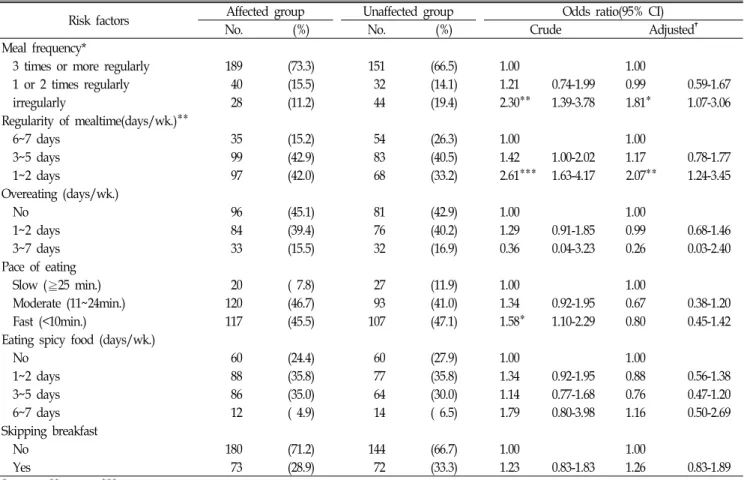
Table 3 shows a univariate analysis of the association between dietary behaviors and prokinetic drug efficacy.
Table 3. Relationship between dietary behavior and efficacy of prokinetic drug.
Risk factors Affected group Unaffected group Odds ratio(95% CI)
No. (%) No. (%) Crude Adjusted†
Meal frequency*
3 times or more regularly 189 (73.3) 151 (66.5) 1.00 1.00
1 or 2 times regularly 40 (15.5) 32 (14.1) 1.21 0.74-1.99 0.99 0.59-1.67
irregularly 28 (11.2) 44 (19.4) 2.30** 1.39-3.78 1.81* 1.07-3.06
Regularity of mealtime(days/wk.)**
6~7 days 35 (15.2) 54 (26.3) 1.00 1.00
3~5 days 99 (42.9) 83 (40.5) 1.42 1.00-2.02 1.17 0.78-1.77
1~2 days 97 (42.0) 68 (33.2) 2.61*** 1.63-4.17 2.07** 1.24-3.45
Overeating (days/wk.)
No 96 (45.1) 81 (42.9) 1.00 1.00
1~2 days 84 (39.4) 76 (40.2) 1.29 0.91-1.85 0.99 0.68-1.46
3~7 days 33 (15.5) 32 (16.9) 0.36 0.04-3.23 0.26 0.03-2.40
Pace of eating
Slow (≧25 min.) 20 ( 7.8) 27 (11.9) 1.00 1.00
Moderate (11~24min.) 120 (46.7) 93 (41.0) 1.34 0.92-1.95 0.67 0.38-1.20
Fast (<10min.) 117 (45.5) 107 (47.1) 1.58* 1.10-2.29 0.80 0.45-1.42
Eating spicy food (days/wk.)
No 60 (24.4) 60 (27.9) 1.00 1.00
1~2 days 88 (35.8) 77 (35.8) 1.34 0.92-1.95 0.88 0.56-1.38
3~5 days 86 (35.0) 64 (30.0) 1.14 0.77-1.68 0.76 0.47-1.20
6~7 days 12 ( 4.9) 14 ( 6.5) 1.79 0.80-3.98 1.16 0.50-2.69
Skipping breakfast
No 180 (71.2) 144 (66.7) 1.00 1.00
Yes 73 (28.9) 72 (33.3) 1.23 0.83-1.83 1.26 0.83-1.89
* p<0.05, ** p<0.01, *** p<0.001, by chi-square test.
†After adjustment for age, sex, and previous gastrointestinal medication.
Frequency of meals per day, regularity of mealtimes per week, and pace of eating were each significantly associated with the prokinetic drug efficacy(P<0.05). However, frequency of overeating per week, frequency of spicy food consumption and skipping breakfast were not associated with the efficacy of this medication(P>0.05).
We also performed multivariable analysis of the association between dietary behaviors and prokinetic drug efficacy(Table 3). After adjustment for sex, age, BMI and history of taking gastrointestinal medications, we found that prokinetic drug efficacy was notably lower among patients with irregular meal intake per day(odds ratio [OR], 1.81; 95% confidence interval [CI],1.07-3.06) compared with patients with more regular mealtime habits. In addition, irregularity of weekly mealtimes showed a significant association with a lack of efficacy of prokinetic drug. That is, patients who had meals at regular times on only one or two days during the week(OR, 2.07; 95% CI, 1.24-3.45) were at a higher risk for poor
prokinetic drug efficacy compared with patients who ate at regular times six to seven days per week. In this multivariable model, pace of eating was not related to prokinetic drug efficacy(P>0.05).
DISCUSSION
We have shown here that irregular meal frequency during the day and irregularity of mealtimes during the week are significantly associated with the poor efficacy of prokinetic drug in dyspeptic patients. In contrast, we also found that frequency of overeating, consumption of spicy foods, pace of eating and skipping breakfast are not associated with the prokinetic drug efficacy.
Although several studies3,7,13) have indicated that dyspeptic patients are less likely to eat three meals per day on a regular basis than non-dyspeptic controls, controlled studies on the
effects of dietary modifications on dyspeptic symptoms are lacking.14,15) Our finding, that irregular meal frequency per day and irregularity of mealtimes per week were significantly associated with the poor efficacy of prokinetic drug, suggests that regularly eating three meals per day for six to seven days per week may improve symptoms in dyspeptic patients with irregular eating patterns. Further clinical trials are needed, however, to determine if there is any correlation between modification of irregular eating habits and symptom improvement among dyspeptic patients.
Although our previous study suggested that overeating behavior was associated with dyspepsia7), in this study we found that frequency of overeating was not associated with prokinetic drug efficacy. In these studies, overeating occurred most commonly at dinner. Although rapid meal consumption (less than 10 minutes) was not associated with prokinetic drug efficacy by multivariate analysis, it did show significant association by univariate analysis. Further studies are necessary to determine whether there is any relationship between the pace of eating and the efficacy of a prokinetic drug. We also found that consumption of spicy foods and skipping breakfast were not associated with prokinetic drug efficacy. Lack of appetite was the most commonly cited reason for skipping breakfast, followed by habitual behavior and lack of time.
Psychological stress is widely believed to play a role in functional dyspepsia by precipitating the exacerbation of symptoms14,16) In the present study, however, we found that the amount of stress was not associated with prokinetic drug efficacy. This finding was similar to that observed in a previous study, in which gastrointestinal medications improved symptoms of dyspepsia, regardless of their causes.14) Other studies, however, have suggested that some anxiolytics improve dyspeptic symptoms.17,18) Thus, further studies are necessary to explain the combined effects of anxiolytics and prokinetics in dyspepsia.
We found that prior intake of gastrointestinal medications was associated with good efficacy of prokinetic drug. This may be due to differences in compliance and motivation among patients who did or did not take previous medication.19) Although smoking and alcohol have been reported to be associated with dyspepsia.20,21) this finding is controversial.22) We found that smoking and alcohol were not associated with prokinetic drug efficacy, whereas others have found that
smoking had an additive deleterious effect on gastroduodenal pathology in dyspeptic patients.23) Further detailed study is required to explore this issue.
One limitation of our study was the lack of endoscopic data from the subjects. This may have led to a misclassification of some study subjects, especially during the enrollment of patients with ulcers and gastrointestinal reflux. The general effect of misclassification, however, could weaken the association, leading to a bias towards the null. Despite these limitations, our findings provide valuable information on dietary behaviors that may be associated with the poor efficacy of prokinetic drug in dyspeptic patients.
In summary, we have shown that irregular eating patterns are significantly associated with the poor efficacy of prokinetic drug in dyspeptic patients. Factors not associated with prokinetic drug efficacy include alcohol consumption, smoking, stress, frequency of overeating, consumption of spicy foods, pace of eating, and skipping breakfast. To increase the efficacy of prokinetic drug, behavioral modifications, such as eating regularly, should be encouraged.
ACKNOWLEDGEMENTS
This study was an add-on study of post-marketing surveillance for itopride and was supported by a grant from Choongwae Pharma Corporation.
REFERENCES
1. Jones R, Lydeard S. Prevalence of symptoms of dyspepsia in the community. BMJ 1989;298:30-2.
2. Hirakawa K, Adachi K, Amano K, Katsube T, Ishihara S, Fukuda R, et al. Prevalence of non-ulcer dyspepsia in the Japanese population. J Gastroenterol Hepatol 1999;14:1083-7.
3. Feinle-Bisset C, Vozzo R, Horowitz M, Talley NJ. Diet, food intake, and disturbed physiology in the pathogenesis of symptoms in functional dyspepsia. Am J Gastroenterol 2004;99:170-81.
4. Bernersen B, Johnsen R, Straume B. Non-ulcer dyspepsia and peptic ulcer: the distribution in a population and their relation to risk factors. Gut 1996;38:822-5.
5. Moayyedi P, Forman D, Braunholtz D, Feltbower R, Crocombe W,
Liptrott M, Axon A, on behalf of the Leeds HELP Study Group.
The proportion of upper gastrointestinal symptoms in the community associated with Helicobacter pylori, lifestyle factors, and nonsteroidal anti-inflammatory drugs. Am J Gastroenterol 2000;95:1448-55.
6. Bode G, Brenner H, Adler G, Rothenbacher D. Dyspeptic symptoms in middle-aged to old adults: the role of Helicobacter pylori infection, and various demographic and lifestyle factors. J Intern Med 2002;252:41-7.
7. Jung WK, Kim JH, Kim YS. Dietary habits in functional dyspepsia.
J Korean Acad Fam Med 2004;25:40-5.
8. Dickerson LM, King DE. Evaluation and management of nonulcer dyspepsia. Am Fam Physician 2004;70:107-14.
9. Shenoy KT, Veenasree, Leena KB. Efficacy and tolerability of itopride hydrochloride in patients with non-ulcer dyspepsia. J Indian Med Assoc 2003;101:387-8.
10. Drossman DA. The functional gastrointestinal disorders and the Rome II process. Gut 1999;45(Suppl II):II1-5.
11. Bae JM, Jeong EK, Yoo TW, Huh BY, Kim CH. A quick measurement of stress in outpatient clinic setting. J Korean Acad Fam Med 1992;13:809-20.
12. Frank SH, Zyzanski SJ. Stress in the clinical setting: the Brief Encounter Psychosocial Instrument. J Fam Pract 1988;26:533-9.
13. Mullan A, Kavanagh P, O’Mahony P, Joy T, Gleeson F, Gibney MJ. Food and nutrient intakes and eating patterns in functional ad organic dyspepsia. Eur J Clin Nutr 1994;48: 97-105.
14. Kurata JH, Nogawa AN, Chen YK, Parker CE. Dyspepsia in primary care: Perceived causes, reasons for improvement, and satisfaction with care. J Fam Pract 1997;44:281-8
15 Kaess H, Kellermann M, Castro A. Food intolerance in duodenal ulcer patients, non ulcer dyspeptic patients and healthy subjects.
A prospective study. Klin Wochenschr 1988;66:208-11
16. Monnikes H, Tebbe JJ, Hildebrandt M, Arck P, Osmanoglou E,
Rose M, Klapp B, Wiedenmann B, Heymann-Monnikes I. Role of stress in functional gastrointestinal disorders. Evidence for stress-induced alterations in gastrointestinal motility and sensitivity. Dig Dis 2001;19:201-11.
17. Dinan TG, Mahmud N, Rathore O, Thakore J, Scott LV, Carr E, Naesdal J, O’Morain CA, Keeling PW. A double-blind placebo- controlled study of buspirone-stimulated prolactin release in non- ulcer dyspepsia–are central serotoninergic responses enhanced?
Aliment Pharmacol Ther 2001;15:1613-8.
18. Chua A, Keating J, Hamilton D, Keeling PW, Dinan TG. Central serotonin receptors and delayed gastric emptying in non-ulcer dyspepsia. BMJ 1992;305:280-2.
19. Kim YS, Sunwoo S, Lee HR, Lee KM, Park YW, Shin HC, Kim CH, Kim DH, Kim BS, Cha JS, Huh BY and Korea Post-Marketing Surveillance Research Group. Determinants of non-compliance with lipid-lowering therapy in hyperlipidemic patients. Pharmacoepidemiol Drug Saf 2002;11:593-600.
20. Shah SS, Bhatia SJ, Mistry FP. Epidemiology of dyspepsia in the general population in Mumbai. Indian J Gastroenterol 2001;20:
103-6.
21. Shaib Y, El-Serag HB. The prevalence and risk factors of functional dyspepsia in a multiethnic population in the United States. Am J Gastroenterol 2004;99:2210-6.
22. Talley NJ, Zinsmeister AR, Schleck CD, Melton LJ 3rd. Smoking, alcohol, and analgesics in dyspepsia and among dyspepsia subgroups: lack of an association in a community. Gut 1994;35:
619-24.
23. Moshkowitz M, Brill S, Konikoff FM, Averbuch M, Arber N, Halpern Z. Additive deleterious effect of smoking on gastroduodenal pathology and clinical course in Helicobacter pylori-positive dyspeptic patients. Isr Med Assoc J 2000;2:892-5.
[ Abstract ]
Dietary Behaviors Associated with the Efficacy of Prokinetic Drug in Dyspeptic Patients
Young Sik Kim1, Hye Soon Park1, Ji Young Park1, Be Long Cho2, Bong Yul Huh2, Dae Hyun Kim3, Young Sung Suh3, Byung Sung Kim4, Chang Won Won4, Sang Woo Ou5,
Korea Post-Marketing Surveillance Research Group6
Department of Family Medicine, University of Ulsan College of Medicine1, Department of Family Medicine, Seoul National University College of Medicine2, Department of Family Medicine, College of Medicine Keimyung University3, Department of Family Medicine,College of Medicine Kyunghee University4, Department of Family Medicine,
Inje University College of Medicine5, Republic of Korea6
Background We sought to determine whether dietary behaviors are associated with the efficacy of prokinetic drug in dyspeptic patients.
Methods From December 2000 to June 2001, 688 patients with dyspepsia were treated with itopride for 4 weeks by 24 family physicians. Itopride efficacy was determined by follow-up during weeks 2 and 4 at which time, using a structured questionnaire, patients were assessed on symptoms, as well as smoking, alcohol, stress and dietary behaviors.
Results At the end of the 4 week treatment, moderate to complete relief of symptoms was reported by 396 patients (57.6%, affected group), whereas 292 (42.4%, unaffected group) reported slight or no improvement. Factors associated with poor efficacy of itopride included irregular meal frequency per day (OR 1.81, 95% CI: 1.07, 3.06) and irregularity of mealtime per week (OR 2.07, 95%CI: 1.24, 3.45). Factors not associated with efficacy included alcohol consumption, smoking, stress, frequency of overeating, consumption of spicy foods, pace of eating, and skipping breakfast.
Conclusions Irregular eating patterns were significantly associated with the poor efficacy of prokinetic drug in dyspeptic patients. To increase the efficacy of prokinetic drug, patients should be advised to eat regularly and at set times.
(Korean J Health Promot Dis Prev 2006 ; 6(2) : 129~135) Key words dyspepsia: dietary behavior; prokinetic drug
14`
∙Address for correspondence : Young Sik Kim
Department of Family Medicine, University of Ulsan College of Medicine
∙T e l : 02-3010-3811
∙E-mail : [email protected]