• 검색 결과가 없습니다.

Effects of Low- or Moderate-dose Whole Body-X-ray Radiation on the Immune System of C57BL/6 Mice

N/A
N/A
Protected

Academic year: 2021

Share "Effects of Low- or Moderate-dose Whole Body-X-ray Radiation on the Immune System of C57BL/6 Mice"

Copied!
6
0
0

로드 중.... (전체 텍스트 보기)

전체 글

(1)

저선량 X-ray 방사선이 C57BL/6 쥐의 면역계에 미치는 영향

고윤미

1,2

ㆍ정연호

2

ㆍ이준아

3

1

원자력병원 방사선의학 임상연구부,

2

강원대학교 의생명과학대학 의생명융합학부,

3

원자력병원 소아청소년과

Effects of Low- or Moderate-dose Whole Body-X-ray Radiation on the Immune System of C57BL/6 Mice

Yunmi Ko, M.S.

1,2

, Yeon Ho Jeong, Ph.D.

2

and Jun Ah Lee, M.D.

3

1

Division of Radiological Science and Clinical Research, Korea Cancer Center Hospital, Seoul,

2

Department of Medical Biotechnology, College of Biomedical Science, Kangwon National University, Chuncheon,

3

Department of Pediatrics, Korea Cancer Center Hospital, Seoul, Korea

Background: Increase in the use of diagnostic imaging or occupational exposure to radia- tion have brought upon concerns on the safety and biological effects of low- or moder- ate-dose radiation. However, limited information is available on the effects of low or moderate dose radiation on human health..

Methods: Using C57BL/6 mice, we aimed to evaluate the biological effects of low- and moderate-dose radiation on the immune system. X-rays was chosen as a radiation source and we analyzed complete blood counts, various lymphocyte subsets and various cyto- kine levels after single fraction x-ray exposure (0.1 Gy, 1 Gy).

Results: No significant changes in the immunologic parameter of C57BL/6 mice were observed after radiation, except LIX (a cytokine equivalent to human CXCL5), that showed higher level after 0.1 Gy radiation compared to the control.

Conclusion: We observed that a single fraction of low or moderate dose of X-ray radia- tion does not cause significant changes in the immune system of C57BL/6 mice. Further studies are necessary to elucidate the mechanism underlying our results.

pISSN 2233-5250 / eISSN 2233-4580 https://doi.org/10.15264/cpho.2018.25.1.50 Clin Pediatr Hematol Oncol 2018;25:50∼55

Received on March 29, 2018 Revised on April 17, 2018 Accepted on April 18, 2018

Corresponding Author: Jun Ah Lee Department of Pediatrics, Korea Cancer Center Hospital, 75 Nowon-ro, Nowon-gu, Seoul 01812, Korea

Tel: +82-2-970-1248 Fax: +82-2-970-1970 E-mail: [email protected] ORCID ID: orcid.org/0000-0003-3310-9566

Key Words: Low-dose, X-ray, Radiation, Immune system, Mice

Introduction

A recent increase in the use of diagnostic imaging or oc- cupational exposure to radiation have brought upon con- cerns on the safety and biological effects of low- or moder- ate-dose radiation [1,2]. Low- or moderate-dose radiation means single dose ≤1.0 Gy. There remain uncertainties on the biological effects of low- or moderate-dose radiation.

Biological effects of high-dose radiation have been demon-

strated in many in vitro studies and nuclear accidents, and regulatory guidelines have been developed on a line- ar-no-threshold model [3-5]. High-dose radiation suppresses the immune response and increases the risk of cancer and non-cancer-related diseases [6,7]. Biological responses to low-dose radiation may differ from those of high-dose radiation. It has been suggested that low doses of radiation induce biological responses such as the inflammatory re- sponse and activation of the immune response [8-10].

Animal studies have shown that exposure to low-dose radi-

(2)

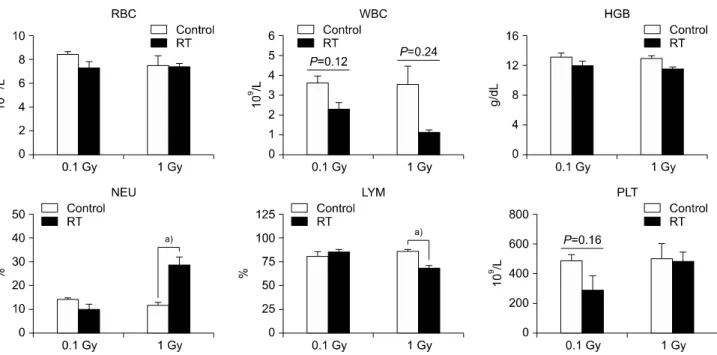
Fig. 1. Comparison of blood cells counts between 0.1 and 1 Gy radiation. The data are means±SEM (

a)

P<0.05).

ation decreases the development of cancer and the sizes of established tumor xenografts [11-13].

Epidemiological studies of residents in high-background radiation areas have demonstrated that levels of natural kill- er (NK) cells were higher in the peripheral blood of this population [14]. Moreover, the incidence of cancer in this population was not different from that in other areas. The immune system responds to exogenous pathogens or envi- ronmental hazards. It has been suggested that exposure to ionizing radiation modulates immune responses in a com- plex dose-dependent pattern, while high-dose radiation se- verely affects hematopoietic cells and suppresses the im- mune system [15-17]. Furthermore, a low or moderate dose of radiation has been applied for the treatment of benign inflammatory and hyper-proliferative diseases in the past decades [18,19].

In this study, we analyzed the biological effects of low- and moderate-dose radiation on the immune system of C57BL/6 mice. We chose X-rays as a radiation source, since medical exposures are more prevalent in the general pop- ulation, and selected two radiation doses: 0.1 and 1 Gy (low and moderate doses, respectively). The effects of X-ray radiation were analyzed using complete blood counts and various lymphocyte subsets including NK cells, and

changes in various cytokine levels after low and moderate X-ray radiation were analyzed.

Materials and Methods

1) Mice and irradiation

C57BL/6 mice were purchased from Orient Bio, Inc.

(Seoul, Republic of Korea) and were bred as a homozygous line. They were maintained under specific pathogen-free conditions at the Laboratory of Animal Research Center in Korea Institute of Radiological Medical Sciences (Seoul, Republic of Korea). Experiments were conducted according to the guidelines for ethical use of animals of our institution under an approved protocol. After acclimatization, 9 to 10-week-old mice were individually placed in plastic cages and were exposed to radiation using X-RAD 320 Biological Irradiator (Precision Xray, Inc., CT, USA) at a dose rate 0.1 Gy/min. Radiation doses were 0.1 (N=6) and 1 Gy (N=6).

Two mice were used as sham control. The mice were sacri- ficed for analysis 96 h after exposure to the radiation.

Experiments were conducted according to the guidelines

for ethical use of animals of our Institution under an ap-

proved protocol (KIRAMS 2015-0018).

(3)

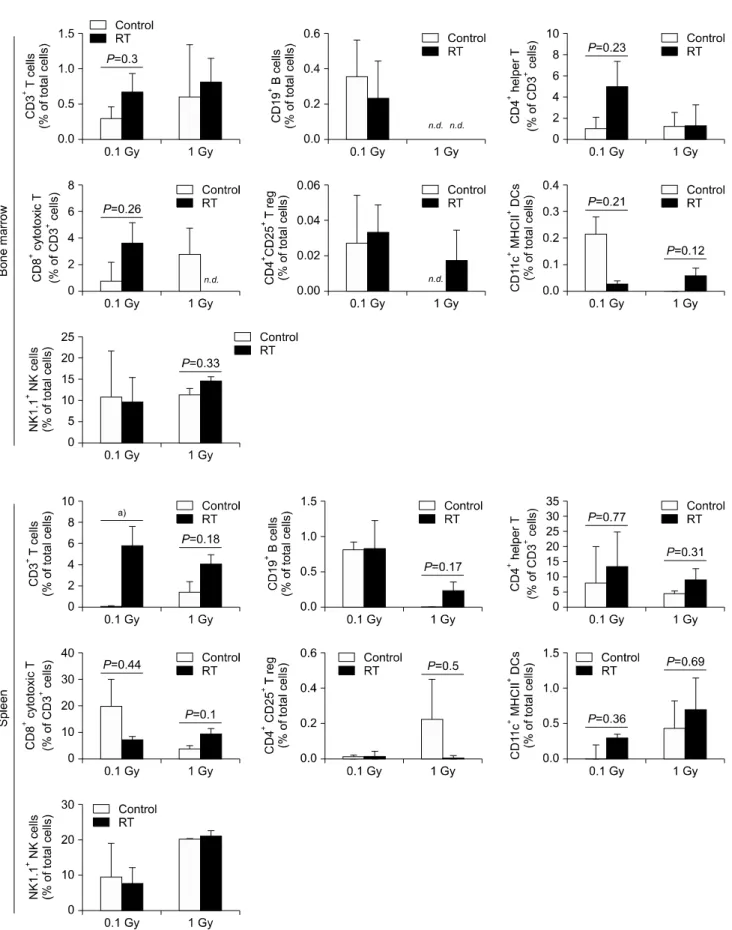
Fig. 2. Changes of immune cells after low and moderate dose radiation. The data are presented as means±SEM (

a)

P<0.05).

(4)

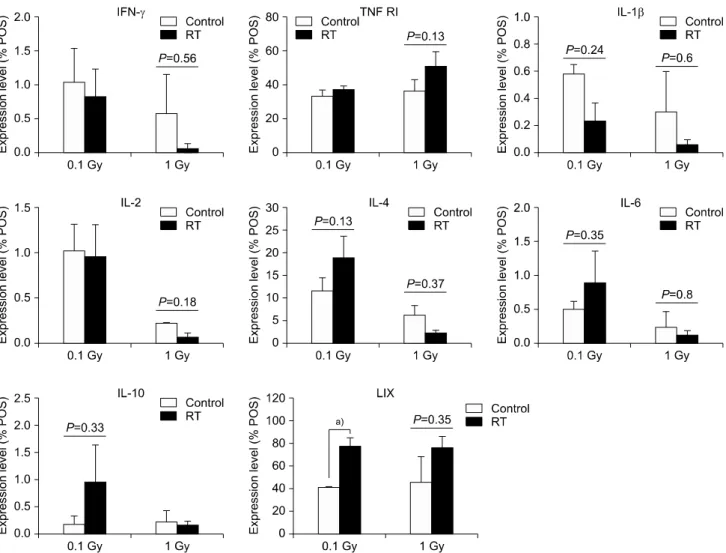
Fig. 3. Radiation-induced cytokine changes in the peripheral blood of C57BL/6 mice. The data are presented as means±SEM (

a)

P<0.05).

2) Analysis of blood, bone marrow, and spleen after radiation exposure

All blood samples were collected from the inferior vena cava under anesthesia and immediately placed in an EDTA-coated tube. Blood counts were analyzed using the VetScan HM5 analyzer (Abaxis, CA, USA), and functional cytokine expressions were measured by using a Mouse Inflammation Array kit (RayBiotech, GA, USA) according to the manufacturer’s protocol. Mononuclear cells were iso- lated from the bone marrow and spleen, and single-cell suspensions were prepared by standard procedures. Cells were stained with the following antibodies: mCD3-fluorescein isothiocyanate (FITC), mCD4-phycoerythrin (PE), mCD8- allophycocyanin (APC), mCD19-allophycocyanin (APC),

mCD11c-allophycocyanin (APC), mCD25-fluorescein isothio- cyanate (FITC), mNK-1.1-phycoerythrin (PE), and mI-A/I-E (MHC II)-phycoerythrin (PE). All of the antibodies were purchased from BD Biosciences (CA, USA). Flow cytometry was performed on FACSCanto II (BD Biosciences, CA, USA) and 10

5

to 10

7

events were acquired per sample and ana- lyzed using FlowJo software (FlowJo LLC, OR, USA).

3) Statistical analysis

Statistical analysis was performed using GraphPad Prism

software (GraphPad Software Inc., CA, USA) and SPSS (IBM

Corp., NY, USA), and P<0.05 was considered statistically

significant.

(5)

Results

After a single exposure to radiation, various hemato- logical indices were analyzed and compared with the sham control. We could not observe any significant differences in hematologic indices after 0.1 Gy radiation. The mice that received 1 Gy of radiation had a higher neutrophil count and lower lymphocyte count than the control mice, how- ever, these hematological values stay within the normal ref- erence range (Fig. 1). T subsets, B-cells, natural killer (NK) cells, and dendritic cells (DC) from the bone marrow and spleen were analyzed. In mice that received 0.1 Gy of radi- ation, the proportion of CD3

T cells were higher in the spleen than in the bone marrow (Fig. 2). Overall, we could not observe any significant differences in the proportion of CD4

helper T, CD8

cytotoxic T, CD4

CD25

Treg, CD11c

MHCII

dendritic, and NK 1.1

NK cells in mice that received 0.1 or 1 Gy of radiation (Fig. 2). Furthermore, the proportion of CD19

B cells was not significantly differ- ent in the irradiated mice when compared to that in control mice. Levels of interferon (IFN)- , tumor necrosis factor (TNF)-R1, interleukin (IL)-1, IL-2, IL-4, IL-6, IL-10 and lip- opolysaccharide-induced CXC chemokine (LIX) were ana- lyzed after exposure to radiation (Fig. 3). Except for LIX, the expression levels of these cytokines were not sig- nificantly different between the control mice and mice that received either 0.1 or 1 Gy of X-ray radiation. Interestingly, mice that received 0.1 Gy of radiation had higher levels of LIX (mouse equivalent of CXCL5) than control mice.

However, the levels of LIX in mice irradiated with 1 Gy were not significantly different from those in control mice.

Discussion

In this study, we analyzed the effect of a single fraction of low (0.1 Gy) and moderate (1.0 Gy) dose of X-ray radia- tion on the immune system of 9-10-week-old female C57BL/6 mice. Overall, no significant differences were ob- served in hematologic indices in the peripheral blood of control and irradiated mice. A low dose of radiation ap- peared to increase the fraction of CD3

T cells, as mice

irradiated with 0.1 Gy of radiation had a higher proportion of CD3

T cells in the spleen. Unexpectedly, the ex- pression levels of LIX, an inflammatory cytokine, was high- er in mice that received 0.1 Gy, while no differences were observed in mice irradiated with 1 Gy of radiation.

It has been suggested that low-dose radiation has anti-in- flammatory effect, while moderate doses have pro-in- flammatory effects. According to the definition of Unites Nations Science Committee on the Effects of Atomic Radiation (UNSCEAR), low-dose radiation refers to doses of equal to or less than 0.1 Gy. Unexpectedly, we observed that mice that received a single exposure to 0.1 Gy X-ray had higher levels pro-inflammatory cytokine LIX compared to control mice. However, mice that received 1 Gy of radia- tion did not show any differences in the expression levels of LIX. LIX is an inflammatory cytokine equivalent to hu- man CXCL5, and is involved in neutrophil induction as well as recruitment and activation of white blood cells. A recent study identified CXCL5 as a peripheral mediator of UVB-in- duced inflammatory pain in rat and human skin [20,21].

Human CXCL5 is secreted by inflammatory cells such as neutrophils and monocytes (macrophages), and is induced by cytokines such as IFN-, IL-1, and TNF- [22,23].

Despite the higher expression levels of LIX, no significant differences were observed in the neutrophil count in mice irradiated with 0.1 Gy when compared to control mice. It is not clear why the expression levels of LIX were higher in the 0.1 Gy group but not in the 1 Gy group. The dose rate and fraction of radiation, or the radiation source might have attributed to our findings, and further studies are nec- essary to clarify this observation.

Our study has several limitations. First, we used a single fraction of 0.1 and 1 Gy X-ray radiation. Considering the effects of chronic and low-dose radiation on health, using a much lower dose rate and multiple radiation fractions would be desirable to evaluate their biological effect.

Second, despite the use of a sham control, the small study sample size might have caused variations in the study results.

In conclusion, we observed that a single fraction of low

or moderate dose of X-ray radiation does not cause sig-

nificant changes in the immune system of C57BL/6 mice.

(6)

Unexpectedly, mice that received a low dose of X-ray radia- tion had a higher proportion of CD3

T-cells and higher expression levels of LIX compared to mice that received a moderate dose of radiation. Since our study involved a small number of animals using single-fraction X-ray irradi- ation, further studies are necessary to elucidate the mecha- nism underlying our results.

Acknowledgments

This study was supported by a grant of the Korea Institute of Radiological and Medical Sciences (KIRAMS), funded by Ministry of Science, ICT and Future Planning, Republic of Korea (1711021931).

References

1. Albert JM. Radiation risk from CT: implications for cancer screening. AJR Am J Roentgenol 2013;201:W81-7.

2. Katsura M, Cyou-Nakamine H, Zen Q, et al. Effects of chronic low-dose radiation on human neural progenitor cells. Sci Rep 2016;6:20027.

3. Song KH, Kim MH, Kang SM, et al. Analysis of immune cell populations and cytokine profiles in murine splenocytes ex- posed to whole-body low-dose irradiation. Int J Radiat Biol 2015;91:795-803.

4. Nowosielska EM, Cheda A, Wrembel-Wargocka J, Janiak MK.

Anti-neoplastic and immunostimulatory effects of low-dose X-ray fractions in mice. Int J Radiat Biol 2011;87:202-12.

5. Lall R, Ganapathy S, Yang M, et al. Low-dose radiation ex- posure induces a HIF-1-mediated adaptive and protective met- abolic response. Cell Death Differ 2014;21:836-44.

6. Frey B, Hehlgans S, Rodel F, Gaipl US. Modulation of in- flammation by low and high doses of ionizing radiation:

Implications for benign and malign diseases. Cancer Lett 2015;368:230-7.

7. Park B, Yee C, Lee KM. The effect of radiation on the immune response to cancers. Int J Mol Sci 2014;15:927-43.

8. Shimura N, Kojima S. Effects of low-dose-gamma rays on the immune system of different animal models of disease. Dose Response 2014;12:429-65.

9. El-Saghire H, Michaux A, Thierens H, Baatout S. Low doses of ionizing radiation induce immune-stimulatory responses in

isolated human primary monocytes. Int J Mol Med 2013;32:1407-14.

10. Bogdándi EN, Balogh A, Felgyinszki N, et al. Effects of low-dose radiation on the immune system of mice after to- tal-body irradiation. Radiat Res 2010;174:480-9.

11. Goudarzi M, Mak TD, Chen C, Smilenov LB, Brenner DJ, Fornace AJ. The effect of low dose rate on metabolomic re- sponse to radiation in mice. Radiat Environ Biophys 2014;53:645-57.

12. Tang FR, Loke WK, Khoo BC. Low-dose or low-dose-rate ion- izing radiation-induced bioeffects in animal models. J Radiat Res 2017;58:165-82.

13. Shimura N, Kojima S. Effects of low-dose-gamma rays on the immune system of different animal models of disease. Dose Response 2014;12:429-65.

14. Borzoueisileh S, Monfared AS, Abediankenari S, Mostafazadeh A, Khosravifarsani M. The effects of residence duration in high background radiation areas on immune surveillance. J Nat Sci Biol Med 2013;4:218-22.

15. Hellweg CE. The nuclear factor B pathway: a link to the im- mune system in the radiation response. Cancer Lett 2015;368:275-89.

16. Ha CT, Li XH, Fu D, et al. Circulating interleukin-18 as a bio- marker of total-body radiation exposure in mice, minipigs, and nonhuman primates (NHP). PLoS One 2014;9:e109249.

17. Wang C, Oshima M, Sashida G, et al. Non-lethal ionizing radi- ation promotes aging-like phenotypic changes of human hem- atopoietic stem and progenitor cells in humanized mice. PLoS One 2015;10:e0132041.

18. Rödel F, Fournier C, Wiedemann J, et al. Basics of radiation biology when treating hyperproliferative benign diseases.

Front Immunol 2017;8:519.

19. Large M, Hehlgans S, Reichert S, et al. Study of the anti-in- flammatory effects of low-dose radiation: the contribution of biphasic regulation of the antioxidative system in endothelial cells. Strahlenther Onkol 2015;191:742-9.

20. Dawes JM, Calvo M, Perkins JR, et al. CXCL5 mediates UVB irradiation-induced pain. Sci Transl Med 2011;3:90ra60.

21. Reichert O, Kolbe L, Terstegen L, et al. UV radiation induces CXCL5 expression in human skin. Exp Dermatol 2015;24:

309-12.

22. Song J, Wu C, Zhang X, Sorokin LM. In vivo processing of CXCL5 (LIX) by matrix metalloproteinase (MMP)-2 and MMP-9 promotes early neutrophil recruitment in IL-1-induced peritonitis. J Immunol 2013;190:401-10.

23. Begley LA, Kasina S, Mehra R, et al. CXCL5 promotes prostate

cancer progression. Neoplasia 2008;10:244-54.

수치

Fig. 1. Comparison of blood cells counts between 0.1 and 1 Gy radiation. The data are means±SEM ( a) P<0.05).
Fig. 2. Changes of immune cells after low and moderate dose radiation. The data are presented as means±SEM ( a) P<0.05)
Fig. 3. Radiation-induced cytokine changes in the peripheral blood of C57BL/6 mice. The data are presented as means±SEM ( a) P<0.05).

참조

관련 문서

Changes in body, flexibility, and physical strength levels of women participating in Pilates have a significant influence on psychological chan ges.. Summarizing

In the analysis of the dose constraint of nuclear medical radiation workers using chi-square test statistics, the dose constraint at (the time of) the highest

Conclusions : No significant corelation of the patency rate was shown in the study on the effects of local irrigation and systemic application of heparin

Development of the Most Appropriate Algorithm for Estimating Personal Dose of Radiation Workers under High Exposure Rate and Non-homogeneous Radiation Field in Nuclear

¾ Optical Properties - A material’s response to exposure to electromagnetic radiation, particularly to visible light.. ¾ Light is energy, or radiation, in the form of

And the objective of radiation safety control is to ensure radiation safety by limiting the probability of stochastic effects below the acceptable ALARA

While existing radiation measuring devices could be used only to a limited extent, radiation measuring devices based on the Internet of Things and disaster prevention

 The biological effect of ionizing radiation is a consequence of the energy transfer, by ionization and excitation, to cells in the body.  Factors of radiation effects