• 검색 결과가 없습니다.

JSUJournal of Surgical Ultrasound

N/A
N/A
Protected

Academic year: 2021

Share "JSUJournal of Surgical Ultrasound"

Copied!
13
0
0

로드 중.... (전체 텍스트 보기)

전체 글

(1)

Impact of 8-Week Bedside Ultrasound Training for Surgical

Residents in the Intensive Care Unit of a Tertiary Care Hospital - a Pilot Study

Kyoung Moo Im, Eun Young Kim

1

Department of Surgery, Seoul St. Mary’s Hospital,

1

Division of Trauma and Surgical Critical Care, Department of Surgery, Seoul St. Mary’s Hospital, College of Medicine, The Catholic University of Korea, Seoul, Korea

Received March 10, 2021 Revised April 15, 2021 Accepted April 22, 2021

Purpose: Bedside ultrasound has become one of the most important non-invasive and read- ily available diagnostic tools, especially for critically ill patients. Despite the increasing usage and importance of bedside ultrasound, a standard and well-structured training program for surgical residents is still lacking. This study assessed and evaluated the effectiveness of our new 8-weeks ultrasound course for surgical residents.

Methods: Twenty-two residents from the department of general surgery from a tertiary care hospital in Korea attended the newly designed 8-weeks of bedside ultrasound training course in the surgical intensive care unit. A multimodal approach was used including didac- tic lectures about the basics of ultrasound as well as daily hands-on ultrasound examinations of patients under the supervision of an instructor. Participants documented their ultrasound findings and determined self-proficiency in ultrasound techniques using a 5-point Likert scale.

Results: After the educational intervention, the proficiency scores of the residents showed a significant improvement in every element (P < 0.001). Proficiency scores also showed a sig- nificant improvement regardless of their previous exposure to ultrasound manipulation.

Among the most perceived barriers in using bedside ultrasound were lack of education (43%) and lack of a feedback system (29%).

Conclusion: The confidence of surgical residents in their use of bedside ultrasound could be improved with a well-structured training program. In addition, a short and intense program may help them to overcome the barriers that they may perceive to using bedside ultrasound.

The authors believe such programs should be encouraged in all surgical residencies so that residents can competently use bedside ultrasound for the primary care of critically ill patients.

Keywords: Surgical residents, Ultrasound, Education, Barriers, Likert scale

Correspondence to:

Eun Young Kim

Division of Trauma and Surgical Critical Care, Department of Surgery, Seoul St. Mary’s Hospital, College of Medicine, The Catholic University of Korea, Banpo-daero 222, Seocho-gu, Seoul 06591, Korea

Tel: +82-2-2258-2876 Fax: +82-2-595-2822 E-mail: [email protected]

INTRODUCTION

The use of bedside ultrasound is expending across both medical and surgical specialties.(1,2) It is an effective diag- nostic tool for detecting free intraperitoneal fluid in trauma

patient, making a rapid diagnosis of shock etiology, or de- termining the fluid status in patients.(3-5) Especially in the intensive care unit (ICU), where the most of patients are im- mobilized and hemodynamically unstable, the bedside ul- trasound is favorable due to it is noninvasive, portable in-

JSU

Journal of Surgical Ultrasound J Surg Ultrasound 2021;8:6-18

https://doi.org/10.46268/jsu.2021.8.1.6

(2)

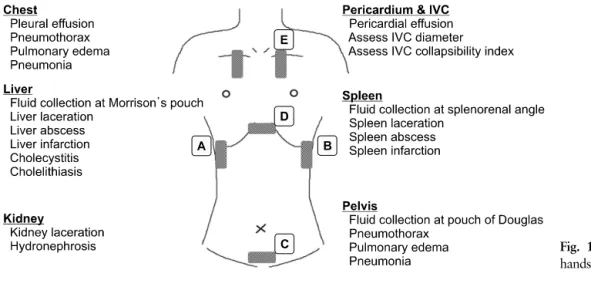
Fig. 1. Findings to look for during hands-on session.

struments, and expeditious in assessing the critical ill patients.(1,6,7) Therefore, it would be very necessary for a resident who needs to quickly and accurately perform pri- mary care and diagnosis for these critical ill patients. In the United States, the American College of Surgeons provided the first ultrasound course since 1996.(8,9) In case of South Korea, the Korean Society of Pediatric Emergency Medicine and Society of Emergency and Critical Care Imaging have conducted emergency ultrasound education since 2013, and they reported the significant improvement of the residents’ability to perform ultrasound after com- pleting their education program.(3,10) The Korean Surgical Society has also mandated that all residents in the general surgery attain competency in the use of ultrasound in the field of various surgeries. However, most residents still do not have sufficient practical opportunities. The rea- sons might be due to curricular time constraints, lack of equipment, shortage of accredited ultrasound trainers, or absence of structured educational program.(2,11,12) These obstacles led most of the surgical residents having slight chance of training and little experience in using the ultrasound during their training period, consecutively. As a result, the needs for development and implementation of a formal, well-established bedside ultrasound training pro- gram have been increasing to the surgical residents who are novice in conducting the sonography.

Herein, we introduced our preliminary report using an 8-weeks of bedside ultrasound training program that in-

clude didactic lectures and direct patient scanning of the actual ICU patients. Additionally, we determine whether our training program can improve residents’ skill and self-confidence in bedside sonography using the ques- tionnaire survey and find out what are the barriers for sur- gical residents to perform bedside ultrasound in a real clin- ical setting.

METHODS

1. Participants and methods

In this pilot study, 22 residents from the department of general surgery at the university-based tertiary care medi- cal center were enrolled. The participants involved 8-weeks of bedside ultrasound training program at surgical ICU from March 2019 to August 2020. For a comprehensive bedside ultrasound training, our program consists of two different teaching methods, which are the didactic lectures and practical session with direct patient scanning. GE Healthcare LOGIQ P9 (Boston, MA) ultrasound machine was used for the training. A convex transducer (C1-5, low frequency, 2-5 MHZ) and a linear transducer (3SC, high fre- quency, 1.7-4 MHZ) were used for both sonographic train- ing and assessment.

The surgeon who has specialty in trauma and surgical

critical care developed the didactic presentation. Each resi-

dent received about one-hour didactic lecture every week

based on the description of “Choi BI. Ultrasound Diagnosis

(3)

of the Abdomen. 3rd ed. Ilchokak Publishers; 2015”.(13) The early lecture focused on basic physics of ultrasound, knobology, the frequency and echogenicity of ultrasound, basic modes of orientation and machine functions. The lat- ter lecture focused on the technique of extended-Focused Assessment with Sonography in Trauma (e-FAST) and the assessment of inferior vena cava (IVC) diameter. Following the didactic portion, the hands-on sessions were introduced. Each resident went through e-FAST examina- tion and measured IVC size on the patients in surgical ICU under instructor’s supervision. For the examination, the patient was positioned supine to 30-degree upright and each resident performed focused evaluation on five differ- ent areas: chest, right upper quadrant, left upper quadrant, suprapubic and subxiphoid as shown in Fig. 1.(1,4,6,7) Each resident focus to visualize each organ (lung, liver, spleen, bladder, kidney and heart) and identify any abnor- mal findings such as free intraperitoneal fluid, pericardial fluid, pneumothorax, or pleural effusion. Intraperitoneal fluid was detected by examining hepatorenal space, sple- norenal space, and retrovesicular spaces. Particularly in the cases of penetrating trauma, pericardium wascarefully evaluated for pericardial effusion. Finally, both thoraxes were evaluated for fluid collection above diaphragm and anterior wall for pneumothorax.

After completion of hands-on course, trainee conducted a post-course survey. Every week, participated residents completed the questionnaire to assess their own compre- hension and confidence (Appendix 1) and the objective structured assessment of ultrasound skill (OSAUS) to assess their own skills (Appendix 2). Then they documented the fin- dins of each patients (Appendix 3). All questionnaires were estimated by the score ranged from 1 to 5, using a 5-point Likert scale (1 = not confident at all, and 5 = very confident).

The Likert scale is an orderly scale and a form of closed ques- tion that is most widely used tools in researching opinion or educational training for its advantage of that people are not forced to express an either-or opinion.(14-20) We queried how the residents perceived their own confidence and profi- ciency during examination in detail by seven different areas

or organs of patient’s body (lung, pleural effusion, bowel, peritoneal cavity, hepatobiliary, internal jugular vein and inferior vena cava). Furthermore, the resident’s competency was also assessed using a Delphi’s Objective Structured Assessment of Ultrasound Skills (OSAUS), a generic ultra- sound rating scale that was achieved through international multispecialty consensus.(21) We modified and simplified the original form of OSAUS and queried on five elements:

applied knowledge of ultrasound equipment, image opti- mization, systematic examination, interpretation of images, and documentation of examination. None of collected data could be linked to individual participants, so the results of assessment could not have any impact on assessing the in- dividual participants’ abilities that was conducted by supervisor. In this study, the primary outcome was to assess the effectiveness of our training course by measuring com- petency of each residents using the validated 5-point Likert scale. The secondary outcome measures were to assess whether there are differences in the efficacy of program by post-graduate year or by previous experience in bedside ultrasonography. Additionally, we evaluated the residents’

obstacles in performing ultrasound examination during their clinical works.

2. Statistical analysis

All statistical analyses were performed using SPSS stat-

istical package software (version 21.0 for Windows; SPSS,

Inc., Chicago, IL). Survey responses to questions regarding

confidence ranged from 1 (not confident at all) to 5 (very

confident). We compared the demographics, previous train-

ing history, as well as other variables of residents who re-

ported being confident in training with those who did not to

assess for the differences in confidence levels. Continuous

data are demonstrated as the mean ± standard deviation and

overall differences were calculated by Student’s t-test or

ANOVA. The Fisher’s exact test or chi-square test were con-

ducted for the categorical variables. The descriptive sta-

tistics are presented as means ± standard deviation and dif-

ferences were regarded as statistically significant when P <

0.05.

(4)

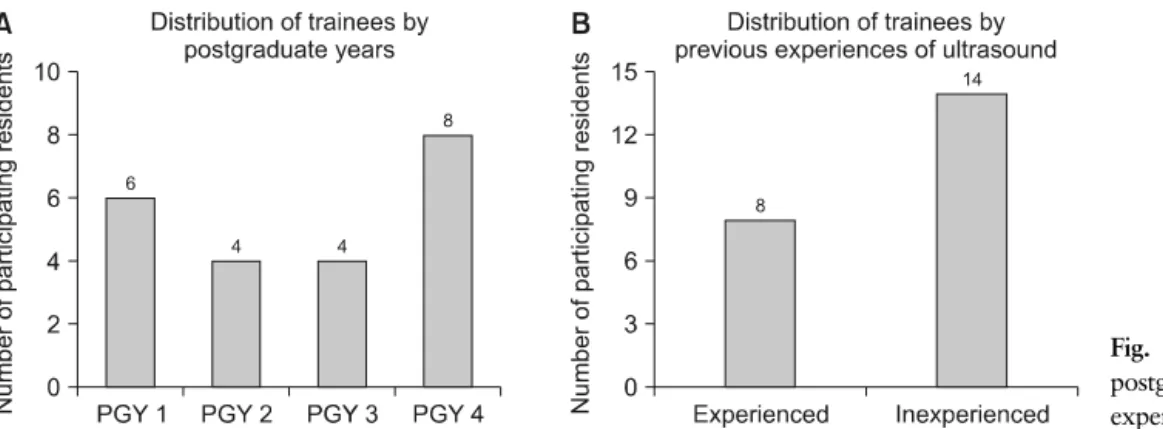
Fig. 2. Distribution of trainees by postgraduate years and by previous experience of ultrasound training.

Table 1. Demographic Characteristics of Enrolled Cases

Variables N (%)

Trainee (N = 22)

Postgraduate year 1 6

2 4

3 4

4 8

Previous experience of bedside sonogram Yes/No 8/14 

Number of sonographic cases before training Experienced 5.8

Inexperienced 0.9

Patient demographics (N = 409)

Age 73.5 ± 8.3

Sex Male/Female 265/144

ICU HD at the time of sonogram 7.2 ± 5.1

Clinical department Upper GI 59 (14.4)

Lower GI 127 (31.1)

Hepatobiliary-pancreas 79 (19.3)

Vascular 128 (31.3)

Trauma 6 (1.5)

  Miscellaneous 10 (1.2)

Sonographic findings (N = 1,456)

Chest Pleural effusion 360 (24.7)

Pneumothorax 10 (0.7)

Pulmonary edema 132 (9.1)

Hepatobiliary (liver, GB, pancreas, spleen) Fluid collection 129 (8.9)

Mass or hematoma 29 (2)

Cholecystitis or stone, polyp 146 (10)

Abdomen and pelvis Fluid collection 273 (18.8)

Mass or hematoma 112 (7.7)

Hydronephrosis 14 (1)

IVC dilatation Normal 677 (46.5)

Collapsed 439 (30.2)

Dilated 246 (16.9)

Not checkable 94 (6.5)

RESULTS

During the study period, 22 residents from PGY 1 to PGY 4 completed the bedside ultrasound training program at

surgical ICU of our institution. Among them, only 8 partic-

ipants had experienced in bedside ultrasound before the

training and the distribution of trainees by postgraduate

years were presented in Fig. 2; 6 trainees of PGY 1, 4 train-

(5)

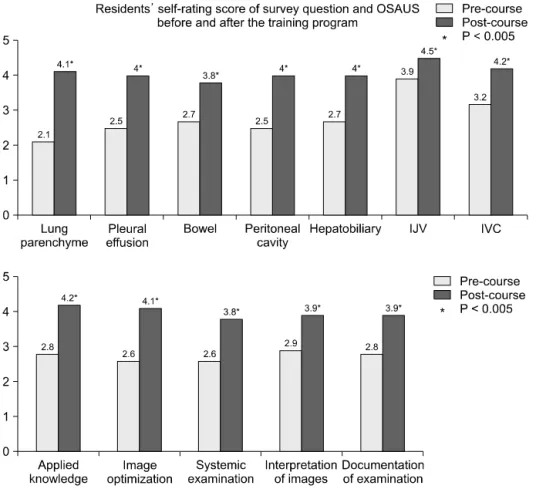
Fig. 3. Residents’ self-rating score of survey question and OSAUS before and after the training program.

ees of PGY 2, 4 trainees of PGY 3, and 8 trainees of PGY 4.

The definition of an experience group is as the participants who had performed bedside ultrasound on at least five times in clinical setting prior to study enrollment. The average number of sonographic cases in the experienced group before the study enrollment was 5.8, whereas the average number of inexperienced residents group was 0.9.

In the current study, 1,456 ultrasound examinations with 409 patients were completed and analyzed. Mean age of patients was 73.5 years and most of them were from de- partment of vascular surgery (n = 128, 31.3%) and depart- ment of lower gastrointestinal surgery (n = 127, 31.1%). The patient demographics and sonographic findings are pre- sented in Table 1.

On the proficiency and OSAUS scores, there were a sig- nificant increase in their confidence level measured after the training course in all elements (P < 0.001) compared with scores before the training (Fig. 3). Between each PGY groups, PGY 4 showed improvement in every element (P <

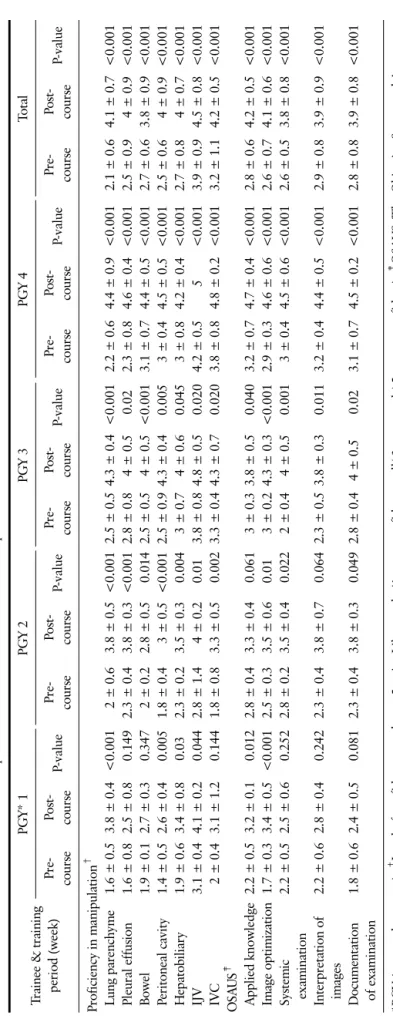
0.001), whereas PGY 1 showed significant improvement in only six different items as shown in Table 2.

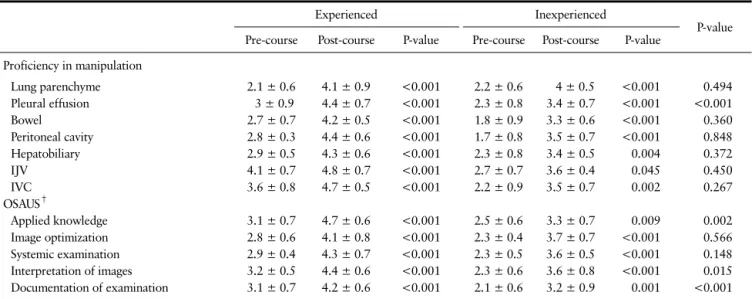
In Table 3, the comparative analysis of scores before and after the training course of two groups according to prior experience of ultrasound are presented in order to de- termine if the previous exposure to bedside sonography af- fect the result of training. Both groups demonstrated sig- nificantly higher confidence level after the completion of training course. Comparing the degree of advances be- tween the two groups, experienced group demonstrated greater improvement in the proficiency score of pleural ef- fusion showed differences (P < 0.001). In OSAUS score, the experienced group also showed greater improvement in applied knowledge, interpretation of images and doc- umentation of examination.

Fig. 4 demonstrated survey result of the barriers to using

bedside ultrasound by surgical residents who participated in

the study. Our results revealed that the residents think

educational barrier, which are lack of proper teaching and

(6)

Ta bl e 2 . Scor es f or Ea ch It em in T erm s of C om pr eh ensi on and C onfi dence in th e T ec hni que f ro m P re- an d P ost -C ou rs e E val uat ion f or E ach T rai nee Tr ai ne e & tr ai ni ng peri od (w eek)

PG Y* 1 PG Y 2 PG Y 3 PG Y 4 To tal Pr e- cour se Po st - co urse P- va lu e Pr e- cour se Po st - co urse P- va lu e Pr e- cour se Po st - cour se P- va lu e Pr e- cour se Po st - cour se P- va lu e Pr e- co urse Po st - cour se P- va lu e Pr of ic ie ncy i n m ani pul at ion

Lu ng pa re nc hy m e 1. 6 ± 0. 5 3. 8 ± 0 .4 < 0. 00 1 2 ± 0 .6 3. 8 ± 0 .5 < 0. 00 1 2. 5 ± 0 .5 4. 3 ± 0. 4 < 0. 001 2. 2 ± 0 .6 4. 4 ± 0. 9 < 0. 00 1 2. 1 ± 0 .6 4. 1 ± 0. 7 < 0. 001 Pl eur al ef fusi on 1. 6 ± 0 .8 2. 5 ± 0. 8 0. 149 2. 3 ± 0. 4 3. 8 ± 0. 3 < 0. 001 2. 8 ± 0. 8 4 ± 0 .5 0. 02 2. 3 ± 0. 8 4. 6 ± 0 .4 < 0. 001 2. 5 ± 0. 9 4 ± 0 .9 < 0. 001 Bo w el 1. 9 ± 0 .1 2. 7 ± 0. 3 0. 347 2 ± 0. 2 2. 8 ± 0. 5 0. 014 2. 5 ± 0. 5 4 ± 0 .5 < 0. 00 1 3. 1 ± 0. 7 4. 4 ± 0 .5 < 0. 001 2. 7 ± 0. 6 3. 8 ± 0 .9 < 0. 001 Pe ri to ne al cavi ty 1. 4 ± 0 .5 2. 6 ± 0. 4 0. 005 1. 8 ± 0. 4 3 ± 0. 5 < 0. 00 1 2. 5 ± 0. 9 4. 3 ± 0 .4 0. 00 5 3 ± 0. 4 4. 5 ± 0 .5 < 0. 00 1 2. 5 ± 0. 6 4 ± 0 .9 < 0. 001 H epat obi liar y 1. 9 ± 0 .6 3. 4 ± 0. 8 0. 03 2. 3 ± 0. 2 3. 5 ± 0. 3 0. 004 3 ± 0. 7 4 ± 0 .6 0. 04 5 3 ± 0. 8 4. 2 ± 0 .4 < 0. 001 2. 7 ± 0. 8 4 ± 0 .7 < 0. 001 IJ V 3. 1 ± 0 .4 4. 1 ± 0. 2 0. 044 2. 8 ± 1. 4 4 ± 0. 2 0. 01 3. 8 ± 0. 8 4. 8 ± 0 .5 0. 02 0 4. 2 ± 0. 5 5 < 0. 001 3. 9 ± 0. 9 4. 5 ± 0 .8 < 0. 001 IV C 2 ± 0 .4 3. 1 ± 1. 2 0. 144 1. 8 ± 0. 8 3. 3 ± 0. 5 0. 002 3. 3 ± 0. 4 4. 3 ± 0 .7 0. 02 0 3. 8 ± 0. 8 4. 8 ± 0 .2 < 0. 001 3. 2 ± 1. 1 4. 2 ± 0 .5 < 0. 001 OS A U S

A pp lie d know le dg e 2. 2 ± 0 .5 3. 2 ± 0. 1 0. 012 2. 8 ± 0. 4 3. 3 ± 0. 4 0. 061 3 ± 0. 3 3. 8 ± 0 .5 0. 04 0 3. 2 ± 0. 7 4. 7 ± 0 .4 < 0. 001 2. 8 ± 0. 6 4. 2 ± 0 .5 < 0. 001 Im ag e o pt im iz at io n 1.7 ± 0 .3 3. 4 ± 0 .5 < 0. 00 1 2.5 ± 0 .3 3. 5 ± 0 .6 0. 01 3 ± 0 .2 4.3 ± 0 .3 < 0.0 01 2.9 ± 0 .3 4.6 ± 0 .6 < 0. 00 1 2. 6 ± 0 .7 4.1 ± 0 .6 < 0. 001 Syst em ic ex am in at io n 2. 2 ± 0 .5 2. 5 ± 0. 6 0. 252 2. 8 ± 0. 2 3. 5 ± 0. 4 0. 022 2 ± 0. 4 4 ± 0 .5 0. 00 1 3 ± 0. 4 4. 5 ± 0 .6 < 0. 001 2. 6 ± 0. 5 3. 8 ± 0 .8 < 0. 001 In te rp re ta tio n o f im ag es 2. 2 ± 0 .6 2. 8 ± 0. 4 0. 242 2. 3 ± 0. 4 3. 8 ± 0. 7 0. 064 2. 3 ± 0. 5 3. 8 ± 0 .3 0. 01 1 3. 2 ± 0. 4 4. 4 ± 0 .5 < 0. 001 2. 9 ± 0. 8 3. 9 ± 0 .9 < 0. 001 Do cu me nt at io n of ex am in ati on 1. 8 ± 0 .6 2. 4 ± 0. 5 0. 081 2. 3 ± 0. 4 3. 8 ± 0. 3 0. 049 2. 8 ± 0. 4 4 ± 0 .5 0. 02 3. 1 ± 0. 7 4. 5 ± 0 .2 < 0. 001 2. 8 ± 0. 8 3. 9 ± 0 .8 < 0. 001 *PG Y ( post gr aduat e year) .

Le ve l o f c on fid en ce ra te d o n a 5 -p oi nt L ik ert s ca le (1 = n ot c on fid en t a t a ll/ 3 = n eu tr al / 5 = v ery c on fid en t) .

OS A U S ( T he Ob je ct iv e S tr uc tu re d As se ss m en t of U ltr asound Ski lls) on a 5- po in t Li ker t s cal e ( 1= no t con fid ent at al l/ 3 = neut ra l / 5 = ver y c onf id en t) .

(7)

Table 3. Differences of Pre- and Post-Course Evaluation in Terms of Comprehension & Confidence in the Technique* of Experienced and Inexperienced Residents (Average of Mean Difference)

Experienced Inexperienced

P-value Pre-course Post-course P-value Pre-course Post-course P-value

Proficiency in manipulation

Lung parenchyme 2.1 ± 0.6 4.1 ± 0.9 <0.001 2.2 ± 0.6 4 ± 0.5 <0.001 0.494

Pleural effusion 3 ± 0.9 4.4 ± 0.7 <0.001 2.3 ± 0.8 3.4 ± 0.7 <0.001 <0.001

Bowel 2.7 ± 0.7 4.2 ± 0.5 <0.001 1.8 ± 0.9 3.3 ± 0.6 <0.001 0.360

Peritoneal cavity 2.8 ± 0.3 4.4 ± 0.6 <0.001 1.7 ± 0.8 3.5 ± 0.7 <0.001 0.848

Hepatobiliary 2.9 ± 0.5 4.3 ± 0.6 <0.001 2.3 ± 0.8 3.4 ± 0.5 0.004 0.372

IJV 4.1 ± 0.7 4.8 ± 0.7 <0.001 2.7 ± 0.7 3.6 ± 0.4 0.045 0.450

IVC 3.6 ± 0.8 4.7 ± 0.5 <0.001 2.2 ± 0.9 3.5 ± 0.7 0.002 0.267

OSAUS

Applied knowledge 3.1 ± 0.7 4.7 ± 0.6 <0.001 2.5 ± 0.6 3.3 ± 0.7 0.009 0.002

Image optimization 2.8 ± 0.6 4.1 ± 0.8 <0.001 2.3 ± 0.4 3.7 ± 0.7 <0.001 0.566

Systemic examination 2.9 ± 0.4 4.3 ± 0.7 <0.001 2.3 ± 0.5 3.6 ± 0.5 <0.001 0.148

Interpretation of images 3.2 ± 0.5 4.4 ± 0.6 <0.001 2.3 ± 0.6 3.6 ± 0.8 <0.001 0.015 Documentation of examination 3.1 ± 0.7 4.2 ± 0.6 <0.001 2.1 ± 0.6 3.2 ± 0.9 0.001 <0.001

*Level of confidence rated on a 5-point Likert scale (1= not confident at all/ 3 = neutral / 5 = very confident).

OSAUS (The Objective Structured Assessment of Ultrasound Skills) on a 5-point Likert scale (1= not confident at all/ 3 = neutral / 5 = very confident).

Fig. 4. Barriers to clinical use of bedside ultrasound by surgical residents.

training or inability to perform ultrasound were the greatest barriers in using ultrasound in clinical setting (43%).

Subsequently, 29% of total respondents said that the lack of a feedback system, which should be done without appro- priate supervision or assessment of senior or specialized staff, was the main obstacle. The time barriers, due to the burden of time required to start the exam, or to complete the exam during limited working hours, was responded in 21% of all respondents. 7% of all responders answered that they did not have the equipment on time, such as inability

to find or use the machine.

DISCUSSION

Key aspect of ultrasound examination is that it is highly operator dependent. In ultrasound, the quality of the exam is not only depended on the equipment, but also on the skills of the operator who performs the exam.(22) Therefore, in order for the resident to perform ultrasound exam, they need to know the theoretical knowledge, able to acquire adequate images and also know how to interpret the images accurately.(23) Since ultrasound training can- not be achieve by only simulation-based learning or lec- tures, multimodal approach including hands-on training has been suggested.(24) For example, environment in hos- pital or patient’s clinical setting such as pain, abdominal wounds, limitation in position causes difficulties in per- forming ultrasound exam, which cannot be learned through didactic lectures or simulation learning with a healthy model or a manikin. For these reasons, a compre- hensive training program with a variety of educational methods should be provide to the trainees.(25)

Interestingly, as shown in Table 2, the pre-course scores

(8)

in proficiency and OSAUS were similarly low regardless of year of training. After the course, PGY 4 showed significant improvement in every areas of evaluation. Contrary to this, PGY 1 only showed the improvement in only few areas and exhibited the lowest responses after the training program.

This might be attributed to limited understanding of ana- tomical structure and ultrasound imaging. We believe that the senior residents have more experience in surgeries, other procedures and clinical settings that facilitate them to acquire skills more quickly and increase their confidence level in performing bedside ultrasound. We expect that our training program could be more effective to residents who have prior knowledge of ultrasound and better under- standing of the patients’ anatomy. In Table 3, we found both experienced and inexperienced group showed sig- nificant improvement of confidence level after the course.

These results support that this training program is not only useful to novice residents, but also helps to enhance the understanding and confidence levels of the non-beginners who had only little experience of bedside ultrasound.

Further collection of more objective dataand the con- ductance of comparative analysis between postgraduate years or between the novice and experienced residents are needed to make detail guidelines in residents’ ultrasound training curriculum and structured educational program.

In educational point, the bedside sonographic exami- nation can be easily applied by inexperienced learners, giving them a proficiency and accuracy comparable to ra- diologist as described in previous studies.(2,8,26) However, despite these advantages, there are many challenges re- main in the introduction of a formal ultrasound training curriculum to surgical residents. As shown in Fig. 4 of this study, there are several barriers to general utilization of bedside ultrasound due to lack proper training oppor- tunities, self-confidence, time and environment. Firstly, traditional ultrasound education uses an apprenticeship approach. The senior residents or critical care attendings provided informal courses depend on their interest and expertise. There was no standardized training or any struc- tured education of ultrasound. Therefore, without thor-

ough understanding of ultrasound, basic anatomy, image acquisition skills and ability to interpretation skills, it is hard for the residents to perform bedside ultrasound.

Secondly, residents do not feel that ultrasound is their scope of practice and do not have confidence to perform the exam on their own without any supervision.

Consequently, residents do not feel comfortable or have confidence in performing ultrasound. Thirdly, there are re- striction in resident’s duty hours, so it is challenging for them to initiate or complete the exam. Lastly, not every in- stitution has portable ultrasound machines, which can be used solely for educational purposes or surgical resident.

Therefore, the machine is often in use and much time and many efforts are required to use the ultrasound machine on time. Due to these reasons, the need for easy to learn in a short period of time and well-structured educational train- ing for wide range of surgical residents is needed. In our training program, residents can repeatedly experience bedside ultrasound during a short period of time, to pa- tients in the surgical ICU, where most of patients have sim- ilar characteristic features such as post-operative abdomi- nal wound, alert mental status and well cooperative patients. In addition, residents can easily approach and use other clinical information such as previous imaging or lab- oratory tests to make better understanding of patient’s cur- rent status. Our results demonstrated that a significant im- provement in overall knowledge and confidence of bedside sonography when comparing the pre- and post-course score. This improvement occurred over two months, which is relatively a short period of time. Authors expect that the well-established and systematized bedside ultrasound training program could ultimately bring the resident ad- equate level of confidence and proficiency of bedside ultrasound.

Despite these interesting findings, our study had in-

herent limitations that require caution to interpret the

results. First, this study has small number of trainees and it

was done in single institution, thus our result of this study

cannot be generalized to other institutions. To establish the

reliability and reproducibility of our results and to find if it

(9)

can be applied to other training hospitals, the study with large number of trainees across different training hospitals should be conducted in the near future. In addition, after completing the training program, we did not verify the ac- curacy or the residents’ ability to perform and interpret ul- trasounds in clinical setting. In order to implement bedside ultrasound in medical practice, the evaluation of perform- ance in objective tool after training is needed to assess the efficacy of training program.(27,28) Moreover, unlike pre- vious reports about the ultrasound training programs, we did not perform sonography using the simulator or healthy human model but conducted bedside ultrasound in actual patients who underwent surgeries in critical ill status. As a result, it might be not easy to find every important structure each time or to observe a normal image of uninjured organ during sonographic examination. However, despite these shortcomings, our results can give awareness of absence of surgical resident’s ultrasound education and showed the systematic ultrasound training program could enhance res- ident’s ultrasound skills and confidence, effectively. We suppose that a prospective multicenter trial with large- sized participants should be conducted in the near future to confirm our results and to set a detailed guideline for train- ing curriculum, subject and duration of training program.

CONCLUSION

We introduced that a short and intense bedside ultra- sound training program could be feasible to surgical resi- dents in order to improve their skills and confidence re- gardless of resident’s PGY or prior experiences. Given the many benefits of bedside ultrasound, our training program would be beneficial for all surgical residencies who make diagnosis and take primary care of severely ill patient in surgical ICU.

CONFLICT OF INTEREST

The authors declare that they have no conflict of interest.

DATA AVAILABILITY

The dataset supporting the conclusions of this article is included within the article (and its additional file(s)), and can be obtained from the corresponding author on a rea- sonable request.

COMPLIANCE WITH ETHICAL STANDARDS

This study was approved by the Institutional Review Board of the Ethics Committee of the College of Medicine, The Catholic University of Korea. All procedures that in- volved human participants were performed in accordance with the 1964 Helsinki declaration and its later amend- ments or comparable ethical standards. Informed consent was obtained from all individual participants included in the study.

REFERENCES

1. Moore CL, Copel JA. Point-of-care ultrasonography. N Engl J Med 2011;364:749-57.

2. Schnittke N, Damewood S. Identifying and overcoming bar- riers to resident use of point-of-care ultrasound. West J Emerg Med 2019;20:918-25.

3. Kim DY, Lee JH, Jung JY, Kwon HS, Chang IW, Kim DK, et al.

Re-evaluation of pediatric emergency ultrasound education for emergency medicine residents. J Korean Soc Emerg Med 2017;28:650-8.

4. Beggs AD, Thomas PR. Point of use ultrasound by general sur- geons: review of the literature and suggestions for future practice. Int J Surg 2013;11:12-7.

5. Ghane MR, Gharib M, Ebrahimi A, Saeedi M, Akbari-Kamrani M, Rezaee M, et al. Accuracy of early rapid ultrasound in shock (RUSH) examination performed by emergency physician for diagnosis of shock etiology in critically ill patients. J Emerg Trauma Shock 2015;8:5-10.

6. Cevik AA, Noureldin A, El Zubeir M, Abu-Zidan FM. Assessment of EFAST training for final year medical students in emergency medicine clerkship. Turk J Emerg Med 2018;18:100-4.

7. Helling TS, Wilson J, Augustosky K. The utility of focused ab- dominal ultrasound in blunt abdominal trauma: a reappraisal.

Am J Surg 2007;194:728-32; discussion 732-3.

8. Nassour I, Spalding MC, Hynan LS, Gardner AK, Williams BH.

The surgeon-performed ultrasound: a curriculum to improve residents’ basic ultrasound knowledge. J Surg Res 2017;213:

51-9.

(10)

9. Rempell JS, Saldana F, DiSalvo D, Kumar N, Stone MB, Chan W, et al. Pilot point-of-care ultrasound curriculum at Harvard Medical School: early experience. West J Emerg Med 2016;17:

734-40.

10. Lee JH, Kang B, Kwon H, Kim S, Kim JY, Lee JH, et al. The ex- perience of emergency pediatric ultrasound education course.

Pediatr Emerg Med J 2014;1:34-41.

11. Kim JS, Cho YS, Kim YS, Ha YR, Kang BS, Chung HS, et al.

Development of an emergency abdominal ultrasound course in Korea: 1-year experience. J Korean Soc Emerg Med 2010;21:382-7.

12. Kim BK, Cha JM, Song DS. How to revitalize the abdominal ul- trasonography education program. Korean J Gastroenterol 2019;73:66-9.

13. Choi BI. Ultrasound Diagnosis of the Abdomen. 3rd ed. Seoul:

Ilchokak; 2015.

14. Martin JA, Regehr G, Reznick R, MacRae H, Murnaghan J, Hutchison C, et al. Objective structured assessment of techni- cal skill (OSATS) for surgical residents. Br J Surg 1997;84:

273-8.

15. Crouch AK, Dawson M, Long D, Allred D, Madsen T. Perceived confidence in the FAST exam before and after an educational intervention in a developing country. Int J Emerg Med 2010;3:

49-52.

16. Pulijala Y, Ma M, Pears M, Peebles D, Ayoub A. Effectiveness of immersive virtual reality in surgical training- a randomized control trial. J Oral Maxillofac Surg 2018;76:1065-72.

17. Fonseca AL, Reddy V, Yoo PS, Gusberg RJ, Longo WE. Senior surgical resident confidence in performing flexible endoscopy:

what can we do differently? J Surg Educ 2016;73:311-6.

18. Happel CS, Lease MA, Nishisaki A, Braga MS. Evaluating simu- lation education via electronic surveys immediately following live critical events: a pilot study. Hosp Pediatr 2015;5:96-100.

19. Schroll R, Smith A, Martin MS, Zeoli T, Hoof M, Duchesne J, et

al. Stop the bleed training: rescuer skills, knowledge, and atti- tudes of hemorrhage control techniques. J Surg Res 2020;245:

636-42.

20. Carver TW. Ultrasound training in surgical critical care fellow- ship: a survey of program directors. J Surg Educ 2018;75:

1250-5.

21. Tolsgaard MG, Todsen T, Sorensen JL, Ringsted C, Lorentzen T, Ottesen B, et al. International multispecialty consensus on how to evaluate ultrasound competence: a Delphi consensus survey. PLoS One 2013;8:e57687.

22. Tolsgaard MG. Assessment and learning of ultrasound skills in Obstetrics & Gynecology. Dan Med J 2018;65:B5445.

23. Celebi N, Griewatz J, Malek NP, Hoffmann T, Walter C, Muller R, et al. Outcomes of three different ways to train medical stu- dents as ultrasound tutors. BMC Med Educ 2019;19:125.

24. Knudsen L, Nawrotzki R, Schmiedl A, Mühlfeld C, Kruschinski C, Ochs M. Hands-on or no hands-on training in ultrasound imaging: a randomized trial to evaluate learning outcomes and speed of recall of topographic anatomy. Anat Sci Educ 2018;11:575-91.

25. LoPresti CM, Schnobrich DJ, Dversdal RK, Schembri F. A road map for point-of-care ultrasound training in internal medi- cine residency. Ultrasound J 2019;11:10.

26. Williams RJ, Windsor AC, Rosin RD, Mann DV, Crofton M.

Ultrasound scanning of the acute abdomen by surgeons in training. Ann R Coll Surg Engl 1994;76:228-33.

27. Trajkovski T, Veillette C, Backstein D, Wadey VM, Kraemer B.

Resident self-assessment of operative experience in primary total knee and total hip arthroplasty: is it accurate? Can J Surg 2012;55:S153-7.

28. Arora S, Miskovic D, Hull L, Moorthy K, Aggarwal R,

Johannsson H, et al. Self vs expert assessment of technical and

non-technical skills in high fidelity simulation. Am J Surg

2011;202:500-6.

(11)

Appendix 1. Survey used to evaluate

trainees’ comprehension & confidence

of ultrasound skills.

(12)

Appendix 2. Survey used to evaluate

trainees’ Objective Structured Assess-

ment of Ultrasound Skills.

(13)

Appendix 3. Checklist for the e-FAST

and IVC volume assessment ultra-

sound.

수치

Fig. 1. Findings to look for during  hands-on session.
Fig. 2. Distribution of trainees by  postgraduate years and by previous  experience of ultrasound training.
Fig. 3. Residents’ self-rating score of  survey question and OSAUS before  and after the training program.
Table 2. Scores for Each Item in Terms of Comprehension and Confidence in the Technique from Pre- and Post-Course Evaluation for Each Trainee Trainee &amp; training period (week)
+2

참조

관련 문서

MP Yousef Al-Fadalah, Supervisor of Parliament Business Environment Committee declared that the Public Institution for Housing Care intends to dedicate nearly 150

&#34;Naming the State of Kuwait to be Speaker of the Asian Group reflects the trust and confidence of member states in the important and active role played by Kuwait

Al-Hajeri Discussed with Prime Minister of Romania Means of Enhancing Relations Ambassador of Romania to Kuwait, Talal Al-Hajeri and Romanian Prime Minister Fiorica

Due to the heavy downpours during the coming few hours, and anticipations of Meteorological Department that weather fluctuation shall continue, it has been decided

Kuwait Direct Investment Promotion Authority (KDIPA) said the 2019 Doing Business Report of the World Bank Group, came in recognition of the reforms made between June 2, 2017, and

HH the Amir and Abbas Discussed Mutual Relations and Support of Mutual Arab Work His Highness the Amir of Kuwait, Sheikh Sabah Al-Ahmad discussed in Bayan Palace with President

Current Tokyo is rich in green compared to other metro cities. In some parts, the greenery has been contributed by the many inherited gardens from the Edo era to today which

In a statement to Kuwait News Agency (KUNA) on the sidelines of a meeting of the Arab Parliament's Foreign Affairs Political and National Security