Received: Mar 6, 2017 Revised: Aug 7, 2017 Accepted: Aug 18, 2017 Published online Oct 25, 2017 Correspondence to: Sae Woong Kim https://orcid.org/0000-0002-9127-9400
Department of Urology, Seoul St. Mary’s Hospital, College of Medicine, The Catholic University of Korea, 222 Banpo-daero, Seocho-gu, Seoul, 06591, Korea.
Tel: +82-2-2258-6226, Fax: +82-2-599-7839, E-mail: [email protected] pISSN: 2287-4208 / eISSN: 2287-4690
World J Mens Health 2018 May 36(2): 153-160 https://doi.org/10.5534/wjmh.17010
Improvement of Persistent Detrusor Overactivity through Treatment with a Phytotherapeutic
Agent (WSY-1075) after Relief of Bladder Outlet Obstruction
Su Jin Kim1 , Seung Hwan Jeon1 , Eun Bi Kwon2,4 , Hyun Cheol Jeong1 , Sae Woong Choi1 ,
Woong Jin Bae1,3 , Hyuk Jin Cho1 , U-Syn Ha1 , Sung Hoo Hong1 , Ji Youl Lee1 , Sung Yeoun Hwang4 , Sae Woong Kim1,3
1Department of Urology, Seoul St. Mary’s Hospital, College of Medicine, The Catholic University of Korea, 2Department of Urology, Institute of Biomedical Industry, College of Medicine, The Catholic University of Korea, 3Catholic Integrative Medicine Research Institute, College of Medicine, The Catholic University of Korea, 4Korea Biomedical Science Institute, Seoul, Korea
Purpose: Many patients with benign prostatic hyperplasia need treatment for remaining storage symptoms after surgery.
Therefore, we evaluated the effect of the phytotherapeutic agent WSY-1075 on persistent detrusor overactivity (DO) after the relief of bladder outlet obstruction (BOO).
Materials and Methods: Rats were assigned to 3 groups: control (n=6), persistent DO (n=6), and persistent DO treated with the phytotherapeutic agent WSY-1075 (n=6). Persistent DO after relief of partial BOO was generated in the rat model, and 6 of the rats with this condition were orally administered WSY-1075. After 4 weeks of administration, cystometry was per- formed. Additionally, 8-hydroxy-2-deoxyguanosine and superoxide dismutase were measured to evaluate oxidative stress in the bladder. Pro-inflammatory cytokines, such as interleukin-8 and tumor necrosis factor-a, were analyzed, as were the M2 and M3 muscarinic receptors of the bladder.
Results: Significantly increased contraction pressure and a decreased contraction interval were observed in the persistent DO group after relief of BOO. Moreover, oxidative stress, pro-inflammatory cytokines, and M3 muscarinic receptors were signifi- cantly increased. After treatment with WSY-1075, significantly reduced DO was observed by cystometry in comparison with the persistent DO group. Additionally, significantly decreased levels of oxidative stress, pro-inflammatory cytokines, and M3 muscarinic receptors in the bladder were observed after treatment with WSY-1075.
Conclusions: Treatment with WSY-1075 improved persistent DO after the relief of BOO mediated by antioxidative and anti- inflammatory effects. Further studies are necessary to identify the exact mechanism of the treatment effect of WSY-1075.
Keywords: Lower urinary tract symptoms; Phytotherapy; Prostatic hyperplasia; Urinary bladder, overactive
This is an Open Access article distributed under the terms of the Creative Commons Attribution Non-Commercial License (http://creativecommons.org/licenses/by-nc/4.0) which permits unrestricted non-commercial use, distribution, and reproduction in any medium, provided the original work is properly cited.
INTRODUCTION
Benign prostatic hyperplasia (BPH) is a common type of voiding dysfunction in middle-aged and elderly men.
Lower urinary tract symptoms (LUTS) in men with BPH are caused by bladder outlet obstruction (BOO) induced by the enlarged prostate gland. Therefore, treatment for BPH aims to reduce BOO and the resis- tance of the prostatic urethra. Medical treatment with various alpha-blockers and surgical procedures such as transurethral resection of the prostate, photoselective vaporization of the prostate, and holmium laser enucle- ation of the prostate can decrease LUTS by reducing the resistance of the prostatic urethra [1-3].
However, some men with BPH experience persistent or newly developing LUTS after medical and surgical treatment [4,5]. In particular, previous clinical stud- ies have observed that patients with severe pretreat- ment storage symptoms experienced persistence and exacerbation of their storage symptoms [4]. Moreover, some patients presented worsening or newly develop- ing storage symptoms after surgery, and their storage symptoms were not improved by medications such as alpha-blockers and antimuscarinics [6]. For these rea- sons, a new treatment approach is necessary to reduce persistent or de novo storage symptoms after surgery for BPH.
Recently, several attempts have been made to find candidate herbal treatments showing a treatment ef- fect on BPH and prostate diseases [7,8]. Therefore, we studied the effects of the plant combination WSY-1075, which is based on Korean traditional medicine [8], in animals showing persistent detrusor overactivity (DO) after the relief of BOO.
MATERIALS AND METHODS
1. Preparation of the plant combination
The plant combination WSY-1075 is a mixed herbal health supplement developed by a company (KEMI- MEDI [KMI] Co. Ltd., Seoul, Korea) that is investigat- ing oriental herbal treatments. It was developed based on gongjin-dan, which is known to have antioxidative and anti-inflammatory effects. A mixture of 5 dried seeds (30.8% Corni fructus, 30.8% Lycii fructus, 15.4%
Angelicae gigantis Radix, 15.4% Cassiae cortkex, and 7.6% Ginseng Radix Rubra) was extracted with boiling tap water (0.25 g/mL) for 3 hours. The plant combina-
tion was manufactured through filtering, concentrat- ing, and freeze-drying processes.
2. Ethics statement
This experiment was approved by The Catholic Uni- versity of Korea Animal Ethics Committee (CUMC- 2015-0175-01).
3. Animal model showing persistent detrusor overactivity after the relief of bladder outlet obstruction
White female Sprague-Dawley rats weighing 250 to 300 g were used in this study. The rats were fed stan- dard rat food and had free access to food and water;
they were maintained under a 12-hour light-dark cycle, with a room temperature of 20°C±2°C and a relative humidity of 50%±10% throughout the experiment. The 18 rats were randomly assigned to 3 groups: the con- trol group (n=6), the persistent DO group (n=6), and the persistent DO with treatment group (n=6, 200 mg/
kg). We induced persistent DO according to the method by Jin et al [9] and we confirmed the reliability of the animal model in a preliminary experiment. An ab- dominal incision was made to expose the bladder and the urethra. In the persistent DO and persistent DO with treatment groups, a 25-gauge angioneedle sheath was placed on top of the urethrovesical junction and then ligated with 3-0 nylon to create a partial BOO.
The sheath was then removed and 2 ends of nylon were pulled down into the vaginal space through the previously made incision [9]. The 3-0 nylon was re- moved through a vaginal approach after 2 weeks. Six of the persistent DO rats were given the plant combi- nation (200 mg/kg) for 4 weeks. The plant combination dissolved in distilled water was administered orally through an 8 F red Rob-Nel catheter once a day.
4. Cystometrography
After 4 weeks, cystometrography (CMG) was per- formed in all rats. Rats were anesthetized using a subcutaneous injection of 1.2 mg/kg of urethane. A su- prapubic midline laparotomy was made to expose the bladder, and a 25-gauge needle connected to polyethyl- ene tubing was inserted into the bladder through the bladder dome. The tubing was connected to a pressure transducer and a Harvard syringe pump via a 3-way stopcock to record intravesical pressure and to infuse saline into the bladder. After emptying the bladder,
CMG was performed using a saline infusion at a rate of 0.04 mL/min. The contraction interval and contrac- tion pressure (maximum bladder pressure during void- ing) were recorded using a polygraph (Grass 7D; Grass Institute Co., Quincy, MA, USA). Non-voiding contrac- tions (NVCs) was determined during the 4 to 2 minutes prior before each voiding contraction, and NVCs were defined as contractions of >4 cm H2O from the baseline pressure during bladder filling [10].
5. Measurements of oxidative stress
Oxidative stress in the bladder tissue was assessed quantitatively by measuring 8-hydroxy-2-deoxyguano- sine (8-OHdG) and superoxide dismutase (SOD) levels.
Total DNA was extracted from the bladder tissue us- ing a DNeasy Blood & Tissue kit (Qiagen, Valencia, CA, USA). The 8-OHdG levels were measured with a DNA oxidation kit (Highly Sensitive 8-OHdG Check ELISA;
Japan Institute for the Control of Aging, Fukuroi, Ja- pan). Absorbance was measured at 450 nm after the fi- nal color was developed with the addition of 3,3′,5,5′-tet- ramethylbenzidine. Tissue sample concentration was calculated from a standard curve and corrected for the DNA concentration. SOD activity (CuZn-SOD and Mn- SOD) in tissue was measured using a SOD Assay Kit- WST (Dojindo, Rockville, MD, USA), monitoring the decrease in the rate of superoxide-mediated reduction of nitroblue tetrazolium at 450 nm using a spectropho- tometer.
6. Pro-inflammatory cytokine analysis
To investigate the anti-inflammatory effects of the treatment, levels of the tumor necrosis factor (TNF)-a and interleukin (IL)-8 cytokines were analyzed using enzyme-linked immunosorbent assays (ELISA). Blood obtained before sacrifice was centrifuged for 10 min- utes (3,000 rpm, 4°C), and the supernatant was immedi- ately transferred to a tube. The cytokine concentration was measured every 5 minutes for 30 minutes, using a spectrophotometer at 450 nm with an immunoassay ELISA kit (R&D Systems, Minneapolis, MN, USA) ac- cording to the manufacturer’s protocol.
7. Western blot analysis
Frozen bladder tissue was ground to a fine powder with a liquid nitrogen-cooled mortar and pestle. The bladder total protein was extracted using a cell lysis buffer (20 mM Tris-HCl at a pH of 7.5, 150 mM NaCl,
1 mM Na ethylenediaminetetraacetic acid (EDTA), 1 mM EDTA, 1% Triton, 2.5 mM sodium pyrophosphate, 1 mM β-glycerophosphate, 1 mM Na3VO4, 1 μg/mL of leupeptin, and 1 mM phenylmethylsulfonyl fluoride).
Protein extracts were quantified with the BCA Pro- tein Assay reagent (Thermo Scientific, Rockford, IL, USA). Quantitative proteins (60 μg) were boiled in the loading buffer (62.6 mM Tris-HCl at a pH of 6.8, 2% sodium dodecyl sulfate [SDS], 0.01% bromophenol blue, 10% glycerol, and 100 mM dithiothreitol). Proteins were loaded into each lane and resolved by 4% to 12%
SDS-polyacrylamide gel electrophoresis. Proteins were transferred onto Hybond-ECL nitrocellulose mem- branes (Amersham Biosciences, Freiburg, Germany), and equal protein loading was verified by Ponceau-S staining (Sigma Aldrich Co., St. Louis, MO, USA). The membranes were blocked by treatment with 5% non- fat milk in Tris-buffered saline containing 0.1% Tween 20, and the membranes were probed with endothelial nitric oxide synthase (1:1,000; BD Pharmingen, San Diego, CA, USA), Rho A (1:1,000; BD Pharmingen), ROCK-I (1:1,000; BD Pharmingen), ROCK-II (1:1,000;
BD Pharmingen), M2 (1:1,000; abcam, Cambridge, MA, USA), M3 (1:500; abcam), and β-actin, followed by in- cubation with the corresponding secondary antibody (Santa Cruz Biotechnology, Santa Cruz, CA, USA) con- jugated to horseradish peroxidase. The densitometric analysis of band intensity used the Luminescent Image Analysis System (LAS-3000; Fujifilm, Tokyo, Japan).
8. Statistical analysis
The statistical analysis was done using SPSS ver. 15.0 (SPSS Inc., Chicago, IL, USA). The data were expressed as means±standard deviations. The data for each group were compared using 1-way analysis of variance and the Bonferroni post hoc test. The cut-off for signifi- cance was set at p<0.05.
RESULTS
1. Cystometric findings
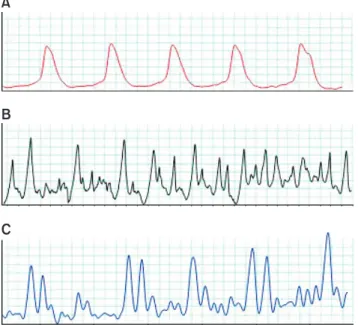
At 2 weeks after BOO formation, the ligature was removed through an intravaginal approach [9] in the persistent DO and the WSY-1075 groups. Oral adminis- tration of WSY-1075 was continued for 4 weeks in the WSY-1075 group. Cystometrograms were obtained after 4 weeks. The contraction pressure (47.8±7.6 cm H2O) of the persistent DO group was significantly greater
than that of the control group (23.6±5.7 cm H2O) (p<0.05).
The contraction interval (5.3±0.4 minutes) of the persis- tent DO group was significantly lower than that of the control group (11.3±0.7 minuted) (p<0.05). At 4 weeks, the contraction pressure (25.3±0.7 cm H2O) of the persistent DO with treatment group was significantly lower than that of the persistent DO group (47.8±7.6 cm H2O) (p<0.05).
The contraction interval (10.9±0.4 minutes) of the persis- tent DO with treatment group was significantly greater than that of the persistent DO group (5.3±0.4 minutes) (p<0.05). The NVCs of the persistent DO with treatment group (2.3±1.5) were significantly fewer in number than in the persistent DO group (4.5±0.6) (p<0.05) (Fig. 1).
2. Changes in oxidative stress
A significant increase of 8-OHdG was noted in the persistent DO group compared with the control group (p<0.05). After administration of WSY-1075, a signifi- cant decrease of 8-OHdG was observed compared with the persistent DO group (p<0.05). SOD was found at significantly lower levels in the persistent DO group than in the controls (p<0.05). After administration of WSY-1075, a significant increase of SOD was observed compared with the persistent DO group (p<0.05). The levels of 8-OHdG and SOD in the persistent DO with treatment group were significantly different from the levels in the control group (p<0.05) (Fig. 2).
3. Changes in inflammatory cytokines
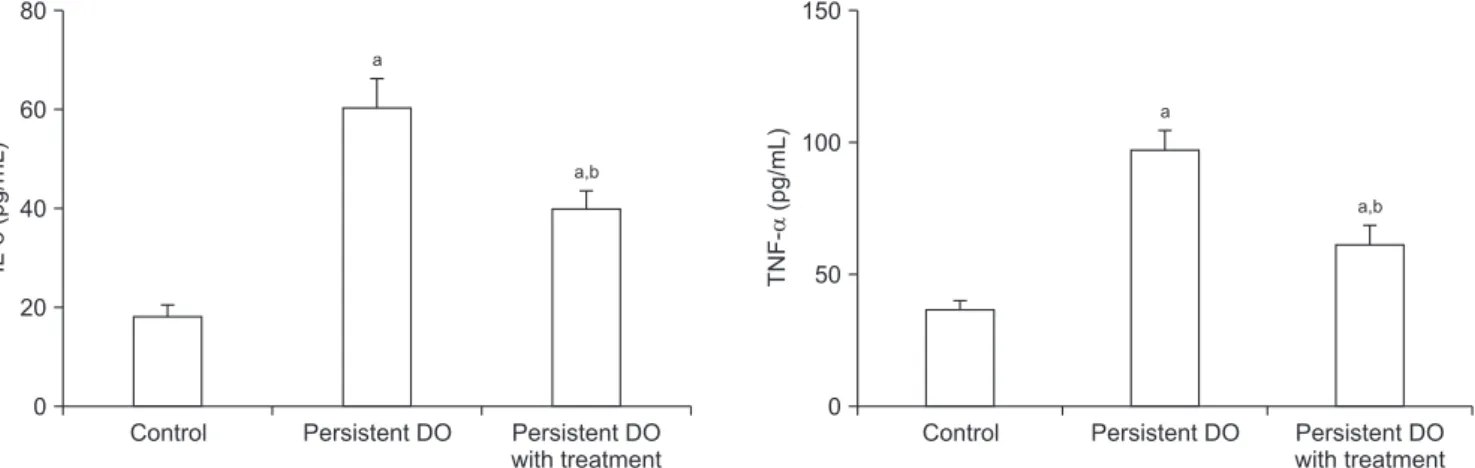
A significant increase in IL-8 and TNF-a was noted in the persistent DO group compared with the control group (p<0.05). After administration of WSY-1075, a significant decrease of IL-8 and TNF-a was observed compared with the persistent DO group (p<0.05). The levels of IL-8 and TNF-a in the persistent DO with treatment group were significantly different from those in the control group (p<0.05) (Fig. 3).
4. Expression of muscarinic receptors
The persistent DO group showed significantly higher expression of the M3 muscarinic receptor and lower expression of the M2 muscarinic receptor in the blad- der than the control group (p<0.05). Significantly decreased M3 muscarinic receptor expression and in- creased M2 muscarinic receptor expression were noted after administration of WSY-1075 compared with the persistent DO group (p<0.05). M2 muscarinic receptor expression in the persistent DO with treatment group Fig. 1. Representative cystometric curves. (A) Control group. (B) Per-
sistent detrusor overactivity (DO) group. (C) Persistent DO with treat- ment group.
A
B
C
Fig. 2. Changes in 8-OHdG and SOD. Values are expressed as means±standard deviations. 8OHdG: 8-hydroxy-2-deoxyguanosine, SOD: superoxide dismutase, DO: detrusor overactivity. ap<0.05 compared with the control group; bp<0.05 compared with the persistent DO group.
8-OHdG(g/mL)
Control 10
8
6
4
2
Persistent DO with treatment 0
Persistent DO a
a,b
Control 100
80
60
40
20
Persistent DO with treatment
SOD(g) /mL
0
Persistent DO a
a,b
was not significantly different from that observed in the control group. However, M3 muscarinic receptor expression in the persistent DO with treatment group was significantly different from that observed in the control group (p<0.05) (Fig. 4).
DISCUSSION
In this study, we observed persistent DO after the relief of partial BOO, and found that persistent DO was improved after oral administration with the plant combination WSY-1075. In addition, decreased M3 muscarinic receptor expression and increased M2 muscarinic receptor expression after treatment were
observed. These functional and molecular changes likely occurred due to the reduced oxidative stress and inflammation resulting from the plant combination.
Ischemia and oxidative stress of the bladder are con- sidered to be one of the mechanisms through which LUTS is induced, and the decrease of blood flow caused by chronic BOO can increase oxidative stress. During the voiding phase, chronic BOO in patients with BPH was found to increase the blood vessel compression resulting from the overdistension of the bladder wall, causing hypoxia [11]. According to a study that ana- lyzed the factors associated with hypoxia in BPH pa- tients after surgery, the number of hypoxia-inducible factor-1a immunoreactive cells in the bladder in BPH Fig. 3. Changes in pro-inflammatory cytokines. Values are expressed as means±standard deviations. IL-8: interleukin-8, TNF-a: tumor necrosis factor-a, DO: detrusor overactivity. ap<0.05 compared with the control group; bp<0.05 compared with the persistent DO group.
IL-8(pg/mL)
Control 80
60
40
20
Persistent DO with treatment 0
Persistent DO a
a,b
Control 150
100
50
Persistent DO with treatment
TNF- (pg/mL)
0
Persistent DO a
a,b
Fig. 4. Changes in the M2 and M3 muscarinic receptors. Values are expressed as means±standard deviations. DO: detrusor overactivity. ap<0.05 compared with the control group; bp<0.05 compared with the persistent DO group.
M3
Beta-actin
Control
Persistent DO with treatment Persistent DO
M2
Beta-actin
Control
Persistent DO with treatment Persistent DO
Relativedensity
Control 0.4
0.3
0.2
0.1
Persistent DO with treatment 0.0
Persistent DO
b
a
Relativedensity
Control 0.8
0.6
0.4
0.2
Persistent DO with treatment 0.0
Persistent DO
a, b a
patients was significantly greater than in controls [12].
These clinical findings showed that hypoxic changes of the bladder took place due to BPH-induced BOO in BPH patients who underwent surgery. Moreover, Azadzoi et al [13] reported that relaxation of the blad- der wall during the filling phase, following the voiding phase, increased blood flow to the bladder wall; how- ever, the degree of increased blood flow was decreased compared to what was observed in the normal bladder.
Additionally, the authors noted that moderate bladder ischemia induced DO and that severe bladder isch- emia induced detrusor underactivity. These previous findings imply that hypoxia and reperfusion of the bladder induced by BOO can produce LUTS. The rat model of DO induced by partial BOO is widely used for the study of storage symptoms associated with BPH [14]. In the present study, the animal model present- ing persistent DO based on the method by Jin et al [9]
was chosen because we analyzed the effect of the plant combination WSY-1075 on persistent DO after the relief of partial BOO. The presence of persistent DO after the relief of partial BOO was confirmed, meaning that moderate bladder ischemia and reperfusion had occurred. As a result, increased 8-OHdG and decreased SOD were observed in the persistent DO group, and it is well known that repeated ischemia and reperfusion of tissue induces oxidative stress [15]. Moreover, pro- inflammatory cytokines such as IL-8 and TNF-a in the persistent DO group significantly increased, similarly to a report stating that inflammatory cytokines were increased in bladders with overactivity induced by chronic bladder ischemia [16]. The mechanism that has been suggested for DO induced by BOO is that chronic
bladder ischemia and reperfusion induce oxidative stress and increase inflammatory cytokines in the bladder. These changes then lead to bladder denerva- tion and increases in molecules, such as prostaglandins and nerve growth factor that are contributing factors to DO and overactive bladder [17]. Therefore, reducing hypoxia and reperfusion induced-oxidative stress may help to control BOO-associated DO.
Administration of the plant combination WSY-1075 led to significantly decreased 8-OHdG, increased SOD, and decreased IL-8 and TNF-a levels in the bladder, demonstrating a reduction of oxidative stress and inflammation in the bladder, even though oxidative stress and inflammatory cytokine levels in the persis- tent DO with treatment group were not decreased to the level of the control group. Moreover, we noted func- tional improvement of DO, as measured by a signifi- cant reduction of contraction pressure, an increase in the contraction interval, and decreased NVCs in CMG after administration of the plant combination. This functional and molecular improvement is suggested to have been due to the antioxidative effect of the plant combination. Several studies have observed the thera- peutic effects of antioxidants such as coenzyme Q10, eviprostat, and vitamin E on LUTS [18-22]. Kim et al [19]
observed that coenzyme Q10 reduced malondialdehyde levels in bladder tissue and micturition frequency in a chronic bladder ischemia model. Studies of the phyto- therapeutic agent eviprostat and vitamin E showed a suppressive effect on oxidative stress and a preventive effect against the deterioration of bladder dysfunction [20-22]. The antioxidative agent eviprostat consists of 5 components, the umbellate wintergreen Chimaphila
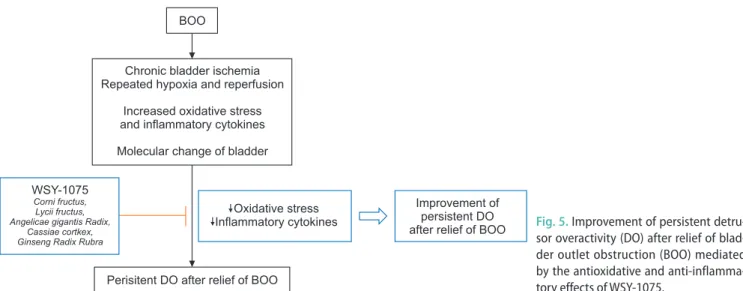
Fig. 5. Improvement of persistent detru- sor overactivity (DO) after relief of blad- der outlet obstruction (BOO) mediated by the antioxidative and anti-inflamma- tory effects of WSY-1075.
BOO
Chronic bladder ischemia Repeated hypoxia and reperfusion
Increased oxidative stress and inflammatory cytokines Molecular change of bladder
WSY-1075 Corni fructus, Lycii fructus, Angelicae gigantis Radix,
Cassiae cortkex, Ginseng Radix Rubra
Improvement of persistent DO after relief of BOO
Perisitent DO after relief of BOO Oxidative stress Inflammatory cytokines
umbellata, the aspen Populus tremula, the small pasque flower Pulsatilla pratensis, the field horsetail Equisetum arvense, and wheat germ oil, and it is con- sidered to reduce prostatic inflammation and BPH- associated LUTS [20,21,23,24]. Similarly to eviprostat, the plant combination used in this study consisted of 5 plants: Corni fructus, Angelicae gigantis Radix, Lycii fructus, Ginseng Radix Rubra, and Cassiae cortkex.
Usually, phytotherapeutic agents are made based on empirically used herbal remedies, and empirical herbal remedies have been made by guidelines for herb-herb combinations in Chinese medicine [25]. According to the theory of herb-herb combinations, this combination was made to enhance the effects and reduce the side effects of the herbs in a balanced manner. All 5 plants contained in the plant combination used in the present study have shown antioxidative and anti-inflammatory effects [26-28]. Therefore, reduced oxidative stress and inflammation after treatment may have been due to the synergistic effect of the plant combination. More- over, expression of the M3 muscarinic receptor was significantly decreased after treatment with the plant combination. This change is important because the M3 muscarinic receptor is a major molecule involved in controlling DO and overactive bladder [29]. Therefore, functional improvement of persistent DO via treat- ment with this plant combination after relief of BOO may have resulted from M3 muscarinic receptor reduc- tion mediated by antioxidative and anti-inflammatory actions that reduce ischemia/reperfusion injuries and adjust the balance of the bladder tissue (Fig. 5)
The present study presented the effects of the plant combination WSY-1075 on the reduction of persistent DO after the relief of BOO. However, it has several limitations. We did not administer the plant combina- tion excluding the rats without DO after relieving of BOO. Therefore, further study confirms the results should be done after excluding the rats without DO af- ter relieving of BOO. Although the plant combination was developed based on the theory of herb-herb com- binations in Chinese medicine, the exact mechanism has not yet been discovered, so further study is needed.
In addition, it is necessary to identify the active in- gredient of each plant. We observed functional and molecular improvements in persistent DO mediated by antioxidative and anti-inflammatory effects, but the precise mechanism should be defined to support the treatment effect.
CONCLUSIONS
Persistent DO after the relief of BOO was improved by treatment with the plant combination WSY-1075.
The treatment effect was mediated by the antioxida- tive and anti-inflammatory effects of the plant com- bination. Based on these preliminary results, further study is needed to discover the exact mechanism and to identify the active ingredients.
ACKNOWLEDGEMENTS
This research was supported by a grant of the Korea Health Technology R&D Project through the Korea Health Industry Development Institute (KHIDI), fund- ed by the Ministry of Health & Welfare, Republic of Korea (Grant no. HI15C0099).
Disclosure
The authors have no potential conflicts of interest to disclose.
Author Contribution
Research conception & design: Kim SJ, Kim SW. Performing the experiments: Jeon SH, Kwon EB. Data acquisition: Jeong HC, Choi SW. Data analysis and interpretation: Kim SJ. Statis- tical analysis: Bae WJ, Cho HJ. Drafting of the manuscript: Kim SJ. Critical revision of the manuscript: Ha US, Hong SH, Lee JY. Receiving grant: Kim SW. Approval of final manuscript: all authors.
REFERENCES
1. Sarma AV, Wei JT. Clinical practice. Benign prostatic hyper- plasia and lower urinary tract symptoms. N Engl J Med 2012;
367:248-57.
2. Lee YJ, Lee JW, Park J, Seo SI, Chung JI, Yoo TK, et al. Na- tionwide incidence and treatment pattern of benign prostatic hyperplasia in Korea. Investig Clin Urol 2016;57:424-30.
3. Gratzke C, Bachmann A, Descazeaud A, Drake MJ, Maders- bacher S, Mamoulakis C, et al. EAU guidelines on the assess- ment of non-neurogenic male lower urinary tract symptoms including benign prostatic obstruction. Eur Urol 2015;67:
1099-109.
4. Barkin J, Diles D, Franks B, Berner T. Alpha blocker mono- therapy versus combination therapy with antimuscarinics in men with persistent LUTS refractory to alpha-adrenergic
treatment: patterns of persistence. Can J Urol 2015;22:7914- 23.
5. Cho SY, Ro YK, Kim H, Son H. Preoperative urinary reten- tion increased the risk of urinary retention after photoselec- tive vaporization of the prostate. World J Mens Health 2015;
33:182-7.
6. Shin YS, Zhang LT, You JH, Choi IS, Zhao C, Park JK. Effi- cacy and safety of tamsulosin hydrochloride 0.2 mg and com- bination of tamsulosin hydrochloride 0.2 mg plus solifenacin succinate 5 mg after transurethral resection of the prostate: a prospective, randomized controlled trial. Clin Interv Aging 2016;11:1301-7.
7. Pagano E, Laudato M, Griffo M, Capasso R. Phytotherapy of benign prostatic hyperplasia. A minireview. Phytother Res 2014;28:949-55.
8. Park JW, Jeong HC, Moon HW, Cho SJ, Yang JH, Kim WH, et al. Anti-inflammatory and antimicrobial effects of a novel herbal formulation (WSY-1075) in a chronic bacterial prosta- titis rat model. World J Mens Health 2016;34:179-85.
9. Jin LH, Andersson KE, Han JU, Kwon YH, Park CS, Shin HY, et al. Persistent detrusor overactivity in rats after relief of partial urethral obstruction. Am J Physiol Regul Integr Comp Physiol 2011;301:R896-904.
10. Nishiguchi J, Kwon DD, Kaiho Y, Chancellor MB, Kumon H, Snyder PB, et al. Suppression of detrusor overactivity in rats with bladder outlet obstruction by a type 4 phosphodiesterase inhibitor. BJU Int 2007;99:680-6.
11. Lin AT, Juan YS. Ischemia, hypoxia and oxidative stress in bladder outlet obstruction and bladder overdistention injury.
Low Urin Tract Symptoms 2012;4 Suppl 1:27-31.
12. Koritsiadis G, Stravodimos K, Koutalellis G, Agrogiannis G, Koritsiadis S, Lazaris A, et al. Immunohistochemical estima- tion of hypoxia in human obstructed bladder and correlation with clinical variables. BJU Int 2008;102:328-32.
13. Azadzoi KM, Tarcan T, Kozlowski R, Krane RJ, Siroky MB.
Overactivity and structural changes in the chronically isch- emic bladder. J Urol 1999;162:1768-78.
14. Parsons BA, Drake MJ. Animal models in overactive bladder research. Handb Exp Pharmacol 2011;(202):15-43.
15. Sasaki M, Joh T. Oxidative stress and ischemia-reperfusion injury in gastrointestinal tract and antioxidant, protective agents. J Clin Biochem Nutr 2007;40:1-12.
16. Matsui T, Oka M, Fukui T, Tanaka M, Oyama T, Sagawa K, et al. Suppression of bladder overactivity and oxidative stress by the phytotherapeutic agent, Eviprostat, in a rat model of atherosclerosis-induced chronic bladder ischemia. Int J Urol 2012;19:669-75.
17. Nomiya M, Andersson KE, Yamaguchi O. Chronic bladder
ischemia and oxidative stress: new pharmacotherapeutic tar- gets for lower urinary tract symptoms. Int J Urol 2015;22:40- 6.
18. Juan YS, Chuang SM, Mannikarottu A, Huang CH, Li S, Schuler C, et al. Coenzyme Q10 diminishes ischemia-reper- fusion induced apoptosis and nerve injury in rabbit urinary bladder. Neurourol Urodyn 2009;28:339-42.
19. Kim JW, Jang HA, Bae JH, Lee JG. Effects of coenzyme Q10 on bladder dysfunction induced by chronic bladder ischemia in a rat model. J Urol 2013;189:2371-6.
20. Kawai Y, Oka M, Kyotani J, Oyama T, Matsumoto S, Kakizaki H. Effect of the phytotherapeutic agent eviprostat on the bladder in a rat model of bladder overdistension/emptying.
Neurourol Urodyn 2013;32:1031-7.
21. Oka M, Fukui T, Ueda M, Tagaya M, Oyama T, Tanaka M.
Suppression of bladder oxidative stress and inflammation by a phytotherapeutic agent in a rat model of partial bladder outlet obstruction. J Urol 2009;182:382-90.
22. Parekh MH, Lobel R, O’Connor LJ, Leggett RE, Levin RM.
Protective effect of vitamin E on the response of the rabbit bladder to partial outlet obstruction. J Urol 2001;166:341-6.
23. Ishigooka M, Hashimoto T, Hayami S, Tomaru M, Nakada T, Mitobe K. Clinical and retrospective evaluation of Eviprostat:
a non-hormonal and non-neuropharmacological agent for benign prostatic hyperplasia. Int Urol Nephrol 1995;27:61-6.
24. Sugimoto M, Oka M, Tsunemori H, Yamashita M, Kakehi Y.
Effect of a phytotherapeutic agent, Eviprostat®, on prostatic and urinary cytokines/chemokines in a rat model of nonbac- terial prostatitis. Prostate 2011;71:438-44.
25. Che CT, Wang ZJ, Chow MS, Lam CW. Herb-herb combina- tion for therapeutic enhancement and advancement: theory, practice and future perspectives. Molecules 2013;18:5125-41.
26. Kim HJ, Kim BH, Kim YC. Antioxidative action of corni fruc- tus aqueous extract on kidneys of diabetic mice. Toxicol Res 2011;27:37-41.
27. Park WH, Hong MY, Chung KH, Kim HM, Lee YC, Kim CH.
Effects of traditional herbal medicine, Hwaotang, on athero- sclerosis using the spontaneous familial hypercholesterolemia model, Kurosawa and Kusanagi-hypercholesterolemic rabbits and the venous thrombosis rats. Phytother Res 2005;19:846- 53.
28. Lam P, Cheung F, Tan HY, Wang N, Yuen MF, Feng Y. Hepa- toprotective effects of Chinese medicinal herbs: a focus on anti-inflammatory and anti-oxidative activities. Int J Mol Sci 2016;17:465.
29. Hegde SS. Muscarinic receptors in the bladder: from basic re- search to therapeutics. Br J Pharmacol 2006;147 Suppl 2:S80- 7.