• 검색 결과가 없습니다.

Characterization of the UV Oxidation of Raw Natural Rubber Thin Film Using Image and FT-IR Analysis

N/A
N/A
Protected

Academic year: 2021

Share "Characterization of the UV Oxidation of Raw Natural Rubber Thin Film Using Image and FT-IR Analysis"

Copied!
9
0
0

로드 중.... (전체 텍스트 보기)

전체 글

(1)

Characterization of the UV Oxidation of Raw Natural Rubber Thin Film Using Image and FT-IR Analysis

Ik-Sik Kim , Bok-Won Lee, Kyung-Suk Sohn, Joohoe Yoon, and Jung-Hun Lee Aero Technology Research Institute, ROKAF, P.O. Box 304-150, 352 Ayang-ro, Dong-gu, Daegu, Korea

(Received October 3, 2015, 1st Revised October 27, 2015, 2nd Revised November 2, 2015, Accepted November 10, 2015)

Abstract: Characterization of the UV oxidation for raw natural rubber (NR) was investigated in controlled conditions through image and FT-IR analysis. The UV oxidation was performed on a thin film of natural rubber coated on a KBr win- dow at 254 nm and room temperature to exclude the thermal oxidation. Before or after exposure to UV light, image of the NR thin film was observed at a right or tilted angle. FT-IR absorption spectra were measured in transmission mode with the UV irradiation time. The UV oxidation of NR was examined by the changes of absorption peaks at 3425, 1717, 1084, 1477, 1377, and 833 cm

−1

which were assigned to hydroxyl group (-OH), carbonyl group (-C=O), carbon-oxygen bond (-C-O), methylene group (-CH

2

-), methyl group (-CH

3

), and cis-methine group (cis-CCH

3

=CH-), respectively. During the initial exposure period, the results indicated that the appearance of carbonyl group was directly related to the reduction of cis-methine group containing carbon-carbon double bond (-C=C-). Most of aldehydes or ketones from carbon-carbon double bonds were formed very fast by chain scission. A lot of long wide cracks with one orientation at regular intervals which resulted in consecutive chain scission were observed by image analysis. During all exposure periods, on the other hand, it was considered that the continuous increment of hydroxyl and carbonyl group was closely related to the decrement of meth- ylene and methyl group in the allylic position. Therefore, two possible mechanisms for the UV oxidation of NR were sug- gested.

Keywords: UV oxidation, natural rubber, FT-IR, image, chain scission

Introduction

Most of polymers usually contain high levels of unsatu- ration in the polymer backbone. The unsaturation of polymer means what includes carbon-carbon double bond (-C=C-) in its backbone. Such polymers are natural rubber (NR), styrene butadiene rubber (SBR), and polybutadiene rubber (BR). “R”

expressed in the ASTM designations does not mean “rubber”

but does refer to “the presence of unsaturation” in the poly- mer backbone. Most of these polymers are susceptible to degradation when exposed to ultra-violet (UV) radiation, heat, water, ozone, and oxygen. The lifetime of a material is determined by UV radiation (photochemical degradation) and thermal oxidation, or a combination of these factors.

1

A lot of work has been carried out over the past 90 years to understand degradation effects in rubber due to the action of oxygen in the air, and more especially, the mechanism of chain scission which is responsible for the accompanying

decrease in elasticity.

2,3

NR has four kinds of microstructures in its molecular chain which are cis-1,4-, trans-1,4-, 1,2-, and 3,4-polyisoprene.

The main ingredient of NR is cis-1,4-polyisoprene. There are numerous publications on the degradation processes of both vulcanized and unvulcanized NRs. Degradation products of polyisoprene that have been identified are hydroperoxides, alcohols, aldehydes, epoxides, ketones, esters, and carboxylic acids.

4

Depending on the ambient conditions (in air or in vacuo), the type of isomer (cis, trans, vinyl), and the type of irradiation source (monochromatic UV light), the prevailing processes differ significantly.

3,5-8

Generally, rubber vulcanizates possess various types of materials such as polymers, carbon blacks, process oils, anti- oxidants, accelerators, crosslinking agents, and activators.

When rubber vulcanizates are irradiated by UV light, com- plex chemical reactions can occur.

2

However it is not easy to detect characteristic oxidation reactions of polymer itself using light such as FT-IR or Raman spectroscopy because rubber vulcanizates include an excellent light absorber like

Corresponding author E-mail: [email protected]

(2)

perature was investigated through image and FT-IR analysis.

The analytical techniques were used with Fourier transform infrared spectroscopy (Bruker, IFS 85) and image analyzer (Olympus, SZX16).

Experimental

1. Materials

SMR 20 as natural rubber was used. This grade was made from field coagulum in Malaysia. Table 1 shows standard malaysian rubber specifications of SMR 20.

10

2. Sample Preparation

NR was cut into 1 mm

3

in size and extracted with acetone for 4 h to remove residual emulsifying agents or soluble organic substances which interfere with spectra of NR. The specimen was dried at 25

o

C for 1 day. 1 g of dried sample was dissolved in a sealed beaker including 100 mL of toluene at room temperature for 7 days. The concentration of the solution was adjusted to contain 1% NR solution. The sample for measurement of the FT-IR spectroscopy and image ana- lyzer was prepared as follows. A transparent thin film of NR was made on a KBr window with dimension of 20 × 20 × 5 mm

3

(width × length × thickness) by coating with 1% NR solution. 1~2 drops of the solution using a glass capillary were dropped and coated thinly on a KBr window. The film thickness must be adjusted to give an absorbance of about 1.0 at 2959 cm

−1

. The sample coated on a KBr window was maintained to evaporate toluene in the dark at room tem-

mal oxidation. The UV oxidation for a transparent thin film coated on a KBr window was performed at 254 nm.

4. Characterization

The images of thin film before and after UV irradiation were observed using image analyzer (Olympus, SZX16). The images were obtained at a right or tilted angle. The spectral changes of thin film were measured in transmission mode per about 24 hrs according to UV irradiation time using Fourier transform infrared spectroscopy (Bruker, IFS 85). FT-IR spectra were scanned from 400 to 4,000 cm

−1

with a reso- lution 4 cm

−1

. The average of 32 scans for sample was taken for the measurement.

Results and Discussion

1. Image Analysis

Figure 1 shows images of a transparent thin film of NR coated on a KBr window at a right angle (a) before UV irra- diation and (b) after UV irradiation of 202 hrs at 254 nm.

To exclude throughly the thermal oxidation, the UV oxida- tion was performed at room temperature. Figure 1(a) shows that the image of thin film of NR before UV irradiation is neat and clean. However, Figure 1(b) indicates that the image of thin film of NR after UV irradiation of 202 hrs reveals a unique characteristic like a lot of fine dim wrinkles. It was

Figure 1. Images of a transparent thin film of NR coated on a KBr window at a right angle (a) before UV irradiation and (b) after UV irradiation of 202 hrs at 254 nm.

Table 1. Standard Malaysian Rubber Specifications of SMR 20

Property SMR 20

Dirt content (% max. on 40 mesh) 0.20

Ash content (% max.) 1.00

N

2

content (% max.) 0.60

Volatile matter (% max.) 0.80

Wallace platicity P

o

(min.) 30

Plasticity retension index (% min.) 40

(3)

found that these dim wrinkles appeared evenly at whole sites.

It was considered that many fine wrinkles could be produced by changes of the chemical structure of NR by UV light.

Figure 2 shows also image of the UV oxidation at a tilted angle for the same sample shown in Figure 1(b). Compared to the image seen at a right angle, that at a tilted angle can be seen even more apparently. The image shows a unique regular structure which is composed of a lot of dim wrinkles with one direction moving along with the lines like gentle waves at constant intervals. This may be interpreted as the regular molecular rearrangement of NR coated on a KBr win- dow.

In fact, NR includes four microstructures in its molecular chain which consist of cis-1,4-, trans-1,4-, 1,2-, and 3,4-poly- isoprene. Of these four isomers, NR consists almost exclu- sively of the cis-1,4 polymer, which was produced in the milky latex of the rubber tree (Hevea brasiliensis). Due to high structure regularity of NR latex, it tends to crystallize spontaneously when it is kept at a low temperature ( −26

o

C) or when it is stretched. In its natural state, however, NR latex is greatly affected by temperature: it crystallizes on cooling, taking only several hours to do so at −26

o

C and it becomes tacky and inelastic above 40

o

C.

Although it is known that high cis-1,4 polyisoprene in NR latex has amorphous structure at room temperature,

10

our result represents that image of a thin film of NR after the UV oxidation shows unique regular structures. The regular struc- tures may be made on an ionic transparent KBr window in the process of evaporating slowly toluene from 1% NR solu-

tion at room temperature for 7 days. Because the carbon-car- bon double bond had more polar than methyl group (-CH

3

) and ethylene group (-CH

2

CH

2

-) in NR backbone, interactions of between double bonds were stronger than those of between ethylene groups. Therefore, when the solution was evaporated slowly on a KBr window, the molecular rear- rangement of NR might be divided into two regions. One is carbon-carbon double bond region (polar region) including pi-electrons and the other is ethylene region (non-polar region). There were a number of waves with orientation, alternating the ridge and the valley as shown in Figure 2. It may be considered that the ridge is composed of ethylene group including less polar character and the valley is made up of carbon-carbon double bond containing more polar character. Although the bond length of carbon-carbon double bond (1.34 × 10

−4

µm) in the valley region is somewhat shorter than that of ethylene group (1.54 × 10

−4

µm) in the ridge region, the interval between the valley is much greater than the one between the ridge. In the valley region, con- secutive chain scission of carbon-carbon double bond by UV irradiation seemed to be happen. As a result, two carbons of carbon-carbon double bond were simultaneously oxidized and carbonyl compounds such as aldehyde or ketone were formed. It was considered that the greater interval between the valley resulted in the repulsive force between partial neg- ative charges of oxygen atoms from aldehyde and ketone group formed by chain scission, together with shrinkage between chains after chain scission. Thus, a lot of long wide cracks with orientation at the polar region containing carbon- carbon double bond seemed to be formed. This will be dis- cussed more later. Figure 3 depicts the regular molecular rearrangement with orientation for thin film of NR coated on a KBr window.

2. FT-IR Analysis

FT-IR absorption spectra for a transparent thin film of NR Figure 2. Image of the UV oxidation at a tilted angle for the same

sample shown in Figure 1(b).

Figure 3. The regular molecular rearrangement with orientation

for thin film of NR coated on a KBr window.

(4)

with the UV irradiation time ranging (a) from 2500 to 4000 cm

−1

and (b) from 700 to 1900 cm

−1

at 254 nm and room temperature are illustrated in Figure 4. It was observed that some oxidation reactions took place because there was incre- ment and reduction of intensity at some peaks.

In the regions ranging from 2500 to 4000 cm

−1

, the FT-IR spectrum of NR at exposure to UV light of 23 hrs shows there is no broad peak near 3425 cm

−1

, showing no change as before UV exposure. After UV irradiation of 23 hrs, how- ever, the spectra indicate that the intensity of broad peak near 3425 cm

−1

increases continuously. A broad peak at 3425 cm

−1

means formation of hydroxyl group (-OH) as a result of the UV oxidation. A broad peak results in the inter- or intramolecular hydrogen bonds between hydroxyl groups.

In the regions ranging from 700 to 1900 cm

−1

, the spectral patterns show that the intensity of absorption peaks at 1717 cm

−1

and near 1084 cm

−1

increases with the UV irradiation time. For the UV irradiation of 23 hrs, the FT-IR spectrum of natural rubber shows there is a very weak peak at 1717 cm

−1

region. During the UV exposure periods of between 23 hrs and 48 hrs, the spectra show that the intensity of peak at 1717

cm

−1

increases steeply and after that, it increases gradually according to the UV irradiation time. A strong and sharp peak at 1717 cm

−1

may be assigned to carbonyl group (-C=O) from ketone (R

2

C=O) and aldehyde (RCOH). In lit- erature, it was well known that the peaks of carbonyl groups at 1810, 1800, 1760, 1735, 1725, 1715, 1710, and 1690 cm

−1

were attributed to anhydride (band 1), acid chloride, anhy- dride (band 2), ester, aldehyde, ketone, carboxylic acid, and amide, respectively.

11

Before the UV irradiation, although the FT-IR spectrum of NR shows there is a very weak broad peak at 1150~1000 cm

−1

region, the spectra show that the intensity of broad peaks near 1038, 1084, and 1130 cm

−1

in this region increases very slowly and continuously with the UV irradiation time at room temperature. On the other hand, in case of the thermal oxidation of NR, the intensity of broad peaks at this region increases greatly together with hydroxyl and carbonyl group with the thermal aging at 80

o

C. It was known that formation of carbon-oxygen bond after forming carbon radical by UV light or heat was influenced by temperature. We will consider the thermal oxidation of natural rubber in future publications.

Figure 4. FT-IR absorption spectra for a transparent thin film of NR with the UV irradiation time ranging (a) from 2500 to 4000

cm

−1

and (b) from 700 to 1900 cm

−1

at 254 nm and room temperature.

(5)

A peak at this region is assigned to carbon-oxygen single bond (-C-O) of primary or secondary alcohols.

The spectral patterns show that the intensity of peaks at both 1477 cm

−1

and 1377 cm

−1

decreases slowly with the UV irradiation time. The peaks of both 1477 cm

−1

and 1377 cm

−1

are assigned to methylene group (-CH

2

-) and methyl group (-CH

3

) in NR backbone, respectively. It means that two groups were changed by the UV oxidation.

The spectral patterns also show that the intensity of peak at 833 cm

−1

decreases greatly during the UV exposure peri- ods between 23 hrs and 48 hrs. After that, the intensity of peak decreases rarely. The peak at 833 cm

−1

is assigned to cis-methine group (cis-CCH

3

=CH-). Table 2 represents char- acteristic FT-IR peaks for the un-oxidized and oxidized NR.

To express quantitatively the increment and decrement of intensity at each absorption peak, Table 3 represents the peak height at each FT-IR absorption according to the UV irra- diation time based on Figure 4. Numbers in Table 3 are obtained from their peak heights based on baseline. Each peak height means its absorbance which is related to quantity (or concentration) according to Beer-Lambert law. Table 3

shows that the peak height at 2959 cm

−1

is the maximum.

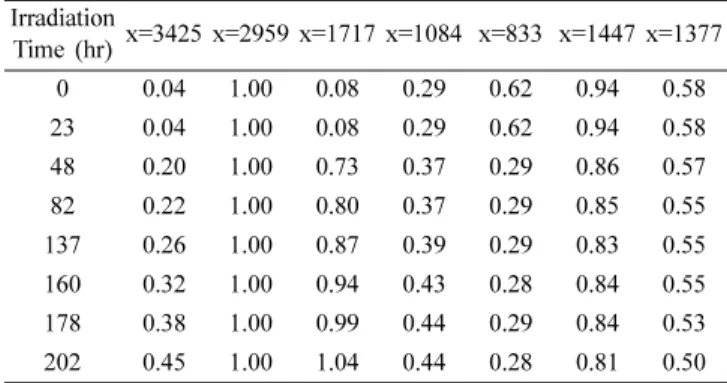
Table 4 represents the relative abundance calculated from the absorption peak ratio of A

x

(x=3425, 1717, 1084, 833, 1447, and 1377 cm

−1

) to A

2959

based on the maximum peak. Figure 5 indicates the change curves of the increment and reduction in each functional group with the UV irradiation time based on Table 4.

During the UV irradiation time ranging from 23 to 48 h, the change curves show that the relative abundance of car- bonyl group, hydroxyl group, and C-O bond increases from 0.08 to 0.73, from 0.04 to 0.20, and from 0.29 to 0.37, respectively. It was confirmed that the formation of carbonyl compound preceeded very fast at an initial step. On the con- trary, the change curves show that the relative abundance of cis-methine group, methylene group, and methyl group decreases from 0.62 to 0.29, from 0.94 to 0.86, and from 0.58 to 0.57, respectively. The relative abundance increases with the order of C-O bond, hydroxyl group, and carbonyl group Table 2. Characteristic FT-IR Peaks for the Un-oxidized and

Oxidized Natural Rubber

Sample I.D. Absorption peak,

cm

−1

Chemical structure

Un-oxidized form

3036 =C-H Stretching

2959, 2935, 2854 -CH

3

(Methyl), -CH

2

- (Methylene) 1477 -CH

2

- (Methylene)

1377 -CH

3

(Methyl)

833 cis-Methine (-CCH

3

=CH wagging) Oxidized

form

3425 -OH (Hydroxyl)

1717 -C=O (Carbonyl)

1084 -C-O (C-O Bond)

Table 3. The Peak Height in each FT-IR Absorption According to the UV Irradiation Time Based on Figure 4

Irradiation

Time (hr) A

3425

A

2959

A

1717

A

1084

A

833

A

1447

A

1377

0 0.60 11.15 0.90 3.20 6.90 10.5 6.50

23 0.70 11.15 0.90 3.20 6.90 10.5 6.50 48 2.15 11.15 8.15 4.15 3.20 9.55 6.30 82 2.35 11.20 9.00 4.10 3.20 9.50 6.20 137 3.00 11.05 9.65 4.30 3.20 9.20 6.10 160 3.70 10.75 10.15 4.60 3.00 9.00 5.90 178 4.25 10.40 10.25 4.60 3.05 8.75 5.50 202 5.00 10.50 10.95 4.60 2.95 8.50 5.20

*Numbers are obtained from their peak heights based on baseline.

Figure 5. The change curves of the increment and reduction in each functional group with the UV irradiation time based on Table 4.

Table 4. The Relative Abundance Calculated from the Absorption Peak Ratio of A

x

to A

2959

Based on the Maximum Peak

Irradiation

Time (hr) x=3425 x=2959 x=1717 x=1084 x=833 x=1447 x=1377

0 0.04 1.00 0.08 0.29 0.62 0.94 0.58

23 0.04 1.00 0.08 0.29 0.62 0.94 0.58

48 0.20 1.00 0.73 0.37 0.29 0.86 0.57

82 0.22 1.00 0.80 0.37 0.29 0.85 0.55

137 0.26 1.00 0.87 0.39 0.29 0.83 0.55

160 0.32 1.00 0.94 0.43 0.28 0.84 0.55

178 0.38 1.00 0.99 0.44 0.29 0.84 0.53

202 0.45 1.00 1.04 0.44 0.28 0.81 0.50

(6)

and decreases with the order of methyl group, methylene group, and cis-methine group. It was identified that the deg- radation of cis-methine preceeded very fast at an initial step.

During this initial exposure period, it was considered that most of carbonyl compounds were formed from cis-methine group containing carbon-carbon double bond because sudden appearance in the relative abundance of carbonyl group was closely connected with abrupt decrement in that of cis- methine group. It was also considered that some carbonyl compounds such as aldehydes or ketones and alcohols were made by abstraction of a hydrogen atom of methyl or meth- ylene group in the allylic position. This will be discussed more later. During this initial exposure period, therefore, it was considered that most of carbonyl compounds such as aldehydes or ketones were formed by consecutive chain scis- sion from cis-methine group, as previously mentioned in image analysis. A lot of long wide cracks with one orien- tation at regular intervals which resulted in consecutive chain scission were observed by image analysis.

During the UV irradiation time ranging from 48 to 202 hrs, the change curves show that the relative abundance of car- bonyl group, hydroxyl group, and C-O bond increases grad- ually. On the contrary, the change curves indicate that the relative abundance of methylene group and methyl group except cis-methine group decreases very slowly. The relative abundance of methylene group and methyl group decreases from 0.86 to 0.81 and from 0.57 to 0.50, respectively. In later exposure period, it was assumed that the UV oxidation of NR was mainly initiated by abstraction of a hydrogen atom in the allylic position. As a result, it was thought that products such as carbonyl compounds and alcohols were produced contin- uously.

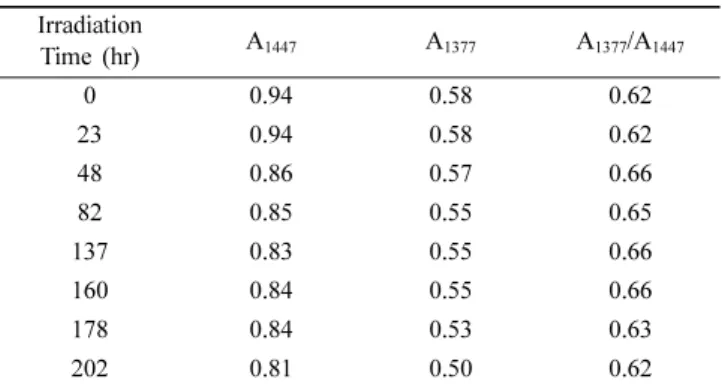
Table 5 represents the relative abundance of the absorption peak ratio of A

1337

to A

1447

. Figure 6 shows the change curves of the increment and reduction in methylene group (-CH

2

-), methyl group (-CH

3

), and the ratio of A

CH3

/A

CH2

based on Table 5. The relative abundance of methylene group decreases at the initial period and that of methyl group decreases at a later period. Therefore, the change curve shows that the slope of the ratio of A

CH3

/A

CH2

increases slowly and then decreases with the UV irradiation time, meaning more reduction of the relative abundance of methylene group at the initial period.

It means that the reactivity of methylene group was greater than that of methyl group.

To describe these phenomena, Figure 7 indicates the molecular structure of cis-1,4-polyisoprene of natural rubber.

The reactivity of polyisoprene increases with the order of (D), (C), (B), and (A). Because the bond dissociation energy of the C=C pi-bond (63 kcal/mole) is relatively weak to the sigma bond (112 kcal/mole), the reactivity of (A) and (B) is much greater than that of (C) and (D). Of the two of (A) and (B), the reactivity of (A) is greater than that of (B) because carbon radical of (A) is stabilized by the methyl group (D) as electron releasing group. Chain scission predominates in

48 0.86 0.57 0.66

82 0.85 0.55 0.65

137 0.83 0.55 0.66

160 0.84 0.55 0.66

178 0.84 0.53 0.63

202 0.81 0.50 0.62

*Numbers in columns of A

1447

and A

1377

represent ones obtained from Table 4.

Figure 6. The change curves of the increment and reduction in methylene group (-CH

2

-), methyl group (-CH

3

), and the ratio of A

-CH3

/A

-CH2-

based on Table 5.

Figure 7. The molecular structure of cis-1,4 polyisoprene of NR.

(7)

polymers like NR, synthetic polyisoprene rubber (IR), and butyl rubber (IIR) which have electron donating group such as methyl group attached to the carbon atom adjacent to the double bond. Polyisoprene has an induction period during which no crosslinking is detected despite the formation of carbonyl groups, whereas polybutadiene undergoes cross- linking reactions early and before the formation of oxidized products.

12

The reactivity of (C) is greater than that of (D) due to weaker C-H bond dissociation energy as an allyl group.

From these results, first, it was concluded that the appear- ance of carbonyl group was directly related to the disap- pearance of cis-methine group including carbon-carbon double bond during the initial exposure period. It means that UV oxidation of NR was mainly initiated at carbon-carbon dou- ble bond and carbonyl compounds like aldehydes or ketones were formed by consecutive chain scission.

Second, it was considered that UV oxidation for NR was initiated by abstraction of a hydrogen atom in the allylic posi- tion during all exposure periods and products such as car- bonyl compounds and alcohols were formed continuously.

Therefore, it was believed that the UV oxidation of NR was progressed by two possible mechanisms. One was direct oxygen attack at the double bond and the other was at two methylene groups and methyl group at the allylic posi- tion.

7,8,13-18

One possible mechanism for the UV oxidation of NR by

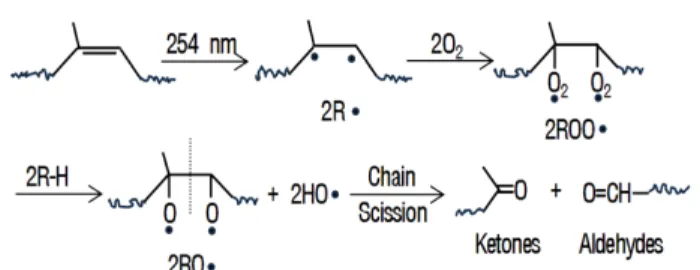
chain scission during the initial exposure period can be explained in Figure 8. In initiation of UV oxidation at 254 nm, a diradical (2R·) by homolytic cleavage may be formed at double bond. A diradical produced by two oxygen attack is converted to a unstable diperoxide diradical intermediate (2ROO ·). It is proposed that this intermediate can undergo scission, give crosslinking, or form a stable cyclic diperox- ides.

13

Chain scission, however must be happen prevalently in our result. An intermediate which reacts with two allylic hydrogens (2R-H) of NR is transformed into two peroxides (2ROOH). After two alkoxy radicals (2RO·) are formed, scis- sion products such as aldehydes or ketones are made by per- oxide decomposition. Tertiary peroxides produce ketones and secondary peroxides give aldehydes.

Two carbonyl compounds like aldehydes or ketones can be made from one double bond. As indicated in Figure 5, it was shown that the increment of the relative abundance in car- Figure 8. One possible mechanism for the UV oxidation of NR by chain scission during the initial exposure period.

Figure 9. The other possible mechanism for the UV oxidation of NR by abstraction of a hydrogen in the allylic position during all exposure

periods.

(8)

by abstraction of a hydrogen in the allylic position during all exposure periods can be explained as stability of carbon free radical as indicated in Figure 9. It is well known that the sta- bility of carbon free radical increases with the order of pri- mary, secondary, tertiary, and allyl. Two methylene groups [(B), (C)] and methyl group (A) of NR belong to allylic car- bon. An allylic carbon can produce easily reactive radical during the exposure to UV light. This formed radical can bind easily with oxygen. During the later exposure period at 254 nm, each radical can be formed at three allylic carbons [(A), (B), (C)]. Each radical produced by oxygen attack is converted to a unstable peroxide radical intermediate (ROO·).

An intermediate reacted with allylic hydrogen (R-H) of another NR chain is transformed into peroxide (ROOH). In case of both path (B) and path (C), after alkoxy radicals (RO·) are formed, products such as aldehydes and ketones are made by oxidation. Secondary alcohols can be produced from reacting alkoxy radicals with allyl radicals of other NR chains. In case of path (A), after alkoxy radicals (RO·) are formed, products such as aldehydes and primary alcohols are made. However, the reactivity of methyl group is somewhat lower than that of two methylene groups because of low rad- ical stability.

Conclusions

Characterization of the UV oxidation of raw NR thin film was investigated using image analyzer and FT-IR spectros- copy. The UV oxidation was performed on thin film of NR coated on a KBr window at 254 nm and room temperature to exclude the thermal oxidation.

After exposure to UV light, the image of thin film was identified to having a unique regular structure which was composed of a lot of dim wrinkles with one direction moving along with the lines like gentle waves at constant intervals.

This was considered as regular molecular rearrangement of raw NR when coated on a KBr window. A number of waves with one orientation seemed to be divided into two regions showing the ridge and the valley, alternately. It was assumed that the ridge region was composed of ethylene group

irradiation time showed the increment of peak intensity at 3425, 1717, and 1084 cm

−1

and the decrease of peak intensity at 1477, 1377, and 833 cm

−1

. Peaks at 3425, 1717, and 1084 cm

−1

were assigned to hydroxyl group (-OH), carbonyl group (-C=O) from aldehydes or ketones, and carbon-oxygen bond (-C-O), respectively. Peaks at 1477, 1377, and 833 cm

−1

were assigned to methylene group (-CH

2

-), methyl group (-CH

3

), and cis-methine group (cis-CCH

3

=CH-), respectively.

During the initial exposure period, the results indicated that the sudden appearance of carbonyl group was directly related to the abrupt reduction of cis-methine group containing car- bon-carbon double bond (-C=C-). Most of aldehydes or ketones from double bonds were formed very fast by chain scission. A lot of long wide cracks with one orientation at regular intervals which resulted in consecutive chain scission were observed by image analysis.

During all exposure periods, it was considered that the con- tinuous increment of hydroxyl and carbonyl group with the UV irradiation time was closely related to the decrement of methylene and methyl group in the allylic position. It was assumed that the UV oxidation of NR was initiated by abstraction of a hydrogen in the allylic position and some products such as primary or secondary alcohols, aldehydes, and ketones were formed continuously.

Therefore, two possible mechanisms for the UV oxidation of NR were suggested: one was direct attack at the double bond and the other was at two methylene groups and methyl group in the allylic position.

References

1. G. Van Santvoort, “Geotextiles and Geomembranes in Civil Engineering”, p. 517, Roterdam, Netherlands, 1994.

2. J. L. Morand, “Chain Scission in the Oxidation of Polyiso- prene”, Rubber Chem. Technol., 50, 373 (1977).

3. K. A. M. dos Santos, P. A. Z. Suarez, and J. C. Rubim,

“Photo-degradation of Synthetic and Natural polyisoprene at Specific UV radiations”, Polym. Degrad. Stab., 90, 34 (2005).

4. M. A. Rodrigues and M. A. Paoli, “The Chemical effects of

Photo-oxidation on Isoprene Rubber”, Eur. Polym. J., 21, 15

(1985).

(9)

5. J. L. Morand, “Photodegradation of Rubber”, Rubber Chem.

Technol., 39, 537 (1966).

6. M. A. Golub and L. C. Stephens, “Photoinduced Microstruc- tural Changes in 1,4-Polyisoprene”, Journal of Polymer Sci- ence: Part A-1, 6, 763 (1968).

7. C. Adam, J. Lacoste, and J. Lemaire, “Photo-oxidation of Polyisoprene”, Polym. Degrad. Stab., 32, 51 (1991).

8. S. Yano, “Photo-oxidation of an IR Vulcanizate”, Rubber Chem. Technol., 54, 1 (1981).

9. J. I. Cunneen, “Oxidative Aging of Natural Rubber”, Rubber Chem. Technol., 41, 182 (1968).

10. J. R. Purdon, “The Vanderbilt Rubber Handbook”, ed. by Robert F. Ohm, 13th Ed. p. 176, R. T. Vanderbilt Company, Inc., Norwalk 1990.

11. D. L. Pavia, G. M. Lampman, and G. S. Kriz, “Introduction to Spectroscopy: A Guide for students of Organic chemistry”, W.B. Saunders Co., Philadelphia, 1979.

12. P. O. Bussiere, J. C. Gardette, J. Lacoste, and M. Baba, “Char-

acterization of Photodegradation of Polybutadiene and Poly- isoprene: Chronology of Crosslinking and Chain Scission”, Polym. Degrad. Stab., 88, 182 (2005).

13. J. R. Shelton, “Aging and Oxidation of Elastomers”, Rubber Chem. Technol., 30, 1252 (1957).

14. R. L. Pecsok, P. C. Painter, J. R. Shelton, and J. L. Koeing,

“Fourier Transform Infrared Studies of the Mechanism of Oxidation of cis-1,4-Polybutadiene”, Rubber Chem. Technol., 49, 1010 (1976).

15. J. R. Shelton, “Review of Basic Oxidation Processes in Elas- tomers”, Rubber Chem. Technol., 45, 359 (1972).

16. T. Yasuyuki, S. Toshaki, H. Masaharu, K. Eiji, and S.

Kazuhiko, European Patent, 0,702,029 B1 (1999).

17. J. F. Rabek, “Polymer Photodegradation: Mechanisms and Experimental Methods”, London, Chapman & Hall, 1995.

18. P. Carstensen, “Free Radicals in Diene Polymers Induced by

Ultraviolet Irradiation I. An ESR Study of cis-1,4-polyiso-

prene”, Rubber Chem. Technol., 45, 918 (1972).

수치

Figure 1 shows images of a transparent thin film of NR coated on a KBr window at a right angle (a) before UV  irra-diation and (b) after UV irrairra-diation of 202 hrs at 254 nm.
Figure 3. The regular molecular rearrangement with orientation for thin film of NR coated on a KBr window.
Figure 4.   FT-IR absorption spectra for a transparent thin film of NR with the UV irradiation time ranging (a) from 2500 to 4000 cm −1  and (b) from 700 to 1900 cm −1  at 254 nm and room temperature.
Table 3. The Peak Height in each FT-IR Absorption According to the UV Irradiation Time Based on Figure 4
+3

참조

관련 문서