• 검색 결과가 없습니다.

Pneumonectomy for Clinical Stage I Non-Small Cell Lung Cancer in Elderly Patients over 70 Years of Age

N/A
N/A
Protected

Academic year: 2021

Share "Pneumonectomy for Clinical Stage I Non-Small Cell Lung Cancer in Elderly Patients over 70 Years of Age"

Copied!
6
0
0

로드 중.... (전체 텍스트 보기)

전체 글

(1)

ISSN: 2233-601X (Print) ISSN: 2093-6516 (Online)

1

Department of Thoracic and Cardiovascular Surgery, Samsung Medical Center, Sungkyunkwan University School of Medicine,

2

Department of Thoracic and Cardiovascular Surgery, Seoul National University Bundang Hospital, Seoul National University College of Medicine

Received: September 11, 2014, Revised: November 13, 2014, Accepted: November 25, 2014, Published online: August 5, 2015

Corresponding author: Jhingook Kim, Department of Thoracic Surgery, Samsung Medical Center, 81 Irwon-ro, Gangnam-gu, Seoul 135-710, Korea

(Tel) 82-2-3410-1696 (Fax) 82-2-3410-6986 (E-mail) [email protected]

C

The Korean Society for Thoracic and Cardiovascular Surgery. 2015. All right reserved.

CC
This is an open access article distributed under the terms of the Creative Commons Attribution Non-Commercial License (http://creative- commons.org/licenses/by-nc/4.0) which permits unrestricted non-commercial use, distribution, and reproduction in any medium, provided the original work is properly cited.

Pneumonectomy for Clinical Stage I Non-Small Cell Lung Cancer in Elderly Patients over 70 Years of Age

Tae Ho Kim, M.D.

1

, Byungjoon Park, M.D.

1

, Jong Ho Cho, M.D., Ph.D.

1

,

Hong Kwan Kim, M.D., Ph.D.

1

, Yong Soo Choi, M.D., Ph.D.

1

, Kwhan-Mien Kim, M.D., Ph.D.

2

, Young Mog Shim, M.D., Ph.D.

1

, Jaeil Zo, M.D., Ph.D.

1

, Jhingook Kim, M.D., Ph.D.

1

Background: Lobectomy is the generally accepted standard treatment for early-stage non-small cell lung cancer (NSCLC). However, especially in elderly patients, it is often necessary to perform pneumonectomy in order to max- imize the likelihood of curative treatment, although pneumonectomy is a challenging procedure. Methods: We ana- lysed patients who were clinically diagnosed with stage I NSCLC and underwent pneumonectomy with curative in- tent from 2004 to 2011. The patients were divided into an elderly group (≥70 years) and a younger group (<70 years). We retrospectively analysed the outcomes of these groups of patients in order to characterize the role of pneumonectomy as a treatment for elderly patients with clinical stage I NSCLC. Results: Thirty patients younger than 70 years of age (younger group) and fourteen patients 70 years of age or older (elderly group) who under- went pneumonectomy were enrolled in the present study. The median follow-up period was 35 months (range, 0 to 125 months). The perioperative mortality rate (within 90 days after the operation) was 7.1% in the elderly group and 6.7% in the younger group (p=0.73). No significant differences between the two groups were observed regard- ing the occurrence of pneumonia, acute respiratory distress syndrome, cardiac arrhythmia, bronchopleural fistula, and vocal cord paralysis. The overall five-year survival rate was 79.4% in the younger group and 35.7% in the elderly group, which was a significant difference (p=0.018). The five-year disease-free survival rate was 66.7% in the younger group and 35.7% in the elderly group, but this difference was not statistically significant (p=0.23).

Conclusion: Although elderly patients with early stage lung cancer showed a worse long-term survival rate after pneumonectomy than younger patients, the outcomes of elderly patients were similar to those of younger patients in terms of perioperative mortality and postoperative complications. Patients should not be denied pneumonectomy solely due to old age.

Key words: 1. Non-small-cell lung carcinoma 2. Geriatrics

3. Surgery 4. Aged

http://dx.doi.org/10.5090/kjtcs.2015.48.4.252

(2)

INTRODUCTION

Non-small cell lung cancer is the leading cause of can- cer-related death in both men and women older than 65 years in Western countries [1], and an increasing number of pa- tients suffer from this disease. Surgical resection is the most effective treatment for early-stage non-small cell lung cancer (NSCLC), and lobectomy is the standard surgical technique for treating NSCLC. Nonetheless, in some instances pneumo- nectomy is the only surgical option for curative resection in patients who require the removal of more than one lobe in order to accomplish a complete resection. However, pneumo- nectomy itself is associated with higher rates of morbidity and mortality than other standard procedures [2-5]. Most sur- geons try to avoid pneumonectomy as much as possible due to these potential adverse outcomes, especially among elderly patients. Moreover, NSCLC is often diagnosed in elderly pa- tients [6]. Thus, an older population is expected to have an increasing risk of lung cancer, and elderly patients must often undergo pneumonectomy for the treatment of lung cancer.

However, it is not clear whether elderly patients obtain the same benefits from major surgical procedures, especially pneumonectomy, as younger patients. Recent evidence shows that pneumonectomy in elderly patients with lung cancer ap- pears to be justified because its outcomes are comparable to those observed in younger patients [7,8]. In this study, we retrospectively evaluated the clinical outcomes of patients at least 70 years of age who underwent pneumonectomy for clinical stage I NSCLC.

METHODS 1) Patients and data collection

We performed a retrospective review of all patients who underwent pneumonectomy for NSCLC at Samsung Medical Center between 2004 and 2011. Clinical data were obtained from the patients’ medical records. A total of 44 patients who underwent pneumonectomy for clinical stage I NSCLC were enrolled in the present study. These patients were divided in two groups according to age: an elderly group (≥70 years) and a younger group (<70 years).

The two groups were compared with regard to demographic,

clinical, and histopathological factors, as well as perioperative mortality, postoperative complications, recurrence, and overall survival. The clinical presentation of these patients was eval- uated using brain magnetic resonance imaging, chest computed tomography (CT), and 18F-fluorodeoxy-D-glucose positron emission tomography CT (FDG-PET CT). Pathological typing and staging were performed according to the current Interna- tional System for Staging Lung Cancer (seventh edition).

2) Operational procedure and follow-up surveillance

Patients were considered to be candidates for lung resection if there was no evidence of extensive mediastinal involvement of the tumour and if they were deemed to have an adequate cardiac reserve and adequate predicted postoperative lung function, as assessed by preoperative spirometry. Pneumon- ectomy was only performed in patients with lung cancer that could not be completely resected via a sleeve lobectomy or bilobectomy. After resection of the main tumour, all patients underwent a complete mediastinal lymph node dissection. A complete resection (R0) was defined as the absence of any residual gross or microscopic disease detected at the bronchial or vascular margins and the absence of residual disease in the mediastinum after nodal dissection. Incomplete resection (R1 and R2) was defined as the presence of microscopic residual tumour fragments at the resected bronchial or vascular mar- gins or residual unresectable nodal disease. Adjuvant chemo- therapy was administered when postoperative stage II or III disease was evident on the pathological report. Postoperative radiation therapy was administered in cases of histologically positive N2 lymph nodes, positive multi-N1 lymph nodes, or a positive resection margin at the time of surgery.

Postoperatively, the follow-up schedule involved visits to the clinic every three to four months during the first two years, and every four to six months from the third to the fifth years. The usual follow-up procedures included a phys- ical examination and a chest CT scan. FDG-PET CT imaging was performed annually.

3) Statistical analysis

For comparisons of continuous and categorical variables,

the Mann-Whitney U-test, the chi-square test, or the Fisher’s

exact test were used, depending on which as appropriate.

(3)

Table 1. Patients’ characteristics Parameter

Younger (<70 yr)

(n=30)

Elderly (>70 yr)

(n=14)

p-value

Gender 0.38

Male 29 (96.7) 14 (100.0)

Female 1 (3.3) 0

Age (yr) 60.1±5.9 73.3±2.3 <0.001

% Predicted forced expiratory volume 1 second (%)

85.1±14.7 86.5±14.5 0.78

% Predicted diffusing capacity of the lung for carbon monoxide (%)

87.4±17.7 97.5±16.4 0.07

Co-morbidities

Chronic obstructive pulmonary disease

9 (30.0) 3 (21.4) 0.72

Stroke 1 (3.3) 0 1.00

Cardiac disease 1 (3.3) 2 (14.3) 0.23

Other disease (renal or hepatic) 0 0 NS Values are presented as number (%) or mean±standard deviation.

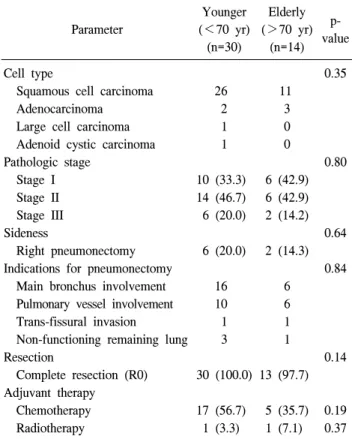
Table 2. Tumor histologic and surgical outcomes after pneumo- nectomy

Parameter

Younger (<70 yr)

(n=30)

Elderly (>70 yr)

(n=14) p- value

Cell type 0.35

Squamous cell carcinoma 26 11

Adenocarcinoma 2 3

Large cell carcinoma 1 0

Adenoid cystic carcinoma 1 0

Pathologic stage 0.80

Stage I 10 (33.3) 6 (42.9)

Stage II 14 (46.7) 6 (42.9)

Stage III 6 (20.0) 2 (14.2)

Sideness 0.64

Right pneumonectomy 6 (20.0) 2 (14.3)

Indications for pneumonectomy 0.84

Main bronchus involvement 16 6 Pulmonary vessel involvement 10 6

Trans-fissural invasion 1 1

Non-functioning remaining lung 3 1

Resection 0.14

Complete resection (R0) 30 (100.0) 13 (97.7) Adjuvant therapy

Chemotherapy 17 (56.7) 5 (35.7) 0.19

Radiotherapy 1 (3.3) 1 (7.1) 0.37

Values are presented as number or number (%).

Survival was calculated from the time of pneumonectomy to the last date of follow-up by means of Kaplan-Meier curves and the log-rank test. Perioperative mortality included death within 90 days after the operation and in-hospital deaths.

Disease-free survival was measured from the date of pneu- monectomy to the date of recurrence or death from any cause. All p-values <0.05 were considered to indicate stat- istical significance. All statistical analyses were performed us- ing JMP ver. 11.0.1 (SAS Institute Inc., Cary, NC, USA).

RESULTS

A total of 44 patients were analysed, and their character- istics are summarized in Table 1. The median follow-up peri- od was 35 months (range, 0 to 125 months). The median age of the patients at the time of pneumonectomy was 64.5 years (range, 49 to 79 years), and 43 patients (97.8%) were male.

The mean predicted forced expiratory volume in one second was 85.1%±14.7% in the younger group and 86.5%±14.5%

in the elderly group, and the mean diffusing capacity of the lung for carbon monoxide was 87.4%±17.7% in the younger group and 97.5%±16.4% in the elderly group. Data regarding the tumour histology and postoperative pathological data are summarized in Table 2. The percentage of patients under-

going a right pneumonectomy was 20% in the younger group and 14.3% in the elderly group (p=0.64). Squamous cell car- cinoma was the most common histological type in both groups (p=0.35). In the younger group, 10 patients were in postoperative stage I, 14 patients were in postoperative stage II, and six patients were in postoperative stage III. In the eld- erly group, six patients were in postoperative stage I, six pa- tients were in postoperative stage II, and two patients were in postoperative stage III. The perioperative mortality rate (death within 90 days after surgery) was 7.1% (one patient) in the elderly group, and 6.7% (two patients) in the younger group (p=0.73). The causes of perioperative death in the younger group were pneumonia (one patient) and acute respiratory dis- tress syndrome (ARDS) (one patient). The cause of perioper- ative death in the elderly group was pneumonia (one patient).

No significant differences between the two groups were found

regarding the occurrence of postoperative complications

(pneumonia, ARDS, cardiac arrhythmia, bronchopleural fistu-

(4)

Table 3. Postoperative complications Postoperative complication

Younger (<70 yr) (n=30)

Elderly (>70 yr)

(n=14)

p-value

Pneumonia 4 2 0.93

Acute lung injury/acute respira- tory distress syndrome

1 0 0.38

Bronchopleural fistula 1 0 0.65

Arrhythmia (atrial fibrillation) 1 0 0.38

Empyema 3 1 0.25

Vocal cord palsy 2 2 0.43

Total 12 5 0.66

Fig. 1. Overall survival curve for patients with clinical stage I lung cancer.

Fig. 2. Disease-free survival curve for patients with clinical stage I lung cancer.

la, and vocal cord paralysis) (Table 3).

The overall five-year survival rates were 79.4% for the younger group and 35.7% for the elderly group. The overall survival rate was significantly higher in the younger group than in the elderly group (p=0.018) (Fig. 1). The five-year disease-free survival rate was 66.7% for the younger group and 35.7% for the elderly group. The disease-free survival rate was not significantly different between the younger and elderly group (p=0.23) (Fig. 2).

DISCUSSION

Non-small cell lung cancer is the leading cause of can- cer-related death in both men and women older than 65 years in Western countries [1]. Despite recent developments in che- motherapy and radiotherapy, surgical resection for stage I or II disease remains the only reliably curative treatment [9].

The Korean population is increasing in age, and elderly age is still regarded as a major risk factor for surgery. Elderly pa- tients tend to be denied surgery or are urged to undergo pal- liative treatment. It has been found that 92.3% of patients younger than 75 years of age received curative surgery for stage I NSCLC, compared to only 69.6% of patients over 75 years of age [10].

Questions remain about the real risks of lung resection sur- gery, especially in elderly patients. Some studies have as- sessed the role of surgery in elderly patients with NSCLC.

Cerfolio and Bryant [11], in a nested case-control study pub- lished in 2006, reported that the overall five-year survival in elderly patients (≥70 years of age) was 78%, which was sig-

nificantly higher than the rate in the younger group (69%,

p=0.01), and concluded that elderly patients with early

NSCLC should not be denied pulmonary resection. In con-

trast, another study found a higher postoperative death rate

among elderly patients undergoing pneumonectomy [12]. The

results of our study showed no significant differences be-

tween the two groups (younger vs. elderly) regarding peri-

operative mortality and morbidity. However, the overall

five-year survival rate was significantly higher in the younger

(5)

group than in the elderly group, while disease-free survival was not significantly different between the two groups.

Goodgame et al. [13] conducted a retrospective study of stage I NSCLC and found that elderly patients have similar re- currence-free survival rate, but worse overall survival than younger patients (five-year survival, 52% vs. 67%; p<0.0001), which was similar to our results. Birim et al. [14] found that increasing age was a significant prognostic factor affecting long-term outcomes, along with other metrics such as the Charlson comorbidity index. We consider it likely that the lower five-year survival rate in the elderly group reflected the natural life course and the presence of increased comorbid- ities towards the end of the lifespan. The average life expect- ancy of Koreans is 81.4 years, as reported by the National Statistical Office [15].

This study has several limitations, including its retro- spective single-centre design and a small number of patients, and therefore it should not be interpreted as presenting strong conclusions, especially regarding overall survival. Nonetheless, old age alone should no longer be considered a factor that excludes the possibility of surgical treatment for stage I NSCLC. A recent study has shown that the proportion of eld- erly patients (>75 years) with stage I NSCLC who undergo surgery has increased from 35% to 49% over the period from 1989 and 2009 [15]. Our study found no significant differ- ences in perioperative mortality and morbidity between the elderly group and the younger group. Therefore, pneumo- nectomy should not be avoided in elderly patients, assuming the careful selection of patients based on preoperative evalua- tions. Nonetheless, attention should be paid to the relatively poor long-term outcomes of elderly patients who undergo pneu- monectomy, and further studies are needed to assess the prog- nosis associated with pneumonectomy in various populations.

CONFLICT OF INTEREST

No potential conflict of interest relevant to this article was reported.

ACKNOWLEDGMENTS

This study was supported by a Grant of the Samsung Vein

Clinic Network (Daejeon, Anyang, Cheongju, Cheonan; Fund No. KTCS04-028).

REFERENCES

1. Jemal A, Siegel R, Xu J, Ward E. Cancer statistics, 2010.

CA Cancer J Clin 2010;60:277-300.

2. Alexiou C, Beggs D, Rogers ML, Beggs L, Asopa S, Salama FD. Pneumonectomy for non-small cell lung cancer:

predictors of operative mortality and survival. Eur J Cardiothorac Surg 2001;20:476-80.

3. Boffa DJ, Allen MS, Grab JD, Gaissert HA, Harpole DH, Wright CD. Data from The Society of Thoracic Surgeons General Thoracic Surgery database: the surgical manage- ment of primary lung tumors. J Thorac Cardiovasc Surg 2008;135:247-54.

4. Fernandez FG, Force SD, Pickens A, Kilgo PD, Luu T, Miller DL. Impact of laterality on early and late survival af- ter pneumonectomy. Ann Thorac Surg 2011;92:244-9.

5. Kozower BD, Sheng S, O’Brien SM, et al. STS database risk models: predictors of mortality and major morbidity for lung cancer resection. Ann Thorac Surg 2010;90:875-81.

6. Vora N, Reckamp KL. Non-small cell lung cancer in the elderly: defining treatment options. Semin Oncol 2008;35:

590-6.

7. Speicher PJ, Ganapathi AM, Englum BR, Onaitis MW, D’Amico TA, Berry MF. Survival in the elderly after pneu- monectomy for early-stage non-small cell lung cancer: a comparison with nonoperative management. J Am Coll Surg 2014;218:439-49.

8. Mizushima Y, Noto H, Sugiyama S, et al. Survival and prognosis after pneumonectomy for lung cancer in the elderly. Ann Thorac Surg 1997;64:193-8.

9. National Cancer Institute. SEER cancer statistics review: 1975- 2005 [Internet]. Bethesda (MD): National Cancer Institute [cited 2010 May 19]. Available from: http://seer.cancer.gov/

csr/1975_2005/.

10. Mery CM, Pappas AN, Bueno R, et al. Similar long-term survival of elderly patients with non-small cell lung cancer treated with lobectomy or wedge resection within the surveil- lance, epidemiology, and end results database. Chest 2005;

128:237-45.

11. Cerfolio RJ, Bryant AS. Survival and outcomes of pulmo- nary resection for non-small cell lung cancer in the elderly:

a nested case-control study. Ann Thorac Surg 2006;82:424-9.

12. Janssen-Heijnen ML, Smulders S, Lemmens VE, Smeenk FW, van Geffen HJ, Coebergh JW. Effect of comorbidity on the treatment and prognosis of elderly patients with non- small cell lung cancer. Thorax 2004;59:602-7.

13. Goodgame B, Viswanathan A, Zoole J, et al. Risk of re-

(6)

currence of resected stage I non-small cell lung cancer in elderly patients as compared with younger patients. J Thorac Oncol 2009;4:1370-4.

14. Birim O, Kappetein AP, Bogers AJ. Charlson comorbidity index as a predictor of long-term outcome after surgery for

nonsmall cell lung cancer. Eur J Cardiothorac Surg 2005;28:759-62.

15. Statistics Korea. Life tables: statistics of national approval,

No. 10135. Daejeon: Statistics Korea; 2013.

수치

Table 2. Tumor histologic and surgical outcomes after pneumo- pneumo-nectomy Parameter Younger  (<70  yr)  (n=30) Elderly  (>70  yr) (n=14)  p-value Cell  type 0.35
Fig. 2. Disease-free survival curve for patients with clinical stage  I lung cancer.

참조

관련 문서

Our results showed that in elderly patients with lung cancer, AAT significantly extended overall survival compared with BSC in patients with advanced NSCLC ≥ 70 years old.To

Purpose: Our institution has implemented two different adjuvant protocols in treating patients with non-small cell lung cancer (NSCLC): chemotherapy followed

Risk factors for tumor recurrence in patients with early-stage (stage I and II) non-small cell lung cancer: patient selection criteria for adjuvant chemotherapy according

Purpose: To investigate short-term response rate, quality of life and toxicities of mannan peptide combined with TP regimen in treating patients with non-small cell

Purpose: For treating advanced non-small cell lung cancer (NSCLC), epidermal growth factor receptor tyrosine kinase inhibitors (EGFR-TKIs) are known to be very effective

Conclusion: After complete resection of stage Ia non small cell lung cancer patients, mortality includes not only cancer related deaths but also cancer unrelated deaths..

Clinical Significance of Lymph Node Micrometastasis in Patients with Stage I Non-Small Cell Lung Cancer.. Phil Jo Choi, M.D.*, Mee Sook Roh, M.D.**, Jae Ik Lee,

Forest plot showing a comparison of recurrence-free survival between segmentectomy and lobectomy in (A) stage I and (B) stage IA non-small cell lung cancer. All of them used