대 한 생 식 의 학 회 지 : 제 37 권 제 4 호 2010
Cryopreservation of Oocytes and Embryos by Vitrification
Mukesh Kumar Gupta1,2, Hoon Taek Lee1,2*
1Department of Animal Biotechnology, 2Bio-Organ Research Center/Animal Resources Research Center, Konkuk University, Seoul, Korea
유리화 방법에 의한 난자와 수정란의 동결보존 무케쉬 쿠마르 굽타1,2·이훈택1,2*
건국대학교 동물생명공학과1, 바이오장기센터/동물자원연구센터2
최근 동결기술이 발달하면서 다양한 목적에 따라 초기 발생단계, 특히 수정 전후의 난자나 수정란의 생명을 연장 하는 것이 가능해졌다. 이러한 난자나 수정란의 보존기술은 인간의 수정능력을 배가시키거나 임신조절에서 응용되 고 있으며, 동물에서는 우수한 유전자원의 보존과 운영, 저렴한 국제간 운송수단, 그리고 생식보조기술과 유전공학 등의 연구에 필요한 생식세포의 공급하는 데서도 중요하게 활용되고 있다. 최근 개발된 완만동결과 유리화 동결방 법은 난자와 수정란을 장기간 동결하여 보존하는데 활용하는 주요 기술이다. 이러한 방법들은 각각 장점과 단점을 가지고 있지만, 상당한 수준의 효율성이 입증되어 실용화되어 있는 실정이다. 무엇보다도 유리화 방법은 완만동결 방법보다 13년이나 늦게 개발되었으나 보다 우수한 기술로 인정을 받고 있다. 비록 유리화 동결은 아직 대한 상반 된 의견과 오염문제가 있지만 인간과 동물의 생식보조기술로 활용되는 빈도가 점차 많아지고 있는 실정이다. 따라 서 본 원고에서는 먼저 난자와 수정란의 동결보존에 대한 기초적인 기술에 대해서 고찰한 다음, 유리화 동결에 관 한 최근의 연구동향에 대해서 종합적으로 검토하고자 한다. [Korean. J. Reprod. Med. 2010; 37(4): 267-291.]
중심단어: 난자, 수정란, 유리화 동결, 동결보존
Although preservation of fertility by cryopreservation of sperm was successful in 19491 it was not until 1972 when first reported the successful cryopreservation of mouse embryos by slow-freezing.2 This pioneering work was later refined and applied successfully to several domestic animal species including cattle,3 sheep,4 goat,5 and pig.6 The first successful pregnancy from cryo- preserved human embryos was reported by Trounson and Mohr7 in 1983 and several successful live births
have since been reported. The freezing protocols used for cryopreservation usually involved dehydration of embryos in a cryoprotective solution followed by slow cooling to -5 to -7℃ at approximately 0.5~2℃/min, manual nucleation of ice formation (seeding), and further slow cooling at approximately -0.3 to - 0.5℃/min until below -30℃ before storage in liquid nitrogen (LN2).
Thawing and rehydration of frozen embryo were achieved by using highly concentrated sucrose solution to act as a regulator of the rate at which water enters the cells in response to low extracellular concentration of cryoprotectants (CPA).
Just 13 years after the first report of successful embryo
접 수 일: 2010년 12월 18일, 수정일: 2010년 12월 24일 게재확정일: 2010년 12월 24일
주관책임자: 이훈택, 우) 143-701 서울특별시 광진구 화양동 1번지, 건국대학교 동물생명공학과
Tel: (02) 450-3675, Fax: (02) 457-8488 e-mail: [email protected]
종 설
cryopreservation by slow-freezing, Rall and Fahy8 reported the successful birth of mouse following cryo- preservation of embryos by vitrification. This approach involved exposure of embryos to a very high concen- tration of CPA for a very short period of time followed by an extremely rapid cooling through direct plunging in LN2 for storage. Vitrification resulted in transition of water to a glass-like state without significant formation of intracellular and extracellular ice crystals. Since vitri- fication did not involve crystallization of water, it did not require thawing. The embryos needed to be warmed ultra-rapidly in the presence of reducing concentrations of non-permeating CPA (usually sucrose) to rapidly dilute and remove the very high levels of intracellular permeating CPA. Compared with slow-freezing, vitri- fication was simpler and more convenient than slow- freezing and did not require expensive equipment (i.e., a controlled rate freezer). In 1986, the event was hailed as the 'rediscovery of vitrification', and reported in Human Reproduction as a potential alternative to slow-rate freezing.9 Successful offspring have since been obtained from vitrified-warmed embryos in several domestic animal species including cattle,10,11 sheep, and pig.12,13
Early cryopreservation attempts had been focused on morula and blastocyst stage embryos but later interest arose in the cryopreservation of oocytes and early embryonic stages as they had certain extra advantages over late-stage embryo cryopreservation. In human ART, it has been viewed as an opportunity to store the reproductive potential of young women who are at the risk of losing ovarian function as a consequence of cytotoxic therapies used to eliminate malignant diseases such as cancer.13,14 Another interesting and emerging interest is in its likely usefulness for women who wish to delay motherhood for personal, professional or financial reasons. By cryopreserving the oocytes and embryos at young age, such women can avoid old age-related reproductive problems such as declining fertility, Down's
syndrome, chromosomal abnormalities and spontaneous abortions. The first report of successful cryopreservation of oocytes was reported in 1958 in mice by Sherman and Lin15 but first live offspring was reported nearly two decades later by Parkening et al.16 and Whittingham2 using the slow-freezing method. The first clinical pregnancy and subsequent live birth from cryopreserved human oocytes were reported by in 1986~1987 by Chen17 and van Uem et al.,18 respectively using the slow-freezing regimen. However, cryopreservation of oocyte was found to be more difficult than that of embryo and did not gain recognition until 1997 when Porcu et al.19 demonstrated the use of intracytoplasmic sperm injection to overcome hardening of the zona pellucida and to achieve pregnancies and a live birth.
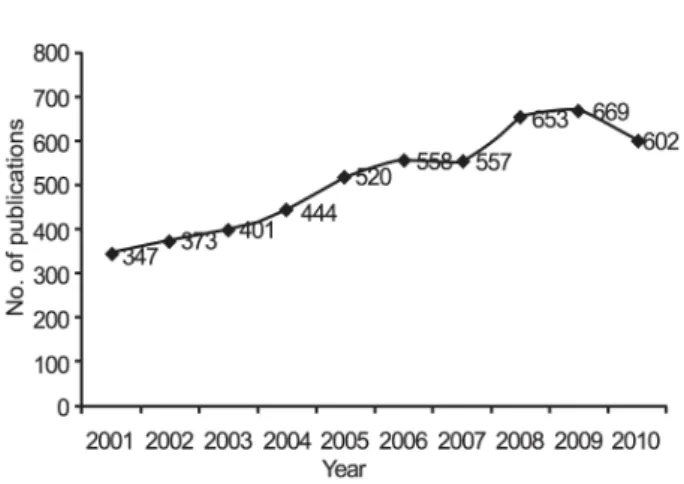
Since the late 1990s, the number of reported live births resulting from oocyte cryopreservation has increased rapidly and has been reported both in human and animals. An analysis of publications in last ten years in PubMed database clearly reveals that thre is increasing interest in the potential applications of oocyte/embryo cryopreservation (Figure 1).
Figure 1. Publication trend in the cryopreservation of oocytes and embryos.
Mukesh Kumar Gupta. Cryopreservation of Oocytes and Embryos by Vitrification.
Korean J Reprod Med 2010.
BASIC TECHNIQUES OF
OOCYTE/EMBRYO CRYOPRESERVATION
Currently there are two main techniques used for the cryopreservation of oocytes and embryos: freezing and vitrification. These two methods mainly differ in the rate of cooling and the procedure of CPA addition (Table 1) while other steps such as storage, thawing/warming and rehydration i.e., removal of CPA differs only slightly between the two procedures (with some exceptions).
1. Freezing or slow-freezing
This is the first successful method applied for the cryopreservation of mammalian oocytes/embryos. The principle behind this method is to induce the crystal- lization of extracellular water into ice in a slow and controlled fashion such that intracellular water is driven out of the cell to result in the extreme elevation of intracellular viscosity or solidification without (or mini- mal) intracellular ice crystal formation. Accordingly, this procedure is often referred as slow-freezing or conventional slow-freezing. The procedure involves two main steps: equilibration and freezing. In the first step,
oocytes/embryos are transferred from isotonic culture medium to a hyperosmotic solution containing one or more permeating CPA and are given a brief equilibration period to take up CPA. During this period, due to difference in intracellular and extracellular osmotic pressure, oocytes/embryos shrink immediately but as CPA permeates, water reenters the cells to maintain the intracellular osmotic equilibrium and shrinkage stops when the equilibrium is reached between the efflux of water and the influx of CPA. Equilibration is complete when no further osmotic and chemical gradients with regard to the CPA as well as water exist. After equili- bration, oocytes/embryos are loaded into cryo-containers (usually plastic straws) and cooled at a rate of 0.5 to 2℃/min from room temperature to a temperature slightly below the melting point of the solution, which is approxi- mately -5 to -7℃. At this temperature, manual seeding is performed by manually touching the cryo-container with a forcep (pre-chilled with liquid nitrogen), or by spaying a jet of LN2 in a programmable freezer, to initiate extracellular ice formation and avoid supercooling.
The oocytes/embryos are then allowed to equilibrate for 5 to 10 minutes after which, the temperature is lowered Table 1. Summary of protocols generally used for the cryopreservation of oocyte and embryos
Parameters Slow-freezing Conventional vitrification Ultrarapid vitrification
Container Straw Straw Minimum volume
cryo-containers* Temperature of treatment Room temperature
(25℃) Room temperature
(25℃) Body temperature
(37℃)
Concentration of permeating CPA ~1.4 M ~7.2 M ~4.7 M
Duration of CPA pre-treatment 0 min 1~3 min 1~3 min
Duration of CPA treatment (final) 15~20 min ~1 min ~25~45 sec
Time required for cooling ~90 min ~3 min <0.1 sec
CPA, cryoprotectants.
*This includes various containers such as electron microscope grid, Open pulled straw, Cryoloop, Cryotop, and their derivatives listed in Table 2. Container-less methods such as solid surface vitrification is also included.
Mukesh Kumar Gupta. Cryopreservation of Oocytes and Embryos by Vitrification. Korean J Reprod Med 2010.
at a rate of 0.3 to 0.5℃/min until below -30℃. During this period, increasing extracellular ice crystal formation drives the intracellular water out of the cells leading to gradual increase in the intracellular osmotic pressure.
The cooling process continues until the intracellular CPA concentration is high enough to allow the solidifi- cation of intracellular water without ice crystal formation (intracellular vitrification) when the cell is plunged into LN2. The frozen samples are then stored in a LN2 storage tank for future use. Just prior to use, samples can be retrieved from the LN2 tank, thawed to 37℃ (or a temperature similar to the physiological body temperature of respective species) and rehydrated by stepwise dilution to remove the CPA from the frozen oocytes/
embryos. The optimal thawing protocol depends on the specific freezing protocol and the CPA used. If the cooling is terminated at a high subzero temperature of -30 to -40℃, a moderately rapid warming (200 to 350℃/min) is required to maximize the survival rate.
Oocytes/embryos cooled slowly to temperatures below -60℃ prior to being plunged into LN2 require a rather slow warming rate of approximately 25℃/min or less.
Since oocytes/embryos are more permeable to water than to CPA and may swell/burst if placed directly in a medium without CPA, dilution for the removal of decreasing CPA from frozen-thawed samples is done stepwise in decreasing concentration of a non-permeating CPA (such as sucrose) that can act as an osmotic buffer to counteract the high concentration of intracellular CPA inside the frozen-thawed sample.
2. Vitrification
Vitrification is a term applied to refer the physical phenomenon describing the solidification of water or water-based solutions into a glass-like amorphous liquid state (called vitreous state), due to extreme elevation in viscosity during cooling, without the formation of ice crystals.20,21 Successful vitrification depends on two
factors: a very high concentration of CPA to inhibit the crystallization water into ice and an extremely high cooling and warming rates (up to 20,000℃/min) to rapidly pass through the dangerous temperature zone between +15 and -5℃ to avoid chilling injuries. Since most CPAs are highly toxic, it is imperative to reduce its exposure time to oocyte/embryo. However, if the exposure is too brief, its permeation to the oocyte/
embryo may be inadequate and intracellular ice may form even in the absence of extracellular ice. Thus, the common protocol for vitrification of oocyte/embryo is to first equilibrate them in a solution (called equilibration solution, ES) containing a lower concentration of one or more permeable CPA before transferring them to final solution (called vitrification solution, VS) containing the full strength permeable CPA and a non-permeable CPA such as a disaccharide or a macromolecule. The ES solution contains between 25 and 50% (usually 50%) of the final permeating CPA concentration and can be added in increasing concentrations, for example 25% and then 50% of the final permeating CPA concentration.
The equilibration time is usually restricted to 1~3 min while incubation time in VS solution is restricted to 25~45 seconds. However, a long (5~15 min) equili- bration time with considerably low concentration of permeable CPA in the ES solution has also been used.
22~24 Such the manipulation of CPA concentration and equilibration time in the ES solution allows several vitrification experiments to be performed in parallel. On the contrary, there is very little scope for manipulating the concentration of CPA and incubation time in VS solution unless cooling rate can be manipulated. In general, there is an inverse correlation between the two factors: the higher the cooling rate, the lower the required CPA concentration, and vice versa. Unfortunately, it is very difficult to increase the cooling rate with currently available means and increasing the CPA concentration not only increased toxicity but also may have detrimental
osmotic effect on oocytes and embryos. On the other hand, increasing the incubation time in VS solution increase the chances of CPA toxicity but may provides a much better protection to oocyte/embryo. A 25 s
incubation with the vitrification solutions has resulted in excellent survival rates after vitrification of pig blastocysts,21 but pregnancies were obtained only when incubation period in VS solution was extended 60 s.25
Table 2. Containers and devices used for the vitrification of oocytes and embryos Container/device
Sl. no.
Original Derivative Reference
1 Plastic straw 102
Straw-in-Straw 26
2 Cryotubes/Cryovials 28
3 Direct dropping into LN2 29
4 Electron microscope (EM) grid 31
Steel grid 32
Nylon mesh 51
Minimum drop size (MDS) 33
5 Cryoloop 34
6 Open pulled straw (OPS) 38
Superfine OPS (SOPS) 39
Closed-pulled straw (CPS) 40
Flexipet denuding pipette (FDP) 41
Cryotip 42
7 Cryotop 44
Hemi-straw system (HSS) 48
Cryolock 79
Cryoleaf 108
Vitrification spatula 50
Plastic blade 49
Minimum volume cooling (MVC) 47
8 Solid surface vitrification (SSV) 22
Aluminum foil 23
9 VitMaster 53
10 High hydrostatic pressure (HHP) 62
Mukesh Kumar Gupta. Cryopreservation of Oocytes and Embryos by Vitrification. Korean J Reprod Med 2010.
In the cooling step, a small volume of the VS solution containing the oocyte/embryo is loaded into/on a sample carrier device, which is then plunged into a coolant (typically LN2), to allow vitrification. The device is then sealed and stored in LN2 tank. The warming (the term 'thawing' is inappropriate as there is no ice crystal formation in the vitrified samples) and rehydration or removal of CPA is similar to slow-freezing method. The step usually involves warming and unloading of oocyte/
embryo from the carrier device to a series of solutions with decreasing osmolarities (usually using sucrose) to rehydrate the oocyte/embryo and remove the toxic CPA.
DEVICES USED FOR VITRIFICATION OF OOCYTES AND EMBRYOS
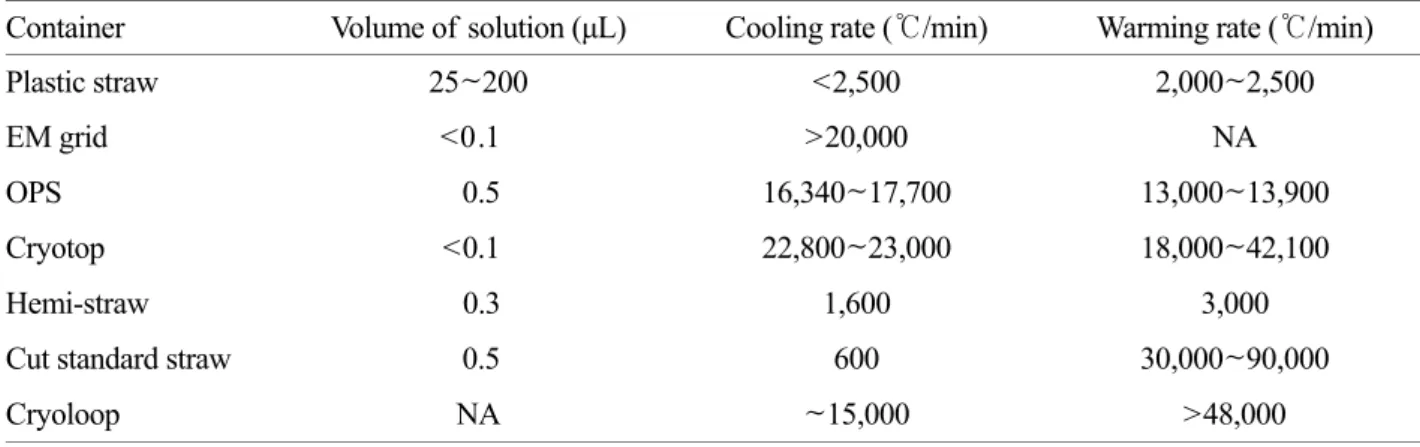
Various types of containers (also referred as 'carrier' or 'vessels') have been used to hold the oocytes and embryos during vitrification, storage and warming (Table 2). In earlier days, the standard 0.25 mL insemination straw was almost exclusively used as the carrier device for the vitrification of oocyte/embryo, which allowed a cooling rate of ~2,500℃/min.26 Newer containers aim to minimize the volume of solution (0.5 to 1.0 μL)
surrounding the oocyte/embryo and thereby, increase the speed of cooling and warming (>20,000℃/min) by facilitating the rapid transfer of heat to and from LN2 (Table 3). Accordingly, such methods are occasionally referred as ultra-rapid vitrification to differentiate it from conventional vitrification using plastic straws (Table 1).
1. Straw type containers
Standard 0.25 mL plastic insemination straw, used commonly for the slow-freezing, is the first container to be tested for the vitrification of oocyte/embryo despite limited achievable cooling (~100 to 1,540℃/min) and warming (~2,000 to 2,500℃/min) rates due to their thick wall (~0.15 mm), large diameter (~1.7 mm) and relatively large amount of solution (25 to 200 μL) required for safe loading of the sample. A segment of the straw can be filled with ~30 μL of VS solution containing the oocyte/embryo and other short segments are filled with VS solution and ~150 μL of sucrose solution, with each segment separated by an air bubble.
The loaded straw is then plunged into LN2 for vitri- fication. For recovery, the straw is warmed in water bath before the contents are expelled from the straw into sucrose solution for rehydration. One problem with the
Table 3. Characteristics of commonly used vitrification containers*
Container Volume of solution (μL) Cooling rate (℃/min) Warming rate (℃/min)
Plastic straw 25~200 <2,500 2,000~2,500
EM grid <0.1 >20,000 NA
OPS 0.5 16,340~17,700 13,000~13,900
Cryotop <0.1 22,800~23,000 18,000~42,100
Hemi-straw 0.3 1,600 3,000
Cut standard straw 0.5 600 30,000~90,000
Cryoloop NA ~15,000 >48,000
EM, electron microscope; OPS, Open pulled straw.
*Adapted from ref. 46.
Mukesh Kumar Gupta. Cryopreservation of Oocytes and Embryos by Vitrification. Korean J Reprod Med 2010.
use of straw is the likelihood of its collapse or explosion due to extreme pressure change during direct immersion of into LN2 during vitrification or into water bath during warming. Even if it remains intact, there is a high probability of fracture damage. This problem may be avoided by including a transitional step, typically cooling in LN2 vapor (on a Styrofoam boat floating on the surface, or by a slow vertical immersion of the sample into the LN2) before vitrification and warming first in air for 10 s or more before immersion into the 37~39℃ water bath.11,27 However, owing to variation in the temperature of LN2 vapor and ambient air due to several factors, above manipulations usually results in decreased and inconsistent post-thawing survival rates.
Consequently, to prevent these variations and to improve the success rate, a minimum of 5 to 7.5 M CPA concen- tration is required when straws are used as containers for vitrification. In addition, the time required for cooling increases up to 3 min (Table 1). To increase the sterility assurance, Kuleshova and Shaw26 suggested double straw approach, called 'straw-in-straw', wherein the loaded 0.25 mL straw is inserted into a larger 0.5 mL straw, which is subsequently sealed by heat or by polyvinylalcohol, before cooling and storage. The loading of embryos in inner straw was done in 30 μL of VS solution with no intermediate segments of other solutions.
Using this method, all vitrified two-cell embryos and morulae were reported to survive after warming although the cooling and warming of the samples was further retarded due to an additional outer straw and a layer of air present between the two straws.26
2. Cryotubes and cryovials
Cryotubes and cryovials, normally used for the cryo- preservation of somatic and stem cells, have also been used for the vitrification of oocytes/embryos although they have thicker wall with lower heat conductance than that of plastic straw.28 The samples are equilibrated in
ES solution and transferred into the cryotubes/cryovials (pre-cooled on ice) using a pipette. The VS solution is then added to the container, incubated for desired period (usually 1 min), closed and then, plunged into LN2 for storage. Recovery of oocyte/embryo is done by holding the cryotube/cryovials at room temperature for 30 to 60s, adding a large volume (~1 mL) of sucrose solution into it for dilution of CPA and rehydration. The oocyte/
embryo is subsequently removed from the cryotube/
cryovial by washing steps. Thin-walled microcentrifuge tubes can also be used in place of cryotubes/cryovials.
The advantage of cryotube/cryovials over the straw type method is its methodological simplicity and its large holding capacity. However, in both methods devitrifi- cation (ice crystal formation during warming) does occur, as indicted by the whitening of the core of the glassy solid before melting was completed.28
3. Container-less vitrification in microdrops Besides minimizing the volume of VS solution sur- rounding the oocyte/embryo, establishing a direct contact (without any thermo-insulating layer) between the VS solution and the LN2 is another best way to increase the rate of cooling. This can be accomplished by directly dropping the carrier-free VS solution, containing the oocyte/embryos, as small microdrops (5 to 20 μL) into the LN2 and storing the vitrified microdrops in cryotubes or cryovials.29 Warming and dilution can be done by directly immersing the vitrified microdrops into the sucrose solution.29,30
4. Metal mesh vitrification (MMV) in Electron microscope (EM) grid
One problem with the container-less microdrop method was the formation of a vapor coat around the microdrop as it falls on the LN2. The vapor coat forms due to boiling and evaporation of LN2 and not only functions as an insulating layer but also prevents the
immediate sinking of microdrop into the LN2 and thereby, hampers the rapid cooling. To eliminate this problem, loading of microdrop on a heavy material, such as metal mesh, was applied. The EM grid was the first container in which both small sample volume and direct contact with LN2 was achievable to obtain a very high cooling rates required for vitrification.31 The EM grids are copper meshes, 3 mm in diameter and 25 μm thick, available in different mesh sizes. After the oocytes/
embryos are incubated in VS solution, they can be loaded on the grid with minimum VS solution and vitrified by directly plunging the grid into LN2. The grids, containing the vitrified samples, can then be placed in cryotubes/cryovials and stored in LN2 storage tanks.
Warming can achieved by directly immersing the grid into warm sucrose solution upon which oocyte/embryo separates from the grid. The vitrified-warmed oocyte/
embryos can now be rehydrated in decreasing concen- tration of sucrose solution to remove the permeating CPA. After loading the oocyte/embryo onto the grid, the grid can also be placed on a filter paper to further remove the excess fluids and hence, further reduce the size of the drop surrounding the oocyte/embryo. Use of EM grid has additional advantage of being thermo- conductive metal which allow rapid attainment of low temperature. Besides, up to 15~25 oocyte/embryo can be loaded per grid and hence, they were considered to be suitable carrier for the vitrification of oocytes and embryos.10,11,27,31 More recently, stainless steel metal mesh has also been used as an economical alternative to EM grid.32 The EM grid method has also been used as minimum drop size (MDS) method with slight modifi- cation.33
5. Cryoloop
In year 1999, Lane et al. adapted the idea of using a small loop that is commonly used in X-ray crystallog- raphy to hold the protein crystals within a film of CPA
solution for data collection at cryogenic temperatures.34 The solution film bridging the hole of the loop is strong enough to hold the oocyte/embryo and with this minimal solution volume, the achievable cooling rate may be extremely high, up to an estimated 700,000℃/min.
Using this tool, safe vitrification can be achieved even in the LN2 vapour.35 The loop, called cryoloop, is now commercially available. It consists of a small nylon loop (20 μm thick and 0.5~0.7 mm in diameter) that is mounted on a stainless steel tube inserted into the lid of the cryovial. Oocyte/embryo can be loaded on the film of VS solution in the nylon loop, secured into the cryotube and stored in LN2. Warming and sample retrieval is done by simply dipping the loop into sucrose solution.36,37
6. Open pulled straw (OPS)
The OPS is a modification of standard plastic straw that is heat-softened and pulled manually, like a glass capillary, to obtain an inner diameter of ~0.8 mm which gives a wall thickness of ~0.07 mm. The pulled straw is then cut at the thinnest point and used as OPS.38 When the narrow end of OPS is dipped into a small droplet of VS solution containing the oocyte/embryos, the sample is automatically loaded into the OPS by capillary action, which is then plunged into LN2 for vitrification. The loaded OPS can be stored like other plastic straws but to avoid the problem of floating, a standard plastic plug is inserted into the wide end of the OPS. Warming can be done by expelling the oocyte/
embryo directly into the sucrose solution. Dilatation of the warming gas in the empty part of the straw assists simple expelling of the sample from the OPS. Sterile OPS is now also available commercially for ready to use. By reducing the diameter and wall thickness, OPS not only allows increased cooling rate but also its transparent wall allows easy visualization of glass-like solidification by naked eye and microscopic follow-up
during loading and expelling of the sample. Conse- quently, after its first introduction in 1998, it soon became popular for the vitrification of oocytes/embryos in domestic animals. However, it has not gain much popularity in human ART. Interestingly, several deriva- tives of OPS soon emerged and became container-of- choice in certain human ART laboratories (Table 2).
Superfine OPS,39 closed OPS,40 Flexipet denuding pipette,41 and cryotip are some of the popular derivatives of OPS.42
7. Cryotop
Cryotop was developed especially for the vitrification of human oocytes/embryos but has also been used successfully in domestic animals.43~45 It consists of a specially constructed fine polypropylene strip attached to a plastic handle. The VS solution, containing the oocyte/embryo, can be loaded on the strip and excess solution can be removed almost entirely by aspiration.
The sample is then immersed into LN2 for vitrification and storage. Cryotop allows higher cooling and warming rates than those achievable with OPS, easy to learn and perform and require simple manipulation which decreases the risk of inconsistency.
8. Cryotip
Cryotip is a derivative of OPS that was devised by Kuwayama et al.42 to prevent the likelihood of disease transmission due to direct contact of the vitrified samples with accidentally contaminated LN2. It consists of a thin plastic straw (250 μm inner diameter, 20 μm wall thickness, and 3 cm length) connected to a thicker part (200 μm inner diameter, 150 μm wall thickness, and 4.5 cm length, and equipped with a movable protective metal sleeve). The oocyte/embryo can be loaded in the thin plastic straw for vitrification and closed by the movable protective metal sleeve before storage in LN2 storage tank. Cryotip was the first vitrification container
to obtain FDA 510 (k) clearance in the USA and hence, had received much attention. However, cryotip requires a long learning curve to load and handle the tool correctly and to avoid the breakage of a loaded cryotip during handling and storage.46 Furthermore, in terms of survival and pregnant rate, it did not differ from other cryo-containers such as cryotop.42
9. Minimum volume cooling (MVC) and Hemi- straw system (HSS)
Hamawaki et al.47 vitrified the cattle embryos by loading them on the outside or inside surface of a plastic straw with minimal volume (<1 μL) of VS solution and directly plunged it in LN2 for vitrification and storage.
This approach was called MVC method but was later modified by Vanderzwalmen et al.48 as Hemi-straw system (HSS) wherein the straw was converted to an hemi-straw by making an oblique cut at one end of the straw for sample loading. Oocyte/embryo can be loaded on the cut end of hemi-straw with minimum volume (~0.3 μL) of VS solution and plunged in LN2 for vitrification. Under LN2, the samples can be mechani- cally protected by inserting the hemi-straw into a larger straw followed by plugging with plastic plugs at the two ends of the larger straw for sealing.
10. Vitrification spatula and plastic blade
The vitrification spatula and plastic blade are deriva- tives of cryotop.49,50 The difference is the structure of sample loading area. In vitrification spatula, the sample is loaded on a pedal (~1 mm2 area) made of a crushed pipette tip,50 whereas the plastic blade is a telephthalate strip (5 mm width). The pedal of spatula or the strip of blade can be loaded with oocyte/embryo in <0.5 μL of VS solution and plunged in LN2 for vitrification and storage. Both carriers have been reported to give nearly 98~100% survival of embryos.49,50 The tested loading capacity was five embryos per blade and 50 oocyte
embryos per spatula. Both vitrification spatula and plastic blade can be readily homemade in a few minutes.
11. Nylon mesh
When oocytes/embryos are need to be vitrified in large numbers, which is normally the case with domestic animals, a nylon mesh may also be successfully used as container to hold the sample.51 The nylon mesh can have a larger surface, in centimeters (mesh size of 60 μm), and has been used to carry up to 65 cattle oocytes for vitrification with apparently higher survival rates. In another study, using human embryos at the cleavage stage, a 98% post-warming survival rate was obtained.6
12. Solid surface vitrification using pre-cooled metal surface
Solid surface vitrification (SSV) is a very simple method that involves placing the VS solution, containing the oocyte/embryo, as a very small droplet (<1.0 μL) directly on the surface a metal block kept half-submerged in the LN2.22 Pre-cooled metal surface is said to have a temperature lower than LN2 itself and hence, a very high cooling rate could be achieved resulting in very high rates of survival and development in several species including cattle, goats, monkeys, and pigs.23,52 SSV approach does not require any special device and has additional advantage of loading several oocyte/embryo in a single droplet. We have further shown that metal block can be replaced with a common aluminum foil, which can be manually folded to make a boat-like structure and floated on the surface of LN2. However, for success of SSV method, it is essential to ensure that the surface of the metal is kept dry prior to placing the VS solution with oocyte/embryo. Using this modified SSV protocol, we obtained up to 80% survival rate for pig oocytes which is the highest recorded success for vitrified-warmed pig oocytes.23,52 Besides, so far, SSV is the only procedure that allowed normal, lipid-containing,
pig oocytes vitrified at either the GV or MII stage to develop up to blastocysts following in vitro fertilization.
23,52 A device that uses pre-cooled metal surfaces in place of LN2 for cooling is now also available in a commercial form (CMV, Cryologic, Mulgrave, Australia).
13. VitMaster
VitMaster is not a container rather is a device that creates a partial vacuum over the LN2 to reduce its temperature by a further 10~15℃ to ~208℃ resulting in the formation of a slush.53 Use of LN2 slush may prevent the insulating pocket of gas forming around the sample as it does with liquid LN2. The inventors of the VitMaster reported that the rate of cooling of solution in sealed pulled straws obtained with their device when the carrier was placed in LN2 slush was 32,200℃/min between 25 and -140℃, below which there is no spontaneous ice nucleation, and only 8,100℃/min when the same carrier tool was plunged into LN2. However, there were no significant difference in results whether cattle oocytes or mouse embryos were vitrified on EM grids in LN2 or in LN2 slush.31,54
COMPONENTS OF SOLUTIONS USED FOR VITRIFICATION
Solutions for vitrification and warming contain one or more CPA in a base oocyte/embryo handling medium.
Most VS solutions generally contain a permeating CPA and a non-permeating CPA in base medium while ES solutions generally contain only the permeating CPA in half the concentration used for making the VS solution.
On the other hand, warming solutions contain a non- permeating CPA in decreasing concentrations as discussed above.
1. Base medium
The base media to which the CPAs are added have
ranged from PBS to HEPES- or MOPS-buffered oocyte/
embryo culture media. Although excellent results have been reported using both types of base media, there has been some concern over the buffering capacity of different buffer media during cooling and warming steps.
At low temperature, phosphate-buffered media such as PBS tends to become acidic whereas organic- (HEPES and MOPS) buffered media appears to become more basic.55 This apparent pH shift may further be influenced by the type of protein and CPA used.56 In one study, HEPES-buffered medium was shown to give better results than PBS-buffered medium used for the slow- freezing of mouse oocytes while another study reported higher success rates with MOPS-buffered solutions than with HEPES-buffered medium for the vitrification of day-3 human embryos.46 Thus, given that brief exposure of embryo to PBS may be detrimental to embryonic development and cause aberrant gene expression it appears that a physiological salt solution buffered by either HEPES or MOPS and containing the complete range of amino acids at physiological concentrations may be the best base medium for making the solutions for vitrification.46 However, a clear superiority of organic- buffered media over phosphate-buffered media has not been established. Another alternative is to use a "tem- perature independent" buffered solution which, however, has not been tested for the oocyte/embryo.57
2. Cryoprotective agent
Dimethyl sulfoxide (DMSO) was the first CPA that enabled the first successful cryopreservation of mouse embryos in 1972,58 and had resulted in the first successful pregnancy and birth from human cryopreserved embryos in 1983.7 However, several permeating (CPA that can enter the cells) and non-permeating CPA (CPA that cannot enter the cell) soon emerged and have been used successfully.
1) Permeating CPA
Ethylene glycol (EG), DMSO, 1, 2 propendiol (PROH), and glycerol are the four major permeating CPAs used for the cryopreservation of oocytes and embryos. Although no specific permeating CPA is significantly superior in assessments of success rates, the one with higher permeability is generally preferred because its rapid permeation shortens the exposure time, reduces the toxic injury, and minimizes the osmotic swelling during its removal. Thus, EG has been widely used for vitrification of oocyte/embryos owing to its low molecular weight, high permeation, and low toxicity.
However, the use of EG alone requires higher concen- trations of the CPA (≥ 5.5 M) and therefore, is often combined with DMSO in 1:1 ratio to decrease the concentration of either CPA by half. DMSO and PROH have higher membrane permeability than glycerol.
However, DMSO has been shown to cause spindle polymerization in oocytes, resulting in an increased potential for polyploidy.59 PROH is a less toxic and more permeable than DMSO. Moreover, cryopreservation using PROH did not increase the aneuploidy rates in oocyte and embryos.60
All CPAs have negative effects, including toxicity and osmotic injuries, on oocytes and embryos the extent of which is directly proportional to the concentration of CPA and the duration of exposure. Exposure of oocytes to commonly used CPAs (EG, PROH, DMSO, glycerol) at a concentration of 2.0 M alone caused abnormal meiotic spindle morphology, increased incidence of aneuploidy and reduced fertilization and embryonic development in mouse.61 Although it is impossible to completely eliminate the CPA toxicity, a number of approaches can reduce the extent of damage caused by the CPA toxicity:
1. Using a highly permeable CPA at lowest required concentration.
2. Keeping the exposure time of CPA to optimum.
3. Maintaining optimal temperature of the solutions.
The permeation of CPAs into the oocyte/embryo is highly influenced by the temperature. Elevated temperature accelerates the permeation of CPAs and therefore, could increase the CPA toxicity. Thus, it is important to select suitable CPA with low toxicity and treat the oocyte/
embryo at a suitable temperature.
4. Combining two or more permeable CPAs.
Measuring the glass-forming efficacy of the CPAs that compose the VS solution has revealed that an excellent VS solution can be formed by a combination of a balanced concentration of a strong glass former such as DMSO and a weak glass former such as EG, acetamide, or formamide that favors cell viability. The mixture of EG and DMSO in 1:1 ratio appears to be one of the most popular combinations for vitrification of oocyte/
embryo. The combination of DMSO and EG gave superior results for human oocyte vitrification compared with DMSO and PROH. A combination of EG and PROH has also been reported. However, others have found acceptable survival, fertilization, cleavage rates, and subsequent pregnancy and implantation rates using either EG plus DMSO, EG plus PROH, or EG alone.
5. Increasing the viscosity of the solution. Some authors have suggested increasing the viscosity of VS solution may assist dehydration of oocyte/embryo and may help reducing the CPA toxicity.53 However, appar- ently there appears to be no direct correlation between the viscosity of CPA and their efficiency at supporting the vitrification.21 For example, EG or PROH are not viscous and do not cause a dramatic increase in the viscosity of water but they are among the most efficient and most widely used CPA in vitrification, in contrast to the highly viscous glycerol that was widely used for traditional freezing, but abandoned several years ago for vitrification purposes.
6. Applying a high hydrostatic pressure. Subjecting the oocyte/embryo to high hydrostatic pressure (~200
times greater than atmospheric pressure) for 60 min, with a recovery period of 1~2 hour prior to vitrification has been reported to increase their cryotolerance and thereby, increase their development competence.62,63 However, this requires an expansive machine and adds extra time for total time required for the vitrification process. Moreover, its utility has not yet been reported unequivocally from other independent labs.
7. Addding a non-permeating CPA. The inclusion of components such as Ficoll or polyvinylpyrrolidone may enhance the effectiveness of the permeating CPAs the reason for which is unknown.
2) Non-permeating CPA
Replacing the part of permeable CPA with non- permeable polymers such as mono- or di-saccharides, polyvinylpyrrolidone, polyethylene glycol (PEG), ficoll, dexran and PVA offers another possibility for minimizing the CPA toxicity. Traditionally, sucrose has been used in cryopreservation solutions at concentration of ~0.5 M.
In the dilution solutions, again, sucrose has been the saccharide of choice. However, other sugars such as trehalose and galactose have been just as effective.64 In fact, trehalose was reported to be superior to sucrose in many studies although it still remains less popular than sucrose. A recent study also reported the injection of trehalose into the cytoplasm of oocytes to improve their cryosurvival.65 The trehalose is rapidly eliminated from the cytoplasm of the developing embryo and does not seem to impair further developmental competence.66 Ficoll is yet another non-permeating CPA that has been used predominantly in combination with EG and sucrose in VS solutions and has given excellent results in our laboratory.10,11,27,36
3) Other additives
High concentration of sera, serum albumin, hyaluronan, anti-oxidants etc. are the other additives that have been
used either in base medium or ES/VS solutions to improve the success rates of vitrifications.22,52,67 Various forms of protein supplementation including egg yolk have also been used but were quickly dropped as its optically dense appearance made the microscopic manipulation difficult.
(1) Choline-based base media
Sodium salts are the major components of all culture media including those of base media used for vitrification.
Extracellular sodium can diffuse freely into the cells but its excess is removed by sodium pump to maintain an intracellular equilibrium. During cryopreservation, the sodium pump may become non-functional and may result in increased ice formation by favoring influx of sodium ion into the cell and efflux of water out of the cell. Replacement of sodium with choline in the base solution may therefore, prevent the salt-induced cryo- preservation injury, resulting in improved survival rate and embryonic development.27 Stachecki et al.68 reported that substituting choline for sodium as the major extra- cellular cation enhanced the post-thaw survival and post-fertilization embryonic development of unfertilized mouse oocytes cryopreserved by slow-freezing. However, we did not find any beneficial effects of substituting sodium with choline on the rates of sperm penetration, pronuclei formation and in vitro development of imma- ture cattle oocytes vitrified by EM grid/EFS40 method.
Thus, contrary to possible inhibition of sodium/potassium pump in slow-freezing, rapid cooling in vitrification probably bypass the temperature zone that affect the cell communication system and hence, replacement of sodium with choline was not beneficial in vitrification system.27
(2) Cytoskeletol stabilizers
Since cryopreservation was found to damage the cytoskeletal structure of oocyte and embryos, use of a stabilizing agent such as cytochalasin B or taxol was thought to improve the survival and subsequent develop-
ment of vitrified oocytes by preventing the damage to cytoskeleton. Besides, such agent may also reduce the fragility and increase the flexibility of plasma membrane to make them less susceptible to cryo-damage. However, controversial results have been reported with the effect of cytochalasin B on vitrification.39,69 In our study, pre-treatment of pig oocytes with cytochalasin B did not significantly improve the proportion of surviving oocytes.23 Interestingly, however, taxol pre-treatment before vitrification reduced the vitrification-induced disturbance in morphology, distribution and ultrastructure of mitochondria and lipid droplets in pig oocytes70,71 and improved their post-warming survival.72 Similarly, treatment of cattle oocytes with taxol improved their survival by stabilizing the metaphase and spindle mor- phology without any adverse changes in the cytoplasm or metaphase spindles.73,74 Beneficial effects of taxol on human and mouse oocytes have also been reported.75,76 However, long-term effect of cytochalasin B and taxol has never been investigated.
CHOOSING THE CPA AND VITRIFICATION CONTAINER
The CPA composition, addition, concentration and removal, as well as warming rates, are more or less determined by the selected cooling rates achievable by the type of vitrification container used.
1. Choosing the CPA
Our laboratory has successfully used 5.5 M EG+1.0 M sucrose+10% FBS (ES30) in DPBS base medium as VS solution for the vitrification of 8-cell-, morula- and blastocyst-stage cattle embryos with or without 3 min equilibration in 1.5 M EG when either EM grid, OPS or cryoloop was used.36 However, for immature and mature cattle oocytes, best results were obtained with EFS40 and EFS30 (30 or 40% EG+18% ficoll+0.5 M sucrose
dissolved in DPBS),27 respectively which was originally developed by Kasai et al.77 EFS has also been used for the vitrification of embryos In both cases, oocytes/
embryos were exposed to VS solution for 20 seconds and warming was done by three-step dilution in 0.5, 0.25 and 1.25 M Sucrose. We also found that, compared to EM grid and MVC straw, conventional straw was not efficient for the vitrification of cattle oocyte even if EFS40 was used as a VS solution.10 In case of cattle oocytes, higher post-warming survival were obtained in combination of EM-grid with EFS30 solution or MVC straw with ES30 solution. However, post-warming survival, sperm penetration, 2 PN formation and in vitro development to blastocyst stage after in vitro fertilization were higher with MVC straw/ES30 method than EM- grid/EFS30 method for both GV and MII stage cattle oocytes.10 In contrast, in vitro survival and hatching rate of vitrified-warmed cattle blastocysts did not differ between EM-grid/EFS30 or MVC straw/ES30 methods but was significantly higher than conventional straw/
EFS40 method.10 In another study,36 we found no signi- ficant differences in the rates of survival, re-expansion or hatching among EM, OPS and cryoloop containers when bovine embryos at the same embryonic develop- mental stage (8-cell embryo, morula or blastocyst) were exposed to same VS solution (EG30) and warmed by same procedure (three-step dilution in 0.5, 0.25 and 0.125 M sucrose).
Here, it may be noted that the critical cooling rate of a 40% EG or DMSO solution to avoid ice formation is 500℃/min, and the calculated critical warming rate to avoid ice formation (devitrification) is over one billion degrees per minute.78 Therefore, using 30% permeable CPA may not be able to completely prevent the ice forming during the cooling and, particularly, during the warming step although the oocyte/embryo may survive the cryopreservation procedure. Thus, to solely indicate this fact, some authors prefer to use the term "rapid
freezing" rather than vitrification and "thawing" instead of warming.
2. Choosing the vitrification container
Successful pregnancies and live births have been achieved by vitrification of oocytes/embryos using most carrier systems including EM grid, OPS, Cryotop, Cryoleaf, and Cryotip. In human ART, cryotop and several of its derivatives, especially the HSS,48 cryolock,79 and cryoleaf has been the most popular carrier tools although many still prefers to use the original EM grid, cryoloop and OPS.21 In a comparative study using cattle embryos at the same embryonic developmental stage (8-cell, morula or blastocyst) exposed to same ES and VS solution and warmed by the same procedure, we found no significant differences in the rates of survival, re-expansion or hatching among EM, OPS and cryoloop containers.36 Thus, the major concerns that need to be addressed by users in considering carrier devices of choice are the holding capacity, aseptic stringency, con- venience of handling, and economic issues. In general, the closed storage system is a compromise between sterility assurance and operational simplicity. However, in case of cattle oocytes, we found that, compared to EM grid and MVC straw, conventional straw was not efficient for the vitrification even if EFS40 was used as a VS solution.10 Similarly, EM-grid/EFS30 or MVC straw/ES30 treatment groups had higher in vitro survival and hatching rates than those of conventional straw/
EFS40 treatment group. Thus, any vitrification container that allows convenient handling of oocyte/embryos in minimum volume of VS solution appears to be equally suitable (Table 1).
3. Storage considerations in choosing the vitrifi- cation container
Some researchers are skeptical that the small sample volume places the vitrified oocytes/embryos at a risk of
inadvertent warming as temperature increases when being moved from tank to tank or during inventory.
However, if appropriately stored at -196℃ or safely below -150℃ in the vapor of LN2, there is no theo- retical reason to suspect that the length of time in storage will adversely affect vitrified sample. So far, there have no evidence that vitrified samples suffer more damage than other samples, including traditionally frozen oocytes/embryos and there have been many reports of pregnancies and births from oocytes/embryos that have been stored for the more than 5 years.80
Recently, significant attention has also been paid to the safety aspects of vitrification, storage, and transpor- tation. To achieve high cooling rate, most vitrification containers establish a direct contact between the oocyte/
embryo and the LN2. Without the direct contact, the cooling rate is compromised and with the direct contact, there is a risk of cross-contamination to occur in LN2 storage tanks as a number of viruses, including the human immunodeficiency virus (HIV) and hepatitis B and C viruses are known to survive in LN2.21 The transmission of viral pathogens to embryos vitrified and stored in open containers by experimentally contami- nated LN2 has been reported in cattle.81 Moreover, transmission of infectious agents as a consequence of storage in LN2 has also been demonstrated in association with the storage of bone marrow and peripheral blood stem cells.82 However, it is very unlikely that commer- cially produced LN2 would contain viral agents of concern such as the HIV, hepatitis, and herpes viruses, which are not air borne. So far, there has been no direct evidence of cross-contamination of human gametes and embryos stored in the same tank. One way to eliminate the possibility of cross-contamination is to filter the LN2 through a 0.2 μ pore size filter or sterilize by UV-irradiation.21 Alternatively, individual tanks may be used to prevent the spread of infectious diseases which, of course would require a spacious laboratory space. Of
note, use of closed containers such as straws does not completely preclude the risk of disease transmission as they are not completely impermeable to most of the dangerous viruses and other infective agents under the extreme temperature, pressure and consequently mechan- ical conditions to which they are exposed.21 Furthermore, no method can compete with the cooling and warming rates of a sample that is surrounded by a thin film of CPA and exposed directly to LN2.
DAMAGES DURING VITRIFICATION AND ITS ASSESSMENT
Oocytes and embryos undergo considerable stress (cold shock and osmotic stress) during vitrification- warming and may suffer considerable morphological and functional damage. According to the different temperature ranges through which the cells pass, three types of damage may be identified during the cooling step. Between +15 and -5℃, oocyte/embryo may incur chilling injuries that predominantly damages the cyto- plasmic lipid droplets and microtubules including the meiotic spindles. In many cases, the latter damage may be reversible but the former is always irreversible and generally contributes to the death of lipid-rich oocytes/
embryos of certain species such as pig.23,52 Between -5 and -80℃, extracellular or, predominantly, intracellular ice crystal formation is the main cause of injury, while between -50 and -150℃ fracture damage to the zona pellucida or the cytoplasm are postulated to occur although the mechanism and the actual temperature of occurrence is not entirely defined.83 Temperature below -150℃ is probably the least dangerous phase of the vitrification procedure. During storage (typically in LN2 at -196℃), if not properly done, accidental warming is probably the most frequent cause of injury which can cause devitrification (occurrence of ice crystals), espe- cially when the CPA level is kept at the minimum level.
During warming, the same types of injuries may occur as at cooling but in inverse order. Apart from these damages, oocyte/embryo may also incur mechanical damage to the plasmalemma, cytoplasmic organelles, cytoskeleton and cell-to-cell contacts, the mechanism of which is not completely understood but is believed to be associated with intracellular and extracellular ice formation, dehydration, gas bubble formation, increased viscosity and the increased in intracellular solute and ionic concentration.
The nature of cryodamage, its assessment and impli- cations vary between developmental stages of oocyte/
embryo. In oocytes, hardening of the zona pellucida, premature release of cortical granules, depolymerization of the microtubules and misalignment of the chro- mosomes are frequently observed that results in poor sperm penetration and pronuclear formation. As a consequence of CPA toxicity and/or chilling injury, the spindles of oocytes cannot hold the chromosomes correctly at the metaphase plate prior to polar body extrusion,60 leading to chromosomal dispersion, increased incidence of aneuploidy or polyploidy, and termination of embryonic development.84 However, fracture of zona pellucida is not so frequent in case of vitrified-warmed oocytes. In case of immature oocytes, resumption of meiosis upon in vitro maturation may be affected.23
On the other hand, in the case of embryos, the para- meters used for the assessment of success in vitrification are predominantly survival and subsequent development although zona pellucida damage and perturbation of metabolism have also been reported.85 In pronuclear and early-stage embryos, resumption of mitosis is often used as an indicator of appropriate cryosurvival and has been shown to correlate with the implantation poten- tial.86 However, assessment of cryodamage is more complex in late-stage embryos and blastocysts. The widely accepted criteria for embryo survival and eligi- bility for transfer is that a minimum of 50% of the
original blastomeres survive. However, partially intact cryopreserved embryos have a reduced ability to develop to the blastocyst stage in vitro and result in blastocysts with reduced total cell numbers and reduced implantation rates.86 Assessment of resumption of development in vitrified-warmed blastocysts is, again, more limited since any increase in the number of cells is difficult to determine without staining procedure and further in vitro culture is currently not possible. However, the ability of a vitrified-warmed blastocyst to undergo re- expansion and hatching may, in itself, indicate functional survival.10,11
We evaluated the effects of CPA and selected freezing methods (EMgrid/EFS30 or MVC straw/ES30) on the microtubule, microfilament, chromatin morphology and ultrastructural characteristics of GV and MII stage cattle oocytes by indirect immunocytochemistry and trans- mission electron microscopy.10 The only 35% of sur- viving vitrified-warmed oocytes showed normal spindle compared to control oocyte group (65.0%). They also showed higher abnormalities in microtubule (MT) configuration such as disrupted MT or activated MT (anaphase II to telophase II spindle) than control oocytes.
However, cytoskeletal microfilaments of oocytes were less affected by vitrification-warming procedures, and did not differ significantly from control group. Ultra- structural abnormalities in vitrified-warmed cattle oocytes were mainly apparent as a lack of dispersion of the cortical granules (cluster formation) and rearrangement of mitochondria at MII phase which might suggest their low capability for normal fertilization and embryonic development after IVF. Besides, the presence of intra- cellular microvilli, lipid droplets and other microorganelle in cattle MII oocytes survived from vitrification- warming procedure were similar to those of control oocytes. Interestingly, however, ultrastructural character- istics of 4-cell embryos developed from IVF of surviving vitrified-warmed MII oocytes by MVC straw/ES30
vitrification method did not differ significantly from those of control group. Overall, our study suggested that chilling damage of cattle MII oocytes was reduced when MVC straw/ES30 method was used.10
In pig oocytes, we also found that a large proportion of vitrified-warmed oocytes underwent parthenogenetic activation without sperm penetration. Parthenogenetic activation of MII oocytes by vitrification process per se has also been reported in sheep and pigs.23,87 Larman et al.88 showed that CPA such as DMSO and EG could induce induce an increase in the intracellular calcium concentration in mouse MII stage oocytes that is com- parable to the initial increase triggered at fertilization.
This rise in calcium level can negatively affect several physiological processes within oocytes and cause activation. Treatment of oocytes with DMSO or EG has also been shown to cause parthenogenetic activation.89 However, in our study, parthenogenetic activation of vitrified-warmed oocytes were probably not caused by the CPA as the proportion of male and female pronucleus containing oocytes were nearly same in oocytes exposed to CPA but not vitrified. It therefore, appears that vitri- fication process per se was responsible for activating the pig oocytes. The vitrification-induced parthenogenetic activation of oocytes may again partly explain the low development of vitrified-warmed pig oocytes. Our study also showed that the treatment of oocytes with βME had no beneficial effect in preventing the vitrification- induced activation of oocytes suggesting that ROS is probably not involved in vitrification-induced activation.
Vitrification can also alter the expression of genes in oocytes and embryos.43 Stress-related genes, including Hsp70, MnSOD, CuSOD, CirpB, Rbm3, and Trp53 together with the house keeping gene -actin, were found to be upregulated up to 33-fold in in-straw-vitrified mouse zygotes at 3 h after warming.90 Interestingly, embryos vitrified by SSV had only slight elevation in expression of these genes and it dropped to their normal
levels after 7 h of culture thereby, indicating that SSV- induced changes in gene expression was reversible.
However, in another study, blastocysts derived from the vitrified zygotes and two-cell embryos by droplet method showed consistent upregulation of the apoptosis-related genes, Bax, Bcl2, and p53.91 However, the percentage of apoptotic cells, as revealed by TUNEL assay, in cryopreserved mouse blastocysts did not differ signifi- cantly from controls.92 It was further shown that DNA integrity was significantly reduced when vitrification- warming was applied to expanded mouse blastocysts92 but not in non-expanded blastocysts or artificial blas- tocoel shrunk expanded blastocysts.92 Fortunately, there does not appear to be any increased risk of adverse obstetric and perinatal outcomes of infants conceived from vitrified oocytes/embryos.93,94
FACTORS AFFECTING THE OUTCOME OF VITRIFICATION
1. Species
Vitrification has been successfully applied to several animal species including cattle, goats, sheep, pig, rat, mouse, hamster and other model species. However, the success rate seems to decrease with increase in the lipid content of the oocyte/embryo as it make them more sensitive to chilling injury between +15 and -5℃.6,23 Accordingly vitrification of lipid-dense pig oocyte/
embryo is more difficult than lipid-rich cattle oocyte/
embryo while that of lipid-light mouse oocyte/embryo is a relatively easy. Delipation can partly circumvent this problem,6 but may compromise the oocyte/embryo viability, as intracellular lipids are a source of energy and exist as complexes of "smooth endoplasmaic reticulum-lipid globules-mitochondria" in cells.
2. In vitro versus in vivo oocytes/embryos
In vivo mature oocytes and in vivo produced embryos
are generally more tolerant to cryoinjuries than their in vitro counter parts.95,96 In fact, cryo-survival has been used as an indicator of oocyte/embryo resistance to tolerate the fluctuations in the in vitro culture conditions and hence, viability.97
3. Developmental stage
Generally, the earlier the development stage (starting from the germinal vesicle stage), the more sensitive the oocytes and embryos are. In case of oocytes, we found that post-warming survival rates of cattle oocytes vitrified at GV stage was very low compared to those vitrified at MII oocytes.10 The survival rate increased with the increase in the duration of maturation. However, in vitro fertilization ability (sperm penetration and 2 PN formation) of survived oocytes did not differ between GV and MII oocytes and were comparable to controls.10 Nevertheless, post-fertilization in vitro development to blastocyst stage was higher in MVC straw/ES30 method than in EM-grid/ EFS30 method and was comparable to those of control.10 In human oocytes, it has also been reported that in vitro incubation for 24 h or so makes them more resistant to morphologically detectable irre- versible damage that occurs immediately or shortly after vitrification (lysis, discoloration of the cytoplasm as the sign of chilling injury, disappearance of the double- refracting cell membrane). As a consequence parameters that seem to work with 100% efficiency in failed fertilized oocytes may result in 0% survival when used for freshly aspirated human eggs.98,99 The cause for this increased cryotolerance upon culture is not known.
Chilling sensitivity of oocytes also seems to increase after fertilization. We recently showed that pig oocytes vitrified 4 hour after fertilization were more resistant to cryo-injuries than unfertilized MII-stage oocytes.52 This result is similar to those of Lim et al., who found higher post-thaw development of cattle oocytes frozen at pronuclear stage, by conventional slow-freezing
method, than those frozen at MII stage.100 The reasons for this higher cryotolerance of fertilized oocytes are however, not clear. It may be related to differences in CPA permeability, chromosomal status, lipid content and phase-transition temperature of unfertilized (MII stage) and fertilized oocytes.52 Thus, vitrification after fertilization may be an alternate and better approach for oocyte cryopreservation than vitrification at GV or MII stage to circumvent the low fertilization and develop- ment of vitrified-warmed MII-stage oocytes that is associated with altered meiotic spindle assembly, MTs, cortical granule distribution, zona pellucida characteristics and vitrification-induced parthenogenetic activation of oocytes.52
In case of embryos, survival rate is directly propor- tional to the number of cell division or the cell number of the embryos: the higher the cell number, the higher the survival rates. We found that cattle embryos at pre- morula stage had lower resistance to vitrification than that of later-stage embryos, irrespective of the vitrification container (EM, OPS or cryoloop).36 There were no significant differences in the rates of re-expansion or hatching among embryo containers in the same stage embryos. However, after hatching, there may be a slight decrease in cryotolerance possibly due to large amount of water inside the blastocoel. To address this issue, two methods have been adopted. One is to freeze embryos at the contraction stage and the other is to artificially shrink the blastocoel cavity. In humans, mechanical reduction of blastocoele by puncturing or repeated pipetting has been used to improve the survival and pregnancy rates. Hiraoka et al. used a handmade glass pipette (< 140 μm in diameter) for artificial shrinkage of human blastocysts.101 After confirmation of a slight reduction of the blastocele puncturing with this pipette, a smaller diameter (100~120 μm) pipette was used and the procedure was repeated a few times. This method gave a very good survival rate of 98% in vitrification of