ABSTRACT
Background: The coronavirus disease 2019 (COVID-19) pandemic is an emerging threat worldwide. It remains unclear how comorbidities affect the risk of infection and severity of COVID-19.
Methods: This is a nationwide retrospective case-control study of 219,961 individuals, aged 18 years or older, whose medical costs for COVID-19 testing were claimed until May 15, 2020. COVID-19 diagnosis and infection severity were identified from reimbursement data using diagnosis codes and on the basis of respiratory support use, respectively. Odds ratios (ORs) were estimated using multiple logistic regression, after adjusting for age, sex, region, healthcare utilization, and insurance status.
Results: The COVID-19 group (7,341 of 219,961) was young and had a high proportion of female. Overall, 13.0% (954 of 7,341) of the cases were severe. The severe COVID-19 group had older patients and a proportion of male ratio than did the non-severe group. Diabetes (odds ratio range [ORR], 1.206–1.254), osteoporosis (ORR, 1.128–1.157), rheumatoid arthritis (ORR, 1.207–1.244), substance use (ORR, 1.321–1.381), and schizophrenia (ORR, 1.614–1.721) showed significant association with COVID-19. In terms of severity, diabetes (OR, 1.247;
95% confidential interval, 1.009–1.543), hypertension (ORR, 1.245–1.317), chronic lower respiratory disease (ORR, 1.216–1.233), chronic renal failure, and end-stage renal disease (ORR, 2.052–2.178) were associated with severe COVID-19.
Conclusion: We identified several comorbidities associated with COVID-19. Health care workers should be more careful while diagnosing and treating COVID-19 when patients have the abovementioned comorbidities.
Keywords: COVID-19; SARS-CoV-2; Comorbidity; Risk Factor; Severity
Original Article
Received: May 27, 2020 Accepted: Jun 18, 2020 Address for Correspondence:
Jaehun Jung, MD, PhD
Department of Preventive Medicine, Gachon University College of Medicine, 38-13 Dokjeom-ro 3beon-gil, Namdong-gu, Incheon 21565, Republic of Korea.
E-mail: [email protected]
*Wonjun Ji, Kyungmin Huh, and Minsun Kang contributed equally to this work.
© 2020 The Korean Academy of Medical Sciences.
This is an Open Access article distributed under the terms of the Creative Commons Attribution Non-Commercial License (https://
creativecommons.org/licenses/by-nc/4.0/) which permits unrestricted non-commercial use, distribution, and reproduction in any medium, provided the original work is properly cited.
ORCID iDs Wonjun Ji
https://orcid.org/0000-0001-7164-2770 Kyungmin Huh
https://orcid.org/0000-0002-5140-3964 Minsun Kang
https://orcid.org/0000-0001-9428-0258 Jinwook Hong
https://orcid.org/0000-0003-1855-9649
Wonjun Ji ,1* Kyungmin Huh ,2* Minsun Kang ,3* Jinwook Hong ,3 Gi Hwan Bae ,3 Rugyeom Lee ,3 Yewon Na ,3 Hyoseon Choi ,4
Seon Yeong Gong ,4 Yoon-Hyeong Choi ,4 Kwang-Pil Ko ,4 Jeong-Soo Im ,4 and Jaehun Jung 3,4
1 Department of Pulmonary and Critical Care Medicine, Asan Medical Center, University of Ulsan College of Medicine, Seoul, Korea
2 Division of Infectious Diseases, Department of Medicine, Samsung Medical Center, Sungkyunkwan University School of Medicine, Seoul, Korea
3 Artificial Intelligence and Big-Data Convergence Center, Gil Medical Center, Gachon University College of Medicine, Incheon, Korea
4 Department of Preventive Medicine, Gachon University College of Medicine, Incheon, Korea
Effect of Underlying Comorbidities on the Infection and Severity of COVID-19 in Korea: a Nationwide Case-Control Study
Infectious Diseases,
Microbiology & Parasitology
Gi Hwan Bae
https://orcid.org/0000-0002-8736-3386 Rugyeom Lee
https://orcid.org/0000-0002-4507-4877 Yewon Na
https://orcid.org/0000-0002-0692-6299 Hyoseon Choi
https://orcid.org/0000-0003-1502-194X Seon Yeong Gong
https://orcid.org/0000-0002-3716-7790 Yoon-Hyeong Choi
https://orcid.org/0000-0003-3228-8179 Kwang-Pil Ko
https://orcid.org/0000-0002-7788-2887 Jeong-Soo Im
https://orcid.org/0000-0002-0632-0158 Jaehun Jung
https://orcid.org/0000-0002-4856-3668 Funding
This study was supported by grants from the Gachon University Gil Medical Center (grant No. 2018-17 and 2019-11).
Disclosure
The authors have no potential conflicts of interest to disclose.
Author Contributions
Conceptualization: Ji W, Huh K, Jung J.
Data curation: Jung J. Formal analysis: Kang M, Gong SY. Funding acquisition: Jung J.
Investigation: Kang M, Na Y. Methodology:
Ji W, Huh K, Kang M, Lee R, Choi H, Jung J.
Resources: Bae GH, Lee R. Software: Kang M, Hong J, Bae GH, Lee R, Choi H. Supervision: Ko KP. Validation: Huh K, Hong J, Bae GH, Na Y, Choi H, Gong SY, Choi YH. Visualization: Na Y, Choi H, Im JS, Jung J. Writing - original draft:
Ji W, Huh K. Writing - review & editing: Choi YH, Ko KP, Im JS, Jung J.
INTRODUCTION
The novel coronavirus disease 2019 (COVID-19) caused by severe acute respiratory syndrome coronavirus-2 (SARS-CoV-2), has rapidly emerged since December 2019. As of May 24, 2020, a total of 5,204,508 confirmed cases, including 337,687 deaths, have been reported worldwide.1 Despite the introduction of social distancing to slow the spread in many countries, the outbreak of COVID-19 has overwhelmed healthcare systems in several countries. Inadequate medical resources have warranted the identification of risk factors for the diagnosis and severity of COVID-19. Although early epidemiological studies from China reported the prevalence of comorbidities,2,3 and its association with disease severity,4,5 the host factors that increase the risk of COVID-19 infection or its severity still need to be identified.
The national health insurance service of Korea registered approximately all COVID-19 patients and test negative controls within the national insurance system. Recently, the Health Insurance Review & Assessment Service (HIRA) of Korea agreed to the share invaluable national health insurance claims data related to COVID-19 for public health purposes. This data is useful for the identification of underlying comorbidities which are associated with the diagnosis and severity of COVID-19.
We conducted a retrospective case-control study, examining the effect of various underlying comorbidities on the risk of infection and severity of COVID-19 using data from the nationwide medical insurance claim database in Korea.
METHODS
Data source
We extracted data from the insurance claims database of the HIRA of Korea. The claims (Fig. 1)6 are made with a special “public crisis” code (MT043) under the national insurance coverage for every suspected case. The reimbursement for confirmed cases is claimed with the Korean Standard Classification of Diseases and Causes of Death, 7th edition (KCD-7) codes, which is a modified version of the International Classification of Diseases and Related Health Problems, 10th edition (ICD-10), designated for COVID-19. Thus, we identified all tested individuals within the national health insurance coverage using the code MT043. All subjects with KCD-7 codes for COVID-19 were categorized as reverse transcription polymerase
Patient visit Medical utilization Claim with list of services and diagnosis (ICD-10)
Payment with review of medical care cost Review for claims
Automatic review
General review
Expert review
Data collection and distribution
Fig. 1. Overview of national health insurance claims data from Health Insurance Review & Assessment Service of Korea (Redrawn from Jung et al. Sci Rep 2019;19(1):8750).6
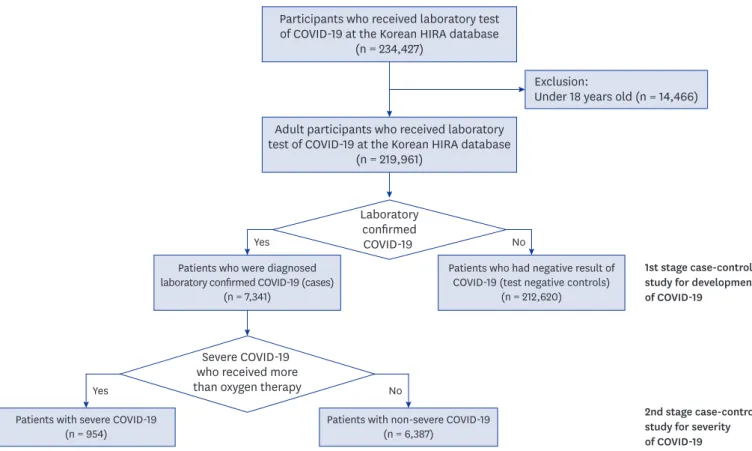
chain reaction (RT-PCR) test-positive cases when the diagnosis was confirmed using RT-PCR with respiratory tract specimens, all RT-PCR positive subjects were identified as a confirmed cases using the database of Korean Center for Disease Control (KCDC); the remaining subjects were categorized as controls (“RT-PCR test-negative” controls). Moreover, severe cases were defined as patients with a diagnosis confirmed by an RT-PCR test, who had claim data for oxygen therapy, mechanical ventilator, extracorporeal membrane oxygenation, and cardiopulmonary resuscitation. The remaining laboratory confirmed subjects were categorized as non-severe cases (Fig. 2).
Study design and definitions
This was a two-staged retrospective case-control study that evaluated the underlying comorbidities associated with the diagnosis and severity of COVID-19. First, we examined the underlying comorbidities associated with the diagnosis of COVID-19 between laboratory confirmed cases and test-negative controls. In addition, the underlying comorbidities associated with the severity of COVID-19 were evaluated and compared between the severe and non-severe confirmed cases. Underlying comorbidities were defined as the reimbursement for ≥ 2 times of KCD-7 code of study diseases, within 3 years prior to the test for COVID-19. The disease of interest was selected from the list of ICD-10 mapping tree, with reports of possible association with SARS-CoV-2 in previous epidemiologic studies, and those with theoretical concerns for increased risk (Supplementary Table 1). Two authors reviewed the literature and selected the diseases of interest, and disagreement was arbitrated by the third author. There were 56 categories in the disease group (Supplementary Table 2). The location of the medical institution where the patients were treated was identified to control a
Participants who received laboratory test of COVID-19 at the Korean HIRA database
(n = 234,427)
1st stage case-control study for development of COVID-19
2nd stage case-control study for severity of COVID-19 Adult participants who received laboratory
test of COVID-19 at the Korean HIRA database (n = 219,961)
Patients who were diagnosed laboratory confirmed COVID-19 (cases)
(n = 7,341) Yes
Yes
No
No
Patients who had negative result of COVID-19 (test negative controls)
(n = 212,620) Laboratory
confirmed COVID-19
Patients with severe COVID-19 (n = 954)
Exclusion:
Under 18 years old (n = 14,466)
Patients with non-severe COVID-19 (n = 6,387)
Severe COVID-19 who received more than oxygen therapy
Fig. 2. Flow chart of selecting process for study participants.
COVID-19 = coronavirus disease 2019, HIRA = Health Insurance Review & Assessment Service.
substantially higher risk of community acquired infection. Daegu city and Gyeongsangbuk- do province (DG) had large regional outbreaks, and many cases did not have any identifiable contact trace.7 A subgroup analysis was conducted for DG area and outside of DG area to identify the risk factors related to community outbreaks. Also, Charlson comorbidity index (CCI) was calculated as previously described (Supplementary Table 3).8 Healthcare utilization was evaluated by the number of hospitalizations, number of outpatient visits, and number of emergency room visits within one year prior to tests for COVID-19. The analysis codes for this study was presented in Supplementary Data 1.
Statistical analysis
The baseline characteristics of cases and controls were compared using the χ2 test and Student's t-test, as appropriate. The prevalence of comorbidities was compared using logistic regression models adjusted for sex, age, residence, CCI, and healthcare utilization as covariates. To mitigate the risk of quasi-separation and overfitting, we performed two different types of multivariate analysis. The multivariate model 1 included one comorbidity at a time with all other covariates, constructing individual models for each comorbidity; the multivariate model 2, included all comorbidities and other covariates in a single model. We used the significance threshold of P < 0.05, and all tests were two-tailed. SAS version 9.4 (SAS Institute Inc., Cary, NC, USA) was used for the analyses.
Ethics statement
This study was approved by the Institutional Review Board (IRB) of the Gil Medical Center, Gachon University College of Medicine which provided a waiver of consent (GFIRB2020-134).
The research was conducted ethically in accordance with the World Medical Association Declaration of Helsinki.
RESULTS
Baseline demographics between case- and test-negative controls At the data cutoff time on May 15, 2020, a total of 219,961 individuals aged ≥ 18 years, who underwent laboratory tests for COVID-19 in Korea were identified and analyzed. The proportion of female was slightly higher (4,371 of 7,341; 59.5%) than that of male in the case group. More than half of COVID-19 patients (4,027 of 7,341; 54.9%) were treated in medical facilities in the DG area, while 45.1% of confirmed cases, treated outside of the DG area.
The control group showed higher healthcare utilization within 1 year before undergoing laboratory tests for COVID-19. Overall, the case group showed a lower prevalence than that of the control group, except for schizophrenia, mental retardation, and developmental disorders (Table 1).
Comorbidities associated with diagnosis of COVID-19 Result of overall analysis
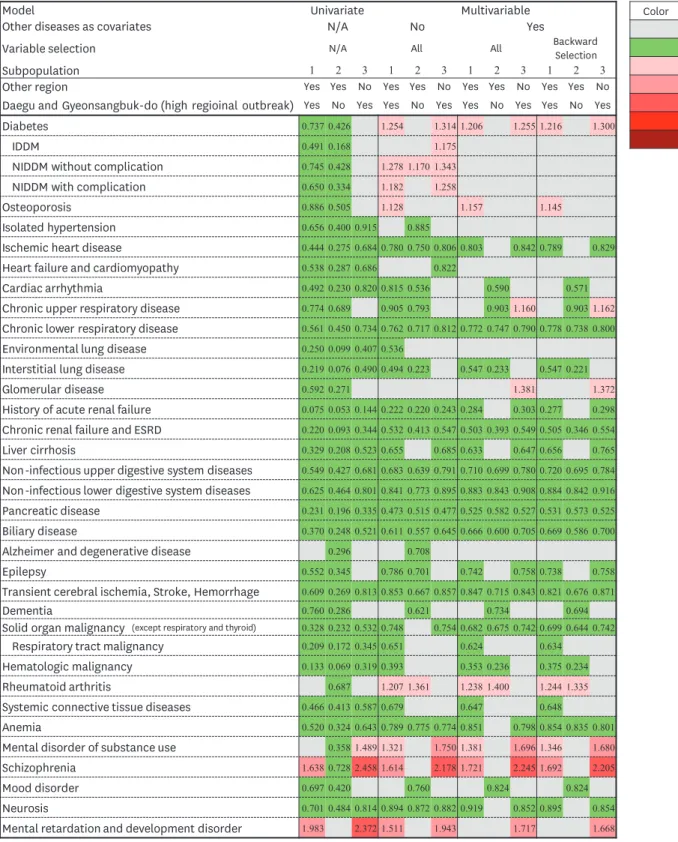
Fig. 3 and Supplementary Table 4 represent the odds ratios (ORs) for the diagnosis of COVID-19 according to the 56 categories of comorbidities. Schizophrenia, mental
retardation, and developmental disorders were associated with an increased risk of COVID-19 in univariate analysis. In terms of multivariate analysis, diabetes (odds ratio range [ORR], 1.206–1.254), osteoporosis (ORR, 1.128–1.157), rheumatoid arthritis (ORR, 1.207–1.244), substance use (ORR, 1.321–1.381), and schizophrenia (ORR, 1.614–1.721) showed an increased risk in the whole study population (Supplementary Table 4). Non-insulin dependent
diabetes mellitus (NIDDM) (ORR, 1.182–1.278), mental retardation and developmental disorder (OR, 1.511; 95% confidential interval [CI], 1.051–2.173) showed an increased risk only in multivariate analysis with single disease category. Ischemic heart disease (ORR, 0.789–0.803), chronic lower respiratory disease (ORR, 0.772–0.778), interstitial lung disease Table 1. Baseline demographics and prevalence of comorbidities between case and test negative controls
Variables Cases (n = 7,341) Controls (n = 212,620) P value
Demographic characteristics
Sex, male 2,970 (40.5) 101,361 (47.7) < 0.001
Age, yr 47.05 ± 19.0 49.48 ± 19.9 < 0.001
18–49 3,819 (52.0) 113,734 (53.5)
50–64 2,159 (29.4) 44,652 (21.0)
65–79 992 (13.5) 34,080 (16.0)
≥ 80 373 (5.1) 20,154 (9.5)
Residence
DG area 4,027 (54.9) 31,259 (14.7) < 0.001
Except DG 3,314 (45.1) 181,361 (85.3)
Charlson comorbidity index 1.23 ± 1.6 1.94 ± 2.4 < 0.001
Healthcare utilization within 1 years before diagnosis of COVID-19
No. of hospitalization 0.25 ± 0.9 0.83 ± 2.1 < 0.001
No. of outpatient visit 17.19 ± 21.4 25.46 ± 31.9 < 0.001
No. of ED visit 0.12 ± 0.5 0.44 ± 1.6 < 0.001
Medical aids 619 (8.4) 12,031 (5.7) < 0.001
Underlying diseases Endocrinopathy
Diabetes 1,043 (14.2) 39,037 (18.4) < 0.001
Thyroid disease 434 (5.9) 13,491 (6.4) 0.134
Cushing syndrome 2 (0.03) 215 (0.1) 0.047
Osteoporosis 633 (8.6) 20,467 (9.6) 0.004
Cardiac disease
Isolated hypertension 1,628 (22.2) 64,412 (30.3) < 0.001
Ischemic heart disease 306 (4.2) 18,971 (8.9) < 0.001
Heart failure and cardiomyopathy 266 (3.62) 13,881 (6.5) < 0.001
Valvular heart disease 28 (0.4) 1,960 (0.9) < 0.001
Cardiac arrhythmia 201 (2.7) 11,517 (5.4) < 0.001
Chronic respiratory disease
Chronic upper respiratory disease 4,430 (60.4) 140,924 (66.3) < 0.001
Chronic lower respiratory disease 1,639 (22.3) 72,058 (33.9) < 0.001
Environmental lung disease 11 (0.2) 1,267 (0.6) < 0.001
Interstitial lung disease 12 (0.2) 1,580 (0.7) < 0.001
Chronic respiratory failure and diaphragm palsy 1 (0.01) 261 (0.1) 0.008
Pulmonary vascular disease 11 (0.2) 1,279 (0.6) < 0.001
Renal disease and ESRD
Hypertensive renal disease 19 (0.3) 1,611 (0.8) < 0.001
Glomerular disease 76 (1.0) 3,690 (1.7) < 0.001
Renal tubule-interstitial disease 37 (0.5) 1,811 (0.9) 0.001
History of acute renal failure 6 (0.1) 2,282 (1.1) < 0.001
Chronic renal failure and ESRD 72 (1.0) 9,149 (4.3) < 0.001
Urolithiasis 85 (1.2) 3,814 (1.8) < 0.001
Viral hepatitis and chronic liver disease
HBV, acute and chronic 115 (1.6) 4,387 (2.1) 0.003
HCV, acute and chronic 17 (0.2) 954 (0.5) 0.006
Non-B, non-C hepatitis 612 (8.3) 22,196 (10.4) < 0.001
Liver cirrhosis 44 (0.6) 3,833 (1.8) < 0.001
Hepatic failure 6 (0.1) 751 (0.4) < 0.001
Disease of digestive system
Non-infectious disease of upper digestive system 6,388 (87.0) 196,527 (92.4) < 0.001
Non-infectious disease of lower digestive system 2,013 (27.4) 80,096 (37.7) < 0.001
Pancreatic disease 40 (0.5) 4,933 (2.3) < 0.001
Biliary disease 129 (1.8) 9,813 (4.6) < 0.001
(continued to the next page)
(ORR, 0.494–0.547), history of acute renal failure (ARF) (ORR, 0.222–0.284), chronic renal failure (CRF) and end-stage renal disease (ESRD) (ORR, 0.503–0.505), liver cirrhosis (ORR, 0.633–0.656), non-infectious upper digestive system disease (ORR, 0.683–0.720), non- infectious lower digestive system diseases (ORR, 0.841–0.884), pancreatic disease (ORR, 0.473–0.531), biliary disease (ORR, 0.611–0.669), epilepsy (ORR, 0.738–0.786), transient cerebral ischemia, stroke, hemorrhage (ORR, 0.821–0.853), solid organ malignancy (ORR, 0.682–0.748), hematologic malignancy (ORR, 0.353–0.393), systemic connective tissue disease (ORR, 0.647–0.679), anemia (ORR, 0.789–0.854), and neurosis (ORR, 0.894–0.919) showed a decreased risk of COVID-19 in whole multivariate analysis.
Analysis of subgroup which excluded high regional outbreak area (DG area)
The case group showed a lower prevalence than that of the control group in most disease categories (Supplementary Table 5). NIDDM without complication (OR, 1.170; 95% CI, 1.005–1.362) showed an increased risk only in multivariate analysis with single disease category, while rheumatoid arthritis (ORR, 1.335–1.400) showed an increased risk in whole multivariate analysis (Fig. 3). Cardiac arrhythmia (ORR, 0.536–0.590), chronic upper respiratory diseases (ORR, 0.793–0.903), dementia (ORR, 0.621–0.734), and mood disorder (ORR, 0.760–0.824) additionally showed a decreased risk of COVID-19 in multivariate analysis of this subgroup. The other overall pattern of association was consistent with the Table 1. (Continued) Baseline demographics and prevalence of comorbidities between case and test negative controls
Variables Cases (n = 7,341) Controls (n = 212,620) P value
Chronic neurologic disease
Systemic atrophy 3 (0.04) 320 (0.2) 0.016
Parkinsonism and movement disorder 265 (3.6) 8,890 (4.2) 0.016
Alzheimer and degenerative disease 207 (2.8) 9,266 (4.4) < 0.001
Multiple sclerosis 6 (0.08) 190 (0.09) 0.830
Epilepsy 131 (1.8) 6,776 (3.2) < 0.001
Transient cerebral ischemia, stroke, cerebral hemorrhage 487 (6.6) 22,223 (10.5) < 0.001
Dementia 368 (5.0) 13,809 (6.5) < 0.001
Malignancy
Solid organ, except respiratory, thyroid 223 (3.0) 18,556 (8.7) < 0.001
Respiratory tract 28 (0.4) 3,822 (1.8) < 0.001
Thyroid cancer 80 (1.1) 2,473 (1.2) 0.564
Hematologic 8 (0.1) 1,731 (0.8) < 0.001
Rheumatologic disease
Rheumatoid arthritis 186 (2.5) 5,853 (2.8) 0.259
SLE 0 (0.0) 0 (0.0)
Systemic connective tissue disease 39 (0.5) 2,410 (1.1) < 0.001
Hematologic disease
Anemia 505 (6.9) 26,462 (12.5) < 0.001
Coagulopathy 35 (0.5) 2,839 (1.3) < 0.001
Bone marrow dysfunction 24 (0.3) 2,298 (1.1) < 0.001
Obesity 3 (0.04) 339 (0.2) 0.011
Nutritional deficiency 287 (3.9) 15,128 (7.1) < 0.001
Mental and Behavioral disorders
Substance use 86 (1.2) 2,504 (1.2) 0.962
Schizophrenia 263 (3.6) 4,717 (2.2) < 0.001
Mood disorder 769 (10.8) 31,575 (14.9) < 0.001
Neurosis 931 (12.7) 36,488 (17.2) < 0.001
Personality disorder 13 (0.2) 415 (0.2) 0.729
Mental retardation, development disorder 37 (0.5) 542 (0.3) < 0.001
Immune deficiency, HIV infection 4 (0.1) 320 (0.2) 0.035
Data are presented as mean ± standard deviation or number (%).
DG = Daegu city and Gyeongsangbuk-do province area, COVID-19 = coronavirus disease 2019, ED = emergency department, ESRD = end-stage renal disease, HBV
= hepatitis B virus, HCV = hepatitis C virus, SLE = systemic lupus erythematosus, HIV = human immunodeficiency virus.
whole group analysis except ischemic heart disease, history of ARF, liver cirrhosis, epilepsy, systemic connective tissue diseases, and neurosis.
Model Univariate Multivariable
Other diseases as covariates N/A No Yes
Variable selection N/A All All Backward
Selection
Subpopulation 1 2 3 1 2 3 1 2 3 1 2 3
Other region Yes Yes No Yes Yes No Yes Yes No Yes Yes No
Daegu and Gyeonsangbuk-do (high regioinal outbreak) Yes No Yes Yes No Yes Yes No Yes Yes No Yes
Diabetes 0.737 0.426 1.254 1.314 1.206 1.255 1.216 1.300
IDDM 0.491 0.168 1.175
NIDDM without complication 0.745 0.428 1.278 1.170 1.343
NIDDM with complication 0.650 0.334 1.182 1.258
Osteoporosis 0.886 0.505 1.128 1.157 1.145
Isolated hypertension 0.656 0.400 0.915 0.885
Ischemic heart disease 0.444 0.275 0.684 0.780 0.750 0.806 0.803 0.842 0.789 0.829
Heart failure and cardiomyopathy 0.538 0.287 0.686 0.822
Cardiac arrhythmia 0.492 0.230 0.820 0.815 0.536 0.590 0.571
Chronic upper respiratory disease 0.774 0.689 0.905 0.793 0.903 1.160 0.903 1.162
Chronic lower respiratory disease 0.561 0.450 0.734 0.762 0.717 0.812 0.772 0.747 0.790 0.778 0.738 0.800
Environmental lung disease 0.250 0.099 0.407 0.536
Interstitial lung disease 0.219 0.076 0.490 0.494 0.223 0.547 0.233 0.547 0.221
Glomerular disease 0.592 0.271 1.381 1.372
History of acute renal failure 0.075 0.053 0.144 0.222 0.220 0.243 0.284 0.303 0.277 0.298
Chronic renal failure and ESRD 0.220 0.093 0.344 0.532 0.413 0.547 0.503 0.393 0.549 0.505 0.346 0.554
Liver cirrhosis 0.329 0.208 0.523 0.655 0.685 0.633 0.647 0.656 0.765
Non-infectious upper digestive system diseases 0.549 0.427 0.681 0.683 0.639 0.791 0.710 0.699 0.780 0.720 0.695 0.784
Non-infectious lower digestive system diseases 0.625 0.464 0.801 0.841 0.773 0.895 0.883 0.843 0.908 0.884 0.842 0.916
Pancreatic disease 0.231 0.196 0.335 0.473 0.515 0.477 0.525 0.582 0.527 0.531 0.573 0.525
Biliary disease 0.370 0.248 0.521 0.611 0.557 0.645 0.666 0.600 0.705 0.669 0.586 0.700
Alzheimer and degenerative disease 0.296 0.708
Epilepsy 0.552 0.345 0.786 0.701 0.742 0.758 0.738 0.758
Transient cerebral ischemia, Stroke, Hemorrhage 0.609 0.269 0.813 0.853 0.667 0.857 0.847 0.715 0.843 0.821 0.676 0.871
Dementia 0.760 0.286 0.621 0.734 0.694
Solid organ malignancy (except respiratory and thyroid) 0.328 0.232 0.532 0.748 0.754 0.682 0.675 0.742 0.699 0.644 0.742
Respiratory tract malignancy 0.209 0.172 0.345 0.651 0.624 0.634
Hematologic malignancy 0.133 0.069 0.319 0.393 0.353 0.236 0.375 0.234
Rheumatoid arthritis 0.687 1.207 1.361 1.238 1.400 1.244 1.335
Systemic connective tissue diseases 0.466 0.413 0.587 0.679 0.647 0.648
Anemia 0.520 0.324 0.643 0.789 0.775 0.774 0.851 0.798 0.854 0.835 0.801
Mental disorder of substance use 0.358 1.489 1.321 1.750 1.381 1.696 1.346 1.680
Schizophrenia 1.638 0.728 2.458 1.614 2.178 1.721 2.245 1.692 2.205
Mood disorder 0.697 0.420 0.760 0.824 0.824
Neurosis 0.701 0.484 0.814 0.894 0.872 0.882 0.919 0.852 0.895 0.854
Mental retardation and development disorder 1.983 2.372 1.511 1.943 1.717 1.668
Color OR
No significant
< 1.0 1.0 ≤, < 1.5 1.5 ≤, < 2.0 2.0 ≤, < 2.5 2.5 ≤, < 3.0
3.0 ≤
Fig. 3. Analysis of relationship between comorbidities and infection of COVID-19.
COVID-19 = coronavirus disease 2019, N/A = not applicable, IDDN = insulin-dependent diabetes mellitus, NIDDM = non-insulin dependent diabetes mellitus, ESRD = end-stage renal disease, OR = odds ratio.
Analysis of subpopulation in high regional outbreak area (DG area)
This subpopulation analysis was conducted to identify the risk factors for high regional outbreak areas. Substance use, schizophrenia, mental retardation, and developmental disorder were associated with an increased risk of COVID-19 in univariate analysis. Diabetes (ORR, 1.255–1.314), substance use (ORR, 1.680–1.750), schizophrenia (ORR, 2.178–2.245), mental retardation and developmental disorder (ORR, 1.668–1.943) were associated with an increased risk of COVID-19 outbreak in whole multivariate analysis, while chronic upper respiratory diseases (ORR, 1.160–1.162), glomerular diseases (ORR, 1.372–1.381) was associated with an increased risk of COVID-19 only in multivariate analysis with all comorbidities (Fig. 3 and Supplementary Table 6). The disease categories which showed a decreased risk of COVID-19 were consistent with whole group analysis except interstitial lung diseases, respiratory malignancy, hematologic malignancy, and systemic connective tissue diseases.
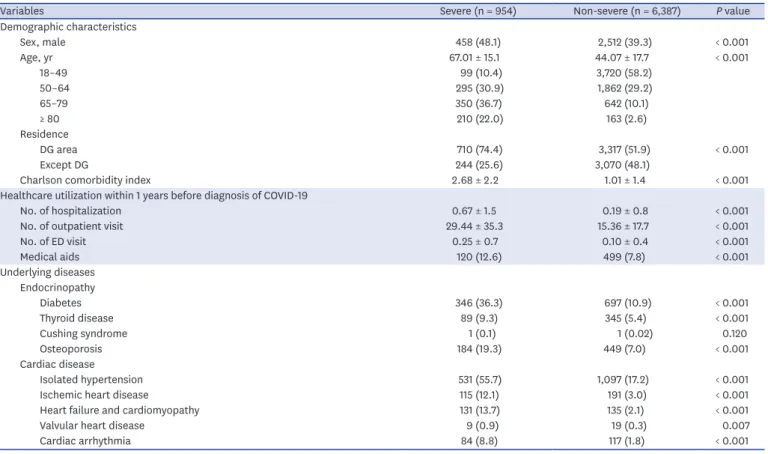
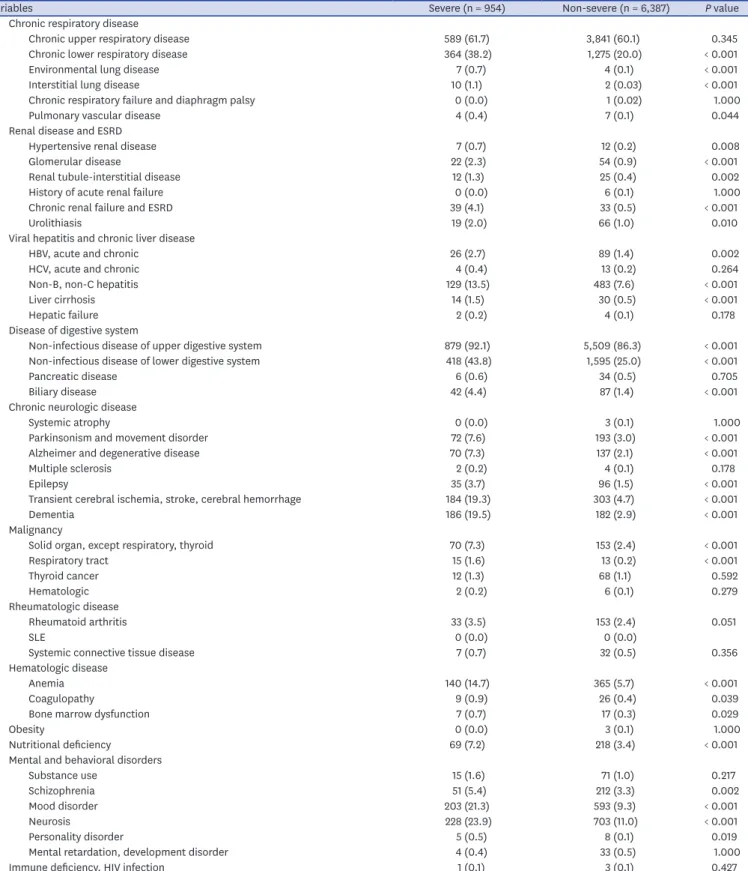
Baseline demographics between severe and non-severe confirmed COVID-19 Severe cases accounted for 13.0% (954 of 7,341) of the laboratory confirmed cases. The mean age was 67.01 (standard deviation, 15.1), and 48.0% (458 of 954) of the patients in the severe group were male. The severe group had relatively older patients, The proportion of Daegu/Gyeongbuk area (DG area, 74.4%, 710 of 954), median CCI, the number of healthcare utilization, and the prevalence of comorbidities were higher in the severe group than in the non-severe group (Table 2).
Table 2. Baseline demographics and prevalence of comorbidities between severe and non-severe laboratory confirmed COVID-19
Variables Severe (n = 954) Non-severe (n = 6,387) P value
Demographic characteristics
Sex, male 458 (48.1) 2,512 (39.3) < 0.001
Age, yr 67.01 ± 15.1 44.07 ± 17.7 < 0.001
18–49 99 (10.4) 3,720 (58.2)
50–64 295 (30.9) 1,862 (29.2)
65–79 350 (36.7) 642 (10.1)
≥ 80 210 (22.0) 163 (2.6)
Residence
DG area 710 (74.4) 3,317 (51.9) < 0.001
Except DG 244 (25.6) 3,070 (48.1)
Charlson comorbidity index 2.68 ± 2.2 1.01 ± 1.4 < 0.001
Healthcare utilization within 1 years before diagnosis of COVID-19
No. of hospitalization 0.67 ± 1.5 0.19 ± 0.8 < 0.001
No. of outpatient visit 29.44 ± 35.3 15.36 ± 17.7 < 0.001
No. of ED visit 0.25 ± 0.7 0.10 ± 0.4 < 0.001
Medical aids 120 (12.6) 499 (7.8) < 0.001
Underlying diseases Endocrinopathy
Diabetes 346 (36.3) 697 (10.9) < 0.001
Thyroid disease 89 (9.3) 345 (5.4) < 0.001
Cushing syndrome 1 (0.1) 1 (0.02) 0.120
Osteoporosis 184 (19.3) 449 (7.0) < 0.001
Cardiac disease
Isolated hypertension 531 (55.7) 1,097 (17.2) < 0.001
Ischemic heart disease 115 (12.1) 191 (3.0) < 0.001
Heart failure and cardiomyopathy 131 (13.7) 135 (2.1) < 0.001
Valvular heart disease 9 (0.9) 19 (0.3) 0.007
Cardiac arrhythmia 84 (8.8) 117 (1.8) < 0.001
(continued to the next page)
Table 2. (Continued) Baseline demographics and prevalence of comorbidities between severe and non-severe laboratory confirmed COVID-19
Variables Severe (n = 954) Non-severe (n = 6,387) P value
Chronic respiratory disease
Chronic upper respiratory disease 589 (61.7) 3,841 (60.1) 0.345
Chronic lower respiratory disease 364 (38.2) 1,275 (20.0) < 0.001
Environmental lung disease 7 (0.7) 4 (0.1) < 0.001
Interstitial lung disease 10 (1.1) 2 (0.03) < 0.001
Chronic respiratory failure and diaphragm palsy 0 (0.0) 1 (0.02) 1.000
Pulmonary vascular disease 4 (0.4) 7 (0.1) 0.044
Renal disease and ESRD
Hypertensive renal disease 7 (0.7) 12 (0.2) 0.008
Glomerular disease 22 (2.3) 54 (0.9) < 0.001
Renal tubule-interstitial disease 12 (1.3) 25 (0.4) 0.002
History of acute renal failure 0 (0.0) 6 (0.1) 1.000
Chronic renal failure and ESRD 39 (4.1) 33 (0.5) < 0.001
Urolithiasis 19 (2.0) 66 (1.0) 0.010
Viral hepatitis and chronic liver disease
HBV, acute and chronic 26 (2.7) 89 (1.4) 0.002
HCV, acute and chronic 4 (0.4) 13 (0.2) 0.264
Non-B, non-C hepatitis 129 (13.5) 483 (7.6) < 0.001
Liver cirrhosis 14 (1.5) 30 (0.5) < 0.001
Hepatic failure 2 (0.2) 4 (0.1) 0.178
Disease of digestive system
Non-infectious disease of upper digestive system 879 (92.1) 5,509 (86.3) < 0.001
Non-infectious disease of lower digestive system 418 (43.8) 1,595 (25.0) < 0.001
Pancreatic disease 6 (0.6) 34 (0.5) 0.705
Biliary disease 42 (4.4) 87 (1.4) < 0.001
Chronic neurologic disease
Systemic atrophy 0 (0.0) 3 (0.1) 1.000
Parkinsonism and movement disorder 72 (7.6) 193 (3.0) < 0.001
Alzheimer and degenerative disease 70 (7.3) 137 (2.1) < 0.001
Multiple sclerosis 2 (0.2) 4 (0.1) 0.178
Epilepsy 35 (3.7) 96 (1.5) < 0.001
Transient cerebral ischemia, stroke, cerebral hemorrhage 184 (19.3) 303 (4.7) < 0.001
Dementia 186 (19.5) 182 (2.9) < 0.001
Malignancy
Solid organ, except respiratory, thyroid 70 (7.3) 153 (2.4) < 0.001
Respiratory tract 15 (1.6) 13 (0.2) < 0.001
Thyroid cancer 12 (1.3) 68 (1.1) 0.592
Hematologic 2 (0.2) 6 (0.1) 0.279
Rheumatologic disease
Rheumatoid arthritis 33 (3.5) 153 (2.4) 0.051
SLE 0 (0.0) 0 (0.0)
Systemic connective tissue disease 7 (0.7) 32 (0.5) 0.356
Hematologic disease
Anemia 140 (14.7) 365 (5.7) < 0.001
Coagulopathy 9 (0.9) 26 (0.4) 0.039
Bone marrow dysfunction 7 (0.7) 17 (0.3) 0.029
Obesity 0 (0.0) 3 (0.1) 1.000
Nutritional deficiency 69 (7.2) 218 (3.4) < 0.001
Mental and behavioral disorders
Substance use 15 (1.6) 71 (1.0) 0.217
Schizophrenia 51 (5.4) 212 (3.3) 0.002
Mood disorder 203 (21.3) 593 (9.3) < 0.001
Neurosis 228 (23.9) 703 (11.0) < 0.001
Personality disorder 5 (0.5) 8 (0.1) 0.019
Mental retardation, development disorder 4 (0.4) 33 (0.5) 1.000
Immune deficiency, HIV infection 1 (0.1) 3 (0.1) 0.427
Data are presented as mean ± standard deviation or number (%).
DG = Daegu city and Gyeongsangbuk-do province area, COVID-19 = coronavirus disease 2019, ED = emergency department, ESRD = end-stage renal disease, HBV
= hepatitis B virus, HCV = hepatitis C virus, SLE = systemic lupus erythematosus, HIV = human immunodeficiency virus.
Comorbidities associated with severity of COVID-19 Result of overall analysis
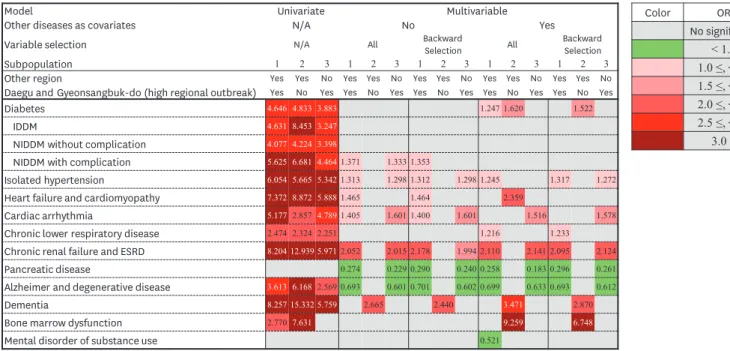
The ORs for the severity of COVID-19 according to the 56 categories of comorbidities are shown in Fig. 4 and Supplementary Table 7. Most disease categories except Cushing syndrome, chronic upper respiratory diseases, hepatitis C, hepatic failure, pancreatic diseases, multiple sclerosis, thyroid cancer, hematologic malignancy, rheumatoid arthritis, systemic connective tissue disease, substance use, mental retardation, and immune deficiency were associated with an increased risk of severe COVID-19 in univariate analysis. Isolated hypertension (ORR, 1.245–1.317), CRF and ESRD (ORR, 2.052–2.178) were significantly associated with an increased risk of severe COVID-19, while pancreatic diseases (ORR, 0.258–0.296), Alzheimer's and degenerative diseases (ORR, 0.693–0.701) were associated with a decreased risk of severe COVID-19 in all multivariate analysis.
NIDDM without complication (ORR, 1.353–1.371), heart failure, and cardiomyopathy (ORR, 1.464–1.465), and cardiac arrhythmia (ORR, 1.400–1.405) showed an increased risk of severe COVID-19 in multivariate analysis with single disease category, while diabetes (OR, 1.247;
95% CI, 1.009–1.543), chronic respiratory diseases (ORR, 1.216–1.233) showed an increased risk of COVID-19 in multivariate analysis with all comorbidities.
Analysis of subpopulation which excluded high regional outbreak area (DG area) In multivariate analysis, dementia (ORR, 2.440–3.471) was significantly associated with severe COVID-19 in all multivariate analysis, while diabetes (ORR, 1.522–1.620), bone marrow dysfunction (ORR, 6.748–9.259) showed an increased risk of severe disease only in multivariate analysis with all comorbidities (Supplementary Table 8).
Analysis of subpopulation in high regional outbreak area (DG area)
In multivariate analysis, the overall pattern of association was consistent with the whole group analysis except diabetes, heart failure and cardiomyopathy, and chronic lower respiratory disease (Supplementary Table 9).
Color OR
No significant
< 1.0 1.0 ≤, < 1.5 1.5 ≤, < 2.0 2.0 ≤, < 2.5 2.5 ≤, < 3.0
3.0 ≤
Model Univariate Multivariable
Other diseases as covariates N/A No Yes
Variable selection N/A All Backward
Selection All Backward Selection
Subpopulation 1 2 3 1 2 3 1 2 3 1 2 3 1 2 3
Other region Yes Yes No Yes Yes No Yes Yes No Yes Yes No Yes Yes No
Daegu and Gyeonsangbuk-do (high regional outbreak) Yes No Yes Yes No Yes Yes No Yes Yes No Yes Yes No Yes
Diabetes 4.646 4.833 3.883 1.247 1.620 1.522
IDDM 4.631 8.453 3.247
NIDDM without complication 4.077 4.224 3.398
NIDDM with complication 5.625 6.681 4.4641.371 1.333 1.353
Isolated hypertension 6.054 5.665 5.3421.313 1.298 1.312 1.298 1.245 1.317 1.272
Heart failure and cardiomyopathy 7.372 8.872 5.8881.465 1.464 2.359
Cardiac arrhythmia 5.1772.8574.7891.405 1.601 1.400 1.601 1.516 1.578
Chronic lower respiratory disease 2.474 2.324 2.251 1.216 1.233
Chronic renal failure and ESRD 8.204 12.939 5.9712.052 2.015 2.178 1.994 2.110 2.141 2.095 2.124
Pancreatic disease 0.274 0.229 0.290 0.240 0.258 0.183 0.296 0.261
Alzheimer and degenerative disease 3.613 6.1682.569 0.693 0.601 0.701 0.602 0.699 0.633 0.693 0.612
Dementia 8.257 15.332 5.759 2.665 2.440 3.471 2.870
Bone marrow dysfunction 2.7707.631 9.259 6.748
Mental disorder of substance use 0.521
Fig. 4. Analysis of relationship between comorbidities on severity of COVID-19.
COVID-19 = coronavirus disease 2019, N/A = not applicable, IDDN = insulin-dependent diabetes mellitus, NIDDM = non-insulin dependent diabetes mellitus, ESRD = end-stage renal disease, OR = odds ratio.
DISCUSSION
In this study, we identified the possible comorbidities that might be associated with the risk of COVID-19 infection and its severity. Diabetes, osteoporosis, rheumatoid arthritis, substance use, and schizophrenia showed significant associations with the diagnosis of COVID-19. The patterns of comorbidities associated with the occurrence of COVID-19 might be different between high and non-high regional outbreak areas. Diabetes, chronic upper respiratory diseases, glomerular disease, substance use, schizophrenia, mental retardation, and developmental disorders were associated with community outbreak (DG area), whereas rheumatoid arthritis was associated with containment area (e.g., institutional outbreak).
Diabetes, isolated hypertension, chronic lower respiratory disease, CRF, and ESRD were associated with severe COVID-19. Moreover, diabetes was strongly associated with the diagnosis and severity of COVID-19.
When interpreting the results of this study, it is necessary to consider the demographic differences between the case and control groups. Most diseases, except schizophrenia, mental retardation, and developmental disorders, showed a higher prevalence in the control group than in the case group (Table 1). This suggested that more tests for COVID-19 were performed in people at a risk of febrile respiratory illness, regardless of the COVID-19 pandemic.9-11 Therefore, we presumed that the negative association in univariate analysis related to COVID-19 occurrence was based on biased baseline demographics and found that this selection bias was alleviated in the multivariate analysis (Fig. 3). Moreover, we compared the laboratory confirmed cases to the RT-PCR-negative control groups and conducted subgroup analysis according to high regional outbreak areas where this bias would have been less affected. As a result, the comorbidities that increased the risk of diagnosis of COVID-19 were more meaningful. Therefore, we found that diabetes, osteoporosis, and rheumatoid arthritis might be risk factors for the diagnosis of COVID-19.
In the case of psychological disorders including substance use, schizophrenia, mental retardation, and developmental disorders, consideration as risk factors for COVID-19 was unjustifiable because this might be correlated with the large clustered outbreak in hospitalized patients who were admitted in closed wards for psychological treatment. Even considering these epidemiological characteristics, some early case reports on the COVID-19 outbreak suggested that differences in socioeconomic levels may influence SARS-CoV-2 infection.12 It might be suggested that the accompanying low socioeconomic status might increase the risk of developing COVID-19 rather than schizophrenia or a psychological disorder itself.13 This study also found that rheumatoid was associated with the diagnosis of COVID-19. Although the impact of immunosuppression on the diagnosis of COVID-19 remains unclear, it is suggested that the long-term use of steroids or immunosuppressants may increase susceptibility to COVID-19.
In spite of a potential selection bias, the result suggested the possibility of chronic illness including ischemic heart disease, cardiac arrhythmia, chronic upper and lower respiratory disease, chronic renal disease, liver cirrhosis, non-infectious upper and lower digestive disease, pancreatic disease, biliary disease, epilepsy, cerebrovascular disease, dementia, malignancy, systemic connective tissue, anemia, and neurosis being associated with a decreased risk of COVID-19. Patients with these conditions might have reduced social activity, which may reduce the possible risk of exposure to SARS-CoV-2. However, this is not clear, and more precise research is needed.
In early epidemiological studies of COVID-19, it was reported that comorbidities including diabetes, hypertension, and chronic respiratory disease, except for malignancy, were related to disease severity or death4,5,14-16 as observed in this study. We also found that CRF and ESRD were significant risk factors for severe COVID-19. In addition, heart failure, cardiomyopathy, and cardiac arrhythmia might be associated with the severity of COVID-19.
Human angiotensin-converting enzyme 2 (ACE2) is a functional receptor of SARS-CoV-2,17 and the heart is a tissue rich in ACE receptors along with the lungs. Cases of COVID-19 related to myocarditis were reported in China18 and Korea,19 and myocarditis was also reported as a risk factor for severe COVID-19.3
In this study, pancreatic disease, Alzheimer's disease, and degenerative diseases were associated with a decreased risk of severe COVID-19. Although the detailed mechanism of this protective effect remains unclear, it is suggested that the possible protective effect may be attributable to drugs used to treat these diseases. For example, camostat mesylate which is widely used protease inhibitor in chronic pancreatic disease might have protective role in COVID-19. TMPRSS2 is a serine protease that primes the spike protein of human coronaviruses and facilitates its entry into the host cell.20 Camostat mesylate was effective in SARS-CoV infected mouse model,21 and it is suggested as a potential therapeutic option in COVID-19.22,23
This study has a few limitations. First, this study was limited to data from the nationwide claims database of subjects who underwent laboratory testing for COVID-19. Thus, the data of patients who were tested via “Drive Through” or local health centers and were treated at non-medical facilities was not included in this study. Therefore, the actual population affected by the disease was different from that of the analyzed population, which was used in this study. Despite this limitation, this study was conducted only for those who underwent the laboratory test for COVID-19 as per the insurance claims database. Therefore, the negative control group had a confirmed a negative result of SARS-CoV-2 infection. Thus, the comparison between this negative control group and case group helped in proper evaluation of the risk factors for COVID-19 occurrence. Another limitation was the inability of the data source to provide information on the severity of the comorbidities. Finally, we could not evaluate the detailed mechanism underlying the relationship between comorbidities and the diagnosis or severity of COVID-19. However, most comorbidities identified in each individual's health insurance claims data could be used for this study. It may be possible to discover previously unknown or unexpected risk factors based on a data driven approach.
In this retrospective case control study, we suggest that diabetes, osteoporosis, rheumatoid arthritis, disorder owing to substance use, and schizophrenia might be risk factors for COVID-19. Besides, hypertension, chronic lower respiratory disease, CRF, and ESRD are associated with severe COVID-19. In addition, diabetes is associated with the occurrence and severity of COVID-19.
ACKNOWLEDGMENTS
The authors appreciate healthcare professionals dedicated to treating COVID-19 patients in Korea, and the Ministry of Health and Welfare and the Health Insurance Review &
Assessment Service of Korea for sharing invaluable national health insurance claims data in a prompt manner.
SUPPLEMENTARY MATERIALS
Supplementary Table 1
Variables in the Korean National Health Insurance claim data Click here to view
Supplementary Table 2 ICD 10 codes for disease category Click here to view
Supplementary Table 3
ICD-10 mapping for Charlson Comorbidity Index Click here to view
Supplementary Table 4
Analysis of relationship between comorbidities and presence of COVID-19 in whole study participants
Click here to view
Supplementary Table 5
Subpopulation analysis of relationship between comorbidities and presence of COVID-19 except the DG region
Click here to view
Supplementary Table 6
Subpopulation analysis of relationship between comorbidities and presence of COVID-19 in the DG region
Click here to view
Supplementary Table 7
Analysis of relationship between comorbidities and severity of COVID-19 in whole study participants
Click here to view
Supplementary Table 8
Subpopulation analysis of relationship between comorbidities and severity of COVID-19 except the DG region
Click here to view
Supplementary Table 9
Subpopulation analysis of relationship between comorbidities and severity of COVID-19 in the DG region
Click here to view Supplementary Data 1
Analytic codes for diagnosis and severity of COVID-19 in Claim data.
Click here to view
REFERENCES
1. World Health Organization. Coronavirus disease 2019 (COVID-19) situation report. https://www.who.int/
emergencies/diseases/novel-coronavirus-2019/situation-reports/. Updated 2020. Accessed May 24, 2020.
2. Emami A, Javanmardi F, Pirbonyeh N, Akbari A. Prevalence of underlying diseases in hospitalized patients with COVID-19: a systematic review and meta-analysis. Arch Acad Emerg Med 2020;8(1):e35.
PUBMED
3. Yang J, Zheng Y, Gou X, Pu K, Chen Z, Guo Q, et al. Prevalence of comorbidities and its effects in patients infected with SARS-CoV-2: a systematic review and meta-analysis. Int J Infect Dis 2020;94:91-5.
PUBMED | CROSSREF
4. Guan WJ, Liang WH, Zhao Y, Liang HR, Chen ZS, Li YM, et al. Comorbidity and its impact on 1590 patients with COVID-19 in China: a nationwide analysis. Eur Respir J 2020;55(5):2000547.
PUBMED | CROSSREF
5. Li X, Xu S, Yu M, Wang K, Tao Y, Zhou Y, et al. Risk factors for severity and mortality in adult COVID-19 inpatients in Wuhan. J Allergy Clin Immunol. Forthcoming 2020. DOI: 10.1016/j.jaci.2020.04.006.
PUBMED | CROSSREF
6. Jung J, Im JH, Ko YJ, Huh K, Yoon CG, Rhee C, et al. Complementing conventional infectious disease surveillance with national health insurance claims data in the Republic of Korea. Sci Rep 2019;9(1):8750.
PUBMED | CROSSREF
7. Korea Centers for Disease Control & Prevention. Coronavirus disease-19 in South Korea. http://ncov.
mohw.go.kr/. Updated 2020. Accessed April 21, 2020.
8. Charlson ME, Pompei P, Ales KL, MacKenzie CR. A new method of classifying prognostic comorbidity in longitudinal studies: development and validation. J Chronic Dis 1987;40(5):373-83.
PUBMED | CROSSREF
9. Kim I, Lee J, Lee J, Shin E, Chu C, Lee SK. KCDC risk assessments on the initial phase of the COVID-19 outbreak in Korea. Osong Public Health Res Perspect 2020;11(2):67-73.
PUBMED | CROSSREF
10. COVID-19 National Emergency Response Center, Epidemiology & Case Management Team, Korea Centers for Disease Control & Prevention. Contact transmission of COVID-19 in South Korea: novel investigation techniques for tracing contacts. Osong Public Health Res Perspect 2020;11(1):60-3.
PUBMED | CROSSREF
11. Her M. How is COVID-19 affecting South Korea? What is our current strategy? Disaster Med Public Health Prep. Forthcoming 2020. DOI: 10.1017/dmp.2020.69.
PUBMED | CROSSREF
12. Chung RY, Dong D, Li MM. Socioeconomic gradient in health and the covid-19 outbreak. BMJ 2020;369:m1329.
PUBMED | CROSSREF
13. Luo Y, Zhang L, He P, Pang L, Guo C, Zheng X. Individual-level and area-level socioeconomic status (SES) and schizophrenia: cross-sectional analyses using the evidence from 1.9 million Chinese adults. BMJ Open 2019;9(9):e026532.
PUBMED | CROSSREF
14. Guo W, Li M, Dong Y, Zhou H, Zhang Z, Tian C, et al. Diabetes is a risk factor for the progression and prognosis of COVID-19. Diabetes Metab Res Rev. Forthcoming 2020. DOI: 10.1002/dmrr.3319.
PUBMED | CROSSREF
15. Bhatraju PK, Ghassemieh BJ, Nichols M, Kim R, Jerome KR, Nalla AK, et al. Covid-19 in critically ill patients in the Seattle region - case series. N Engl J Med 2020;382(21):2012-22.
PUBMED | CROSSREF
16. Shi Y, Yu X, Zhao H, Wang H, Zhao R, Sheng J. Host susceptibility to severe COVID-19 and establishment of a host risk score: findings of 487 cases outside Wuhan. Crit Care 2020;24(1):108.
PUBMED | CROSSREF
17. Zhou P, Yang XL, Wang XG, Hu B, Zhang L, Zhang W, et al. A pneumonia outbreak associated with a new coronavirus of probable bat origin. Nature 2020;579(7798):270-3.
PUBMED | CROSSREF
18. Zeng JH, Liu YX, Yuan J, Wang FX, Wu WB, Li JX, et al. First case of COVID-19 complicated with fulminant myocarditis: a case report and insights. Infection. Forthcoming 2020. DOI: 10.1007/s15010-020-01424-5.
PUBMED | CROSSREF
19. Kim IC, Kim JY, Kim HA, Han S. COVID-19-related myocarditis in a 21-year-old female patient. Eur Heart J 2020;41(19):1859.
PUBMED | CROSSREF
20. Hoffmann M, Kleine-Weber H, Schroeder S, Krüger N, Herrler T, Erichsen S, et al. SARS-CoV-2 cell entry depends on ACE2 and TMPRSS2 and is blocked by a clinically proven protease inhibitor. Cell 2020;181(2):271-280.e8.
PUBMED | CROSSREF
21. Zhou Y, Vedantham P, Lu K, Agudelo J, Carrion R Jr, Nunneley JW, et al. Protease inhibitors targeting coronavirus and filovirus entry. Antiviral Res 2015;116:76-84.
PUBMED | CROSSREF
22. McKee DL, Sternberg A, Stange U, Laufer S, Naujokat C. Candidate drugs against SARS-CoV-2 and COVID-19. Pharmacol Res 2020;157:104859.
PUBMED | CROSSREF
23. Bittmann S, Weissenstein A, Villalon G, Moschuring-Alieva E, Luchter E. Simultaneous treatment of COVID-19 with serine protease inhibitor camostat and/or cathepsin L inhibitor? J Clin Med Res 2020;12(5):320-2.
PUBMED | CROSSREF