
Genome-wide analysis on the effects of Salviae miltiorrhizae Radix in hyperlipidemic mice
12
0
0
전체 글
(2) 74. 大田大學校 韓醫學硏究所 論文集 第21卷 第2號. free fatty acid (FFA) and deposition in. classified. muscle induces a negative feedback loop in. derived from caffeic acid, e.g. salvianolic. insulin-mediated muscle insulin signaling and. acids, and lipophilic components including. glucose. prolonged exposure to FFA might cause. diterpenoids tanshinones . And Salviae miltiorrhizae Radix is also used for treating. impairment of insulin release through the. coronary. utilization.. In. the. pancreas,. . mechanism of lipotoxicity . In the liver, high FFA. into. the. hydrophilic. depsides. . heart. disease,. cerebrovascular. disease, hepatitis, hepatocirrhosis, chronic concentration. renal. failure,. dysmenorrheal. and. contribute to resistance to the action of. neurasthenic insomnia in Southeast Asian. insulin by enhancing glucose output from. countries including China and Korea . High quality aqueous extract granule of. . liver . The accumulation of TG in liver by high FAs also bring about non-alcoholic fatty. . . Salviae miltiorrhizae Radix should be a rich. liver disease (NAFLD). NAFLD does damage. source of phenolic compounds with strong. to liver, which is the main organ of glucose. antioxidant activity, and it is also used as. metabolism,. dietary supplement in healthy food products. such. as. steatosis,. steatohepatitis, and hepatocellular necrosis . . . Herbal extract is composed of various. to fibrosis . The balance between hepatic lipogenesis and lipolysis is important to. kinds of phytochemicals; it would be difficult. improving insulin resistance and NAFLD.. to. Reducing the level of cholesterol in plasma is. an. effective. method. to. treat. identify. major. pharmaceutical throughput. components. effect.. screening. having. Therefore systems. high. such. as. atherosclerosis. Many chemical drugs, such. microarray analysis is essential process to. as fibrillate and statins, are characterized by. elucidate the molecular effects of herbal. high. extract on disease animal model.. liquid-lowering. speed. and. good. efficacy. However, they can not meet the. Thus, in this experiment, we evaluated the. demands for treatment due to the different. effect of Salviae miltiorrhizae Radix on. hyperlipidemia. high-fat. patients,. some. potential. induced. hyperlipidemia. and. adverse effects and great drug dependence. performed a genomewide analysis of the. . changes of genes in liver tissues.. . By comparison, plant materials and those extracts are characterized by minimal adverse. effects. and. multiple. targets. in. Ⅱ. Materials and Methods. . preventing and curing hyperlipidemia . Salviae miltiorrhizae Radix (Dansam. in. Korean), the dried root of Salvia miltiorrhiza,. 1.. Salviae. miltiorrhizae. Radix. extract. (SMe) preparation. is one of the most popularly used medicinal. Salviae miltiorrhizae Radix was purchased. herbs and is now experiencing a particularly. in the authorized herb market (Jeonnam. strong and rapid demand for treatment and. Pharmaceutical,. prevention. system. selected good samples. To fractionate the. disorders . The major bioactive constituents of Salviae miltiorrhizae Radix can be. aqueous extract, 100 g of dried Salviae. . of. cardiovascular. Korea). and. carefully. miltiorrhizae Radix were boiled with 1500 ㎖.
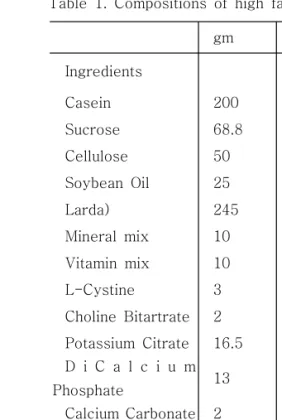
(3) Genome-wide analysis on the effects of Salviae miltiorrhizae Radix in hyperlipidemic mice. 75. of pure water at 100℃ for 3 hours. After. sacrificed at the same time of the day in all. filteration, the filtrate was evaporated under. groups to avoid circadian fluctuations.. reduced pressure and then freeze-dried to. Table 1. Compositions of high fat diet. obtain the aqueous extract. And the total crude extractive powder (SMe) was 35 g.. gm. kcal. The extract stored in deep freezer when. Ingredients. unused, and freshly diluted for experiment.. Casein. 200. 800. Animals were fed orally with the dose of. Sucrose. 68.8. 275.2. Cellulose. 50. 0. Soybean Oil. 25. 225. Larda). 245. 2,205. commercially (Dooyeol Biotech, Korea) and. Mineral mix. 10. 0. used.. Vitamin mix. 10. 40. standard conditions of lights and controlled. L-Cystine. 3. 12. room temperature, and received food and. Choline Bitartrate. 2. 0. water. Potassium Citrate. 16.5. 0. 13. 0. Calcium Carbonate. 2. 0. Maltodextrin. 125. 500. Total. 773.85. 4,057. 100 ㎎/㎏/day for five days when needed. 2. Animals and chemicals Adult male C57BL6 mice at the body weight. of All. ad. purchased. 18-20g animals. libitum. from. were. were. All. obtained. housed. under. chemicals. Sigma. were. Chemical. Co.. (Sigma-Aldrich Korea, Korea).. D i C a l c i u m Phosphate. 3. Experimental design Rats were fed with basic diet for 2 weeks in the experimental environment before the experiments were conducted. Once they had adapted to the environment, 8 mice were selected randomly as the normal group (NG);. a) Typical analysis of cholesterol in lard = 0.95 mg/gram. these were fed with basic diet, while the . . others were fed with high-fat diet as presented in Table 1 during 4 weeks of. 4. Biochemical analysis All blood samples were taken after an. experimental period, and randomly divided. overnight fast. Blood samples were collected. into 2 groups as following, i.e. control group. and centrifuged at 3500g for 15 min to. (CG), and SMe-dosage group (100 ㎎/㎏. obtain serum. The levels of serum total. body weight, SG), each group consisting of 8. cholesterol (TC) and triglycerides (TG) were. rats.. determined using commercially available kits. NG and CG were orally administered by. (purchased. infusion with the same volume of water,. Korea). while the SG was treated with SMe once. instructions.. from. according. Asan to. the. Pharmaceuticals, manufacturers'. daily for 4 weeks. At the end of the experimental period and after 12 h of. 5. Statistical analysis. fasting,. All. animals. were. anesthetized. with. chloral hydrate by intra abdominal way and. parameters. were. recorded. for. individuals within all groups. All data were.
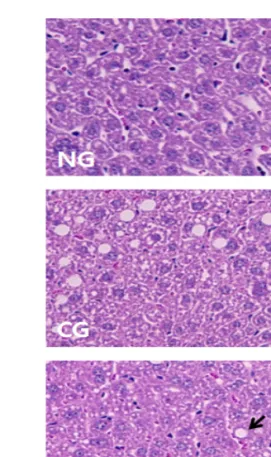
(4) 76. 大田大學校 韓醫學硏究所 論文集 第21卷 第2號. shown as mean±SD. Statistical comparisons. scanner (Perkin-Elmer, Boston, MA).. of data were carried out using the t-test of the SPSS 13.0 system. A value of P<0.05. 8. Data analysis. was considered significant.. Microarray data was normalized using the . Lowess method, as previously described . Only spots with intensity level reater than. 6. Hepatic morphology Each livers were removed from the mice and. put. in. a. solution. were selected for analysis and only genes. were. that were well measured in all sample were. processed routinely for paraffin embedding,. included in the analysis. We considered 2. and 5 ㎛ sections were prepared and dyed. fold of expression change as baseline of. with hematoxylin and eosin; stained areas. up-or. were viewed using an optical microscope at. program was applied for ontological analysis. ×200.. . Fixed. of. 1.4 times to that of the local background. 4%. paraformaldehyde.. buffer. tissues. down-regulation.. OntoExpress. and cytoscape program was applied for interaction network analysis16) in which. 7. RNA isolation from liver and microarray experiment. databases of BOND (http://bond.unleashed informatics.com). The liver tissues were surgically resected. and. the. BioGRID. (http://www.thebiogrid.org/) were used.. and perfused with ice cold saline and then immediately snap frozen and stored in liquid. Ⅲ. Results. nitrogen. The total RNA was then isolated from the frozen tissue using a Qiagen. 1. Changes of serum lipid levels. RNeasy Kit (Qiagen Korea Ltd) according to. The effects of SMe on serum lipid levels. the manufacturer’ instructions. The quality of. were examined at the end of the treatment.. the total RNA was then evaluated based on. The serum total cholesterol levels in mice of. the. was. CG (157.15±11.59 ㎎/㎗) were significantly. determined by agarose gel electrophoresis.. increased compared to the levels in NG. RNA from the mice in each group was. (94.85±12.01 ㎎/㎗). In the SG (121.96±11.85. ratio. pooled. of. prior. 28S/18S. to. RNA,. analysis. which. to. eliminate. ㎎/㎗),. serum. total. cholesterol. level. was. individual variability. An Agilent microarray. significantly decreased when compared with. containing approximately 45,000 oligo-spots. CG. Triglyceride (TG) increased by 1.3-fold in. (Agilent Technologies Co.) was used for. CG (83.09±3.10 ㎎/㎗) when compared with NG. hybridization. The probe preparation and. (67.59±8.51 ㎎/㎗) and significantly decreased. hybridization were performed using a 3DNA. in SG (71.16±6.60 ㎎/㎗).. array detection system according to the manufacturer’. protocol. (Genisphere,. PA),. with 20 μg of RNA being used to produce fluorescently. labeled. cDNA.. RNA. So,. SMe. administration. remarkably. improved in high-fat induced hyperlipidemia in mice.. from. normal mice was used as a reference. Raw. 2. Changes of liver tissue morphology. image files were obtained using a ScanArray. Microscopic liver tissues are shown in Fig..
(5) Genome-wide analysis on the effects of Salviae miltiorrhizae Radix in hyperlipidemic mice. 77. 2. Liver histological examination of the NG showed a normal cell architecture, while significant. morphological. changes. were. observed in the CG. Liver sections in the mice of the CG showed significant lipid vacuolization, which were indicated with black. arrow.. accumulation. On of. the. hepatic. other lipid. hand, droplets. appeared to be relatively lower in the SG. These results seemed to correspond to the serum lipid profiles given in Fig. 1. It demonstrated that SMe could reduce the accumulation of lipid droplets in liver tissue cells of hyperlipidemic mice and prevent cardiovascular disease.. Fig. 2. Photomicrographs (×200) of liver tissue. morphology. of. experimentally. hyperlipidemic mice. The features included: few fat droplets were shown in the liver of normal mice (NG); many large fat droplets were indicated by the arrowhead in the liver Fig. 1. Effects of SMe on Total Cholesterol and Triglyceride Levels in Hyperlipidemic mice. Total cholesterol and triglyceridelevels in. serum. were. measured. using. spectrophotometry. NG, naive, normal group; CG,. hypercholesterolemic. mice,. control. group; SG, SMe administered mice, sample group. Values are represented as mean±SD. #P < 0.05 vs. NG, *P < 0.05 as compared to CG (n=8).. of mice fed a high-fat diet (CG); picture of liver tissue from SMe administered mice (SG). 3. Gene ontological analysis of genes down-or up- regulated by high-fat diet To elucidate the molecular effects. of. high-fat diet on liver, we performed an ontological analysis for genes that were up-or down-regulated in response to liver lipid vacuolization induced by high-fat diet..
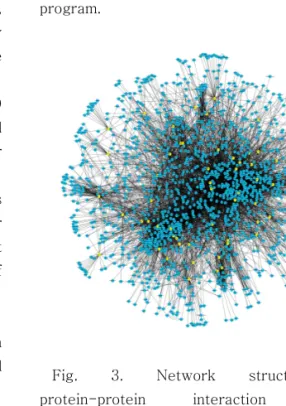
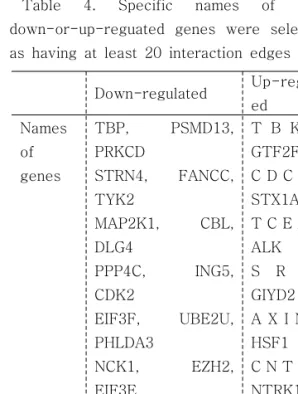
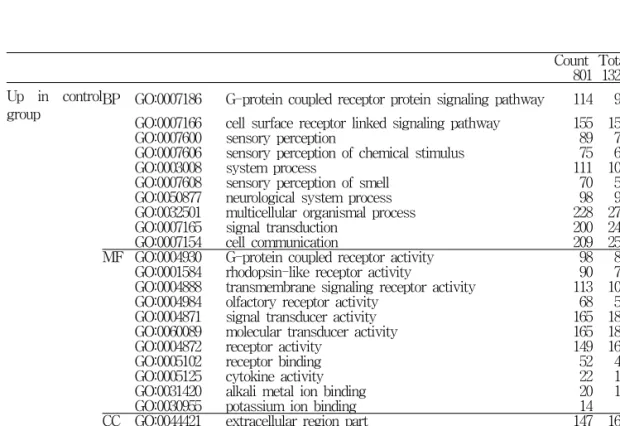
(6) 78. 大田大學校 韓醫學硏究所 論文集 第21卷 第2號. Functional involvement of down-regulated. Core. down-regulated. genes. (yellow. genes (below 2-fold) by administration of. circles) were selected as having at least 20. high-fat diet were investigated by Gene. interaction edges (Fig. 5). The names of 54. Ontology implemented in GOstat program.. core. BP, MF and CC represent Biological process,. Interaction. Molecular function and Cellular component,. nodes between core nodes and its first. respectively,. neighbors. were visualized by Cytoscape. program.. And. definition.. under. the. P-value. Gene. Ontology. represents. false. discovery rate (FDR). Functional. nodes. were. listed. network. in. composed. core. Table of. 6.. 1,464. up-regulated. genes. (yellow circles) were selected as having at. involvement. up-regulated. least 20 interaction edges (Fig. 6). The. genes (over 2-fold) by administration of. names of 22 core nodes were listed in Table. high-fat diet were investigated by Gene. 4. Interaction network composed of 659. Ontology implemented in GOstat program.. nodes between core nodes and its first. BP, MF and CC represent Biological process,. neighbors. Molecular function and Cellular component,. program.. respectively, definition.. under. of. the. P-value. Gene. were visualized by Cytoscape. Ontology. represents. false. discovery rate (FDR). To accomplish this, all of the up- (1,856) and down-regulated genes (2,017) identified in this study were classified based on their defined ontology (Table 2, 3). As shown in Table 2 and 3, various biological processes were involved in liver lipid vacuolization, which means that high fat diet caused suppression or induction of various cellular functions in liver. 4. Network structure of protein-protein interaction. among down-or up-regulated. gene altered in liver by high-fat diet Because. it. was. postulated. that. key. components would interact with many other counterparts, we evaluated the interaction significance. using. information.. Fig.. interaction 3. and. 4. network show. the. interaction network structure of the first neighbors. of. proteins. corresponding. to. down- or up- regulated genes in liver lipid vacuolization induced by high-fat diet.. Fig.. 3.. Network. protein-protein down-regulated least. 20. structure. interaction genes. neighbors). (connected by. of among by. high-fat. at. diet.. Protein-protein interaction by Cytoscape. Total: 1,464 nodes, Yellow: 54 nodes..
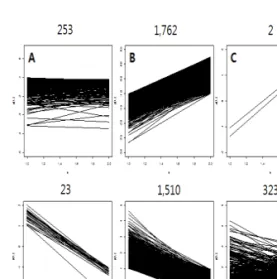
(7) Genome-wide analysis on the effects of Salviae miltiorrhizae Radix in hyperlipidemic mice. 79. SKI, STRN, APOB TRIM28,. PSMD4,. USP11 POLR3D,. TRAF6,. GNAI1 GAPDH,. CCT3,. ING2 KBTBD7,. CDT1,. KRT8 ZHX1,. PTPRC, TRIM29 GNA12, ERBB4 G A B 2 , CALCOCO2. NUP98,. MTA1 PSMD11, Fig.. 4.. Network. protein-protein. structure. interaction. of. BAP1,. CCND3. among. SRF,. PIAS3,. up-regulated genes (connected by at least. PRKCB. 20. FOS, MSN, ZBTB16. neighbors). by. high-fat. Protein-protein interaction. diet.. by Cytoscape.. GEMIN4,. Total: 659 nodes, Yellow: 22 nodes. Table. 4.. Specific. names. of. core. 5.. Effect. down-or-up-reguated genes were selected. expression. as having at least 20 interaction edges. high-fat diet. Down-regulated Names. TBP,. of. PRKCD. genes. STRN4,. PSMD13,. TYK2 MAP2K1,. CBL,. CDK2 EIF3F,. UBE2U, EZH2, ERBB3,. HNF4A. TCEA2,. administration. de-regulated. genes. on by. The core node genes identified in this. R. C. ,. A X I N 1 , CNTN2, C D C 6 , STAT5A, USP42. response to liver lipid vacuolization induced the effect of SMe on these genes. classified. changes. into. 6. genes. were. subgroups.. of. (A). Down-regulated genes in both control and. APLP1 RNPS1,. of. Expressional. NTRK1. DDA1 CTTN,. CDC20,. S. SMe. by high-fat diet. Therefore, we measured. HSF1. EIF3E VAV1,. T B K 1 ,. GIYD2. PHLDA3 NCK1,. ed. ALK ING5,. of. analysis was thought to play key roles in the. STX1A. DLG4 PPP4C,. Up-regulat. GTF2F2 FANCC,. TGFB1,. SS18L1. SMe. administration. Down-regulated. in. (253 control. genes). but. (B). restored. genes to normal level in SMe administration (1,762 genes). (C) Down-regulated in control but. up-regulated. genes. in. SMe. administration (2 genes). (D) Up-regulated in control but down-regulated genes in SMe administration (23 genes). (E) Up-regulated in control but restored genes to normal level in SMe administration (1,510 genes). (F).
(8) 80. 大田大學校 韓醫學硏究所 論文集 第21卷 第2號. Up-regulated genes in both control and SMe. herbal. administration (323 genes).. interesting because they are traditionally. medicine. that. is. particularly . used for treating cardiovascular disease ; they are especially interesting because of their anti-atherosclerosis properties. Salviae miltiorrhizae Radix has the pharmacological effects. . anti-hypertension ,. of. anti-arrhythmia. . and anti-atherosclerosis. . . It can also be used for treating angina pectoris21) and ischemic strokes, etc. Salviae miltiorrhizae Radix is also used for menstrual disorders, chronic liver disease, and trouble sleeping caused by complaints such as rapid heartbeat and tight chest. Some people use Salviae miltiorrhizae Radix for skin conditions including acne, psoriasis, and eczema. It is also used to relieve . of genes. The changes were classified into 6. bruising and to aid in wound healing . In this experiment, aqueous extract of. subgroups. Salviae miltiorrhizae Radix (SMe) was tested. Fig. 5. Profiling the expressional changes. whether it has the effect of lowering serum lipid level. As results, SMe administration to mice. Ⅳ. Discussion The. main. causative. atherothrombotic. is. for the. disturbances occurring in lipid metabolism. Though. there. are. a. large. class. of. hyperlipidemic drugs used in the treatment, none. of. the. existing. ones. hyperlipidemia. significantly. decreased serum lipid level, and lowered. factor. diseases. having. available. worldwide is fully effective, absolutely safe . and free from side effects . Hence efforts are being made to find out safe and effective agents that may be beneficial in correcting the lipid metabolism and preventing cardiac . diseases . Among the natural materials, medicinal plants hold promise in the discovery of new drugs. Salviae miltiorrhizae Radix is a traditional. liver lipid vacuolization (Fig. 1-2). It means that SMe has beneficial effect on lipid accumulation. in. liver. tissue. cells. in. hyperlipidemic patients. Since. the. beginning. of. the. 1990s,. molecular biology has moved toward high throughput measurements and data similar to the transition in the analytical chemistry field in the early 1970s. There are many different. high. technologies molecular. throughput currently. biologists,. measurement employed. including. by DNA. sequencing and LC–VMS (and derivatives), but one of the more ubiquitous tools in use is the DNA microarray. DNA microarrays are popular due to their unique ability to query.
(9) Genome-wide analysis on the effects of Salviae miltiorrhizae Radix in hyperlipidemic mice. 81. the mRNA expression levels of thousands of. pharmaceutical effect of SMe and could be. genes (potentially all of the genes in an. used in the development of new drugs for. organism) simultaneously with relatively high. the treatment of hyperlipidemia.. specificity, providing a snapshot in time of. Ⅴ. Conclusion. the overall gene expression of the system under. study.. However,. there. are. some. important considerations to take into account. This study was carried out to determine. when one is using DNA microarrays or. whether SMe extract exerts beneficial effect. . . complex. against hyperlipidemia, and to analyze the. mixtures of a variety of known and unknown. administration significantly decreased serum. analyzing DNA microarray data Most herbal medicines are . constituents . Therefore, it remains unclear how a single molecule in a complex herbal medicines exerts a biological effect. changes lipid. of. genes. level,. in liver tissue. SMe. and. lowered. liver. lipid. vacuolization in hyperlipidemic mice. By carrying out ontological analysis, large. To. numbers of genes were identified in up-. better understand the biological activities of. (1,856) and down-regulated genes (2,017).. complex medicines obtained from natural. The expression of most of the genes that. resources, it is essential to clarify the roles. were altered in response to high-fat diet. of individual molecules.. was. and. interacts. with. other. molecules.. restored to normal levels in SMe. DNA. treated mice, with a recovery rate of 81.3%. microarray data for liver in hyperlipidemic. and 87.3% being observed for up- and. mice by high-fat diet.. down-regulated genes, respectively.. In. By. this. an. study,. we. ontological. examined. analysis,. functional. Thus, SMe has beneficial effect on lipid. involvement of genes were investigated and. accumulation. up-. hyperlipidemic patients, and identified core. (1,856). and. down-regulated. genes. in. also. interaction. network. used. in. in. development of new drugs for the treatment. The. be. cells. node. analyzed.. could. tissue. (2,017) were identified, and pathways were structure showed core genes which play. genes. liver. the. of hyperlipidemia.. important role in hyperlipidemia induction. References. and the identified proteins can be used as primary target of treating hyperlipidemia. And down- or up- regulated genes could be. 1. Alsheikh-Ali AA, Kuvin JT and Karas. classified into 6 subgroups. According to. RH.. analyzing the subgroups, SMe administration. fibrates.. showed. Cardiology. 2004;94:935-8.. potential. effects. by. controlling 2.. genes to normal levels. Through this study, the effects of SMe on hyperlipidemia. were. analyzed,. and. the. subset of core node genes selected using our approach may be a good target for the. Risk. Lebovitz. of The HE.. adverse. events. American Insulin. with. Journal. resistance. consequences.. Experimental. Endocrinology. &. Diabetes.. of and. Clinical 2001;. 109:135-48. 3. Goldstein BJ. Insulin resistance as the.
(10) 82. 大田大學校 韓醫學硏究所 論文集 第21卷 第2號. core defect in type 2 diabetes mellitus.. Effect of soybean oligosaccharides on. American. blood. Journal. of. Cardiology.. 2002;90:3-10. 4.. Angulo. Nonalcoholic. New. fatty. England. liver. Journal. of. 13. Woo MN, Bok SH. Medicine. 2002;346:1221-31.. Hyperlipidemic. and. diet.. effects. 2009;47:2076-82.. total. flavonoids. of. Perilla. Frutescens leaves in hyperlipidemia rats. 14.. and Choi MS. body. fat-lowering. Food. and. Beheshti. B,. Toxicology.. Braude. I,. Marrano. Zielenska. M. and. P,. Thorner. International. 2011;44(1):404-9.. JAJA. Chromosomal localization of DNA. Squire. amplifications in neuroblastoma tumors. Study of Traditional Chinese Medicine.. using. Xue Yuan Press. Beijing. 2001;2:1093.. genomic. 7. Mei L, Yongguo L, Guixin C, Xuemei C, Mian Z and Zhengtao W. Extraction and. P,. Chemical. induced by high-fat diet. Food Research 6. Dong ZH, She J and Zheng HZ. Modern. cDNA. microarray. comparative. hybridization. Neoplasia. 2003;. 5(1):53-62. 15. Khatri P, Voichita C, Kattan K et al.. ultra-performance liquid chromatography. Onto-Tools:. of hydrophilic and lipophilic bioactive. improvements in 2006. Nucleic Acids. components in a Chinese herb Radix. Res. 2007;35:W206-11.. Salviae. Miltiorrhizae.. Journal. of. Fugh-Berman supplements treatment. A.. in of. Herbs the. and. cardiovascular. additions. and. disease.. Prev. Cardiol. 2000;3:24-32.. integrated. models. interaction. networks.. of. biomolecular Genome. Ghatak A. and Asthana. pharmacotherapy.. on. Pharmacology. 1995;27:14-9.. nervous. system.. Phytother. Res. 2006;20:427-37.. OP. Recent. trends in hyperlipoproteinemias and its. pharmacological effects of Salvia species central. Res.. 2003;13:2498-504. 17.. 9. Imanshahidi M and Hosseinzadeh H. The the. and. Cytoscape: a software environment for. dietary. prevention. new. 16. Shannon P, Markiel A, Ozier O et al.. Chromatography A. 2007;1157:51-5.. Indian. Journal. of. 18. Kumari CS, Govindasamy S and Sukumar. 10. Wang X, Morris-Natschke SL and Lee. E.. Lipid. lowering. activity. of. Eclipta. KH. New developments in the chemistry. prostrata in experimental hyperlipidemia.. and biology of the bioactive constituents. Journal. of. 105(3):332-5.. tanshen.. Med.. Res.. Rev.. 2007;. 1:133-48. 11.. and. effects of Fatclean in rats fed a high-fat. Dai XY. Hypolipidemic and antioxidant of. levels. rats. Food Chemistry. 2010;119:1633-6.. 5. Feng LJ, Yu CH, Ying KJ, Hua J and. 8.. glucose. antioxidant enzymes activity in high fat. P.. disease.. lipid,. Chinese. of. Ethnopharmacology.. 2006;. 19. Wang BS, Wang LJ, Zhang YB, Lu JS, Pharmacopoeia. Commission.. Tang N, Huang YT, Yan WH and Song W.. Pharmacopoeia of the People’s Republic. Reduction. of China. People’s Medical Publishing. -reperfusion. House. 2005;1:213-4.. hemodilution. Clinical Hemorheology and. 12. Chen H, Liu LJ, Zhu JJ, Xu B and Li R.. of. myocardial injury. by. Microcirculation. 1997;17:181-6.. ischemia isovolumic.
(11) Genome-wide analysis on the effects of Salviae miltiorrhizae Radix in hyperlipidemic mice 20. Zhang M, Li X, Qin G, Liu Y and Zhao X. Effects of Danshen injection on the. Peter. and. microarrays. oxide. in. endothelium. and. vasodilatation in diabetic patients. Zhong Yao Cai. 2005;28:529-32. 21.. Qiu. ZX,. Ma. HJ. Observation. on. effect. danshen. Wang. of. droplet-pill. analysis.. An. introduction. for. gene. Chemometrics. to. DNA. expression. and Intelligent. DF.. 30. Iizuka N, Oka M, Yamamoto K, Tangoku. compound. A, Miyamoto K, Miyamoto T, Uchimura S,. combined. with. Hamamoto Y and Okita K. Identification of. trimetazidine in treating senile unstable. common. angina pectoris. Zhongguo Zhong Xi Yi. antitumor activities of a medicinal herb. Jie He Za Zhi. 2005;25:787-9.. and. and Lin SJ. Salvia miltiorrhiza inhibits intimal. hyperplasia. and. monocyte. chemotactic protein-1 expression after balloon injury in cholesterol-fed rabbits. Journal. of. Cellular. Biochemistry.. 2001;83:484-93. Korean. Herbology. Committee.. Korean. Compilation. Herbology.. Seoul:. Younglimsa. 2007:458-9. 24.. DW.. Laboratory Systems. 2010;104(1):28-52.. and. 22. Chen YL, Yang SP, Shiao MS, Chen JW. 23.. Physiol. Genomics. 2006;25:355-63. 29. Tobias KK, Robert MF, Susan ED and. reserve of tissue plasminogen activator nitric. 83. Stoughton. RB.. microarrays. in. Applications biology.. of. DNA. Annu.. Rev.. Biochem. 2005;74:53-82. 25. Quackenbush J. Computational analysis of microarray data. Nat. Rev. Genet. 2001;2:418-27. 26. Katagiri F and Glazebrook J. Overview of mRNA expression profiling using DNA microarrays.. Curr.. Protoc.. Mol.. Biol.. 2009;22(4):1-13. 27. Nguyen DV, Arpat AB, Wang N and Carroll RJ. DNA microarray experiments: biological. and. technological. aspects.. Biometrics. 2002;58:701-17. 28. Verducci JS, Melfi VF, Lin S, Wang Z, Roy S and Sen CK. Microarray analysis of gene expression: considerations in data. mining. and. statistical. treatment.. or its. oligonucleotide. distinct major. genes. related. component. microarray.. to by. International. Journal of Cancer. 2003;107:666-72..
(12) 84. 大田大學校 韓醫學硏究所 論文集 第21卷 第2號. GOstat Count Total P-val 1167 13214 Down inBP GO:0008203 cholesterol metabolic process 15 59 0.0396 GO:0050868 negative regulation of T cell activation 7 14 0.0442 control GO:0009611 response to wounding 36 220 0.0442 group GO:0016125 sterol metabolic process 15 65 0.0442 GO:0001816 cytokine production 17 79 0.0442 GO:0051250 negative regulation of lymphocyte activation 8 20 0.0442 GO:0050672 negative regulation of lymphocyte proliferation 7 16 0.0442 negative regulation of mononuclear cell GO:0032945 proliferation 7 16 0.0442 GO:0042130 negative regulation of T cell proliferation 6 12 0.0442 GO:0019627 urea metabolic process 4 5 0.0442 MF GO:0004497 monooxygenase activity 23 101 0.00146 oxidoreductase activity, acting on paired GO:0016705 donors, with incorporation or reduction of 22 107 0.0157 molecular oxygen Enriched CC No term Table 2. Down-regulated genes (2,017) by high-fat diet (GOstat). Up in controlBP GO:0007186 group GO:0007166 GO:0007600 GO:0007606 GO:0003008 GO:0007608 GO:0050877 GO:0032501 GO:0007165 GO:0007154 MF GO:0004930 GO:0001584 GO:0004888 GO:0004984 GO:0004871 GO:0060089 GO:0004872 GO:0005102 GO:0005125 GO:0031420 GO:0030955 CC GO:0044421 GO:0005615 GO:0031224 GO:0016021 GO:0005578 GO:0044425 GO:0030016. Count Total 801 13214 G-protein coupled receptor protein signaling pathway 114 981 cell surface receptor linked signaling pathway 155 1534 sensory perception 89 757 sensory perception of chemical stimulus 75 603 system process 111 1036 sensory perception of smell 70 572 neurological system process 98 924 multicellular organismal process 228 2712 signal transduction 200 2429 cell communication 209 2593 G-protein coupled receptor activity 98 848 rhodopsin-like receptor activity 90 768 transmembrane signaling receptor activity 113 1085 olfactory receptor activity 68 558 signal transducer activity 165 1822 molecular transducer activity 165 1822 receptor activity 149 1642 receptor binding 52 432 cytokine activity 22 151 alkali metal ion binding 20 142 potassium ion binding 14 85 extracellular region part 147 1603 extracellular space 131 1505 intrinsic to membrane 280 3841 integral to membrane 279 3828 proteinaceous extracellular matrix 26 230 membrane part 298 4254 myofibril 10 61. Table 3. Up-regulated genes (1,856) by high-fat diet (GOstat).. P-val 9.01E-11 2.00E-09 1.21E-08 1.33E-08 3.09E-08 1.15E-07 6.76E-07 2.40E-06 0.000152 0.000388 4.59E-09 7.22E-09 1.19E-07 1.69E-07 1.19E-06 1.19E-06 5.85E-06 1.73E-05 0.00166 0.00769 0.00838 9.43E-07 0.00014 0.0034 0.0034 0.0142 0.0194 0.0307.
(13)
수치
+3
관련 문서
PURPOSE: The object of this study is to observe the dosage‐dependent pharmacological effects of an aqueous extracts of dried stem barks of Cinnamomum cassia Blume [Cinamomi
The butanol fractions of Astragali Radix (BFAR; 5, 25 and 125 mg/kg, respectively) were administered orally to mice daily for 21 consecutive days. Mice were immunized
Normal : naive group in normal mice, Control : only Atopic Dermatitis(AD) group in AD induced mice, ARS : Adenophorae Radix (AR) spread group in AD
Inhibitory effect of Platycodi Radix on ovalbumin-induced airway inflammation in a murine model of asthma. Food
Effect of Ginseng radix (PG) treatments on sperm count. Expressions and localizations of CatSper3 protein by Ginseng radix treatment in mouse testes. Images
그 여과액을 진공 회전증발농축기(rotary vacuum evaporator)에서 감압 농축 한 다음 동결 건조하였다.. Effects of Achyranthis Radix water extract on progression
Results : Water extracts of Puerariae Radix significantly inhibited the serotonin-induced scratching behavior and the mean of scratching bouts was reduced by half
Effects of Scutellaria Radix Extract on the Membranous Nephropathy Induced by Cationic Bovine Serum Albumin in Mouse Model.. Man-Ho Kim, Chung-Sik Cho, Cheol-Jung
